Open Thread – Brutal clampdown, protesters shot in Kashmir (Pak administered)

The ‘K’ word serves as a lightning rod in any discussions involving Indians and Pakistanis. And the BP space is no different. That there are diametrically opposing views, fiercely dug in, is an understatement.

Over the past few days, the portion of J&K that came under Pakistani suzerainty after the ‘tribal’ invasion of 1948, has seen massive political protests that have led to violence and deaths of civilians. This isn’t the first time for such incidents in what Pakistani refers to as “Azaad” (free) Kashmir. The old Pakistani playbook of deploying military force, banning political organizations, and media blackout has been deployed once again. This time however, ‘feels different’ somehow. It has become increasingly difficult for totalitarian states to execute media clampdowns in the social media age, and videos and information are steadily streaming out of Rawalkot, Muzaffarabad and elsewhere.

I would hope that this open thread stays away from the always contentious circular ‘debates’ on whether India/Pakistan are the ‘rightful owners’ of Kashmir, and focuses on the specifics of the ongoing protests instead.

Why is that over the last decade or so, such repeated outbreaks of protests show up repeatedly, often swiftly followed with brutal state clampdowns. I think its reasonably fair to say that a strong majority of the residents of Pak-administered Kashmir were and continue to be, willing subjects of Pakistan. What then, is triggering such unrest, repeatedly?

Apprehension (translation from the Urdu)–Part 2

This is the final part of “Apprehension”, a translation of Bilal Minto’s short story “Andesha”. Part 1  was previously published on BP.

Farhat Auntie was pleased when the car arrived. That very day, she suggested they go out for some shopping, but Fizzu Uncle flatly refused. He said he wouldn’t leave the house except in case of dire need and she could go shopping in a rickshaw the way she always had. He said he had retired so early so he could give his full attention to study and reflection. Auntie didn’t reply because for many years she had been following Ammi’s advice to retreat whenever she heard the words ‘study’ and ‘reflect.’

But now a new problem had arisen. She had sold her jewelry to buy the car and there was no one to drive it. She couldn’t figure out what to do with it. She couldn’t even sell a car with Hala tiles. After a while she asked Fizzu Uncle why he had bought the car in the first place?

“I didn’t buy it,” he said. “You did.”

Auntie was shocked at this response but at that very moment she decided, if I am the one who bought the car then, inshallah, I will be the one to drive it. And then, you, Fazeelat Bajwa, when you find yourself paralyzed, that thing you have been saving all your money for, you will have to go to the hospital in a rickshaw.

The same day, Auntie spotted a car from a driving school parked in front of the bakery. Interpreting that as a sign from the unknown, she jotted down the number of the “Fee-Male” Driving School.

The driving school was owned by Farzana Malik. She had two cars. She taught in one while a woman she had employed gave lessons in the other. When Auntie phoned the next morning, Farzana Malik herself answered. Auntie said she wanted to learn to drive and hoped the school was open to women.

“Ha ha ha!” Farzana Malik laughed happily. “We teach both — women and men. Ha ha ha! But only I teach males. I’m afraid if I let my assistant, Rozina, do that, she might run away with one. Then where would I look for a new assistant? Ha ha ha!”

“Oh, I see,” Auntie said. “I had taken your school’s name to mean it was only for women.”

“Ha ha ha! No. We have the two ‘e’s and a dash in the middle of “Fee-Male” to indicate that we take fees from males and teach them to drive. Isn’t that funny? “Fee-Male.” Ha ha ha!” Continue reading Apprehension (translation from the Urdu)–Part 2

The Pandits who read Brown Pundits

In May, Brown Pundits drew around sixty-one thousand visits, roughly two thousand a day and up about a third on the month. Thirty of those readers answered our survey, and while they agree on almost nothing, they are held together anyway by what they find interesting.

They are, on the same evidence, almost entirely male, forward-caste nearly to a person, and tilted in their politics. 

The survey can only make sense against the size of our readership. In May, Brown Pundits drew about sixty-one thousand visits, close to two thousand a day, up roughly a third on April. Nearly half of that traffic came direct, readers typing the address or returning by habit rather than arriving from a search or a feed, and the average visit ran about a minute and a half across a little over two pages. The largest national audiences were in Canada, India and the United States.

Brown Pundits, May 2026
Visits ~61,000, up about a third on April
Per day ~2,000
Direct traffic 49%
Average visit ~1m 27s, 2.2 pages
Largest audiences Canada, India, United States

Against those sixty thousand, thirty people answered our survey before we closed the form. This is the devoted few who filled in a form asking their caste and their politics, not a census of the many who pass through.

The comments show who shouts; the survey shows who is here.

Of the thirty who answered
Men 25+
Aged 30 to 49 18
Hold a Master’s or doctorate 21
Reading from outside South Asia 17
Hindu (five observant) 18
Muslim 4

The one thing everyone wants

Continue reading The Pandits who read Brown Pundits

Review: Pakistan: Courting the Abyss by Tilak Devasher, a 10 year retrospective

Hey folks, this will be my first article on Brown Pundits. Hope you guys enjoy it! Any recommendations regarding future topics, books, or just critique on the article itself will be greatly appreciated!

Tilak Devasher is a former Special Secretary, Cabinet Secretariat Government of India. He is now known as a prolifically researcher on Pakistan in India. 10 years ago he began his scholarly journey with Pakistan: Courting the Abyss. As I was going through the book I wished there was a 10 year retrospective on his work which would help us determine how well his work has held with time. So, I’ve decided to undertake that task myself.

Continue reading Review: Pakistan: Courting the Abyss by Tilak Devasher, a 10 year retrospective

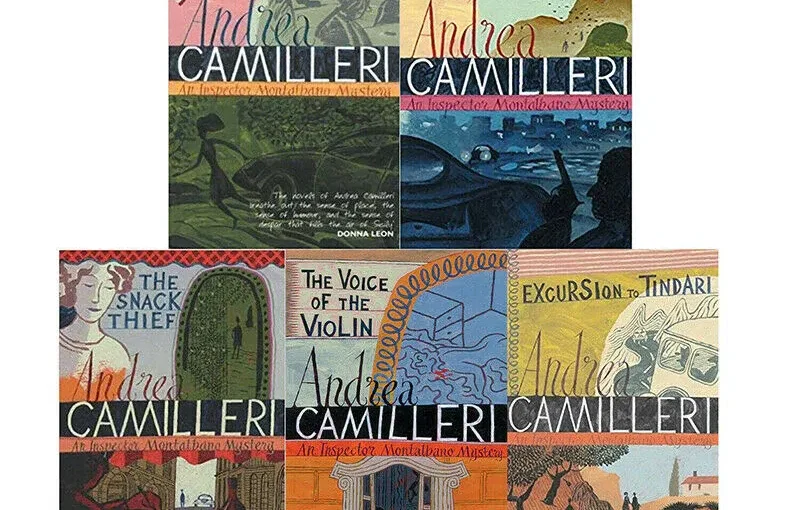
Review: Andrea Camilleri’s Inspector Montalbano Mysteries

This has nothing to do with South Asia but in an attempt to mix up subjects I’m sharing this recent piece I wrote about crime fiction.  Also see these related pieces on crime fiction:  “Mehmet Murat Somer’s Turkish Delight Mysteries” and “Moonflower Murders by Anthony Horowitz”. 

One of my guilty pleasures is that I read police procedurals to relax. Though they are certainly not high art, these novels are paradoxically comforting– despite the violence they contain– since the reader knows that the mystery will be solved in the end. This perhaps explains why detective stories–of which police procedurals are a subgenre– continue to be one of the most popular literary genres. Agatha Christie, for example, is one of the world’s bestselling authors.

Sometime during the pandemic, I discovered Andrea Camilleri’s Inspector Montalbano mysteries. At a time when we were all stuck at home, these novels allowed me to travel vicariously to Sicily. The books are full of local color. In particular–since Inspector Montalbano is a gourmand– they are full of descriptions of local cuisine.

The series often covers the connections between crime and politics–the Mafia is often involved in the plots. In a 2012 interview with The Guardian, Camilleri spoke about how he combined the detective novel with social commentary. He said: “In many crime novels, the events seem completely detached from the economic, political and social context in which they occur… In my books, I deliberately decided to smuggle into a detective novel a critical commentary on my times. This also allowed me to show the progression and evolution in the character of Montalbano”. Continue reading Review: Andrea Camilleri’s Inspector Montalbano Mysteries

Open Thread: Bharat wins at Norway Chess, but something is off with Bollywood

Our 2026 reader survey is open until 7 June – anonymous, roughly five minutes. Please take a moment.


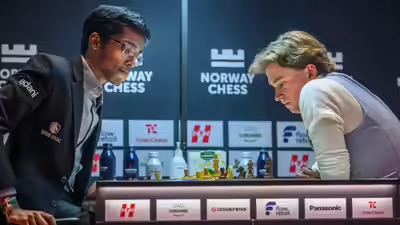
We are travelling, but South Indians, Tamilians?, are crushing it at chess. Praggnanandhaa took Norway Chess in Oslo this week with four straight classical wins to close, past Wesley So and over Gukesh on the way.

Which confirms the theory we have been quipping all trip: India, that is Bharat, owns the letter C. Chess, plainly. Cricket, obviously. Cuisine, beyond dispute. Culture, increasingly. Conversation, certainly (Desis are loud and loquacious). Caste, come to think of it..

However there is one C that has curdled: Cinema.

We caught the otherwise excellent Vadh 2 on the road. One scene was so gratuitously disturbing that we can’t shake it out of our minds.

Since Sacred Games, the sex and gore on Netflix India have not been there to serve a story. They are there to stimulate, and the audience being titillated are India’s masses. A young, idle, frustrated population is easiest to hold with sensation, so that is what is fed. This is not film-making. It is sedation at scale, and a restless country kept watching is silenced from increasing inequity (the largess of the Oligarchics) but perhaps deepening in rage (the constant ire at minorities)?

Ps: The Commentariat may also enjoy our newsletter piece on Mission Chandrayaan (Aug’23) witten prior to our re-engagement with BP, which we essentially inaugurated with Telugu being the Italian of the East (Sep’24).

The Newsletter and BP both started to kick off at roughly the same time; we decided to focus on BP since Substack is full of individual Auteurs but BP has a very venerable community, which we wanted to honour. The survey results are trickling through but what is astonishing is how sticky readers have been over this long decade and a half (BP will be 16 years in December; probably the oldest continuing Brown Blog on the internet).

Pps: Last call on the survey before it closes tomorrow.

Look closely and you may “see” what we have done throughout this post 🙂

.

Budget season is here

Our 2026 reader survey is open until 7 June – anonymous, roughly five minutes. Please take a moment.


This piece is published recently in The News International.

Budget season is here. Everyone is presenting their two cents on the way out of the IMF’s vicious trap (with the latest iteration imposing 105 compliance requirements, including 75 ‘structural conditionalities’), solutions to kill all tax ills, a panacea for the power sector miscarriages, a lethal shovel for the trade deficit serpent, development-centric economic prescriptions to counter pro-cyclical meandering and whatnot.

And thanks to ChatGPT and Google NotebookLM, Facebook and LinkedIn are brimming with macroeconomic commentaries and infographics. Resplendent seminars are being organised, with the same slides but for the new fiscal year, to gauge the impending behemoth. Newspapers, especially oped sections, are the sweet spot for policymakers and even ex-ministers. One may wonder where the magical healing potion was when they were orchestrating the national financial (mis)management. Maybe it is only after defenestration that one gets hold of the knowledge that the job required in the first place.

Continue reading Budget season is here

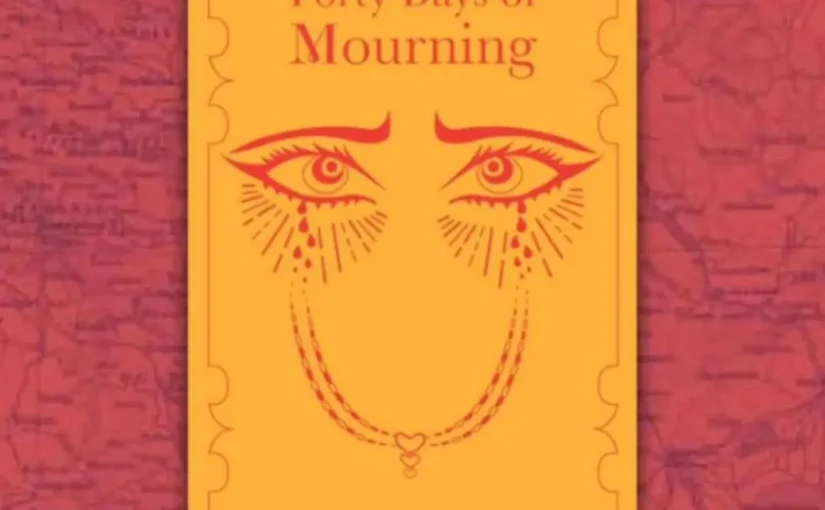
Arslan Athar’s debut novel Forty Days of Mourning Remembers Hyderabad Deccan through Grief and Silence

Our 2026 reader survey is open until 7 June – anonymous, roughly five minutes. Please take a moment.


Since there has been some recent discussion of Hyderabad Deccan here, I am sharing this book review from DAWN of Arslan Athar’s debut novel Forty Days of Mourning. 

Note: Like everyone else these days, Arslan also has a Substack.   He is a Lahore-based writer. 

Hyderabad Deccan is not merely a setting in this novel. It is a living, breathing presence that shapes the people who inhabit it and the events that unfold. Once a princely state rich in terms of material wealth and cultural plurality, Hyderabad carried a distinct identity that rarely finds adequate representation in narratives of colonial India. Discussions around the British Raj and Partition often reduce history to binaries, and Hyderabad’s nuanced past is frequently overlooked. Athar’s novel resists this erasure with care and precision.

And:

As pressure from the newly formed Indian state increases, Hyderabad’s fragile independence begins to crack. The story follows this slow unravelling, moving from hope and denial to violence, loss and reckoning, ending with the state’s forced integration and the collective grief of a world that disappears almost overnight.

As the wife of a high-ranking army officer, Saleema moves through the city’s elite circles, aware of every whisper of political tension, every shifting alliance. But as the Nizam’s Hyderabad faces the inevitability of annexation, Saleema realises that neither status nor cunning can fully shield her, and the choices she makes ripple through both her personal life and the crumbling world around her.

Continue reading Arslan Athar’s debut novel Forty Days of Mourning Remembers Hyderabad Deccan through Grief and Silence

Open thread -Tamilnadu

Our 2026 reader survey is open until 7 June – anonymous, roughly five minutes. Please take a moment.


Some random points:
1) annamalai has quit BJP. Three strands are coming through :
a) he was not accommodated properly, was not given more freedom, party did not listen to him on avoiding aidmk alliance and hence was sidelined.
B) was never a BJP man ideologically, was an opportunist, impatient and hence good riddance.
c) since BJP cannot play any shade of Dravidian game, it is better that annamalai be a silent b team of BJP.

2) Vijay has become a honorary family member and now mothers and aunties are worrying about his health, long working hours, and lack of good lunch!
They want him to eat better and go to office on alternate days.

India’s Wealth will not turn Pakistan into East Germany

Our 2026 reader survey is open until 7 June – anonymous, roughly five minutes. Please take a moment.


The Comment thread is afire with the usual (and senseless) India-Pakistan arguments (essentially which of the two is poorer). Q waves the whole question away by pointing at the figure, unimpressed by “an average Indian producing only $2,800 in GDP every year,” and asks what the point even is. There is a point, two in fact.

First: per capita and scale measure different things. Per capita describes the life of a citizen. Scale describes the weight of a state. A single integrated market of 1.4 billion people generates agglomeration, economies of scale, and a pull on capital and talent that no small rich economy can match (India’s ascent in the world of cricket is an extremely interesting meditation). That is why India passed Japan in 2025 to become the world’s fourth-largest economy, why it is the fastest-growing major one, and why it is on course to take third from Germany by around 2028. The market no exporter can ignore, the trade terms a four-trillion-dollar base can lean on, the air defence and roads it can fund: that is concrete power, and it is not nothing. Much of the gain is siphoned by a clutch of oligarchic houses, but the dynamism is real.

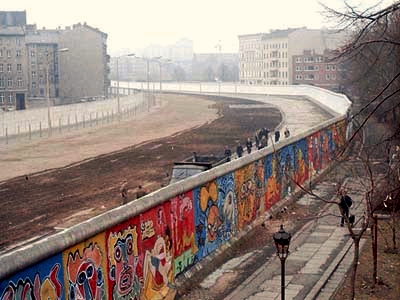
Second: however that same wealth does not buy what BB imagines it buys. India outweighs Pakistan in GDP by something close to eleven to one. It has still not turned Pakistan into its East Germany, a dependent satellite drawn quietly into its orbit and, in time, absorbed. Pakistan remains sovereign, armed, and unbought. Pakistanis are not running across the Punjabi wall to their ethnic kin.

In May 2025, after Pahalgam, the larger economy did not dictate terms: Operation Sindoor ended not in surrender but in a ceasefire announced, awkwardly, from Washington, with both capitals claiming the win.

Look West. Iran is a fraction of the wealth of the United States and Israel, yet it has absorbed the most advanced air forces on earth, kept its regime, and kept the knowledge to rebuild what was struck. The guns fell silent at a ceasefire, not a capitulation. Wealth buys reach. It does not buy outcomes.

BB treats the GDP gap as a deed of ownership over Kashmir, and assumes Kashmiris will swallow their pride for a higher income per head, that prosperity purchases consent. It misreads the Islamicate moral economy entirely. In that ledger ‘Izzat and Deen, dignity and faith, are not line items to be outbid. The Hyderabadi Harvard PhD still sings the song of his lost people.

Peoples who set independence above comfort have done so across the whole anti-colonial century, and no balance sheet has ever talked them out of it. Money may buy luxury but not loyalty.

What price will any Indian or Pakistani nationalist accept for their love and loyalty to their homeland?

Brown Pundits