Carl Sagan famously said that you have to know the past to understand the present. As the inheritors of the Dhārmika civilization, to understand the present, we must go back to where it all began – Mūlasthāna, a place we are guilty of forgetting.
An Old Fort of Dharma
The origin of the great Bhāratīya civilization is widely acknowledged to date back to antiquity. However, the question of which city in the region of Bhāratavarśa has been continuously inhabited for the longest period, remains unresolved. Multan, formerly known as Mūlasthāna, Sāmbapurā, Kāśyapapuri, and Prahlādapurī, is widely believed to be the oldest city in the Indian subcontinent, with an estimated antiquity of 3000-2800 BC according to Ahmad Nabi Khan’s book “Multan: History and Architecture”. This estimation, however, is just a glimpse into Multan’s distant past, as its true age has been muddied by the passage of time. Today, the city of Multan finds itself in Pakistan, following the partition of India in 1947, and for most Indians today, the memory of this city itself has become a hazy one.
Multan was historically a bustling city located at the crossroads of important trade routes. To get a sense of what ancient Multan was like, imagine a city with narrow, winding streets lined with vibrant bazaars, populated by merchants and traders, selling everything from exotic spices and textiles to precious gems and jewelry. The air is filled with the sounds of bargaining and the smell of spices. In the center of the city stands a majestic temple, a symbol of the city’s religious importance. Around the temple are grand buildings and mansions, constructed from gleaming red bricks and decorated with intricate carvings and mosaics. The city is surrounded by high walls, giving it a fortress-like appearance and providing protection from invaders. Beyond the walls are lush green fields, dotted with farms and orchards, stretching as far as the eye can see. The Chenab River flows nearby, providing a source of irrigation and water for the city’s residents. In this ancient city, one can see the blend of different cultures, reflected in the architecture, art, and customs of its people. Ancient Multan was truly a city of great beauty and importance, and a visual feast for the senses.
So, what do Dhārmika scriptures tell us about the origins of Multan? According to tradition, the city was founded as Kaśyapapurī by the sage Kaśyapa, a descendant of Brahma, and the son of Manu. Its ancient heritage is confirmed by numerous archaeological sites in the area dating back to the Early Harappan period of the Sindhu-Sarasvatī civilization. This same city is described as Kaspapuros by Hekatues, Kaspaturos by Herodotus, and Kaspeira by Ptolemy. The Mahābhārata mentions Multan as the capital of the Trigarta Kingdom, ruled by the Katoch dynasty, during the Kurukṣetra War.
Additionally, Multan is considered to have been the capital of King Hiraṇyakaśipu of the Kāśyapa gotra and was later renamed Prahlādpurī after his son Prahlāda became king. It is thought that the Hindu festival of Holī originated from the Prahlādpurī Temple in Multan. (Gazetteer of the Multan District, 1923-24 Sir Edward Maclagan, Punjab (Pakistan). 1926. pp. 276– 77.)
The name Multan is derived from the Sanskrit word “Mūlasthāna,” meaning “the place of origin.” Some believe that it was one of the earliest settlements in the region and may have even been the birthplace of Hindu Dharma. Dr. D.S. Triveda, for instance, proposes that the original home of the Vedic Aryans, who considered the Sapta-Sindhu their home, was near the Devikā River in Multan. This is not a consensus view, however.
Another version of the city’s origin story involves King Uśīnara of the Ānava (Anu lineage), who divided a kingdom on the eastern border of the Punjab among his five sons. Śibi, one of the sons, eventually became the ruler of Multan. He went on to conquer the entire Punjab region, except for the northwest corner, and established four separate kingdoms through his sons: the Vṛṣadarbhās in Multan, the Sauvīras in Sind, the Kekayas in the districts of Gujarat and Shahpur between the Jhelum and Chenab rivers (the Chaj doab), and the Madrakas, with their capital in Sakala (modern-day Sialkot), in the Lahore division of Punjab. According to the Mahābhārata, Śibi was renowned for his honesty, and a story about his truthfulness and compassion is recorded. The tale recounts how Śibi protected a dove from a hawk that sought to make it its midday meal, offering his own flesh from his thigh as a substitute meal for the hawk.
Multan has also uncovered coins belonging to the Yaudheyas. The Yaudheyas were a powerful and influential republican tribe in the area who claimed to be a warrior clan descended from King Yuddhiṣṭhira of the Pāṇdavas. The warrior-related forms Yodheya and Yaudheya are descended from Yodha. (Majumdar, R. C. (Ed.). (1973). History and culture of the Indian people (Vol. 2). Bharatiya Vidya Bhavan.)
Looking up to Sūrya Bhagavān
Multan in antiquity was home to a saṃpradāya dedicated to the Sun God Sūrya, centered around the Multan Sun Temple. The significance of the Sun Temple was such that it was noted by Greek Admiral Skylax during his journey through the region in 515 BCE, as well as by the Greek historian Herodotus in the 5th century BCE. (R. C. Majumdar, J. N. Chaudhuri, G. S. Sardesai, The History And Culture Of The Indian People (11 Vol. Set), 1977.)
The earliest Hindu text that mentions a Sūrya-worshiping sampradāya is the Sāmba Purāṇa, and the associated legend can also be found in the Bhaviṣya Purāṇa and a twelfth-century inscription in Eastern India. The story says that Sāmba, who was cursed and had become a leper, sought Bhagavān Śrī Kṛṣṇa’s help to restore his youth. Kṛṣṇa told him that only the Sun God Sūrya had the power to do so. Following Ṛṣi Nārada’s advice, Sāmba went to the forests of Mitravan on the banks of Candrabhāga, which was already considered a sacred place for Sūrya worship. There, he propitiated Sūrya and received boons of cure and eternal fame, with the condition that he build Sūrya temples. According to the Bhaviṣya Purāṇa, Sūrya specifically instructed that the temples be installed at the banks of Candrabhāga, where he would reside permanently. The next day, Sāmba received an icon of Sūrya while bathing and established the first Sun Temple in Sāmbapurā. Sāmbapurā is believed to be the same as Multan, and the temple is referred to as the eponymous institution. A different legend suggests that the temple was built by the Hindu king Vikramāditya. This temple is also known as the Ādityanātha temple. (Jain, M. (2019). Flight of Deities and Rebirth of Temples: Episodes from Indian History. Aryan Books International.)
The belief in the divinity of the Sun has been passed down from Vaidika times and is still practiced today by the Saura tradition. Ancient coins and medallions, such as a human bust of the Sun with stamens representing his rays, suggest that Sūrya was a widely worshiped deity as early as the third century BC. Greek writers and Kuṣāna coins featuring the name and image of the Sun attest to Sūrya’s continued popularity in later periods. Sūrya is a prominent figure in Itihāsas, with descriptions of his ornaments and family life, including his wives and children, as well as his various adventures. The Gāyatrī Mantra, one of the most sacred in Hinduism, is dedicated to the Sun. Additionally, the Chaṭh Pooja is a popular religious event in Bihar that involves prayer and fasting in honor of the Sun, has been practiced for centuries and continues to this day, further emphasizing the historical significance of sun worship.
The people of Multan are believed to have been protected from conquest and subjugation by the blessings of Sūrya. Even Alexander’s invasion of the city proved to be his downfall. Legend has it that during the battle for the city, Alexander was struck by a poisoned arrow which eventually led to his illness and death. The exact spot where the arrow hit Alexander can still be seen in the old city, as recorded by the Chinese traveler Xuánzàng during his visit to Multan in 641 AD.
During Xuánzàng’s visit in 641 CE, it was the only Sūrya temple in the region. He wrote: “Very magnificent and profusely decorated. The image of the Sūrya-deva is cast in yellow gold and ornamented with rare gems. Women play their music, light their torches, offer their flowers and perfumes to it. The kings and high families of the five Indies never fail to make their offerings of gems and precious stones. They have founded a house of mercy, in which they provide food and drink, and medicines for the poor and sick, affording succor and sustenance. Men from all countries come here to offer up their prayers; there are always some thousands doing so. On the four sides of the temple are tanks with flowering groves where one can wander about without restraint.” (Li, R. (2006). The Great Tang Dynasty Record of the Western Regions (W.M. Keck Foundation Series). BDK America.) The records of Xuánzàng and various Arab travelers from the 7th to 8th centuries shed light on the significance of the Multan temple during that time. Expensive aloe-wood, imported from Cambodia, was offered to the Sūrya God at Multan.
So what happened to the Sūrya temple in Multan, considering that it no longer exists? It’s intriguing to consider how a temple of such significant repute, known throughout the subcontinent as a wealthy pilgrimage site, can be erased without a trace, to the point where its exact location is unknown today, and even its memory no longer exists. To understand this, we must look forward to the 7th century CE.
The Arrival of the Arabs: A Temporary Setback
During the 7th century, Multan, which had been ruled by the Rāi and Chacha dynasties for centuries, experienced its first incursion by Muslim armies. Before that, it was a flourishing town with a booming textile industry. Armies led by Al Muhallab ibn Abi Suffrah and Abdool Ruhman Bin Shimur conducted several raids into India, reaching as far as Multan. However, their raids were largely unsuccessful and their progress towards the east was halted. The Arabs were unable to penetrate India through the Khyber Pass, the Bolan Pass, or along the Makran coast. (Asif, M. A. (2016). A Book of Conquest: The Chachnama and Muslim Origins in South Asia.)
A few decades later, however, Muhammad ibn Qasim would launch another invasion on behalf of the Arabs, marking a turning point in the history of Multan. Hajjaj ibn Yusuf, the governor of Iraq, sent Muhammad ibn Qasim into Sindh and Multan to start the Muslim conquest of India. Hajjaj gave strict instructions to kill anyone belonging to the combatants, arrest their children for hostages, and give protection only to those who convert to Islam. (Derryl N. MacLean, Religion and Society in Arab Sind (Brill, 1989), 37.)
In the early 8th century, the Arab armies invaded Sindh, which had recently ended a period of civil wars and was ruled by Rāja Dahīr. Muhammad ibn Qasim faced strong resistance while conquering Sindh, which took him approximately eight months. He encountered difficulties in several towns, including Alor and Brāhmanābād. During the process, he killed many and enslaved thousands of people. Those who were capable of bearing arms were beheaded, while the rest were put in chains.
The Muslim invaders treated the native population harshly and offered the choice of conversion to Islam or death. (Derryl N. MacLean, Religion and Society in Arab Sind (Brill, 1989), 37.) Brāhmanābād’s residents abandoned the fort out of fear for their lives. However, not all Sindhis were willing to surrender, and the invaders massacred thousands of them. As the religious war continued, it proved impractical to offer all Indians the choice of conversion or death, and an adjustment was made to grant the Hindus the status of People of the Book (Ahl al-kitab). The jizya was demanded from the Hindus and their submission was accepted, with the ultimate goal of converting them to Islam. Hindu temples were considered to be centers of idolatry and were destroyed whenever possible. At Daybul, Muhammad ibn Qasim destroyed a Hindu temple and had the Brāhmins circumcised and converted to Islam. However, seeing their resistance, he ordered all those over 17 to be executed. (Arun Shourie, Harsh Narain, Jay Dubashi, Ram Swarup, and Sita Ram Goel, Hindu Temples: What Happened to Them, vol. 1, A Preliminary Survey (Voice of India, 1990), 264.)
The main cities of southern Sindh, Nehrun and Siwistan, showed the least resistance. The conquest of these cities was facilitated by the lack of loyalty among the Buddhist section of society, superstition among some sections of the population, and weak leadership among the ruling dynasty. Muhammad ibn Qasim began encouraging the locals to surrender, but this irritated Hajjaj who wrote to him and criticized his policies. (B. R. Ambedkar, Thoughts on Pakistan (Thacker and Company Ltd., 1941), 50.)
Following his conquest of Sindh, Muhammad ibn Qasim crossed the Beas and laid siege to the city of Multan for two months, as it was one of the most important trading centers of the Indian subcontinent at the time. However, the city was heavily fortified, and its inhabitants were not willing to lay down their arms so easily. Despite facing a shortage of supplies, the local ruler Rāja Dahīr managed to hold off Muhammad’s army. During the prolonged siege, Muhammad’s army had run out of provisions and was resorting to eating donkeys. Despite the Hindus’ refusal to surrender, a traitor from the city eventually betrayed Multan.
This Multanī informant told Muhammad about an underground canal that provided sustenance to the city. (Flood, Finbarr Barry (2009). Objects of Translation: Material Culture and Medieval “Hindu-Muslim” Encounter) Taking advantage of this information, Muhammad had the canal blocked, which led to the surrender of Multan. The able-bodied men were massacred, but the children, women and temple ministers, numbering 6,000, were taken captive. The Muslim invaders discovered a treasure of gold in a chamber that was ten cubits long and eight cubits wide and took it home. Muhammad ibn Qasim infamously looted and transported to Basra 330 chests of treasure, including 13,300 pounds of gold, from the Adityanath temple. The city became known as the “City of Gold” or the “Frontiers of Gold” among Arab geographers until the 14th century due to the acquisition of wealth, either through looting or revenue.
In the 9th century, Aḥmad Ibn Yahya Ibn Jabir Al Biladuri wrote in his work Futuhu al-Buldan about the Arab conquest of Multan and how they acquired a substantial amount of gold from the temple’s halls. He writes, “The Musulmans found there much gold in a chamber 10 cubits long by 8 cubits broad, and there was an aperture above, through which the gold was poured into the chamber.”
Despite the conquest, most of the city’s population remained non-Muslim and resisted conversion for several decades under Umayyad rule. After this initial victory, the Arabs struggled to maintain control, and in a short amount of time, much of Sindh was lost. They were eventually limited to the small states of Brāhmanābād and Multan in the 9th and 10th centuries. That is all the Arabs had to show for three centuries of relentless effort. This limited success, compared to their conquests in the Middle East, Europe, and Persia, was due to the superior military strength and political organization of the Indians.
The Arab conquest of Sindh was not due to their superior military might, but rather, it was their only successful campaign on Indian soil. After their conquest, they faced defeats in conflicts with powerful Indian states. For instance, one Arab army sent to invade North India suffered a major defeat at the hands of Nāgabhaṭṭa I of the Imperial Pratihāra dynasty that was ruling the region then, while another army that entered Lata in South Gujarat was defeated by Pulakeśina Avanijanāśraya in a battle near Navsari.
An Emirate, and a Site of Blackmail
After Muhammad ibn Qasim’s conquest, Multan was ruled by Muslims, but it functioned as an independent state known as the Emirate of Multan from 855 AD. The 10th-century Arab geographer Al-Muqaddasi noted that the Multan Sun Temple was in a bustling area of the city, between the ivory and coppersmith bazaars (Shourie et al., Hindu Temples.). The temple was a major source of revenue for the Muslim rulers, drawing large numbers of pilgrims and contributing up to 30% of the state’s revenue. They allowed the temple to exist but hung a piece of cow’s flesh on the deity’s neck in order to humiliate the Hindus to whom the cow was sacred (Shourie et al., Hindu Temples.).
Al-Biruni in his book Kitab al-Hind described the temple’s deity as a wooden statue covered in red leather and with two red rubies for eyes, and even stated that it was built during the Krita Yuga. Abu Rihan relates that the temple and the statue of the Sun, which existed before his time, were said by the people to be 216,432 years old.
In addition to being a major source of revenue for the Arab state, the mūrti of Adityanāth in Multan was also used as a defensive measure. Whenever Hindu Rajas attacked to reclaim the city, the Arabs would display the revered deity on the fort wall and threaten to break it. The Pratihāras were influential in North Indian politics at the time and served as a barrier against the Muslims in the Sindhu valley. Muslim writers believed the Pratihāras were the greatest enemies of the Muslims and could easily defeat them. Al-Masudi writes, “When the unbelievers march against Multan and the faithful do not feel themselves strong enough to oppose them, they threaten to break their idol and their enemies immediately withdraw.” Istakhri, who makes a similar statement, adds that “otherwise the Indians would have destroyed Multan.” (Majumdar, R. C. (1956). Arab invasion of India. Bharatiya Vidya Bhavan.)
The Muslims leveraged the Hindu Pratihāras religious beliefs to avoid destruction. It seems that the Pratihāras were not fully aware of the Muslim threat, as they let their religious beliefs stop them from defeating the Muslim rule in India, which they had the ability to do. The Hindu leaders of the Pratihāras and Shāhi dynasties failed to act against the Muslim conquerors due to their lack of foresight, statesmanship, and rationality. They could have easily conquered Multan and defended India against the danger of Muslim invasion, but either they were ignorant of the political situation or too parochial in their thinking. The lack of knowledge of the outside world or failure to understand contemporary events, of the kind of societal storm that Islamic rule was, was the main cause of their indifference to the danger that eventually overwhelmed them.
The Rāṣṭrakūṭas (who ruled over large parts of the Deccan at the time), however, took a different approach and befriended the Muslims, giving them opportunities to settle in their territory, build mosques, and be governed by their own governors. This attitude of religious tolerance was uncommon in the world at that time and showed a stark contrast to the destructiveness of the Muslim invaders.
Multan was later captured by the Qarmatian chief, Jalem, the son of Shaiban, when the priests of the Sun Temple were massacred, the deity was broken to pieces, and the temple itself was turned into a mosque. (Shourie et al., Hindu Temples.)
Slipping Away: The Slow Retreat of Dharma
In the early 11th century, Multan was attacked twice by Mahmud of Ghazni. Later, it is believed that a mosque known as Jami Masjid was constructed on the same site as the temple. A single traitor had initiated this entire sequence of events.
The Sun Temple and its deity were however soon restored by the religious zeal of the Hindus. When Al Idrisi of Morocco wrote about Multan in 1130 AD, the worship of the Sun God was as flourishing as ever. The extract from Nuzhat al Musthak of Al Idrisi reads, “Multan is close upon India; some authors indeed, place it in that country. It equals Brāhmanābād in size and is called the house of gold. There is an idol here, which is highly venerated by the Indians, who come on pilgrimages to visit it from the most distant parts of the country, and make offerings of valuables, ornaments, and immense quantities of perfumes. This idol is surrounded by its servants and slaves, who feed and dress upon the produce of these rich offerings.
It is in the human form with four sides and is sitting upon a seat made of bricks and plaster. It is entirely covered with a skin like red Morocco leather, so that only the eyes are visible. Some maintain that the interior is made of wood, but others deny this. However it may be, the body is entirely covered. The eyes are formed of precious stones, and upon its head there is a golden crown set with jewels. It is, as we have said, square, and its arms, below the elbows, seem to be four in number. The temple of this idol is situated in the middle of Multan, in the most frequented bazaar. It is a dome-shaped building. The upper part of the dome is gilded, and the dome and the gates are of great solidity. The columns are very lofty and the walls colored. Around the dome are the dwellings of the attendants of the idol, and of those who live upon the produce of that worship of which it is the object.” (Elliot, H. M. (1867). The History of India, as Told by Its Own Historians (Vol. 1).)
In 1175, Muhammad of Ghor captured Multan and in 1178, he attempted to invade the Chālukya Kingdom. He sent his envoy to the court of Prithviraj Chauhan to persuade him to come to a peaceful agreement, but Prithviraj refused and Muhammad of Ghor decided to invade his Chāhamāna kingdom. The first battle of Tarain was fought in the winter of 1191 CE, where the Ghurid army was defeated by Prithviraj , who was accompanied by other rulers. Muhammad of Ghor was wounded in the battle, but he retreated and left a garrison at Tabarhindah. Prithviraj Chauhān captured the fort, but did not pursue the Ghurid army. According to the Hammira Mahākāvya, Prithviraj even captured Muhammad of Ghor in the battle but later freed him and let him return to Multan. This proved to be his undoing years later. In 1192, Muhammad of Ghor invaded again, and the second battle of Tarain was fought, ending in a decisive victory for the Ghurids.
The Battle of Tarain is considered a turning point in medieval Indian history as it resulted in the temporary downfall of Rajput power and the establishment of Muslim rule in Northern India, leading to the formation of the Delhi Sultanate.
Multan went on to be ruled by various empires, including the Mamluks and the Tughlaqs. The countryside surrounding Multan was reported to have experienced significant devastation due to the overly high taxes imposed during the rule of Muhammad Tughlaq. Even the Mongols laid siege to Multan at one point. In 1445, it became the capital of the Langah Sultanate and was later conquered by the Mogul Empire in 1526. Under the leadership of the Mogul Akbar, Multan was made into one of the largest provinces of the Mogul Empire.
Saqa Mustad Khan, a Muslim historian, compiled a comprehensive record of Aurangzeb’s military activities using the emperor’s state archives shortly after Aurangzeb’s death in 1707. Benāres, Nādia, Mithilā, Mathurā, Tirhut, Pratiṣṭhāna, Karhaḍa, Ṭhaṭṭā, Multan and Sirhind were the famous seats of Hindu learning at the time. (Roy, S. K. (2018). Education system in India during the Mughals. Research Review International Journal of Multidisciplinary, 3(9), 109.) Multan was famous as a center of specialization in astronomy, astrology, mathematics and medicine.
Khan wrote, “In 1669, the Lord Cherisher of the Faith learnt that in the provinces of Ṭhaṭṭā, Multan, and especially at Benāres, the Brāhmaṇa disbelievers used to teach their false books in their established schools, and that admirers and students both Hindu and Muslim, used to come from great distances to these misguided men in order to acquire this vile learning. His Majesty, eager to establish Islam, issued orders to the governors of all the provinces to demolish the schools and temples of the infidels and with the utmost urgency put down the teaching and the public practice of the religion of these misbelievers.” (Shourie et al., Hindu Temples, 279; Goel, The Story of Islamic Imperialism in India, 280.)
In 1666, Jean de Thévenot visited Multan during Aurangzeb’s reign and described a Hindu temple that attracted pilgrims from far and wide, whose offerings contributed to the provincial treasury. He writes, “At Multan there is another fort of Gentiles, whom they call Catry. That town is properly their country, and from thence they spread all over the Indies; but we shall treat of them when we come to speak of the other sects: both the two have in Multan, a Pagod of great consideration, because of the affluence of the people, that came there to perform their devotion after their way; and from all places of Multan, Lahore and other countries, they come thither in pilgrimage. I know not the name of the idol that is worshiped there; the face of it is black, and it is clothed in red leather; it has two pearls in place of eyes; and the Emir or Governor of the country, takes the offerings that are presented to it.” (Thévenot, J. (1687). Relation d’un voyage fait au Levant (English translation: Travels into Diverse Parts of Asia and Africa). Printed for H. Bonwicke, T. Goodwin, M. Wotton, S. Manship, and J. Nicholson.) The description of the idol was similar to that of Istakhri’s description of the Multan Sun Temple, though Thévenot claimed ignorance about the deity’s identity. Al-Idrīsī’s claim that the Sun Temple had been restored was thus corroborated.
In 1853, Alexander Cunningham visited Multan and noted a local tradition blaming Aurangzeb for destroying the temple, though no one could identify its location. There are also contemporary accounts from earlier centuries that corroborate that the Sun Temple again regained its eminence as one of the most important Hindu places of pilgrimage. It is believed to have continued so until it suffered its final destruction at the hands of Aurangzeb in 1666. Cunningham was told that when the Sikhs occupied the town in 1818, they couldn’t find the remains of the temple and converted a venerated tomb into a Gurdwara. Based on etymological arguments, Cunningham believed the recently destroyed Jāmiʿ Masjid to be the most probable site of the temple. (Cunningham, A. (1873). Report for the Year 1872-73. Archaeological Survey of India.) Notably, a stone image of Sūrya was found at the location and is currently kept in an English museum. (Jain, M. (2019). Flight of Deities and Rebirth of Temples: Episodes from Indian History. Aryan Books International.)
An Afghan incursion, a Sikh fightback
Despite repeated invasions, Multan remained northwest India’s premier commercial center throughout most of the 18th century. In the realm of commerce and trade, Hindu merchants still dominated, with merchants from Multan being particularly renowned for their expansive business dealings and abundant wealth. They were frequently sought after by nobles and the bourgeoisie for financial assistance in times of need.
In the following years, it was ruled by the Durrani empire before finally being conquered by the Sikh Empire in 1818. The siege of Multan, as part of the Afghan-Sikh Wars, took place from March to June of 1818, resulting in the capture of Multan by the Sikh Empire from the Durranis. It was the first time in over a millennium that Multan was liberated from Muslim rule, except for the brief period between 1758 and 1760 when the Marathas under Raghunathrao had seized Multan. At the time of the Sikh conquest, its population was still slightly more than half Hindu or Sikh.
In the past, the Sikh Empire had launched multiple assaults on Multan, with the most significant one occurring in 1810. Despite their victories against the defending forces, the governor of Multan, Muzaffar Khan Sadozai, would retreat into the Multan Fort. In previous sieges, the Sikhs accepted large one-time payments of tribute, while the 1810 attack resulted in Multan being required to pay an annual tribute.
In early 1818, the Sikh Empire’s leader, Mahārāja Ranjit Singh, dispatched Misr Diwan Chand to the southwest frontier of the empire to prepare for an invasion of Multan. By January, a robust supply chain was established from the capital, Lahore, to Multan, using boats to transport supplies across the Jhelum, Chenab, and Ravi rivers. Rani Raj Kaur, the consort of Ranjit Singh, was tasked with overseeing the provision of food and ammunition, and ensured the steady flow of grain, horses, and ammunition to Kot Kamalia, a town located between Multan and Lahore.
Misr Diwan Chand launched the campaign in early January by capturing the forts of Nawab Muzaffar Khan at Muzaffargarh and Khangarh. In February, the Sikh forces, led by Misr Diwan Chand and nominally under Kharak Singh, arrived at Multan and demanded that Muzaffar pay the outstanding tribute and surrender the fort. However, Muzaffar refused, and a battle ensued, with the Sikh forces emerging victorious. Despite this, Muzaffar retreated into the fort, and the Sikh army requested additional artillery. Ranjit Singh responded by sending the powerful Zamzama and other artillery pieces, which began bombarding the fort’s walls. Muzaffar and his sons attempted to defend the fort but were killed in the subsequent battle. The successful siege of Multan marked the end of significant Afghan presence in the Peshawar region and eventually led to a series of events that ended in the capture of Peshawar by the Sikhs. When the Sikhs took possession of Multan, there was not a trace left of the old Sūrya Temple. Enraged by this, they turned the tomb of Shams-i-Tabrez into a hall for the reading of the Granth.
After this, Multan came under the control of a Hindu vassal, Dewan Mulraj Chopra. In 1845, the First Anglo-Sikh War broke out, and was won by the British East India Company. Three years of uneasy peace were spent trying to keep Multan practically independent under Mulraj while ostensibly under the control of the East India Company.
Multan had 80,000 residents in 1848. It was renowned for its richness and served as the regional trading hub for spices, silks and other treasures. Early in 1848, Sir Frederick Currie, the newly appointed Commissioner in the Punjab, asked that Mulraj pay back taxes and levies that had been owed to the Sikh Empire’s central Durbar. Mulraj abdicated in favor of his son in an effort to prevent a full annexation of Multan. Nonetheless, Currie made the decision to install Sardar Khan Singh as the Sikh monarch, who would be accompanied by Patrick Vans Agnew, a British political agent. (Charles Allen, Soldier Sahibs, Abacus, 2001)
In April 1848, the two British officers, Vans Agnew and Lieutenant Anderson, arrived in Multan to take control of the citadel from Mulraj. They were attacked by Mulraj’s troops and both officers were killed. Mulraj saw himself as committed to rebellion and presented Vans Agnew’s head to the local authorities. The British political agent in Bannu, Lieutenant Edwardes, took steps to suppress the rebellion but was hindered by the Commander-in-Chief of the Bengal Army, Sir Hugh Gough, who did not want to expose European troops to a campaign during the harsh weather. In June, Edwardes led an army against Multan and defeated Mulraj’s forces. General Whish was ordered to begin the siege of Multan, but the East India Company’s forces were too weak to maintain it and were forced to retreat.
Sher Singh Attariwalla, a detachment of the Khalsa, rebelled against the East India Company in September, leaving the siege vulnerable. The Sikh Khalsa Army, under the command of General Sher Singh, inflicted a significant defeat on the British Army at the Battle of Chillianwala. Both sides claimed victory, but the Sikhs were eventually seen as the victors. This was one of the toughest battles fought by the British Army and led to the loss of British prestige, contributing to the Indian Rebellion of 1857.
In November, General Whish was reinforced by a large force from the East India Company’s Bombay Army and was able to easily supply the large force. Inside the city, Mulraj had 12,000 troops and 54 guns.
Whish ordered four columns of troops to attack the suburbs of a city. The attack resulted in Mulraj’s forces being driven back into the city and the city walls being breached. The main magazine in the citadel exploded, killing 800 of the defenders, but Mulraj maintained his fire. Whish ordered a general assault on January 2, 1849, leading to a bloody house-to-house fight in the city. The Nawab of Bahawalpur was a key ally of the British in this endeavor. Whish ordered civilians to be herded into the main square, resulting in further casualties. The citadel held out for another fortnight, but eventually fell on 22 January after heavy bombardment and an explosion of three mines under its walls. Mulraj surrendered with 550 men, but only after Whish insisted on unconditional surrender. It then fell to the British Empire and became part of British Punjab.
Corporal John Ryder of the (European) Bombay Fusiliers later wrote of the city after the siege, “Mountains of dead lay in every part of the town, and heaps of human ashes in every square, where the bodies had been burnt as they were killed. Some were only half-consumed. Many had been gnawed and pulled to pieces by dogs; and arms, legs, heads and other parts lay in every place. The town swarmed with millions of flies.” (Ian Hernon, Britain’s forgotten wars, Sutton Publishing Ltd, 2003)
The British acquired significant amounts of plunder. The value of Mulraj’s treasury was estimated to be three million pounds, a substantial amount for the era. The already damaged castle was further destroyed and washed away after a massive overflow of the Indus and Chenab rivers in August of 1849, and it eventually turned into an island of muck in the middle of the floodwaters.
After the establishment of British control in Punjab, the British were worried that a strong leader like Sher Singh Attariwalla could spark a large-scale conflict with them again, so they exiled him. The fall of Multan was a key event in consolidating British rule in India for a century afterwards.
Role in the freedom struggle
Surendra Nath Banerjee, a pioneer in demanding full independence from British rule, founded the Indian Association as a forum for discussing national matters. He embarked on a nationwide tour with the aim of fostering a robust public sentiment, unifying India’s diverse communities based on shared political goals and aspirations, promoting goodwill between Hindus and Muslims, and engaging the masses in the key public movements of the time. Multan was one of the key stops on his tour.
Henry Cotton, a member of the Indian Civil Service (ICS), but sympathetic to the political aspirations of India, describes his impression at the time: “The educated classes are the voice and brain of the country. The Bengalee Babus now rule public opinion from Peshawar to Chittagong; and, although the natives of North-Western India are immeasurably behind those of Bengal in education and in their sense of political independence, they are gradually becoming as amenable as their brethren of the lower provinces to intellectual control and guidance. A quarter of a century ago there was no trace of this: the idea of any Bengalee influence in the Punjab would have been a conception incredible to Lord Lawrence, to a Montgomery, or a Macleod, yet it is the case that during the past year the tour of a Bengalee lecturer, lecturing in English in Upper India, assumed the character of a triumphal progress; and at the present moment the name of Surendra Nath Banerjee excites as much enthusiasm among the rising generation of Multan as in Dacca”. (Mittal, S. C. (1977). Freedom Movement in Punjab, 1905-29. Concept Publishing Company.)
The tour of Surendra Nath Banerjee brought a wave of hope and inspiration to the Indian community. It showed that politics could be just as captivating as religion and that there was a greater unity and shared interests among the different regions of India than previously believed. This realization paved the way for the creation of a nationwide political organization within a decade. The tour also proved that it was possible to unite the masses under a common political goal to improve India’s political condition.
By 1907, Multan had become one of the sites of political agitation in favor of home rule in Punjab along with Lahore, Amritsar, and Ferozepore. Nationalist factions advocated for the assassination of high-ranking British officials, as well as calling upon the public to revolt and overthrow English rule. In addition to this, an active effort was launched to turn the yeomanry, a primary source of recruitment for the armed forces, against the British. This was done through the spread of seditious literature and public meetings where the attendees, many of whom were military pensioners, were openly encouraged to join the cause of rebellion.
The Demographic balance shifts
During colonial times, Multan’s industrial potential went largely untapped due to the British building only a few railway lines, as well as the unequal distribution of canal colonies. This led to high unemployment and low wages, which was exacerbated by the alteration of the land by the government. (Ahmad, A. N. (2022). Infrastructure, Development, and Displacement in Pakistan’s “Southern Punjab”. Antipode.) As a result, many people decided to voluntarily leave Multan. Furthermore, communal riots in the 1920s and the violent actions of Muslim attackers against the Hindus, which included plundering, massacres, and dishonoring of women, shocked the nation and caused many Hindus to flee Multan. **These two factors, along with the differential in fertility rates between the communities, combined to result in a Muslim majority in Multan during British rule.
The Hindu Mahasabha came into prominence with an active program by way of reaction to the horrible atrocities perpetrated by Muslim aggressors on Hindus in Multan, Malabar and other places where rioting had taken place. Madan Mohan Malaviya advocated for the formation of Hindu Sangathan in order to promote the interests of the Hindu samāj.
In 1923, the Hindu Mahasabha made an impressive effort to bring back to Hindu fold over four and a half lakh Mālakāna Rajputs who had previously converted to Islam. This was seen as a response to the ongoing riots that were happening at the time. The Mahasabha welcomed them back into Hindu dharma, providing them with a sense of solace and a renewed connection to their culture and beliefs. This was a powerful demonstration of the Hindu Mahasabha’s commitment to preserving their rich and vibrant culture and heritage, no matter the circumstances.
Swami Shraddhānanda also organized the Shuddhi movement with a view to bringing back within the Hindu fold those who had renounced Hindu faith and were converted into Islam.
In 1938, Multan was rocked by a serious communal riot that led to fatalities, injuries, and the destruction of numerous homes. As a result, British troops were dispatched to the scene to quell the violence.
The Muslims of Multan eventually supported the Muslim League and the Pakistan Movement in the 1940s. In 1946, the Muslim League called for Direct Action Day to agitate for a separate Pakistan. The violence that followed in Calcutta is well-known, but there was also extensive bloodshed in Multan, Lahore, Rawalpindi and Amritsar.
At least as early as mid-1946, the Muslim League had been conducting a concerted and ostensibly covert effort to arm its supporters. In March 1947 the Muslim League compelled Unionist Muslims to resign from their ministries in the Punjab government, exposing Hindus and Sikhs to the partisan policies of the predominantly Muslim government.
Then Multan witnessed a sudden escalation of violence amidst the anti- and pro-Pakistan sloganeering that had been prevalent in the major cities of Punjab. This marked the outbreak of large-scale violence in the region. Several key locations across Multan saw brutal attacks against Hindus and Sikhs, including the TB Hospital near Delhi Gate where even dying patients had to flee or perish and the old bazaar where Sikh students were killed by the police. The stories of violence, such as the killing of renowned philanthropist Seth Kalyan Das’ entire family, continue to haunt Hindus to this day. Syed Saheb, the mob’s leader, rallied his followers to fight the unbelievers. The mob went on to burn down Hindu and Sikh colonies while the police opted to show no interest. The canal that was once the lifeline of this area and adjacent villages was now filled with dead bodies. (Muhammad Hassan Miraj. (2013, October 30). The famous Four – Part IV. Dawn)
After this, the colonial government’s power would quickly wane; the British would no longer be able to persuade the Indians that violence would result in harsh punishment or heavy retaliation due to a lack of resources and personnel. After the incidents in Rawalpindi and Multan in early March 1947, the situation would inevitably descend into anarchy.
Hindus in Multan had a tragically simple choice to make given the current circumstances: either put their safety and future in the hands of Muslims, or take steps to assist themselves.
Even to the Indian National Congress, the creation of Pakistan appeared to be the only way of deliverance from the anarchy and bloodshed caused by the chaos, confusion and complete break-down of administration that happened at this time. Only the terms of Partition and where the boundary would be drawn were yet to be determined.
Baldev Singh, who was the Sikh member of the Viceroy’s Executive Council, proposed an exchange of property and people as the Boundary Commission’s terms of reference when he met with the Governor General, the Congress, and the Muslim League on June 2. He approved partition in principle. At a subsequent press conference, the Viceroy Lord Mountbatten made it plain that the ruling Labour Party government in the United Kingdom would never support Partition on the basis of landed property. As a result, population served as the main criterion for division, with everything else relegated to “other factors”. At this point, it became clear that Multan would become part of Pakistan.
After Pakistan gained independence in 1947, most of the Hindu, Jain and Sikh minorities who still constituted 42% of Multan’s population were violently forced to relocate to India.
Jawaharlal Nehru, the interim prime minister, did very little to remind the provincial government of its responsibility to safeguard Hindus and Sikhs. Unfortunately, Nehru had even consistently resisted calls for Hindus and Sikhs to be evacuated from Muslim-majority areas.
The Śahīdī Dalas established by Master Taster Singh of the Akali Dal and the Relief Committees of the Rāṣṭrīya Svayamsevaka Saṅgha were crucial in preventing attacks on Hindu-Sikh localities in major cities of West Punjab. This is why when the Sarsanghchalak of the RSS, M.S. Golwalkar, visited Punjab, he was greeted by crowds of thousands of fervent Hindus and Sikhs in Lahore, Multan, Lyallpur, and Sialkot. In Lahore, armed Hindu and Sikh civilians, directed by District Magistrate Muhammad Ghani Cheema, successfully defended themselves against Muslim mobs long enough to evacuate the majority of non-Muslims to India. Without the decision to arm and mobilize Hindus and Sikhs, and demonstrate their ability to retaliate, it is likely that the pogrom on the scale of the one that took place in Rawalpindi would have happened numerous more times, including in Multan.
The ruins of Dharma post-Partition
Those Hindus who stayed back in Multan were forced to convert, barred from employment, and deprived of the right to cremation. The remaining Hindus live in slums and adopt Muslim-sounding names to hide their identity. There is a banyan tree in a narrow street where the Hindus keep the mūrtis and worship them. (Muhammad Hassan Miraj. (2013, October 30). The famous Four – Part IV. Dawn)
To trace the whereabouts of the Hindus who left Multan, one must examine where the Sāraikī language is spoken in India. Sāraikī is the language of Multan and the surrounding southern Punjab region, now a part of Pakistan, and has a distinctive vocabulary and grammar that sets it apart from other regional languages like Urdu and Punjabi. There are several dialects of Sāraikī spoken in different parts of India, with the Multanī dialect possessing unique vocabulary and pronunciation patterns specific to the region. According to the 2001 Indian census, Sāraikī is spoken in urban areas throughout Haryana, Delhi, Rajasthan, and Uttar Pradesh by over 68,000 people. In Delhi in particular, they have settled in a sublocality called Multanī Dhanda in Pahārganj where they serve a unique cuisine famously known as Multanī Moth Kachori. Many speakers of the Multani dialect achieving success in fields like medicine, engineering, fashion design, and IT. Some, such as Gautam Gambhir and Milkha Singh, have even achieved glory in sports. While some have assimilated into speaking Punjabi or Hindi, many in the Multanī diaspora still consider Sāraikī to be an integral part of their cultural heritage and a distinct aspect of their identity. The trauma of the violence of Partition continues to affect the entire community after generations.
One of the stories that best encapsulates the tragedy of Partition of India is that of Milkha Singh. Born and raised in a small village in Multan district, he witnessed the brutal murder of his parents and seven siblings. His father’s dying words, “Bhaag Milkha Bhaag”, exhorting his son to run for his life, became a haunting memory that stayed with him for the rest of his life. Fleeing for his life, Milkha Singh arrived in India as an orphan and struggled to survive, resorting to petty crimes and odd jobs. Despite the trauma and hardship he had endured, Milkha Singh discovered his athletic abilities while serving in the Indian army. With dedication and hard work, he became one of India’s most celebrated athletes, earning the nickname “The Flying Sikh” for his record-breaking achievements in track and field. Through his perseverance and success, Milkha Singh became a symbol of hope and resilience for millions of people who had also suffered during the Partition. But his success on the track could not erase the pain and trauma of his past. In interviews, Milkha Singh often spoke about the emotional scars he carried from the Partition, and how his father’s dying words had haunted him for years. His story is a poignant reminder of the lasting impact of the Partition on the lives of millions of people who were forced to leave their homes and loved ones behind.
Another story of Partition told among the Jain community of Jaipur is that of the Jains from Multan. The community, then living in Multan, was worried about their mūrtis and jinavāṇī since they couldn’t travel through the bus or train routes to India due to the ongoing riots. Eventually, they managed to hire a private plane from Bombay to carry their 85 mūrtis, household items, and people to safety in India. However, the plane was overloaded and the pilot refused to fly it. He suggested taking only a few mūrtis since they all looked alike. But the women in the plane were adamant about taking all the mūrtis and jinavāṇī and refused to leave them behind. Finally, they removed all the household items, but the plane was still overloaded. The pilot gave the community an ultimatum – either the people or the mūrtis. The community decided they would stay behind so that the mūrtis and jinavāṇī could be taken to safety. In the end, the pilot decided to take the risk of taking both, while leaving behind their belongings. During the flight, the women took a pledge to not eat or drink anything until the plane reached Jodhpur, and chanted the Namōkāra mantra. The plane miraculously landed safely at Jodhpur airport, despite being overloaded. The pilot, who was a Sikh, was amazed by the experience and asked to see the mūrtis. The Jain community asked him to leave non-vegetarian food and drinks before he could view the mūrtis, which he obliged. The idols and jinavāṇī are now located at the Adarsh Nagar, Multan Jain Temple in Jaipur, and people can visit them. This story highlights the traumatic experiences of the Jain community during the Partition, where they had to leave behind their homes and belongings and risk their lives to save their mūrtis and jinavāṇī. The fear, uncertainty, and loss they experienced during this time left a lasting impact on their lives.
The departure of Hindus, Sikhs and Jains from Multan had a significant impact on the city’s demographics and cultural landscape. Many of the city’s Hindu temples, shrines, and other religious and cultural sites were abandoned, destroyed, or repurposed for other uses, and it has become a predominantly Muslim city. Multan is currently the fifth largest city in Pakistan, with a population of over 1.8 million people according to the 2017 Census, but it has lost most of its Dhārmika heritage.
At the time of independence in 1947, Multan was a neglected area. The remnants of the Old Fort lay in ruins, surrounded by overgrown bushes and ditches that hinted at its destruction. Most roads were unpaved, and the sewer system was so inadequate it barely functioned. The departure of the Hindu community also had an impact on the city’s economy, as many of the Hindu merchants, traders, and businessmen who played an important role in the city’s commercial and economic life left with their families.
Through the centuries, many Hindu temples and shrines had been destroyed, leaving little evidence of the city’s Hindu past. Indian history is abundant with such instances of cities, palaces, forts, temples, and dynasties that were once highly regarded and well-known and have been forgotten today. A number of temples are still located in Multan’s mohallās, seemingly oblivious to their surroundings, and now function as residential spaces. It is only upon careful inspection that their true identity becomes apparent.
A Muslim mob destroyed the Prahlādpurī Temple in Multan, which had been built in honor of Prahlāda and dedicated to Narasimha, in 1992. Many Hindus believe Prahlāda personally constructed the first temple in honor of Vishnu’s Narsimha Avatar. This was after Vishnu appeared from a pillar to kill Hiranyakashipu and reward Prahlāda’s faithfulness. The pillar was built into the temple, and it is thought that this is where the Holīka Dahan festival had its start. Yet, in contrast to how enthusiastically Hindus celebrate Holī across the border, the temple where the custom is said to have started has forgotten about it. The temple and the city have undergone a more radical change due to Partition than in a millennium of being occupied by various invaders. As a consequence, the tale of Prahlāda is no longer told in the temple, and there remain only ruins. The Evacuee Trust Property Board is the owner of the location. The Narasimha pillar is still standing, and it is thought that the Narasimha deity had long since been transported to a shrine in Haridwar after being removed for safety. (Jain, M. (2019). Flight of Deities and Rebirth of Temples: Episodes from Indian History. Aryan Books International.) By 2006, squatters had occupied the site’s lower levels, and waste disposal there was a regular occurrence. Despite the Supreme Court of Pakistan issuing an order urging its restoration, efforts to rebuild the temple have not yet been successful.
Sūraj Kuṇḍ, or the Sun Pool, was another Multan location with a long history of Sun God worship. It was connected to the veneration of the Sun and Narasimha. There were two annual fairs: one in the winter and one in the summer. Some remnants of Hindu culture can still be found in Multan today. Some Hindu-era structures have been preserved and some local residents continue to practice Hindu customs and rituals, although they may have evolved over time. For instance, the local spring festival, known as the Urs, has Hindu roots and is celebrated with great enthusiasm by the community.
To sum it up, the Dhārmika history of Multan is a rich and intriguing aspect of the city’s background. Despite the obstacles faced by the Hindu community over the centuries, their heritage continues to persist and remains an integral part of Multan’s cultural legacy.
Our memory, our myopia
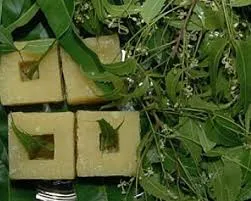
Multan lives on in India’s cultural memory through Multanī Miṭṭī, or the clay of Multan, which is a type of clay that has been used as a traditional purifier and cleanser in India for centuries. It is called Multanī Miṭṭī due to its origin in Multan. This clay is known for its remarkable ability to purify and cleanse, and even today, it is still widely used in rural parts of India. It is believed to have powerful detoxifying and cleansing properties and is thought to be especially effective for washing hair. This is why it is still a popular alternative to shampoo in rural areas, where commercially produced shampoo is often not readily available. The legends surrounding Multanī Miṭṭī give it a special significance, and it is still thought of as a sacred purifier by many. In addition to its use as a purifier and cleanser, Multanī Miṭṭī is also widely used in skin care treatments, such as masks and scrubs. It is particularly beneficial for those with sensitive or problematic skin.
Indian history is filled with stories of cities, monuments, forts, temples, and dynasties that have long been forgotten. And the grand Sun Temple in Multan probably is the most egregious of our tendency to forget our own past. Perhaps it is tougher for us because no physical trace of this temple survives today . Nevertheless, its memory lives on in the form of recordings in ancient literature, as well as in the collective memory of the Indian subcontinent. As a student of Indian history, one may wish to visit Multan for educational, recreational, or spiritual purposes, yet unfortunately, this may not be possible for most Indians. Multan may be out of reach physically, but it is still connected to the rest of India through its presence in history books, in the realms of Purāṇa and its rightful place in the Great Song of our civilization.
We must keep this memory alive until the day we get an opportunity to locate and rebuild the Multan Sun Temple and the Prahlādpurī Temple again. These are two of the most important landmarks of this civilization. These temples were once a symbol of Hindu culture and devotion, and their destruction has had a lasting impact on the Hindu community. Rebuilding the temples would not only restore cherished cultural landmarks, but also help to preserve Hindu heritage and history for future generations. Just as the bonfire on the night before Holī symbolizes the victory of Dharma over Adharma, similarly Dharma must rise again in Multan.
One of the stories of Dharma that echo through the history of Multan is that of a Dharma Guru named Mul Chand. Mul Chand was a highly revered figure in ancient Multan, known for his deep devotion and spiritual wisdom. He lived a simple life, dedicating himself to serving the local Hindu community and spreading the teachings of his faith. One day, a wealthy merchant came to visit Mul Chand, seeking guidance on how to attain inner peace and happiness. Mul Chand listened patiently to the merchant’s concerns and then took him on a walk through the city’s bustling bazaars. As they walked, Mul Chand pointed out the different sights and sounds of the city, from the bustling crowds to the vendors selling their wares. He showed the merchant how even the most mundane activities of everyday life could be sources of joy and fulfillment. The merchant was struck by Mul Chand’s wisdom and realized that true happiness could not be found in material wealth, but in the simple things in life. He thanked Mul Chand for his guidance and went on to live a life filled with contentment and peace. This highlights the importance of Dharma in ancient Multan and the deep spiritual wisdom that was present in the city.