On Ahmadiyyas and Jains

One of my favourite examples to demonstrate why Hindus and Muslims are like chalk and cheese (or cheese and chalk- no value judgment implied by the metaphor!) is their respective treatment of Jains and Ahmadiyyas.

We all know about the plight of Ahmadiyyas in Pakistan. Not a week goes by when there isn’t a story in the media on Ahmadiyya persecution. To Indian eyes, this can be quite baffling. The Ahmadiyyas reserve a highly exalted position for Prophet Muhammad. By all socio-cultural markers: naming and dressing conventions, eating habits, praying patterns etc., they appear “Muslim”. Yet certain theological red lines are crossed- including the recognition of Indic icons such as Buddha and Krishna as prophets, but most importantly the perceived violation of the doctrine of Khatam-un-Nabiyeen: the finality of Muhammad’s prophethood. A clear case of orthodoxy trumping orthopraxy. This hostility towards the Ahmadiyyas is not a recent phenomenon and can be traced back to the views of the founding fathers of Pakistan, such as Allama Iqbal.

From a Hindu perspective, this can appear bizarre- ethnic Punjabi “Muslims” who share so much in common in both cultural and kinship terms are so hostile towards each other due to some theological disputes. There are more consequential theological disputes within sects of Hinduism. For example, within Vaishnavism, there is the Dvaita Vedanta school founded by the 13th century scholar-saint Madhavacharya which believes that the Divine (i.e. Vishnu or the supreme being) is distinct from the individual. The better known Advaita Vedanta school founded by Adi Shankaracharya is Monistic (i.e. believes in the essential unity of the Divine or Vishnu and the individual). From a theological perspective, these ruptures are perhaps as radical as those between Sunni Muslims and Ahmadiyyas. Yet, the average modern Hindu, even someone who self-identifies strongly as a Vaishnavite, would find the notion of being hostile to other Vaishnavites on the basis of doctrinal differences to be bizarre and laughable.


Continue reading On Ahmadiyyas and Jains

Sign-up for my Substack!

The price-point for paid subscription to my new newsletter is too high for most Indians (well, Americans perhaps?). So I am not asking for paid sign-ups as much as encouraging people to do a free sign-up. The reason is two-fold.

First, I’m going to put out a reasonable amount of free content. You can see that this week where I put out 5 posts.

Second, I want more sign-ups from India, because one of the areas I plan on covering in my Substack into the 2020’s is the America-India relationship and India’s future prospects. I’m personally interested, and honestly, I think there are some business opportunities I want to explore. So I would appreciate sign-ups as I want to build up that relationship.

(if you don’t know what Substack is, here’s an article)

Book Review: Islamic Empires- Fifteen Cities that Define a Civilization

Justin Marozzi: Islamic Empires: Fifteen Cities that Define a Civilization 

One of the starkest contrasts between the Indic and the Islamic civilizations is the relative importance accorded to the urban. Dharmic philosophies place special emphasis on solitude- going off to the forest to meditate (vanaprasthashrama) and then eventually renouncing the material world (sanyasashrama) are considered important virtues. Dharmic iconography is replete with non-urban landscapes and settings: Lord Shiva meditating in the Himalayas, Lord Krishna feeling most at home in the bucolic settings of Vrindavan, and Lord Buddha renouncing urban life to find the truth. The Monistic underpinnings of some dominant schools of Indic philosophy- the belief that the Divine exists (and can be found) everywhere- further reduces the appeal of urbanism. The final element at play here is geography: Dharmic philosophies flourished in a land of abundance- the sapta sindhu or the land of the seven rivers- a highly fertile landscape. There was little need to create the metaphorical oasis in the desert.

By contrast, Islamic civilization has always been defined by urbanism. The Prophet Muhammad was born in the city of Mecca. He spent much of his life in the cities that define Islam to this day- Mecca and Medina. While there are elements of the spiritual associated with his life- the time spent in solitude in the caves of Mount Hira, for example- the dominant strands of his life were temporal. The building of the empire beginning with the conquests of Mecca and Medina, the dispensing of justice and organising the Ummah. The concept of Jannah or paradise in Islam- a place replete with gardens- also drove the move towards the urban. In a desert region, the quest was to conquer (or build) cities: oasis where the faithful could congregate, protected from the harshness of the surrounding landscape.

Justin Marozzi, an Anglo-Italian journalist who has spent much of his life in the Islamic world, gives this twinning of Islam and urbanism an innovative twist. He seeks to tease out strands of Islamic history by examining fifteen cities across fifteen centuries- one for each century of Islam’s existence. He largely succeeds in his quest to provide a bird’s eye view of a complex and sophisticated civilization, across the arc of its history.

Continue reading Book Review: Islamic Empires- Fifteen Cities that Define a Civilization

Indian Americans are exceptional; no shit sherlock

The Atlantic has a piece up, The Truth Behind Indian American Exceptionalism Many of us are unaware of the special circumstances that eased our entry into American life—and of the bonds, we share with other nonwhite groups. I’m really curious what The Atlantic paid for this piece because it’s a husk of prose that just mixes and matches cliches and random facts into the sausage casing of a social justice narrative.

The author is “Senior reporter with WNYC’s Race & Justice Unit,” which suggests to me they aren’t very smart because obsessive fixation with “social justice” indicates you are stupid. Also, they state that “I don’t recall hearing the name Dalip Singh Saund until I was in my 30s.” If you don’t know that name, and you are Indian American, you are probably not very smart or intellectually curious. I knew Singh’s name when I was sixteen as I was interested in political history.

Open Thread – 12/19/2020 – Brown Pundits

We’re going to have Glenn Loury on on this Sunday’s Browncast. It was a fun conversation. Already up for patrons, and I also cross-posted to my Substack, because I think it’s such an interesting conversation.

Loury is one of the most important public intellectuals alive today. He speaks for many, many, people. Many people in science who are not on the far Left follow his work closely because he knocks down the shibboleths of preference falsification. If you can, I recommend anyone to be a patron of the Glenn Show.

On caste and a new Hinduism

Some of my Hindu American friends online engage in a defense of attacks on Hinduism by denying the necessary connection between caste and Hinduism. Since religion is made by men, this is true on the face of it. There is nothing necessary in any religion.

But, Hinduism is a religion strongly associated with the Indian subcontinent. Far more than Islam is necessarily associated with Arabia! (the greatest doctors of Islam were not Arabs, but more often Persians!) And caste is strongly associated with the Indian subcontinent. This is not a transitive relation, but the affinity is clear. It has hard to think about Hinduism without caste and jati, though it is possible (e.g., Tulsi Gabbard is a devout Hindu, but not Indian, while some Muslim Indians have their own forms of endogamous caste, despite not being Hindu).

Untouchable

Is this just a historical coincidence? Like many, I have read Nicholas Dirks’ Castes of Mind. Though Dirks acknowledges the ancient origins of varna and jatis, he puts great emphasis on the rationalization of the system under the British. Additionally, he points out the rise and fall of jats. The Indian landscape is communally fluid in its hierarchy.

This is plausible. But I do not believe it is true on a deep and fundamental level. I have come to this conclusion because genetics is so striking.

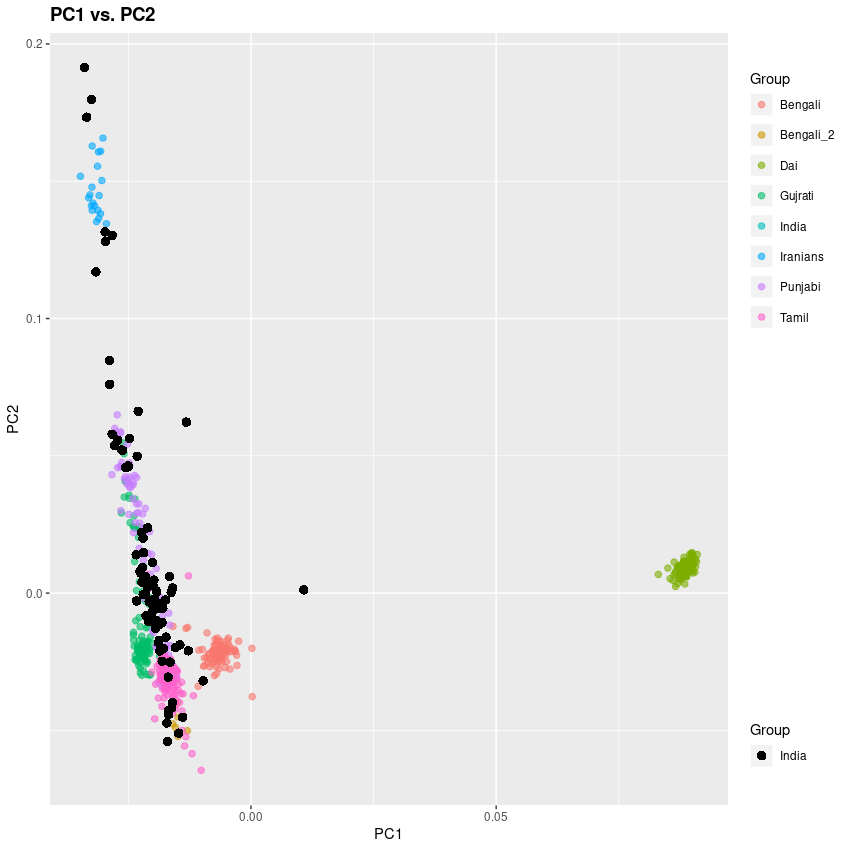
  1. Though the correlation is not perfect, within regions there is a strong association between “steppe” ancestry and caste status (more steppe means higher status)
  2. Dalits in the South have almost no steppe. The non-Dalit but non-Brahmins have some. In the north, Dalits in Uttar Pradesh have the least steppe, and in some ways are genetically closer to Dalits in Tamil Nadu than non-Dalits in Uttar Pradesh.
  3. There are clear indications of 1,500 of endogamy in a village in Andhra Pradesh (elsewhere too).

When I first stumbled onto these facts they were shocking and bizarre. Totally unexpected. I assumed some caste stratification, but this was ridiculous.

These are the reasons that though I believe the new modern Hindus do sincerely abhor caste and jati, it is sometimes hard to take their protestations that the connection between caste and Hinduism is incidental. You are {{{Brahmin}}}, the product of several thousands of years of endogamy written all over your genes, the scion of the priestly caste of Hinduism, protest that caste and jati have nothing to do with the religion! Except that the priestly castes seem to be amongst the most punctilious adherents to endogamy of all!

So what’s the future? As an atheist of Muslim familial background I have some advice: make Hinduism less Indian, because that is the fundamental issue. Hinduism evolved organically within the Indian subcontinent with jati and varna, and like intertwined siblings growing up in the same house, there are some shared characteristics. Grow up. Leave the house. Be your own person.

The Self-Hating Prophecy of Indian Elites


What is the difference between introspection and self-hatred? Introspection brings reflection, intention, and evolution. Self-hatred brings rumination, doubt, and rot. One is essential, the other is extinction.

Engagement of either shift one’s fate. From the roots of mentality grow branches of thought, blooming into flowers of action and eventually the fruits of result. Nowhere is this more clear than the night and day of the Indian elite.

The ancient elites of India wrote eternal tomes of meditation that built the bedrock of a civilization that has seen the best and worst of humanity, outlasting every peer and power. Their art and literature emanated confidence, beauty, and advancement. While sure of themselves, they had no qualms integrating new ideas from abroad or from home. Diversity was strength, and challenge was opportunity.

Their descendants today are devolution incarnate – Kali Yuga realized. An unending anguish for the approval of outsiders, self-flagellating of even the most innocent of traditions, and an obsessive compulsion for mediocrity are the trickle-down that these elites have given Indians since independence.

While trivial bashing of them is enjoyable, I want to get to the meat of their minds as well as what these minds have yielded.

What causes the exceptional self-loathing of these elites? The mania of knee-bending and the need to constantly look outwards for validation? The ability to be stupendously arrogant towards their birthright to rule yet despise their roots? Continue reading The Self-Hating Prophecy of Indian Elites

Browncast: Abhinav Prakash and Karol Karpinski

Two BP Podcasts, one after another. You can listen on Libsyn, Apple, Spotify, and Stitcher (and a variety of other platforms). Probably the easiest way to keep up the podcast since we don’t have a regular schedule is to subscribe to one of the links above!

You can also support the podcast as a patron. The primary benefit now is that you get the podcasts considerably earlier than everyone else. This website isn’t about shaking the cup, but I have noticed that the number of patrons plateaued a long time ago.

First, I talk to Karol Karpinski. Karol lived in Dhaka for two years in the mid-2010s. Most of our conversation was around economics since he is an economist, but he also mentions his brush with the tragic events of the Dhaka Isis attack.

Second, to Abhinav Prakash on the farmer protests. Mukunda joins in. Abhinav’s view is that this is basically a rentier class strike.

Sharing a continent

25% of humans live in the Indian subcontinent. 18.5% live in China. Together that’s 43.5% of the world’s population in the two great Asian civilizations. Not a trivial number in the 21st century, especially in a nascent multipolar world.

And yet the two societies often lack a deep awareness of each other, as opposed to an almost pathological fixation on the West, and in India’s case the world of Islam.

Indians are clearly geopolitically aware of China. Obsessed even. But aside from cultural exotica (e.g., the Chinese “eat everything”), there seems to be profound ignorance.

This is illustrated most clearly when I hear Indian intellectuals aver the proud continuous paganness of their civilization. Setting aside what “pagan” means, and its applicability to the Hindu religious tradition, the key here is a contrast with the world to the west, which was impacted by a great rupture. The people of Iraq have a written history that goes back 5,000 years, but the continuity between ancient and modern people of the region is culturally minimal. Modern inhabitants of Bagdhad know on some level that their ancestors were Sumerian, but for most of them their identity is wrapped up in their religion and the lives of the Prophet and his family, or for Christians that of Jesus.

This is not the case with the majority of Indian subcontinental people, whose religious traditions and cultural memory go back further, literally to the Bronze Age at the latest. The foundational mythological cycles which define Indian culture probably date to 1000 to 1500 BC. During this time Kassites ruled Babylonia, and the Assyrians were coming into their own. Until modern archaeology, these people were only names in the Bible or in Greek historians.

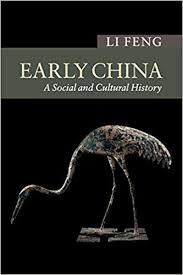
But this is not only true of India. These Chinese also look to the Bronze Age Shang dynasty, and in particular, the liminal Zhou, to set the terms of their modern culture. The ancient sage kings, who likely predate the Shang, are also held in cultural esteem.

Does any of this matter? I don’t honestly know. I’m American, not India or Chinese. But perhaps it might help on some level if these two civilization-states could understand and accept that they share in common having extremely deep cultural roots apart from the revelation of the God of Abraham, the God of Isaac, and the God of Jacob.

Brown Pundits