Open Thread, 11/14/2020 – Brown Pundits

I don’t know anything about Diwali, but Happy Holdidays! (I found out that it was Diwali this weekend from Twitter and the comments here).

A new podcast on the election results with Josiah Neeley and Richard Hanania. We get kind of spicey by the end, as I make fun of Richard making fun of Peter Turchin, and make a huge prediction about Hunter Biden’s future.

“The Buddhist Age”

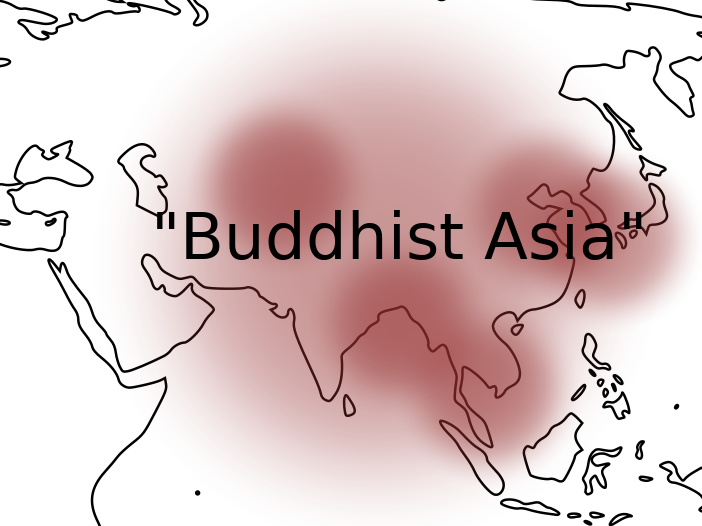
Civilizational affinities in 700 AD

I made an offhand comment on Twitter that I thought might be worth amplifying and elaborating. You can argue that to a great extent the period between 250 AD and 750 AD can be thought of as the “Buddhist Age” in Asia. The year 750 AD is easy as a cut off point, as the battle of Talas in 751 symbolizes the recession of Tang Chinese influence in Turanian Central Asia, and the inexorable advance of the Muslim Arabs. The year 250 is more vague, but it post-dates the collapse of the Han dynasty, and starts to see the ascension of Buddhism as a Chinese religion par excellence, rather than a marginal Indian cult.

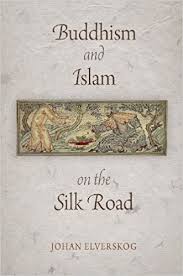
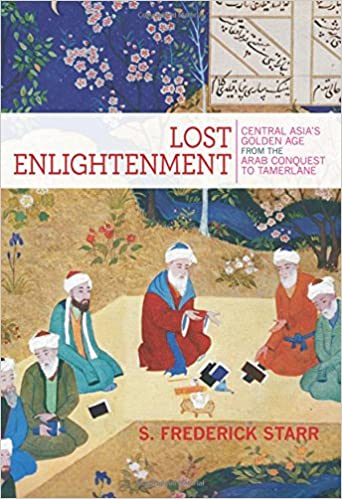
Let’s focus on the year 700. What’s going on? First, let’s acknowledge that Buddhism is in serious decline across the Indian subcontinent, though there are local pockets of strength, with a late Indian summer to come with the Pala Empire of Bengal in 750. Second, it was under threat across its East Iranian heartland. It is often forgotten that Buddhism and Zoroastrianism competed toe-to-toe as the religion of the elites across the East Iranian world, from modern-day Afghanistan to Khorasan and deep into Transoxiana. The book Buddhism and Islam on the Silk Road documents this interplay. Lost Enlightenment as well as Christopher I Beckwith’s book argues from the strong role of Turanian Buddhism in shaping Abbassid era Islam (e.g., viharas as models for madrassas and Turanian Buddhist textual culture as the seedbed for hadith).

in Japan Buddhism was taking root, while in Korea and much of China it was the dominant religion in 700 AD. Buddhism also had a thin, but detectable, impact across Southeast Asia, along with Indic culture more generally. Tibet was not as clearly associated with Buddhism in 700, but the religion had already been introduced and was making a cultural impact.

What does this have to do with “Brown Pundits”? Buddhism is the dominant vehicle of clear and obvious Indian cultural influence in the world. It is, arguably, the earliest of the great missionary religions to exist today. Though Buddhism never took root in the West, it was clearly known and a presence in the eastern Mediterranean during the Roman period in cosmopolitan ports such as Alexandria. Though Indian numerals are extremely consequential, they are a more bit-sized cultural element, which has been detached from their Indian matrix. In contrast, Buddha’s Indian origin is well known, and the influence of Buddhism is probably responsible for legends that are hard to explain such as the Indian princess who married into the Korean royal line and gave rise to a modern day Korean clan.

Browncast – Saagar Enjeti: An Indian-American Right Populist

Another BP Podcast is up. You can listen on LibsynAppleSpotify,  and Stitcher (and a variety of other platforms). Probably the easiest way to keep up the podcast since we don’t have a regular schedule is to subscribe to one of the links above!

You can also support the podcast as a patron. The primary benefit now is that you get the podcasts considerably earlier than everyone else. This website isn’t about shaking the cup, but I have noticed that the number of patrons plateaued a long time ago.

This episode features Mukunda and Akshar talking to Saagar Enjeti, co-host of Rising on The Hill and host of The Realignment Podcast. We talk about Saagar’s come up and his political journey as we delve into the US election results, right populism, and an Indian-American’s place in all this.

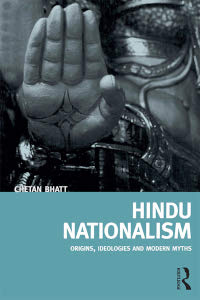
Reducing Hindu nationalism to the Enemy

Politico has a silly piece up, How Hindu Nationalism Could Shape the Election. The silliness is in the title: Hindu nationalism will not shape the election. No one in the USA knows what it is. No one in the USA cares. But headlines need to justify the “deep-dives.”

The author clearly had a preconceived conclusion, and it’s pretty much a paint-by-numbers article in that light. There is zero chance that any Indian Amerian journalist will write a sympathetic portrait of Hindu nationalism, and develop a “strange new respect.” The conclusion is baked into the cake.

With that said, why do many Indian Americans get so angry at these sorts of pieces? I would appreciate comments (unhinged and somewhat concise please, I know many of you are going “bug-eye” over this piece, so calm down).

First, this quote jumps out: “Savarkar made clear that he saw Nazi Germany’s treatment of Jews as a model for dealing with India’s Muslims.” Any mention of Nazi Germany in a Western context as an analogy is poisonous. It’s like having an expensive multi-course meal at the French Laundry, and then they tell you there’s a touch of feces in one of the items. The totality of what you’re eating no longer matters, you are not going to eat even a little bit of shit. Any mention of Nazis is going to ruin and color the whole thing. You know what the audience will take away, and you know what the writer intends.

But that brings us to the point that from a liberal perspective there were many unpleasant things associated with early Hindu nationalist ideology, and Hindutva-identified people have been associated with atrocities for decades, from Godse down to leaders in the Gujarat riots. Isn’t this fair?

I think the problem here is that the same journalists who would reject the reduction of Islam to Sayyid Qutb or shrug off the relevance of the Nazi sympathies of the Mufti of Jerusalem have no problem engaging in reductionism in relation to Hindu nationalism and Hinduism. Basically, many Indians see that Islam and Muslims are treated with generosity, and not judged by their lowest moments, while the converse is true for Hindus and Hinduism. Muhammad, the notional founder of Islam, engaged in sex slavery. This is just a fact. But Muslims are not judged by Muhammad’s illiberality, while Hindus are judged by illiberal interpretations of Manusmriti. Why? (some scholars and politicians in the Gulf have used sex slavery as a justification for the tolerance of Russian sex workers, so it’s a live issue)

For reasons that are only partly clear over the last few decades, the global Left and the West’s intelligentsia has taken a default philo-Islamic stance. Modi’s India can be depicted in very negative terms, while there is benign neglect of persistent and massive human rights abuses in Pakistan. The differing standards obviously enrage many Hindus, but the deeper question is why. Is this a “bottom-up” process, or, are there larger institutions that have made particular decisions? Remember, most Westerners are very vague about Hinduism, and have never seen the word “Hindutva.” These journalists and publications are shaping first impressions. Where are their marching orders coming from?

The same people who would decry demands that Rashida Tlaib denounce her own kith and kin as guilt by association are demanding that Preston Kulkarni do exactly that. Where do these double-standards come from?

In the future, I expect we’ll see more “think pieces” and “investigations” of American Hindus and Hinduism which sheds light on dark developments in this subculture. Meanwhile, there will be benign neglect of the illiberalities among American Muslims and Islam. The media’s attention and energy are finite, and they are quite selective about what they devote their focus to. Focus is clarifying, because it tells you what they care about, and what their motives are.


Open Thread – 10/31/2020 – Brown Pundits

So I started a Subreddit. You can start your own threads there. Eventually, that might make the “open threads” redundant (they are not scaling well with ~400 comments per week).

I’ve posted a few podcasts on the Patreon. One is a new podcast from Richard Hanania, where he takes a skeptical stance toward France in relation to the late unpleasantness. But several are from the Substack I’m starting shortly (probably next week). Probably won’t be posting those in the future.

A Hindu nationalist in the House?

Slate has published a transparent “hit piece” on Preston Kulkarni, who is likely to win a seat for the Democrats in Houston. I say hit piece because it doesn’t seem deeply reported, but sourced from Pieter Friedrich, who I have mostly seen online as a rather inflammatory activist, not a dispassionate scholar.

A reporter in the area, Chad Washington, notes that believe it or not, people in and around this area of suburban Houston are not very interested in the fact Kulkarni might have “ties” to the Hindu Right.

There are two issues I want to highlight here as to why I’m putting this post up (which to be frank does amplify what I think shouldn’t be an issue at all):

– The demand that people denounce all sorts of things that they claim to barely even understand in the interests of solidarity and popular fronts is pretty ridiculous. Kulkarni is aiming to represent suburban Houston in the House. His opinions on Indian politics are unimportant. There are cases where Muslims are asked to ritually denounce everything under the sun and everyone they may have shared a stage with. That’s bullshit. And this is bullshit.

– It is strange to me how the “Left” can so naturally use the language of xenophobia to attack xenophobia. Here is the title: “Why Are Democrats Backing a House Candidate With Reportedly Shady Foreign Ties?” Foreign ties? I mean, his last name is {{{Kulkarni}}}. He worships elephants! His white mother married a foreigner. What’s wrong with her!

Obviously, the Indian American writer of the hit piece isn’t anti-Indian as such, but this opportunistic recourse to this rhetoric and guilt-by-association won’t end well.

Update: OK the Republicans/Christian Right are now after him.

Caste in 2nd Generation American Diaspora

Saw some very interesting conversations on caste in America in the recent Open Thread and wanted to hear more perspectives as well as sharing my own.

Growing up, I wasn’t aware of my caste nor my friends’ caste. I still am unaware of most other Indian-Americans’ castes (besides obvious ones like Sharma and a few Gujarati ones I know) and never thought too much of it. Caste just doesn’t seem to factor into 2nd Gens…except this trio of exceptions:

  1. The SJW Brahmins

  2. The Victim Card Dalits

  3. Poonjabi (NOT INDIAN!!!!) Jatts

Group 1 seems like a case of White Guilt with a few drops of saffron. Read any BuzzFeed-esque article written by this group and you could easily Find & Replace “White” with “Brahmin” (or “Hindu” if they are really deep in the hole) and “Black” with “Dalit.” Simple transpositions on an infinitely more complex topic.

Group 2 is enrolling in the grand Oppression Olympics that is underway in America. While I recognize the dire need to address the discrimination against Dalits in India, I cannot for the life of me understand how any 2nd gen would even be aware enough to discriminate against another 2nd gen based on caste. I can’t memorize that many last names and their associated caste. Maybe it happens amongst immigrants, but I can’t imagine any impact between Indian-Americans born in the US.

Equality Labs is probably the vilest and most prominent example of this new vehicle in action where they even want to make caste an official marker in the USA.

Both Group 1 and 2 label any “Hindu” practice, no matter how inconsequential or innocent (like Holi, vegetarianism, pujas, tilaks, the literal color orange, etc…), as Brahminical Patriarchy, fascism, and/or casteism. The agenda is pretty clear cut. See my “Brahminism” post. 

Group 3 is honestly a conundrum to me. I just don’t understand the “why” in this group. But the lack of understanding makes it the easiest group to lampoon. Can only listen to music where the word “Jatt” is rammed into the song at least 40x, or else it’s Hindi music. This clique proudly flaunts their caste like they’re back in India (oops, sorry I meant Punjab). They’re in an intermittent digital war with Hindu E-Trads (who are already a shitshow themselves), many times because of some unnecessary and out the way slandering of India/other Indian ethnic groups or E-Trads disgusting edgelording over 1984. There is a heavy pour of Punjabi/Jatt chauvinism (and Scythian???). In the end, it goes back to what I said at the beginning – I don’t get the “WHY” for this group.

When I initially asked my fairly religious Punjabi Sikh friends why the singers keep saying “Jutt” in all the bhangra music I listened to – they rolled their eyes, explained it’s a caste, and then called them dumbasses and we laughed off. They then told me to call anyone who engages in that behavior a “tatti di sabzi.” I think that’s a fair response for all of the above.

Save for these 3, I don’t think caste is that important to most Indian-Americans, including normal Brahmins, Dalits, Jatts (note – I am none of these so it’s just my outside perspective).

Comments!

They say blogs are dead. They say comments are dead. To my surprise, this website has surprised me. In the later years of the Sepia Mutiny weblog the number of comments started dropping off. The theory was that people were commenting more on Facebook (Twitter wasn’t huge then). Google Analytics says that more than 20,000 people are reading this website in a given month. That’s not trivial, but it’s small. That being said, the comment threads are often “hopping.”

This is good and nice. How do we maintain this? I don’t moderate much at this point but am worried about things getting out of control. That being said, this is not a job and I have lots of other things to attend to. Thoughts?

Open Thread – 10/24/2020 – Brown Pundits

Going to post some notes on the latest podcast here. I talked to Fred Martin, who is of Haitian origin, but pretty stridently French, and a liberal. We discussed the killing of Samuel Paty, and Islam and Islamism in France. We also mooted the differences in relation to race between the USA and France, and our contrasting experiences. Finally, we talk about the coming winter of coronavirus in Europe.

A lot of the discussion centered around the contrast between France and the USA, which is always interesting to explore.

Thanks to everyone who is a Patron. I’ve started posting podcasts which you can’t find elsewhere yet there…

On Twitter, Suhag Shukla has been pushing back on the “caste is a huge problem for Indian Americans” narrative. I think she’s right on the specific issue. But, I am skeptical when she seems to attribute caste to colonialism, or, that it is not tightly integrated into Hinduism. I think Hinduism has a caste problem like Islam has a religious oppression problem. Religions are made by humans, and how they play out is a human matter. For whatever reason, Islamic societies have not been pluralistic in an egalitarian manner to other religions, while Hinduism in India is hard to disentangle from caste and jati. This doesn’t mean they’re necessary connections. Caste and jati are not major issues in Balinese or Cham Hinduism, though varna does exist.

The major dynamic which needs to be reiterated is that American Hinduism is very distinct from Hinduism in India, just as American Islam is very distinct from Islam in the Near East. I’m 99% sure that the Indian Americans I know (Generation X) would exhibit no caste bias of any note because in the USA it’s just not relevant in any way.

Brown Pundits Subreddit.

Brown Pundits