Not all societies are identical

There is some discussion on “Hindu Twitter” and elsewhere about the French response to the murder of Samuel Paty. In short, France is going “medieval” on the asses of a lot of Muslims, even nonviolent but very conservative organizations. To use a German phrase, the French state is entering into a Kulturkampf against militant Islam. Or at least it is signaling that it is.

To all this, some on the Hindu Right are asking why some liberal or Left intellectuals are applauding or tolerating France’s reaction, which is hitting down hard on the Muslim community. Would they be so tolerant of India clamping down on Muslims? My own answer is simple: different nations have different histories, and abstract universal values and standards are often not useful.

Continue reading Not all societies are identical

Tibeto-Burmans, Munda, and Bengalis


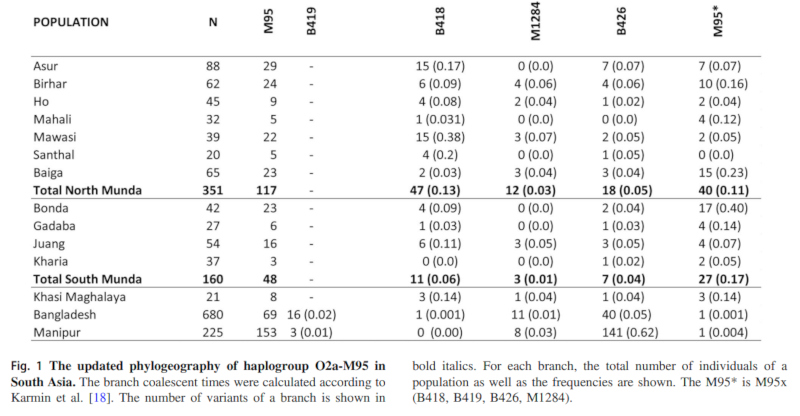
I’m pretty sure I posted this Chaubey lab work as a preprint, but it’s now a published paper. For those who can’t understand the table, it illustrates a big difference between Tibeto-Burmans and Munda. The samples from Bangladesh look to be generic Bangladeshis, the 10% frequency for O2a seems to match the other data I’ve seen for East Bengalis.

This confirms that the East Asian admixture into Bengalis was not Munda. And, the Tibeto-Burmans of the nTibeortheast have no assimilated Munda ancestry. I think it does lend more credence to the idea that the Munda arrived in the Indian subcontinent across the Bay of Bengal, landing in Odisha, rather than from the northeast.

Scale – In Satyagraha, Societies, and Statecraft

One writer who caused an evolution of my thought is the fiery Nassim Nicholas Taleb. His brash yet precise style, swashbuckling smashing of intellectuals, and ancestral Mediterranean insights provided an alternative thought diet in a world that force-feeds the same message to me on television, social media, and amongst my friends here in a buffet of American coastal elites. From the jest of randomness, the beauty of black swans, the advancement of antifragility, and piercing skin in the game, Taleb created a dancing sequence of jabs and hooks to create a battle-hardened mentality to approach the world and knowledge.

One of the biggest yet most nuanced lessons I learned from Taleb was that of scale – how inputs yield outputs differently, depending on size and magnitude. An easy example of this common-sense concept is the difficulty in enforcing an exercise and diet regimen for oneself versus one’s entire family versus one’s entire community and so on. Trying to do good things is easier and possibly more effective in the long run when done on a smaller scale.

It’s one thing to change oneself on an individual level, another to create a visible shift in societies, and another to execute proper governance accounting for different groups along with the externalities and the headaches that come along with policies.

The Search for Truth

Satyagraha or the holding of truth paved the road in Mahatma Gandhi’s non-violent struggle for India’s independence. Inspired by the ahimsa of Hinduism and Jainism, Gandhi brought his own interpretation taking an ancient concept to new frontiers.

The principles of satyagraha:

  1. Nonviolence
  2. Truth
  3. Not stealing
  4. Non-possession (not the same as poverty)
  5. Body-labor or bread-labor
  6. Control of desires
  7. Fearlessness
  8. Equal respect for all religions
  9. Economic strategy such as boycott of imported goods (swadeshi)

Admirable qualities that built the legend of the Mahatma, the great soul. Selflessness at its apex captured the hearts of Indians across the subcontinent in a mass non-violent movement at such a scale that it has no parallels in world history before or since. While an individual taking on satyagraha is highly laudable, expanding it to society proved a double-edged sword.

With the British reeled from a cataclysmic World War at home and a cracking crown jewel in the Raj, their leaders eventually acquiesced to the rightful demands of an independent India. Truth had met victory in the eyes of the Mahatma’s disciples, but this satyagraha would now face a much older foe that had made its home in the subcontinent over centuries.

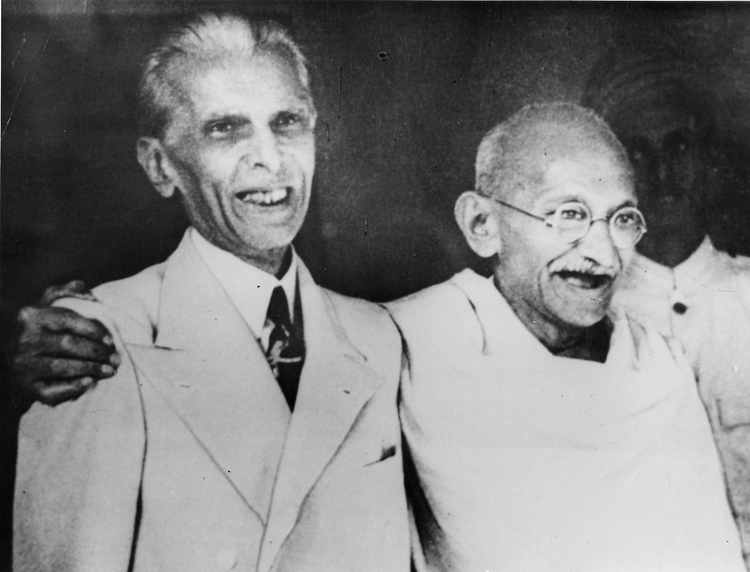
Jinnah and Gandhi Prior To Their Falling Out Early On In The Indian Independence Movement

NaivetĂ© crept into a population until it was maimed by the madness of a maniac with Muhammed Ali Jinnah’s call of “Direct Action” severing the dreams of Gandhi and millions of other Indians for a united India. What Gandhi and his ideological descendants, Gandhians, got wrong is how values apply at scale. Stunningly noble principles for individuals could not be forced upon a people who were facing a polar opposite ideology filled with aggressive malice and cultivated by despicable men to match.

“Hindus should never be angry against the Muslims even if the latter might make up their minds to undo even their existence.” —Mahatma Gandhi, Birla Mandir, New Delhi, on April 6, 1947; Partition Would Occur 4 Months Later

The beauty of satyagraha was smeared with the ugliness of Islamism and this duality incarnated by way of a bloody partition. An assassin would cite the suicidal idealism of Gandhi as the gunpowder to his fatal and fateful bullet that transformed a man into a martyr and Gandhi into a god. The last breath of Gandhi permeated throughout Indian politics since.

Forsaking looking at others’ faults and focusing on your own to improve are great actions on an individual level. Trying to apply this mentality at a large scale is impossible and can be disastrous. Gandhi’s goal to apply the kindness and tolerance that he practiced throughout his life at a larger level provides a testament to the dangers of this ruinously beautiful ideal.

Primus Inter Pares

While I may have been harsh on Gandhi, his satyagraha was a very inspirational movement that achieved its primary aim (with the help of several violently resisting Indians of course, too) and would echo in the minds of different generations and geographies. Its failures would only truly come to fore when reciprocity broke down as scale increased and satyagraha faced the sinister.

A communal concoction that had been boiling for centuries spilled over once again just as Gandhi tried to ease the concerns of an ambitious Jinnah and company who were decided in their choice to break India. What went so wrong here?

Good behavior scales badly. Bad behavior scales goodly.

An essential lesson to impart here is that the kindness that we should all so admire shouldn’t be extended frivolously in the world at large scales. Strive to be exceedingly kind to all the individuals in your life, but expect less of a return as familiarity decreases and quantity increases. The world of geopolitics and governance is witness to how might towers over magnanimity as scale maximizes. And it is here where we need to examine a powerful chapter across world history for the past several decades – social justice.

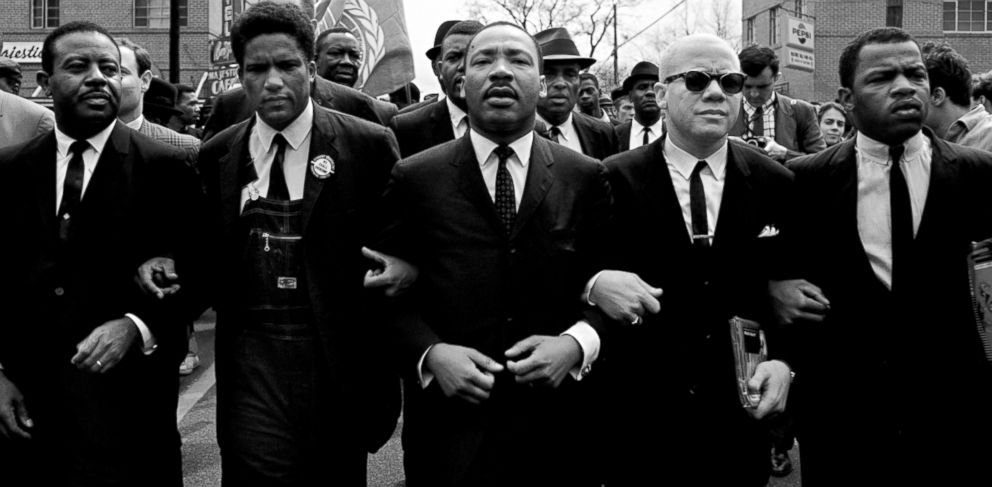
Inspired By Gandhi’s Non-Violent Movement, Martin Luther King Jr. Marched For Civil Rights and To End Segregation

Social justice has yielded some of the greatest moments in politics as policies such as apartheid and segregation were thrown into the abyss, while reservations in India helped lower castes climb out of the abyss. Tangible benefits were born through simple and actionable policies and goals.

Today, however, social justice movements have been plagued by vague goals and a lack of dynamic leadership. Faceless protests descend into rioting at an alarming rate with politicians taking advantage of the chaos and righteous movements thwarted by themselves. No Gandhi’s, no Dr. King’s, no Mandela’s lead the wave of change today. The absence of these emissaries who create a dialogue between the masses and politicians means that when social justice is applied at scale, it descends into disarray with vultures disguised as politicians picking and prodding at a soon to be carcass of a movement. Justice has inherent danger when applied at scale and needs the right leaders and values to guide it properly.

On the flip side, there are also the potential horrors of hyper-local justice such as in the panchayat system of rural India, where a clan of elders decides the fate of the accused, sometimes with cruel and Hammurabi style punishments. We are seeing this hyper-local eye for an eye type justice now extrapolate to larger scales amongst many intelligentsia and political leaders, a notion that would lead to disastrous strife if the scale continues to ramp up.

Virtualism

Bruno Maçães, a prominent political analyst and now part-time philosopher, proposes that America is entering a period where fantasy supersedes reality. The digital world at your fingertips is shaped by the hand of technology. What you see and consume on your timeline is a lens with a distorted scale of the world. What is anecdote becomes amplified into annals as the speed of the extreme races past the mundane on the information superhighway.

THE SPREAD OF SOCIAL MEDIA AND TECHNOLOGY HAVE BLURRED THE LINE BETWEEN FANTASY AND REALITY

Outrage oscillates the Overton Window wildly as technology’s reality distortion field melds our perception. This pendulum pushes our politics in an increasingly divisive direction as upstart politicians wield clout and clicks on social media steering agendas into fantastical territories that are disconnected from realities and history. Technology and social media have brought notions of the past closer to us than ever as rabid battles over who oppressed who pan out in the digital theatre of war.

Elite consensus is upended by guerrilla historians, sometimes erroneously but many times rightfully. These intellectual insurgents zoom out and in on specific instances to promote their perspective, occasionally out-of-context but every so often right on the money. The thin selection of stories published by establishments has given way to an explosion of untold chapters bypassing traditional media and academia, all with the help of technology.

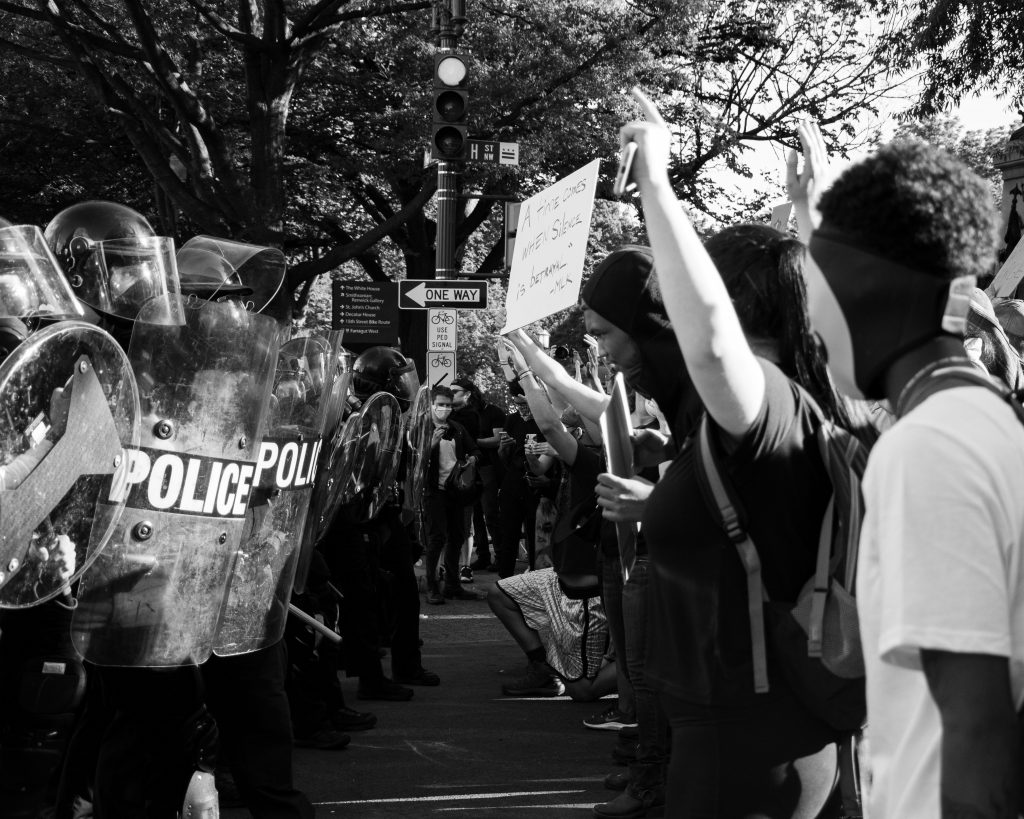
Protests Have Quickly Descended Into Riots Across The US As No Leader Stands On The Same Platform As The Giants of the Past

However, this has directly lead to an exacerbation of the application of justice. Crimes of the past are scaled out to include those in the present. Justice morphs into its fraternal twin, revenge. Now, I don’t believe it’s right to silence the discussion of the horrors of the past as that is essential to reconciliation. However, this discussion must be joined with efforts to bring real justice – opportunity and truth – to those who have been oppressed and not extend the hatred of the past to the descendants of oppressors in the present. Funny enough, the answer to opportunity may lie in economics (whether welfare reform, access to capital, ease of business, tackling inequalities, etc…) rather than culture wars.

Today’s society values performatives over pragmatism. In the quest to fight historical injustices, we can’t ask for revenge that spirals into a wheel of fire. We should remember the great effort to organize mass non-violent movements such as satyagraha and civil rights in an era today where the embers of violence quickly follow the gasoline rhetoric of many of our politicians and “activists.” For only great men, great women, and great movements transcend the limits of scale and sculpt our tomorrow.

This is a repost from The Emissary. Please visit the blog for more content and thanks to Brown Pundits!

Reflections on Nadir Shah’s exploits in India

Last year marked the 280th anniversary of Nadir Shah’s invasion of the city of Delhi – an event as catastrophic as the invasion of the city by Timur in 1398.

It is worth reflecting on this remarkable event in early 18th century – an episode that underscores the perils of a weak state.
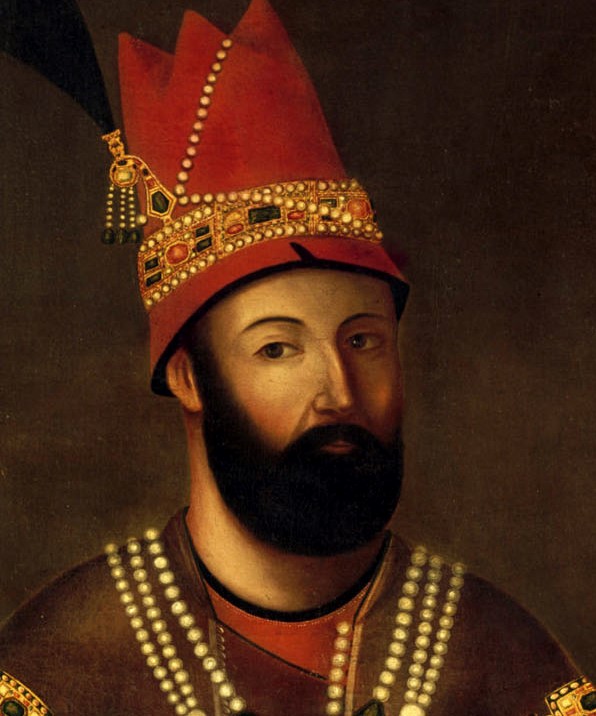
Source : wiki images

State of the Empire in the 1730s

What’s remarkable about this invasion is that it happened barely 32 years after the death of Aurangzeb in 1707 – a time when the Mughal Empire was still very formidable and pan Indian in extent (albeit a tad over-extended). By 1739, the decline of the empire was well underway. The Mughal emperor at the time of Nadir Shah’s assault was Muhammad Shah, Aurangzeb’s great grandson.

Now it is well known that Aurangzeb was just the 6th Mughal emperor, between 1526 and 1707. But Muhammad Shah who ascended the throne in 1719, was the 12th!

So you had six new emperors in the ten years following Aurangazeb’s death – as many emperors as the number between 1526 and 1707 – a commentary on the chaos at the head of the empire in the years succeeding Aurangzeb.

Now let us do a quick summary on the state of the region just before Nadir Shah’s assault –

  • Bengal was already semi-independent, with Murshid Quli Khan becoming the first Nawab of the region circa 1720.
  • Avadh was on its way to autonomy with Saadat Khan becoming its first Nawab in 1722.
  • The Marathas were clearly in the ascendant. By 1737, they had gained tax collection rights in Deccan, Gujarat, Bundelkhand. In 1737, two years before Nadir Shah’s raid, Baji Rao attacked Delhi and scored a remarkable victory – despite having an army half as large as the Mughals. Post the battle of Delhi, Malwa was ceded by the Mughals to Baji Rao’s Marathas. In 1738 on the eve of the Nadir Shah invasion, the Mughal crown was already weakened considerably.

The other point to note is that even after 2 full centuries of Mughal rule, the nobility of the land was largely foreign born. So power was wielded by men who felt no patriotism for India, and had no affinity to the traditions and culture of the land.  Let’s take some examples –

      • Nizam Ul Mulk, perhaps the most influential noble in early 1700s, was of Uzbek ancestry. His grandfather had migrated from Samarkhand
      • Saadat Khan, the Nawab Avadh, was a native of Nishapur (north eastern Iran), who had moved to India in early 1700s

This goes contrary to the perception pushed by many historians today that Mughals shouldn’t be regarded as foreigners as they were “thoroughly assimilated” and “rooted” in the Indian soil. Hardly the case.

The foreign origins of much of the creme-de-la-creme of the nobility meant a somewhat weak affinity to the land, and susceptibility to treason against the state. Saadat Khan in fact later advised Nadir Shah to assault Delhi, and ask for a large ransom.

Now let’s examine the situation in Persia in the decades leading up to Nadir Shah’s invasion of India.

The Safavid empire ended in 1722 following an Afghan rebellion. But this proved shortlived, with Nadir Shah defeating the Afghans and establishing his rule over Persia starting 1736.

With respect to Afghanistan – Mughals had lost Southern Afghanistan (including Qandahar) to Persia in the mid 1600s. However they retained control of Kabul / northern parts of the country.

Right from the start of his reign, Nadir evinced great interest in the Mughal Empire. He could see the waning power in Delhi as an opportunity. Also the Persian hold over Qandahar meant a strategic advantage for Persia, lost to the Mughals for nearly a century.

Failed Diplomatic efforts

What’s interesting though is that Nadir didn’t simply launch an assault on India with a savage horde. He engaged in extensive diplomacy, with multiple communications with Mughal crown!

E.g. in 1736, Nadir Shah sent an envoy to Delhi, informing of his intent to expel Afghan rebels from Qandahar, and requesting that the Mughal power in Kabul should obstruct these Afghans and not give them refuge. The Mughal emperor Muhammad Shah responded agreeably. But when the expulsion of Afghans happened from Qandahar in early 1737, the Afghan rebels did flee to Kabul. The Mughals breached on their promise!

When Nadir Shah sought an explanation for this breach through an envoy, Delhi gave him no reply. And on top of that detained the Persian envoy!

Even communication between Delhi and Kabul was terribly slothful! When the Mughal governor in Kabul sought funds for his troops, his repeated requests were turned down by Muhammad Shah the emperor. So clearly you had a situation when the frontier regions of Afghanistan and Punjab grew gradually defenceless through neglect, at a time when Persian power under Nadir Shah was on the rise.

This was an empire waiting to be assaulted.

The Battle at Karnal

Nadir conquered Northern Afghanistan in 1738. Peshawar and Lahore soon followed. Then the Shah marched to Karnal, where a decisive battle awaited him. In the great battle that ensued at Karnal (February 1739), the Persian army numbered at 55K cavalry. The Mughal army was likely larger, but heavily reliant on elephants – a ponderous and outmoded carrier.

What’s also remarkable is that the Mughal armies took for ever to assemble at Karnal! Saadat Khan, the noble from Awadh, took a whole month to arrive with his troops in Karnal.

It took him 3 days to travel from Delhi to Panipat – a mere distance of 55 miles! This is in sharp contrast to the blitzkrieg raids that Marathas were undertaking elsewhere in India at the same time. The Mughal army (in part perhaps because of its reliance on elephants) was not mobile enough. Not nimble enough.

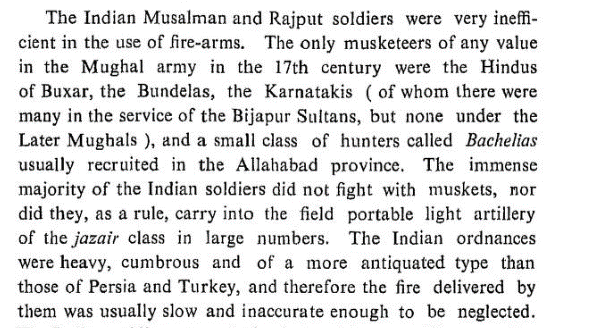
The other major difference was in the familiarity and comfort with fire-arms. The Persian army revelled at fire-arms. The Mughal army still relied a great deal on swordsmanship and “felt a contempt for missile weapons” (to quote Jadunath Sarkar)

Here’s Sarkar elaborating on the Indian inefficiency at fire-arms
So the result at Karnal was a resounding victory for Nadir Shah. But what followed was not a raid on Delhi rightaway, but extensive negotiations for peace!  This included face-to-face conversations between Nadir Shah and the Mughal emperor Muhammad Shah at the Persian camp near Karnal.

Negotiations post battle

Here’s an account from Sarkar drawing on the primary sources of Harcharan, Anandram et al on the first meeting between Nadir Shah and Muhammad Shah.
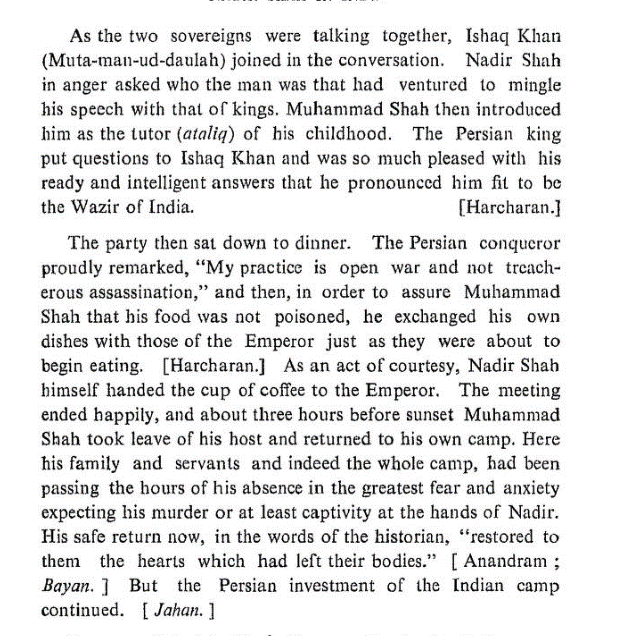
But the emperor reneged on his word and did not pay the requested ransom of Rs 20 crores! This angered Shah and eventually led to a second meeting with the emperor and the latter’s house-arrest

Raid on Delhi

What followed was the famous raid on Delhi, which lasted about 50 days. But a point to note is that the provocation for this trigger came from the Mughal side. Saadat Khan in particular – the Nawab of Oudh.  While Nadir originally had an indemnity of 50 lacs in mind, it was Saadat who told Nadir after the Karnal battle, that if he were to go to Delhi, he could get 20 crores! As opposed to 50 lacs.

Nadir’s raid on Delhi was focused mainly on collection of ransom. Not just from the treasury, but also from private mohallas, with the consent of the Mughal emperor. But he did not intend to engage in a massacre. What triggered the massacre was an uprising in Delhi against the stationed Persian soldiers. Some 3000 Persian soldiers were killed by Delhi-ites. Nadir had to retaliate with a massacre, which likely claimed some 20K Delhi civilian lives in a span of a few hours. This is a conservative estimate, with other estimates as high as 4 lacs.

Consequences and Takeaways

So that brings us to the end of this brief account of Nadir Shah’s raid of Delhi. What were its consequences?

First of all the raid did not trigger the empire’s decline per se. The Mughal empire’s decline had started long before Nadir Shah set foot.  But Nadir Shah’s invasion unlike Timur had some political consequences – it resulted in the loss of Afghanistan and the modern Frontier province to Persia. Eventually it led to the loss of Punjab to the Afghans (under Ahmed Shah Abdali) a few decades later. The Maratha raids on Bengal too ensued a few years after Nadir’s raid.

So it could be said that Nadir Shah’s invasion hastened the decline of the empire, though not necessarily the cause of it.

More importantly it has some lessons for our times. We tend to think of “invaders” as ravaging hordes lacking in civilization and human values. But Nadir was a shrewd diplomat. He engaged in multiple diplomatic overtures, though the Mughals bungled every one of them.  Even the ransom amount to him was suggested by a Mughal insider, Saadat Khan. So was the idea to raid Delhi. Even the massacre at Delhi that ensued was in large measure a retaliation of the massacre of his own soldiers by Delhi civilians

We live in an age of constitutional patriotism, where deference to the state has to transcend ethnic ties. But Nadir Shah’s episode has lessons for us in this respect.

The reason the invasion was facilitated was because of high treason, which in turn was caused by the fact that much of the Mughal nobility was of foreign origin, and felt little patriotism towards India.

Some 30 years ago, there was a debate in India around “Foreign origin” of Sonia Gandhi and whether this should bar her from public office and electoral politics. The debate settled in Sonia’s favor

But then when we reflect on episodes like these from the past (Saadat Khan’s treason for instance), you wonder if an ethnic connect to the land is a pre-requisite to expect a high degree of patriotism.

We will conclude on that note.

References: Jadunath Sarkar’s “Nadir Shah in India”.

The author tweets @shrikanth_krish

Open Thread – 10/17/2020

The thread is open. Three new podcasts this week in case you aren’t subscribed. Sometimes I get overwhelmed with things and I just can’t be bothere with detailed show notes.

As I mentioned before I’m recording interviews for a new podcast I’m starting up separate from the others I run. I’m just throwing them on Patreon for now. Today I recorded an interview with the author of 1177 B.C.: The Year Civilization Collapsed. Looking at the tracks…he’s a very good talker!

I really recommend the book, it’s pretty well written. He also talks about his follow-up book, in terms of when we can expect and what it’s about.

Also, I may start trashing stupid comments now and then. Just to keep you guys “honest.”

The rise of Indicus!

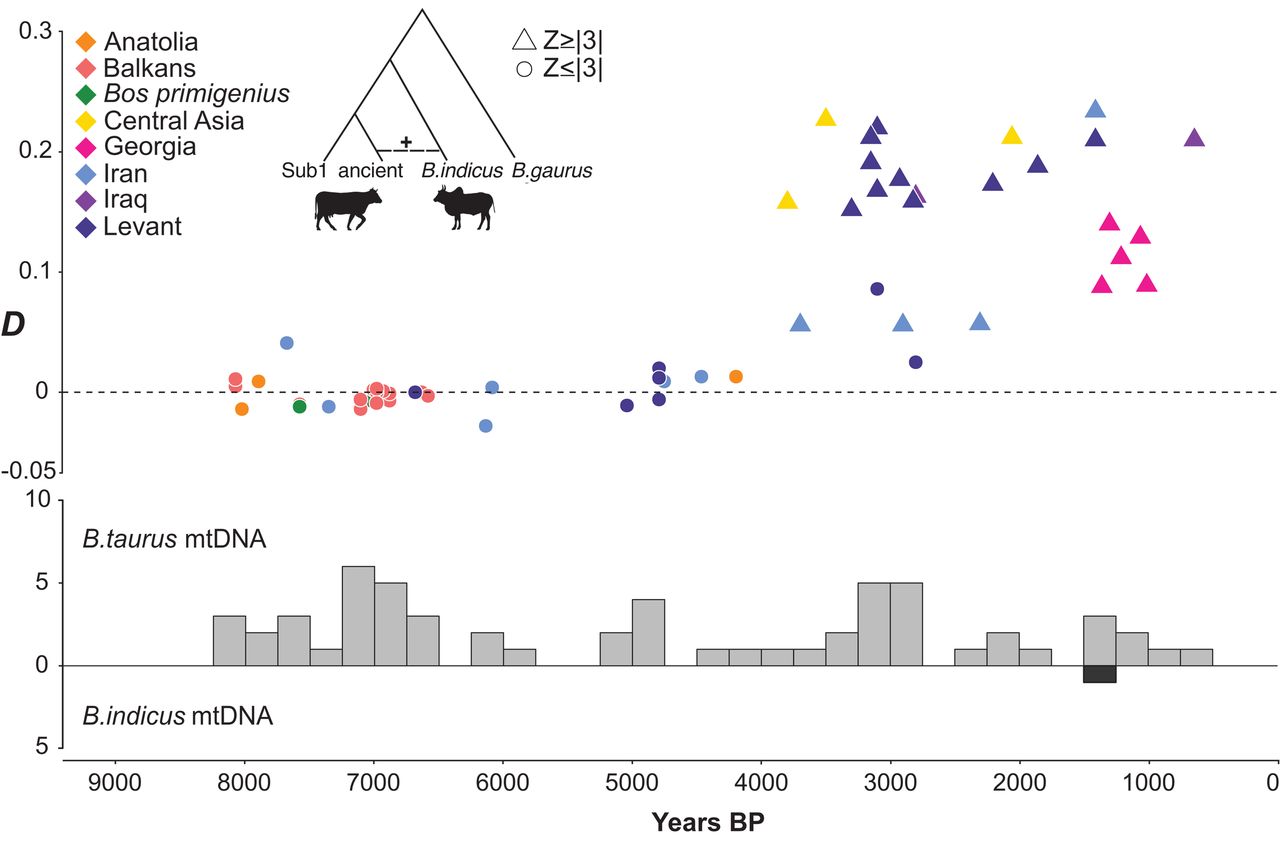
A few years ago an ancient DNA paper on cattle was published, Ancient cattle genomics, origins, and rapid turnover in the Fertile Crescent. It’s a pretty good paper with interesting results. The paper confirmed pretty strikingly that there was a punctuated and massive expansion of indicus ancestry across the Near East between 3,500 and 4,000 years ago.

The interesting aspect of cattle is that there are really two species that intermix. Using mtDNA researchers estimate indicus and taurus diverged 300,000 to 2,000,000 years ago. But the main thing you have to remember is cattle generations are about 20% as long as human generations. So 300,000 cattle years are equivalent to 1.5 million human years. And, for technical reasons (smaller effective population size) one should probably assume mtDNA underestimates the divergence.

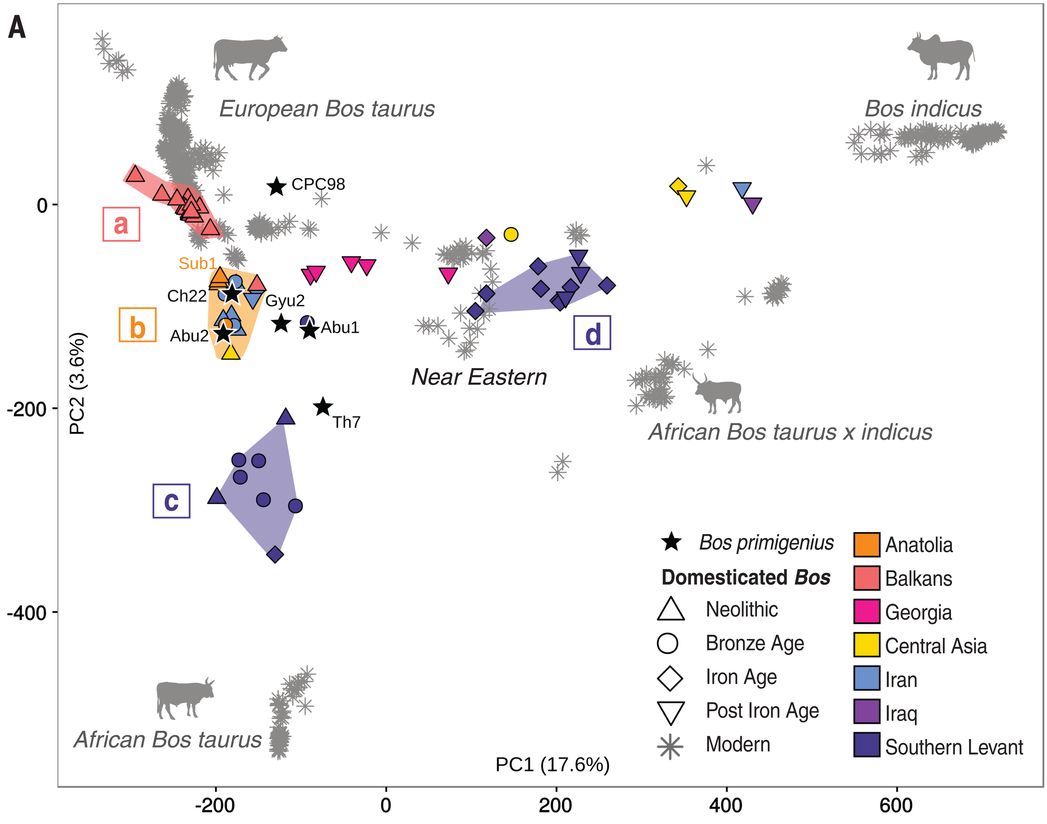
Ancient cattle from the Near East are all taurus. The PCA plot shows that most of the variance is on PC 1 which separates indicus and taurus (a secondary dimension is PC 2, between African and Near Eastern/European lineages). The figure at the top of this post shows that there is a massive jump in genome-wide indicus ancestry across the Near East between 2000 and 1500 BC. As the authors note this can’t be diffusion; the jump is too sudden and sweeping.

So what happened during this period? As noted in the paper: Bronze Age civilization almost collapsed around ~2000 BC. More concretely, after 2000 BC is when we see evidence of Indo-Europeans in the Near East. The Indo-Aryan Mittani show up in Mesopotamia in ~1600 BC. The Indo-European Hittites, the Nesa, are known from Anatolia a bit earlier.

This is also the period that small, but detectable, levels of “steppe” ancestry show up in some ancient samples.

Before this paper, I would have leaned to the position that the Mittani Indo-Aryans migrated directly from the Sintashta homeland without much contact with Indian Indo-Aryans. These data are too suggestive of a widespread zone of expanding agro-pastoralists that existed between western South Asia and the Near East between 2000 BC and 1500 BC.

One of the things we know from the barbarian period during the Fall of Rome is that barbarian groups had strong channels of information flow. For example, a group of Saxons arrived with the Lombards in Italy in the second half of the 6th century. But, through various channels, these Saxon warriors learned that their co-ethnics had established dominance in what was to become England, and there are texts which allude to the reality that they decamped and crossed the Alps, presumably on the way to what was going to be England. The point here is that there was a “Saxon international.”

Aside from the Mittani the evidence of Indo-Aryans in the Near East is tenuous, though some of the Kassites of Babylonia may have had Indo-European affinities. There is not nearly as strong a genetic imprint of steppe in the Fertile Crescent as in Northwest India. The Hittites were very different from Indo-Aryans, who seem to have the closest relationship to the Slavic language family.

The indicus breed is adapted to tropical dry climates. It seems plausible that the Indo-Aryan international facilitated the spread of this breed in the centuries before 1500 BC.

Twin bombings across Pakistan in Waziristan and Ormara

(Article originally posted at the These Long Wars blog)

I’m going to link to the Dawn article, because let’s face it, nobody except state apparatuses are now reporting on Balochistan, because all independent media worth mentioning has been forced out by violence and intimidation. The Balochistan model of political control is being rolled out across Pakistan with varying degrees of political success.

I don’t know what I can say about the Waziristan attacks, besides maybe the state of Pakistan should stop using the former FATA districts as a launching ground for attacks into Afghanistan. That sort of observation feels redundant, but one would imagine that the milieu that feeds extremists and makes it easier for them to thrive there might also succour anti-state extremists.

What I can say about the Balochistan attacks besides that I think enough is enough with using the Frontier Corps (FC) for internal security. Up-arm and up-armour the Balochistan police and send them after the insurgents. That can be done if we give the Baloch people a stake in their future by creating as many jobs as there are households in Balochistan. The number of non-secessionist Baloch probably outnumbers the number of secessionists. However, their interest in breaking away would be neither here nor there if there were serious economic reasons for them to remain tied to Pakistan and the state did not predate on their resources. If Balochistan was treated as a normal province rather than a colony, enough residents would take care of the violent secessionists on their own. I think this insurgency, and over-extended internal security mission in Balochistan has gone on long enough. This is supposed to be the Fifth Baloch insurgency, and I’m not even sure if we are in the fifth or sixth phase of this Fifth Baloch insurgency.

I’m gonna have to lean on NFP’s views on how these conflicts in these socially marginal districts are now being fed and politicised by the larger mainstream, ultra-nationalistic polarisation.

https://twitter.com/NadeemfParacha/status/1316736696478769152?ref_src=twsrc%5Etfw

You can read Dawn’s report on the attacks, here.

Ayesha Siddiqa’s succint history of anti-Shia Deobandis

(Article originally posted at the These Long Wars blog)

Ayesha Siddiqa covered the sudden rise of anti-Shia extremism in Pakistan, in a recent article. In it she gave a short history on the provenance of anti-Shia, Sunni extremism in the country that’s worth reading:

Though the first instance of Sunni-Shia tension erupted around 1951 in Sindh, it built up more decisively during the 1980s. General Zia-ul-Haq’s regime looked away while the Anjuman-e-Sipah-e-Sahaba (ASS) took birth in Jhang, South Punjab in 1986. It later turned into the Sipah-e-Sahaba Pakistan (SSP) that became the mothership of all Deobandi militancy. It gave birth to Lashkar-e-Jhangvi (LeJ) during the early 1990s, and also the Harkat-ul-Mujahideen, Harkat-ul-Ansar, and later Jaish-e-Mohammed (JeM).

During counter-terrorism operations by Pakistan, segments from the SSP, LeJ and JeM went into making the Tehreek-e-Taliban Pakistan (TTP). Some members of this even went on to join Daesh. The SSP was also one of the first organisations to fight in Afghanistan. Besides militancy, the organisation also engaged in politics. Its leader, Haq Nawaz Jhangvi, initially contested elections in 1988 from a Jamiat-e-Ulema-e-Islam–Fazlur Rehman (JUI-F) ticket, and later formed his own party. Around the time Haq was killed in 1990 outside Islamabad, Pakistan saw a lot of bloodshed, including sectarian violence, through the decade of the 1980s, 1990s, and the 2000s. Like the evolution of its militant wings, the SSP’s political face also evolved. One of its current forms is the group Ahle Sunnat-Wal-Jamaat (ASWJ), which is visible in electoral politics. The SSP and other militant groups are part of the Deobandi network that comprises militant outfits, political groups, and welfare institutions.

The network is so well spread out in the largest province of Punjab that there are over 20,000 staunch Deobandi voters in every constituency, which makes the group important for all political parties and builds their influence. The JUI-F, headed by Maulana Fazlur Rehman, is one of the most prominent faces of the network. It is instrumental in partnering with the Pakistan Peoples Party (PPP) and spreading the influence of Rehman’s network in Sindh and Baluchistan.

I think that’s a good enough bite-size history by Dr Siddiqa on the rise of sectarian extremism in Pakistan.

Below is an election poster of anti-Shia candidates, with my opinion on them.

https://twitter.com/TheseLongWars/status/1314616671018024960

Their Muslim Problem—And Ours


Every now and then there is a controversy on Indian-Twitter which bleeds over into my timeline that I have to notice.

Some quick observations:

– There are those who lambast the critics of this ad. Many of the critics are low-IQ vulgarians. So the criticism is not without foundation. But, most of the responses dodge the gendered nature of the objection. The fact is that in Islam it is understood that Muslim men can marry non-Muslim women. It is also tolerated for Christians and Jews to retain their religion after marriage. The children are considered Muslim. This practice in a patriarchal society was seen as a boon to the Islamic nation.

The advertisement plays into this Islamic trope. The converse of this is that most interpretations of sharia ban the marriage of Muslim women to non-Muslim men. Again, the rationale for this is straightforward: the children inherit the religion of the father, and therefore the children are lost to Islam. If the supporters of the beauty of the advertisement of interfaith marriage believe in this custom, then they should support more speech. In particular, they should support an advertisement where a Hindu man marries a Muslim woman in a Hindu ceremony to show that there is nothing wrong with this act so long as the people consent freely.

Continue reading Their Muslim Problem—And Ours

Climate change is a development problem

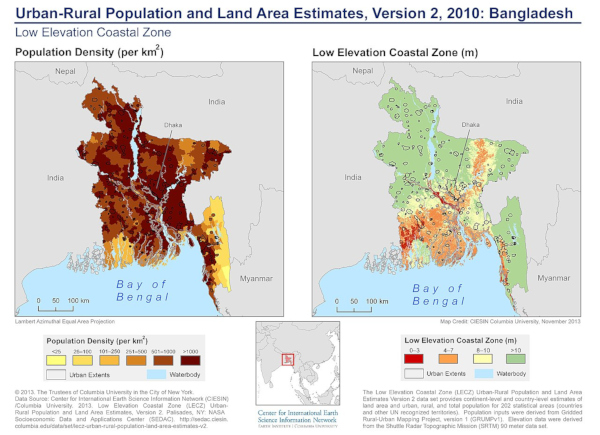
In the comments below there is some mention of the problems that Bangladesh will face due to increases in global sea level. The hypothesis is that there will be a mass migration to India as Bangladeshis flee low-level zones which are going to be inundated. I don’t think this is capturing the real issue: if millions of Bangladeshis are still subsistence farmers on marginal maritime zones then there has been a massive development failure.

Even extreme sea-level scenarios by 2100 posit a 2.5-meter rise, which means only a small proportion of the territory of Bangladesh would be inundated. If by 2100 Bangladesh is not a predominantly urban society after 80 years of economic development from 2020, there are much deeper structural problems to deal with than climate change.

Development and wealth change the downsides of risk a great deal. The 1970 Bhola cyclone caused hundreds of thousands of deaths. Something that is unlikely to be replicated in the region for various reasons (e.g., information technology and coordination are far better!).

I’ve been paying attention to climate change since the late 1980s. As someone whose family is from Bangladesh I have been very worried…my image in 1990 was of peasants fleeing inundated paddies. But things have changed a great deal. In 2020 nearly 40 percent of Bangladeshis live in cities. By 2100 a substantial majority should…

Brown Pundits