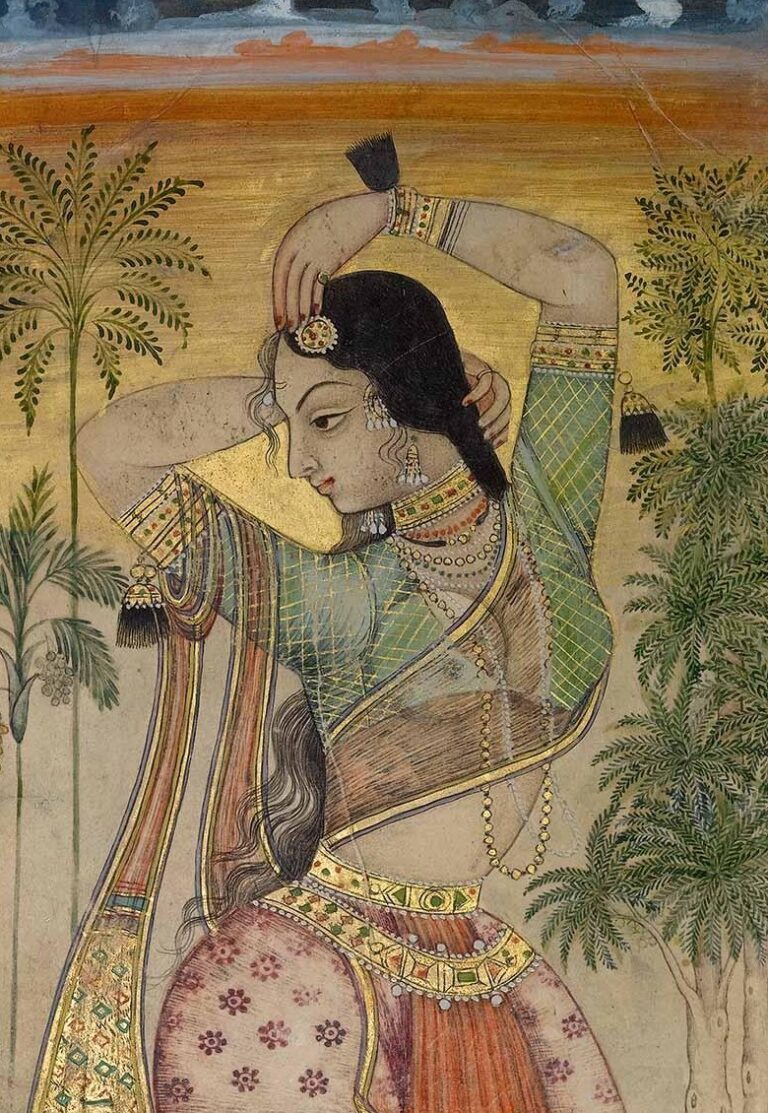
This is an essay written by Varun (Bone of Empire @BotE85371688 on Twitter), an Indian-American friend who asked me to share it on brownpundits. I think it starts an important conversation..
Thoughts that Shape Power
Once upon a time I worked in a defense think tank in New Delhi. It was a fun, fresh-out-of-college job. The pay sucked, but the conversation was always rich, and we had tea time twice a day.
Every Friday morning we were encouraged to sit through a Research Briefing by one of our colleagues. Presentations lasted an hour and were divided into two parts – the presentation itself, and the question/critique period. Everyone — from fresh-faced interns (myself) to retired professionals — was encouraged to present their research or some other topic of interest and receive audience feedback. The variety of personal backgrounds at the institute guaranteed a range of quality for the presentations. What was most shocking to me, as an intern, was that senior researchers were often the sources of tremendous bullshit.
One Friday, a scholar — whose name I will not mention — gave a presentation on the Indo-Bangladesh border. They offered detailed recommendations for securing the region, including drones, CCTV cameras, electrified fencing, checkposts, watchtowers, and more. The presentation lasted a full 30 minutes; the question period, which had been allotted the same amount of time, lasted only five.
A retired army colonel simply asked, “What will all this cost?” The scholar was unable to provide a straightforward answer, and hemmed and hawed for a few more minutes before the moderator broke early for tea.
I went back to my office and looked up the scholar’s research presentation, which was usually uploaded onto the institute website before the sessions. Her presentation had tickled something in the back of my mind — a sense of familiarity. Upon looking up her work and running a few Google searches, I realized that her presentation was essentially a copy-paste of a policy proposal about the US-Mexico border that was being debated in the United States. The price tag for the proposal was around $15 billion, without adjusting for the radically different geography of the Indo-Bangladesh border region. To put that in context, India’s military budget in 2011 was $36 billion, and this researcher was casually proposing that the country find half that amount to secure the Indo-Bangladesh border.
Copy-pasting ideas isn’t particularly exceptional in Indian academia, but I didn’t realize how prevalent and brazen it was until that session. I knew that the Indian university system was notorious for lax ethical standards — plagiarism, data massaging, poor logic, and outright fabrication are all rampant. I did not realize until years later that the laxity was by design.
You see, universities aren’t primarily places dedicated to the pursuit of truth and knowledge, although that is how they advertise themselves. They actually exist to train (read: indoctrinate) a country’s intellectuals across a broad spectrum of disciplines and allow them to network. They cultivate each generation of elite professionals to manage their country’s economy, security, education, and cultural institutions. Elite education systems freely circulate diverse ideas to maximize the possibility of students being exposed to useful ones, but are also supposed to provide students with tools to contextualize ideas. One eye gives you exposure, two gives you depth (three gives you insight, but that’s a whole different story). When properly supported with strong ethical standards that punish lying, plagiarism, and laziness, and professional standards that control egotism, status-seeking, gatekeeping, tribalism, and other antisocial behaviors, graduates from “finishing” institutes enter civic life and promote and develop ideas that are essential for a country’s prosperity and security.
Indian universities successfully expose their students to the world’s diversity, but fail at contextualization, ethical, and professional standardization. Teaching students to keep one eye closed is intentional. Understand that all elite networks consolidate their power around a very narrow range of ideas — first principles that govern their behavior and unite them. Unfortunately, the very system of education that trains the elite also gives people the skills to totally reformulate the fundamental logic that allows the elite to remain united, and thus powerful.
Since independence, powerful elite factions in India consolidated their power using first principles that were formulated by British and other Western intellectuals, who wanted to exploit the country and prevent the formation of political opposition. Their first principles were formulated to advance this agenda. Individuals who study and enter the workforce in environments where the paths to success are controlled by ideologues — and alternatives are, to put it diplomatically, disincentivized — have little reason to develop and gain support for new theories and models of understanding. Even when people do create new theoretical frameworks, they must then gain sufficient financial and social support from established patron networks. Thus senior researchers, students, or anyone else can lazily or maliciously promote bad ideas without worrying about unsettling established patrons.
Instead of being the heralds of progress, instead of helping create an intellectual culture that could build an independent India, the higher education system reinforced colonial control systems. The rules and personal relationships that form the body of India’s intellectual institutions are being reformed, but the first principles that are the foundation of intellectual life are much more difficult to change.
Limited Perspective
An optometrist’s client barges into his clinic. The client is covered in mud, his clothes are torn, and he has cuts and bruises all over himself. He puts his brand-new glasses on the counter and says, “These glasses don’t work! I just got hit by a cart while crossing the street! I demand a refund!”
The optometrist looks stunned and asks, “You couldn’t see the cart with your new glasses?”
The client responds, “How could I? It hit me from behind!”
Or as the old saying goes: you can only see what you look at, and you can’t look at everything at once.
First principles are the ideologies that dictate how we look at the world; they are rules to which all other rules must adhere. The laws of thermodynamics, for example, are first principles in the material sciences. In modern politics, first principles are often defined in constitutions and describe a society’s ideals and aspirations, the boundaries of legitimate power, and the rights that society grants its people. Not all first principles are written; some are simply unquestioned social norms people follow. The foundational logic of a society is its culture, a word whose root literally means “to cultivate” — in this case, to cultivate a way of thinking and a way of doing.
Societies express first principles through fashion, conventions of communication, and taboos. They mark the boundaries of acceptable behavior — often the boundaries of acceptable thought — in power exchanges, and are enforced by violence or exclusion. Access to elite networks, and all the privileges and material advantages that confers, depends on outwardly expressing and supporting those principles.
In social studies and history, Indian scholars purposefully underemphasized the upheaval caused by British rule as a fundamental cause of rampant inequality in the country. Indian scholars, at the behest of the Indian National Congress, instead created a narrative based on caste dynamics, and then linked pre-colonial inequality to present-day inequality, neatly skipping over a hundred and fifty years of social engineering and misgovernance by the British. A deeper examination of their foundations quickly exposes the shallowness of this hypothesis. Yet this interpretation is used in Indian economic jurisprudence.
Similar faulty logic, shaped by political ideology, is found in every field of the humanities. For example, India’s political divisions are studied as a left-right binary, despite the diversity of the political ideological ecosystem. The BJP is painted as a right-wing authoritarian party and compared to other autocratic parties in the West (namely Nazi Germany), while its opposition, the Congress, is viewed as a bastion of liberal democratic values. An actual analysis of positions would show a much more complex landscape, with both parties representing liberal, autocratic, and conservative positions under different circumstances.
India’s economic policy, meanwhile, was trapped in a 75-year experiment with socialism based on economic theories borrowed from the Soviet Union and fringe Western intellectuals. Unquestioning adherence to these theories left India with deep and vicious poverty among the worst in the world. Once the economy was liberalized, the bureaucracy under the UPA I regime decided that India would not rebuild its manufacturing capability, but would instead focus on developing its service sector with the IT industry, based on theories proposed by the World Bank and several Western universities.
The Indian elite adopted English as the language of business, scholarship, and power. They justified this decision by linking speaking English with access to international markets dominated by the United States and England. Don’t speak English? Good luck getting a decent-paying job, entrance to a top university, or access to elite social networks. Belief that English is the language of access is so deeply rooted that ethno-linguistic nationalists consider it more acceptable to speak than a different native language. For example, Hindi speakers are viciously attacked by Tamil and Kannada linguistic chauvinists.
Where India’s post-colonial elite couldn’t assert direct control over the country’s intellectual spaces, they flooded them with misinformation — fabricated research, rumormongering, and propaganda — following Lenin’s tactic of “every idea being worth a thousand pages of writing.” In a battle for narrative control, quantity is always better than quality.
Parroting ideas from the West is the easiest way to gain legitimacy among old elite circles in India, because the supremacy of the West was established during the colonial era. “The West is Best” is the first principle of their power, and mirroring Western language and ideas allows aspirants to access guarded avenues of prosperity. Curiously, it also allows the elite to access international elite networks and capital streams to support their local projects, but that is a tangent to explore later. First principles, at least on sociological levels, establish a standard that people use to determine affiliation — a single idea that doesn’t necessarily need to be articulated, but delineates the legitimate from the illegitimate.
The Mission
Although the British were motivated by profit to subjugate India, theft was only part of the project. A significant portion of the British elite also wanted to civilize Indians through religious conversion and Europeanization. Missionaries were given authority to establish schools to deracinate and convert Hindus. Communist writer Frantz Fanon described this phenomenon in his book The Wretched of the Earth, where he argued that the goal of European education in the colonial world was to create natives who were at their core European — they wore the skin of the native, but held faith in the mission of their oppressors. Fanon further explained that even after independence, the post-colonial elite continued to rule as their European masters had ruled, by exploiting the native population for their own benefit.
If one only looks at the colonial era through a Marxist lens — that the era was purely about material gains — then Fanon’s theory is exactly what happened in India. The Indian National Congress was effectively created by the English to manage revolutionary activity and ensure a transition to an independent India ruled by people who held English values: in other words, an English-educated minority led by Nehru and his clique. However, when one looks past Fanon’s analysis, one sees the political environment was much more complicated. A Muslim elite who believed it was their mission to complete the Islamic expansion into the Indian subcontinent (under the Islamic revival/caliphate movement), and a communist elite who believed it was their responsibility to turn India into a communist paradise, also competed for power. Christianity, Islam, communism, and Euro-centrist Nehruvians all established power bases in India, drew resources from international capital, and pursued policies that were hostile to native political power. Strangely, the goal of these post-colonial factions was not primarily to extract resources, but to pursue what the British saw as their secondary mission — civilizing the country.
Why these factions pursued ideological goals instead of focusing on purely material gains is a story unto itself, but suffice to say that their first principles are logically consistent. Indian elites whose worldview is defined by native first principles do exist and have gained power. However, the commanding heights of the narrative economy — namely the universities and media, where mass culture is shaped — are still largely controlled by non-native ideological forces.
I’ve come to the realization, after many years of reflection, that the senior scholar at the think tank plagiarized US border policy because it was a very loud debate in the United States. Not only was the research publicly available, but potential political patrons would have heard about the debate. She could have just as easily chosen another country, but promoting something that was popular in the US was more likely to get her noticed. She advanced her career by publishing work from the West, and also served the interests of the elite by adding more noise to intellectual spaces and preventing actual border security reforms from being taken seriously. Useful idiots like her are common in Indian academia — not by accident, but by design.
Wonderful article. Having seen the downside of both American and Indian academia, I couldn’t agree more. Indian academia needs a serious revamp. It is primarily filled with professional climbers of the kind the article mentions to the detriment of India; students and public at large.
Nehruvian socialism has destroyed these institutions. Liberals have had their say for 50 years and everything has gone to the dogs.
Indian academia has poor standards, probelms with plagiarism and is quite cliquish.
Ideological gatekeeping contributes to the above( though it is very conspicuous that he neglected to mention the current dispensation that is largely continuing much of the same gatekeeping) but a bigger reason is the fact that many universities are underfunded. The person who he mentioned may have had an extreme amount of workload to manage and not have had sufficient time to actually proof read all that they had presented.
Many academics, regularly complain about being contract workers for years, being made to develop lectures, do administrative activities,lack access to good journals and research papers and then be expected to give a research paper with all this. One cant be expected to not take the easy way out in this situation.
This is largely a problem that stems from India still being a poor country and much of our political climate being geared towards providing immediate succor to the populace, cant give money for research if you have to keep people from starving to death, many of the policies that he accuses of being ideological are a result of this want for resources, the fact that even in this govt not only has manufacturing faced difficulties in getting off the ground but many subsidies have continued and enlarged shows that the emphasis towards socialism is a part and parcel of this country social environment.
I also would like to disagree thst Indian academics who are Marxist or nehruvisn are just parroting what the west says, much research provided by these people is well argued, and well researched, when it passed plagarism and quality checks. One can question the assumptions underlying their ideas but not the originality and thought put behind many of them. One should also consider that these ideas wont be able to maintain hegemony if they lacked substance.
Almost all of Indian Left-Liberal talking points – Hindu domination of minorities, moral responsibility to ensuring the Muslims get a ‘fair deal’, equal but different treatment of caste groups, Sanskritization etc were handed to them by the British to scupper INC’s momentum. While I agree the present govt hasn’t done enough to counter this, I am willing to cut them some slack. They’ve to fight against something that has been woven into the Indian state’s core DNA right from independence. UPSC types still think op-eds in the Hindu are gospel and those are the guys that make our policies. Probably explains why in the 2000s, when the Chinese were plotting world domination on rare earths, EVs, our govt was extolling the virtues of policy where every Indian had a right to dig holes with shovels. Mao would be more proud of Indian Lefties than the current CCP.
What is absolutely loathsome is the Indian Left’s criticism of the current regime’s genuine efforts to undo the damage done by Congress when it has to work with one hand tied behind its back. The closest we will ever get to Kalki arriving is a Lee Kuan Yew type personality rising to power.
//Almost all of Indian Left-Liberal talking points – Hindu domination of minorities, moral responsibility to ensuring the Muslims get a ‘fair deal’, equal but different treatment of caste groups, Sanskritization etc were handed to them by the British to scupper INC’s momentum.//
It is strange that you think there are talking points and not the lived reality of many people.
1. We literally live in a countey where people can kill muslims on the suspicion of cow slaughter, glorify a massacre like bhagalpur riots, call for open boycott, give repeated and never ending tests of patriotism, intrude on prayer meeting and throw all kinds of accusations without any fear of being charged for fake cases and above all, call even genuine political outreach as appeasement when the same done for many other communities is not called out. This is clear domination, if it was any other country and any other group you would not be saying.
2. Sanskritizaton was made by an Indian sociologist and is reflected both historically and present dont know why you think that is an agenda.
3. Muslims are one of the few communities that actually have reduced mobility as generations go, if they are equal citizens then this has to be dealt with by the state.
4. And what exactly is wrong with treating caste groups that have different levels of economic developments and societal challenges differently, do you think a caste group involved in manual scavenging and one involved in tanning have the same issues and challenges and same needs
These all are borne out of the social situation in our country. It is the reason why except for the Muslim sympathetic ones, sanskritization and differential treatment are still practiced because this is what these groups need.
It is not a theoretical talking point, for crying out loud and certainly not from the british.
//Probably explains why in the 2000s, when the Chinese were plotting world domination on rare earths, EVs, our govt was extolling the virtues of policy where every Indian had a right to dig holes with shovels. Mao would be more proud of Indian Lefties than the current CCP.//
Missteps were made but the continuation of many of the same policies,by the present govt indicate that it is the social situations not idealism that is responsible for certain policy choices
MNREGA saved millions of lives helped on rural development and gave an income to many poor and unskilled people who would have died otherwise, dont know why you think it is such a bad thing.
//What is absolutely loathsome is the Indian Left’s criticism of the current regime’s genuine efforts to undo the damage done by Congress when it has to work with one hand tied behind its back. The closest we will ever get to Kalki arriving is a Lee Kuan Yew type personality rising to power.//
The present dispensation is using the same tactics it accuses others of, if anything they are even more brazen, no student was advised by the university to not participate in a protest before 2010, nor were programmea that talked about failure of our country stopped when those extolling the value of the cow were allowed.
The leftists and Marxists for all their faults could defend their views to any critic, and when not held back by plagiarism or lack of resources produced work that is quality. Weakening the systems that enabled this in favor of uniformity thst even premier universities like the DU are not ready for, infrastructure wise needs to be called out.
Only in India can ‘Marxists’ make such silly assertions and still be taken seriously.
These jokers have had a free run for 50 years. Utterly ignorant hypocrites
Even then they’ve lost all their political strongholds because how awful they truly are at even basic governance.
They are taken seriously all over the world, and even in India many of the policies and common sense is influenced by Marxism, anywhere workers are legally allowed to unionize and market is not seen as a neutral and sufficient force for development Marxist will continue to be relevant.
While people rails against cultural Marxism in India, nobody rails against the economic teaching of it.
They really should rail against economic leftism more. But alas for the BJP is also practically speaking a Hindu-Marxist party which will create an unsustainable nanny state before it creates an economy which can actually sustain it.
And I dont think that the bjp wants to be this way.
At some point you need to at least consider that certsin economic policies are less due to ideological reasons and more due to the fact that the situation in this country basically forces your hand.
Wow, you appear to be in a generous mood today, dropping some absolute bangers.
At this point, there is utterly nothing left for me to ‘debate’ with you. You are single-handedly winning the argument. For me.
I dont think this is the victory you think it is or that you and I are even saying the same thing.
Economic ideas of Marxism thst are relevant the world over and cultural ideas reinforce each other, today the very notion of Marxist influence in cultural ideas provokes repulsion.
Tomorrow, the focus on materialism as a driving force in culture, and how power structures are used to keep people in check may become much more acceptable and also part of ones common sense.
As I said any country where unionization is acceptable and the market is not seen as neutral arbiter will see Marxism be relevant there.
they are taken “seriously” since they serve a purpose of undermining India as useful idiots.
If someone seriously wanted to undermine india there are many opaque organization who can receive funds without registering themselves, companies who can bend laws on their behalf and ultimately it is not illegal to donate to political parties in India, since they are not under scrutiny under RTI. Look at who is electorally, and socially dominant if you are searching for useful idiots.
Given the above it is very clear that the communist with no electoral heft, and their cultural ideas are not as well accepted as their economic ones, this is not where one would spend money if they wanted to undermine the country.
Even your favorite party abides by and takes many of the ideas that communists have created seriously that is where their enduring relevance comes from.
I know we like to talk past each other with ever shifting goal posts. I am not going to bother with a point by point rebuttal or pointing you to primary resources that will question your priors but perhaps you should read more about Indian politics and the origins of INC. Reading up on British motivations re partition of Bengal and Communal Award may be a good place to start?
The present dispensation is using the same tactics it accuses others of, if anything they are even more brazen, no student was advised by the university to not participate in a protest before 2010, nor were programmea that talked about failure of our country stopped when those extolling the value of the cow were allowed.
I have a personal experience that strongly militates against this, yet another grand pronouncement of yours.
Back in the early 2010s I was in university (considered one of the top professional institutes back then) when RaGa made one of his ‘youth leader’ visits. We were told he will be taking questions from students so I naturally was curious as an early 20s something guy who was seeing a lot going wrong with the country back then. To absolutely no one’s surprise, none of the questions me or my friends sent in were answered. Now, you may be thinking that in a university with thousands of students that’s perhaps just a law of averages but you’d be wrong. Our university across its 5 batches had a grand total of 400 students and I happened to be very close friends with the student council’s president who was tasked with “questioning” RaGa. His handout had pre-drafted questions that RaGa’s team had already prepared him to respond on.
Fully expecting you to wave this off as just an anecdotal experience but at least I am not making grand generalizations and accusing others of doing so, eh?
The only thing I can agree with weakening of institutions – but then again, I don’ think the BJP is actually worse than the INC on that front either. We’ve almost never had robust institutions because the INC established a culture of emplacing yes men not long after Independence.
// I am not going to bother with a point by point rebuttal or pointing you to primary resources that will question your priors but perhaps you should read more about Indian politics and the origins of INC. Reading up on British motivations re partition of Bengal and Communal Award may be a good place to start?//
How do you know I have not read about these two?
Are you perhaps saying thst just because the british used domination of Hindus on Muslims as a reason to grant communal awards, any assertion to this effect is a british handover?
Do you agree or disagree with thr fact that rallied where Muslims are called to be socially boycotted are happening in India of today? That cow vigilantes can kill Muslims in thr name of cow protection and get a heroes welcome? That urban segregation is a reality for many Muslims? And as experience on this very site shows, being suspicious pf even banal demands Muslims make and their loyalty is a accepted without any pushback? Let us discuss if Muslims are being marginalised in today’s India before dismissing any claims of dominantion.
If you want to talk about domination of hindus in northeast i am fully willing to discuss that as well for all seven states. I am also willing to discuss domination by Sikhs during the khalistani era as well as domination by buddhist in Myanmar and sri Lanka. Let us speak about every kind of domination no matter the victims in this century
As far as your whole anecdote is concerend, I am not Rahul gandhi defender, I dont care that a similat situation happening with another leader right now is not causing any concern for you, the congress was ultimately voted out and will stay out of power for many years because of its numerous failures
Should we wait for years to begin discussing similar things happening today which even you agree is happening. What is the point of showing concern for the state of universities in India if the people who are continuing the same trend today and are not even going to be called out?
@XTM I think my response to this went into spam.
It was quite long so dont want to rewrite it
But as a summary,
1. I know about the communal award and that giving muslims protection was one of the reason for the support for partition of Bengal. We are living in the 21st century and one can see the ease with which Muslims can be called to be socially boycotted, the ease with which they can be beaten up and killed on suspicion for having beef, the ease with which segregation towards them can be justified and on this very site itself even many banal demands of theirs as well their loyalty can be problemitized. You dont need to depend on the British to say in this current year Muslims arw under threat of being dominated.
2. Rahul gandhi is not the PM, his party is out of power and will be for many years, and it really does not bother me what you think of him or what failures they have done because they have been thrown out due to their failures.
3. Since it is doubtful if you will accuse any of the present day leaders of doing scripted interviews and seem to think the continuation of gatekeeping and ideologucal pruning by another party is acceptable because the congress did this I really wonder if sad quality of our universities( where when failures are overcome solid work is produced) is a concern or bashing the people of the past is
4. If the sad quality of universities is a concern you cant avoid criticising the people in charge in the present as well who are also continuing many of the same practises of gatekeeping and putting their close people in places of importance as well.
5. Reading some of the responses here, it is less that gatekeeping seems to be a problem than the people who are doing the gatekeeping may not agree with them.
1. Unnecessary expansion of the number of universities (for political reasons)with all classical departments, almost no prospects of jobs, appointments made on non academic reasons. minimal funding, sluggishness, rise of private universities with good campusus and ‘foreign linkage’, entry of white foreign universities,……..,…..
2. One controversial but real fact. Loss of interest of the so called brahminical classes to humanities,(due to zero job prospects) is adding to the demise of many departments.
These historically literate people who learnt humanities (liberal arts?? ), have moved over to STEM. Northindia still has some steam for BA, not so in South india.
3. The landed gentry and other non brahminical people who took leadership of humanities have lost interest after just two generations. For eg. one facebook guy called upon Brahmins to talk about Kannada and help in the struggle for its primacy.( as they had done years ago ,before they were hounded out. of the field. )
4. Now white guys are studying these subjects for Indian conditions, making the circle full.
Good response, lots to consider.
I am of the opinion that universities should be places of learning that is what they were built for, what they do best and we can never have too many of them. Though if one cant spend money on even basic infrastructure, then obviously they should stop.
In India even STEM grads are not able to get good paying jobs unless they join the govt or want to go into reseaech, even engineers outside of CS/IT are unable to get good jobs in their field. We do have a job crisis in this country, I am not exactly sure why it is the case for engineering grads when so much infeastructure development is happening, but that is the unfortunate situation.
Overall evrry country in the world is facing the problem of elute over production and there does not seem to be anyways to solve other than wait it out and let declining birth rates ensure supply is lesser than demand in the coming decades.
The caste dynamics you provided are interesting but I feel that only is a delayed gradient. Such as those just entering the workplace who maybe from historically marginalised castes are facing the issues described above first and eventually it will affect everyone.
What I found most interesting about the article is how the Author (BotE) took especial pains to constantly reference the “offenders” gender.
Haha though am not sure if that was intentional or not? DEI has really done a number on everyone.
Agni, The question of course is who will do the revamp?
Archer, Funny thing is that I am a liberal and even I’m angry at this nonsense. I’ll write a defense of liberalism sometime later.
Calvin D’Souza, I agree that funding is a major issue, but I disagree with the work load complaints. There are very few professions (or professionals) that get to specialize to such a degree that they don’t have to do any other work. Most jobs require people to wear many hats.
The lack of facilities was definitely a major problem. As a junior researcher I had access to the institute’s library. They were very proud that they had 20,000 books available, which to me was a joke for such a top rated research facility. 20k books isn’t even a small town library in the US.
X.T.M., I would like to say that you’re missing the forest for the trees, but I’m pretty sure you’re staring at a rock!
That being said, I mentioned her gender because I hate writing like an academic. She was a person, the story was about her behavior, and that was a lead in to the broader point I was trying to make. Don’t worry though, I have more anecdotes with men behaving like idiots. I promise I’m an equal opportunity offender.
Welcome to BP ..
I understand the need to want to write like a human but what I’m saying, until disclosed otherwise, the presumption was that the consultant was a male.
Considering how gendered and racialised conversations about competence are, it’s just something to reflect on imho.
//Calvin D’Souza, I agree that funding is a major issue, but I disagree with the work load complaints. There are very few professions (or professionals) that get to specialize to such a degree that they don’t have to do any other work. Most jobs require people to wear many hats//
The issue of workload is not necessarily due to the nature of the work itself but more the amount that is put on a single person. One of the issues with staff shortages in many universities that are well known is that one person ends up doing the work multiple people should be doing.
Difficult to focus on your own research when you are doing the work of multiple people. It is easier in many cases to follow the herd.
The above problem is largely due to funding and would be mitigated to a large extent with better funding. Other issues like plagiarism or substandard research and ideological gatekeeping need more robust administration, for which we need to reduce the political interference in our universities
The whole reason why some ideologies could take over, no matter the merits of their work is the political backing these ideologies had.
The only option in my view is to completely dissolve the power structures in academia via withdrawing financial support. The clique that runs institutions has to be dismantled. The rot is at the top unfortunately, with political support. So who can bell the cat?
For example,
The Government of India has tabled the ISI Bill, 2026 in the Lok Sabha on August 3. This Bill seeks to repeal the ISI Act of 1959, abolish the ISI Society formed by Prasanta Chandra Mahalanobis and other eminent persons, and reformulate the structure and function of ISI as a “statutory body corporate.”
I see this as a welcome change.
I’m hoping that foreign universities setting up shop in India might help break the monopoly, just like private colleges in the US broke the monopoly of the public ones.
How do think tanks measure success in India? Publications? Polices influenced? Media presence?
In a country where access is everything, how does it work?
At the end of the year, what are they patting themselves on the back for?
Genuinely very curious.
I heard about social media influencers now getting unprecedented access to politicians. Will they be the new think tanks?
Retired military officers are a menace. Thank God, Retired civil servants are not very vocal.
Raghuram Rajan and AS Dulat have been trouble enough. Although I do think retired bureaucrats tend to be more tightlipped.
X.T.M., Thank you, the welcome is much appreciated. I haven’t written in a very long time and was fairly anxious about actually publishing an article. I’m trying to break my habits of scholarly writing, which I think is one of the worst forms of writing to be created. I’ll never figure out why we thought it was a good idea to try and communicate complex ideas about the modern world by writing like religious scholars in 1600s English colleges. Fortunately I’m not an academic or a public intellectual and don’t have a reputation to maintain. I can focus on clear communicate.
Calvin D’Souza, Too true. At some point I will be discussing the role of capital consolidation and funding in cultural development.
Agni, That’s certainly an option! Though I’m not sure what you mean when you say private universities in the US helped break the public monopoly? The US university system went through three (well four now) stages of development. The first stage was all private with the foundation of places like Harvard, Yale, Princeton, and many other small liberal arts colleges. The second stage started in 1862 with the passage of the Morrill Land-Grants Act which allowed states to allocate land for the establishment of public state universities. The third stage, which was when public universities and colleges started to outnumber private ones, was after WW2 with the passage of the GI Bill. We are at the fourth stage where many liberal arts colleges (mostly for-profit ones) are shutting down, but we’ll get to that.
Indosauraus, It depends on whether the Think Tank is public or private. The private ones have clients that hire them for research and have very specific output criteria for their employees. The public ones vary greatly in output requirements. When I was working at the one in Delhi the staff was split into different camps – retirees, punishment posters, serious researchers, and leftovers. Of the four, the serious researchers were the smallest camp, but they were brilliantly smart.
I worked at another Think Tank in Bangalore that was attached to a hard science research university, and they ended up doing some really brilliant work. They were a public-private partnership. All of the staff were university professors, but had clients in various branches of government. Only serious work got done there. The last project I worked on was a war gaming scenario that was being set up to run on a company’s super computer.
Yes sorry, I meant private monopoly broken by the introduction of public universities. Private universities are typically controlled by specific groups that would have a vested interest in everything from student selection to pricing. Which means that affordable education wasn’t available to the average American.
Now of course with the freezing of all NIH grant funding, even public universities are feeling the pressure with many departments being forced to close. I was shocked to hear about this development from my advisor.
Would you like me to make you an author?
India now says”galti se mistic” hogaya. Kirana hills may have been hit by a loitering device, searching for a radar.
Secondly, they were trying to hit skardu, but since weather was bad, they hit bholari instead.
Agni, The US higher education system is in decline. No doubt about it.
X.T.M., Sure! The would be greatly appreciated.
Formerly Brown, Bit of a non-sequitur, but okay!
your account has been created as an author buddy; password should have been emailed to you..
sup