This was an old review I wrote and is now lost in our archive somewhere, so I decided to repost.
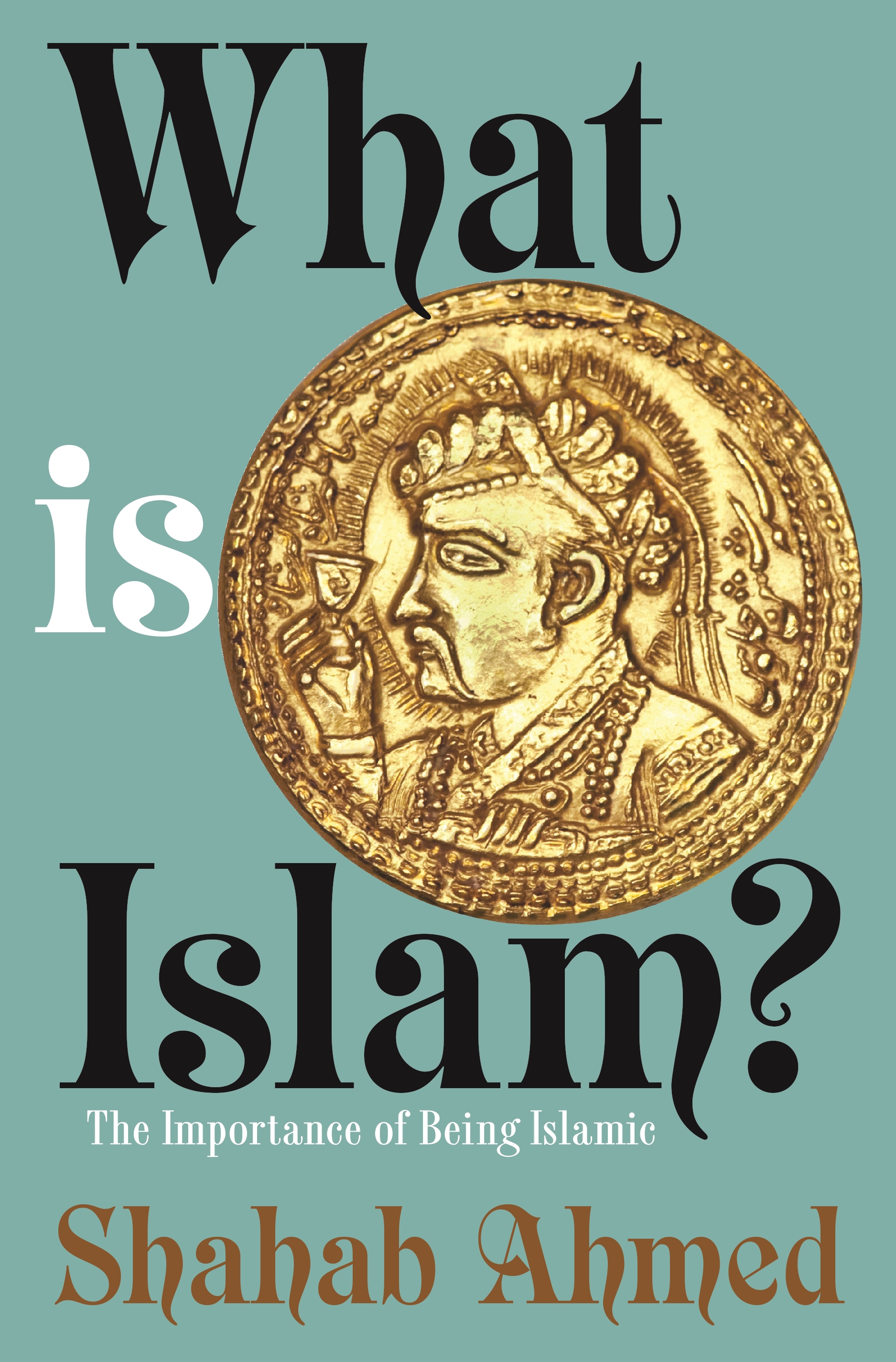
Shahab Ahmed tells us up front that he is not going to answer the question “what is Islam?”. And of course, he does not really do so, but the title (misleadingly) suggests that he will, and in the course of the book, he comes perilously close to trying (and failing) to do so without outright saying he is going to do it. In short, Shahab himself seems confused about what he is trying to achieve here. The book is a description of some (but certainly not all) aspects of Islamic culture as it developed and expanded, especially AFTER the initial Arab phase of empire building. And it is a long argument with various seen and unseen opponents who want to define Islam as some ONE thing. In the course of this argument, Shahab wants to show that Islam was very varied, but he also wants to show that it is not infinitely varied. In the course of an overly long book, he manages to show that Islamicate societies (a term he does not really approve of) had a very wide variety of beliefs and practices, though they also remained anchored within a certain tradition and in continuous argument with particular foundational texts. All of this may be a surprise to extreme puritanical Islamists AND to more or less ignorant anti-Islamists, but should be no surprise at all to anyone else. Why wouldn’t there be a lot of variety? Anyway, if you happen to spend your life arguing with people who have a very monochromatic view of Islam, then you can keep this book handy in order to prove otherwise. It is good for that.
Beyond that, it is a rich compendium of anecdotes (he has read VERY widely and quotes extensively from hundreds of sources) and you will learn a lot about the “Balkans to Bengal complex”, a cultural zone that Shahab Ahmed is particularly fond of and regards as archetypically Islamic. Incidentally, you will also be able to prove to your friends that Islamic history is characterized by an official/theocratic prohibition of alcohol AND a simultaneous cultural fascination and widespread use and even praise of alcohol, complete with social practices that incorporate regular use of alcohol (e.g. in poetry recitals and courtesan dance performances… though this also being a work of apologetics, the “courtesan” part is not highlighted). What you will NOT find is any mention of how the Islamic empire was created in the first place. Military force and politics are almost completely absent from this cultural history of Islamdom. Make of that what you will. But it is worth keeping in mind that the geographic region extending from the Balkans to Bengal did not just magically happen to switch religions, it was conquered…Still, the the book is worth reading if you want to know more about the cultural history of the core-Islamicate region. It is more or less useless as a book of history. And it is somewhere in between when it comes to theology and philosophy.
Overall, this is high class and erudite apologetics, and the anecdotes collected herein will stand the test of time; but I suspect that the postmodern arguments and apologetics will not age well. When the current phase of history has passed, readers will wonder why Shahab Ahmed is wasting their time with convoluted and wordy arguments about how legitimate or illegitimate this or that simple-minded view of Islam actually is. Then again, maybe postmodernism will not fade away as completely as I imagine (or wish for) and future generations will continue to be fascinated by the verbiage that just seems like waste of space to me.
Time will tell.
Post Script: A friend commented that “you cannot expect him to say more than that..” and I am adding my answer to this review:
I certainly expect a good historian (even a “cultural historian” ) to say much more than that! I happen to be reading Tomb’s “The English and their history” at the same time and the difference is night and day. With Tomb’s book you actually get an attempt at describing the English and their history and culture and so on, with systematic, rational and evidence-based theorizing and refutation of theories. Whether you agree with his particular view or not, you get what he is saying and you get what he is arguing against. Much of the time, you get something close to a “full picture”. With Shahab Ahmed, you are in much more scattered territory and big aspects of history are skipped entirely; Worth reading, but less for its argument, more for its varied and interesting bits of information.
To be fair Shahab Ahmed does not claim that it a history book. It’s not Marshal Hodgson,Ira Lapidus or Michael Cook …
The author’s work is already outdated in some sense, almost by 2 decades at this point, because we have, in some essence, moved beyond the framework being presented here. The biggest issue with apologetic literature is the fact that they try to defend its faith from the opposing worldview of the religious “outsider”/”other”, but in some essence, their defense itself reinforces the external perspective. Most apologists fail to critically analyse an underlying issue: Is culture a reflection of religion, or was religion a reflection of culture?
For example, many churches in the American South used to suffer from racial segregation in the olden times, especially among Southern Baptists. Was the segregation (and by extension racial prejudice) that was going on a result of Christianity, or was Christianity merely reflecting the underlying racial prejudice in society? In trying to present a weird defense of your faith, you are enforcing the notion that your faith is directly shaping the underlying culture of the land and, by extension, its problems. Additionally, these defenses often shift the focus away from the day-to-day interactions and underlying material conditions that play a much bigger role in shaping society and how religion works within said society. I mean, recent times have kinda shown that many societal issues that were often linked to religion persisted within a given society even after the decline of that religion. China abandoned a lot of its traditional religious practices, yet it still has issues ranging from Homophobia to sexism despite lacking a religious framework that encourages such practices.
Another issue would be the fact that many people embrace a given religion because they agree with the underlying cultural worldview associated with that religion. His ahistorical rendering often treats religion (Islam in this case) as a unique entity, often detached from historical processes that were already going on in Arabia and the wider Middle East. Islam was shaped by Judaic, Christian, Arabian polytheism, Zoroastrian, and other religious belief systems, which, to an extent, did allow the Islamic religion to dominate most of the Middle East and North Africa, where these beliefs already existed. The people were already predisposed to such belief systems and adapted to a new religious model that integrated those original beliefs within a more stable structure. War and trade were definitely a part of things, but those alone don’t work out successfully since people don’t always accept religions like that. If that were true, then most of North Africa should be Christian, considering the Europeans ruled them extensively.
The next issue stems from the whole label of “Islam” itself, which presupposes the modern idea of perfectly closed categories without any grey areas. For example, Sarmad Kashani was an important religious figure in the Mughal Empire, who was an armeanian descent persian Kabbalh follow Jew, who converted to Islam, became a Fakir, then gave up Islam to become a Hindu yogi, and then decided to give up on all these categories outright. Different elements from various religions shaped his worldview and his sense of identity; he doesn’t fit into a clear category that you could call “Islamic”, “Jewish,” or “Hindu”. Even things labelled as “Islamic” don’t always perfectly make sense with the historical context behind them. I remember seeing a Mughal painting of a Mughal emperor, and it was labelled as “Islamic”, but the painter was clearly Hindu; there was a strong influence of European realism and South Asian Naturalism in the painting style. Outside of the fact that the painting was commissioned by a muslim emperor, the painting has so many non-Islamic elements that make it harder to tie under a singular religious identity. Historically, religious identities, while present, had very porous boundaries in many places and resulted in religious practices that are heavily syncretic.
The Last major issue would be the fact that this construction of a broader religious cultural zone from the Balkans (a realitvely christian regions) to Bengal (a region within a deeply non-Muslim South Asia) results in non-muslim “other” being marginalized from their own past and indirectly turning the muslim into the “foreign other”. Take the Mughal Empire; they would be categorically placed within this Islamic world, and their elite culture as well as products of a wider Islamic culture, despite these “products” being heavily non-Islamic in origin. Like a lot of Mughal literature, especially in languages like Braj tend to have a lot of strong influences from Vaishnavite groups like Gaudian Vaishnavites and broader Classical modes of poetry, as well as the non-Islamic Sanskritic theory of Rasa. The overemphasis on the “Islamic” nature of the Mughal Empire ties the state and legacy to wider Eurasian communities, who neither have anything in common nor a deeper interest in this part of the world. I mean, South Asia produced extensive “Islamic” Indo-Persian works, but it was historically ignored in Iran since it wasn’t Persian enough and was too South Asian, while it is too “foreign” for the non-Muslim regions of South Asia like India since it was an extension of the “Islamic” world, of which they, as non-Muslims, are not a part of. Mind you, a lot of Indo-Persian writers included non-muslims all the time.
These tendencies often feed into ethnonationalism all the time. A conservative will usually point to the messes that happen in the Middle East and says that what happens if you let muslims come into power, since they are no more different than those people over there. Another element here comes from the fact that “Islam” has a universal cultural identity that transcends boundaries means that other religions can do literally the same thing. A conservative can say that these muslims are a part of this larger “Islamic” culture, and they aren’t part of our “Christian/Hindu/Buddhist” culture; hence, they can’t ever be a part of our society. Mind you, there is no Islamic, Hindu, or any other religious culture. Tamil Hindu behaves and think more like Tamil Muslims, while they aren’t similar to a Balinese Hindu or an Arab Muslim, etc.
Honestly, a close regional ethnographic analysis of religious practices within a singular region can do more to defend faith than trying to make broad generalizations about religious practice without considering geographic and ethnographic elements. Every region has distinct problems that manifest in its religions, and trying to understand the social context of these places brings more nuance. For example, Female genital mutilation is common in Sub-Saharan Africa, including many “Islamic” countries like Mali, where it is justified with Islamic texts. In this situation, it would be more useful to examine the social context for why it happens in these regions, rather than trying to make a broad, sweeping defense of Islamic practices and theological justifications or critiques. The social context provides a more nuanced image of the manners in which religion is being shaped by the local cultural and social beliefs of a people group.
Hence, I believe this book is outdated, especially in these times with ethnonationalism and the need to go beyond simple abstract explanations that avoid ground realities like cultural variation.
From the description it seems that the main aim of this book was to defend muslims as a group from racists and others who espouse similar culturally illiterate ideas about muslims in general.
Very little can convince people like the above to let go of their biases and when you speak of a large area across multiple centuries it becomes difficult to say something coherent.
If you specifically try to save the honor of religion by way of ethnography you get the problems you describe that serve to uphold the honor of neither islam as a religion nor the people following it.
Were the ideas explained in this book new and unique 20 years ago at least?
In all honesty, I find the notion of trying to defend the honor of any religion was pointless endevor that will forever be an uphill battle. Most religions are too diverse and have a variety of practices that often contradict one another, so trying to defend all these things simultaneously is near impossible. And yes, I agree with you that most of the people that would insult the religion are clearly not going to care about this since they are not acting in that way due to ignorance. Racists don’t really care for apologetics since they already made up their mind beforehand.
I feel like this book was explicitly created to address the complicated position that the Islamic religion was placed in during the aftermath of 9/11. Like a lot of the flattening of Islam into a simple identity started around that period as a lot of stereotypes became more commonplace. However, we have definetly moved beyond that point especially moving into the 2010’s as America say a broader shift their understanding of both the Middle East and the Islamic religion. The notion that Islam is diverse religion with a wide variety of viewpoints isn’t really some revelation in this day and age especially after the expansion of the internet, which allows us to see different parts of the world that was previously ignored. It might have been more effective in the early 2000’s before the Internet fully took off and people understanding of the world they lived was meaningfully evaluated.
This book would have been useful for a liberal leaning individual in the early 2000’s america that kinda wanted revenge aganist Afghanistan for 9/11 and had a very negative opinion of Islam. However, progressivism in the West (which was diffused into other countries) has clearly moved beyond an apologetic or simplistic understanding of Islam and religion more broadly. Religious conflict today are even more domestically connected isssues like the changing nature of the national character and internal ethnic/racial tensions as result of complex demographic shift.
A large portion of these issues are heavily regionalized in some sense. Take Hindu-Muslim communalism in India, which has specific issues stemming from a history of religious interactions that was unique to South Asia. Aplogetic works like the one above that tries to be broad and lacks regional context can’t really protect the Islamic religion or its people from communal political factions. Honestly, this work kinda is outdated ever since the ideas that it presented became more commonplace and evovled beyond the authors writings, especially in the late 2010 onwards, ironically when the author was writing this work.
Yes correct apologetics in general is kind of pointless beyond a point
You raise a lot of interesting points, but I do think you maybe overestimating how much people know about islamic or muslim cultures. Such knowledge is still quite rare, as is the knowledge about how much islam as a religion is effected by culture and vice versa.
Books like this do help in at least giving one who wants to learn a starting point, but of course not many want to do so.
It would be great to learn about intersection between culture and religion at a more local level, and more so if loval knowledge systems are seen as primary sources of understanding, I do agree broad works like the above are not as useful in sensitive situations.
I agree with your points here, but I don’t think I am overestimating people that much here. It is kinda common sense to understand that 2 billion people who follow a given religion aren’t going to think the same or be absolutely devout. I have literally seen people who have wives from a different religion or race, and even friends from different backgrounds, who then proceed to turn around and make broad generalizations about said race or religion. People understand the fact that things are clearly more nuanced, but they willfully choose not to pursue such a mode of thought since they honestly don’t really give a shit. Also, people don’t read as much as they did in the past, and even then, most people turn to works of fiction these days.
The people who would have any interest in other religions aren’t going to really start with apologetic literature; they’re probably gonna look at more academically inclined works that explain things more clearly.
[…] caveat. Omar put it plainly in his Shahab Ahmed review: the zone from the Balkans to Bengal did not change religion by magic; it was conquered. There is a […]