
A statement titled “Spare India from Anarchy” began circulating in Indian diaspora WhatsApp groups on 14 October, four days after the Delhi lockdown described in The Raj With a New Flag. It is signed by “Indian-origin academics, students and alumni of universities outside India”, collects names through a Google Form, and rests its argument on a line from B. R. Ambedkar. The line deserves a closer look, and so does the record of what the Indian street has done to Indian law.
What the letter says
The statement makes five points. Indian democracy has held for seven decades with working institutions and peaceful transfers of power. Election denial, attacks on constitutional bodies and a preference for “street over Sansad” now threaten it. The armed forces have been pulled into partisan debate. Doubts about the vote have been built on “minor clerical errors” and amplified by “anarchist groups”. Dissent is essential, but differences should be settled “through debate, discussion, dialogue and dissent within the constitutional framework.”
It names no authors and no organisation. It lists no demands.
Who is asked to sign
The form asks for a name, a university email, the university attended and the year of graduation. The intended signatory is a graduate living outside India. Most of them do not vote in Indian elections; overseas Indians can register but must be physically present in their constituency to cast a ballot.
What Ambedkar said in 1949
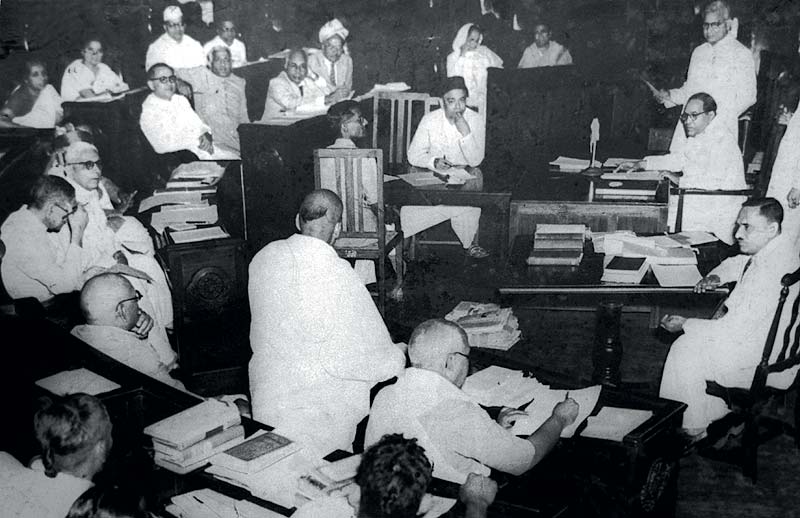
The letter’s authority is Ambedkar’s closing speech to the Constituent Assembly on 25 November 1949, the source of the phrase “grammar of anarchy”. The passage is worth reading whole, because it is aimed at a specific target.

The grammar of anarchy
Ambedkar said that once constitutional methods for achieving social and economic ends exist, “there can be no justification for these unconstitutional methods.” He then named them: “the bloody methods of revolution”, and “the method of civil disobedience, non-cooperation and satyagraha.” Those, he said, “are nothing but the Grammar of Anarchy and the sooner they are abandoned, the better for us.”
Civil disobedience, non-cooperation and satyagraha were Gandhi’s methods. Ambedkar was asking the new republic to retire the Congress movement’s own toolkit. A letter that quotes the phrase against protesters is quoting a man who meant it against the founding party as much as against anyone else.
The second warning: hero-worship
The same speech carries a second warning, less often quoted. Ambedkar said that in politics “bhakti or hero-worship is a sure road to degradation and to eventual dictatorship”, and that Indians were more prone to it than any other people. He warned a third time that political democracy would not last without social democracy: liberty, equality and fraternity as “a way of life”. The letter quotes the first warning and not the other two.
The street has written Indian law before
The letter treats “street” and “Sansad” as rivals. The record shows them working in sequence: a movement outside, a law or a verdict inside.
| Years | Movement | What the institutions then did |
|---|---|---|
| 1974 to 1975 | Navnirman in Gujarat; JP’s “Total Revolution” in Bihar | Gujarat assembly dissolved; Emergency declared June 1975; Congress lost the 1977 election |
| 1990 | Anti-Mandal protests | Supreme Court upheld OBC reservation in 1992 with a 50% ceiling |
| 2011 | Anna Hazare’s fasts at Jantar Mantar and Ramlila Maidan | Lokpal and Lokayuktas Act, 2013 |
| 2012 to 2013 | Protests after the Delhi gang rape | Criminal Law (Amendment) Act, 2013 |
| 2019 to 2020 | Shaheen Bagh sit-in against the CAA | Supreme Court ruled in October 2020 that protest in public places cannot be indefinite |
| 2020 to 2021 | Farmers’ protest on Delhi’s borders | Parliament repealed the three farm laws in November 2021 |
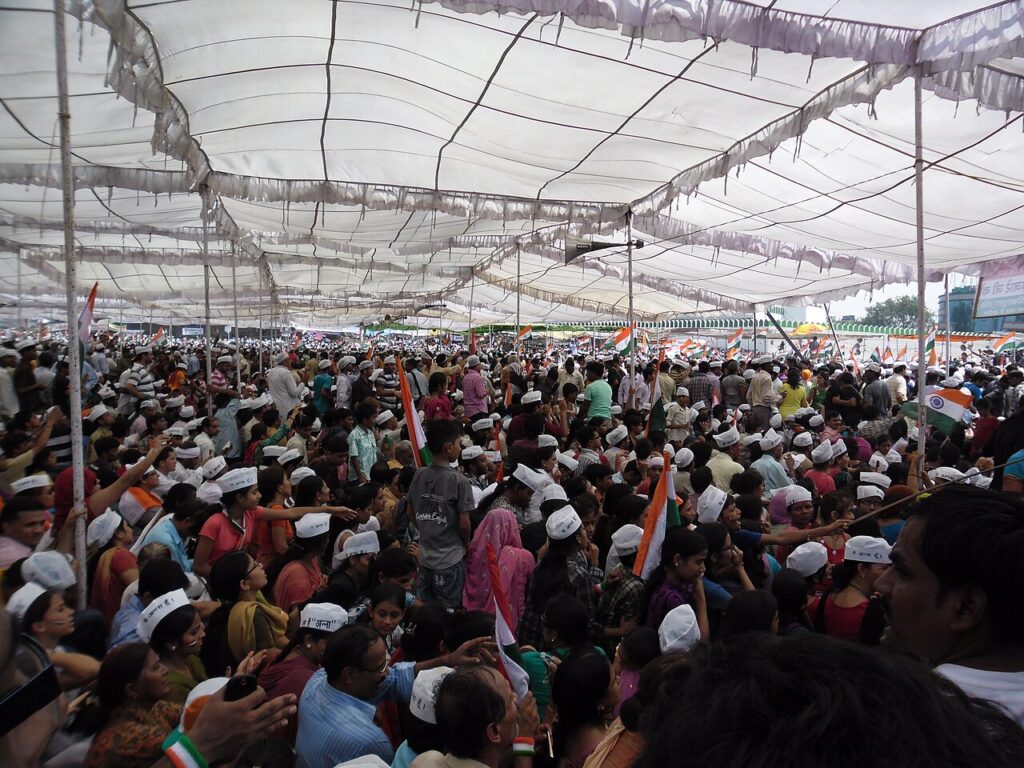

Each of these began outside Parliament. Each ended inside an institution. The Emergency is the exception that proves the sequence: it was the institutions, not the street, that suspended the Constitution.
What the letter gets right
Three things. Peaceful transfers of power have held since 1977, including in 2004 and 2014 when the losing side had reason to contest. Institutions do erode when every result is called stolen; that is the lesson of other democracies this decade. And a movement that lives on social media has to show it can also live inside a legislature, a point the July posts on the Cockroach movement made before the Delhi lockdown.
What it does not settle
“Minor clerical errors.” The protests concern the Special Intensive Revision of the electoral rolls. The scale of deletions is contested, and the letter does not give a number. Whether the deletions are minor is the question in dispute, not a premise the letter can assume.
Who speaks. A graduate abroad asking voters at home to stay off the street is making a request that costs the signatory nothing. The letter does not address that asymmetry.
The armed forces. The letter says the forces have been drawn into partisan debate but does not say by whom. Without that, the sentence can be read either way.
Sansad itself. The letter asks for debate in Parliament. It does not say what happens when Parliament does not sit on the question, or passes a law in minutes, as it did when it repealed the farm laws in 2021 without discussion.


Where this leaves the argument
Ambedkar’s speech supports the letter on one point and undercuts it on two. It does condemn unconstitutional methods once constitutional ones exist. It also condemns hero-worship and warns that a constitution without social democracy will not hold. Indian practice since 1949 has not followed his advice on the first point, and the laws listed above are the result. The question the letter raises is real: where does a constitutional method end and an unconstitutional one begin? The answer in Indian history has been settled case by case, usually by a court, after the street had already moved.