X.T.M
X.T.M is a writer, editor, and investor working between Cambridge and the Persian Gulf. He is a co-founder of Brown Pundits, Senior Partner at BRAHM Collection, a platform for Indian handmade art and heritage, and Principal at Raef Capital.
He writes longform essays on civilisation and power, with a focus on the Persianate and South Asian worlds, and has shaped Brown Pundits since its early years. His work explores the intersection of history, identity, and state formation, particularly the unresolved cultural consequences of Partition.
His interests include Bahá’í philosophy, Iranian and Mughal history, and the long arc of civilisational continuity across Eurasia.
He writes under the X.T.M byline and can be found on X at @XerxestheMagian.
Most popular · Most recent
-
Why Can’t South Asia Move On?
Why does South Asia litigate 2,000-year-old events as though they happened yesterday? Because almost nothing is lost between generations. The cure is neither the past nor the future. It is…
-
Bin Qasim’s Thousand-Year Wound
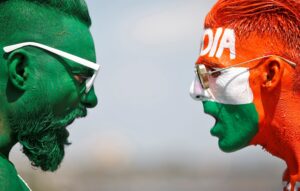
X.T.M argues that India and Pakistan face a fault line over a thousand years old, dating to Muhammad bin Qasim’s landing in Sindh in 711. Each side now speaks only…
-
Dharms are Natural Democrats
The indigenous record was procedurally rich and narrow. The colonial record was procedurally borrowed and narrow. In 1950 Delhi adopted universal adult suffrage at a stroke, literacy under a fifth,…
-
Pakistan, the Successor State to Islamistan
Pakistan is usually read as drifting ever deeper into theocracy. We argue the reverse: its elite has quietly secularised, keeping Islam as the national language while shedding it as the…
-
Kashmir is not Palestine.
X.T.M argues that comparing Kashmir to Palestine is false. He points to the 1990 exodus of Kashmiri Pandits, Kashmiri Muslims voting and holding office, and the contrast with Gaza, while…
-
Was Partition Good for Muslims?
X.T.M argues that Partition, sold as deliverance, was a sophisticated act of self-disinheritance for South Asian Muslims, leaving them divided across three states, without electoral leverage, with a psychological cleft,…
-
The Lutyens Brahmin & the Indian Muslim
X.T.M borrows the Boston Brahmin to describe India’s apex elite, admitted by assimilation, presentation and marriage, and asks whether the new Hindu order’s explicit loyalty tests for Indian Muslims expose…
-
Did Modi Make India Great Again?
X.T.M, writing from Delhi, weighs what one Modi tenure has compounded against Britain’s seven prime ministers in a decade, citing India’s rise to fourth-largest economy, and asks what continuity buys…
-
Erm
-
India’s Wealth will not turn Pakistan into East Germany
X.T.M answers a commenter’s per-capita point: scale and per-capita income measure different things, and India’s size gives it weight. But economic weight is not destiny, India has not turned Pakistan…
-
Pakistani Centrists, Not Muslim Extremists
X.T.M sets a moderation standard: Pakistani commenters on the site are centrists, not extremists, and illiberal arguments stay up so long as they stop short of incitement. A Pakistani commenter…
-
The Cockroach Takes a Bow
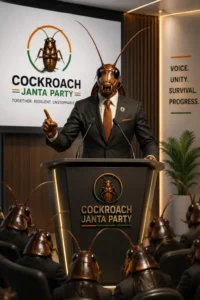
Flag-occupation is not sufficient. Shaheen Bagh flew the tricolour and read the Preamble nightly, and was sorted out of the nation anyway. The CJP was not, and the difference is…
-
💔Sana Yusuf Did Not Have to Die
After the murder of TikTok creator Sana Yusuf in Karachi, X.T.M argues that violence against women in Pakistan is an outcome of a society built on honour and male entitlement,…
-
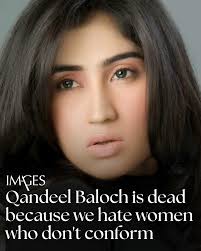
Why is Pakistani Culture obsessed with Policing Female Virginity?
X.T.M reflects on an overheard story of a Pakistani-origin daughter in Europe and the murders of Sana Cheema and Qandeel Baloch. The post argues that policing a daughter’s body remains…
-
The Writ of the Pakistani State into P.A.K
Two states reached for the same instrument five weeks apart. The AJK police called the protesters a challenge to the writ of the state. Pradhan put tukde-tukde forces at Jantar…
-
Nehru Lost India, Not Jinnah
X.T.M argues that Nehru, not Jinnah, lost a united India: the 1946 Cabinet Mission Plan already offered a workable confederation, which the League accepted, and Nehru’s July press conference undid…
-
Poorer Pakistan OutFoxes Richer India?
X.T.M argues that although India is richer, Pakistan’s narrower, military-anchored power structure gives it structural resilience in confrontation, while India’s democracy imposes restraint. He says understanding this asymmetry beats arguing…
-
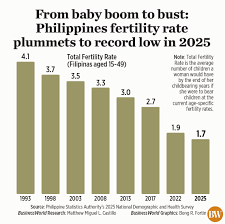
The Philippines Birth Rate Crash
The post reports that the Philippines’ fertility rate fell from 4.1 in 1993 to 1.7 in the 2025 survey, the steepest drop on record, and asks why anyone expected the…
-
What Kind of Space Is Brown Pundits
X.T.M relays the authors’ discussion about what kind of space Brown Pundits should be, calling it a bridge across nations and faiths, with some feeling one ideological current dominates and…
-
The Crescent and the Trident clash over their women
X.T.M argues that the Crescent’s seclusion and the Trident’s ‘protection’ of women are unequal in statute, citing Pakistan’s Hudood Ordinances, but equivalent in structure, as the bahu-beti bachao slogan and…
-
Pakistan must not treat Afghanistan like Gaza
X.T.M argues that Pakistan’s strike on a Kabul addiction hospital, which Taliban authorities say killed 408, echoes Gaza in its asymmetry of suffering. He accepts that TTP attacks are real…
-
Happy Rakhi – what is a race?
X.T.M notes that the comment thread has turned to race and genetics, and says he may expand on how class, colour, creed, caste, genetics and community overlap.
-
Pakistan Does Not Need to Imitate India to Be Stable
X.T.M answers a call for Pakistan to turn secular and drop Kashmir. He argues that state failure comes from weak institutions rather than religious language, that Kashmir is foundational to…
-
Homebound with Ishaan Khatter
Reviewing the film Homebound, India’s Oscar submission, the author asks whether casting privileged actors as a Dalit and a Muslim amounts to Dalit-washing, and whether Western praise rewards poverty as…
-
The Pakistani Voice That Isn’t in the Room
X.T.M relays BB’s observation that Pakistan’s case at BP is argued almost wholly by people abroad, while India is argued by residents. The note argues the case is untested rather…
-
Double Standards, Modi’s Gamble, and Why Ramadan Gets It Right
X.T.M argues that applying a deconstructive lens to Hinduism but not Islam is asymmetric, citing Manu Pillai’s book. The post also treats Pakistan’s literacy gap and Modi’s strategy, and ends…
-
The Game We Can Smell
X.T.M argues that liberal-left language has become a disguise for Hinduphobia, and that Hindus are expected to love the Mughals. After the death of Asha Bhosle, the post says Partition…
-
Eliminator, Not Meritocracy
X.T.M argues NEET is an eliminator, not a meritocracy, a rationing device for 1.3 lakh MBBS seats that measures stamina and family resources, yet should be kept because fragmented state…
-
Op Sindoor Was Not a Pakistani Defeat: Precedents Two Days From Pahalgam
Two days from the Pahalgam anniversary, three precedents worth setting down before the narrative hardens: Sindoor was not a Pakistani defeat, the Crescent commentariat cannot keep living Western lives while…
-
The Pakistani Inferiority Complex
X.T.M argues that Pakistan’s elite is marked by an inferiority complex towards Arab, Turkish, Persian and Afghan Muslims, which he links to the country’s low human development and its anxieties…
-
Africa’s only Hindu island
Starting from Mauritius as Africa’s only Hindu-majority island, X.T.M speculates on Hindu island diasporas, the role of Brahmin migrants in spreading caste, and an Aryan-versus-AASI model of masculine and mother-goddess…
-
On Dhurandhar, Decorum, and Where BP Draws the Line
X.T.M explains a suspension of BB’s commenting rights until 2 April after he directed a film-style threat at another commenter. The post says the line is argument versus menace, admits…
-
The Honey Trap of the Ummah:
X.T.M argues that a dispute with commenters exposes the fault lines in the India–Pakistan–Muslim triad. He contends that Indian minorities have accepted an unspoken compact of living within an increasingly…
-
IIT Bombay Says It Followed Procedure. A Student Is Dead.
Sahil Wakode was caught with his phone in a midterm at IIT Bombay and was dead by evening. The institute says he was counselled and reassured; the family alleges threats…
-
Will India and Pakistan Learn from the Historic Korea Summit?
X.T.M quotes an article asking whether India and Pakistan can learn from the Korean summit, which suggests resuming sports and cultural exchange, and adds a quibble comparing the two partitioned…
-
Who did the Brits conquer India from?
Did the British take India from the Muslims or from the Hindus? The question cannot be answered, because it was never true. The empire they inherited had already fallen apart,…
-
Pakistanis = Indian Muslims With Sovereignty?
X.T.M argues that Pakistanis are in effect Indian Muslims who gained sovereignty, and asks what it cost. The post says Partition gave sovereignty to two-thirds of the pre-1947 Muslim population,…
-
Let Hindus Decide for India
X.T.M argues that a coalition of Islamists, liberal elites and foreign commentators resists Hindu political consolidation, that Hinduism and India are coterminous, and that those who opted out of Hindustan…
-
When Brahmins get treated like Dalits; the world listens
Responding to an Instagram post, the author argues that white people must learn more about race, but asks how many upper-caste Indians would let their children play with Dalits, and…
-
India, Pakistan & the Central Asian Dancefloor
X.T.M contrasts India joining the CAFA Nations Cup, a sign of its growing standing in Central Asia, with its withdrawal from a World Championship of Legends match against Pakistan after…
-
Why Pakistan Won’t Go the Way of Iran
X.T.M argues that Pakistan will not follow Iran’s path of secularisation because Pakistani Islam is inherited bottom-up and fuelled by Partition’s trauma, whereas Iran’s was imposed in 1979 and so…
-
The Brahmin Civil War
Pattanaik gives us a priesthood in service — Baniya capital commanding, Brahmin ideology obeying. Look closer at the temple queue: the priesthood is in schism. Hindutva as an upper-caste revolt…
-
The price of Unity for India’s Dravidians
Prompted by Afghanistan’s outsized global influence, the author muses that the four Dravidian states’ sub-nationalism vanishes on the world stage within Indian nationalism, and wonders whether more distinctive Indian minorities…
-
nos ancêtres les Hindous
X.T.M argues that when Hindu voices retreat from comment threads, the space turns anti-Hindu rather than neutral. The post defends Hindu civilisational continuity, rejects the claim that Hinduism is a…
-
Coloniser Alert + Cultural Appropriation Attack
In a self-described rant, the author objects to a Twitter user’s claim that Hinduism is young, argues Shiva worship is ancient, favours the indigenous-Aryan view while urging care over Iran…
-
China: The Unseen Winner of the Indo-Pak Skirmish?
A short framing note followed by a relayed Telegram-circulated account and a commenter’s quoted view of the May 2025 India-Pakistan air clash, claiming Chinese systems outperformed Western ones and that…
-
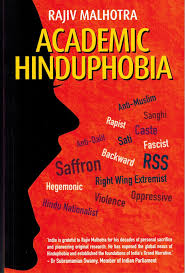
Hinduphobia Exists, But Pakistan Was Not Born from It
X.T.M argues that Hinduphobia exists, mostly as dismissal and erasure in academic and diasporic discourse, but that Pakistan was not born of it. He sees the Partition as a Muslim…
-
Kashmir
With the Kashmir government fallen, X.T.M says he would prefer the LoC as a soft border with no redrawing of the map, and warns he will delete comments that turn…
-
Why India will not lose her soul to missionaries
X.T.M argues that India will not lose its Hindu soul to missionaries, because societies are shaped by elites, not headcount, and India’s elite is not converting. He starts from a…
-
India and Pakistan Are Playing Chicken; simply to hurt themselves
Two nuclear states with shared languages, shared music, and shared families are accelerating away from each other, each waiting for the other to swerve. Neither is. Both are losing. A…
-
How Pakistan Punjabified Lahnda and Urdufied Punjab
As Pakistan prepares to debate new provinces, X.T.M asks what Punjab is. He argues that colonial canals, Partition and the census folded Grierson’s Lahnda continuum into “Punjabi”, while the south…
-
The Muslim Districts That Hold West Bengal Up
The post accepts that West Bengal Hindus have a real grievance over demographic change, but argues the three Muslim-majority border districts of Murshidabad, Malda and Uttar Dinajpur are the reason…
-
On Civilisational States and Who Gets to Claim the Indus
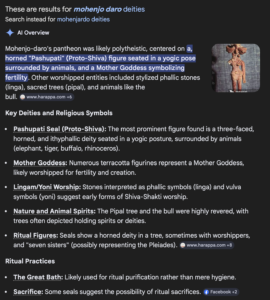
X.T.M disputes Kabir’s claim that calling India a civilisational state is a right-wing position, arguing the case is archaeological. He says Mohenjo-daro’s Pashupati seal and other religious motifs continue into…
-
THE FAITH THAT NEVER FADES: THE HISTORICAL RESILIENCE OF HINDUISM
Zach introduces a piece by his friend MJ on the resilience of Hinduism through centuries of persecution, framed by his own decision to mark Cheti Chand rather than Norouz. MJ’s…
-
No Muslim actors please; we’re Hindu..
A short comment on a photo of a Hindi film delegation meeting Narendra Modi, in which no Muslim star appears, ending with a lament for Urdu.
-
India never existed
I deleted my post since I’m just going to put these tweets out there; it will make for a good podcast though. I suspect in a 100 years we will…
-
When was India’s Golden Age?
X.T.M asks when India’s Golden Age was, using the question to argue that India and Pakistan are not ‘equally artificial’: Pakistan rests on the long-lived Indus basin, while India is…
-
Why this kolaveri di on Indian genetics
Objects to a caption in an article on Indian genetics that treats high-caste Hindus as the prototypical Indians, calling the association in poor taste.
-
Pakistan, the lost country-
Zach argues that Pakistan’s national identity problems surface when it meets Arabs, Persians and Turks, and that it should embrace Hindu festivals and Sanskrit heritage. He calls Pakistan an insufficiently…
-
Shashi Tharoor on Kashmir
X.T.M shares a Shashi Tharoor video on Kashmir sent by his wife, says he is ambivalent on the issue, and muses on Tharoor’s list of India’s unifying differences.
-
Turanistan & the Scythians of India
Observes that the largest concentrations of Scythians are in the Subcontinent’s border zones, recalling that Gujjars, Kambojas, Rajputs and Jats have Scythic or Iranian associations, and that these northwestern invaders…
-
You the Marathas, we the Mughals & Dalrymple the Coloniser
X.T.M dismisses William Dalrymple as a coloniser lecturing on Indian history, and doubts a commenter’s claim that the British won India from the Marathas, saying he is a self-declared Mughalist…
-
PPP – Post Pahalgam Pakistan..
-
Hitchhiking through India-
Introduces a podcast with Rajat Ubhaykar, who hitchhiked six months through India, and says it left the host feeling an urban Hindu hegemonic outlook obscures India’s profound pluralism.
-
Brown, that is Bharat, Pundits
Fifteen years as the British of the blogosphere, running on an unwritten constitution; that experiment ends today. The landscape has changed since the founding. A blog that does not register…
-
On being Indian
A guest reflection by The Living Lakshmi, born in Madras and living in Britain, on why expatriates stay tethered to India and what being Indian means: a country of many…
-
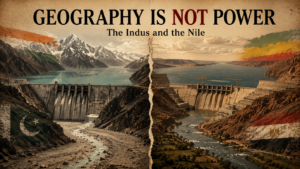
Geography Is Not Power
India suspended the Indus Waters Treaty believing the upstream power holds the tap. It does not. From the Indus to the Nile, the country at the top of the river…
-
Israel, India, and the Rise of Defensive Asymmetry
The author argues that Israel’s offensive against Iran and India’s against Pakistan are stalling against tenacious defences, and sees a new ‘defensive asymmetry’ built on information shields, narrative resilience and…
-
Men of State, and the Great Mahatma
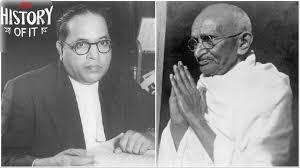
X.T.M sets four house positions: Jinnah and Nehru were men of state, judged as builders of states; Gandhi was a man of Dharma, a different category; Ambedkar is a constitutional…
-
The Pakistani Myth that made us Great-
Prompted by Ambedkar’s account of why Brahmins gave up beef and began worshipping the cow, the author doubts the Indian interest in ancestry testing, notes that genetics suggests caste predates…
-
Should the Pakistani elite revive Sab-ki-Hindi (the Farsi of India).
Prompted by a Kathak performance, the author argues that the noblest thing Pakistan’s elite could do is revive the medieval Persian of India, completing the long Persianisation of the Indus…
-
Padamavati
Asks what Indian commentators make of the Padmavati furore, after the film’s release was postponed indefinitely.
-
Gurdaspur and Siliguri: The Two Necks That Held
The post argues that Pakistan opted out of the subcontinent, and that India kept both strategic ‘necks’, Gurdaspur and Siliguri, in 1947 and 1971, so claims that India is a…
-
The Urdu-Speaking Inheritance
Shares a speech by Senator Faruqi, praising the Urdu-speaking inheritance as defiant, liberal, just and aristocratic.
-
Founder Sites and Institutional Sites: A Note on Sikh Sacred Geography
X.T.M announces an automatic fine for racialised language against Dravidian communities, then sets a framework for disputes over Sikh holy places. Founder sites such as Nankana Sahib lie in Pakistan,…
-
Pakistan’s Civilisational Orphanhood
An argument that Pakistan’s elite is fiercely nationalist on paper but has no civilisation to call its own, living instead in English and Western ideas.
-
Quaid, Modi, and the Operation Sindoor
Argues that India’s response to the Pahalgam attack, including Operation Sindoor and suspending the Indus Waters Treaty, may strengthen Pakistan’s national identity, since nations harden against an adversary and martyrdom…
-
Is PTI the BJP of Pakistan and Imran Khan, Modi
X.T.M finds Pakistani politics worse than India’s, yet sees a symmetry between Imran Khan and Narendra Modi: both seem incorruptible and free of dynasty. He warns of hard times if…
-
Jallianwala Bagh; 100 years on
On the centenary of Jallianwala Bagh, the author is infuriated that Britain’s prime minister would not apologise, reflects on Britain’s mix of condescension and respect towards India, and suggests caste…
-
Biryani Night
Reporting on a Cambridge South Asian Forum screening of the Kashmiri film Harud, the author describes a round table where he argued that India cannot understand its Muslim minority and…
-
Some controversial thoughts on Remembrance Day & Kashmir
The author finds Remembrance Day’s ‘freedom’ framing tiresome since Indians who fought for the Empire stayed subjects, then reflects on a play about Kashmir, arguing Kashmiris are themselves in revolt…
-
The Long Dark Night for India’s Muslims
X.T.M reads a Bengal order on Vande Mataram in madrasas as a symptom of India’s Muslims being absorbed into a Hindu-Persianate mainstream. It argues Pakistan and upper-caste liberalism accelerated this,…
-
The Patriarchy Survives Everything
Prompted by a heated thread on the Philippine birth rate, X.T.M rejects a commenter’s proposal to restrict women’s education and work as a cure for falling fertility, argues that falling…
-
Trump Has Birthed Eurasia
X.T.M argues that Donald Trump’s treatment of India has pushed Narendra Modi towards the SCO summit alongside Xi Jinping and Vladimir Putin, and reads the occasion as the start of…
-
Is It Indian Culture or Hindu (Brahmin) Culture that creates excellence?
Prompted by Faizan Zaki’s Scripps Spelling Bee win, X.T.M asks whether Indian-American excellence stems from Indian culture or specifically Hindu and Brahmin culture, arguing it is encoded in the cultural…
-
The British have no contrition for what they did to India-
Argues that Britain writes about the Raj without contrition and that the whitewashing of empire has fed resentment of the EU, calling Brexit the imperial reckoning Britain avoided.
-
Defending Hindu Honour from Liberalistanis
The author shares a Twitter exchange in which a Pakistani user criticised Islam’s treatment of women and Hinduism, and says a later exchange with another user led him to see…
-
Has Manish Malhotra jumped the shark?
Questions designer Manish Malhotra’s ‘Indo-Persian’ collection Zween, saying it shows Bollywood with floral motifs rather than Iran, and suggests he should have called it back to Pakistan, since Mughlai high…
-
Caste and the 1,000 Families
X.T.M says he is suspicious when white liberals ally against caste, since caste was strengthened under colonial rule, and tells anecdotes of Indian women academics who say caste was used…
-
India That Is Bharat: The Exceptional Uniqueness and the Dual Identity
X.T.M answers the charge that the site treats India more gently than Pakistan. The post argues India is both a seventy-nine-year-old state and a civilisation of some five thousand years,…
-
She Parked a Car With Her Husband. Fifty Years Later, She Is Still Waiting.
X.T.M tells the story of Damayanti Tambay, who has searched for fifty years for her husband, missing since the 1971 war, with 54 Indian personnel still unaccounted for. He argues…
-
Hijab: Between Revelation and Regulation
The author argues that the Qur’an never commands a garment called hijab, using the word for a barrier or curtain, and that it offers a theology of modesty, not a…
-
The Mughals Were Not an Indian Dynasty — They Were a Dynasty in India
X.T.M argues, drawing on Richard Eaton, that the Mughals were a dynasty in India rather than an Indian dynasty, anchored in Persianate high culture and Turko-Mongol kingship, and contrasts them…
-
How Pakistan Became South Asia’s Reference Muslims
X.T.M argues that Partition cut one Muslim political world into three, and that Pakistan, having taken Urdu, now supplies the default picture of a South Asian Muslim. He calls this…
-
Thoughts on the 5 Point Plan?
X.T.M quotes the Cockroach Janta Party’s five-point plan, from barring Chief Justices from Rajya Sabha seats to a 20-year ban on defectors, and strongly disagrees with the defection ban but…
-
Did the Brits “Indianise” the NorthWest?
Asking whether the British ‘re-Indianised’ the north-west, the author argues Sindh, Balochistan and the Frontier saw long Iranian and Muslim influence, while British patronage of Hindi, canal colonies and middle-class…
-
On Whose Side Is God?
X.T.M argues that planners of the Iran war misread Shia Islam, which honours death with dignity. He says killing Khamenei hands the system a martyr, and that the Pahlavist, secular-liberal…
-
Why Pakistani liberals will always fail
After deleting a longer post on Aasia Bibi, the author argues Pakistani liberals are toothless because they will not challenge Islam itself, says Muslims must be free to criticise the…
-
Yes they are Paki pedos & keep Hindu Temples, “Hindu”
Backing Sajid Javid’s condemnation of the convicted grooming gang, the author, a British Pakistani, says the label ‘Asian’ unfairly tars other minorities, that Punjabi would be more exact, and that…
-
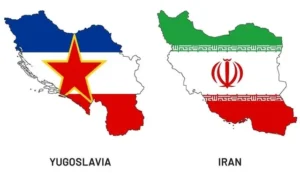
Pakistan Is Not Yugoslavia
X.T.M argues that Pakistan is not a Yugoslavia-in-waiting. He says a state built around permanent vulnerability tends to centralise and adapt, that 1971 taught that disintegration brings catastrophe, and that…