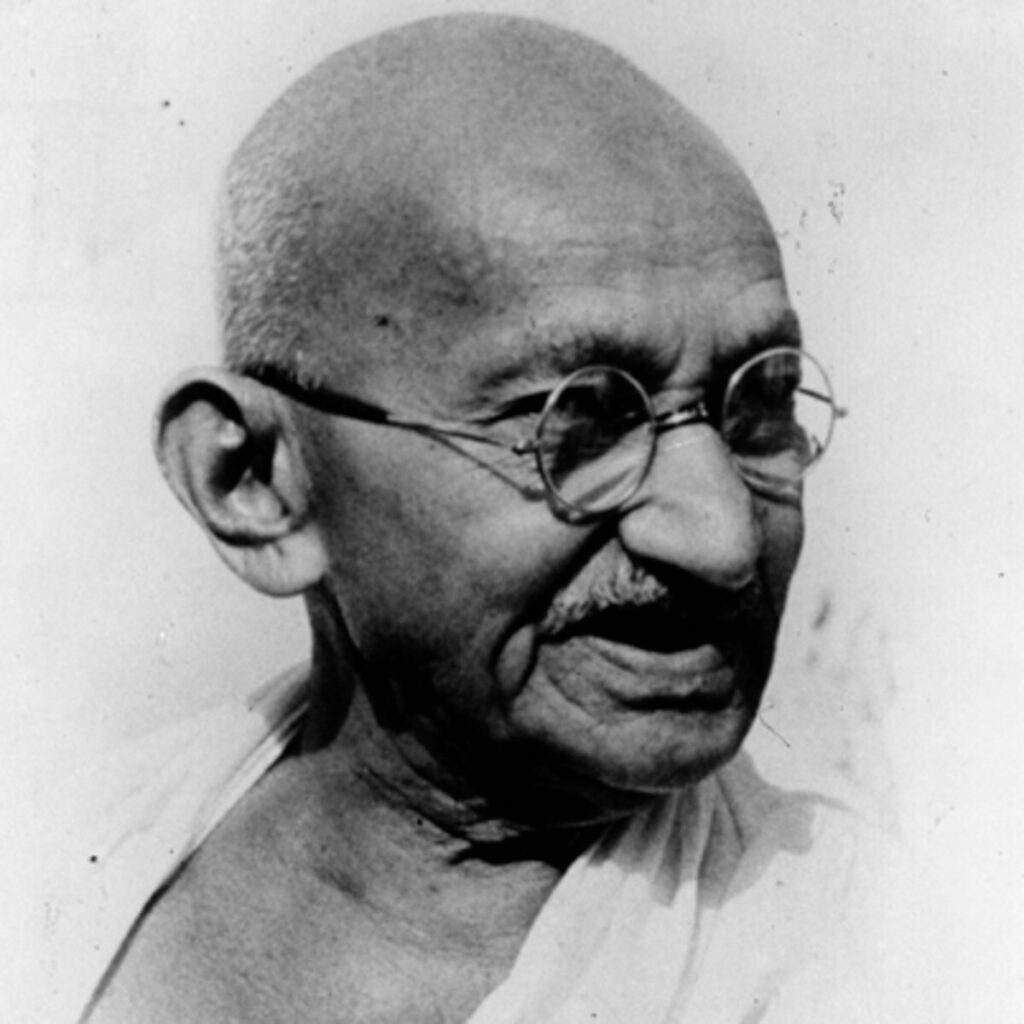

The Gandhi Jayanti thread asked whether Gandhi is politically homeless. What if Gandhi built the nation, the Raj built the state, and the state is still running on that infrastructure?
Gandhi built the nation, not the state
From lawyers’ club to mass movement
Before 1915 the Indian National Congress was a debating society for lawyers. By 1920 it was a mass movement of peasants who had learned to resist together. That is Gandhi’s work more than anyone else’s.
It is the Hindu belief that a mind with supreme self control attains the capability of changing reality. Gandhiji is the physical embodiment of that. The metaphor made real.
Indosaurus, on the Gandhi Jayanti thread
Nehru’s design, Patel’s map, Ambedkar’s constitution
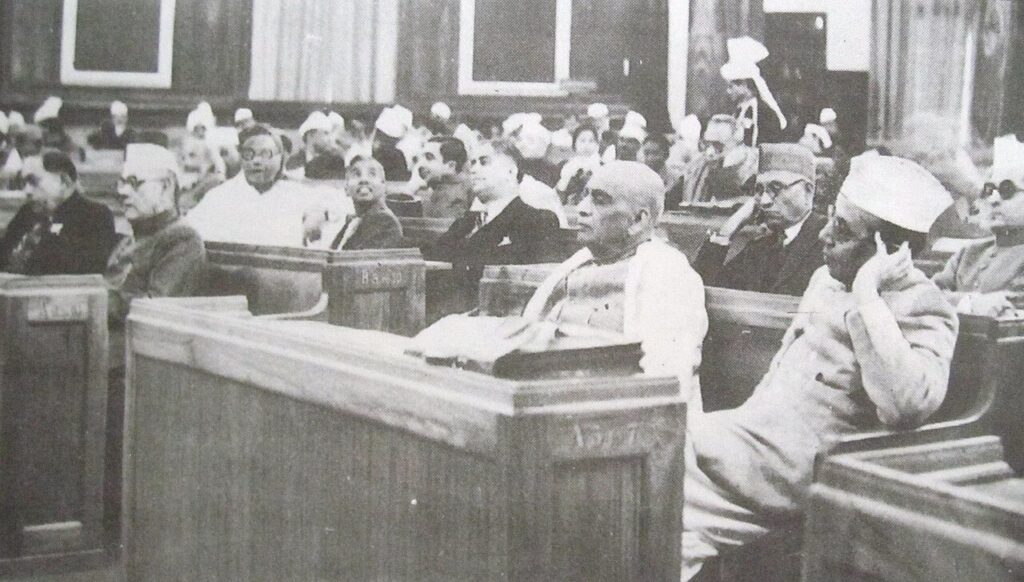
The state is somebody else’s. Modern India is a centralised parliamentary republic, run in English, with a standing army, a civil service and a district collector. It is Nehru’s design, Patel’s map and Ambedkar’s constitution.

Village republics, reduced to Article 40
Gandhi wanted village republics and a minimal state. The Constituent Assembly gave the panchayat one line among the directive principles, Article 40, and built everything else on the opposite plan. Then it put his face on the money.
Why no party can hold Gandhi
- The BJP cannot claim the man whose last fast, in January 1948, was for the safety of Delhi’s Muslims.
- Congress cannot claim him, because it built Nehru’s state, not his.
- The left cannot, because he defended varna.
- The Ambedkarites cannot, because of the 1932 Poona Pact, where his fast against separate electorates forced Ambedkar’s hand.
That last objection is the serious one. It says moral coercion is still coercion, and the Depressed Classes paid for it. The opposite view holds that no party has dropped Gandhi, his portraits stay up whoever governs, he is simply no longer the only god in the state’s pantheon.
The colonial state was inherited, not overthrown
What was never settled
France and America settled their internal balance of power through real conflict. India put moral pressure in its place, so the colonial state’s machinery passed intact to native elites. Partition was a different kind of rupture. The question is whose interests nationalism never touched.
That is right about the inheritance. The republic of 1950 kept the Police Act of 1861, sedition, preventive detention and the collector. None of it was discarded. It was debated, kept and transferred. The redistribution never happened.
Would a revolution have done better?
Revolutions usually hand the machinery to whoever wins them, sharpened. What Gandhi did redistribute was the habit of refusal: peasants, women and the poor learned they could say no to a government and be counted.
A hard state in Gandhian cover
That habit did not settle the balance of power. It made the state feel it had to pretend to be good. Shekhar Gupta calls India a hard state in Gandhian cover.
The masses follow the earnest reading of gandhism and the state runs it’s own playbook with the earned legitimacy from that narrative.
girmit, on the Gandhi Jayanti thread
Pakistan bombs Afghanistan: the Raj’s frontier policy
Kunar and Helmand, 30 September
Pakistani jets hit Kunar and Helmand on the night of 30 September, another round in a conflict both sides have called open war since February. The Taliban say nine civilians died; the UN mission says at least ten, most of them children. Islamabad says it hit 22 militants; the UN mission counts over 1,100 civilian deaths and injuries in Afghanistan from cross-border violence this year. Pakistan’s foreign minister warned Kabul on 3 October not to let its territory be used for attacks, and took the dispute to the Moscow-format meeting on 5 October. No talks between the two governments are scheduled. Naam de Guerre asked what the strategy is; 0M-3 answered that it is the British one.
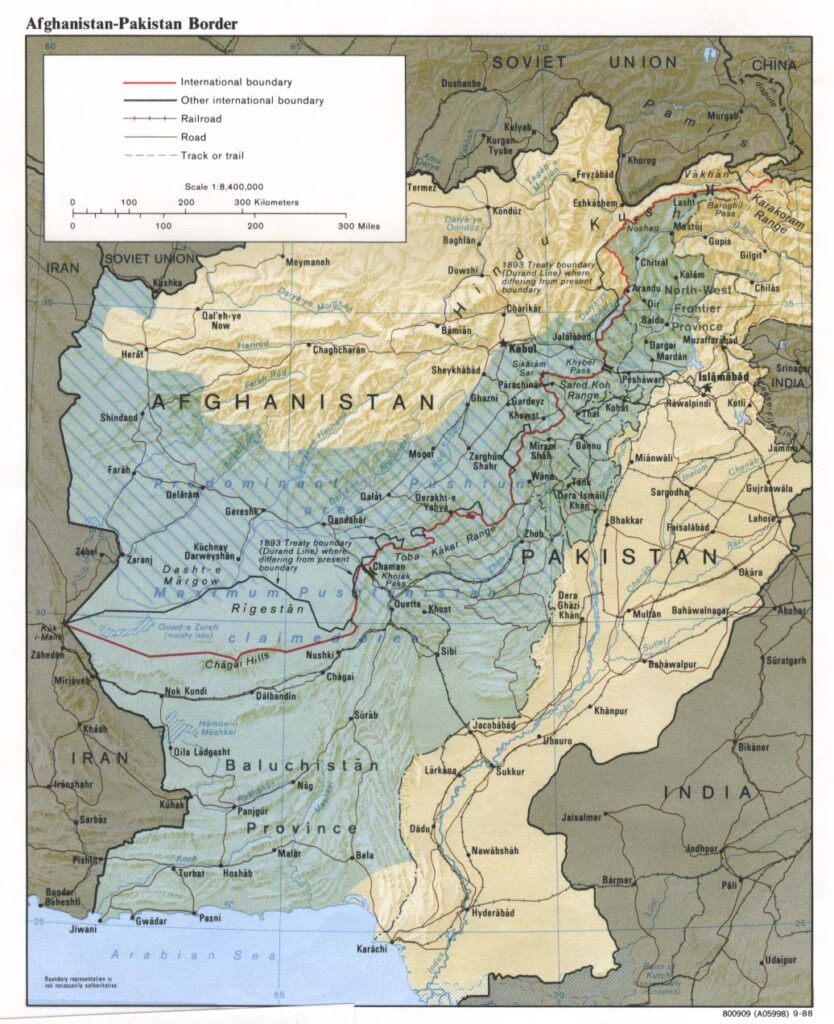

The same playbook since 1919
When the ground war failed in 1919, the British bombed the tribes, and few Pashtuns have accepted the Durand Line since. Pakistan inherited the line, the method and the problem. It is now fighting, in slow motion, a government it spent decades helping into power. What is the exit?
Governor’s rule in the Frontier, 11 October
On 11 October President Zardari, on the prime minister’s advice, declared a state of emergency in Khyber Pakhtunkhwa and imposed governor’s rule, citing the provincial government’s failure to ensure security. Chief Minister Sohail Afridi, the assembly speaker and several ministers were taken into what the interior ministry calls preventive custody, a week into PTI’s long march. Governor Faisal Karim Kundi now runs the province with an eleven-member advisory council. Direct rule over the Frontier from the centre is older than Pakistan.
Delhi bans protest in the capital
The Cockroach rally and the lockdown, 10 to 13 October
The Cockroach Janta Party called a rally in Delhi for 10 October to demand that the chief election commissioner, Gyanesh Kumar, resign over the Special Intensive Revision of the voter rolls, which has removed more than 130 million names. The government sealed the capital with thousands of police, suspended travel and telecom links, detained the party’s founder at the airport and, by the party’s count, thousands of supporters. Some 600 were arrested in Mumbai. Former chief ministers Mamata Banerjee, Arvind Kejriwal and Pinarayi Vijayan were detained for a time. The leaders were released on 11 October and on 12 October the opposition marched to the Supreme Court with a petition against the Election Commission. On 13 October the prime minister called India the mother of democracy; the UN human rights office raised the mass detentions, and Germany’s finance minister cancelled the India leg of his Asia trip, citing current developments. The rule now is the one Islamabad has long kept: protest all you like in the provinces, but not in the capital.
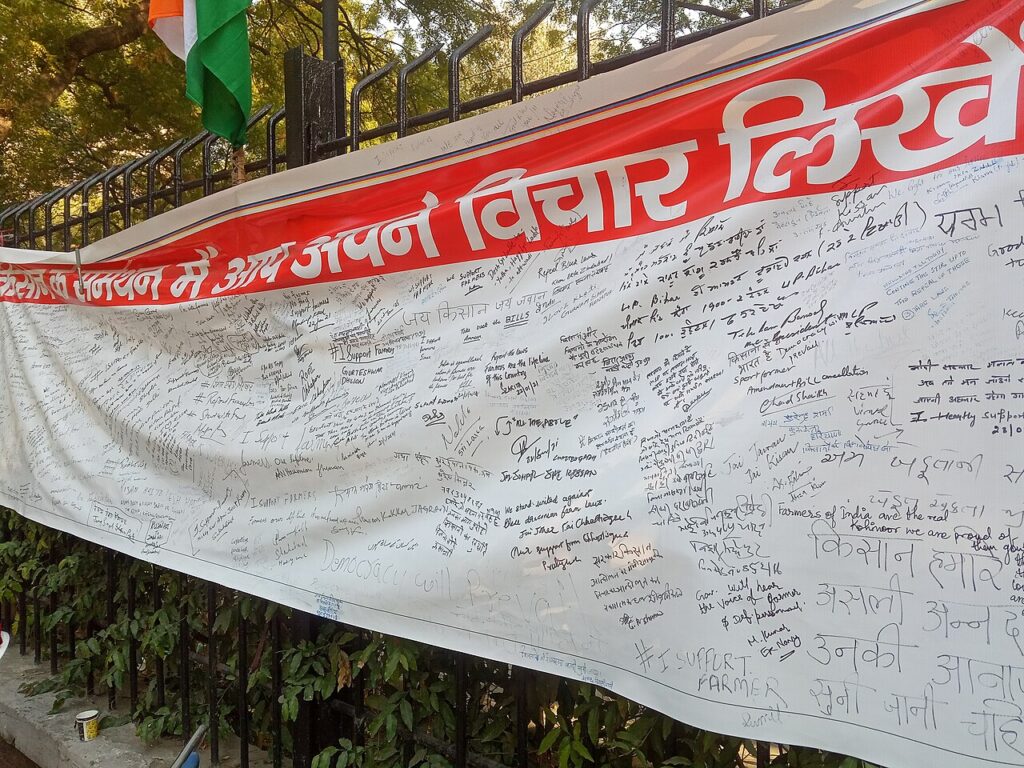

The Raj’s machinery against the Mahatma’s method
Here the two halves meet. Dharna is Gandhi’s own method. Its critics say it has become a way to hold the country to ransom.
…dharnabaazi has become a playbook for those wanting to cause mischief.
Agni, on the Gandhi Jayanti thread
A country whose characteristic political excess is sitting down and refusing to eat has been lucky in its founder. A government that bans the sitting down in its capital is afraid of something. However, a party built on mocking the prime minister is not yet a party.
The flydubai FZ1073 attack: vetting, not suspicion
What happened on the flight
On 30 September the Omani co-pilot of flydubai FZ1073, Dubai to Tel Aviv, attacked the Indian captain, Smit Machchhar, with the crash axe. Investigators say he tried to bring the aircraft down. The captain, with crew and passengers, stopped him, and the flight landed at Tabuk. The UAE attorney general now says it was a premeditated plot to fly the aircraft into the passenger terminal at Ben Gurion. Oman had reportedly barred the co-pilot, Hamam Al-Hammami, from flying over extremist views; flydubai’s own checks showed nothing. The captain is recovering in hospital in Abu Dhabi. Trump has suggested an Iranian link without giving details, Iran calls the incident staged, and the UAE has not linked Iran to it.

_-_60954_-_VGHS.jpg)
Should passengers know a pilot’s religion?
Archer raised the question on the thread after friends began ringing airlines to ask. Disclosure would put every Muslim pilot on trial to catch one man the system should have caught.
The RBI raises rates: paying for other people’s wars
On 7 October the Reserve Bank of India raised the repo rate by 25 basis points, to 5.50%, its first rise since 2023, and changed its stance to calibrated tightening. It points to tighter money in the US and to food and fuel prices pushed up by the war in West Asia. On 12 October the September figures came in: inflation 5.54%, the highest since October 2024, with food at 7.74%. Core inflation was 4.2% in August. ICRA expects another rise in December.
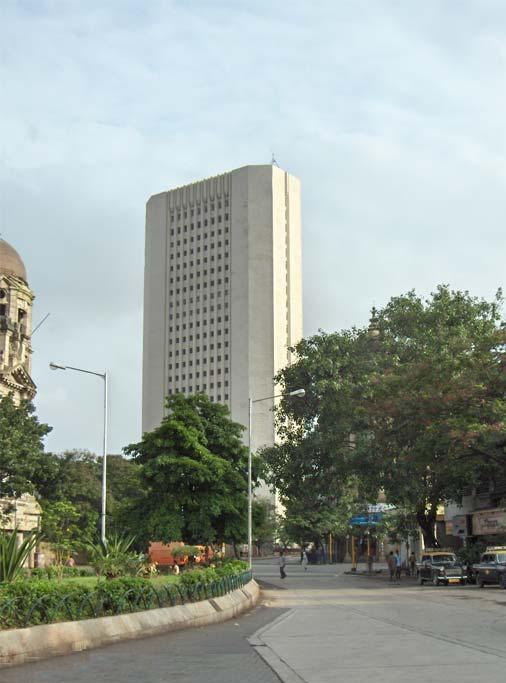

Most of this is imported inflation, not overheating, though the core number says some of it is home-grown. India is paying for other people’s wars at the petrol pump, and the RBI has chosen to pay early.
Will India’s engineers come home?
US visa limits, led by the $100,000 fee on new H-1B petitions, have revived the old question; formerly brown asked it on the thread. India needs deep tech; what it will get first is what pays, and what pays in India is still logistics and payments. Deep tech follows capital, and capital follows the first exits.
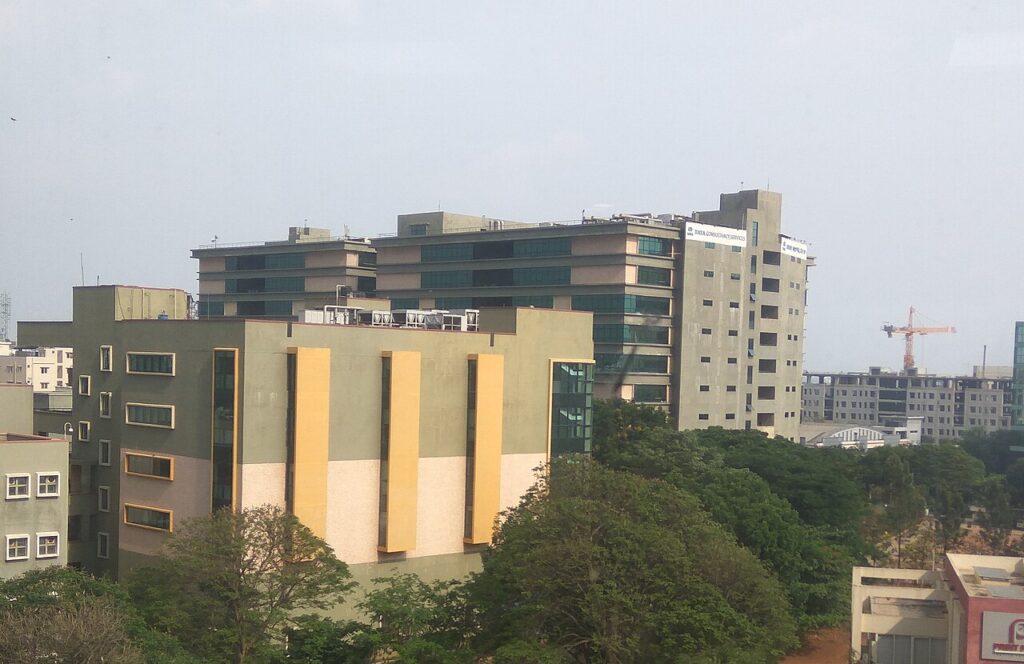

The state can build the roads, the ports and the digital rails. It cannot decree a Bell Labs.
Smaller items
| Date | What |
|---|---|
| 1 October | Nepal: 16 trekkers stranded in Manang rescued. Separately, the avalanche search found more bodies. |
| 1 October | Nepal, already suspended by FIFA, will miss the SAFF Championship in Dhaka in November. |
| 3 October | Sri Lanka beat Bangladesh by 63 runs for Asian Games cricket bronze. |
| 8 October | Nana Patekar, Om Shanti: Rs 50 a show early on, and army service in Kargil. |
| 9 October | An ancient structure found at Jandial, near Sirkap, in Khyber Pakhtunkhwa. |
| 11 October | Bangladesh: Rooppur unit 1 reached its first controlled nuclear chain reaction. Dhaka also signed a $336 million Chinese loan for two Mongla port terminals. |
| 12 October | Nepal: flash floods in Gorkha cut the Manaslu trail and stranded more than 100 foreign trekkers; a rescue is under way. |
| 12 October | Sri Lanka: President Dissanayake said the country is open to a new IMF agreement. |
| 6 October | World Bank: South Asia to grow 6.9% this year on domestic demand. |
Why Gandhi is still worth having
Kabir made the case on the thread: whatever his faults, Gandhi led the non-cooperation movement, went to jail for it, and much of the goodwill India had abroad came from him; Martin Luther King and Nelson Mandela claimed him as an inspiration. Nobody governs by the Sermon on the Mount either. The point of Gandhi is not that South Asia follows him. It is that its states still feel they have to pretend to, and the pretence is the only check some of them have.
Judge him as a man of Dharma, not a man of state.
I think for all the faults of the Congress we cannot blame them for not creating a state out of Gandhi’s imaginations. The reality is the Gandhian state of a village republic is a stupid, dangerous and unworkable idea. It goes against the modern conception of a state. Gandhi had a habit of railing against any modern technology like even a fountain pen because they would not fit his idyllic village republic. I have to simply quote Ambedkar to demonstrate why such a republic would be an awful idea.
https://scroll.in/article/1032646/why-gandhi-disliked-the-fountain-pen-he-thought-it-would-metamorphosevill-villages-into-cities
The reality is Gandhi’s ideas would’ve taken India into an isolated dark age no different than Cambodia’s Khmer Rouge if implemented into reality. It’s best that the founders decided to create the Nehruvian state despite whatever faults it may have had.
I’ve been giving this some thought since Girmit’s excellent comment of litigating state power. I feel state violence has a common pattern, it is just a sliding scale of implementation.
Gandhi’s state machinery concepts were so manifestly unfeasible that we can ignore them as anachronistic aberrations.
But the Gandhi/Nehru vision was not just about state machinery, but upon the ideals too, and those I think were mostly in sync.
>>Antonio Gramsci proposes the idea that the elites maintain control, not just through violence and state machinery but by indoctrinating the populace in ideals that they take as de facto ‘truths’.
In an Indian context, the construct is through Varnas. In the western system it is the Church, its morality and commandments, the intellectuals and their infallibility, the meritocratic nature of society, nationalism etc.
India rejected one for the other, but by foreign imposition, not self reform.
Is the Modi govt’s biggest cultural achievement the remoulding of these ideals to fit more comfortably? I tried to put my finger on it, but am not sure it is quite right.
https://indosaurus.substack.com/p/embracing-ourselves?r=1mp4jc
Governor’s Rule exists in both the Indian and Pakistani constitutions. How many times has India applied it to Kashmir? If that’s acceptable, then certainly Pakistan has the right to apply it in KPK.
In August 2019, India took away Article 370. It also deprived Kashmir of statehood and unilaterally divided it into two Union Territories. Omar Abdullah, Mehbooba Mufti etc were under house arrest for months.
I have seen people like Nidhi Razdan refer to the situation in Delhi as the “Kashmirization of India”–a statement which has obviously offended many Kashmiris.
On Governor’s Rule in KPK, here is a good piece by Asad Rahim Khan. I disagree with his politics because he is pro-PTI but it is a good explanation of the legal implications of the situation:
“States of exception: what the Constitution, 3 court rulings and 50 years say about the KP emergency”
https://www.dawn.com/news/2036585/states-of-exception-what-the-constitution-3-court-rulings-and-50-years-say-about-the-kp-emergency
Removing the elected government of a province is a tactic of last resort. This was not a decision that the Pakistani government took lightly. They had warned PTI for over two weeks that any “Long March” would lead to the imposition of Governor’s Rule. The Pakistani government is not playing this time. Anyone who thinks of causing havoc in Islamabad has hopefully gotten the message that that is now a complete non-starter.