Y-chromosome
-
How much “steppe” ancestry is there in South Asia? (Indian subcontinent)
A back-of-the-envelope estimate by the author that about 14 per cent of ancestry in South Asia, around 220 million people, derives from steppe Sintashta pastoralists, with 20 to 25 per…
-
The East Asian ancestry in Bengalis is probably not Munda
Razib Khan revises his earlier view that Bengalis’ East Asian ancestry is mostly Munda, arguing that genome-wide and haplogroup data point to a Tibeto-Burman donor, and says he now leans…
-
The Indo-Iranians go west!
Razib Khan examines why Sintashta-related ancestry seems lower in much of Iran than among Indo-Aryans in northwest South Asia, finding his qpAdm results erratic and using R1a1a lineage data to…
-
AASI Y chromosomal lineage: haplogroup C
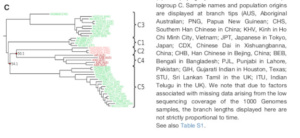
Razib Khan notes that Y haplogroup C, found in South Asian groups without East Asian ancestry, diversified about 50,000 years ago between Australians, Papuans and Indians, making it a likely…
-
They came, they conquered, & they were swallowed
Responding to a reader’s piece on an invasive Aryan migration, Razib Khan agrees on the likely violence and sex-biased conquest but argues the conquered were the ruins of Indus societies,…
-
Brahmins were made in India, not the steppe
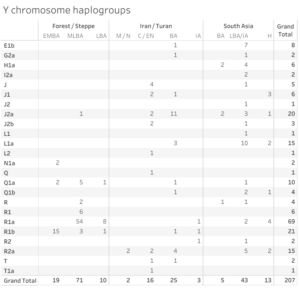
Razib Khan reads Narasimhan et al.’s Y-chromosome data to argue that Brahmin lineages, from UP, Punjab and elsewhere, mix steppe R1a with many local lineages, so Brahmins were formed in…
-
The Burmese frontier of Bengal
Razib Khan reads Thant Myint-U’s account of Burmese memories of Bengal alongside mtDNA and Y data, finding about 10 per cent East Asian lineages in Bangladesh. He argues a Tibeto-Burman…
-
O2a and Munda
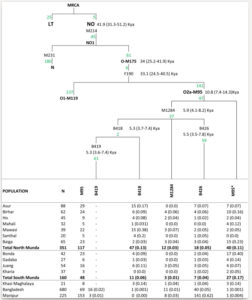
Razib Khan quotes a paper on Y-chromosome haplogroup O2a-M95, which finds at least three founders linked to the spread of Austroasiatic languages into South Asia within the last five thousand…
-
West Bengal Kayasthas are heterogeneous paternally and conventional Bengalis overall
Razib Khan says West Bengal Kayasthas sit on the PCA between East Bengalis and the main India cline, and unlike Bengali Brahmins, who resemble Uttar Pradesh Brahmins, differ little from…