Razib Khan
Razib Khan is a Bangladeshi-American geneticist and writer. He is co-founder of Brown Pundits and runs Unsupervised Learning, a Substack on population genetics, evolution, history, and politics with more than 55,000 subscribers, alongside the accompanying podcast. He has blogged at Gene Expression since the early 2000s.
His writing has appeared in The New York Times, The Guardian, National Review, Slate, India Today, Quillette, and UnHerd. He is Director of Operations at FUTO in Austin, Texas, and co-founder of GenRAIT, a life-sciences platform company. Earlier in his career he developed ancestry algorithms for Gene by Gene, the Genographic Project, and Insitome, and was among the first employees at Embark Veterinary.
Born in Dhaka and raised in upstate New York and eastern Oregon, he holds degrees in biochemistry (2000) and biology (2006) from the University of Oregon, and undertook doctoral work in genomics and genetics at UC Davis. He lives in Austin.
Most popular · Most recent
-
South Asian nations
Razib Khan dislikes the ‘GDP wars’ between India, Bangladesh and Pakistan and argues that health indicators are a harder-to-fake comparison, saying Pakistan is now the subcontinent’s ‘slow kid’ and that…
-
Notes the emergence of “Indic civilization”
A supplement to the podcast clarifying terms: the author, a self-described semantic instrumentalist, says disagreements over words matter less than the concepts behind them, and uses ‘Indic’ for the civilisation…
-
The flip side of globalization
Razib Khan links a report of protests across Bangladesh after a 52 percent fuel price rise, adding that global supply shocks from the Russia-Ukraine conflict will hit small developing nations…
-
Culture can be more powerful than biology
Sharing an interview with the author of a memoir on honour in Pakistan, the geneticist author argues honour killing shows that culture and kinship incentives can override biology, since fathers…
-
Pass the samosa, spare the postcolonialism
Razib Khan argues that Edward Said’s Orientalism at least made an intelligible argument, whereas mass-level postcolonialism is inchoate and its academic form unintelligible, using a Juggernaut piece on cultural appropriation…
-
They came, they conquered, & they were swallowed
Responding to a reader’s piece on an invasive Aryan migration, Razib Khan agrees on the likely violence and sex-biased conquest but argues the conquered were the ruins of Indus societies,…
-
Perhaps India is not special in resisting Islamicization
Reading on imperial China, the author reconsiders why India, unlike Iran, resisted total Islamicisation, arguing that Han resilience makes India less exceptional, and that conversion of some elites and oppressed…
-
America has been good to immigrants and we should be honest about who we are
Razib Khan clarifies his Unherd piece: he argues that some South Asian American social justice activists claim the weight of colonialism and oppression to add to their authority despite privileged…
-
The Muslim intrusion into India was probably inevitable
The author argues that Muslim conquest of India was probably inevitable whatever any single battle’s outcome, because between 500 and 1500 pastoralists from Inner Asia dominated agricultural civilisations across Eurasia,…
-
Why Turks ruled India for so long
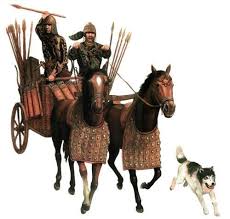
Razib Khan argues that geography and economics, chiefly Turkic and Muslim access to steppe warhorses, rather than Hindu passivity or disunity, best explain the long Turkic ascendancy in the subcontinent…
-
The white acting mother of a white presenting daughter
Reacting to an essay by a Pakistani American mother whose daughter passes as white, the author discusses her possible Syed background, argues such pieces serve a demand among affluent white…
-
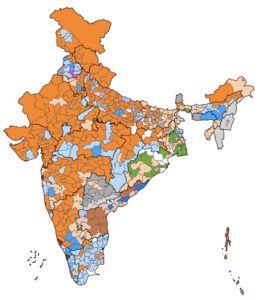
Indian Elections 2019 Thread
-
How much “steppe” ancestry is there in South Asia? (Indian subcontinent)
A back-of-the-envelope estimate by the author that about 14 per cent of ancestry in South Asia, around 220 million people, derives from steppe Sintashta pastoralists, with 20 to 25 per…
-
Hindus are the most authentic Indians
Raised in America as ‘Indian’ despite Bangladeshi Muslim roots, Razib Khan reflects on Hindu claims that Muslim and Christian holy sites lie elsewhere, and on how India’s native religious traditions…
-
An Iyer on the ticket
Biden picks Kamala Harris as VP nominee.
-
The memes reflected in our genes
Razib Khan asks how Brahmins can show higher steppe ancestry yet not form a single founding lineage, answering that Indian social ecology and Brahmin roles spread and mixed steppe ancestry,…
-
2019 Brown Pundits Reader survey
Announces the 2019 reader survey, noting that comments suggest more South Asian readers than the audience really contains, and urging quieter readers to take part.
-
The Jat Gene!
Razib Khan plots Jat samples on PCA and admixture charts, finding them at the ANI end of the cline and distinct from Pashtuns and especially Baloch, who show more West…
-
On caste and a new Hinduism
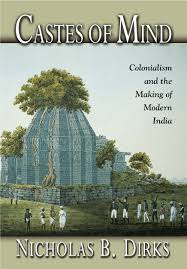
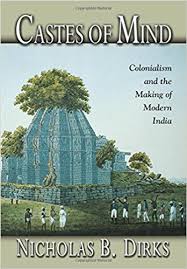
The author argues that caste is closely tied to Hinduism and the subcontinent, and that although Nicholas Dirks’s Castes of Mind stresses British rationalisation of caste, the striking genetic structure…
-
Takeaways from the golden age of Indian population genetics
Responding to an India Today report on Rakhigarhi DNA, the author sets out what genetics shows: South Asian ancestry as a mix of steppe, Iranian-farmer and AASI components, with the…
-
Race and religion trump class
Focusing on victims of ‘Asian’ grooming gang scandals, the author argues they were treated as vulnerable and expendable because of class, and that police would have acted faster had the…
-
23andMe says Bangladeshis are more Bengali than West Bengalis!
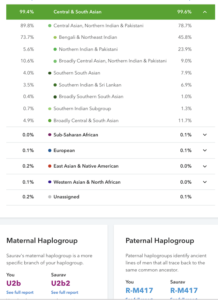
Razib Khan notes that 23andMe’s updated panel gives Bangladeshis more ‘Bengali’ ancestry than West Bengalis, because it treats East Asian-enriched ancestry as diagnostic, which would make even Tagore’s profile look…
-
The Sintashta were swarthy
Razib Khan checks Sintashta pigmentation loci and finds they were much darker complected than modern northern Europeans, probably closer to Sardinians, which helps explain why many North Indians with steppe…
-
When writing about India is actually just writing about America
Razib Khan argues that a Slate piece on the show Friends, billed as about India, was really about the worries of Western liberals, since the show has little influence on…
-
India as the hydra against Islam
Razib Khan asks why India stayed mostly non-Muslim after some five centuries of Muslim rule, and rejects the claim that violent resistance explains it, noting that Iran’s Tabaristan kept Zoroastrian…
-
Intra-subcontinental insults are…
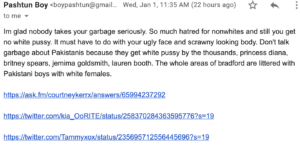
The author shares an odd email of insults from Pakistanis and Hindus, saying such abuse presupposes a communal identity he mostly lacks, and puzzles over insults aimed at Bengalis and…
-
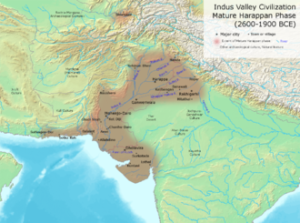
The Sindhi homeland of the “Dravidians”
The author is modestly confident of Peter Bellwood’s hypothesis that Dravidian languages spread south through the western Deccan, citing IVC-like ancestry in southern Pakistan and parts of South India, Dravidian…
-
Their Muslim Problem—And Ours
On the row over an advertisement showing an interfaith marriage, the author argues critics dodge its gendered side, since Islam allows Muslim men but not women to marry out, and…
-
Indus Valley, Sintashta, and Andamanese ancestry in select grioups
Razib Khan runs qpAdm models for South Asian populations, using Indus, Sintashta and Andamanese ancestry, finding for example that Ror have more of both than Kamboj and Uttar Pradesh Brahmins…
-
The shadow of the crescent
Razib Khan argues that modern Indian and Hindu mentality, secularist or Hindutva, is shaped by a double colonial layer of Islamic and Western rule. He finds postcolonial theory unhelpful as…
-
Was India ever really “secular”?
Starting from a book asking whether Europe was ever really Christian, the author argues India’s secularism was a chimera, a collectivist society ruled by an English-speaking elite, whose failure to…
-
The material wages of caste
Razib Khan sets aside the arguments over caste, varna and jati and asks what caste has meant materially, for wealth and work.
-
How Indian are Pakistanis (vs. non-Indian)
The author argues that affluent, liberal Pakistanis understate Pakistan’s cultural ties to the wider Middle East and fixate on India instead, citing a 2012 Aspen Institute panel where Pakistan’s speaker…
-
Indians in Kerala are less religiously polarized, those in Bihar are more polarized
Razib Khan uses World Values Survey regional data to check commenters’ claims, finding trust across religions is highest in Kerala and lowest in Bihar. He cautions that single results need…
-
The once and future “Brown Pundits”
Razib Khan recounts how Brown Pundits began as Sepia Mutiny wound down, divides South Asian Americans into assimilators, hybrid ‘South Asian Americans’ and traditionalists, and says the blog now interests…
-
How Indians view themselves vs. how Westerners view Indians
Razib Khan comments on a headline about dark-skinned Indian-origin actresses in Bridgerton, saying casting will not change subcontinental norms but offers a window into aesthetic standards and the assumption that…
-
West Asian ancestry in South Asian Muslims
Answering complaints about his claim that South Asian Muslims are almost entirely of local descent, the author explains that ’99 per cent indigenous’ concerns DNA, not genealogy, since after about…
-
The Elephant and the Dragon
Quoting a reader’s comment, the post suggests Chinese elites see Indians as big talkers and little doers, shaped by Cold War diplomacy and an earlier split in which China chose…
-
A vision for solving India’s caste social crises
Razib Khan argues that jati-varna helped India resist Islamisation but is now a problem, calls caste-based reservations socially toxic and economically inefficient, and expects falling endogamy to dissolve the system…
-
How Islam’s greatness redounds to Indian religion
The author argues that the more transformative Islam appears in the genetic and cultural record, the more remarkable it is that India was still about 75 per cent non-Muslim on…
-
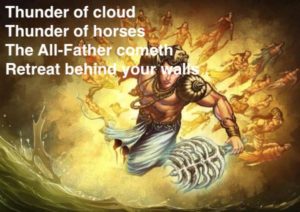
What The All-Father Means
The author explains his joke about being a scion of the All-Father: the R1a1a Y-chromosome lineage spread across Eurasia and South Asia, and star phylogenies from whole-genome data suggest a…
-
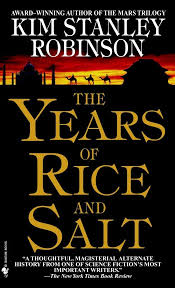
Years of Rice and Lentils
Prompted by Kim Stanley Robinson’s The Years of Rice and Salt, the author poses a thought experiment: what if the Rajputs had halted Turco-Muslim expansion beyond Sindh and parts of…
-
Brown Pundits 2018 Reader Survey
Razib Khan announces the 2018 Brown Pundits reader survey on SurveyMonkey, with results viewable after completing it.
-
Leicester!
-
Caste – bred to the bone!
Razib Khan follows a podcast on caste, arguing from genetics that jati is a strong reality, with endogamy across southern Asia for 1,500 years, and contrasting China’s civilisational continuity, where…
-
What is a civilization?
Reflecting on what a civilisation is, the author finds Huntington’s emphasis on religion persuasive for South Asia, citing Peter Turchin’s view of higher religion as a meta-ethnic identity, while arguing…
-
Why Aryan Migration Theory (“AMT”) is probably true, but it might not matter
Razib Khan explains why he reads the Aryan Migration Theory as probably true on the genetic evidence, while saying it may matter less than the heat suggests. He also describes…
-
Caste in the Indian subcontinent: the wages of Manu
Razib Khan points to a new Substack post on caste, saying the DNA data now give the general outline and it is up to social historians to make sense of…
-
Hindu conversions to Islam in Pakistan
Razib Khan, citing a news report, argues that conversions of poor Hindus in rural Sindh, which is about 10% Hindu, are better explained by desperation and discrimination than by pure…
-
The invention of Hinduism 1,000 years ago by a Muslim
Razib Khan criticises the Eurocentrism of postcolonial discourse and offers extracts from the Central Asian polymath Al-Biruni on Indian religion, as one of the earliest extensive outsider accounts of the…
-
Down with eggs?
Razib Khan asks whether there is a good nutritional case for BJP-aligned governments removing eggs from school meals, arguing that growing children need protein and fat, that India still has…
-
Division
Razib Khan laments that South Asians keep stressing their differences, Indian against Pakistani, north against south, high caste against low, though they share common roots and outsiders see the kinship.…
-
Lord Indra the brutal!
Assuming an Indo-Aryan intrusion around 1500 BC, Razib Khan estimates 10-20 per cent Indo-Aryan ancestry in the Gangetic plains and argues, from admixture patterns, that the intrusion may have caused…
-
An early modern Pax Islamica
Reviewing The Muslim Empires of the Ottomans, Safavids and Mughals, the author praises its short comparative frame, noting that the three dynasties differed in religious basis: Ottoman ghazis, the Safavid…
-
Religious change, genocide, and culture in the Indian subcontinent and Eurasia
Razib Khan argues that ‘genocide’ carries modern, mass-politics connotations that do not map neatly onto premodern ethnic and religious turnover, where death was often a side-effect, and says readers should…
-
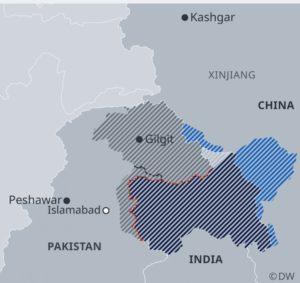
Xinjiang and Kashmir, China and India
Razib Khan observes that Kashmir and Xinjiang are geographically close, and notes that Kashmir gets far more solidarity from the Western Left than Xinjiang, though China’s actions there look far…
-
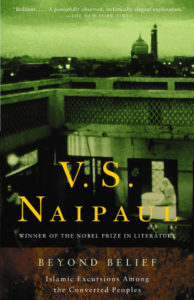
V. S. Naipaul has died
A short tribute saying the author has read only Naipaul’s nonfiction, which distilled familiar intuitions into economical prose, though he later rejected much of its analysis, and leaving the fiction…
-
The Mughals!
After a Clubhouse debate on the Mughals, the author rejects both the ‘great Indians’ and ‘genocidal colonisers’ extremes, arguing they were partly an alien Turco-Mongol presence yet drove changes that…
-
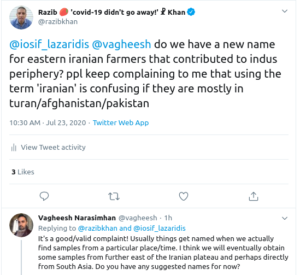
What do we call the Ancient Ancestral North Indians?
Razib Khan agrees with commenters that ‘eastern Iranian farmers’ is a misleading label for the main ancestry of Indus Valley people, since the lineage split before farming, about 10,000 to…
-
How Indians invented the universal religion
Disagreeing with guest Armin Navabi on a podcast, the author argues that universalist, post-tribal religion was not invented by Christianity and the Abrahamic tradition, pointing to Ashoka’s Edict 13 and…
-
Brahmin please!
Discussing a study following Swedish families over seven generations, the post notes that ancestors’ status shapes life chances long afterwards despite high mobility, which fits Gregory Clark’s work on persistent…
-
Brown American in 2019
Responding to Hasan Minhaj’s interview with Zoomers, Razib Khan notes their wish that people understood the diversity within Indian Americans, and reflects that immigrants of 1965 to 1990 are now…
-
Saffron on the outside, woke on the inside
The author argues that although Hindutva and ‘woke’ politics are opposed in theory, parts of Hindutva Twitter borrow the woke style, including emphasis on feeling, lack of humour and identitarianism,…
-
Getting beyond the nerd understanding of religion
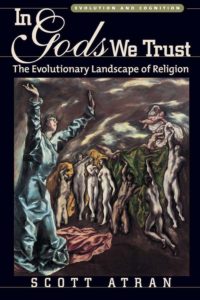
Razib Khan, an atheist who says he does not intuitively get religion, argues technically minded ‘nerds’ misread it because belief in gods, spirits and ghosts is the universal raw material…
-
Pogrom in Kabul
Quotes a report of an Islamic State attack on a Sikh temple in Kabul that killed 25 worshippers, with the comment that attackers keep to their old script even during…
-
The passing
Reading Pankaj Mishra’s New York Times op-ed on white nationalism, the author argues that even progressive whites show revealed preferences for living among other whites, citing Bill Clinton’s own town,…
-
Taking sides when good and evil is unclear
Razib Khan explains why his default on foreign conflicts is mild isolationism when good and evil are unclear.
-
An Iyer in the Whitehouse
A short note that Kamala Harris’s mother was a Tamil Brahmin immigrant, that Harris reminds the author of an Iyer friend, and that he thinks she is a likelier president…
-
Maratha Mindset: How to Control Your History and Emotions to Grasp the Future on Your Terms
Prompted by the film Panipat, Razib Khan reflects on the rising Maratha moment in Indian historical imagination, arguing that history’s facts are fixed while interpretation shifts with the analyst, and…
-
Hindu racism against Muslims
Prompted by Mindy Kaling’s use of ‘racism’ for prejudice against Muslims, Razib Khan argues that both some Hindu nationalists and some Muslims treat Muslims as an alien race, although genetics…
-
Lakshmi
Reading about the Corded Ware culture for his steppe series, the author explains that its mature phase is about 70 per cent Yamnaya, with farmer ancestry coming through women, and…
-
India before the binary
Quoting an article that blames British colonialism for erasing Indian trans histories, the author likens the claim to saying the British invented caste and argues that Indians are merely instruments…
-
Hinduism was not invented by the British (or Muslims)
Disagreeing with the view that Hindu identity was manufactured by colonialism or by Muslims, the author argues Megasthenes, al-Biruni and Faxian already saw Indians as a distinct people, and that…
-
Genetical observations on caste
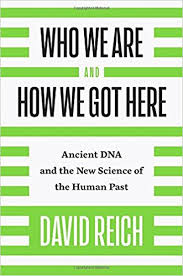
Citing David Reich’s book, Razib Khan says most Indian jatis have been genetically endogamous for about 2,000 years and varna groups differ in steppe ancestry, which he thinks undermines the…
-
To the victors go the glory!
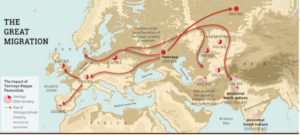
Introducing his steppe series, the author argues the subcontinent was stamped by the steppe: Indo-Aryans (about 15 per cent of ancestry), possibly Iron Age pastoralists, and the Muslims, who had…
-
To understand Islam one must understand religion
Writing for new readers, especially ‘internet Hindus’ and philosophical atheists, the author argues that understanding Islam first requires understanding religion as a natural phenomenon, drawing on cognitive anthropology, and criticises…
-
Indian culture started when the British arrived: tales of shadology
Citing a study of skin-colour bias in arranged Indian marriages, the author notes fair-skinned candidates were preferred and found no sex difference, and turns to the paper’s framing of colour…
-
All that matters is which way you are punching
Responding to a New Yorker passage on Modi, Razib Khan argues that some Hindu nationalists want a nation-state built on an ethnoreligious core, much like Pakistan’s original vision, and that…
-
Genetics stories in India Today
Shares an extract from an India Today piece on 4,500-year-old DNA from Rakhigarhi, adding that many Hindu nationalists are unperturbed by such findings and that the paper’s publication is still…
-
Dallas area teen wins National Spelling Bee
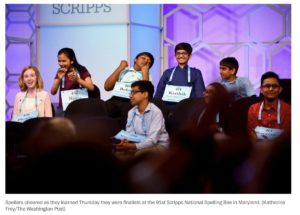
Razib Khan congratulates Karthik, from the Dallas area, on winning the National Spelling Bee, and Venkat, from Northern California, who won the National Geo Bee.
-
The myth of Brahmin supremacy!
Razib Khan argues that ‘Brahmin privilege’ and ‘Brahmin supremacy’ are imported analogues of ‘white privilege’ and ‘white supremacy’, and disputes a quoted claim that varna literally means colour and that…
-
Crazy Rich Asians is not social work
Dismissing the demand for ‘representation’, the author argues critiques of Crazy Rich Asians in Singapore are simplistic, that Chinese-Indian racism there runs both ways, and that giving English and Mandarin…
-
Beyond the Bangladeshi basket-case
A quoted report that Bangladesh’s per capita GDP, $1,905 in 2019 on IMF data, now exceeds West Bengal’s $1,566 and most eastern Indian states, with the poster noting Bangladesh is…
-
Genetic variation across many South Asian communities
Sharing percentages from a preprint on the genomic formation of South and Central Asia, the author cautions about sample sizes and urges readers to compare how ancestry varies across groups,…
-
South Asian nationalism
Responding to a tweet about being sorry to be mistaken for Pakistani, the author says many liberal Indian Americans are highly nationalistic and switch between left-liberal and nationalist views, and…
-
The practice of untouchability by district
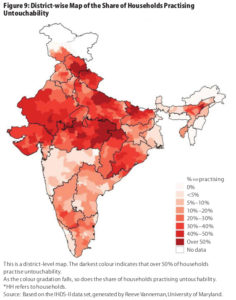
Razib Khan shares a district map of untouchability practice, taken via Alice Evans from a paper on its continuing practice in India, noting that regional patterns outweigh education, income or…
-
The power of the nameless
Using Angkor Wat, the Khmer Empire, Cham Hindus and Bali, the author rebuts a commenter’s claim that ‘Hinduism’ was a British census category, arguing that the faith has deep and…
-
The education of the people of Tianzhu
Noting Shakespeare in India’s ruling decriminalising homosexuality, the author argues the English-speaking Indian elite remains oriented to the West even as China overtakes Britain in trade, and urges Indians to…
-
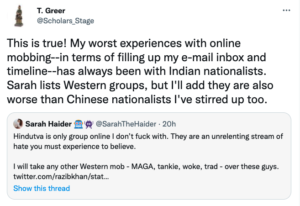
Allies on the Right
Razib Khan replies to Sarah Haider and Tanner Greer about his disavowal of the online Hindu Right, saying that if people are against him, he is against them.
-
Maharashtra genetics
A quoted abstract of a study of West Maharashtra castes and tribes finding Deshastha Brahmins carry more Iranian and steppe ancestry than Kunbi Marathas, and tribal groups very high AASI,…
-
What is in a name?
Starting from the origins of Martin Luther’s name, the author questions why Indian converts to Christianity often take ‘Christian names’ to avoid pagan references, noting that European converts kept names…
-
Global alliances and wheels within wheels
Taking Adam Webb’s thesis of non-Western revival against global liberalism as a lens, the author notes Western leftist protests against a Hindu nationalist meeting in Chicago, and an ex-Muslim activist’s…
-
Hindenburg vs. Adnani
A Wall Street Journal report on the Adani Group losing about $64 billion in value after the Hindenburg short-seller report, with excerpts from it and a remark that the author…
-
The Brahui, total genetic replacement?
Razib Khan argues from a paper on the Dravidian-speaking Brahui that they are genetically indistinguishable from the Baloch, so either their language is a retention after major population replacement or…
-
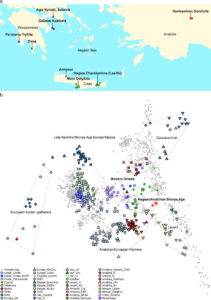
How the Greeks came to be
Using ancient DNA, the author says most Greek ancestry derives from Anatolian farmers some 9,000 years ago, with later waves from the east, a Bronze Age pulse linked to Greek…
-
Sharing a continent
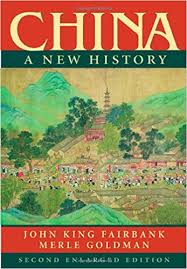
The author notes the subcontinent and China hold over 40 per cent of humanity yet know little of each other, and argues that Indian claims of a continuous ‘pagan’ civilisation…
-
We are all Aryans now
Drawing on a chapter he wrote for a forthcoming Indian book, the author argues that almost all South Asians are Aryans in the genetic sense, since Indo-Aryan steppe ancestry runs…
-
Toward a mature conservatism
Citing Narendra Modi’s remark that Ganesha shows ancient plastic surgery, the author argues that pseudoscience and pseudohistory on the Indian Right are a worrying sign of poor epistemological hygiene. He…