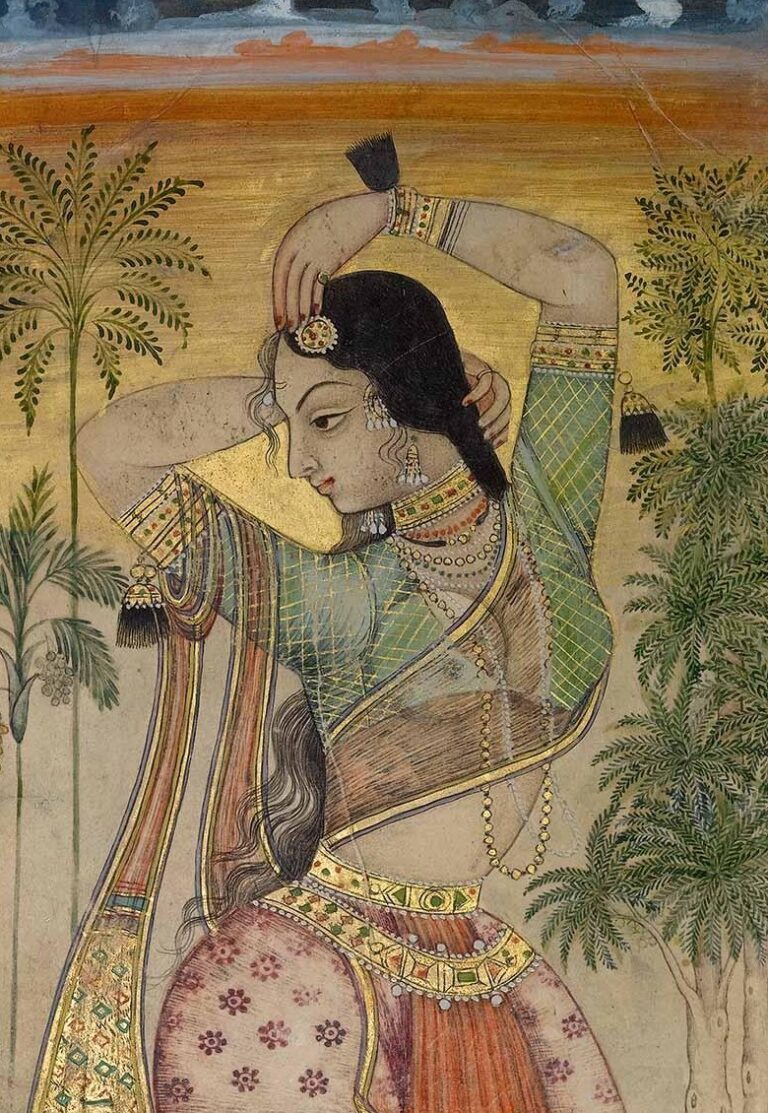
Devdutt Pattanaik asked on Facebook who funded the Brahmins to give up meat. His claims about Brahmin vegetarianism: the earliest texts promoting a fully vegetarian lifestyle are Jain texts from Gujarat around 1000 AD; Muslim merchants and halal practice may have shaped Hindu purity rules; and trade went both ways, with Gujarat supplying the peacocks seen in Islamic art and Muslim traders supplying the lions that became the symbol of the Jain kings of Girnar. He conceded that some monks and priests were vegetarian earlier, and asked whether the influence could have run the other way. He framed each point as “this needs investigation.” His Baniya and Brahmin thesis was discussed in The Brahmin Civil War.
Satire or history
“Who funded” and “this needs investigation” are phrases used online to question activists and protests. Pattanaik applied them to Brahmin diet and ended: “So it cannot be Baniya funded.” The post can be read as satire of that method. Whether or not it was meant as satire, its historical claims can be checked.
Two claims that hold
Brahmin diet varies by region
Members of several Brahmin communities eat fish, and some eat meat: Bengali, Odia, Maithil, Kashmiri, Saraswat and Konkani traditions all include fish-eating groups. Vedic ritual included animal sacrifice. Vegetarian norms are prominent among Brahmin communities in Gujarat, Rajasthan, the Tamil and Kannada regions and parts of the Hindi belt. Current practice shows variation; it does not by itself show how old any of these diets are.

Jain accounts describe a royal ban on killing in Gujarat
Jain accounts record that in the twelfth century the Chaulukya king Kumarapala, advised by the Jain scholar Hemachandra, proclaimed amari, a ban on killing animals, across his kingdom. The accounts come from the Jain side. How far the ban was enforced is not known.

Arguments against eating meat long before 1000 AD
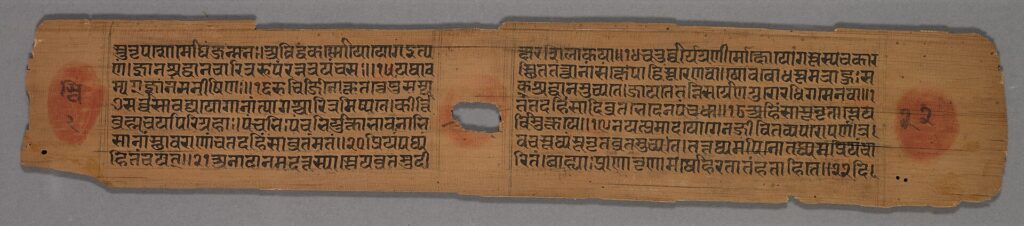
Pattanaik’s dating concerns texts that promote a fully vegetarian life. The sources below are of different kinds. None shows all Brahmins changing diet at one moment. Together they show that the argument for abstaining from meat is far older than medieval Gujarat.
| Date | Source | Type | Content |
|---|---|---|---|
| c. 250 BCE | Ashoka’s edicts | Royal policy | Rock Edict I reduces killing in the royal kitchen to two peacocks and a deer, the deer not regularly, and says these too will stop. Pillar Edict V lists protected animals. A restriction on killing, not a vegetarian rule for all subjects. |
| Early centuries CE | Manusmriti 5.48 to 5.49 | Normative teaching | Meat cannot be had without injury to living beings, so a man should avoid it. The same chapter permits meat in ritual and other contexts. |
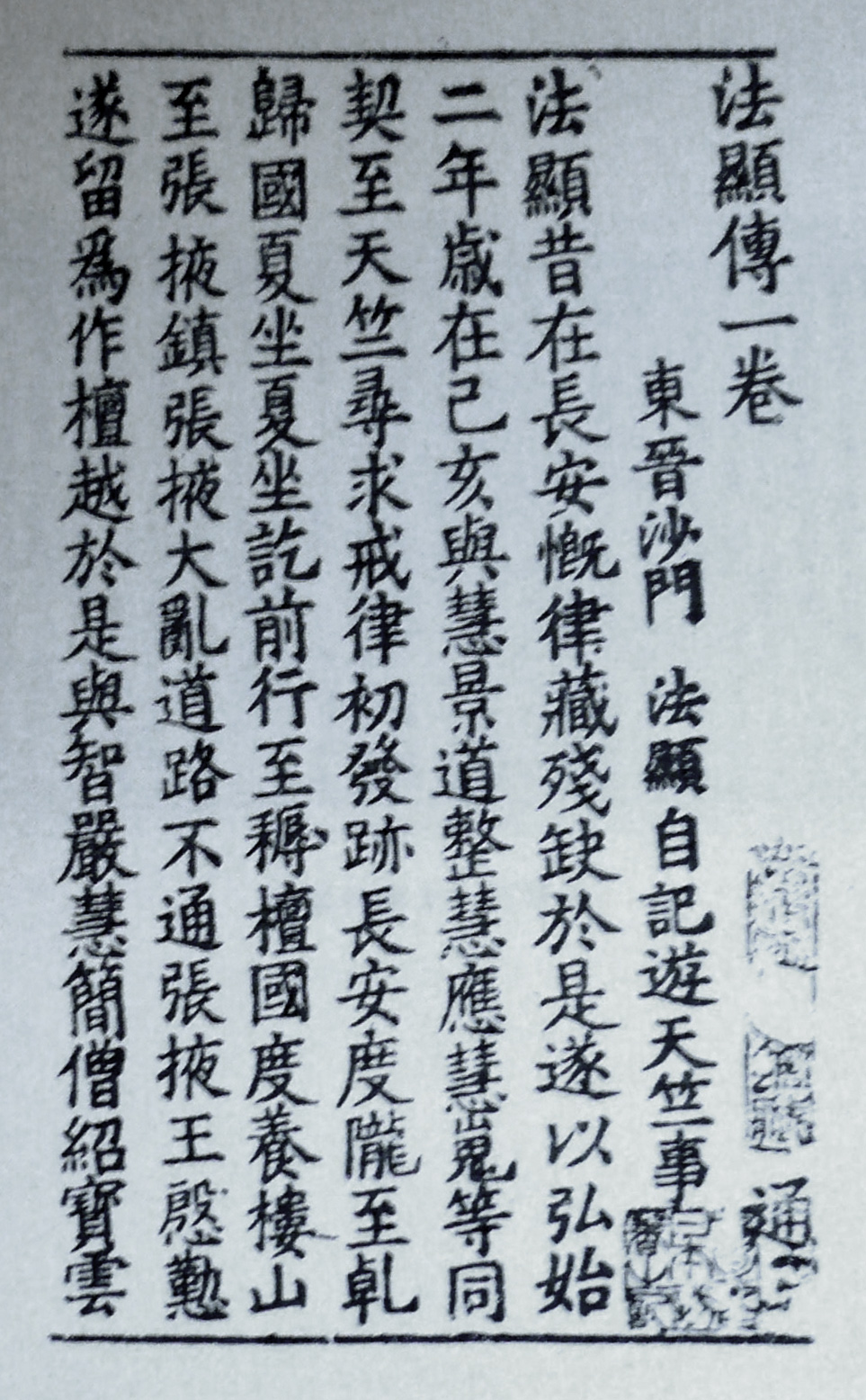
| c. 400 CE | Faxian, Chinese pilgrim | Traveller’s account | Reports that in the Middle Country people did not kill living creatures, drink alcohol, or eat onion or garlic, except the Chandalas. An observation, not a census. |
| c. 300 to 600 CE (dating disputed) | Tirukkural, chapter 26 | Normative teaching | Ten verses on abstaining from meat. |

The disputed Jain passage
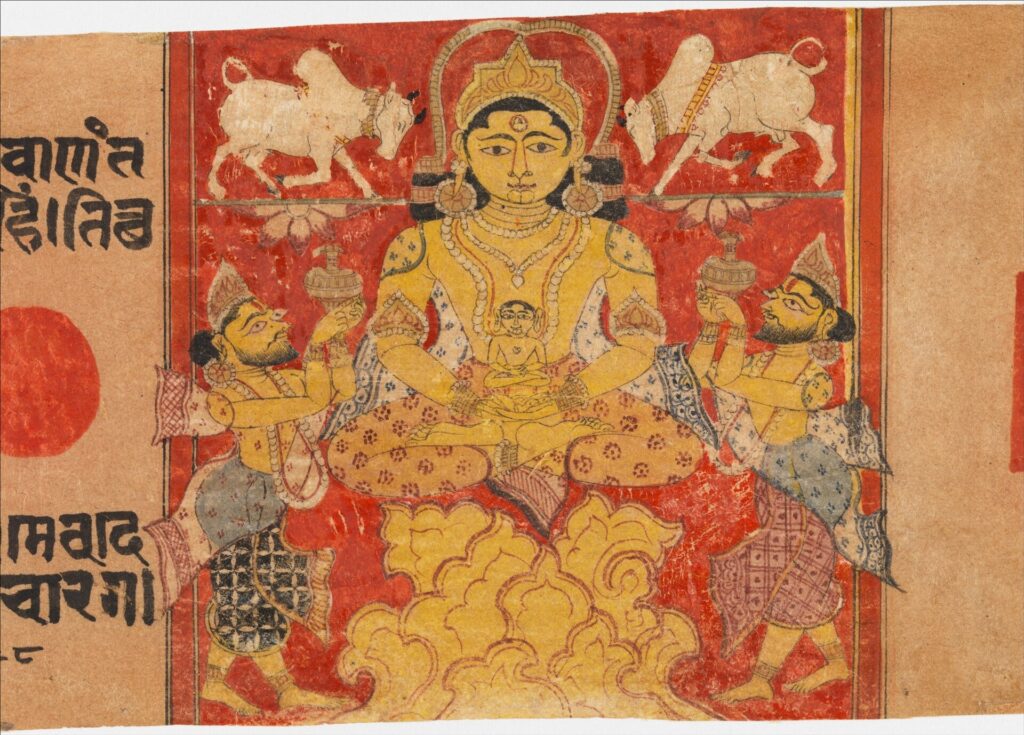
Pattanaik’s reading that early Jain texts allowed meat rests in part on the Bhagavati Sutra (Viyahapannatti 15), in the account of Mahavira’s illness. Revati prepares food described with words that can mean pigeon and rooster. The Indologist Ludwig Alsdorf defended the literal meat reading. Jain commentators since the medieval period have read the words as plant names, a gourd and a citron. The passage is disputed and has been for more than a century. It does not settle Mahavira’s diet, and it does not date the origin of Brahmin vegetarianism either way.

Purity rules and the lion before Islam
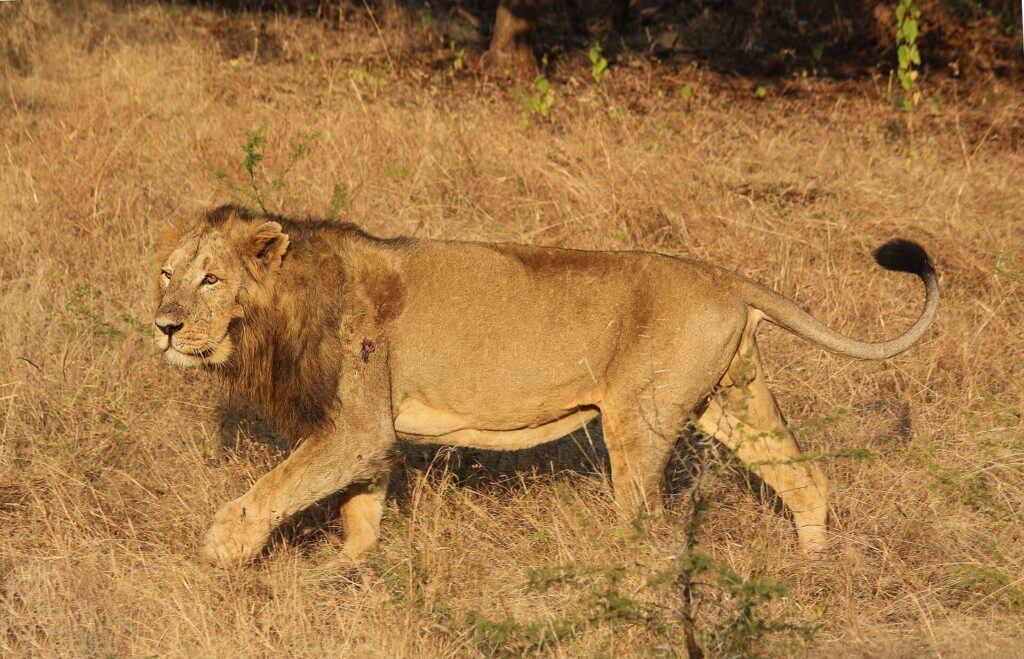
Dharmashastra texts classified substances, animals and people as pure or impure centuries before Islam reached Gujarat. Lions are native to Gujarat, where the Gir forest and the surrounding Saurashtra landscape hold the surviving wild Asiatic lions, and the lion is Mahavira’s emblem in Jain iconography. None of this rules out later borrowing in particular cases. It does mean that a Muslim import is not needed to explain the purity rules or the lion.

What the evidence explains, and what it does not
Sanskritisation explains spread, not origin
M. N. Srinivas described Sanskritisation in the 1950s: castes seeking higher status adopt the practices of higher castes, often including vegetarianism. This explains how a prestigious diet spreads, and why diet still marks caste boundaries in everyday life. It does not explain why Brahmins in some regions adopted it first.
Competition with Buddhism and Jainism
Brahmanical traditions competed with Buddhism and Jainism for royal and merchant patronage over many centuries, and both of those religions made non-violence central. That is a plausible pressure on Brahmin practice. The sources used here do not establish whether it explains the regional pattern, and the ancient texts above do not measure it.
What the sources establish
Diet is now argued over as a marker of national identity: meat called foreign by one side, vegetarianism called an import by the other. Indian arguments for abstaining from meat predate Islam and Hemachandra. The sources do not identify one moment when all Brahmins changed diet, or one sponsor. Regional practice, religious teaching, patronage and status imitation are separate mechanisms, and each needs its own evidence.
Since then: the goddess and the flies
Pattanaik has stayed on the subject. Three posts since the one I answered above:
| Date | Post |
|---|---|
| 13 October | Flies in the Rig Veda: an answer to the vegetarians who call meat-eating Hindus “makkhi” |
| 18 October | China had no food taboos, “no halal, no satvik, no kosher”, until Buddhist monks brought ideas of purity |
| 19 October | “How to make a vegetarian goddess?”, his New Indian Express column of 18 October, posted in Hindi |
The goddess column makes the same argument as the Brahmin post, with the goddess in place of the priest. In Konkan, Gauri comes home after Ganesh and is fed fish or mutton by Koli, Agari and Maratha households. In Bengal, Uma comes home for four days, goats were once killed before her in the old houses, and on Dashami she is sent off with fish and rice. A daughter eats what the house eats. Against this he sets Vaishno Devi of the Trikuta hills, a maiden who hates meat and liquor; both belong to her enemy Bhairon Nath, the disciple of Gorakhnath. He then gives two Jain stories: in Jinasena’s Harivamsa Purana of 783 CE, Durga’s blood cult begins when hunters find a tiger has eaten a Jain nun and conclude that the goddess wants blood; at Osian in Rajasthan, the monk Ratnaprabhasuri gives Chamunda a heap of sweets, she gives up the buffalo and becomes Sachiya Mata, the vegetarian clan goddess of the Oswal Jains. His explanation is the purse. Marwari and Gujarati families, Jain and Vaishnava, paid for the marble, the feeding halls and the trusts; “once the purse comes into their hands, the goat is taken away.” His text is the Devi Bhagavata Purana, 3.26, where verses 30 and 31 prescribe fruit for Navaratri and verses 32 to 34 open a second path: animals offered to the goddess go to heaven, and the killing counts as non-violence. A popular modern Hindi translation, he says, folds those verses into one line about fruit.
I checked what I could. Swami Vijnanananda’s translation of 3.26 reads as he says: “Those who eat meat, they can sacrifice animals in this worship of the Devi; and, for this purpose, goat and wild boars are the best”, the animals “attain to unending heavens”, and “in all the Sastras … this killing of animals in a sacrifice is considered as non-killing.” Chapter 27 adds that “payasa and fresh fish are to be specially offered”. Two menus, both lawful, as he says. One correction: the chapter names goat and wild boar; the buffalo is his addition. The Harivamsa story, the Osian story and the 956 CE inscription at Osian are as he gives them, though I read the Harivamsa in summary, not in the original. The Shrine Board’s own account of the Vaishno Devi legend names Bhairon as “a disciple of Guru Gorakhnath”, so that outline is the shrine’s own. The fish sent off with Durga on Dashami is well attested in Bengal; for Konkan his source is his own 2015 column on the Kolis of Mumbai.
The flies post holds too. All six verses he cites read as he says in Griffith’s translation: the fly that eats the raw flesh of the sacrificed horse, whose share goes to the gods (1.162.9); the men who wait for their portion of the cooked horse (1.162.12); the honey-bee that sang to the Ashvins (1.119.9); worshippers “like flies on honey” around Indra (7.32.2); the fifteen or twenty bullocks cooked for Indra (10.86.14); the horses, bulls, oxen and rams offered to Agni (10.91.14).
What is not shown is the same as before: a date and a sponsor. He dates the spread of the Vaishno Devi story to the twentieth century, through the Arya Samaj, BAPS, calendar art and cassettes, and gives no source; he concedes that the age of the written legend is unknown. The Hindi translation that drops the three verses is not named, so I could not check it. The purse mechanism is documented at Osian and plausible elsewhere, but he gives no second case with dates and accounts. The texts show two traditions side by side for a very long time, and the richer one setting the menu wherever it paid for the temple. That is the finding of the Brahmin post as well.