A Tribute to A Family of Freedom Fighters
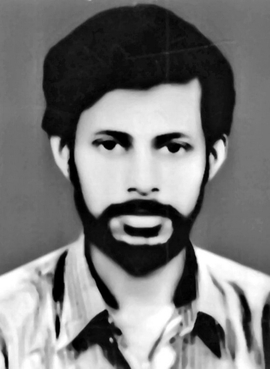
In 1971, my cousin Ashfaqus Samad (Nishat Bhai) was a student in the Statistics dept. of Dhaka University, having graduated from St. Gregory’s School and Notre Dame College. A talented student, he was considering options of graduate study at MIT and elsewhere. Pakistan Army’s genocidal crackdown started on the night of March 25th; on the 27th, he and his friends Badal, Bodi (Shaheed) and Masud left for Kishoreganj and met with EBR forces there. On April 4th, they returned with a few .303 rifles, some ammunition and 25 grenades, thus becoming the first guerrillas to organize armed resistance in Dhaka. The cache was initially stored at his home, and subsequently moved cross-town at great peril to his friend Towhid Samad’s Dhanmondi residence. Realizing that it was inadequate, he then went to Agartala, India, for further military training.
After seeing sporadic action in the Saldanadi sector, in June he was selected for the First War Course of Bangladesh Army, to be trained by the Indian Army at Camp Murti, near the Indo-Bhutan border. Bearing ID No. S.S. 33, he was one of 61 Commissioned Officers, including Sheikh Kamal (eldest son of Sheikh Mujib), who graduated on October 9th, and one of only two of his batch to be killed in action (KIA) during the war. He was assigned to Sector 6 in Dinajpur and Rangpur, where he helped liberate several areas, notably Bhurungamari, the first upazila (sub-district) to be freed.
So thorough was the rout of the Pakistanis by allied forces that their new battalion commander in nearby Nageshwari, Lt. Col.(later Brig.) M.M. Sarfaraz Khan, reported: “Earlier, on 14th November, the enemy successfully attacked a company of 25 Punjab in Bhurangamari…..All the troops including the Company Commander were in poor state. Many of them were in a state of anguish…..I turned to look at the bleak situation and the demoralized soldiers who had recently faced bitter defeat.”
It is not widely appreciated that mid-November marked Indira Gandhi’s “Eid” gift to Bangladesh – prior to that Indian forces did not routinely cross the international boundary (IB), but thereafter joint Indo-Bangladesh forces launched relentless attacks along the entire border. The strategy was to soften up the Pakistanis and drive them into garrisons, which would later be besieged and bypassed on the road to Dhaka.
Nishat Bhai led a small force against the Pakistani stronghold in Raiganj, but in the course of battle they were unable to find cover against elevated enemy positions on the Fulkumar River bridge and adjacent buildings. He told his men to retreat and regroup, while he stayed back alone with a light machine gun to provide covering fire. He bought precious time for his troops, but he paid for it with his life. The Pakistanis targeted their fire on his gun position until he fell silent.
Moved by the ultimate sacrifice of their young leader, his men were determined to fulfill his mission and to recover his remains. A joint Indo-Bangladesh force launched a fearsome counter-attack, and after several hours of bitter fighting, 25 Punjab was driven all the way back to Nageshwari. Nishat Bhai and some other martyrs were buried near the Joymonirhat bazaar mosque after funeral prayers on free Bangladesh soil. It was Eid Day. The army of the state which had awarded his Fulbright Scholar mother the Tamgha-e-Quaid-e-Azam in 1970, would kill him in 1971. He was only 22.
U.S. Civil War historian Michael Musick wryly observed that “…..while all battles are fearsome things, not all battles are equal, particularly in their historiography.” Nishat Bhai’s younger brother Ishtiaq Aziz wrote that perhaps he died in “just another battle.” But was it? From my perch in faraway Florida, I have access to precious little primary sources which might be available locally. But this much is clear: perhaps because of their disastrous defeat a week earlier in Bhurungamari, the Pakistanis were spoiling for a rematch. Lt. (later Lt. Col.) K.J.S. Bakshi of 1 Field Company Engineers wrote in his book Untold Incidences of Operations 1971 Bangla Front: “Soon the enemy too reorganized itself and put up a very tough battle at Raiganj. They used intensive artillery to bombard our troops with plenty of air burst shells inflicting heavy casualties on our side.”
The Government of India posthumously awarded ‘Vir Chakra’ (VrC) to BSF Deputy Commandant (DC) Inderjit Singh Uppal and Lance Naik Mohini Ranjan Chakravarty for their heroic actions during the Battle of Raiganj. The BSF battle report is as follows: “Two Coys of 78 Bn alongwith Mukti Fauz were asked to capture north bank of Phulkumari river near Raiganj. Both Companies i.e. A/C Coy lead by Sh Indrajeet Singh Uppal, Dy Comdt left their location Andharijhar Khamar at 0001 hrs on night 19/20 November 1971 and took opposition on the bank of Phulkumari river. The Companies fought their way upto the North bank against considerable small arms, 82 mm Mortar and 105 mm artillery fire. A fierce battle ensued between the Pakistan and the Indian forces. The enemy bunkers were very heavily fortified. The BSF, Rajput and the Mukti Fauj had a tough time to dislodge the enemy. It was in this battle that Deputy Commandant Indrajeet Singh Uppal came under enemy fire and breathed his last.” DC Uppal was the only BSF officer KIA in the Eastern Theater in 1971.
In the meantime, my Boro Mama (eldest maternal uncle), whose younger son Ishtiaq Aziz was fighting with Dhaka’s famous “Crack Platoon,” a daring guerrilla unit composed of college students, was picked up by the Pakistanis from his home on the fateful night in August, when many freedom fighters and their family members were arrested. Unable to capture any of his freedom fighter sons, the Pakistanis unleashed their fury on the father. Then a man in his 50’s, he was savagely beaten in the torture chamber at the old MP Hostel. The great Crack Platoon guerrilla, late Masud Sadique (Chullu), who was also arrested, has written that he was shocked one day to find my wounded uncle there, still urging the young fighters not to give up or divulge information about arms caches to the Pakistanis (“অস্ত্র কোথায় আছে তোরা বলিসনা, ওটা আমাদের মুক্তির জন্য লাগবে”).
Dr. Kamal Siddiqui CSP ‘68, then PS to Foreign Minister Khondokar Mushtaq, who later became my brother-in-law, was present in the room at the Bangladesh High Commission when the brief of Nishat Bhai’s martyrdom was presented to my Boro Mama, who had just arrived in Kolkata. Kamal Bhai said that he was frozen with shock, and he just sat there stoically as the tragic news sunk in. After the war, he would recover from his physical wounds – but he never recovered from the premature loss of his beloved first-born son, Nishat (which in Persian denotes the ‘Bringer of Happiness’). The bringer of happiness would bring happiness no more. May they both rest in peace.
What an absolutely wonderful tribute. A patriot who has done his duty will not only rest in peace, but by his deeds contribute his ayush to his compatriots, blessing them in turn.
Yes indeed – may he rest in peace.
Thank you for giving special attention to Nishat Bhai. I see you acquired his picture as well! He grew a beard during the war. Some interesting experiences while researching the piece: I was told that a Rajput “Major Opel” was killed in the same battle. I checked Indian military deaths archive, but found nobody by that name dying on that day. However, the Indian Embassy in Dhaka popped up with a list, showing that a “DC Uppal” was killed in the same place on the same day. I checked BSF archives – not easy to do – and found the battle report. A BSF “DC” is equivalent to an Indian army major, so it was not “Major Opel” but DC Uppal who had died.
I also found a plaintive post by DC Uppal’s son, who must have been a child in 1971, inquiring about the circumstances of his father’s death. Unfortunately, I have not been the able to establish contact with him. Curiously, in the Indian Embassy list, only DC Uppal is referred to as “Shri” – perhaps because the others were not officers! The Pakistani brigadier’s comments were from his diary, posthumously published by his daughter, a therapist. Perhaps she was troubled by her father’s role. And my aunt and uncle – they were shattered by their son’s death, and lived the balance of their lives as mere shadows of what they once were. Such is the human cost of these upheavals.
It was Jinnah’s death anniversary on September 11th. There was a lot of discussion in Dhaka – without Pakistan, there would be no Bangladesh, so he must be revered as well! My reading is that Jinnah was primarily a parlor politician – not a street politician – and having outmaneuvered East Bengali heavyweights like Sher-e-Bangla and Suhrawardy, he might have thought he had East Bengal in his pocket. When the Dhaka University students told him they would complain to the King, Jinnah – him being the GG – snapped that he didn’t have to learn politics from students. Had he lived longer, he would have been disabused of that notion by students – like Nishat Bhai.
Wonderful posts
In a cinematic twist of fate, the senior Pakistani NCO @ the torture cell @ the Old MP Hostel in Dhaka, Havildar Shafin Gul, who had a fearsome reputation, turned out to have been my uncle’s drill instructor @ the Civil Service Academy, Lahore, when he was a trainee there in the 50’s. Gul eventually recognized his old charge, and took pity on him. Had he not shielded my uncle from further torture, he would likely not have survived the ordeal. Even a monster is not beyond redemption!
Such a stirring tribute. A nation born with such sacrifice will endure and prosper.
Hope these questions are relevant :
1) why did the revolution not sustain ? Was it lead and participated only by a section of bangla elites? with common man not involved much?
2) the charge of nepotism faced by mujeeb might not stick, as nepotism is a way of life in our parts.
3) there are reports that mujeeb was not fully committed to Bangladeshi cause as he had one foot in the Islamic boat. Did this leave a crack open for the jamaat elements to come back?
4) how can memorials of those fallen behind vandalized?
5) looks like Punjabi could never understand the Bengali, as the Indian UP bhyyas are now finding out.