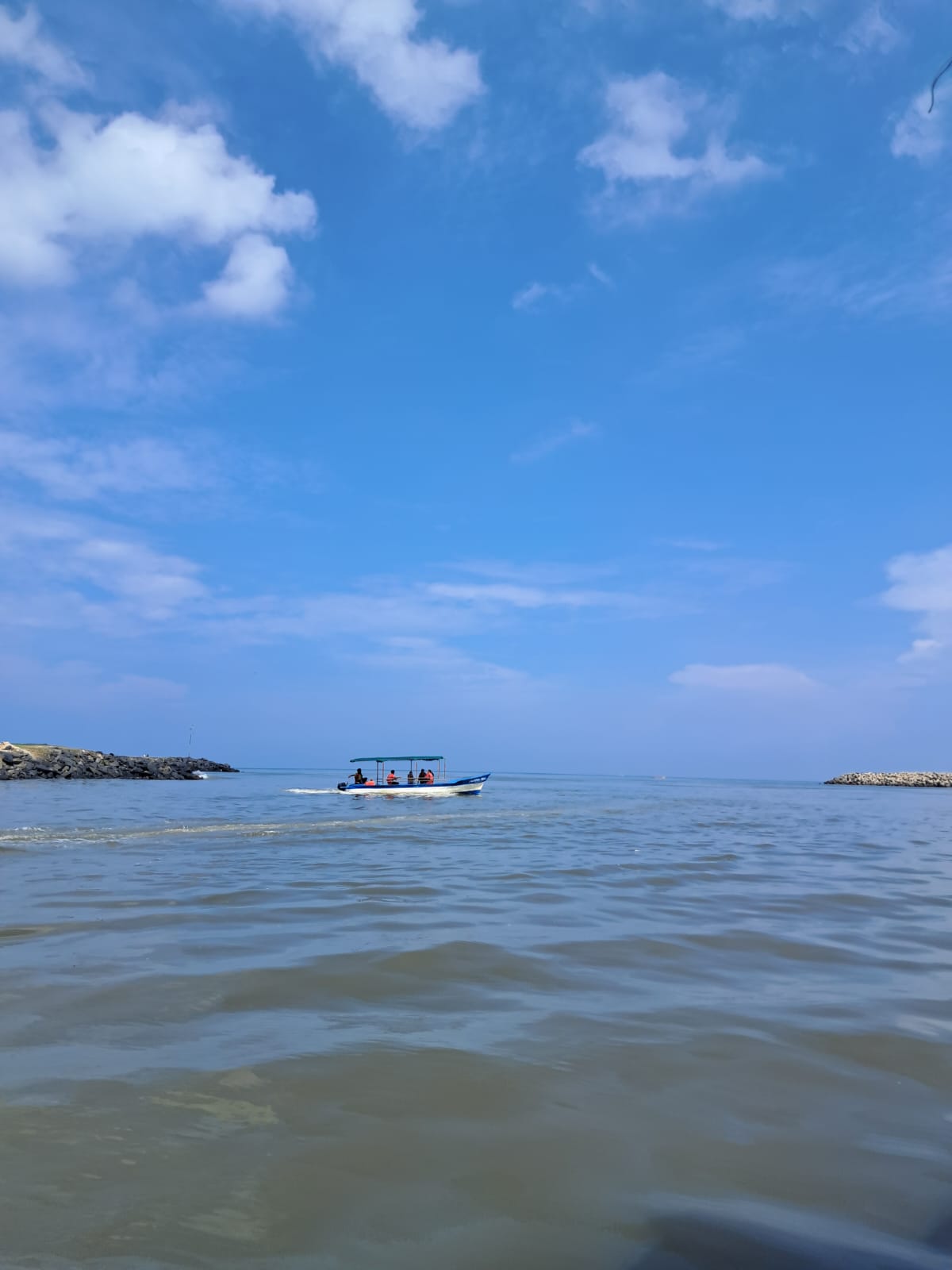
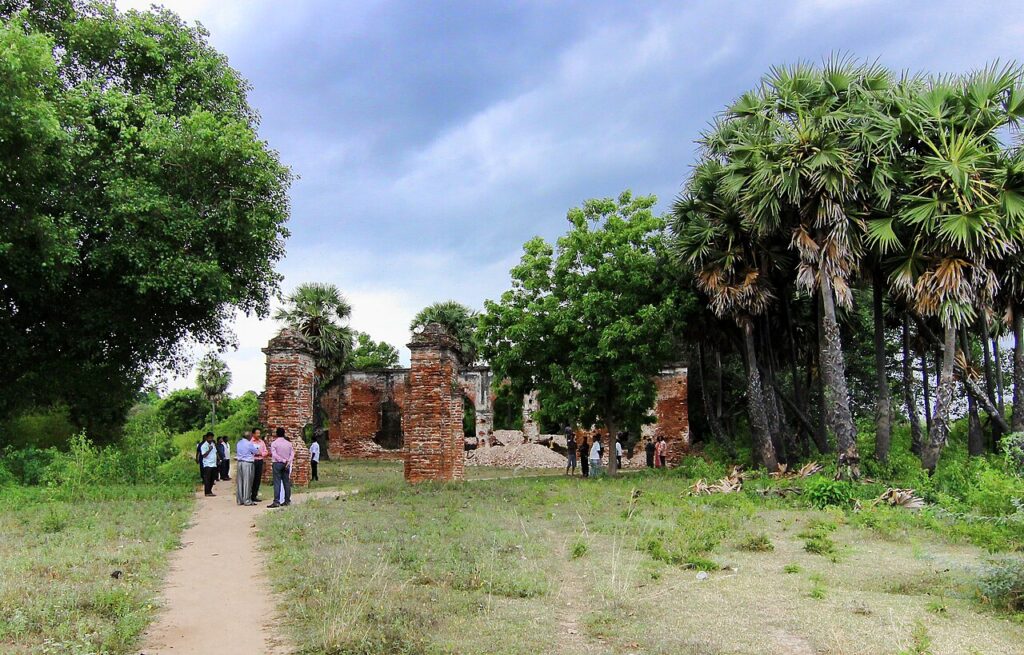
- Arikamedu, about four kilometres south of Pondicherry on the Ariyankuppam river, is one of India’s best-known excavated ports with evidence of trade with the Roman world. This piece was inspired by Agni; the photographs are hers, from her visit on 17 October.
What is there
The site is a low mound on the right bank of the river, where it opens into a lagoon before the Bay of Bengal. It is widely identified with Poduke, a market town named in the Periplus of the Erythraean Sea, a Greek sailing manual of the first century CE, and in Ptolemy’s Geography of the second century.
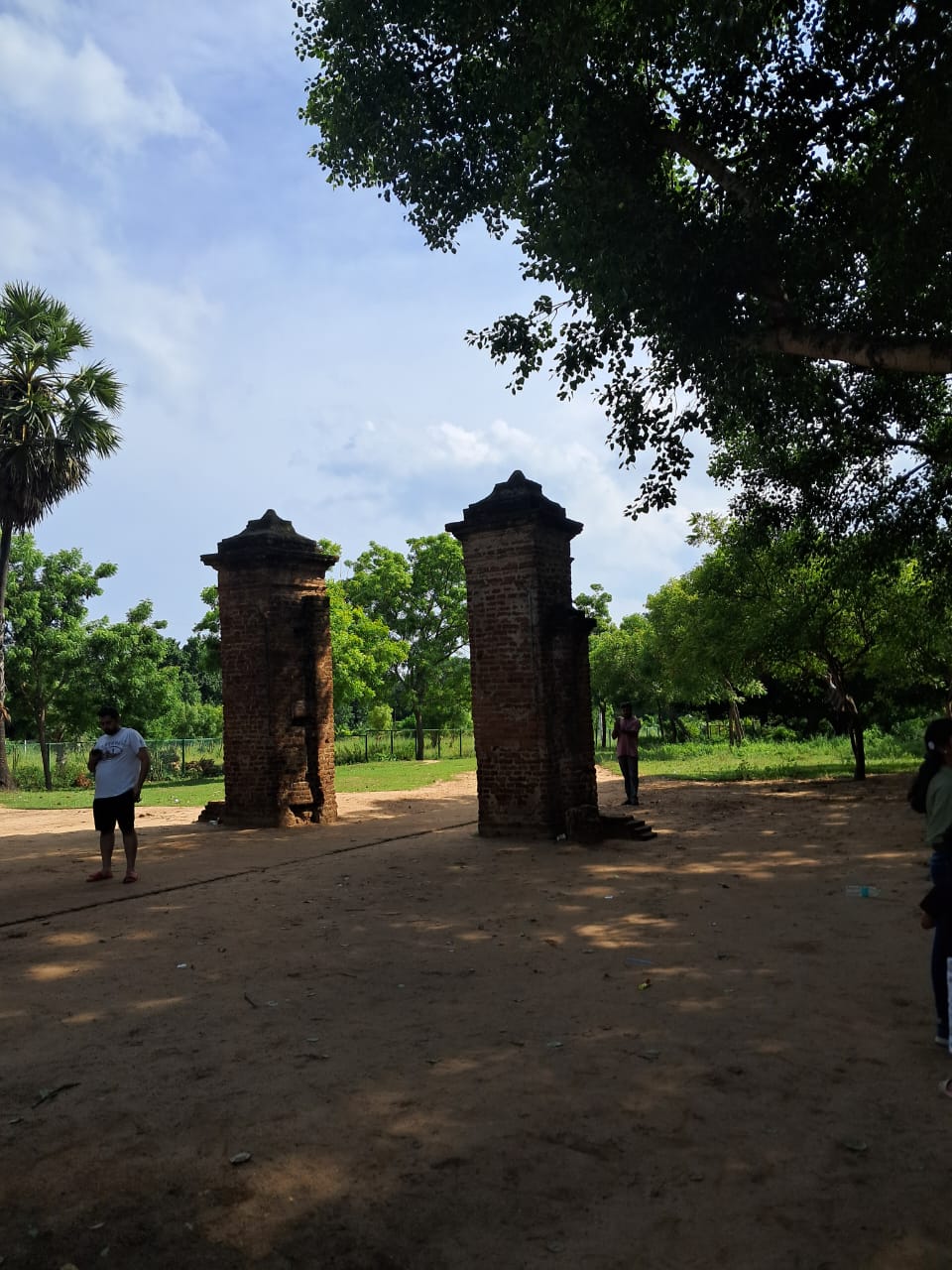
The brick pillars and arches that visitors photograph are not Roman. They are what is left of an eighteenth-century French missionary seminary and residence, usually dated 1771 to 1773 and abandoned in 1783, with some of the ancient bricks reused in its walls. The ancient remains, which the excavators read as warehouses, tanks and drains, lie in the trenches and under the ground.
How it was found
| Date | What happened |
|---|---|
| 1734 | French records describe villagers carrying off old bricks from the mound near Virampattinam |
| 1945 | Mortimer Wheeler and his team dig the site and find imported Italian red-gloss pottery, Arretine ware; report published 1946 |
| 1982 | The Archaeological Survey of India takes control of the site, 34.57 acres |
| 1989 to 1992 | Vimala Begley, K. V. Raman and their collaborators dig for three seasons and find occupation before and long after the main Roman trading period |
The finds include amphorae, Arretine ware, Roman lamps, glass, beads of glass and stone, gems, and the waste of a bead-making industry. Wheeler read them as a trading post opened under Augustus and closed within two centuries. The later digs showed a much longer settlement history, with Rome as one trading partner among several. Finds from Arikamedu are displayed in the Puducherry Museum.
What it looks like now
She found the site neglected: used for selfies, littered, loud. The mangroves along the lagoon were full of plastic, and the estuary too. I have been there myself; I went kayaking on that river.
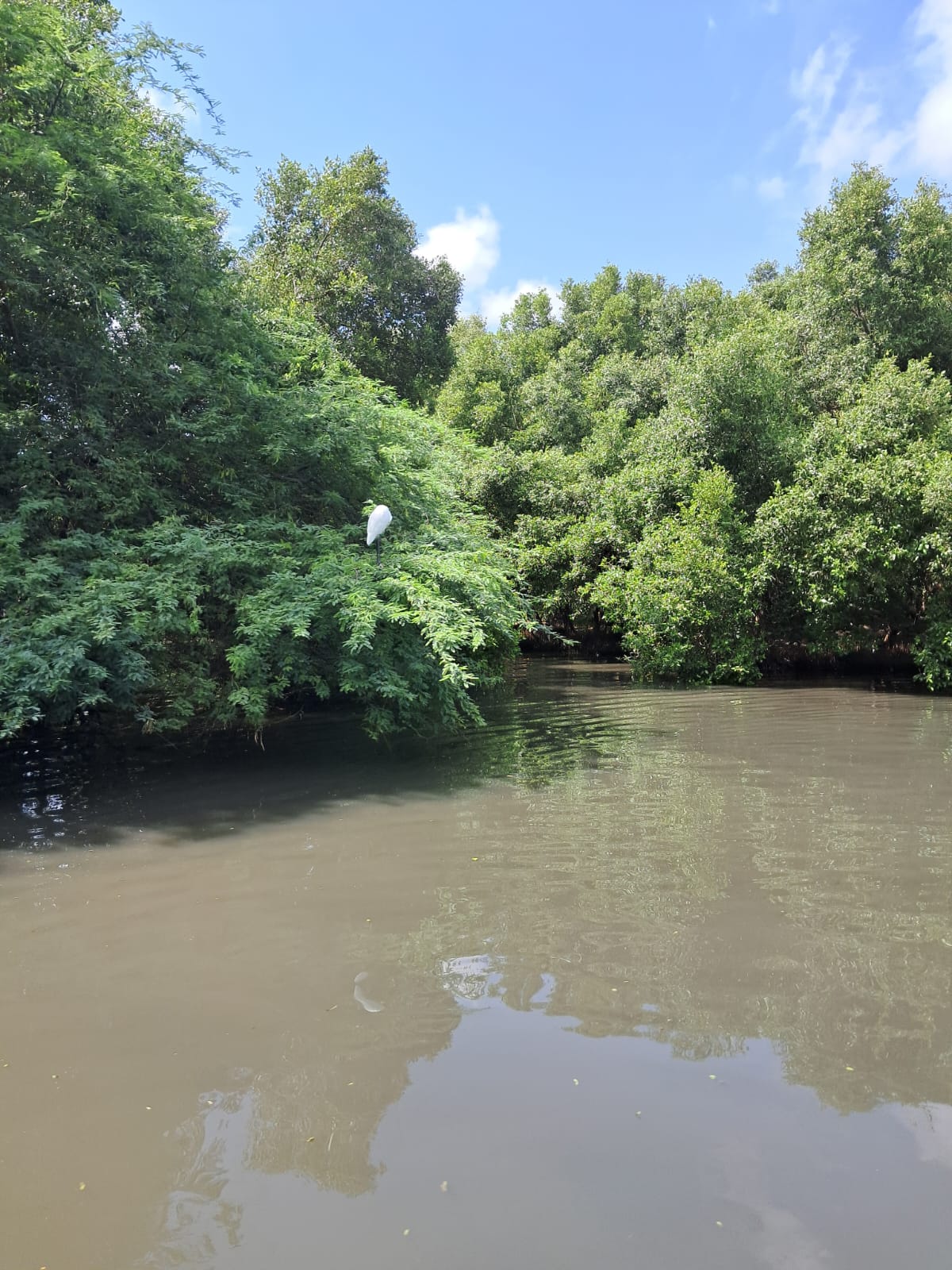
The site is protected by the Archaeological Survey of India. The visible walls are eighteenth-century, the finds are in a museum, and the river that made the port is choked with rubbish. What should a site like this be for, and who should look after it?