
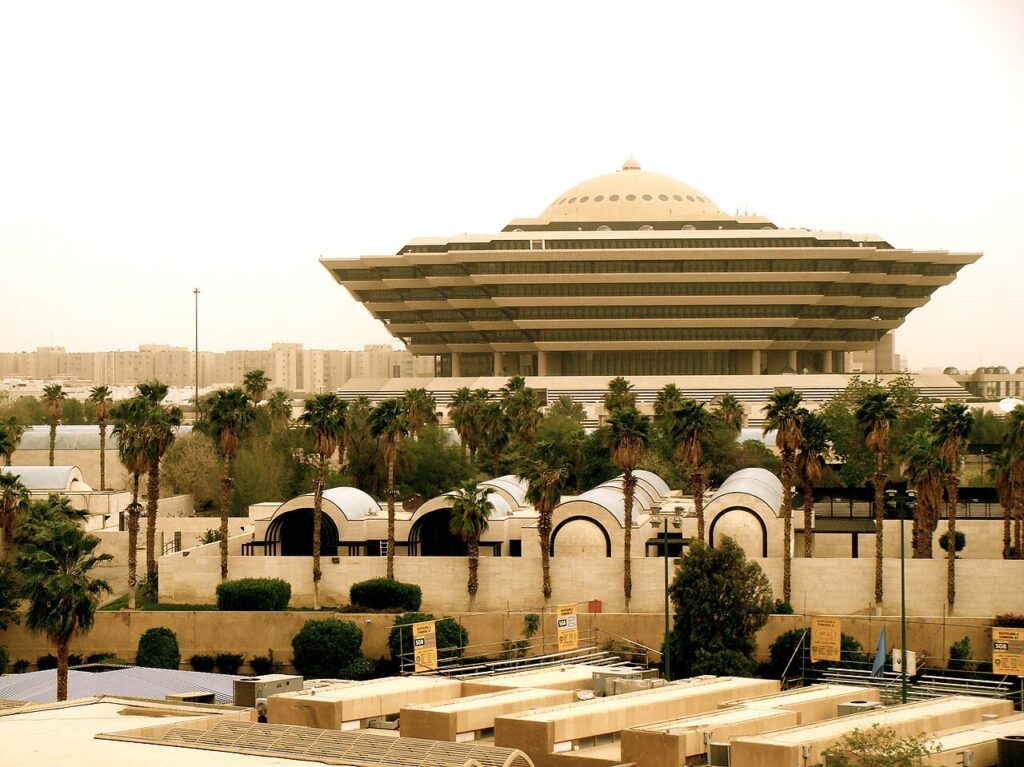
On 14 October Saudi Arabia executed two Bangladeshis, Nazrul Islam Abdul Basir and Siti Akhtar, for what its Interior Ministry called immoral acts inside a mosque in Mecca. A Facebook post by the Pakistani journalist Ali K Chishti applauded the executions and said that “capital punishment is in Quran”. That is true. However it is not what the court relied on.
What the ministry said
The ministry’s statement, carried by the Saudi Press Agency, opens with four Quranic verses: 7:56, 28:77, 2:205 and 5:33. The last, 5:33, concerns those who “wage war against Allah and His Messenger and strive upon earth to cause corruption”, and lists death among the penalties.
The statement then says that the two committed immoral acts inside a mosque in the holy city; that a court convicted them and sentenced them to death under ta’zir, weighing the gravity of the acts and the sanctity of the time and place; that the relevant judicial authority upheld the sentences; and that a royal order authorised the executions, carried out in the Makkah region.
It does not name the mosque, say what the acts were, or publish the judgment.
What ta’zir means
A common classification of Islamic criminal law has three kinds of penalty. Hudud are fixed penalties set by scripture for a short list of offences. Qisas is retaliation for killing or wounding, which the victim or the victim’s family may waive for compensation. Ta’zir is the rest: a penalty left to the court’s discretion where no fixed penalty applies, or where its standard of proof is not met.
The ministry did not call this a hadd sentence. Unlawful sex, zina, carries a fixed penalty: the Quran gives one hundred lashes (24:2), and stoning for a married offender (muhsan) comes from the hadith. The court did not apply it. Nor did the ministry describe the case as hiraba, the offence of 5:33. The verse is quoted in the statement; the legal category the statement gives is ta’zir.
Classical jurists debated how far a discretionary penalty could go. Rudolph Peters, in Crime and Punishment in Islamic Law (2005), records that all the schools came to allow death as ta’zir in some circumstances. Saudi courts use it often:
| Year | Recorded executions | Ta’zir | Drug cases | Foreign nationals |
|---|---|---|---|---|
| 2024 | 345 | 141 stated; 39 not disclosed | 122 | 138 |
| 2025 | at least 356 | not supplied here | 240 | 188 among the drug cases |
Sources: ESOHR, 2024 report; Amnesty International, 2025 figures.
So the Quran does contain capital punishment, and the ministry quoted the verse. But the sentence it announced was discretionary. No verse required these two deaths. A court chose them, and the judgment that explains why has not been published.
What Bangladesh knew
According to a consular memorandum reported by The Daily Star, Nazrul was detained on 1 August 2023 with a cybercrime allegation recorded against him, and Suety Akhter (Sweety Akhtar to her family) on 2 August 2023 with an adultery allegation. Both had worked as cleaners for a contractor, Al Majal. The consulate received a prisoner list with their names on 30 September 2026; it did not say they had been sentenced to death. Neither family had asked the consulate for legal help.
So Dhaka knew the two were in prison. It was not told of the death sentences or of the executions, and learned of the executions from the press. The consulate then asked the Saudi authorities for details. On 17 October the state minister for foreign affairs, Shama Obaed Islam, told reporters that the government had received no information on the sentences and called the case “a major lesson for us” (Prothom Alo).
Both countries are parties to the Vienna Convention on Consular Relations. Article 36 requires the authorities to tell a detained foreigner, without delay, of the right to have the consulate informed. Whether the two were told, and whether they had lawyers, is not on the record.
Bangladesh sent 754,369 workers to Saudi Arabia in 2025, about two-thirds of all its workers who went abroad that year (UNB). About 3.5 million Bangladeshis live there (Arab News), and in 2025-26 the kingdom has been Bangladesh’s largest source of remittances (The Daily Star). The minister’s lesson was addressed to them: obey the host country’s laws.

What is not known
As of 2 November: what the two did; what evidence the court accepted; how a cybercrime entry and an adultery entry became a conviction for immoral acts in a mosque; whether they had lawyers; and whether they were told they could contact their consulate. The verses in the statement tell us how the ministry presented the case. They do not tell us how the court decided it.
My own view is that these two innocents did not deserve to be executed. At the very worst they should have been deported back to Bangladesh, and even that is highly arguable.
It’s great that you are highlighting this XTM.
In reality they were executed for being poor and unconnected, part of the human detritus export by the apathetic countries of the subcontinent.
Posting a companion piece to this, a Bangladeshi’s demand for justice which will fall on deaf ears. But one I endorse fully.
https://substack.com/home/post/p-221310815
Thank you – yes it’s very sad goings on. This is more about power and economy rather than religion ..
It would be difficult to see Indian or Pakistani citizens being treated as thus.
There is something about geopolitical heft even offsetting economic might
The ‘what if’ game is a poor one to play.
What if Bangladeshis kept their leader of conscience, the one who chose exile over ripping her country apart?
Would she have tolerated it?
Kya Hasina maan jaati?
Personally I do not have such faith in any of the countries to really lift a finger without the media raising a stink.
A SriLankan Tamil was saved the death penalty on the back of one.
https://www.bbc.com/news/articles/c6x2v0vn7r1do
Very occasionally online shitstorms have a positive result.
The Saudi punishment has no basis in – Islamic law.
The ‘stoning’ part in the Hadith is an inheritance of Jewish law that was followed by earlier Muslims before it was abrogated by Quranic injuction.
The maximum sentence for adultery is 100 lashes in the Quran (24:2). For fornication it’s even less. And that only when 4 witnesses of good character are available who have withnessed the act (24:4). Failure to uphold this requirment results in 80 lashes for the accuser (24:4)
This case met none of that, so the Saudis had to make up a reason to execute the two individuals. They just did it because these people were poor, and the Bangladeshi government did not step in. That is all. It has brought on righful condemnation in South Asia of Saudi authorities
Yes I was thinking of you when I was writing the comment; if they had been East Pakistanis or Indians, this probably wouldn’t have happened ..