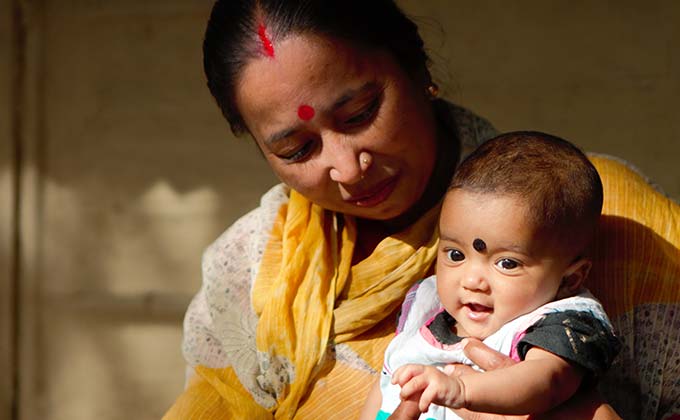
The Crescent and the Trident clash over their women

Two flags fly over the subcontinent’s women. One says cover them. The other says protect them.

We do not think the two are equivalent in cruelty. We think they are equivalent in structure.

No Hindu Equivalent to Zia.

There is no Hindu-nationalist equivalent of Zia ul-Haq’s Hudood Ordinances of 1979, which for decades made a raped woman’s complaint the raw material of a charge against her. There is no Hindu-nationalist equivalent of the Qanun-e-Shahadat of 1984, under which, in certain documentary and financial matters, two women’s testimony is required to equal one man’s. Pakistan partially repaired the first in 2006. The second stands.

That is statutory. It is one-sided. Anyone who tells you the two flags are the same is lying to you, and we are not going to.

What follows is about something else.

I. Two Patriarchies.

Continue reading The Crescent and the Trident clash over their women

Pakistan & India as Imperial Nation States

The useful conversations at a conference are never in the room. They happen in the corridor, over bad coffee, among the people who did not get a panel.

What we heard there over the weekend was a single proposition, stated with varying degrees of anger. The subcontinent is held down by two post-imperial states, each of which inherited the Raj’s administrative logic and neither of which has any intention of loosening it. The languages, the peoples, the small nations inside the big ones are being quietly extinguished. The activists who said this were Baloch, Sindhi, Kashmiri and Punjabi (as well as Pushtun, Hazara, and Urdu-speaking).

We should also say at the outset that this essay is about Pakistan. The two-hegemon frame is the activists’ frame, and we have not necessarily adopted it.

I. Ethnicity versus the Pakistani state.

Continue reading Pakistan & India as Imperial Nation States

Bangladesh whitewash Pakistan again

Bangladesh completed a whitewash over Pakistan yesterday in the test series they were playing at home, winning it 2-0. This follows the 2-0 whitewash they achieved in the test series before this, in Pakistan two years ago (in Rawalpindi, of all places). Bangladesh have also won the last ODI and T20I series between the two sides.

During my vanvaas, apart from enjoying the IPL (on which I will do a post later, maybe after the final) I also watched a decent chunk of the test series. Test cricket has its own flavour of joy, distinct from the more immediate rush of T20 cricket. Its slower and more meandering pace means you can actually put it on the background while tending to other stuff. 

Some thoughts about the series.

Bangladesh has overtaken Pakistan

Bangladesh has been doing economically well over the past few decades and now surpasses Pakistan in most, if not all socioeconomic indicators – higher GDP, higher GDP per capita, higher HDI, lower poverty rate, higher life expectancy, better access to electricity etc.

Diverging HDI between Bangladesh and Pakistan

Diverging GDP pci between Bangladesh and Pakistan

Continue reading Bangladesh whitewash Pakistan again

Gurdaspur and Siliguri: The Two Necks That Held

A precedent post on Pakistan’s self-exile from the subcontinent, and the geography that outlasted it

This is not anti-Pakistan polemic. Pakistan can flourish in the role she has chosen, and may continue to do so (Pakistan’s pivotal role in the US-Iran war is, on any honest reading, a legitimisation win for the current hybrid government)). The point being made here is structural, not personal.

Pakistanis are a subset of the British Raj’s Muslim population. As Punjabis, as inheritors of the Mughal cultural complex (alas one cannot destroy his Masjid and simultaneously claim to be his heir), as native carriers of the Hindustani register that becomes Urdu under one stylisation and Hindi under another, they began with a favoured position inside the subcontinent. They have traded it for a subordinate position inside the wider Muslim world. The internal hierarchies of the Islamicate, where Pakistanis rank against Arabs, Turks, and Persians, are dense and unflattering and deserve their own treatment another day.

The cause of the trade, in the end, is theological. The subcontinent runs on iconographic generosity, painted shrines, sung saints, plural deities, devotional excess. Strict iconophobia cannot live inside that civilization without breaking it. Pakistan chose the stricter line in 1947 and has progressively tightened it since. The Urdu denial, the recent insistence in some Pakistani quarters that Urdu is not really an Indian language, is the cleanest evidence of the opt-out.

Irreducibly Indo-Persian

Continue reading Gurdaspur and Siliguri: The Two Necks That Held

India and Pakistan Are Playing Chicken; simply to hurt themselves

Two comments are worth picking up on, and one claim worth interrogating.

N disagrees that contact ameliorates ties. EK suggests the only Islamicate voices the Indian RW respects are those who have “debased their own civilizational integrity.” We do not know who he is shadow-tweeting. It could be us, the Founders of this blog, who are Islamicate by heritage and recognisably friendly to Hindu right-wing readings. Either way, the framing is off. And then there is Q, on the thread as we write, claiming Pakistanis “will eventually take over the Islamicate world.

The cost of distance

The dominant idea of the last decade is that less contact means more security. Fewer visas. Less trade. No cricket. No artistic exchange. Reduced diplomatic warmth. This is sold as realism. It is, in large part, self-harm.

Distance does not produce clarity. It produces mythology. When people stop meeting one another, they begin imagining one another. The imagined neighbour is always simpler, darker, and easier to hate than the real one.

He is also, as Dhurandhar showed, sexier. Hatred and desire run on the same current. The more villainous the Pakistani on screen, the more the Indian audience leans in.

Civility is built by proximity. Not sainthood. Habituation. When people share space, study, trade, marriage, and culture, the room for fantasy narrows. One can still dislike the other side. But one dislikes actual people, not cartoons.

N’s response to this is that contact theory is “akin to blaming a victim for not engaging with the perpetrator.” That feels like the Israeli security story applied to the Indian Sub-continent. It assumes Pakistanis are a permanent terror-source requiring permanent counter-violence.

Pakistan obliges the narrative by behaving badly enough often enough to keep it alive. India obliges the frame by treating every bad actor as the median Pakistani. Both governments are now invested in the loop.

Pakistanis no longer defend hybrid Islamicate culture Continue reading India and Pakistan Are Playing Chicken; simply to hurt themselves

Two Colonisations, One Border: What the Data Actually Says About Bengal’s Post-1971 Demographic Story

Check BB’s personal anecdote on the Northeast.

As mentioned, the Special Intensive Revision of electoral rolls in West Bengal has removed 9.1 million names, 2.7 million of them under contested adjudication. The argument has compressed itself into two bad positions. Either every deletion is disenfranchisement, or every deletion is a Bangladeshi caught. Neither is true, and the census of the last hundred years tells a more specific story than either side wants.

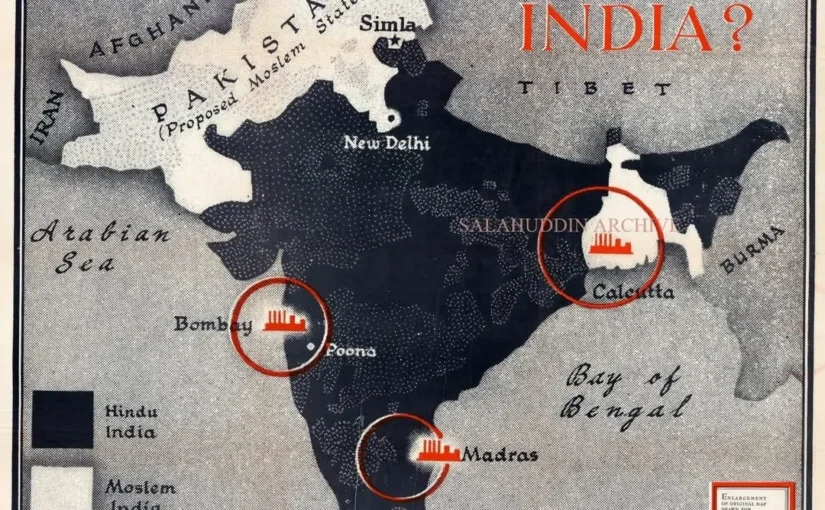
The received wisdom on Northeast India collapses into one sentence: Bangladeshi Muslims are flooding across the border. The received wisdom is partly wrong and mostly incomplete. A narrower reading of the census, focused on the actual border districts, tells a stranger story. There are two demographic colonisations in eastern India, not one. They run in opposite religious directions, and Indian statecraft has treated them as opposites: one ratified, one criminalised.

Tripura: the Hindu Bengali takeover

Tripura*: 1951: 71% Hindu, 7% Muslim (with ~21% still counted under tribal religions separately).

Today: 83% Hindu, 9% Muslim.

In 1941, tribals were 50% of Tripura. By 2011, 32%. Partition and the 1971 war did the rest.

The population that replaced the Kokborok, Reang, and Jamatia is Bengali Hindu, not Muslim. Tripura’s Muslim share today is 9%, below the all-India average. The Northeast state most transformed by Partition and 1971 is the one that became a Hindu Bengali colony.

South Tripura district is the cleanest data point. The ST share there is 17%. The Bengali Hindu majority there is overwhelmingly composed of descendants of refugees who crossed between 1947 and 1971.

*Note on Tripura: the Hindu figure jumped partly because tribals were reclassified as Hindu between 1951 and 1971 in the census. Real Hindu Bengali influx adds on top of that statistical shift.

Assam border districts: the Muslim Bengali case

Assam: 1951: 72% Hindu, 25% Muslim.

Today: 61% Hindu, 34% Muslim. Continue reading Two Colonisations, One Border: What the Data Actually Says About Bengal’s Post-1971 Demographic Story
Bangladesh

Bangladesh swears in its first male prime minister in 35 years Tarique Rahman.

The morning after the monsoon: Bangladesh votes for a fresh start

Bangladesh Nationalist Party leader Tarique Rahman, takes the oath as Prime Minister of Bangladesh 17 February. Screenshot BBC News report.

Intro

The electorate of this delta nation has given politicians another opportunity to build a democratic, peaceful and harmonious nation. The road ahead is challenging, but some tasks are achievable

Opinion

By Irfan Chowdhury / Sapan News

If democracy had a scent, in Bangladesh it would be the acrid smell of burning tires. For nearly four decades, elections in this delta nation have been martial events, marred by strikes, machetes, and the terrifying silence of the “hartal” (strike). Yet, as the sun rose over the river Buriganga on 13 February, the air was clear. The 13th Parliamentary Election, held the previous day, did not end in bloodshed. It ended in queuing.

For the first time since 2008, Bangladeshis cast ballots that were actually counted. And they delivered a verdict that is as decisive as it is retrograde.

As the final tallies from the election trickled into the Election Commission’s headquarters, the air of revolutionary fervour was replaced by the cold math of electoral reality. The Bangladesh Nationalist Party has returned from the political wilderness with a crushing two-thirds majority.

The numbers are startling. The Nationalist Party and its allies secured 212 out of 300 seats, an absolute majority that gives their leader, Tarique Rahman, the mandate to reshape the republic. For Rahman — the son of the late President Ziaur Rahman and former Prime Minister Khaleda Zia who passed away recently — this is a personal and political vindication. Having led the party from a self-imposed exile in London for nearly two decades, he returns to the centre of power

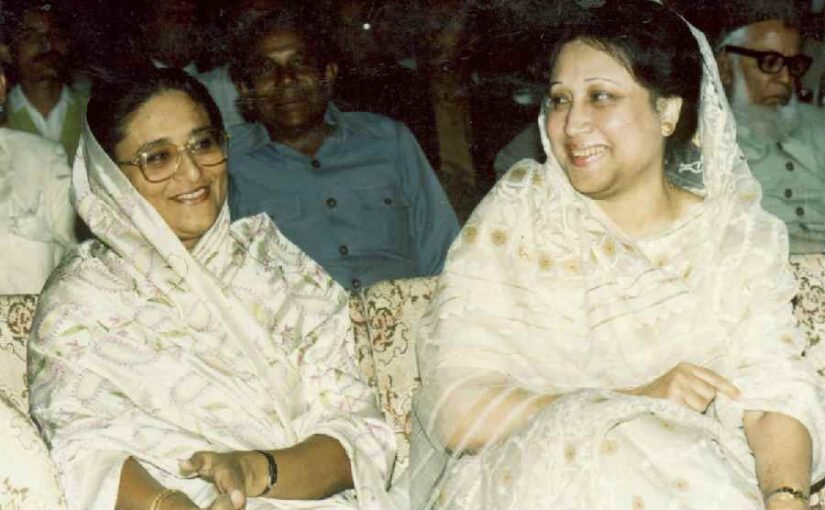
After the Begums: Bangladesh searches for a new order

In the tea stalls of Bangladesh, where politics is consumed with the same sugary intensity as the cha, the mood is one of jittery anticipation. For 18 months the country has been a state in parenthesis.

On 12 February that parenthesis would close. Voters will go to the polls in a unique double act: casting one ballot for a new parliament and another in a referendum on the “July Charter,” a package of constitutional reforms designed to prevent the rise of another autocrat.

The election is framed as the culmination of a “Second Liberation,” born of the student-led uprising that ousted Awami League in August 2024 after 15 consecutive years in power.

Observers from the Commonwealth, the EU and other nations are in place; the ballot boxes are ready.

Continue reading After the Begums: Bangladesh searches for a new order

Brown Pundits