On the states that were never drawn, and the language of Lord Krishna’s own country
- Why was the linguistic principle applied everywhere except the Hindi belt?
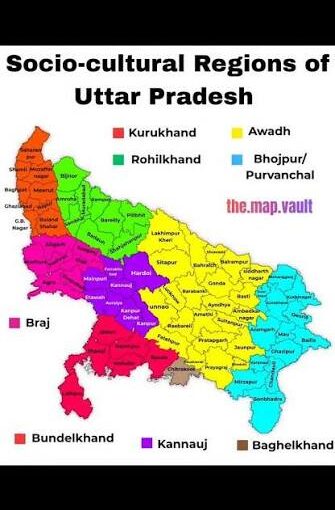
- What would a Braj Pradesh look like, and which is its capital, Agra or Mathura?
- Can the languages be scheduled without unseating Hindi?
- What did Ambedkar see in 1955?
Good for the South but not the North?
The States Reorganisation Commission redrew the South along language lines and left the North alone. Andhra for Telugu, Kerala for Malayalam, Karnataka for Kannada, and one enormous Uttar Pradesh for a “Hindi” that contains multitudes. Ambedkar read the report and wrote a pamphlet, Thoughts on Linguistic States, published in December 1955. His verdict: the Commission had produced “a consolidation of the North and balkanisation of the South“, and intentionally or not, the fact was there.
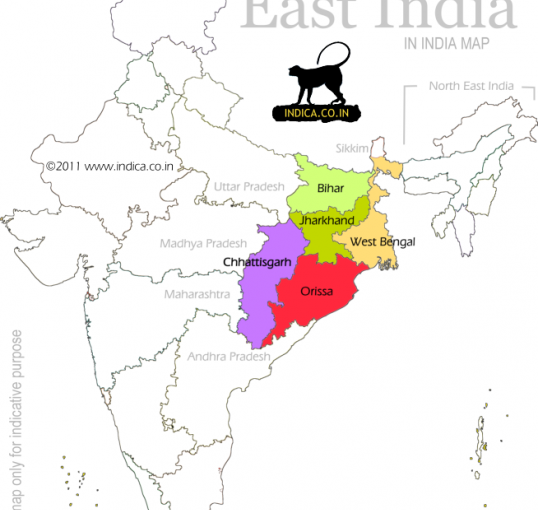
His remedy was specific. Divide UP into three states of roughly two crore each, capitals at Meerut, Cawnpore and Allahabad. Divide Bihar in two, capitals at Patna and Ranchi. “The idea of having bigger linguistic states is not a democratic idea at all,” he wrote, and he added the detail that pre-empts the obvious objection: each of the resulting states would still have Hindi as its language. Division did not threaten Hindi. Forty-five years later, southern Bihar became Jharkhand with its capital at Ranchi, exactly as drawn.
In November 2011 Mayawati’s assembly passed a resolution splitting UP into four, Purvanchal, Bundelkhand, Awadh Pradesh and Paschim Pradesh, and sent it to Delhi. The UPA let it die. Uttar Pradesh today holds over 240 million people, which would rank it around the fifth largest country on earth, under one Vidhan Sabha.
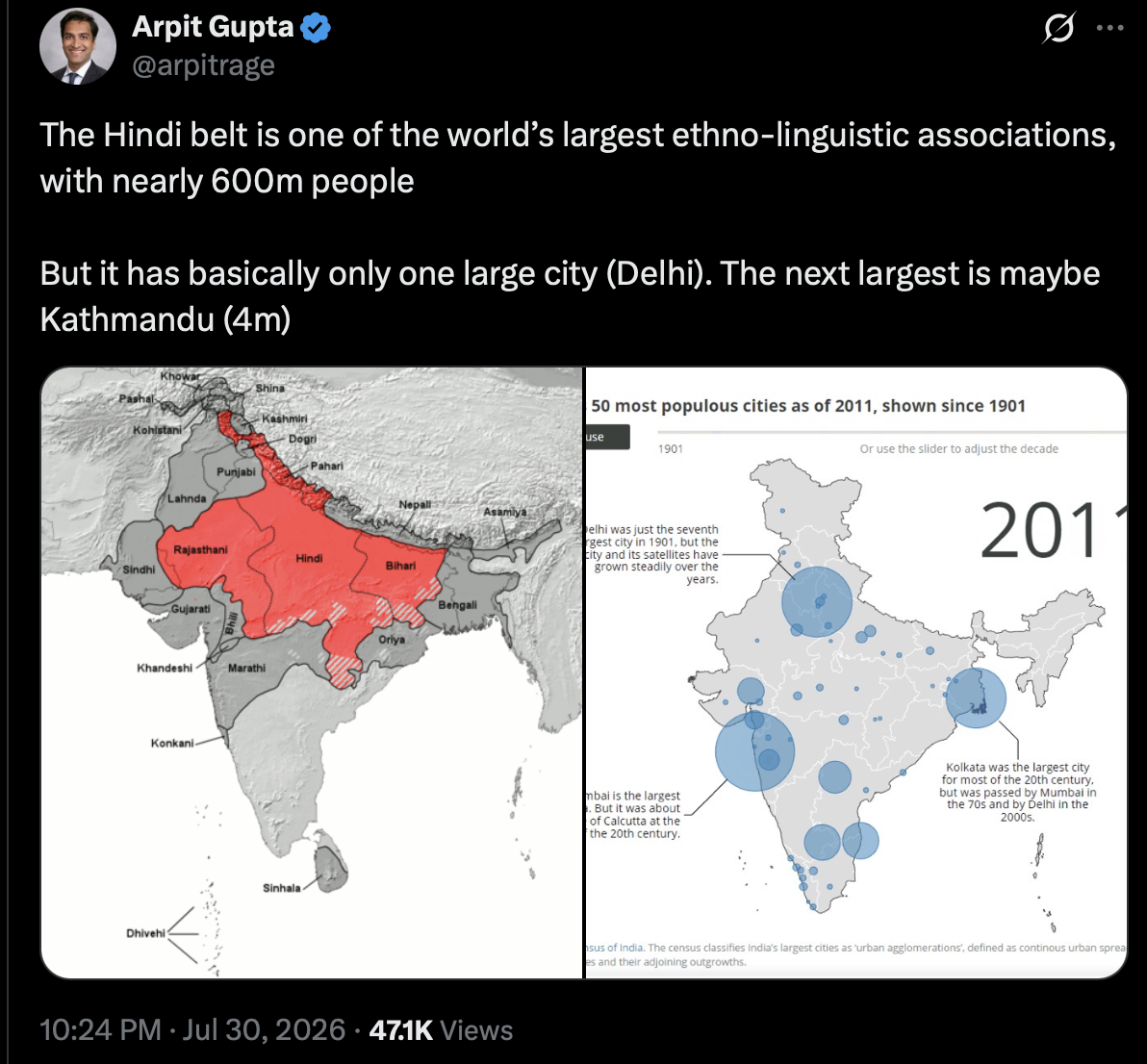
The Hindi umbrella