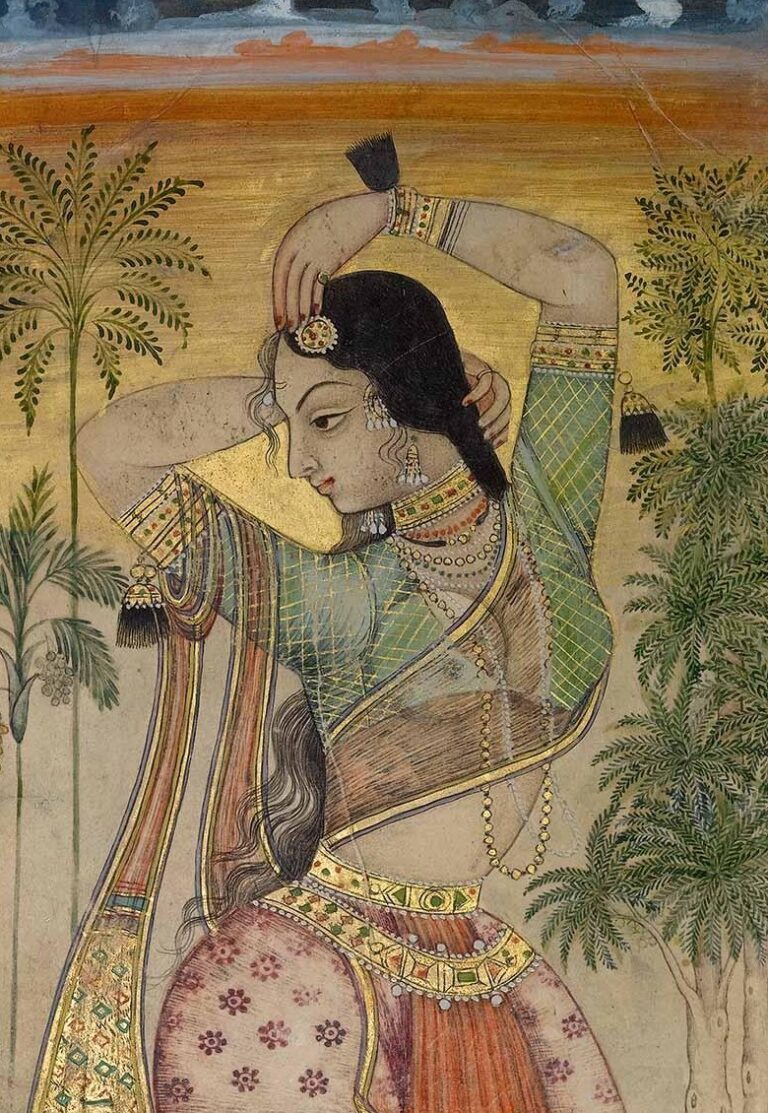

A dosa in wheat country
My Urdu teacher is from Rajanpur, at the bottom of Punjab where the Koh-e-Sulaiman begins and, as he puts it, three provinces meet. On Friday morning, Pakistan time, he told me about a bread I could not picture. “We Saraiki people make dosa,” he said. “We have been making it for centuries. We have a name for it: chilla.”
Then the method. “Rice flour. Make it into a batter, thin as gravy. Spread it on the tawa with any bowl.” That is a dosa. Nobody rolls a chilla. In Delhi a cheela is a gram-flour pancake. His is rice, in a province that eats wheat. His mother makes it every winter and the family eats it with saag. In summer nobody touches it. He sent me a photograph of last winter’s, taken on the tawa.
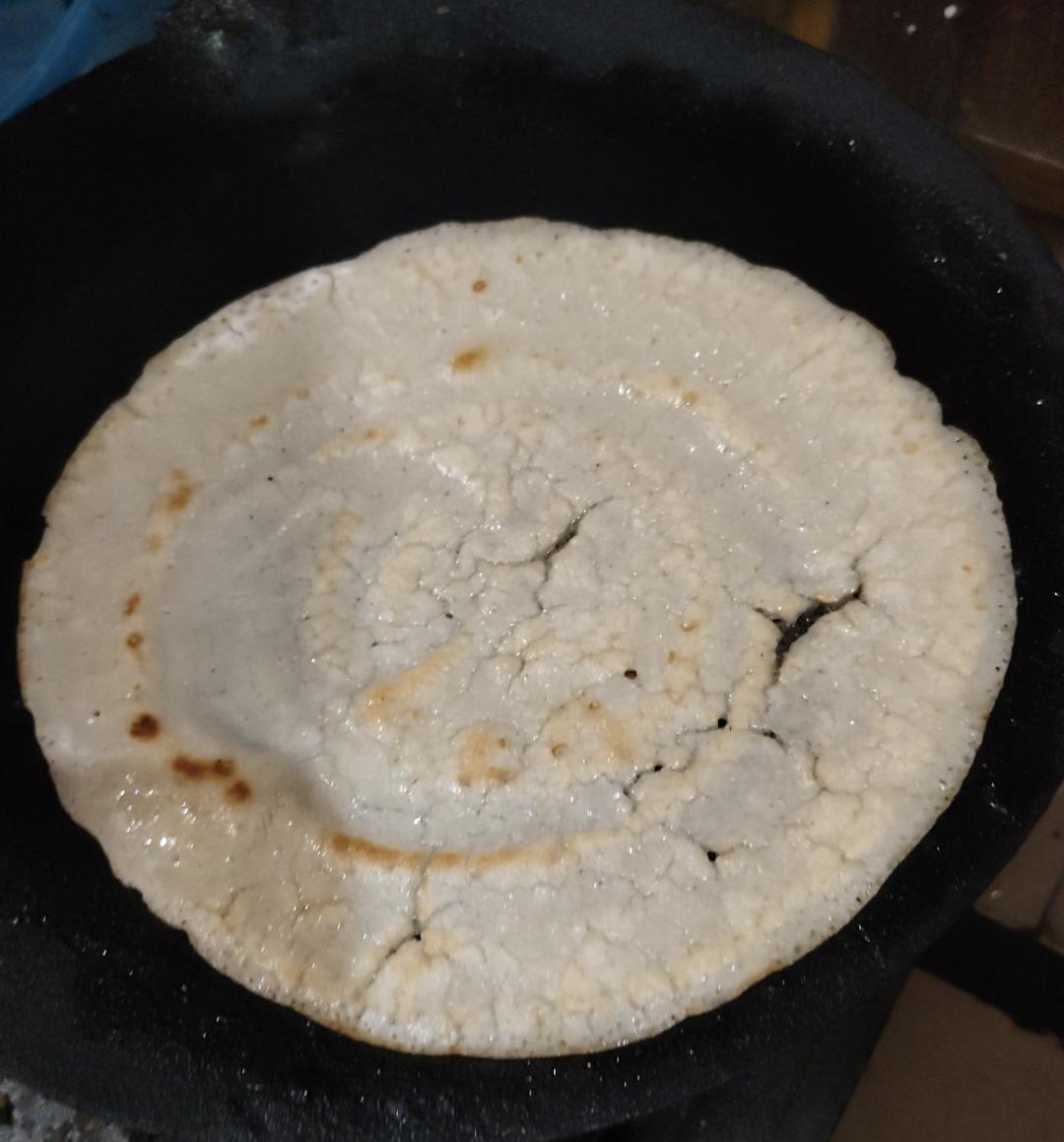
“What a mixture Punjab is,” he said. “We sit eating a South Indian dosa with saag. Punjab’s authentic food with South India’s.” He does not know where it came from. He thinks there is some connection between South India and South Punjab, a Dravidian one and a roti one.
Is there a Dravidian residue in South Punjab, on the plate and on the tongue?
What Friday looks like
Jumma runs in three parts. The imam’s taqrir comes first, a long speech in Urdu or any language. Then the khutba, the formal teaching. Then the namaz. Khutba and prayer together take twenty minutes. To hear the whole taqrir you go an hour early. Most people go for the namaz and are back in twenty-five minutes. His school closes at half past one on a normal day and at a quarter to one on Fridays, so that pupils and teachers can make it.
Then lunch. In Karachi, Friday means biryani. “Nothing in religion says so,” he said. “It is not written anywhere that you must eat it. It became culture.” Fish on Friday survived in England after the fast did; biryani on Friday somehow became Pakistani Islam. In his house Friday is keema aloo, or rice. Keema of mutton or beef, since Pakistan eats both and, he noted, India does not eat the second at all.

A pound a day
He put numbers on the table, in my currency, for food alone; electricity and transport were not in it. A hundred rupees buys one meal from a stall: a roti and salan, a small plate of biryani, samosas or chanay-naan. A single man can survive on a pound a day, which he put at 350 rupees. That is the floor, and the poor below the line live on it. Above the floor he gave me a ladder. The poor with some earnings spend about £2 a day. The middle class £4 or £5. The upper middle £10 to £15. I offered him the £5 McDonald’s meal as England’s equivalent and he asked whether it was any good. It is not.
In his village, for a household of three, it is now cheaper to bring dinner home from the hotel than to cook it. “We call a restaurant a hotel,” he said; he means the roadside eatery. A plate of salan and rotis for three costs less than the flour and oil to make them, and on 350 rupees you cannot buy both. “This ease is not progress,” he said. “It is not that people have money. No.” Four or five people breakfast on a hundred rupees of chanay and parathas, because eggs for everyone cost more and somebody has to stand at the stove.
He asked an old woman in his village why her household of three never cooked. “I am old now, I cannot cook,” she told him. “And it is cheaper than what is made at home.” He warned her that hotel food is neither clean nor healthy. “Do you think they put in a hundred per cent of what should go in? No. That is why it is cheap.”
The bread map
I asked him to walk me round the country by bread. Wheat roti is common everywhere, he said, but some areas have their own.

Punjab: phulka, chapati, tandoori roti, naan, roghni naan, makki ki roti, puri, kulcha. Soft, with butter. Chanay is the breakfast, and the proper plate hides a boiled egg and a kofta in the chickpeas. Chicken kofte exist and are not very good.
Sindh: bajra roti, and the Sindhi koki, a thick flatbread kneaded with onion and green chilli. He has people in Sindh, and their bread is already different.
Khyber Pakhtunkhwa: keema naan, Peshawari naan, and the thin Peshawari chapati that he calls patli.
Gilgit-Baltistan: thick rounds, closer to naan.
Balochistan: meat, chutney, tea, and safri roti, a huge bread baked for the road. Safar means journey; people carry it and eat from it all day. He has eaten it once, near Fort Munro, where Punjab meets Balochistan.
Kashmir: sheermal, lavasa, girda. Bakers’ bread with Persian names; sheermal is milk bread and lavasa is lavash.
I confessed that my own favourite is a cheese naan. He told me an American travel vlogger in Islamabad has been crowned by his followers the unofficial master of the cheese paratha, so I am in company.
Wheat reached the Indus from the west, through Mehrgarh, nine thousand years ago. Bajra and jowar are African and arrived about four thousand years ago. Rice was growing on Indus sites by about the same time.
Maize is American, so makki ki roti cannot be older than the Portuguese. Every bread points somewhere. Peshawari naan points at Kabul. Sheermal points at Isfahan. Bajra points at the Thar. Chilla points south, a long way south.
The Elamite-Dravidian hypothesis
The chilla is a dosa in method, not only in looks. His neighbours do not even eat it. Move a few villages and the winter bread is jowar or bajra, the millets of the dry south; even in his own area, he says, chilla is made but rarely, and mostly in his own house. A rice batter in a millet district in a wheat province is the kind of habit that has a history.
He offered more. Some local historians, he says, hold that the people around an old fort near his town are natives who came from nowhere else, in the same sense the south is native. Saraikis bear heat as southerners do. They speak and dress a little apart from the rest of Punjab and from Sindh, and he thinks they look a little apart too, as Tamils do from the rest of India.
Pakistan already has a Dravidian language. Brahui is spoken on the Kalat plateau in Balochistan, 360 km from Rajanpur as the crow flies. Linguists still argue whether it is the survivor of an older Dravidian spread across the Indus or a medieval migrant from central India. In 1956 Murray Emeneau argued that Indo-Aryan picked up its retroflex consonants, the ṭ and ḍ that Avestan and Old Persian never had, from the Dravidian speakers it absorbed.
Asko Parpola and Iravatham Mahadevan read the Indus seals as Dravidian. And the bones: the one Harappan genome we have, a woman from Rakhigarhi published in 2019, mixed an old Iranian-related lineage with the deep South Asian line geneticists call AASI, whose share rises as you travel south today. If you wanted a Dravidian Indus, you could build one from that.
Testing Dravidia on the Indus
Each strand frays when you pull it. Saraiki has implosive consonants, sounds made on an intake of breath. It shares them with Sindhi and with no Dravidian language, so the tongue pulls the belt down the Indus toward Sindh, not across to the Deccan. Emeneau’s retroflexes, if they are Dravidian, sit under all of Indo-Aryan from Peshawar to Patna and say nothing about Rajanpur in particular. Nobody has proved Parpola right or wrong in thirty years. The Brahui are the sharpest warning: genetically they sit with their Baloch neighbours, with no Dravidian signature of their own. Language moves without bodies.
And the bread. Rice bread appears wherever rice is the crop; Karnataka has akki rotti and Malabar has pathiri. A rice roti could be ecology, not ancestry. Except the belt grows cotton, not rice. Pakistan’s rice sits east in the Kalar tract around Gujranwala and south in the Larkana bowl of upper Sindh. Somebody carried rice flour into cotton country and kept the habit through every winter since. If chilla is old, it is older than the Punjab it lives in.
He had read the Lahnda post, where I argued that the census and the canal colonies folded the middle of the old Lahnda belt into “Punjabi” while the south became Saraiki. He raised it himself: somewhere, he said, there has to be a connection. The census flattened the middle.
The plate kept the micro-regions the census cannot see: chilla in one house, jowar in the next village, bajra across the Sindh line, all inside a district the state files under Punjab. Whether any of it is Dravidian is unproven.
Bro its just a chilla made from Rice flour instead of wheat.
Cultural convergence is a phenomenon.
The idea of Dravidianiam being this distinction of South Pakistan.
This entire belt from Khuzestan (Elam) through to TN has an Elamo-Dravidian vibe.
Also that’s how the ancestors of the Melanesians, Aboriginals and Papuans traversed (via the Southern migration route).
I think you’re extrapolating a lot out of rather little.
He’s ………….tryna make Dosa without batter 😀
I think Elamo-Dravidian theory does have some merits fwiw.
IVC seems to have been very Dravidian inflected?
There may well be. But it doesn’t require….. Dosa-fication of a Rice cheela 🙂
are there any other precedents in the region for a Rice cheela?
Neer dose of coastal karnataka.
I propose that what makes dosa a dosa is that its fermented. Chilla is an instant batter, essentially a south asian galette. Dosa, appam, sanna, idly, paDDU/appe are all fermented like Ethipian injera.
I’m crazy for injera .
Injera is great. It primarily made from a cereal called teff in Ethiopia which is not strictly the same but a close relative of what we call ragi, which also makes a nice component of dosa batter.