India’s Wealth will not turn Pakistan into East Germany

Our 2026 reader survey is open until 7 June – anonymous, roughly five minutes. Please take a moment.


The Comment thread is afire with the usual (and senseless) India-Pakistan arguments (essentially which of the two is poorer). Q waves the whole question away by pointing at the figure, unimpressed by “an average Indian producing only $2,800 in GDP every year,” and asks what the point even is. There is a point, two in fact.

First: per capita and scale measure different things. Per capita describes the life of a citizen. Scale describes the weight of a state. A single integrated market of 1.4 billion people generates agglomeration, economies of scale, and a pull on capital and talent that no small rich economy can match (India’s ascent in the world of cricket is an extremely interesting meditation). That is why India passed Japan in 2025 to become the world’s fourth-largest economy, why it is the fastest-growing major one, and why it is on course to take third from Germany by around 2028. The market no exporter can ignore, the trade terms a four-trillion-dollar base can lean on, the air defence and roads it can fund: that is concrete power, and it is not nothing. Much of the gain is siphoned by a clutch of oligarchic houses, but the dynamism is real.

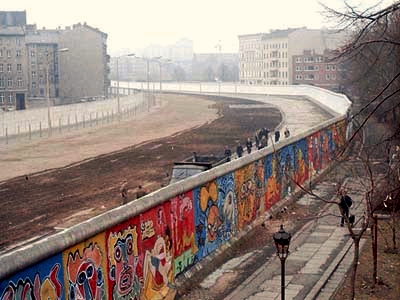
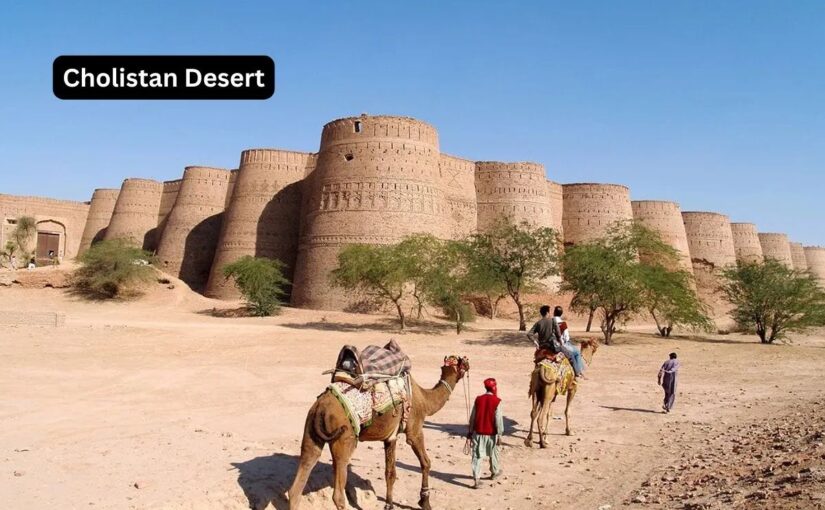
Second: however that same wealth does not buy what BB imagines it buys. India outweighs Pakistan in GDP by something close to eleven to one. It has still not turned Pakistan into its East Germany, a dependent satellite drawn quietly into its orbit and, in time, absorbed. Pakistan remains sovereign, armed, and unbought. Pakistanis are not running across the Punjabi wall to their ethnic kin.

In May 2025, after Pahalgam, the larger economy did not dictate terms: Operation Sindoor ended not in surrender but in a ceasefire announced, awkwardly, from Washington, with both capitals claiming the win.

Look West. Iran is a fraction of the wealth of the United States and Israel, yet it has absorbed the most advanced air forces on earth, kept its regime, and kept the knowledge to rebuild what was struck. The guns fell silent at a ceasefire, not a capitulation. Wealth buys reach. It does not buy outcomes.

BB treats the GDP gap as a deed of ownership over Kashmir, and assumes Kashmiris will swallow their pride for a higher income per head, that prosperity purchases consent. It misreads the Islamicate moral economy entirely. In that ledger ‘Izzat and Deen, dignity and faith, are not line items to be outbid. The Hyderabadi Harvard PhD still sings the song of his lost people.

Peoples who set independence above comfort have done so across the whole anti-colonial century, and no balance sheet has ever talked them out of it. Money may buy luxury but not loyalty.

What price will any Indian or Pakistani nationalist accept for their love and loyalty to their homeland?

Nehru Lost India, Not Jinnah

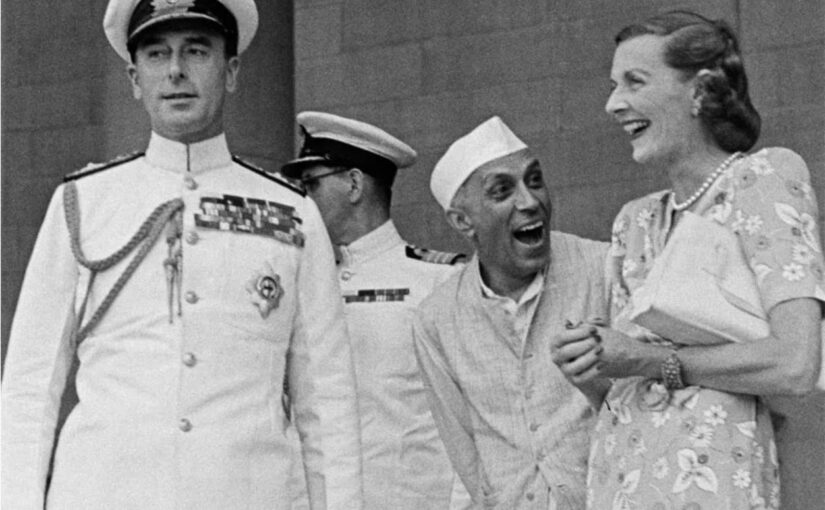
We write this from the chair of those who have just declined, again, to partition their own blog. The exercise concentrates the mind. Brown Pundits has a Saffroniate. It has a Crescentiate. It has an awkward intermediate seat between Viceroy and Prime Minister. We have chosen, repeatedly, to hold the centre.

We have observed that Nehru did not.

1. The Men.

Jinnah was self-made. He was technically brilliant. He was legalistic to the point of pedantry, which is the only kind of legalism that ever wins a constitutional argument. Nehru rode on his father’s coattails, on Gandhi’s affection, on the Mountbattens’ hospitality.

The asymmetry was decisive. One man knew the document. The other man trusted the room.

2. The Cabinet Mission Plan.

The Cabinet Mission Plan of 1946 already confederated India. Grouping A, Grouping B, Grouping C. The Centre held defence, foreign affairs, communications. Everything else devolved. This was workable. The League accepted it provisionally as the best available route to parity. Nehru wobbled, then in his July Bombay press conference reserved the Congress right to revise the groupings once seated in power. The League withdrew within weeks. The edifice collapsed.

The question the Saffroniate refuses to ask is the simple one. Why was it harder to confederate on linguistic lines than on religious lines? The States Reorganisation that the Republic executed in 1956 was already latent in 1946. Madras Presidency was a Tamil, Telugu, Malayalam, Kannada tinderbox. Bengal was Bengal. The Indus was the Indus. The Hindi belt was the Hindi belt.

Four groupings could have been negotiated. Continue reading Nehru Lost India, Not Jinnah

Open Thread: Pakistan’s Demons are The Daughters of God

Q writes on Pakistani source confirms US, Iran closing in on one-page memo to end war:

  1. Total Pakistani victory. If Pakistan pulls off the mediation, this will its greatest diplomatic victory ever. Lifting of Iranian sanctions will allow cheaper Iranian oil to flow directly to Pakistan, and the oil pipeline can be finally completed. Complete eradication of Indian influence from Iran is now achieved, and this will also eliminate any support to BLA from across the border.

Pakistan post Sindoor is on a winning streak. The mediation is real, the memo is real, and if it holds, the diplomatic ledger for the year goes firmly into Rawalpindi’s column. Iranian oil at the door, IP pipeline thinkable for the first time in fifteen years, BLA lifelines into Sistan throttled, Chabahar quietly demoted. A Victorious month?

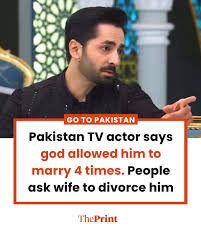
But the question is whether she can conquer her demons. And the demons are not in the foreign ministry. They are in the drama studios.

Q again, on Pakistani dramas:

Women low-key love abusive behaviour from attractive men. Pretty much all women fantasy porn is about this. (What they don’t love is abusive aggressive behaviour from ugly or poor men) Since females are the primary target audience of these dramas, they tend to show this because that’s what the market demands. I would not read too much into this. What’s more concering was that foreign funded NGOs were trying implement anti-family messaging in the last 15 years – and that messaging has suddenly dried up after their funding dried up.

Fantasy is not preference. A woman reading a brooding-billionaire romance is not auditioning for one. To collapse the two is to flatten the female imagination into a market signal, which is exactly what the Pakistani dramas do and exactly why they rot the culture that consumes them.

Daughters of God Continue reading Open Thread: Pakistan’s Demons are The Daughters of God

Founder Sites and Institutional Sites: A Note on Sikh Sacred Geography

This post is to be treated as Precedent on two matters.

First, on moderation

We have been alerted by Hamza that a number of Pakistani commentators on this site have been using anti-Dravidian racialised language against South Indian communities. This will not be tolerated on Brown Pundits.

Any comment that uses racialised language against Dravidian, Tamil, or South Indian communities will be removed, and the offending commenter will have twenty comments removed instantly as an automatic fine. There is no warning phase.

This is personal as well as editorial. DLV’s family was driven out of Sindh by Muhajirs at Partition. It was the Dravidians and the Tamils of Chennai who welcomed them, gave them a second home, and treated them as their own. Any racialised language against those communities on this site will be met with the full weight of the moderation tools available.

To Kabir’s credit, as far as we are aware, he is the only regular Pakistani voice on this blog who has never used racialised language of any kind, even in sharp disagreement. He remains institutional and high-minded even when the argument turns to nuclear rattling. He does not share in the wider Desi pathology with regards to skin colour and race, and that exception is worth naming. It may be the American side of him. Whatever the source, it is the standard this site expects of every commenter, Pakistani, Indian, Bangladeshi, or otherwise.

Second, on substance

The post below establishes a framework for how this site will discuss the sacred geographies of Partition going forward. The recent Kabir-Kishore exchange on Sikh holy places, is the occasion, but the framework is intended to apply across all such disputes: Hindu sites in Pakistan, Muslim sites in India, Sikh sites on both sides of the Wagah, Buddhist sites across the subcontinent. Future BP posts on sacred geography should refer back to the founder-institutional distinction laid out here.


Founder Sites and Institutional Sites: A Note on Sikh Sacred Geography

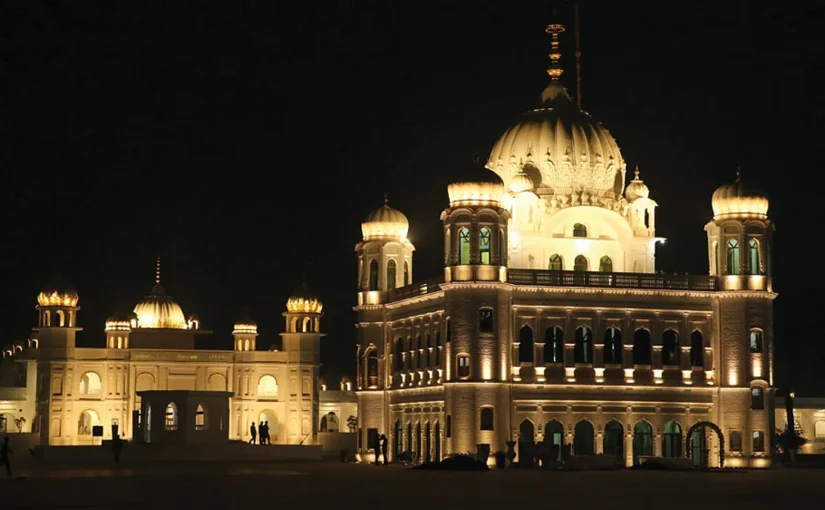
A recent exchange on this site sets out two claims about Sikh holy places. The first says Sikhs lost most of their sacred sites to Pakistan in 1947. The second calls that claim nonsense. Both are right, and the disagreement turns on a distinction neither has named: founder sites versus institutional sites.

The Pakistan-side Holy Sites

Continue reading Founder Sites and Institutional Sites: A Note on Sikh Sacred Geography

Op Sindoor Was Not a Pakistani Defeat: Precedents Two Days From Pahalgam

Two days from the tragic anniversary of Pahalgam (may those brave Martyrs rest in Peace for their sacrifice for Dharma). A useful moment to set down precedents, because a year out the narrative has hardened in places it should not have, and we would like the comments to stress-test these before they calcify further.

Precedent one. Operation Sindoor was not a Pakistani defeat.

Pakistan entered 2025 as a failed state. It exits the Pahalgam year as a diplomatic champion. Whatever happened in the skies over those days in May, the outcome in global perception is unambiguous. A military operation is never only a military operation. It is also how the world reads it, and on that ledger the result is not the one Delhi wanted. No Pakistani commentator across the spectrum treats Sindoor as a setback. Our Pakistani readers can confirm this in the thread, and we invite them to. The Indian premise that Pakistan might now re-engage to recover from some imagined humiliation makes zero sense. The humiliation is not where Indian commentary locates it.

Precedent two. The Crescent commentariat cannot have it both ways.

There is a pernicious Pakistani trait, most visible in the diaspora and the Anglophone class at home. They live distinctly Western lifestyles. They then want Islam for all. Live your beliefs. It is a genuinely offensive thing to cheer on the Iranian revolution, a revolution deeply devastating to the Iranian people, from an American suburb or a DHA drawing room. Only a Pakistani commentator could manage the trick of celebrating the Islamic Republic while exempting themselves from its consequences.

In the Iranian diaspora, religious Shias are quietly ostracised. Persian pride, across pre-Islamic, Islamic and post-Islamic registers, is astonishing in its depth. Some of us, the Baha’is for instance, integrate all three.

The TNT move, which imports Islamist preferences onto others while the class that holds them escapes the reality (QeA typifies this), is the opposite.

Precedent three. The rediscovery of Hinduism is coming, and it will come from South Punjab and Sindh. Continue reading Op Sindoor Was Not a Pakistani Defeat: Precedents Two Days From Pahalgam

Brown Pundits