
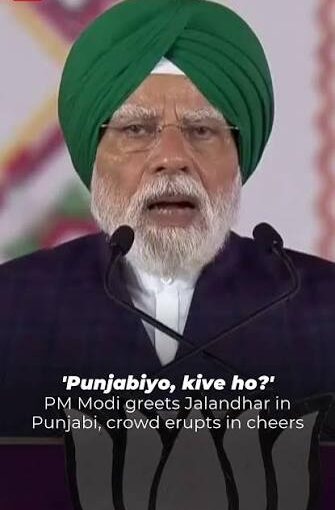
Seven to One
Tomorrow, Andy Burnham will be sworn in as Britain’s seventh prime minister in ten years. Keir Starmer resigned ten years, almost to the week, after the Brexit referendum. The CNN piece I read over breakfast had all but reconciled Britain to middle power status, and nobody in London seems to find the phrase strange anymore. Britain will have had seven prime ministers this decade. India has had one since 2014.
Everything I have been thinking about this week turns out to be the same question at different scales. The state of India. The state of Britain. The state of my own small republic of letters. What does continuity buy, and what does churn cost? Delhi will not let me put the question down.
Oh, could I have one more? Yes, please. Thank you. My fourth cup of sambar. Right now, it is sublime.
South Indian meals are, I always say, like Arabic food: a very good balance of taste and health, neither sacrificed to the other.
Ghalib at the Airport
The first thing that met me in Delhi was Ghalib. His line is the city’s standing epigraph: Ik roz apni rooh se poocha, ki Dilli kya hai? To yun jawab mein keh gaye: yeh duniya mano jism hai aur Dilli uski jaan. I asked my soul, what is Delhi? It replied: the world is the body, and Delhi its life. My own origins are in Delhi. Coming in past the airport and the diplomatic enclave, the couplet does not read as nostalgia. It reads as a forecast. The airport connects this city to everywhere; the enclave fills everyone with the Ghost of Lutyen; Delhi, in a way, is the soul of the world, and the capital of a fledgling superpower.
Did Modi make India great again?
The Quantum of Greatness
In 2013-14, India was roughly the eleventh largest economy in the world. The government’s end-of-year review for 2025 declared it the fourth, at 4.18 trillion dollars, past Japan, behind only the United States, China and Germany. The government, for its part, projects 7.3 trillion dollars by 2030 and Germany overtaken within three years.
Every forecaster of consequence, the IMF, the World Bank, Moody’s, S&P, Fitch, the ADB, puts Indian growth for 2026 somewhere between 6.2 and 7.4 per cent, the fastest of any major economy, and has done for years. That is the continuity dividend in its purest form: eleven consecutive budgets from the same government, no coalition collapse mid-reform, no Truss interlude, no markets pricing in the next resignation. Compounding is boring. That is rather the point. Britain’s decade was interesting.
The State That Builds
Scale is the headline; state capacity is the story. The dullest subject in political economy is the one this decade most changed. The Indian state learned to deliver things.
Take the payment rails first, because they are taped to the counter of this restaurant. The QR code beside the till, is a terminal of the largest instant-payment system on earth. UPI now carries roughly 49 per cent of the world’s real-time payment volume, about 85 per cent of India’s digital payments, some 66 crore transactions every day, and has grown twelve-thousand-fold in a decade. The IMF calls it the global benchmark. Frenchmen and Emiratis can pay through it.
The physical plumbing kept pace with the digital. On the government’s count the country’s airports have roughly doubled since 2014, from 74 to about 160; one of them greeted me with Ghalib. The national highway network has grown by more than half, from about 91,000 kilometres to about 146,000, at a construction pace that touched 30-odd kilometres a day. More than half a billion bank accounts were opened for people who had never had one; an identity number now covers more than a billion; cooking gas, toilets and piped water reached crores of rural households through delivery machinery that mostly works, which in India is the miracle. And in 2023 Chandrayaan-3 put a lander near the lunar south pole, the first country to manage it, on a budget smaller than a Hollywood film’s.
The World Comes to Delhi
The diplomatic enclave I drove past is multi-alignment made concrete. This is a capital that sits in the Quad with Washington and Tokyo, photographs itself at the SCO with Moscow and Beijing, and sees no contradiction. It bought Russian crude at scale through Western displeasure, took Washington’s tariffs last August over exactly that, and kept buying. It hosted the G20 in 2023 and used the chair to walk the African Union into permanent membership, a fact Africa remembers. It signed a trade pact with the Emirates and built a Hindu temple in Abu Dhabi. Its diaspora is the world’s largest and remits well north of 100 billion dollars a year, the biggest such flow on the planet.
And it has shown reach of the harder kind. Fourteen months ago, after the Pahalgam massacre, Operation Sindoor sent Indian strikes across the border at terror infrastructure. We wrote about Sindoor at length at the time, and I will not relitigate the doctrine here. The point is a state willing to accept escalation risk in pursuit of deterrence, and an arms industry that noticed. Defence exports were 686 crore rupees in 2013-14. In the financial year just ended they touched 38,424 crore, a record, up 63 per cent in a single year, going to more than 80 countries, with the public-sector yards’ exports up 151 per cent in the year after Sindoor. The defence budget itself has grown from 2.5 lakh crore to 6.8 lakh crore across the decade. One may like or dislike what that buys. It is not the balance sheet of a middle power.
Here comes my filter coffee. Thank you. Thank you.
Steelmaning our arguments
The fourth largest economy is also, per head, a poor country: around 140th in the world in per capita terms. The growth is real and its distribution is lopsided; consumption tells a K-shaped story; manufacturing’s share of output has sat stubbornly in the mid-teens through a decade of Make in India, which is why the jobs question will not go away no matter how many airports open.
The institutional column is darker. In April, Reporters Without Borders ranked India 157th of 180 countries for press freedom, down six places in a year, in the category the index calls very serious, citing the judicial harassment of independent media through defamation and national security statutes. V-Dem has filed India under electoral autocracy since 2021. The investigative agencies show a durable appetite for opposition politicians. Defenders answer with turnout and with the fact that power still changes hands, and they are not wrong: in 2024 the voters themselves pruned Modi’s majority, and he has governed since in coalition, dependent on allies in Andhra and Bihar. Uncontested was always the wrong word for this tenure. Undisplaced is the right one.
And undisplaced keeps being renewed. Two months ago the BJP won West Bengal, the state it could never crack, taking 207 of 294 seats on a turnout of about 94 per cent, the highest ever recorded in an Indian election, with Mamata Banerjee losing her own seat in Bhabanipur to Suvendu Adhikari, who now governs the state. The first right-wing government in Bengal’s history, in the old citadel of the Left. The pollsters missed it by more than fifty seats. Whatever this dominance is, gravity or greatness or something less lovely, the electorate keeps voting for its continuation.
From We to I
But since Ruchira’s passing, I want to be more personal in my connections and more intentional about what Brown Pundits is for. I try not to meditate too much on the blog, and then I do, and it becomes a little autobiographical. That is the truth of it: in our constructs, we put so much of ourselves into it.
The Last Vestige of the Blogosphere
We are in a post-factionalism phase, and it has clarified something for me. Building a community matters more to me than building a rival to the Juggernaut, or whatever. We are the last vestige of that era of the Brown Blogging Dynasts and that is not nothing.
Why, in an essay whose title contains Modi, am I spending words on a blog?
What a decade of continuity does for a state, a community does for a small republic of letters. Britain churns prime ministers; the internet churned its communities; both lost something they have never properly priced. Brown Pundits is my love letter to India perhaps..
What Twitter Ate
There was something idiosyncratic and very homely about the early days of the internet. People could know each other. Twitter ate that world. Brown Pundits, in a way, should preserve it: keep a room where it survives away from predatory capitalism of the trillionaire class.
The Line between a Person and their Ideas
Keeping such a room requires a rule, and I have been meditating on the exchange between online safety and precedent. The rule is simple. Individuals must and always should be respected; there is never an excuse for crossing that line. Ideas enjoy no such immunity. Not all opinions and beliefs need to be respected. They should not be flagrantly disrespected, but they can be actively questioned.
Brown Pundits started as a diaspora blog. We look at things from a perspective of Western values, especially on gender.
DLV is an academic powerhouse; why should I yearn for a traditional Patriarchy, where that would be denied to her? The deeper point is that difficult conversations can happen without anyone being diminished.
Velocity and Quality
I have stopped caring how active the comment threads are. If you want high velocity, there was a time when the threads ran to 200 comments a day. That is a very different quality of conversation. Different, not better. This blog is about good quality writing, and quality does not scale the way velocity does.
Two Thousand and Two Thousand
My newsletter grew to a considerable height: roughly 2,000 subscribers, against the blog’s 2,000 readers a day. Readers replied to the newsletter (Ruchira used to). But I do not know why Brown Pundits always grabs my attention. On the blog you get the stimulus of the community, and community is everything at the end of the day. There are those who remember you, and you who remember them.
Middle Power, Great Power
Britain is reconciling herself, in the pages of CNN, to being a middle power, and her political culture has made the reconciliation easy to believe: a resignation ritual so familiar that the staff know where to stand on the pavement. The enclave I drove past was laid out by an empire that once audited its Indian possessions from London; the auditors’ successors now count their own prime ministers by the decade.
India, meanwhile, under a tenure, a reign really, that has run undisplaced since 2014, pruned in 2024, renewed in Bengal in 2026, is being asked the opposite question: is she becoming a great power?
Did Modi make India great again? I borrowed it from an American slogan of restoration, and it does not quite fit. Restoration is Britain’s temptation, not India’s. On Ghalib’s arithmetic, Delhi never stopped being the world’s life; what the last decade did was reconnect the body.
A state that learned to deliver, an economy compounding past its old masters, a foreign policy with reach, and, in the other column, a poor country per head with a press ranked 157th and agencies that lean on the opposition. Becoming is the honest word.
Greatness of this kind accumulates: in airports and enclaves, in payment rails and export manifests, in students and capital and diplomats, in the dull compounding fact of continuity.
Tomorrow Britain swears in her seventh prime minister of the decade. India has had one since 2014. I do not offer the arithmetic as a verdict on either country; stability can curdle, and churn can renew. But sitting here, over the last of the filter coffee, the couplet at the airport reads less like poetry and more like reporting. I asked my soul, what is Delhi? The world is the body, and Delhi its life.
It is very disingenuous for a country to quote Ghalib at the airport while making the lives of its own Muslim citizens miserable. Hindu nationalism has no place for real living Muslims but of course it wants to appropriate Urdu’s greatest poet.
The BJP won West Bengal. But your essay does not acknowledge the systematic disenfranchisement of that state’s Muslims through the SIR process.
On “traditional patriarchy”: My great-aunt was a professor of pathology. My mother is an accomplished medical professional as are my father’s sisters. There are many many upper-middle class Pakistani women who are accomplished professionals. They are also good wives and mothers. There’s nothing wrong with that. Marriage is essentially an arrangement to perpetuate the species. That’s the whole point.
Once again, if someone doesn’t want to be a wife or a mother that is her right.
It’s fine to love India. But engaging in cheerleading for the Modi regime just reveals one’s own partisan preferences.
Where are the lives of Indian Muslims, “miserable?”
This isn’t to say that there are significant issues but everywhere we go, we see the the largest minority in the world (Indian Muslims).
Also this isn’t a puff piece on the Modi era but it just so happens that India has become richer, more confident and more “herself” under his tenure.
Skyroot has made India the 3rd country in the world with a private company capable of space flight with its launch in the last couple days.