The US lost but has to resort to face saving measures. Yet to see who has the last laugh. Will Iran get access to its frozen assets? What concessions will it grant vis-a-vis the nuclear stockpile? 60 days to go.
US isn’t a reluctant imperialist, the US has propagandized the world for the last 30 years that they’re a benevolent hegemon. The reality is that the US in its 250 year history has only been at peace for 18 years.
The mass displacement of Delhi’s Muslim elite to Pakistan, particularly to the newly established capital of Karachi, resulted in a highly distinct formulation of refugee identity. Unlike the total, localised population exchange that occurred along the partitioned border of East and West Punjab, the migrants from Delhi and the broader United Provinces entered a complex demographic landscape in Sindh where they possessed no contiguous territorial homeland. To negotiate this displacement, the Delhi elite deployed their immense linguistic, educational, and cultural capital to establish a position of socio-political hegemony within the nascent Pakistani state. Commonly categorised within the broader Muhajir identity, these migrants understood their displacement not as a triumphant arrival in a promised land, but as a tragic exile, an unmitigated tragedy described as a severing akin to separating nails from flesh. This profound sense of loss was articulated through the preservation of Dilli culture, which they positioned as the peak of South Asian Islamic refinement.
Today’s Delhi is a rough and violent town. The niceties which mark other old capitals, like vadodara, Bhopal, Mysore, Lucknow, Hyderabad, pune, etc is missing because the west Punjabi hindu/sikh refugee, having lost everything once, Is not willing to loose again.
Hence even a small road accident results in a rage.
Yea I don’t think that’s the reason for the psychopathy of Delhi-walas. I’ve had one too many “tu janta hai mera baap kaun hai” to buy all that. It’s because they feel like they’ve got more privilege than other folks that they can just bully other people into succumbing to their demands constantly. That culture has been reinforced from top-to-bottom.
What is happening in Pakistani Kashmir btw? @RecoveringNewsJunkie had made a post and I thought it was the “usual” dharna that happens in the subcontinent.
But seems it is more serious. Even in the UK protests have happened where most “Pakistanis” are from that region.
I genuinely thought it was just some random protest which would die down in a day but even British Mirpuris are protesting. Not insinuating anything else – just the seriousness of it.
Just that everything is not fine and dandy and there is dissatisfaction there even if they do not want to join the Indian side.
The violence and the blackout is real.
As far as diplomatically goes, Pakistan really hasn’t achieved much as a country?
Trump sees utility for Munir and his gang so has them on board his projects while simultaneously banning immigration from Pakistan.
And if you don’t mind me asking, what are the actual diplomatic gains that Pakistan has made?
Not words or proclamations but real on ground stuff?
All that is happening is very one-sided (as a favour for the ceasefire) – the Board of Peace, the mediation etc. All of this benefits the USA, not Pakistan.
When is the world going to help Pakistan out on THEIR issues?
Kashmir which is close to their hearts? IWT abeyance? The world keeps mum on these.
I hope you don’t mind me saying this but your Pakistani connection means you do have a soft spot for them which leads you to fall for these “optics”.
Wow this is quite an overreaction from you. Fwiw, I thought BB’s comment was fairly ‘normal’ and not triggering/trolling at all. Only Pakistani Fauji Nationalists would want to aggressively push back on even talking about the brutal repression happening in PoK. When the shoe is on the other foot, we’d have the Crescentiate occupy the front and centre about the Indian state’s so called genocide in the region.
It isn’t. I myself admitted that I thought it was just the usual run of the mill subcontinental dharna that keeps happening from time to time and ignored it.
I saw the protests in the UK and was naturally curious considering these protests mostly happen against India, not Pakistan.
Think it is a new enough development to be curious about.
If Jammu (the actual equivalent of “Azad Kashmir”) had such developments, it would be similarly curious.
I wanted Devji to pinpoint, if he must, the historical moment when Islam stopped being only a faith people practised but became an actor with a destiny and a plan. He argues that the idea took root in the context of expanding European empires and the concurrent decline of traditional Muslim sovereignties, such as the formal end of the Mughal Empire after the Indian Mutiny of 1857 and the establishment of the British Raj. This power vacuum created an environment where a new, educated middle class of Muslim intellectuals began to conceptualise Islam as an abstract, agentive force acting in its own right. This “democratisation of Muslim authority” allowed individuals to make claims in the name of Islam without relying on traditional figures like kings or clerics. Initially, Muslim liberals framed this abstract Islam as a “civilisation,” a way to understand its collective historical action. Devji emphasises that Islam as it emerged in modern times is inseparable from, and in fact is, a colonial category, even if used for oppositional purposes.
Since there has been a lot of discussion on the Indus Waters Treaty, here is a Pakistani perspective. The author is an international lawyer and a graduate of Harvard Law School.
Pakistan is not approaching this dispute from a position of weakness. Far from it. Hand on heart, I believe Pakistan’s legal position deserves serious consideration. The real question is whether Pakistan is prepared for the long game that modern international disputes increasingly require. Lawfare has become a permanent feature of international competition. Countries that understand this aspect can shape debates long before judgements are delivered. The future of the Indus dispute will depend not only on what the law says, but also on who succeeds in defending it and embedding it within the broader international conversation. That contest is already underway, and Pakistan needs to get ready for the long haul of international lawfare before it is too late.
Zaid Bin Shabir is a journalist based in Jammu & Kashmir. He writes extensively on politics, conflict, human rights, governance, environment, policy issues, and religion in the region.

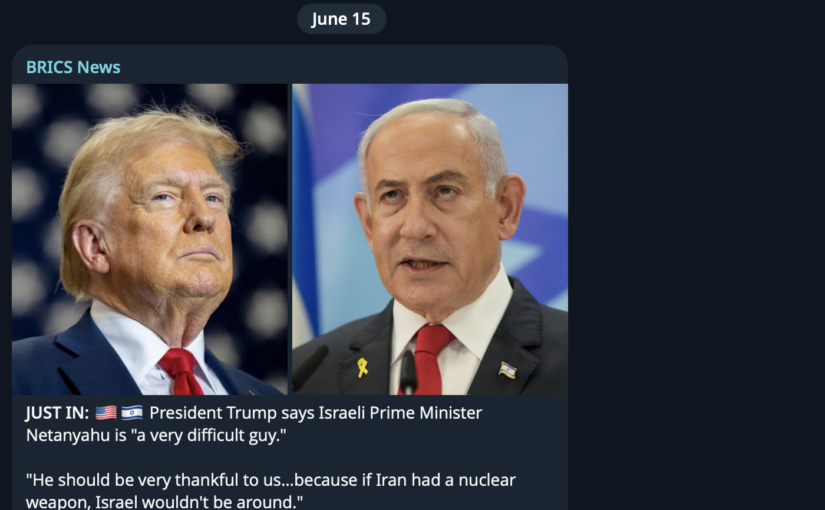
The US lost but has to resort to face saving measures. Yet to see who has the last laugh. Will Iran get access to its frozen assets? What concessions will it grant vis-a-vis the nuclear stockpile? 60 days to go.
USA is a reluctant imperialist. It doesn’t have the patience or history for such wars.
It should stay back and enjoy life.
US isn’t a reluctant imperialist, the US has propagandized the world for the last 30 years that they’re a benevolent hegemon. The reality is that the US in its 250 year history has only been at peace for 18 years.
+1
Well said. Luckily the Teflon coating seems to be wearing off gradually.
we have quite the backlog of articles to write but it seems the world is fairly calm at the moment
India cut off from US support
😀
Weren’t PM Modi & President Trump together just now?
“The Missing Half of Partition: Delhi’s Muslims and the Making of the Muhajir World”
By Shah Umair
https://sikkawala.substack.com/p/the-missing-half-of-partition-delhis
Today’s Delhi is a rough and violent town. The niceties which mark other old capitals, like vadodara, Bhopal, Mysore, Lucknow, Hyderabad, pune, etc is missing because the west Punjabi hindu/sikh refugee, having lost everything once, Is not willing to loose again.
Hence even a small road accident results in a rage.
Yea I don’t think that’s the reason for the psychopathy of Delhi-walas. I’ve had one too many “tu janta hai mera baap kaun hai” to buy all that. It’s because they feel like they’ve got more privilege than other folks that they can just bully other people into succumbing to their demands constantly. That culture has been reinforced from top-to-bottom.
Rich kids + Haryanvis..
Inequality always breeds this
Punjabis you mean? Haryanvis are very socially conservative and rigid, but they’re not the card holding Lutyens elite.
The cultural elite embarked for Khi..
The Lahori cultural elite went to Delhi.
We have not read this thus. We have a queue of articles but no time to dedicate ..
Hopefully things will calm down also we will power down the ceasefire rule to only those who want it.
We suspect you want it vis a vis RNJ, BB & 0M?
RNJ, BB, Q & EK have their imposed ceasefire otherwise removed.
If it heats up again, we’ll impose it but let’s modulate?
It’s an interesting article.
I’m content with my ceasefires.
What is happening in Pakistani Kashmir btw? @RecoveringNewsJunkie had made a post and I thought it was the “usual” dharna that happens in the subcontinent.
But seems it is more serious. Even in the UK protests have happened where most “Pakistanis” are from that region.
This is an absurd comment.
British Mirpuris are the strongest Pakistani contingent about loll..
BB this is why India-based Pakistani analysts always miss the mark.
We have yet to hear how since post Sindoor Pakistan & India have fared diplomatically.
It’s odd.. even when Pakistan gets it right; it’s wrong..
Will Mirpur rejoin its kin across the border 🙂
I think you misinterpret my comment.
I genuinely thought it was just some random protest which would die down in a day but even British Mirpuris are protesting. Not insinuating anything else – just the seriousness of it.
Just that everything is not fine and dandy and there is dissatisfaction there even if they do not want to join the Indian side.
The violence and the blackout is real.
As far as diplomatically goes, Pakistan really hasn’t achieved much as a country?
Trump sees utility for Munir and his gang so has them on board his projects while simultaneously banning immigration from Pakistan.
And if you don’t mind me asking, what are the actual diplomatic gains that Pakistan has made?
Not words or proclamations but real on ground stuff?
All that is happening is very one-sided (as a favour for the ceasefire) – the Board of Peace, the mediation etc. All of this benefits the USA, not Pakistan.
When is the world going to help Pakistan out on THEIR issues?
Kashmir which is close to their hearts? IWT abeyance? The world keeps mum on these.
I hope you don’t mind me saying this but your Pakistani connection means you do have a soft spot for them which leads you to fall for these “optics”.
Agent Khwaja Asif is the real Rakesh Bedi.
Wow this is quite an overreaction from you. Fwiw, I thought BB’s comment was fairly ‘normal’ and not triggering/trolling at all. Only Pakistani Fauji Nationalists would want to aggressively push back on even talking about the brutal repression happening in PoK. When the shoe is on the other foot, we’d have the Crescentiate occupy the front and centre about the Indian state’s so called genocide in the region.
It just feels very obsessive .
It isn’t. I myself admitted that I thought it was just the usual run of the mill subcontinental dharna that keeps happening from time to time and ignored it.
I saw the protests in the UK and was naturally curious considering these protests mostly happen against India, not Pakistan.
Think it is a new enough development to be curious about.
If Jammu (the actual equivalent of “Azad Kashmir”) had such developments, it would be similarly curious.
you completely misunderstand the complexities of either Pakistani or Muslim society.
these are very complex social and human interactions, which means this is ethnic-partisan negotiations rather just secession etc.
for instance we haven’t heard of any such things in the United Kingdom.
there is a ton of inertia and it takes alot for a disaffected population to riot.
another aspect is that Muslim culture tends to evolve; if anything the US attack on Iran shows Muslim countries are aware of “divide and rule.”
I never said anything about secession. Just that there have been “issues” and wanted to know more about them.
There has been protests by British Kashmiris outside the UK parliament as well as deaths/blackouts back home.
https://www.aljazeera.com/amp/news/2026/6/8/at-least-11-killed-in-pakistan-administered-kashmir-clashes-before-rally
I think BB was genuinely asking, not stoking.
Yup, that’s how I read it too.
Yup, We think BB was only asking. But the other We wont see this perspective because We don’t have credibility.
“Fiction Fest 2026: Writing Across Languages with Rakhshanda Jalil”
https://www.youtube.com/watch?v=RxFnmZQpYuk
This was the Zoom event that I attended last night
“A Doll’s Story (after a bombing in Beirut)”
Poem by Zehra Nigah
Translation by Anjum Altaf
https://3quarksdaily.com/3quarksdaily/2026/06/thursday-poem-518.html
Interview with Faisal Devji on his new book “The Waning Crescent: The Rise and Fall of Global Islam”
https://www.angleanchorvoice.co.uk/p/interview-with-faisal-devji-islam
Since there has been a lot of discussion on the Indus Waters Treaty, here is a Pakistani perspective. The author is an international lawyer and a graduate of Harvard Law School.
“Winning the Indus lawfare”
By Hassan Aslam Shad
https://www.dawn.com/news/2009409/winning-the-indus-lawfare
“Nazuk” (translation from Balochi)
By Fazal Baloch
https://www.himalmag.com/nazuk-himal-fiction-fest-2026
“In Ladakh, redistricting by the Modi government fuels Muslim anxieties and communal division”
By Zaid Bin Shabir
https://www.himalmag.com/india-ladakh-districts-muslims-marginalisation
“How Do You Describe a Titan Like Naseeruddin Shah?”
By Sohini Chattopadhyay
https://thewire.in/film/how-do-you-describe-a-titan-like-naseeruddin-shah