Razib Khan
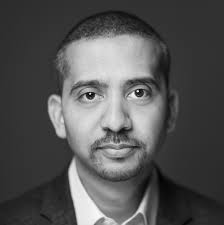
Razib Khan is a Bangladeshi-American geneticist and writer. He is co-founder of Brown Pundits and runs Unsupervised Learning, a Substack on population genetics, evolution, history, and politics with more than 55,000 subscribers, alongside the accompanying podcast. He has blogged at Gene Expression since the early 2000s.
His writing has appeared in The New York Times, The Guardian, National Review, Slate, India Today, Quillette, and UnHerd. He is Director of Operations at FUTO in Austin, Texas, and co-founder of GenRAIT, a life-sciences platform company. Earlier in his career he developed ancestry algorithms for Gene by Gene, the Genographic Project, and Insitome, and was among the first employees at Embark Veterinary.
Born in Dhaka and raised in upstate New York and eastern Oregon, he holds degrees in biochemistry (2000) and biology (2006) from the University of Oregon, and undertook doctoral work in genomics and genetics at UC Davis. He lives in Austin.
Most popular · Most recent
-
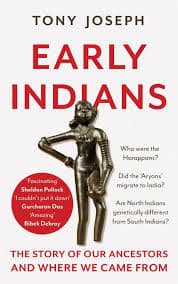
Tony Joseph’s Early Indians
Linking his India Today review of Tony Joseph’s Early Indians, the author generally likes the book and has only minor quibbles with its genetics, though he thinks it over-emphasises aboriginal…
-
South Asians and “communalism”
Razib Khan, citing David Reich, argues that South Asia, unlike China, is a collection of many genetic groups with strong structure persisting within regions, so that Brahmins in Tamil Nadu…
-
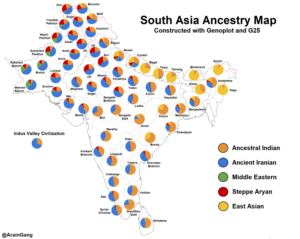
Global 25 is good, but a minor issue
Razib Khan challenges a Global 25 map of South Asian ancestry, arguing that it wrongly gives Andamanese-related ancestry to northeastern groups such as the Khasi, whom his f3 tests show…
-
Indian Matchmaking
Razib Khan, on the Indian Matchmaking show, says he takes such shows as anthropology rather than how the world should be, and that older age has softened his opposition to…
-
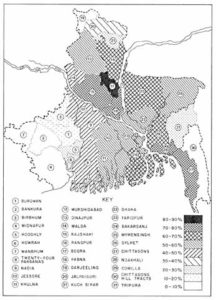
The rise of Islam after 1500 in the Indian subcontinent
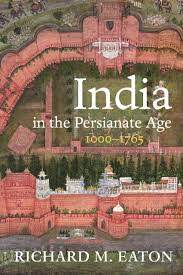
Razib Khan recommends Richard Eaton’s The Rise of Islam and the Bengal Frontier, which explains Muslim majorities in eastern Bengal by peasant adoption of Islam under Mughal-era elites after 1576,…
-
Memory outlives flesh
Answering why Indo-Aryans dominate debate despite contributing perhaps 10 to 30 per cent of northern South Asian ancestry, the author argues through St Perpetua and Polish Catholics that language and…
-
Not all societies are identical
Responding to Hindu Right questions about why liberals tolerate France’s crackdown on Muslims after Samuel Paty’s murder, the author argues that nations differ historically, contrasting France’s individual-only emancipation and nation-building…
-
On Being Hindu in the Islamic Republic of Pakistan
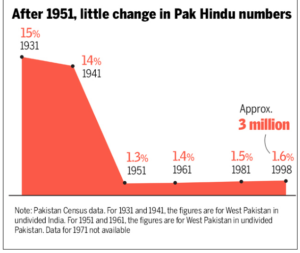
Commenting on halted construction of an Islamabad Hindu temple, Razib Khan argues the objection fits historical Islamic norms of tolerating but not encouraging minorities, and that Hinduism is seen as…
-
Brown Pundits Reader Survey #3
Link to the third Brown Pundits reader survey, with results available in a shared spreadsheet.
-
They’ll protest more the more they are wrong
Commenting on a video concluding that civilisation came from India, the author likens its confident style to Creationist speakers, says provisional citations are presented as refutation, and expects forthcoming ancient…
-
Hinduism will die, and Hinduism will live
Razib Khan answers Hindus who lament their religion’s weakness, arguing that 1.2 billion adherents and great internal variation make extinction implausible, that jati-varna’s flexibility helped Hinduism survive Islam, and that…
-
So what’s wrong with being kaala?
Razib Khan, prompted by a comment thread, asks why South Asians recoil from the word ‘kaala’ (dark) even when well-off and Westernised. He treats it as learned conditioning that should…
-
Christian conversions in rural India
Razib Khan quotes a New York Times report on mob attacks and conversion-law arrests of Christians in India, reads it sceptically as a Cow Belt, Dalit-convert phenomenon, notes Hindus are…
-
Pivoting to the future
Quoting a report on Delhi reopening after its deadly Covid wave, the author asks how Modi will supercharge India’s economy, saying as an American that a strong India is good…
-
Genetics is not about “dunking” on Hindu nationalists
The author, a geneticist, says geneticists are not out to debunk Hindu nationalists, criticises anti-nationalist triumphalism that misreads the science, argues the Indo-Aryans were highly Indianised by the time their…
-
Mehdi Hasan’s hypocrisies
The author argues that Mehdi Hasan should not use guilt by association, as in his attack on Rand Paul over his father’s newsletters, given Hasan’s own past remarks about homosexuals…
-
Why Indian Americans are not the new Jews
Razib Khan argues the analogy between Indian Americans and American Jews is superficial, sketching the two Ashkenazi migrations, the German Jews and the far larger wave from the Russian Empire,…
-
The Sintashta shamans
Razib Khan wonders whether the Kalash of Chitral, about 30 per cent Sintashta in ancestry, can show what early Indo-Aryan belief was like, noting their mountain shamanism resembles steppe shamanism…
-
Brown privilege in the American executive suite
Discussing a study across nine experiments finding East Asians underrepresented in US leadership while South Asians outperform whites, the author draws out its explanation: cultural differences in assertiveness rather than…
-
Genetic odds & ends
Razib Khan notes a Cambodian sample from 100 to 300 AD with considerable Indian ancestry, and argues appearance is a poor guide to ancestry, since physical variation within Indian populations…
-
Calvinism, atheism, and Hinduism
Prompted by an NPR journalist’s remarks on Hinduism, the author argues that mockery of Hindu gods by some secular South Asian Muslims reflects an Abrahamic view of other gods as…
-
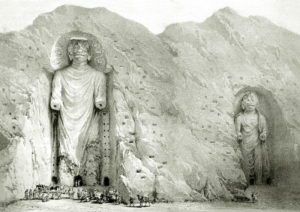
Afghanistan was never “Hindu”
Razib Khan argues Afghanistan was never ‘Hindu’ in any comprehensible sense: its highlands were heavily Buddhist until about 900 AD, and he sees the area as a crossroads of Persian,…
-
Why Scythians, Sakas, and Kushanas, are NOT the source of “steppe” ancestry
Quoting a genetics paper on South and Central Asia, the author argues that Scythians, Sakas, Kushans and Huns cannot be the main source of South Asia’s steppe ancestry, because present-day…
-
Stolen oppression
Reacting to a psychiatrist’s lecture about shooting white people, the author argues that educated, resourced brown Americans are not underprivileged, and claims most white Americans are worse off.
-
Hindu atheist vs. Secular Jihadists
Razib Khan reacts to a podcast between Jarin Jove and the Secular Jihadist hosts, finding Jove’s arguments on Hindu nationalism sophistic and close to American social justice reasoning, and warning…
-
Looking to the east: a different secularism than the West
Responding to a piece linking Hagia Sophia to India, the author asks whether Western-style secularism can take root in non-Christian societies without the Reformation and Enlightenment, suggesting that religion defines…
-
Stop trying to make ‘caste happen’
Reacting to a Washington Post report on Google cancelling an Equality Labs talk on caste, Razib Khan argues that progressive funders and Indian American journalists uncritically relay activists’ claims, and…
-
Food between cultures
Razib Khan, reacting to an essay on reclaiming Indian food from the white gaze, agrees that white cooks of ‘exotic’ food are rewarded more than immigrants, but rejects the idea…
-
Brown Pundits – Episode 5, reflections on the Chinese age
Episode 5 of the BP Podcast reflects on the Chinese age. The host objects to people being surprised that a brown person takes an intellectual interest in China, and argues…
-
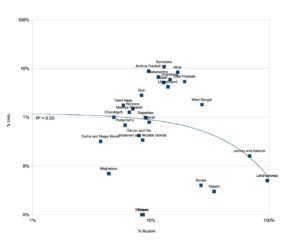
Muslims and Urdu in India
Razib Khan plots Census 2011 data on Urdu speakers against Muslim share by state, finding the core Urdu-identified region in the Deccan and Bihar, about 30 per cent of Tamil…
-
Reducing Hindu nationalism to the Enemy
The author calls a Politico piece on how Hindu nationalism could shape the US election silly, arguing no one in America knows or cares about it, and asks why many…
-
The Persian captivity
Razib Khan urges readers to study histories beyond the subcontinent, arguing that pastoralist depredations were not unique to India, that Turkic dynasties dominated the Muslim world for a thousand years,…
-
Ancient Ancestral South “Indians” may have roots in Southeast Asia
Razib Khan welcomes a conference report of Pleistocene gene flow from Pleistocene Southeast Asians into South Asia, arguing that Southeast Asia’s larger Last Glacial Maximum populations and the haplogroup M…
-
West Bengal, TMC wins!!!
Quoting a report that Modi’s BJP fell well short in the West Bengal election while Mamata Banerjee’s TMC won, the author asks whether the TMC has an ideology and whether…
-
Brown in the Whitehouse
-
The Aryan Integration Theory (AIT)
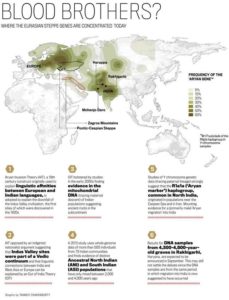
Razib Khan drops the label ‘Aryan Invasion Theory’, arguing from ancient DNA that Indo-Aryans interposed themselves into a fallen landscape rather than conquering a coherent civilisation, with steppe admixture dated…
-
India and COVID-19
Quotes a TIME report doubting India’s low COVID-19 case count given limited testing, and asks readers why no major outbreak has appeared, noting Iran’s far higher numbers.
-
Brown power now!
The author argues that brown Americans now hold real power on the Democratic Left, naming Saikat Chakrabarti, Faiz Shakir, Ro Khanna, Pramila Jayapal and Neera Tanden, and says he hopes…
-
A Hindu in the Whitehouse?
Noting that Tulsi Gabbard is running for president as a devotee of Gaudiya Vaishnavism, Razib Khan doubts she can win but is curious about the attacks on her religion, and…
-
The the origins of the false moral panic about caste in the USA
Razib Khan calls the push to ban caste discrimination in US institutions, such as Brown University, a false moral panic, arguing that few Indian Americans are Dalit or care about…
-
First AASI mtDNA genomes from Sri Lanka (2500 and 5500 BC)
Razib Khan quotes a paper reporting the first mitochondrial genomes from Mesolithic hunter-gatherers in Sri Lanka, haplogroups M18a and M35a, both South Asian-derived, adding only that it is odd this…
-
Against blood quantum as a measure of indigeneity
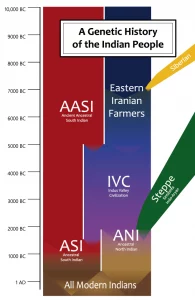
Razib Khan sets out the three ancestry streams behind modern South Asians (Steppe Indo-Aryan, Ancient Ancestral South Indian and an Iranian-farmer-related component) and argues that blood quantum is a poor…
-
BAPS!
Quoting a report on a lawsuit alleging that a Hindu sect used low-caste men lured from India as forced labour at its New Jersey temple, the author notes that ‘caste’…
-
AIT vs OIT survey
A reader survey asking whether readers favour the Aryan Migration Theory or an Out of India origin, prompted by the readership now being plural-majority Indian by IP address and widely…
-
The Arctic home of the Aryans
Razib Khan discusses a preprint on ancient genomes from northwestern Russia, showing Fatyanovo Corded Ware people carried steppe and early farmer ancestry from a fast migration northeast, and links this…
-
People of Indian ancestry need to learn things outside of India or they will sound stupid
Razib Khan answers a commenter who compares Islamic invasions of India to Christian conquests in the Americas, arguing the Spanish aimed to extract rents rather than slaughter, that disease caused…
-
A “carvaka” perspective historicity of myth and religion
Razib Khan argues from a sceptical standpoint that Ram and Krishna, if they existed, belong to prehistory like Abraham or Zoroaster, whereas the Buddha and Mahavira are liminal figures, and…
-
What is Islamophobia?
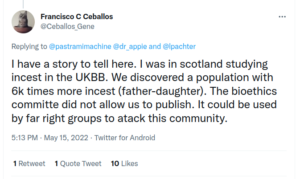
Razib Khan argues that traditional family and cultural systems can mask depravity, citing suppressed evidence of sexual abuse in a UK community to avoid stereotypes, as at Rotherham, and adds…
-
They came not to bring peace but a sword
Razib Khan responds to a Twitter debate on the Indo-Aryan legacy, arguing that steppe-descended pastoralists were initially destructive, as in Europe, but that southern Indo-Europeans such as early Greeks and…
-
A Mongol India, a pagan India?
Taking up a Twitter counterfactual, the author asks what might have followed had the Mongols destroyed the Delhi Sultanate, surveying how the Mongol khanates adopted Islam or Buddhism to speculate…
-
They forgot who they were?
The author notes that linguistic and genetic evidence puts the Romani’s departure from the subcontinent around 1000 AD, with roughly 30 per cent South Asian ancestry, and finds it curious…
-
Genetic distance in Europe and South Asia
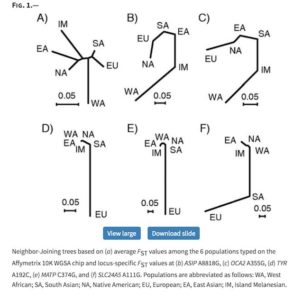
A neighbour-joining tree of pairwise Fst genetic distances for European and South Asian populations, with a link to the raw table.
-
The Burmese frontier of Bengal
Razib Khan reads Thant Myint-U’s account of Burmese memories of Bengal alongside mtDNA and Y data, finding about 10 per cent East Asian lineages in Bangladesh. He argues a Tibeto-Burman…
-
From basket-case to garment superpower
The author says an article uses Bangladesh as a prop to attack Pakistan’s rulers, though Bangladesh has governance problems and textile dependence, and notes the blog gets far more traffic…
-
Brown is all, all is brown
Razib Khan argues for a liberal, broad view of who counts as ‘brown’ or desi, using adoptees raised as English-speaking American Christians and converts to South Asian religions as test…
-
Upward mobility in India by geography
Shares a figure from a paper on intergenerational mobility in India, noting that others are discussing its caste results while the poster wants to draw attention to geography.
-
Results of 2018 Reader Survey
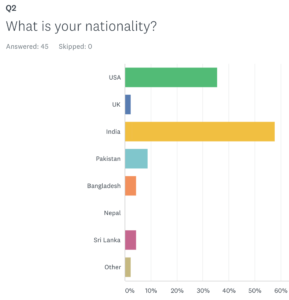
Razib Khan reports the 2018 reader survey: among 104 respondents the modal South Asian reader is an Indian, Hindus are modal but non-religious readers are common, about 95 per cent…
-
Race is not just skin color
Starting from Arrian and Strabo’s descriptions of Indians and a 2007 paper on the convergent evolution of light skin in Europeans and East Asians, the author argues race is not…
-
Cultural evolution at work!
Quoting a New York Times report on clerics resisting limits on Friday prayers in Pakistan, the author argues that Islam’s perceived unitary cohesion, which some Hindu nationalists envy, can have…
-
Indian futures
Responding to Noah Smith’s bullish piece on India, the author takes agglomeration as the economist’s main lesson, argues that huge nations scale in ways small ones cannot, and flags human…
-
On being an “upper caste” “Muslim”
Razib Khan reflects on being called an ‘upper-caste Muslim’, arguing that although his ancestry may be largely Kayastha and Brahmin, caste is irrelevant to his family’s identity as generic Bengali…
-
Stark Truth About Aryans: a story of India (part 1)
Razib Khan posts the opening of his paid Substack essay Stark Truth About Aryans, which sets out how recent genetic research explains South Asia’s diversity and asks what findings of…
-
Why I like to ask about caste
The author argues that asking about caste, like asking about income in America, touches what really matters, observing that a group agreeing about caste privilege turned out to contain no…
-
Our existence is an offense to moderate Muslims!
Razib Khan quotes a comment advising ex-Muslims to keep quiet, and a reply that people announce their atheism because they can, citing killings of non-believers in Muslim countries, and says…
-
The religion of Hindus before Hinduism
Razib Khan disputes Richard Eaton’s aside that Turk-Indian conflict was not confessional, arguing religious and civilisational identity was robust and that a bundled Hindu identity is older than the 19th…
-
Endogamy and assimilation: Parsis in India
Prompted by a Guardian profile of Parsis, Razib Khan argues they combine high assimilation with high separateness, citing genetic work that finds them closest to Iranians and Caucasus populations, with…
-
Bring the Kalash to Ladakh!
Following a Twitter suggestion, the author proposes that the Kalash be allowed to relocate to Ladakh, a similar ecosystem with less pressure to assimilate, as a constructive step for a…
-
What to read if you don’t want to read Guha
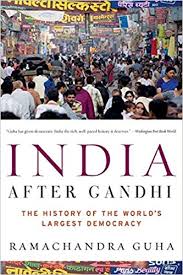
Razib Khan asks what books on Indian history an American conservative should read instead of Ramachandra Guha’s India After Gandhi, after Kushal Mehra noted Ben Shapiro was reading it. He…
-
More Sikhs in Canada than India proportionally
A one-line observation that Sikhs are 2.1% of Canada’s population against 1.7% of India’s, after heavy migration to Canada over the last decade.
-
Varna is Indo-European and jati is Indian
Razib Khan observes that most Indo-European societies had occupational caste systems but only the subcontinent has jati, suggests the Indo-Aryans adopted indigenous forms of strict endogamy, and speculates that jati…
-
Is the Mesopotamian world for elephant ‘Dravidian’?
The author links a Nature paper arguing that the Mesopotamian word for ‘elephant’ points to a Dravidian language in the Indus Civilisation; he leans towards agreeing but finds the chain…
-
“The Buddhist Age”
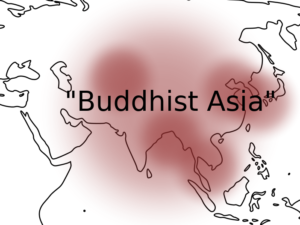
The author argues that 250 to 750 AD can be thought of as Asia’s ‘Buddhist Age’, and that around 700 Buddhism, though declining in the subcontinent and under threat in…
-
Long long with caste be a bar? Perhaps more than three centuries!
Razib Khan says genetic data surprised him: jati groups are sharply distinct, endogamy is deep and ancient, and steppe ancestry roughly correlates with caste status, so he argues caste may…
-
Hindutva need a Tariq Ramadan (without the rape allegations!)
Razib Khan argues that Hindu nationalists lack voices who are uncompromising yet fluent in Western philosophical and rhetorical language, as Tariq Ramadan was for conservative Islam. He doubts the claim…
-
Genetic change, cultural coherency, and social structure
The author rejects a commenter’s claim that high R1a frequency in South Asia reflects non-paternity events, citing jati endogamy and uniform autosomal ancestry, and compares the Hui, whose Y chromosomes…
-
The end of the Kalash is nigh
The author argues that the end of the Kalash is near, since educated young women are reportedly converting to Islam and their high fertility can no longer offset conversions, and…
-
Bhadralok are made not born
Razib Khan plots two West Bengali samples, a Kayastha and a Brahmin, and finds the Kayastha resembles Bangladeshi samples with less East Asian ancestry, which supports the view that Kayasthas…
-
On the rectification of names and religion
Drawing on Scott Atran’s naturalistic approach to religion, Razib Khan argues that interpretive anthropology, and postcolonial thought with it, holds too much power to settle factual questions, and weighs the…
-
On the Hindu contradiction of intents
Razib Khan calls calls for ghar wapsi, the return of non-Hindus to Hinduism, ‘kind of a joke’: he argues Hinduism is too community-oriented to absorb many converts, so reconversion is…
-
AASI Y chromosomal lineage: haplogroup C
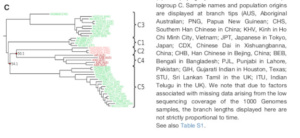
Razib Khan notes that Y haplogroup C, found in South Asian groups without East Asian ancestry, diversified about 50,000 years ago between Australians, Papuans and Indians, making it a likely…
-
Brown Pundits Podcast #2 – Asia Bibi and Colorism
Brown Pundits Podcast number 2, a long episode of more than an hour and a half, covers the Asia Bibi case and colorism, as its title makes clear, and asks…
-
Muslims have always known how weird Saudi Arabia is
Not a fan of Hasan Minhaj’s comedy, the author says Muslims of every kind hold mixed feelings about Saudi Arabia: it sponsors Salafism and its rulers are seen as hypocrites,…
-
The Indian Neolithic
Observes that understanding South Asian genetic patterning needs better knowledge of Neolithic archaeology, citing Chirand in Bihar, with extensive Neolithic remains at least 4,500 years old, and asking who those…
-
Our history is serious and not a game
The author explains that his jokes about the Aryan invasion debate are not serious, that his views on the peopling of India have shifted with better data, and that the…
-
The end of the European age
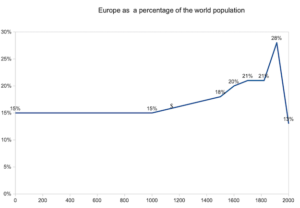
Using a chart of Europe’s share of world population falling from 28 per cent in 1913 to about 10 per cent now, the author argues that talk of colonisers and…
-
Between Marx and the mullah
The author argues that ancient DNA shows massive past population turnovers, yet premodern states lacked the capacity for coordinated genocide, so Latin American collapse owed more to disease and famine,…
-
This is America
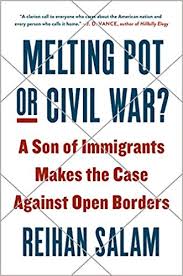
Links an interview with Reihan Salam, son of Bangladeshi immigrants, on his book making the case against open borders. The poster says he mostly agrees with Salam and remarks that…
-
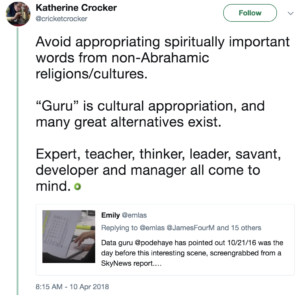
White presenting, women presenting, person defends Dharmic terminology from white people
Razib Khan mocks a tweet in which white-presenting people defend Dharmic terminology, agreeing that Hindu belief is sometimes belittled as ‘mythology’ but arguing such public posturing is more about the…
-
The Indo-Aryan question nearing resolution
Following his India Today review of South Asian genomics, the author adds beliefs held at a lower threshold of certainty about the Indo-Aryan question, noting that the ‘controversy’ over Aryans…
-
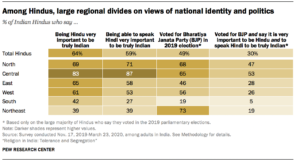
Pew Survey on India (religion, etc.)
The author lists impressions of the Pew survey on religion in India: Hindi’s dominance in the Gangetic plain, doubts over reported mass conversion in the South, strong opposition to inter-caste…
-
China, strong government, free society, India, weak government, strong society
Sharing a Pew chart after a podcast discussion, the poster notes China’s government controls religion more than India’s, yet individual Chinese have more freedom in religious identity, since religion lacks…
-
Dalit in Silicon Valley
Razib Khan responds to the New York Times report on caste in Silicon Valley, arguing from population numbers and genotype samples that Dalits are too few among Indian Americans for…
-
Why Indian Muslims are in India not of India
Razib Khan asks why Indian Muslims have stayed less assimilated than earlier arrivals such as the Ahom. He argues that the gap between Islam and Dharmic traditions matters, and that…
-
Who doth speaketh the mleccha bhasha?
Answering a reader, Razib Khan argues it is plausible that Indo-European languages spread despite steppe ancestry of only 10 to 20 per cent in the Gangetic plain, citing male-mediated expansion…
-
Toward a beige future
Responding to a Washington Post piece that linked J.D. Vance’s pronatalism to white nationalism, the author notes Vance’s interracial family and argues that liberals lack the cultural competence to read…
-
Brown Pundits – Episode 4, three Hindus talk about the Golden Age of Islam
Episode 4 of the BP Podcast, in which three Hindus discuss the Golden Age of Islam, with a note that ‘Hindu’ is used here in its older, geographical sense, and…
-
I for one welcome our new Brown overlords!
Razib Khan says Amy Wax describes a real overrepresentation of Indians in woke activism but speaks as a Boomer working with black-white racial categories. He defends her intelligence while finding…
-
Riding the pink rocket
A tweet from @bimboubermensch, posted without further comment, claiming that woke brown women from well-off families say they dislike white men but only date them.
-
A Hindu nationalist in the House?
The author calls a Slate article on Democratic House candidate Preston Kulkarni a hit piece, arguing his views on Indian politics are unimportant to suburban Houston voters, that demands for…