Burma and Imperial Britain

Their relationship with the British Empire is that of slave and master….Is
the master good or bad? That is not the question…his control is despotic and….self-interested….

As we all know, Arundhati Roy is considered as one of the leading (if not the leading) thinkers of the world. If Obama can be gifted the golden gong then we do not see why she should not be considered as well.

As it so happens, Imperial Britain also suffered heavily at the hands of a Roy-like figure, one Mr E.A. Blair (also a Nobel winner, but for literature). 

Here is Blair’s take on British exploitation of Burma. The background is very much relevant to India as well. We found it to be an interesting read. Enjoy.  
……
British politics in Burma is the same as in India.

Industrially speaking, India was deliberately kept in ignorance.
She
only produces basic necessities, made by hand. The Indians would be
incapable, for example, of making a motor-car, a rifle, a clock, an
electric-light bulb etc. They would be incapable of building or sailing
an ocean-going vessel.

At the same time they have learnt in their
dealings with Westerners to depend on certain machine-made articles. So
the products of English factories find an important outlet in a country
incapable of manufacturing them herself.

Foreign competition is
prevented by an insuperable barrier of prohibitive customs tariffs. And
so the English factory-owners, with nothing to fear, control the markets
absolutely and reap exorbitant profits.

……

How a Nation Is Exploited – The British Empire in Burma

Following
the recent troubles in India, we have asked our contributor, Mr E. A.
Blair, whose investigations on ‘The Plight of the British Worker’ have
already appeared in these pages, to tell us something of the unrest
which has been fermenting in the sub-continent for some years, and which
is threatening to spread to English Indo-China.

Burma lies between India and China. Ethnologically it belongs to Indo-China.
It
is three times the size of England and Wales, with a population of
about fourteen million, of whom roughly nine million are Burmese.

The
rest is made up of countless Mongol tribes who have emigrated at
various periods from the steppes of Central Asia, and Indians who have
arrived since the English occupation.

The Burmese are Buddhists; the tribesmen worship various pagan gods.

To
be able to talk in their own language to the people of such diverse
origins living in Burma, you would need to know a hundred and twenty
different languages and dialects.

This country, the population of
which is one-tenth as dense as that of England, is one of the richest in
the world. It abounds in natural resources which are only just
beginning to be exploited.

There are tin, tungsten, jade and rubies, and these are the least of its mineral materials.
At this moment it produces five per cent of the world’s petroleum, and its reserves are far from exhausted.

But the greatest source of wealth-and that which feeds between eighty and ninety per cent of the population-is the paddy fields.
Rice is grown everywhere in the basin of the Irawaddy, which flows through Burma from north to south.
In the south, in the huge delta where the Irawaddy brings down tons of alluvial mud every year, the soil is immensely fertile.
The harvests, which are remarkable in both quality and quantity, enable Burma to export rice to India, Europe, even to America.
Moreover, variations in temperature are less frequent and sharp than in India.
Thanks
to abundant rainfall, especially in the south, drought is unknown, and
the heat is never excessive. The climate as a whole can thus be
considered one of the healthiest to be found in the tropics.

If we
add that the Burmese countryside is exceptionally beautiful, with broad
rivers, high mountains, eternally green forests, brightly coloured
flowers, exotic fruits, the phrase ‘earthly paradise’ naturally springs
to mind.

So it is hardly surprising that the English tried for a long time to gain possession of it.

In
1820 they seized a vast expanse of territory. This operation was
repeated in 1852, and finally in 1882 the Union Jack flew over almost
all the country.
 

Certain mountainous districts in the north,
inhabited by small savage tribes, had until recently escaped the
clutches of the British, but it is more and more likely that they will
meet the same fate as the rest of the country, thanks to the process
euphemistically known as ‘peaceful penetration’, which means, in plain
English, ‘peaceful annexation’.

In this article I do not seek to
praise or blame this manifestation of British imperialism; let us simply
note it is a logical result of any imperialist policy.

It will be
much more profitable to examine the good and bad sides of British
administration in Burma from an economic and a political standpoint.

* * * * * * * * * * * * * * * *

Let us turn first to politics.
The
government of all the Indian provinces under the control of the British
Empire is of necessity despotic, because only the threat of force can
subdue a population of several million subjects.

But this despotism is latent. It hides behind a mask of democracy.

The
great maxim of the English in governing an oriental race is ‘never get
something done by a European when an Oriental can do it’. In other
words, supreme power remains with the British authorities, but the minor
civil servants who have to carry out day-to-day administration and who
must come into contact with the people in the course of their duties are
recruited locally.

In Burma, for example, the lower grade
magistrates, all policemen up to the rank of inspector, members of the
postal service, government employees, village elders etc. are Burmese.

Recently,
to appease public opinion and put a stop to nationalist agitation which
was beginning to cause concern, it was even decided to accept the
candidature of educated natives for several important posts.

The system of employing natives as civil servants has three advantages.
First, natives will accept lower salaries than Europeans.
Secondly,
they have a better idea of the workings of their fellow countrymen’s
minds, and this helps them to settle legal disputes more easily.

Thirdly, it is to their own advantage to show their loyalty to a government which provides their livelihood.
And
so peace is maintained by ensuring the close collaboration of the
educated or semi-educated classes, where discontent might otherwise
produce rebel leaders.

Nevertheless the British control the
country. Of course, Burma, like each of the Indian provinces, has a
parliament-always the show of democracy-but in reality its parliament
has very little power.

Nothing of any consequence lies within its
jurisdiction. Most of the members are puppets of the government, which
is not above using them to nip in the bud any Bill which seems untimely.

In
addition, each province has a Governor, appointed by the English, who
has at his disposal a veto just as absolute as that of the President of
the United States to oppose any proposal which displeases him.

Yet although the British government is, as we have shown, essentially despotic, it is by no means unpopular.
The
English are building roads and canals-in their own interest, of course,
but the Burmese benefit from them-they set up hospitals, open schools,
and see to the maintenance of law and order.

And after all, the Burmese are mere peasants, occupied in cultivating the land.
They have not yet reached that stage of intellectual development which makes for nationalists.
Their
village is their universe, and as long as they are left in peace to
cultivate their fields, they do not care whether their masters are black
or white.

A proof of this political apathy on the part of the
people of Burma is the fact that the only British military forces in the
country are two English infantry battalions and around ten battalions
of Indian infantry and mounted police. Thus twelve thousand armed men, mostly Indians, are enough to subdue a population of fourteen million.

The
most dangerous enemies of the government are the young men of the
educated classes. If these classes were more numerous and were really
educated, they could perhaps raise the revolutionary banner. But they
are not.

The reason is firstly that, as we have seen, the majority of the Burmese are peasants.
Secondly,
the British government is at pains to give the people only summary
instruction, which is almost useless, merely sufficient to produce
messengers, low-grade civil servants, petty lawyers’ clerks and other
white-collar workers.

Care is taken to avoid technical and
industrial training. This rule, observed throughout India, aims to stop
India from becoming an industrial country capable of competing with
England.

It is true to say that in general, any really educated
Burmese was educated in England, and belongs as a result to the small
class of the well-to-do.

So, because there are no educated classes, public opinion, which could press for rebellion against England, is non-existent.
* * * * * * * * * * * * * * * *

Let
us now consider the economic question. Here again we find the Burmese
in general too ignorant to have a clear understanding of the way in
which they are being treated and, as a result, too ignorant to show the
least resentment.

Besides, for the moment they have not suffered much economic damage.

It
is true that the British seized the mines and the oil wells. It is true
that they control timber production. It is true that all sorts of
middlemen, brokers, millers, exporters, have made colossal fortunes from
rice without the producer-that is the peasant-getting a thing out of
it.

It is also true that the get-rich-quick businessmen who made
their pile from rice, petrol etc. are not contributing as they should be
to the well-being of the country, and that their money, instead of
swelling local revenues in the form of taxes, is sent abroad to be spent
in England.

If we are honest, it is true that the British are robbing and pilfering Burma quite shamelessly.

But
we must stress that the Burmese hardly notice it for the moment. Their
country is so rich, their population so scattered, their needs, like
those of all Orientals, so slight that they are not conscious of being
exploited.

The peasant cultivating his patch of ground lives more
or less as his ancestors did in Marco Polo’s day. If he wishes, he can
buy virgin land for a reasonable price.

He certainly leads an arduous existence, but he is on the whole free from care.
Hunger and unemployment are for him meaningless words. There is work and food for everyone. Why worry needlessly?

But,
and this is the important point, the Burmese will begin to suffer when a
large part of the richness of their country has declined.

Although
Burma has developed to a certain extent since the war, already the
peasant there is poorer than he was twenty years ago.

He is beginning to feel the weight of land taxation, for which he is not compensated by the increased yield of his harvests.
The worker’s wages have not kept up with the cost of living.

The
reason is that the British government has allowed free entry into Burma
for veritable hordes of Indians, who, coming from a land where they
were literally dying of hunger, work for next to nothing and are, as a
result, fearsome rivals for the Burmese.

Add to this a rapid rise
in population growth-at the last census the population registered an
increase of ten million in ten years-it is easy to see that sooner or
later, as happens in all overpopulated countries, the Burmese will be
dispossessed of their lands, reduced to a state of semislavery in the
service of capitalism, and will have to endure unemployment into the
bargain.

They will then discover what they hardly suspect today,
that the oil wells, the mines, the milling industry, the sale and
cultivation of rice are all controlled by the British.

They will also realise their own industrial incompetence in a world where industry dominates.
* * * * * * * * * * * * * * * *

British politics in Burma is the same as in India.

Industrially speaking, India was deliberately kept in ignorance.
She
only produces basic necessities, made by hand. The Indians would be
incapable, for example, of making a motor-car, a rifle, a clock, an
electric-light bulb etc. They would be incapable of building or sailing
an ocean-going vessel.

At the same time they have learnt in their
dealings with Westerners to depend on certain machine-made articles. So
the products of English factories find an important outlet in a country
incapable of manufacturing them herself.

Foreign competition is
prevented by an insuperable barrier of prohibitive customs tariffs. And
so the English factory-owners, with nothing to fear, control the markets
absolutely and reap exorbitant profits.

We said that the Burmese
have not yet suffered too much, but this is because they have remained,
on the whole, an agricultural nation.

Yet for them as for all
Orientals, contact with Europeans has created the demand, unknown to
their fathers, for the products of modern industry. 

As a result, the
British are stealing from Burma in two ways:

In the first place,
they pillage her natural resources; secondly, they grant themselves the
exclusive right to sell here the manufactured products she now needs.

And
the Burmese are thus drawn into the system of industrial capitalism,
with any hope of becoming capitalist industrialists themselves.

Moreover
the Burmese, like all the other peoples of India, remain under the rule
of the British Empire for purely military considerations. For they are
in effect incapable of building ships, manufacturing guns or any other
arms necessary for modern warfare, and, as things now stand, if the
English were to give up India, it would only result in a change of
master. The country would simply be invaded and exploited by some other
Power.

British domination in India rests essentially on exchanging
military protection for a commercial monopoly, but, as we have tried to
show, the bargain is to the advantage of the English whose control
reaches into every domain.

* * * * * * * * * * * * * * * *

To sum up, if Burma derives some incidental benefit from the English, she must pay dearly for it.

Up
till now the English have refrained from oppressing the native people
too much because there has been no need. The Burmese are still at the
beginning of a period of transition which will transform them from
agricultural peasants to workers in the service of the manufacturing
industries.

Their situation could be compared with that of any
people of eighteenth-century Europe, apart from the fact that the
capital, construction materials, knowledge and power necessary for their
commerce and industry belong exclusively to foreigners.

So they
are under the protection of a despotism which defends them for its own
ends, but which would abandon them without hesitation if they ceased to
be of use.

Their relationship with the British Empire is that of slave and master.

Is
the master good or bad? That is not the question; let us simply say
that his control is despotic and, to put it plainly, self-interested.

Even
though the Burmese have not had much cause for complaint up till now,
the day will come when the riches of their country will be insufficient
for a population which is constantly growing.

Then they will be able to appreciate how capitalism shows its gratitude to those to whom it owes its existence.

E. A. BLAIR

…..

Link: http://theorwellprize.co.uk/george-orwell/by-orwell/essays-and-other-works/how-a-nation-is-exploited-the-british-empire-in-burma/

……

regards

D men frm East India Co wud like to c u*

William Hague is UK foreign secretary. George Osborne is UK chancellor of the exchequer
 
These gentle-ministers no doubt come in peace and mean well.  

The powers that be should solve the present education/VISA mess, Indian govt should allow private sector and foreign direct investment (FDI) in higher education, UK govt should permit Indian executives to get a hassle-free VISA. Goodwill will be generated only if both sides accommodate each other in a fair handed manner.
……..
The whole world watched India undertake the largest election in the
history of mankind, and we have not stopped watching. Prime Minister
Narendra Modi’s historic victory and his bold plans for India’s future
have grabbed the world’s attention.


The Indian people have given their government a mandate for change
and for reform that could be transformational and the United Kingdom
stands ready to partner with India to realize your prime minister’s
vision of growth and development, benefitting all Indians and releasing
more of this nation’s immense potential. 

That is why, as the British
foreign secretary and chancellor of the exchequer, we are here in India
this week as a team to build on the partnership between our two
countries.


We already have a deep and important relationship, but it could be
even stronger. That is why our government has made a determined effort
to strengthen the foundations of our partnership over the past four
years. It is why we have made more than 50 ministerial visits to India,
why we have strengthened our diplomatic network and why we put new
energy into increasing trade and investment.


This effort is bearing fruit for both countries: our bilateral trade
is now almost 50% higher than it was in 2009; UK companies are the
biggest investors in India; and, over the last few years Indians have
invested more in the UK than European Union countries put together.


We are visiting India this week because we want to work with Prime
Minister Modi’s government to build on those ties, to back his plan for
economic development and to strengthen our partnership on the world
stage. As India pursues a wide-ranging programme of change, we believe
Britain has something to offer across the board.


First, our bilateral trade and investment has huge potential for
further growth. British companies still sell less to India than they do
to Switzerland, a country 150th the size. This has to change, and there
is a new drive for trade in the British economy: we are growing faster
than almost any other western country, we are massively increasing
support for exporters and we have made our business environment even
more competitive.


We want to see more Indian companies coming to Britain, following in
the footsteps of the likes of Tata. We want to help India access
international markets for investing in infrastructure.


We want British firms who built the infrastructure for the London
Olympics to help build the 100 new cities Prime Minister Modi is
planning, our world-leading transport companies to help develop your new
roads, railways and ports, and our defence and aerospace companies to
help bring India more cutting-edge technology, skills and jobs.


Second, we believe we should strengthen our educational ties because
we both benefit from the flow of ideas and expertise, and from the
understanding and contacts our students and researchers develop.


The UK has welcomed almost 1,00,000 Indian students to our
world-class educational institutions in the last five years and
thousands of researchers and academics. We are clear: there is no limit
to the number of qualified Indian students who can study at British
universities and no limit to the number that can work in graduate
employment.


We have now allocated £50m through our Newton Fund for joint research
with India to tackle some of the world’s biggest challenges, from
sustainable water supply to renewable energy to public health; and we
will continue to look for opportunities to build up our educational
links.


Third, we want to strengthen our cooperation in development and in
foreign policy. Together we can do more to advance our shared interests,
from tackling terrorism to addressing climate change to building
regional stability.


India wants a secure environment abroad in which to pursue
development at home and the UK through our diplomatic and defence
capabilities and our membership of the UN Security Council, Nato and EU,
can help find solutions that work for us both to problems that affect
us both.


We are deeply concerned over the kidnapping of Indian citizens in
Iraq and we want to work more closely together to address the many
challenges of an unpredictable and unstable world. To help us do this,
we want an expanded UNSC with a permanent seat for India.


The UK has had a steady purpose over the past four years: to
strengthen ties with India for the long term. This week we will be
pursuing that goal in our meetings with business leaders, civil society,
with Prime Minister Modi and with external affairs minister Sushma
Swaraj and finance minister Arun Jaitley.


We want to build on the advances we have already made, to support
your new government’s clear and ambitious plans for the future, and to
give a new impetus to this special relationship that can be one of the
great partnerships of the 21st century.

……..

Link: http://blogs.timesofindia.indiatimes.com/the-times-of-ideas/britain-will-do-all-it-can-to-help-release-indias-immense-potential

….

regards

* how we spell like a teenage girl

The life of Sheila

Lalu Prasad …has Z Plus security cover with NSG commandos
guarding him….even when he was pronounced convicted in fodder scam and
put inside Birsa Munda jail. The NSG, of course could not stay inside
the jail. The commandos were back on duty once he was released on bail.

This (and many others) can be made into a fine Monty Python sketch but Indian media is too deferential towards politicians. 

Sheila Dixit was the Chief Minister of Delhi during the disaster that was the Delhi Commonwealth Games. When told that an over-bridge collapsed and killed some laborers (just like in Brazil yesterday) she responded that “no VIPs were going to use the bridge.”

This and other acts of arrogance directly led to her humiliating loss to Arvind Kejriwal in the Delhi elections. But politicians never ever lose their privileges. She was appointed by the previous Congress regime as the present governor of Kerala. The BJP wants her out which may not be the right constitutional thing to do. But one major benefit will be that she will lose her immunity and be open to corruption charges. 
…………..
As Delhi chief minister Sheila Dikshit lived a regal life. No surprises
that she does not want to leave the opulent perks that come with the
high constitutional office of Kerala Governor. 

Resigning from that post,
as desired by the Modi government would not just take away her immunity
to be prosecuted in a criminal case but will also force her to live
life as an ordinary citizen, howsoever affluent and connected, but pay
for wasteful services enjoyed.


When the whole of Delhi used to sweat it out during summer, both due to
power outage and high electricity tariff,s Sheila forced government
agencies to fix 31 Air conditioners and 15 desert coolers at her
official 3 Motilal Nehru residence. She also did not need to pay the
electricity bills. And it was not only the fact that she wanted to stay
cool in the summer. She also ensured that during winters, all corners of
her house were kept adequately warm. In addition to 25 heaters that
were installed in various corners, 12 geysers of 50 litre and 25 litre
capacity were fixed to ensure an uninterrupted supply of warm water in
bathrooms.


The bungalow has sprawling manicured lawns, made up as per the taste of
the former Delhi chief minister. This type VIII bungalow is spread
across an area of three acres.


These revelations have been made in an RTI response to queries made by
the noted RTI activist Subash Agrawal. It also comes to light that the
former Delhi chief minister now Governor of Kerala, had sundry household
and kitchen durables bought on government expenses. She did not
consider it necessary to buy these things herself for her own use.


These included things like two RO system (water purifier) , refrigerator
not one but two (265 litre and 310 litre), 16 air purifiers, two
microwave ovens, hot case, toaster, three TVs etc.


These were the items which were removed by the CPWD when they came to
renovate and refurnish the house to make it a post re-retirement home
for former prime minister Manmohan Singh. The CPWD added in its response
that “the AC’s and other fixture have been partially utilized in
various Government offices as per the requirement”.


Agrawal said, “Consumption of electricity and expenses on such a large
fleet of electrical equipment can be well imagined that too at a time
when austerity-drive was there in existence with shortage of electricity
for commoners having been a common phenomenon. Our elected
representatives should be role-model citizens adopting austerity in
their personal lives especially when it is at cost of tax-payers’ money.
Enquiry should also be made if former Delhi chief minister was entitled
for such princely facilities, and necessary action may be taken against
concerned ones responsible for allowing expenses more than permissible
limit.”


If Sheila will have to explain for her pompous living on public
expenditure, some other UPA benefactors who still continue to live with
walking symbol of VVIP culture, Z Plus and Z category security will get
anxious moments in days to come. It would be left to their lobbying
capacity to see whether or not they are removed from the list of high
and mighty.


In most cases Z Plus or Z category security has come as perk of power
than due to any genuine threat perception. The Union home ministry has
begun the “review”. But to avoid the consequent political storm, Home
Minister Rajnath Singh may like the “review” process to take its own
sweet time, till mid-August when budget session of Parliament concludes.


Lalu Prasad, for instance has Z Plus security cover with NSG commandos
guarding him. It presented a unique sight when NSG was by his side,
protecting him even when he was pronounced convicted in fodder scam and
put inside Birsa Munda jail. The NSG, of course could not stay inside
the jail. The commandos were back on duty once he was released on bail.


The ever growing list of VVIP protectees saw too many inclusions in the
list. Besides, Lalu, Beni Prasad Verma, Amar Singh, Manish Tiwari,
Pratap Singh Bajwa, Pramod Tiwari, Brajesh Pathak, Satish Chandra
Mishra, Naveen Jindal, journalist Anirudh Bahal of Cobrapost and former
Union minister Matang Sinh some of those who were given security of
varying category Z Plus, Z or Y during the UPA regime. Two BJP leaders –
Shahnawaz Hussain and Rajiv Pratap Rudy were accorded ‘Z’ category
security.


The list of VIP protectee has 427 names, 346 Central protectee and 81
local. Over 35 are in Z Plus category, more than 50 in Z category. A Z
plus protectee has 36 commandos guarding him, in Z category 22 commandos
guard him, in Y category 11 security personnel are attached to the VIP
and in X category two policemen guard him.

…..


Link: http://www.firstpost.com/printpage.php?idno=1601629&sr_no=0

…..

regards

Britain responsible for Taliban-led atrocities

This is what brown liberals (aka coconuts) have been saying for some time and who knows, there may be some truth in it after all. It is well documented that South Asians are unable to govern themselves responsibly, we do not have the tools to finish the job. The British as our colonial masters should have educated us on the specifics of managing a liberal democracy (as opposed to the divide and rule policies and the free trade for me but not for thee policies and the food for british soldiers alongside mass starvation for native civilians policies and the… you get the idea).

Presently in our discussion of tools and British responsibility we have something a bit more specific in mind and which concerns a massive fraud that has been effected in the present. We frequently see such bomb detectors in operation and we are unhappy (but unsurprised) to know that they do not work (we are under the impression that sniffer dogs work very well but that may not be an appropriate suggestion for Pakistan).  

Thus the fact that more of us are not dead from terrorist attacks is not because the security is so efficient, rather the terrorists are simply exhausted by the demands of the job. Now that is a comforting thought.
…….
It is is one of the world’s most obvious terrorist targets. So how
did a group of 10 militants armed with guns, bomb vests,
rocket-launchers and grenades get into Karachi’s Jinnah airport?
Part of
the answer, incredibly, may lie in the fact that Pakistani security
personnel still guard the outer perimeter using versions of the phoney
bomb detector sold by the convicted British conman Jim McCormick.

McCormick’s
device, which he called the ADE 651, was itself a variation of a common
design. Essentially, a telescopic radio aerial is attached by a hinge
to a plastic handgrip.
When used by a “properly trained” operator, who
must first sensitise it to the “molecular frequency” of explosives, it
was supposed to point out bombs by swinging towards them.

In fact, all this was nonsense.
The aerial swings because of unconscious movements by the operator,
known as the ideomotor effect – the same thing that gives rise to the
common belief in dowsing.
Nevertheless, McCormick and other fraudsters, such as Gary Bolton, exported thousands to clients around the world, including in Iraq and Pakistan. Less ambitious criminals used to sell them as golf ball detectors in the 1990s.


Like dowsers, though, many security personnel continued to keep the
faith. In 2010, even after McCormick had been charged with fraud,
Pakistan’s Airport Security Force admitted to the Dawn newspaper that they were continuing to use a device of their own design that operates on the same principle.

Iraq, which had been McCormick’s largest market, still uses them too,
despite repeated warnings. In 2009, the New York Times confronted bomb
squad commander Major General Jehad al-Jabiri with evidence of the ADE
651’s fraudulence, yet he insisted that it was effective,
saying:
“Whether it’s magic or scientific, what I care about is it detects
bombs.” In 2011, al-Jabiri was charged
and later jailed for – of all things – taking bribes from McCormick.
And still the ADE 651s were being used, as recently October 2013.

At the same time it was apparently common to find Beirut security guards still scanning cars for explosives with an ADE 651, or something similar. And there are reports of other devices being used in the south of Thailand.
Indeed, according to Detective Sergeant Steve Mapp, who led the
investigation into McCormick, some people’s belief in the ADE 651 is
almost unshakeable. As he told Business Week, “In Kenya they said, ‘No, we know about Mr McCormick’s conviction, but we’re really glad we’ve got them – and they do work.'”

…….

Link: http://www.theguardian.com/world/shortcuts/2014/jun/09/fake-bomb-detectors-british-conman-pakistan-karachi-airport
…….

regards

net benefits of British rule?

On the other hand, for the conquered peoples, British rule was an unparalleled blessing. For the first and only time in their histories, they had a government that tried – and generally tried with success – to be just and moderate. India in particular gained from British rule. It got a reasonably honest administration, and the benefits of English law and of western science and education. No one who looks at India under Aurangzebe and under Queen Victoria can regard the change as other than for the best for the great majority of the Indian people. Seen purely from the right of the conquered peoples to life, liberty and property, the only disadvantage of British rule was that it finally came to an end. And this is the truth even taking into account the bloodshed of the initial conquests and of the maintenance of British rule. Every imperial power that ever existed has governed by the sword. No other has ever unsheathed the sword so reluctantly and with so many compensating benefits.
http://seangabb.co.uk/?q=node/664

Permit-raj for bonsais

For many decades after independence (and especially since the nationalization era) India suffered grievously under the so-called permit-raj system – even a land-line phone connection (equipment made by the State-owned Bharat Electronics Ltd) would require years. And that was not the end of it, long-distance connection (and to foreign lands) quality used to be atrocious. Calls to the USA (given the time difference) used to be a tense all-night affair as late as the 1990s.

Aatish Taseer reflects on the impact of permit-raj on the very entity that invented it – the Indian National Congress. This internal permit-raj regulated the injection of new political talent that would be required to keep the organizational wheels churning and the boilers firing. There was only one problem with the hot-housing effort: it was intentionally set-up to create bonsais not banyans. 

Every Congress leader,
as with certain bonsai, comes with, or will cultivate, a self-dwarfing
mechanism. He can grow, he knows, but never too big. He must be careful
not to put the heir in shadow; and, when the heir is something of a
bonsai himself, this is not always easy. 

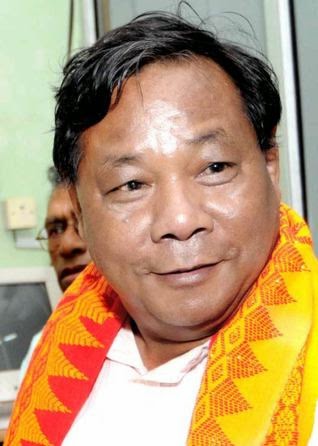
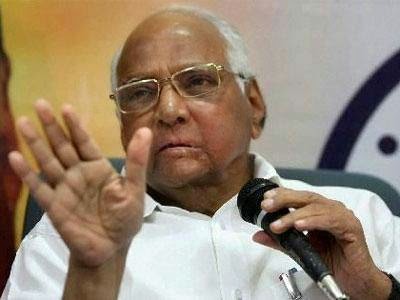
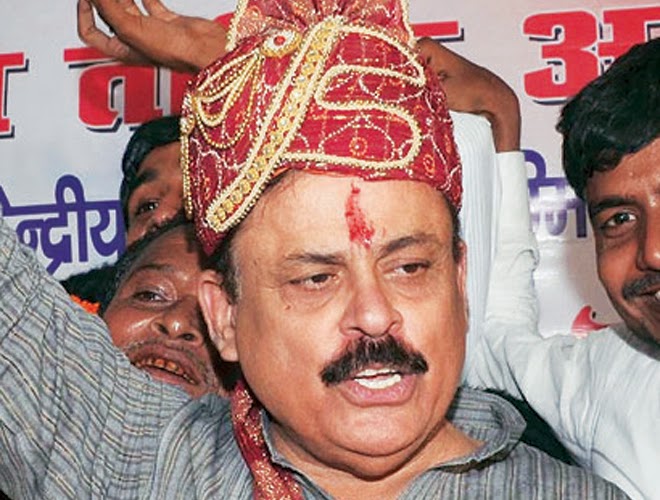
The last desperate call for reform was in 1999, when the Amar, Akbar, and Anthony trio of Sharad Pawar, Tariq Anwar and Purno Sangma raised the banner of revolt. Sonia they said was not fit for purpose. That was a good time as any to cut off the family with a (well deserved) pension. Too bad that it did not come to pass.

Today, fifteen years later, Pawar is left bloodied but unbowed in face of the Modi storm. His party won four seats in Maharashtra (including his daughter Supriya Sule from home-town Baramati) as compared to the two for Congress. Anwar won handsomely from Katihar, Bihar and Purno Sangma is aligned with the BJP. If you only permit bonsais be prepared for harakiri.
…………
It was a hot desolate morning. The countryside was very poor and
arid, and past a sloping expanse of fields, solid gold with ripened
wheat, an ancient and arresting vision:
the white sands and distant glitter of the Ganges. 

The road rose and
we came upon the Congress campaign. There was something almost quaint
about the sight of the Congress tricolour in the little village of
Kamarian. It was like one of those flags, which when ubiquitous and
powerful had offended the eye, but now, absent long enough to be robbed
of its associations, brought up—as with the hammer-and-sickle— a feeling
almost akin to nostalgia. The candidate was a political heir and the
son of a family friend.
 

A handsome man, he sat on the floor among a
smallish crowd of people with a Congress cloth, lined saffron and green,
tied like a turban round his head. He was soft spoken and listened
attentively to all that was said. Later, in the car, on the way to
another meeting, he said, in reply to a question about why he wanted to
be in politics:
“A while ago, I had an accident and broke my femur. I
was in bed for three months and began to think about what I would really
like to do. And I realised that I wanted to do something for the people
here. I know I can’t change India, but I would like, on a personal
level, at least, to do politics in a different way.”


A general observation: this is the kind of man—sincere, hardworking,
with a certain fineness of sensibility—that the Congress, much more than
the BJP, is able to attract. The tragedy is that it is never able to do
anything with this talent. Dynasty is to blame. 

Every Congress leader,
as with certain bonsai, comes with, or will cultivate, a self-dwarfing
mechanism. He can grow, he knows, but never too big. He must be careful
not to put the heir in shadow; and, when the heir is something of a
bonsai himself, this is not always easy. It takes a real invertebrate
like Manmohan Singh to meet the party’s idea of what the stature of the
extra-familial leader should be. In such an atmosphere, where illusions
must be kept alive, and where great lies have routinely to be told,
there are always men to tell them.

……
Link: http://www.openthemagazine.com/article/voices/mogambo-in-the-sacred-city
……

regards

“Prime minister of people of all faiths”

The old colonial masters (of divide and rule) have a quiet word of advice for the tsu-Namo. 

In brief: switch off the religious  talk (it has served its purpose), now concentrate on the economics. We are cautiously hopeful that this will be the case, though we cant be sure. Some weapons (polarizing people for material gain) are too good to be left unused. Also, there are too many elections to be won down the road, starting with the most important ones in Uttar Pradesh and in Bihar.

That brings us back to how exactly it was possible for the British empire to rule India for two centuries with (mostly) enthusiastic native support. The divide and rule policy worked because Indians were hugely divided to begin with. It only required a few subtle tricks to raise the issue of sub-nationalism(s) which diluted the case for freedom from the British (they were just standing by in order to protect the minorities from the majority).

It would seem that the only divide in India worth talking about is the Hindu-Muslim divide or the Upper caste – OBC – Dalit one. Not so. There is huge on-going acrimony between Hindu Bengalis and Hindu Nepalis over formation of a new state in Darjeeling. In Telengana, the fight is between Telegu speakers (mostly Hindu) from two regions (Andhra, Telengana). The fight over water between Karnataka and Tamil Nadu is probably more bitter (if it was possible) than between India and Pakistan.

There is however an advantage in reducing every problem to a Hindu: Muslim issue- advantage for the Hindus. Given the demographics in India/South Asia and also in the west – Gujaratis are 45% of all Indians in the UK and close to 50% in the USA – and taking geo-politics into account, the Hindus will lose a few battles but win the war.  

Take a trivial example (not so for many millions of fans). The top three cricketing powers- India, UK and Australia have now joined hands to ensure that all power is concentrated in their hands. This sort of OPEC cartel like behavior should be normally unacceptable (especially for people who are supposedly from democratic traditions). But it looks as if all the small countries are sort of OK with this arrangement (money talks). So what is the chance of Pakistan getting a fair shake from this gang? Will any of the highly talented Pakistani players ever get to play for IPL (where you can earn real money)? Will the ban on playing international cricket inside Pakistan be ever lifted? Some people will say that this is what payback looks like – if people are prepared to live by the sword, then they should be prepared to die by it as well. But amidst all this back-stabbing a beautiful game is lost and that is a real tragedy.

Moving on to larger issues on the global stage, it is quite true that Hindus (and Jews) are not considered a threat by the people who are in charge- the West and now China. And while the Islamic civilization is certainly a formidable super-power (by the numbers as well by wealth), it will not be able to shake-off a pincer attack from the two dominant power centers, as is about to happen in Nigeria.
……………….
Britain’s
foreign minister for India Hugo Swire has said India’s new Prime
Minister Narendra Modi’s biggest challenge will be to prove “that he is
the prime minister of the whole of India and of people of all faiths”.


Calling Modi “a man we can surely do business with”, Swire said, “Modi
will have to silence critics and shrug off the anti-secular image. By
the numbers it is clear that Modi has been voted into office by people
of all faiths and religions in the biggest ever electoral exercise in
the world. He has now the enormous task of being a leader for every
faith.”

Swire admitted that Modi’s “enormous victory” took Britain by surprise.

“Our initial analysis was that Modi will do extremely well. But in the
initial stages of the elections, his support looked strong though
lacking in some parts of India. However the sheer size of the mandate
has caught us by surprise. It’s been a unanimous victory,” Swire said.

Talking about the debacle of the Congress party, Swire said “The
Congress has been in power for a long time. Political parties get tired.
Indians wanted change and they showed that in overwhelming numbers.” He added that since BJP has now got the majority “a single party government is always ideal”.

Swire said, “It’s almost in over three decades that India will have a single party government which is always ideal.” He added, “A decisive election is always good. We went into coalition
in Britain because we did not get a majority and our country was on dire
economic states. We are fighting the elections and intend to win by a
large margin as a single party government is ideally better.”

In March 2013, Swire had met Modi in Ahmedabad to sign a 20-year deal to supply liquefied natural gas to Gujarat.

He said, “I have met Modi a few times in India. He has now the enormous
task to translate the magic of Gujarat to the rest of India and bring
it back to the growth rates of 1990s. If he can do so India will be in a
very good place. Britain is home to 1.5 million Indian diaspora of
which 45% are Gujaratis. They will be following the election results
very closely.”

…….
Link: http://timesofindia.indiatimes.com/india/UK-minister-Modi-will-have-to-shrug-off-anti-secular-image/articleshow/35316374.cms
…..
regards

“…abundance of everything but …no izzat”

At the end of the day everything boils down to izzat. And izzat is tied up with how your women behave. If the castes inter-mingle the position of the elites become untenable.

During British rule it was clear that the Englishman was the top caste in India. One of the most important ways to preserve their reputation was to never never allow white women to come into contact with the darkies. However World War I created a crisis that was not easily resolved. And ultimately the lost British prestige was the starting point for the movement for independence.

“If you want any French women, there
are plenty here and they are very good looking,” wrote a rather excited young
soldier to a friend in the Punjab. He was not alone. From the first deployment
of the Indian Expeditionary Force to France in 1914, the Indians proved
extremely popular with European ladies and the feeling was often mutual. Their
presence in large numbers (some 90,000 Indians were deployed to the theatre),
their distinctive appearance and good manners made them a magnet for local
women. 
When these same sepoys were invalided to Britain, as many were for
treatment and convalescence, their reception was much the same. In seaside towns
along the south coast, where most of the hospitals for Indians were located,
convalescent sepoys and their Indian carers were objects of fascination for the
English ladies. “Brighton is covered with girls who make a lot of the natives,”
wrote a British hospital orderly to his wife in the spring of 1915, adding
that, “They are to be seen arm in arm with ward servants and are very fond of
coloured people.”

The reaction of the Indians varied.
“The women have no modesty,” wrote Surjan Singh, a patient in Brighton’s
Kitchener Hospital, “but walk with the men who please them most.”
Another
patient declared in a letter to his brother, “There are lots of women to be
had. They write letters to us to come to their house and have food with them,
and that we can get a woman. I am very much confused in mind.” But most had
fewer reservations: “I am very happy in this place,” wrote one Sikh patient,
with obvious enthusiasm.

It goes without saying that the
military authorities were not best pleased with this situation. Foremost in
their minds was the thought that sexual and even romantic relationships between
British women and Indians would dim­inish the izzat—dignity—of the Raj.
Sepoys’
letters referring to the ready availability of white women were usually
censored and, for the same reasons, female English or European nurses were
almost never employed in Indian hospitals in either Britain or France. British
commanders and senior politicians knew well that liaisons between Indian
soldiers and white women could wreck the carefully constructed mythology of
racial distinctiveness.

But British women, in India at
least, were generally beyond the reach of Indian men, for they tended to be of
the “better sort”—the wives of officers and administrators, or perhaps pious
missionaries.
Encountering a white woman who did not fit the constructed image
of the self-disciplined, morally upright memsahib was obviously as much a
revelation to Indians as much as it was a worry for the British elite. 
Most of the women attracted to Indian soldiers in France and Britain were from
the working or lower middle classes. They showed little in the way of prejudice
towards Indians and their familiarity was clearly unsettling to those further
up the social scale.
Commanders feared that this familiarity would undermine
the sedulously constructed barriers and hierarchies that separated troops drawn
from the colonies from white British troops. Moreover, it shook the very
foundations of Empire. Would Indians—indeed those on whom the British
ultimately depended to police their Empire—ever see the British in the same
light again? The mask of racial distinctiveness was slipping forever and
drastic action needed to be taken.

The military authorities in Britain
and France were now determined to do all that they could to prevent
un-trammelled liaisons between Indian soldi­ers and European women.
In the
spring of 1915, the commandant of the Kitch­ener Hospital in Brighton, Colonel
Bruce Seton, ordered all Indian hospital staff to remain within the compound.
The same was true of patients, with the exception of a few convalescent
officers and warrant officers, who were sometimes issued with restricted passes
to visit the town. But as Seton readily acknowledged, the confinement of some
600 Indian patients and staff within the hospital area was “no easy matter”.
The brick walls had to be supplemented with barbed-wire palings and a police
guard was placed around the perimeter. Similar precautions were taken elsewhere
in England and, as far as possible, in France.

These restrictions were deeply resented
by soldiers who had grown accustomed to a measure of freedom. “They do not let
us out to the bazaars,” protested one patient to a comrade in the 40th Pathans.
“They do not let the French or English girls talk to us, nor do they let us
talk to them. The English have become very bad. They have become dogs. 
Our Indian soldiers are very much oppressed, but they can do nothing. There is
abundance of everything but there is no izzat
.”

In one notable case, this anger
found an outlet in violence. An Indian Sub-Assistant Surgeon, who had been
working in a hospital along the coast in Bournemouth, burst into Seton’s office
and attempted to shoot him with his revolver.
He missed and was subjected to
seven years’ rigorous imprisonment. 

regards

World War I (from an Indian viewpoint)

It has been a hundred years past now. The Indian numbers are pretty impressive, it is sad that none of our JNU educated historians (mostly elite class Bengali Marxists) have dwelt on this aspect of Indian history.

….

How many Indians were involved in WW-I, where did they mostly hail from?

Figures differ. Though most estimates say 1.4 million Indians—950,000
soldiers and 450,000 non-combatants— participated in the War, some
figures show that almost 1.7 million Indians, including 6,00,000
non-combatants signed up for war between 1914 and 1918, from a then
total population of 225 million. The soldiers were mostly from Punjab
(which would now include  Haryana), Garhwal and Kumaon, though with the
setting up of a Bengali regiment there were recruits from eastern India
and elsewhere.

How many Indian soldiers were killed?

Officially, about 50,000 Indian soldiers died, while more than 65,000
were wounded and about 10,000 were reported missing in action.


How do we remember the Indian soldiers who fell in the War?

The India Gate in New Delhi is the most visible symbol of the War in
India. It was dedicated to Indian soldiers who fought in the First World
War for the British Empire. It commemorates the 70,000 Indian soldiers
who fell in defence of the Empire in the War and, subsequently, also
other soldiers who died in the Northwest Frontier and the Third Afghan
War and had no known grave. ‘The eternal flame’ was installed there in
1971 and has since become the site of the symbolic tomb of the ‘Unknown
Soldier.’

Where were Indian soldiers deployed?

They were deployed in the European theatre, Egypt, Palestine and Africa. They fought in many of the major battles of the War.

What impact did WW-I have on India’s freedom movement?

It had a major and fundamental impact on India’s freedom movement. It
began with Britain’s decision in 1917 that India  will be granted 
“responsible government” like other British “white dominions.” It
shifted the leadership in the Congress from the “moderates” to Gandhi’s
movement of “Swaraj in one year”. It also brought about a shift in
politics from the avowedly “secular” to more strident appeal for
religious allegiance.  

The popular outrage movement against the “Rowlatt
Act”, seen as a tool to curb freedom of expression, led to the
Jallianwala Bagh massacre in Amritsar in April 1919 and devolution of
power to the provinces in India by Britain.

regards

The West India company

…is striving to be a bit more humane than the East India Company (the 18th c. avatar, not the 21st c. shop owned by Sanjiv Mehta).

Taymoor Soomro recounts the bad old days in the Dawn
….
The East India Company was to its generation, what Amazon will likely be to
the next: monstrous, semi-sovereign, monopolistic, life-styling. It was a
state-backed, limited liability company incorporated in the seventeenth century
to explore the world and trade for the British. Through commerce and political
machination, it acquired increasing control over India and eventually colonised
the subcontinent before it was absorbed into the British administration.  

Over
its almost three century (first) life, it grew to rule one-fifth of the world’s
population, command a standing army of 200,000 men and control half the world’s
trade.
It was simply “the Company”.

The Company stood for power, adventure, discovery, luxury and class. It did
not bring civilisation to the subcontinent. The Mughals of the 17th and 18th
centuries were far more sophisticated than the British in many ways.
But it
brought tea and spices to the West and cheap cloth — calico, gingham, chintz,
seersucker and taffeta for example — a clean underwear revolution. Like all
corporates, its greatest strength and failing was its pure profit motive. In an
age with little regulation and competition, that absolute lack of morality
harnessed to extraordinary power generated massive profit and massive harm.  

The
Company played a role in the Bengal Famine of 1770 in which 10 million died,
the Boston Tea Party in 1773, the Anglo-Chinese Opium Wars from 1839 to 1842
and 1856 to 1860 and the War of Independence 1857, also known as mutiny; and
destroyed local textile and shipbuilding industries.
It was finally dissolved
in 1874 because of its failures in administration. The grotesque poverty of the
subcontinent today is in part a product of its rule.

So its revival comes as something of a surprise. Even more so, given that
the resuscitator who has pressed his warm breath between its blue lips is an
Indian. Sanjiv Mehta — a businessman with a diverse background in gemology and
tea trading — bought the rights to use the East India Company name in 2005.

There are clearly incentives. The East India Company has a name and
reputation that provide an obvious platform for a luxury goods retailer. Even
more so because we seem to remember the good and none of the bad. It is, in
British history, the original bridge to the exotic Orient, bringing tea and
pepper and cloves and muslin to the Empire. And in subcontinental history, the
Company heralded the British Raj — and brought order to India in a way that
none have since.
Its recent revival is an exercise in monetising those elements
of orientalism and nostalgia and as such its investment appears to be purely in
its branding.

Don’t get me wrong — if, on a hungry afternoon, at the back of a cupboard, I
chanced upon a dusty jar of its Real Raspberries Enrobed in Chocolate, I’d
likely enjoy them notwithstanding my discomfort with their politics and
semantics.

But in the end the East India Company’s revival leaves me more than anything
else with an unpleasant taste in my mouth. Its gruesome legacy, its
orientalism, its poor product selection make this endeavor unwise. In its
second incarnation, the Company retains its relentless thirst for profit but
little else.  

And to revive a grand Empire builder as a gift shop — well, it’s
like Pol Pot as a Cabbage Patch Kid: embarrassingly distasteful … but perhaps
appropriately degrading. If this is an act of revenge, it’s masterful.

……………
IT
major Tata Consultancy Services said it has been named as the top
employer in Europe for the second consecutive year by the Top Employers
Institute.

The company was recognised as an exceptional performer
across six core human resources areas – primary conditions, secondary
benefits, working conditions, training, career development and company
culture.


“We are delighted to have been rated as the foremost
employer across Europe for the second consecutive year and we look
forward to building on this success as we continue to grow and develop
our talent base across the UK and Continental Europe,” TCS Executive
Vice President and Global Head, Human Resources Ajoy Mukherjee said.


Previously known as the CRF Institute, The Top Employers Institute is
an independent organisation that identifies top performers in the field
of Human Resources worldwide. The Top Employer certification is based on independent research conducted by the institute and audited by Grant Thornton.

regards

Brown Pundits