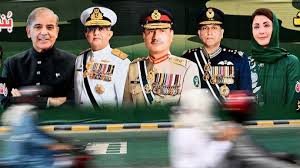
Pakistan, the deciding hinge between the West & CRINK

Pakistan does not announce itself as a great power. That is precisely why it works.

Prussia, built on Position, not Pretension

In a world that is reorganising around blocs, chokepoints, and undersea cables, Pakistan has emerged as one of the most dextrous middle powers on the planet. Not because it dominates geography, but because it understands it. Not because it leads alliances, but because it survives them. Most states are trapped by their alignments. Pakistan is not. It sits at the hinge of the Eurasian landmass: between the Gulf and Central Asia, between China and the Muslim world, between the Indo-Pacific and the Middle East. This position is dangerous for weak states. For competent ones, it is leverage. Pakistan has learned how to convert constraint into flexibility.

Dexterity & Diplomacy as Strategy Continue reading Pakistan, the deciding hinge between the West & CRINK

Venezuela as Pakistan: A Template, Not an Accident

Venezuela is not being punished. It is being re-made. Not into a liberal democracy. Not into a stable autocracy. Into something more useful. Into a Pakistan. By this, I do not mean a people or a culture. I mean a regime form (as what Bush did to Maduro’s earlier Iraqi doppelgĂ€nger): a state kept permanently unstable, permanently securitised, and permanently dependent; yet intact enough to sign contracts, police its population, and function as leverage against rivals. This is the form Empire prefers when it can no longer rule directly.

1) Why Venezuela Matters

Venezuela is not peripheral. It is inconveniently rich.

  • The largest proven oil reserves in the world (over 300 billion barrels)

  • Significant natural gas

  • Large gold reserves

  • Access to rare earths

  • Control of the Caribbean–Atlantic corridor, close to major shipping lanes and the US mainland

A sovereign Venezuela is not a local problem. It is a potential pole. This is why it cannot be allowed to work. Donald Trump said the quiet part out loud: Venezuela has “all that oil.” It should be “ours.” The language was crude. The intent was orthodox. What matters is not the tone, but the continuity of aim.

2) Sanctions as a Weapon System Continue reading Venezuela as Pakistan: A Template, Not an Accident

Pakistan and the Act of Union

A Cold Comparison, Not a Romantic One

There is only one historical analogy worth using when discussing Pakistan “rejoining” India: the Act of Union of 1707 between Scotland and England. Not Rome and Greece. Not Yugoslavia. Not German reunification. And certainly not civilizational nostalgia. The reason is simple. The 1707 Union was not about love, memory, or reconciliation. It was about bankruptcy, security, elite survival, and managed loss of sovereignty without humiliation. That is the only way such a union could ever happen.

Union Is an Elite Exit, Not a Popular Dream

Scotland did not join England because it felt British. It joined because it was broke. The Darien Scheme collapsed. The Scottish state was insolvent. The elite faced personal ruin. England controlled capital, markets, and trade. The Act of Union absorbed Scottish debt, protected elite property, preserved law and church, dissolved sovereignty while preserving status. The public opposed it. It passed anyway. Unions are not plebiscites. They are elite exits under pressure.

Pakistan’s Position Is Structurally Similar

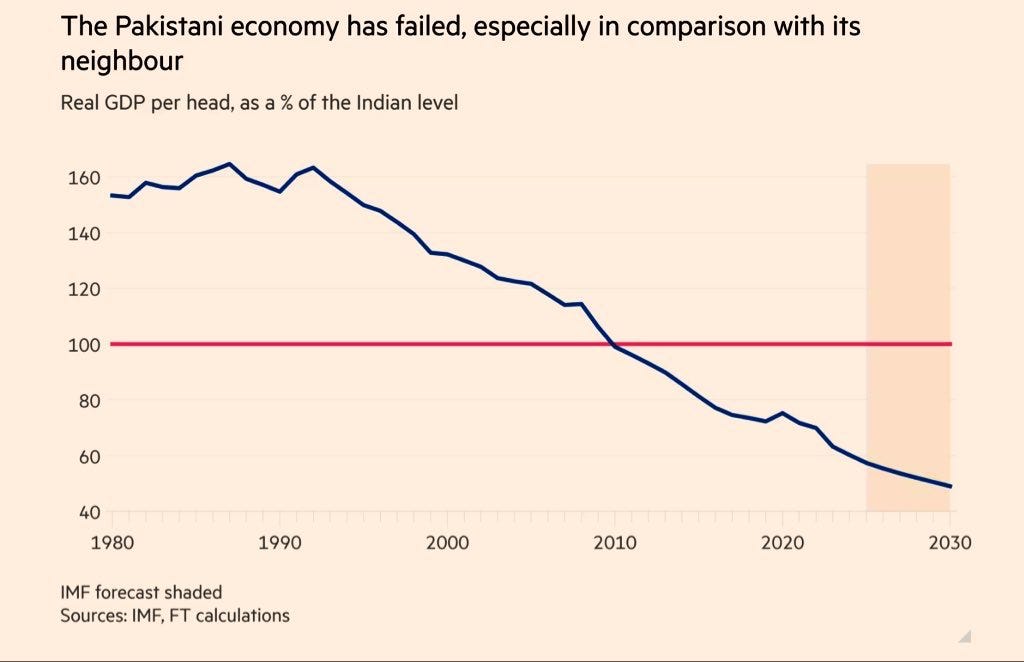
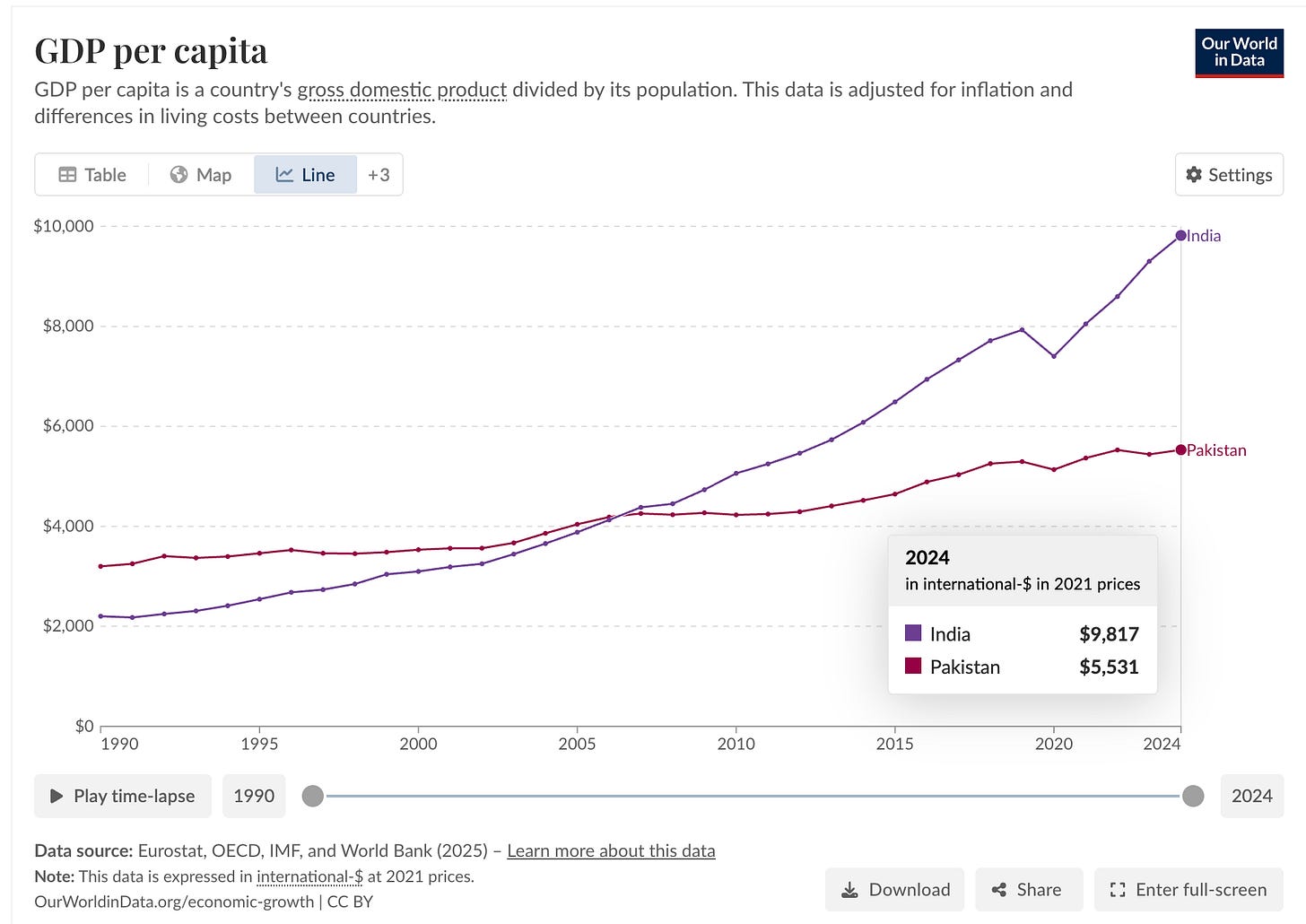
Pakistan today is not Scotland in 1707. But the resemblance is close enough to matter. Pakistan is chronically indebted, permanently IMF-dependent, over-militarised by design, economically capped by scale and FX limits. It is run by elites whose lives are already offshore, Like Scotland, the state is failing faster than rents can be extracted, sovereignty has become expensive, security dominates fiscal policy and there is no credible independent growth path. This is not ideology. It is arithmetic.

Why India Is England in This Analogy Continue reading Pakistan and the Act of Union

Dhurandhar showcases Bollywood’s New Obsession: The Sexy Pakistani Villain

We watched Dhurandhar last night at Apple Cinemas (the last time we went to see Ishaan Khatter’s Homebound). It is the best mass-market Bollywood film I’ve seen since Animal, and far more immersive. What struck me most was not the action, nor the plot, but Bollywood’s new formula: a full-scale fetishisation of Pakistan.

Kabir keeps claiming that Bollywood casts Pakistanis as villains. This misses the point. The villain is always the sexiest figure in any film. Bollywood has finally realised this. Raazi hinted at it. Animal stumbled on it with Bobby Deol’s star stealing turn. Dhurandhar perfects it.

For the first time, Hindu actors are not performing cartoon versions of Pakistan. They are cosplaying Pakistanis with forensic precision; the clothes, the diction, the swagger, the social codes. In earlier decades the attempt was clumsy. Now the calibration is exact. Pakistan, in these films, becomes the Wild West of the subcontinent: familiar enough to feel intimate, distant enough to feel dangerous. Continue reading Dhurandhar showcases Bollywood’s New Obsession: The Sexy Pakistani Villain

The Earth’s Lost Industrial Heart

After our discussion on industrialisation in India, I began to wonder: if the Earth were one country, one government, one infrastructure grid, one economy, where would its industrial heart lie?

Geographically, the answer is obvious. The natural centre of the world, for energy, labour, and trade routes, isn’t London, New York, or Beijing. It’s the triangle between the Persian Gulf, the Indo-Gangetic plain, and the Red Sea.

Deserts rich in hydrocarbons. River basins dense with labour, water, and grain. Seas that touch every continent. If the world were united, this belt, Arabia to India to the Nile, would be the Ruhr, the Great Lakes, and the Pearl River Delta combined.

The Natural Order of Geography

Before empire, this region was the planet’s connective tissue. Spices, silk, horses, and steel moved from India to Arabia to Africa. Energy, grain, and knowledge flowed through the Red Sea and the Persian Gulf like the arteries of the Earth. It was not the “Middle East”; it was Middle Earth. Continue reading The Earth’s Lost Industrial Heart

Pakistan’s Diplomatic Triumph (Trump?)

United States President Donald Trump especially thanked Prime Minister Shehbaz Sharif and “my favourite” Field Marshal Asim Munir on Monday for their efforts in achieving peace in Gaza, among many other world leaders.

Trump thanks PM Shehbaz and ‘my favourite’ Field Marshal Asim Munir for Gaza peace efforts

I might expand on this tomorrow, but it’s telling that Dr. Lalchand finds all this quite amusing—Pakistan back again with a begging bowl. I, on the other hand, see it as something closer to a post-Pahalgam pivot. Perhaps India is underestimating Pakistan’s deep instinct for adaptation, especially as the region continues to drift in unpredictable directions.

Brown Pundits and the Echo Chamber Problem

The Echo Chamber of the Commentariat

It has been on my mind that Brown Pundits, for all its liveliness, risks drifting into an echo chamber. The commentariat is our lifeblood: their activity sustains the blog far more than page views alone. And yet, the very strength of that community can also be its blind spot.

I do not want Kabir to end up being the Cassandra of BP, always warning of decline, and being proved right in the end. If we are not careful, we could slide into a right-wing echo chamber where challenging voices fade, and the capacity for deep interrogation, the core of what makes BP unique, is diminished.


Pahalgam and the Question of Narrative Continue reading Brown Pundits and the Echo Chamber Problem

Homebound with Ishaan Khatter

Last night Dr. Lalchand & I watched Homebound, India’s submission to the Oscars, at Apple Cinemas in Cambridge, Mass. This sad film follows a Dalit (Chandan Kumar) and a Muslim (Mohammed Shoaib Ali) struggling against the odds during the pandemic, their solidarity fictionalized as a fragile bridge across India’s deepest divides.

On the surface, it is a familiar story: the disenfranchised facing systemic barriers. But what struck me was how privilege itself performed disenfranchisement. Ishaan Khatter, brother to Shahid Kapoor, plays the marginalized Muslim. Janhvi Kapoor, descended from Bollywood royalty, embodies a Dalit woman. Vishal Jethwa, a bright-eyed Gujarati, portrays the Bhojpuri Dalit lead. This is not unique to India; Hollywood, too, casts elites as workers. Yet it raises the question: when poverty is performed rather than lived, is it “Dalit-washing”?


Poverty, Emotion, and Representation

Watching the film, I reflected on poverty’s emotional landscape. For elites, emotions can be expansive, indulgent, aestheticized into art. For the working poor, emotions are often constrained by survival — narrowed into necessity. Homebound tried to humanize its characters, but I wondered whether it romanticized what in practice is a relentless narrowing of possibility.

The West rewards this narrative. Parasite in Korea, Iranian cinema, Slumdog Millionaire — poverty & Global South tribulations as spectacle becomes “poverty porn.” The Guardian gave Homebound four stars. Great art often tilts melancholic, yes, but here the melancholia is curated for Western consumption.


Identity, Vectors, and Islamicate Selfhood

More unexpectedly, the film stirred something personal. I realized how much I have vacated my own Islamic identity. It was not traumatic. As a Bahá’í with Persian cultural roots, I found overlap — even comfort — in Hindu traditions. Dalits, in their rapid Hinduization, represent one vector of assimilation; Muslims and scheduled-caste Muslims, often in tension, another. Homebound imagines solidarity, but in life these vectors pull unequally. Continue reading Homebound with Ishaan Khatter

Roman Palestine and the Crusades

I am quite familiar with History of England and Europe since even before my teens. That was because my father had beautifully illustrated school History text books from England. Plus many historical novels eg Walter Scotts The Talisman which is set in Palestine during the Crusades. I read them all many times over as nothing better to do as no TV then in SL till 1977.

Let us start with the historical Jewish Diaspora. Historical as verified from sources other than the Bible. The Romans controlled the middle east around 1 BC. (Think Julius Caesar and Cleopatra an Egyptian Queen of Greek Origin)

To quote
Asia Minor after the Macedonian Wars (214–148 B.C.). In 63 B.C. The defeat of the Carthaginians gave Rome almost complete control of the Mediterranean. Romans conquered most of Asia Minor in 188 B.C., Syria and Palestine in 64 and 63 B.C.

In 70 C.E. (a few years after the purported passing of Jesus Christ the Romans Destroyed the Judaism Temple in Jerusalem. Apparently this ended the ability to make animal sacrifices to God (Yahweh). Plus the Roman persecution of the Jews and Judaism led to their disperal from Palestine, i.e. the Diaspora

Note: There is no evidence of a Kingdom or Country called Israel in any of the Historical or Pre-historical records of the Babylonians and Assyrians. There was region called Palestine (PalaistinĂȘ, ΠαλαÎčÏƒÏ„áż‘ÌÎœÎ·) since at least since the Greek times. The word Israel became considered “Fact” when Europe became Christian and the Bible an accepted source of fact given by the Divine. The Jews became notable and rich because they were money lenders. Christians (and Muslims) are forbidden to lend money on interest (usury). Think Merchant of Venice and Shylock the Jew

Continue reading Roman Palestine and the Crusades

Brown Pundits