India That Is Bharat: The Exceptional Uniqueness and the Dual Identity

This is a Brown Pundits Precedent Post.


We have been asked, repeatedly and in good faith, why Brown Pundits appears to handle criticism of India with more care than it handles criticism of Pakistan. The charge is that we hold a double standard. It deserves a direct answer.

The answer is that we do hold a distinction, and we are not embarrassed by it, but it is not the distinction the charge assumes.

The Distinction

Pakistan is roughly seventy-nine years old as a sovereign state. India as a sovereign state is roughly seventy-nine years old as well. As nation-states under international law, as signatories to the United Nations, as entities with currencies and armies and foreign ministries, the two are pari passu. We treat them that way and we will continue to treat them that way. On every question that applies to nation-states as nation-states, the two sit at the same table and get the same scrutiny.

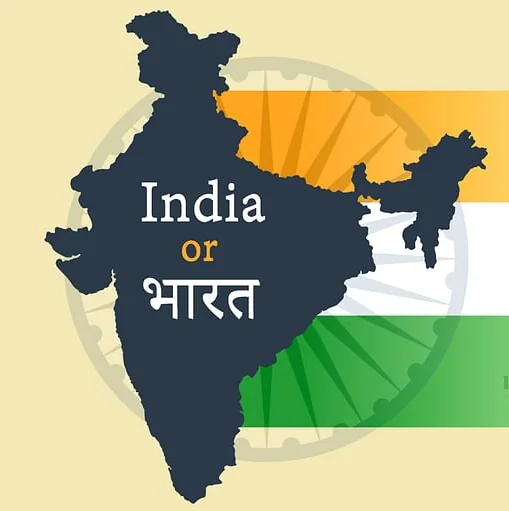
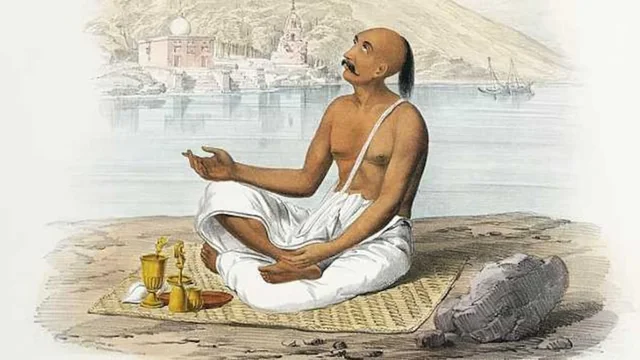
But India is not only a nation-state. India is also a civilisation, and the civilisation is not seventy-nine years old. The civilisation is, give or take the archaeological argument one prefers to have, somewhere around five thousand years old. It stretches from the Indus Valley through the Dravidian-Aryan synthesis, through the Vedic period, through the great classical flowering, through the medieval syntheses, through the colonial rupture, and into the present. One can argue the exact nature of the continuity. One cannot plausibly argue that the continuity is not there. It is there in the same way it is there for China. It is there in the same way it is there for Egypt. It is there.

This is not a claim about superiority. It is a claim about category. Pakistan is a sovereign state. India is a sovereign state and a civilisation. The two facts do not cancel. They coexist.

The Civilisational Peer Group Is Short

How short is short. At the level of a nation-state that is co-terminus with a multi-millennial civilisation, the peer group is essentially India and China. Two entries. Iran and Egypt have the civilisational depth but have been transformed by the Greco-Arab conquest, in an unalterable fashion. Greece has the civilisational depth but the modern Greek state is a nineteenth-century construction with limited political continuity to the ancient polis; the Ottoman interlude was equally determinative. Israel is a unique case and we will come to it.

That leaves India and China. Two countries on the planet where the nation-state is also the civilisation, where the sovereign political entity today is a recognisable continuation of the same cultural-linguistic-religious matrix that produced its earliest texts, and where the ordinary citizen, with some education, can read something written two or three thousand years ago in a language that is still a living vehicle of the culture.

That is not a small claim. It is also not a nationalist claim. It is simply a descriptive one.

The Indian Exception Continue reading India That Is Bharat: The Exceptional Uniqueness and the Dual Identity

The Ukrainian Interlude is over

The Iranian One has just started

Nobody seems to be interested in Pakistan’s diplomatic resurrection. What does it mean that a country written off as failed just a year ago is now the hinge of a regional peace settlement and averting World War Three on the double. This is the actual story of 2026 and it is not on our comment boards.

Pakistan: From Failed State to Diplomatic Champion

A year ago, before Operation Sindor, Pakistan was being written off in every serious strategic publication in the English language. The IMF was reluctant. Every mainstream Indian and Western analyst agreed. Pakistan was finished as a regional actor of any significance.

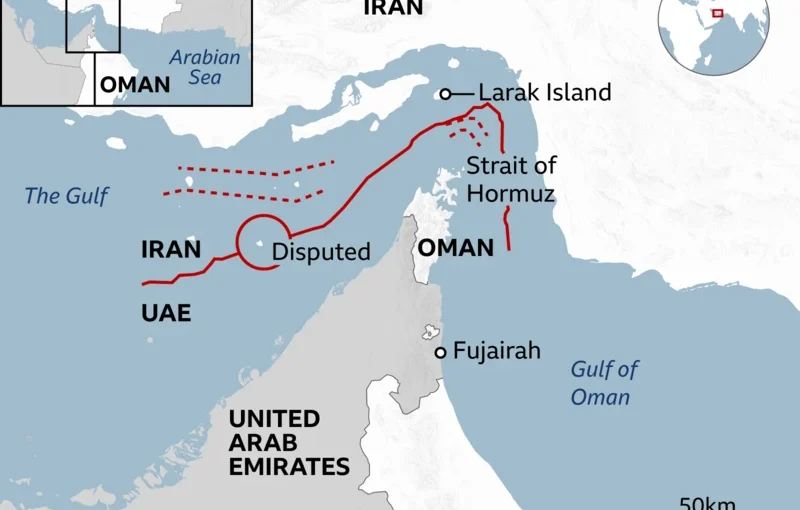
Today Pakistan is mediating, leading, the Iran crisis. The Hormuz situation, which could have escalated into a catastrophic closure of the world’s most important oil chokepoint, is moving toward resolution largely because Pakistan has positioned itself as the only party credible with Tehran, Riyadh, and Washington simultaneously.

The war that looked civilisational is now looking more like a pivot point. Pakistan is not a failed state. India is not uniquely ascendant under PM Modi. The question of whether the BJP holds power post-Modi is now a live one, not a theoretical one. Iran is not isolated. Israel is not unbreakable. The realignment is happening now, in real time, and almost nobody seems to be writing about it.

Iran Stood Up Continue reading The Ukrainian Interlude is over

The Strait That Broke the World

On February 28, 2026, the United States and Israel struck Iran.

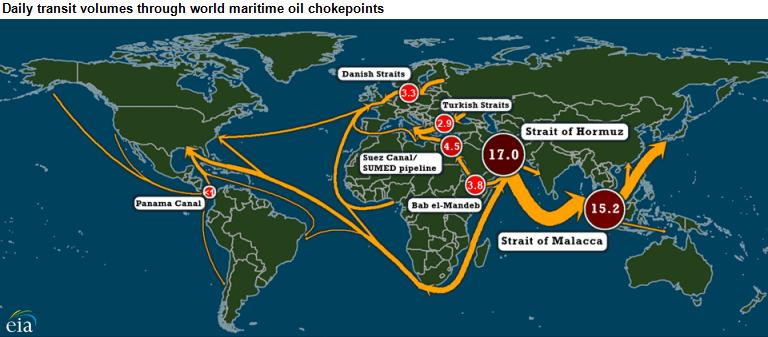
They hit fuel depots, missile sites, command infrastructure. Within seventy-two hours, the Strait of Hormuz, twenty-one nautical miles at its narrowest, carrying twenty percent of the world’s oil, closed. It has not reopened. Everything that follows from that sentence is not speculation. It is arithmetic.

The Price

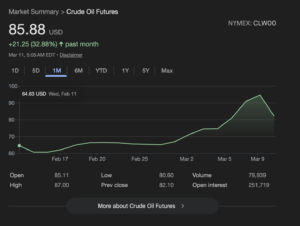
Oil was at sixty-five dollars a barrel when the bombs fell. Within days it touched one hundred and twenty. Analysts at Kpler said publicly that if Hormuz stayed shut through March, one hundred and fifty was not a ceiling. Barclays agreed. The IEA called the disruption the largest in the history of the global oil market, twice the scale of the 1956 Suez Crisis. People heard those numbers and thought: petrol prices. School run. Heating bills. They were thinking too small.

The Cascade

Oil is not just fuel. It is the circulatory fluid of the entire industrial world. When it doubles overnight, everything that moves, everything that is made, everything that is insured, financed, or shipped reprices simultaneously.

Marine insurance becomes unwritable. Trade credit freezes. Every CFO at every company in every sector looks at their cost assumptions, built at seventy dollar oil, and cancels the next quarter’s capex in the same morning meeting. That coordinated freeze is not a symptom of recession. It is the recession, arriving before a single GDP figure confirms it.

The banks come next. Energy loans, airline debt, shipping company bonds, all underwritten at sixty to eighty dollar oil. At one hundred and twenty sustained, covenant breaches begin quietly. Not crashes. Tightening. The marginal credit that keeps service businesses alive stops flowing.

Then the Gulf sovereign wealth funds. ADIA. PIF. QIA. Mubadala. Two to three trillion dollars in global assets, equities, real estate, private equity, deployed as patient capital into Western markets for fifteen years. They are nominally richer at one hundred and twenty dollar oil. But their export infrastructure is disrupted, their domestic spending obligations spike immediately, and their liquidity needs arrive precisely when their asset values are falling.

The moment even one major fund moves from net buyer to net seller, it removes the price support it has been providing silently for years. Other funds follow. The risk premium they have been suppressing across global asset classes reasserts overnight.

This is not the 2008 financial crisis. That was a fire in the financial system’s wiring. This is the fuel supply to the engine failing. Different category. Larger consequences.

The Trap Continue reading The Strait That Broke the World

GDP of South Asian countries 1 : nominal vs real

In March 1776, exactly 250 years ago, Scottish economist Adam Smith published his work The Wealth of Nations, widely considered to be one of the most influential books on political economy.  In this book he highlighted the fact that people often confuse the real wealth of a country (the ability to buy goods and services) with  its nominal wealth. The idea is still relevant today, so let us have a closer look. If we rank the major South Asian countries by their per capita nominal GDP (size of the total economy in the local currency divided by the price of a dollar), the list goes as follows :

1. SriLanka : USD 4516 
2. India : USD 3051
3. Bangladesh : USD 2960 
4. Pakistan : USD 1710
5. Nepal : USD 1550
6. Afghanistan : USD 417 

Many people assume that these numbers measure how poor or rich a country is. In particular, the average Sri Lankan is 50 percent wealthier than the average Indian, and the average Bangladeshi is 70 percent wealthier than the average Pakistani. This is not really true. The nominal GDP accurately measures the real wealth of a country only in an utopian world where there are no taxes or other barriers on tradable goods, and transportation costs are completely absent. In reality, Americans can not instantly transport themselves to India to get cheap haircuts, and South Asian countries often impose huge taxes on imported goods. So nominal GDP is a flawed yardstick if we want to compare different countries.

Here’s a simple puzzle based on this idea : What steps should the Indian government take if they want to increase the country’s per capita nominal GDP from USD 3000 to USD 6000 within this year?

At first glance, achieving this may seem unattainable, given that India’s economy is currently growing at a rate of 6-7 percent annually. However, once we realize that nominal GDP also depends on trade policies, it is easy to come up with strategies to make this happen. For instance, the Indian government could implement an extra import duty of Rs 45 per dollar on all imported goods while simultaneously offering a Rs 45 per dollar subsidy (through tax incentives, free land, etc.) for all exported products. This will reduce the price of the dollar from Rs 90 to Rs 45 and double India’s nominal GDP. It’s also easy to see that this will have no impact on the real economy. Since the USD isn’t utilized in local transactions, the domestic market will stay the same. The extra tax imposed on imports will be balanced by the decrease in the dollar’s value. Likewise, the lower dollar rate will be offset by subsidies provided in the export sector.


A Deleted Tweet Just Moved the Oil Price 17%. Welcome to the New World.

The Graph Nobody Is Talking About

Oil Prices

BP Admin Note

September 2025 – Brown Pundits
Punditji

Before the oil, a brief note on Brown Pundits itself. Over recent months we have tried to move the comment threads toward a simple goal: remove noise while preserving disagreement. This is not a place for ideological conformity. It is a place where arguments should challenge substance rather than inflame style.

The density of comments has fallen slightly but the quality of disagreement has improved.

What the threads also reveal is a persistent misunderstanding about the relationship between civilisation and crisis. The caricature, that certain societies simply “fail to modernise“, misses the deeper negotiation underway.

Every tradition older than industrial modernity faces the same question: how to carry inherited principles into a world not built around them. That is not a uniquely Muslim or Persian problem. It is the defining problem of our age.

With that said, to the oil!

Oil Tanker Routes at Kimberly Clifton blog
SoH > SoM

The Only Number That Matters

Continue reading A Deleted Tweet Just Moved the Oil Price 17%. Welcome to the New World.

Poorer Pakistan OutFoxes Richer India?

“No one wants a strong India. But PM Modi opened doors. He strengthened the military, advanced the economy, maintained balanced relations with the West, Russia, and China. That is serious statecraft” –Aleksandar Vučić, President of Serbia

India is richer

Strip away the noise and a simple asymmetry remains. India will almost certainly remain richer than Pakistan for the foreseeable future. The gap in GDP, fiscal depth, technology, and demographic scale is widening, not narrowing. On material indicators, India has the advantage. Yet material advantage does not always translate into strategic dominance.

India is louder

India is a mass democracy. It is electorally accountable, media-saturated, and sensitive to public opinion. Governments must justify escalation. Markets react to instability. Voters punish miscalculation. This imposes restraint.

Pakistan is tighter

Pakistan is structured differently. Power is narrower. Decision-making is concentrated within a smaller elite, with the military as the central institution. That creates rigidity in some domains but flexibility in others. Strategic continuity does not reset every five years. Public opinion matters, but it does not directly determine policy in the same way it does across the border.

Structural Differences

This structural difference shapes behaviour. India must think about global markets, coalition politics, and reputational cost. Pakistan can absorb economic stress more easily because its political system is already insulated from full electoral volatility. That insulation produces durability, even under strain.

The list gets smaller. There are six countries who sent the head of state/government to all three: 1) Beijing military parade 2) Davos Board of Peace launch 3) Washington BOP 1st meeting They are: Armenia | Azerbaijan | Indonesia | Kazakhstan | Pakistan | Uzbekistan

Like Israel Continue reading Poorer Pakistan OutFoxes Richer India?

Pakistan – Falling Behind in the Indian Subcontinent

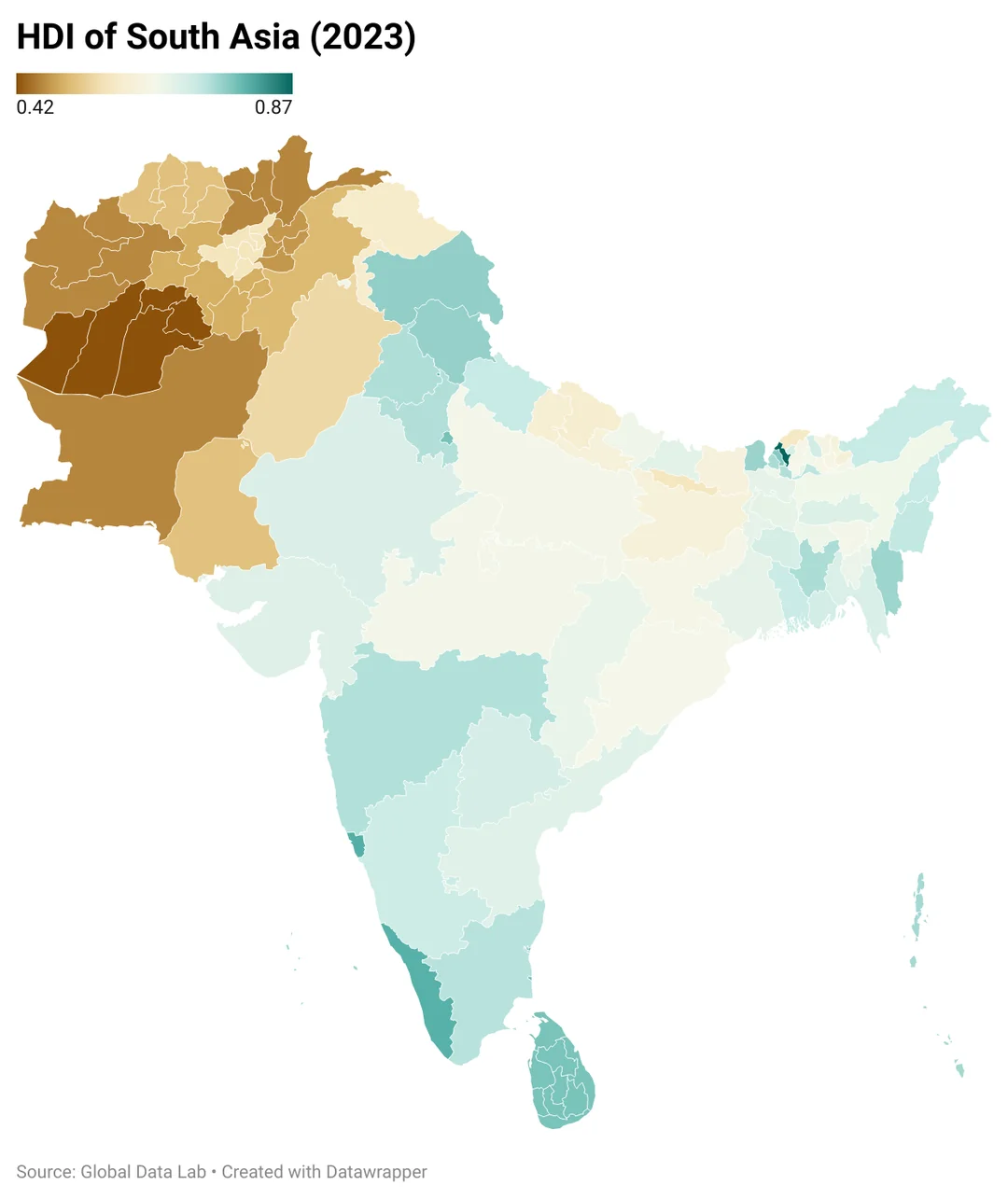
So the UN HDI numbers for 2023 were out last year.

https://hdr.undp.org/data-center/human-development-index

Global Data Lab is an organization that uses this data (amongst other data) to create “sub-national” HDI.

https://globaldatalab.org/

One thing you can see from the map is that the only border which is so distinct is the India-Pakistan one. If one does not know they will not be able to make the borders of India-Nepal, India-Bangladesh, India-Bhutan or Pakistan-Afghanistan.

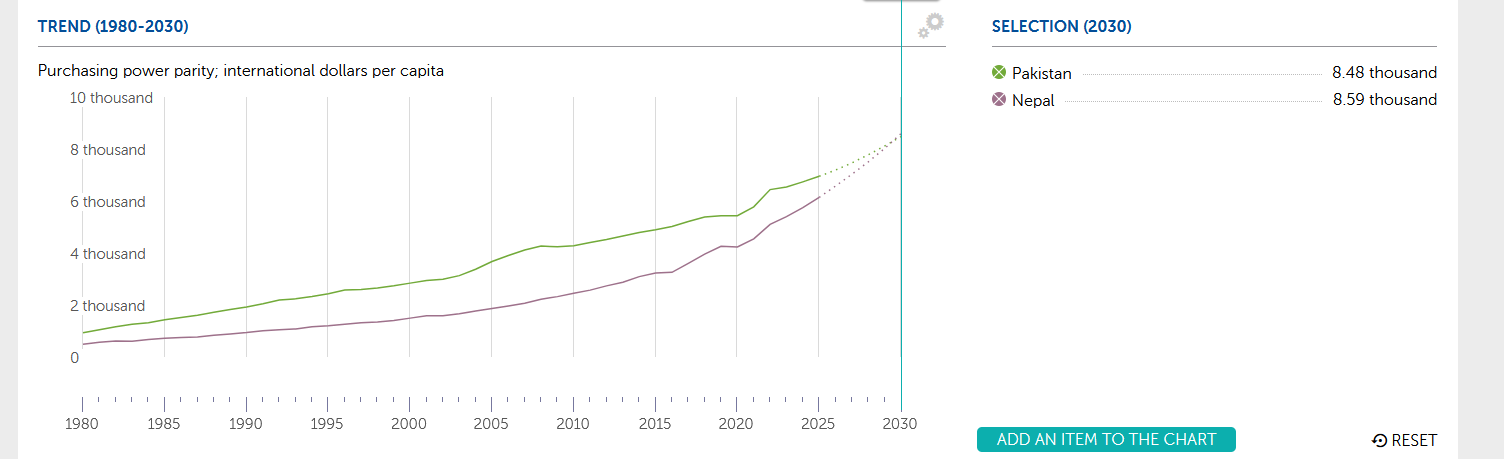
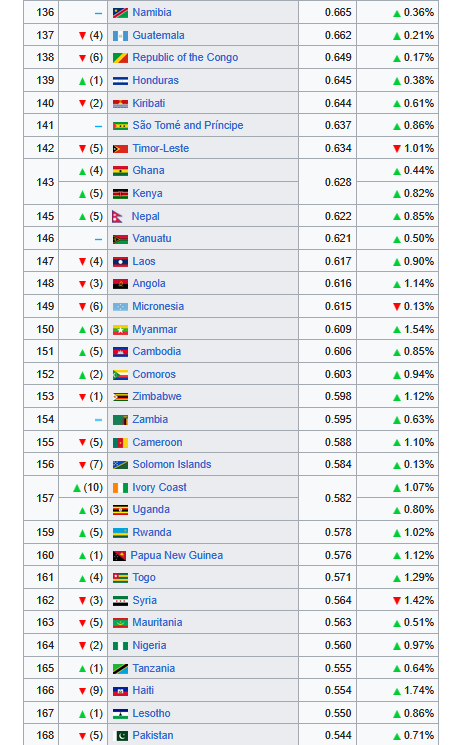
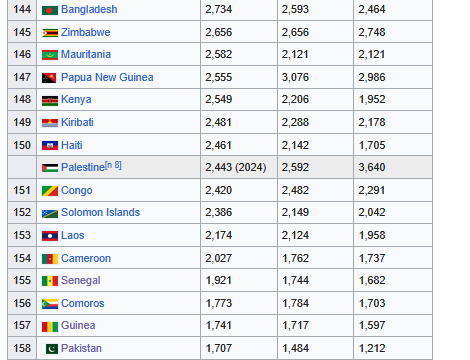
Thing is not only does Pakistan have the lowest HDI in the Indian subcontinent (only one in UN’s “low” HDI below 0.55. Everyone else is above 0.6), it will also have the lowest per capita income in 5 years, going below Nepal.

In fact, the World Bank has removed Pakistan from “South Asia” and classifies them as part of MENAP because their growth data is so different from the rising economies of the subcontinent.

https://www.worldbank.org/ext/en/region/mena

https://www.worldbank.org/ext/en/region/sar

And not only are the other desi countries leaving Pakistan behind, many sub-saharan African countries are as well.

HDI of SSA countries vis a vis Pakistan

GDP pci of SSA countries vis a vis Pakistan

Pakistan’s dramatic drop in fertility

Meanwhile, Pakistan’s average number of children per woman has dropped sharply from 3.61 in 2023 to 3.19 in 2024, reflecting shifting fertility patterns. By comparison, India’s rate declined more modestly from 2.14 to 2.12.

Why women in South Asia are aging faster than in Europe, US

Those are not marginal adjustments. That is acceleration. For decades, Pakistan was treated as a demographic outlier. India fell below replacement. Bangladesh stabilised. Iran collapsed to European levels. Turkey dropped. The Gulf states hollowed out. Pakistan remained “young.” That youth dividend now looks fragile.

Economic Pressures

The fertility transition is no longer creeping. It is sprinting. The familiar explanation is economic pressure. Urban housing costs more. Education lasts longer. Children are expensive. Women delay marriage. This is all true but incomplete. The deeper shift is cultural. Modernity changes how individuals see time.

Rural Norms

In agrarian societies, children are labour, security, and continuity. In urban societies, children are choice. Once children become a choice rather than a necessity, fertility becomes elastic. It bends downward.

Social Media Continue reading Pakistan’s dramatic drop in fertility

Open Thread Modi and Drumpf announce US-IND Trade deal

https://x.com/narendramodi/status/2018377090840830101

With typical bluster, the Donald declares victory and claims that India will ‘stop buying Russian oil (eventually’, and buy ‘$500 billion’ in US goods (no timeline given). Modi’s announcement doesn’t even mention those vague commitments notably.

18% is lower than Vietnam, lower than China, and also lower than Pakistan’s tariff rates, in spite of the ….abject genuflection given to the Drumpf Administration by Pakistani elites over the last few months.

Brown Pundits