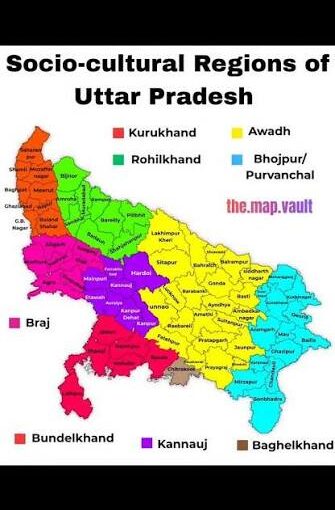
What would Braj Pradesh look like?

On the states that were never drawn, and the language of Lord Krishna’s own country

  1. Why was the linguistic principle applied everywhere except the Hindi belt?
  2. What would a Braj Pradesh look like, and which is its capital, Agra or Mathura?
  3. Can the languages be scheduled without unseating Hindi?
  4. What did Ambedkar see in 1955?

Good for the South but not the North?

The States Reorganisation Commission redrew the South along language lines and left the North alone. Andhra for Telugu, Kerala for Malayalam, Karnataka for Kannada, and one enormous Uttar Pradesh for a “Hindi” that contains multitudes. Ambedkar read the report and wrote a pamphlet, Thoughts on Linguistic States, published in December 1955. His verdict: the Commission had produced “a consolidation of the North and balkanisation of the South“, and intentionally or not, the fact was there.

His remedy was specific. Divide UP into three states of roughly two crore each, capitals at Meerut, Cawnpore and Allahabad. Divide Bihar in two, capitals at Patna and Ranchi. “The idea of having bigger linguistic states is not a democratic idea at all,” he wrote, and he added the detail that pre-empts the obvious objection: each of the resulting states would still have Hindi as its language. Division did not threaten Hindi. Forty-five years later, southern Bihar became Jharkhand with its capital at Ranchi, exactly as drawn.

In November 2011 Mayawati’s assembly passed a resolution splitting UP into four, Purvanchal, Bundelkhand, Awadh Pradesh and Paschim Pradesh, and sent it to Delhi. The UPA let it die. Uttar Pradesh today holds over 240 million people, which would rank it around the fifth largest country on earth, under one Vidhan Sabha.
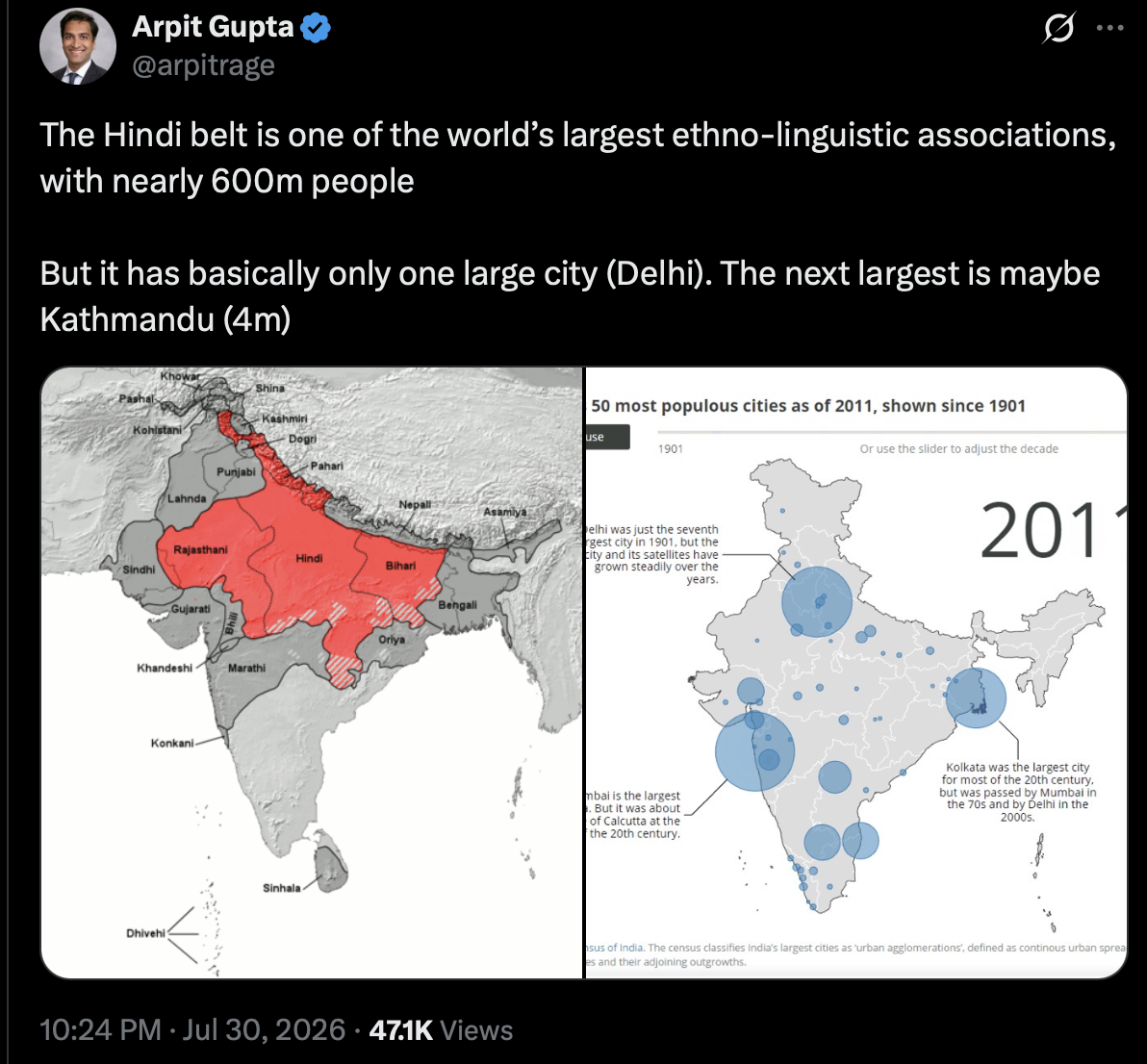
The Hindi umbrella
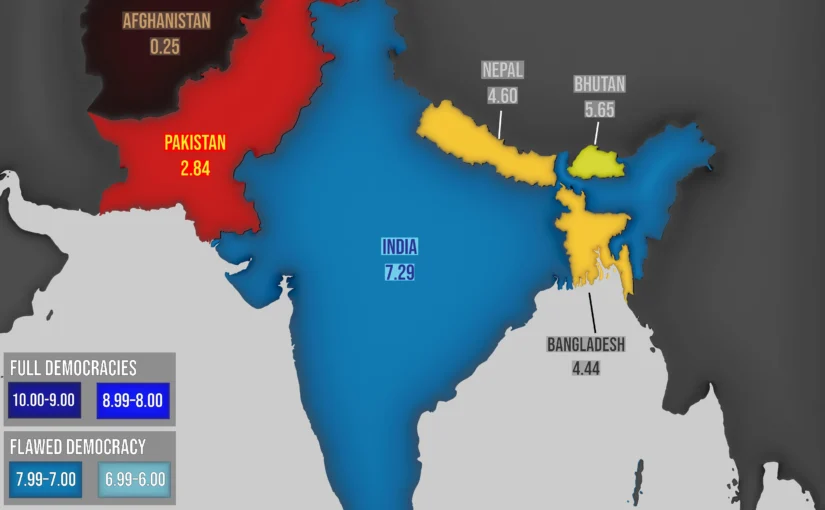
Continue reading What would Braj Pradesh look like?

Dharms are Natural Democrats

On what Britain bequeathed, and what Delhi chose

  1. What did Britain actually leave in 1947, institutions or a franchise?
  2. Whose precedent was universal suffrage in 1950?
  3. Why did the wardrobe never decolonise?
  4. Are all South Asians natural democrats?

The Colonial Bequest

The parliamentary system across India, Pakistan and Bangladesh is Westminster’s. The founders, Gandhi, Nehru, Jinnah, were British-trained lawyers. Liberal democracy arrived in the West through revolutions and arrived in South Asia from the top down. Before the British, the subcontinent was ruled by monarchies, and the political parties are still run by royal houses in all but name, the Bhuttos, the Sharifs, the Gandhis. South Asians, on this account, are not natural democrats.

The chamber, the party system, the common law, the drafting language, the Inns of Court on the founders’ CVs are Albion’s gift. The Indian precedents, Chandragupta and Akbar are kings at scale, and pointing at them concedes the monarchy claim rather than rebutting it. The answer sits in the smaller polities.

The Dharmic republics

Continue reading Dharms are Natural Democrats

Who did the Brits conquer India from?

We asserted that West crushed and humiliated the Mughals. 0M-3 answered that the humiliation was an inside job: it was the Marathas who broke Mughal power, and when Delhi passed to the Company in 1803 the treaty was signed with the Marathas, the emperor not even a party to it.

Did the British take India from the Muslims or from the Hindus? The empire the British inherited had already fallen apart, and it had fallen apart along lines that almost had nothing to do with faith.

The British conquered successor states, not an empire.

Aurangzeb died in 1707, and within a generation the Mughal map was a fiction. Hyderabad went its own way under the Nizam by the 1720s, Bengal and Awadh became nawabis in all but name, and the Marathas took the centre. The spectacular blows did not come from London. Nadir Shah of Persia sacked Delhi in 1739, carried off the Peacock Throne and the Koh-i-Noor, and left tens of thousands dead in the streets in a single day. The Afghan Ahmad Shah Durrani came back to plunder again and again after him. By 1788 the emperor Shah Alam had been blinded by an Afghan adventurer and was living as a pensioner of his Maratha keepers. When General Lake walked into Delhi in 1803 he collected a prisoner the Marathas had been holding, not a throne. The British did not topple the Mughals. They arrived to read the will.

The frontiers were not religious frontiers.

Press the communal map onto the eighteenth century and it tears at once. Tipu Sultan, the Muslim tiger of Mysore, ruled a country that was mostly Hindu and ran his revenue through a Brahmin, Purnaiah. Ranjit Singh, the Sikh lion of Lahore, ruled a Punjab that was mostly Muslim. The Maratha and Nawabi states alike were administered by Hindu clerks and financed by Hindu bankers. There was no Muslim India and no Hindu India waiting to be defeated. There were states, and the faith of the man at the top told you very little about the people beneath him, still less about the men who ran his treasury.

The conquest was paid for and fought by Indians.

Plassey in 1757 is remembered as a battle. It was closer to a purchase. Siraj-ud-Daula lost because his own commander, Mir Jafar, stood aside, and Mir Jafar stood aside because the Jagat Seths, the richest Hindu banking house in Bengal, had decided their Nawab was bad for business and bought his army out from under him. Seven years later at Buxar the Company beat the Nawab of Awadh, the deposed Nawab of Bengal, and the Mughal emperor himself, all three together, and then took the right to tax Bengal to pay for the next war. The armies that did this work were Indian, sepoy and Hindu and Muslim in the great majority, marching on credit raised against Indian land. The Company was paramount because Indians found it paid to make it so.

The disunity is the story.

The faith of each beaten ruler is almost beside the point. The British did not conquer a religion. They completed a hostile takeover of a bankrupt estate, with Indian money, Indian troops, and a long row of victories over rulers who were Muslim, Hindu, and Sikh by turns and who would never combine.

Two Colonisations, One Border: What the Data Actually Says About Bengal’s Post-1971 Demographic Story

Check BB’s personal anecdote on the Northeast.

As mentioned, the Special Intensive Revision of electoral rolls in West Bengal has removed 9.1 million names, 2.7 million of them under contested adjudication. The argument has compressed itself into two bad positions. Either every deletion is disenfranchisement, or every deletion is a Bangladeshi caught. Neither is true, and the census of the last hundred years tells a more specific story than either side wants.

The received wisdom on Northeast India collapses into one sentence: Bangladeshi Muslims are flooding across the border. The received wisdom is partly wrong and mostly incomplete. A narrower reading of the census, focused on the actual border districts, tells a stranger story. There are two demographic colonisations in eastern India, not one. They run in opposite religious directions, and Indian statecraft has treated them as opposites: one ratified, one criminalised.

Tripura: the Hindu Bengali takeover

Tripura*: 1951: 71% Hindu, 7% Muslim (with ~21% still counted under tribal religions separately).

Today: 83% Hindu, 9% Muslim.

In 1941, tribals were 50% of Tripura. By 2011, 32%. Partition and the 1971 war did the rest.

The population that replaced the Kokborok, Reang, and Jamatia is Bengali Hindu, not Muslim. Tripura’s Muslim share today is 9%, below the all-India average. The Northeast state most transformed by Partition and 1971 is the one that became a Hindu Bengali colony.

South Tripura district is the cleanest data point. The ST share there is 17%. The Bengali Hindu majority there is overwhelmingly composed of descendants of refugees who crossed between 1947 and 1971.

*Note on Tripura: the Hindu figure jumped partly because tribals were reclassified as Hindu between 1951 and 1971 in the census. Real Hindu Bengali influx adds on top of that statistical shift.

Assam border districts: the Muslim Bengali case

Assam: 1951: 72% Hindu, 25% Muslim.

Today: 61% Hindu, 34% Muslim. Continue reading Two Colonisations, One Border: What the Data Actually Says About Bengal’s Post-1971 Demographic Story

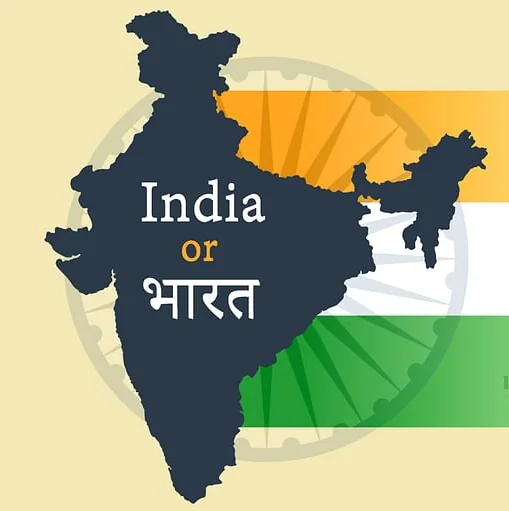
India That Is Bharat: The Exceptional Uniqueness and the Dual Identity

This is a Brown Pundits Precedent Post.


We have been asked, repeatedly and in good faith, why Brown Pundits appears to handle criticism of India with more care than it handles criticism of Pakistan. The charge is that we hold a double standard. It deserves a direct answer.

The answer is that we do hold a distinction, and we are not embarrassed by it, but it is not the distinction the charge assumes.

The Distinction

Pakistan is roughly seventy-nine years old as a sovereign state. India as a sovereign state is roughly seventy-nine years old as well. As nation-states under international law, as signatories to the United Nations, as entities with currencies and armies and foreign ministries, the two are pari passu. We treat them that way and we will continue to treat them that way. On every question that applies to nation-states as nation-states, the two sit at the same table and get the same scrutiny.

But India is not only a nation-state. India is also a civilisation, and the civilisation is not seventy-nine years old. The civilisation is, give or take the archaeological argument one prefers to have, somewhere around five thousand years old. It stretches from the Indus Valley through the Dravidian-Aryan synthesis, through the Vedic period, through the great classical flowering, through the medieval syntheses, through the colonial rupture, and into the present. One can argue the exact nature of the continuity. One cannot plausibly argue that the continuity is not there. It is there in the same way it is there for China. It is there in the same way it is there for Egypt. It is there.

This is not a claim about superiority. It is a claim about category. Pakistan is a sovereign state. India is a sovereign state and a civilisation. The two facts do not cancel. They coexist.

The Civilisational Peer Group Is Short

How short is short. At the level of a nation-state that is co-terminus with a multi-millennial civilisation, the peer group is essentially India and China. Two entries. Iran and Egypt have the civilisational depth but have been transformed by the Greco-Arab conquest, in an unalterable fashion. Greece has the civilisational depth but the modern Greek state is a nineteenth-century construction with limited political continuity to the ancient polis; the Ottoman interlude was equally determinative. Israel is a unique case and we will come to it.

That leaves India and China. Two countries on the planet where the nation-state is also the civilisation, where the sovereign political entity today is a recognisable continuation of the same cultural-linguistic-religious matrix that produced its earliest texts, and where the ordinary citizen, with some education, can read something written two or three thousand years ago in a language that is still a living vehicle of the culture.

That is not a small claim. It is also not a nationalist claim. It is simply a descriptive one.

The Indian Exception Continue reading India That Is Bharat: The Exceptional Uniqueness and the Dual Identity

Open Thread; The Archive, The Lynching, and Humanity First

Open Thread — The Archive, The Lynching, and Humanity First

A note: we are currently backtagging the entire BP archive — all 3,987 posts. The comment boards may show cross-linked notifications as the system processes older threads. We will update when complete.

Gaurav Lele’s post today asks serious questions about asymmetric condemnation. It is worth reading carefully.

But one comment in the thread deserves to be elevated. Calvin wrote:

https://article-14.com/post/even-after-their-son-was-lynched-the-khan-family-did-not-leave-the-hindu-village-3-months-later-they-fled-694f49ba99322The fact is that the people caught in TCS case will be tried and spend years in jail. That is where the fundamental difference in response comes from, we know when the perpetrators are muslim not only them but even their family will suffer, this is not guaranteed when the muslim may be the victim.

Calvin is right. And the story he linked proves it.

Continue reading Open Thread; The Archive, The Lynching, and Humanity First

Archeological Society of India to work with Indonesia on Prambanan Temple Complex Restoration

A brief respite from war, death and bombings. Some encouraging news from South East Asia.

I have had the privilege to visit the Angkor Wat Complex in Siem Reap, Cambodia. The ASI has done some decent work there in restoring some of the buildings within. The Prambanan temple complex dates back to the 10th century and after Angkor, its the largest one in SE Asia. I would love to visit someday.

I did visit Bali briefly a couple of decades ago, which was a wonderful rabbithole to fall down into, in terms of Indic influence and syncretic culture in SE Asia. Balinese Hinduism is a fascinating fusion of what we Indians think of as ‘core’ Hinduism, along with local animist influences. What superficially can feel slightly alien and almost jarring – in terms of pooja thalis adorned with whole skinned chickens, is in fact, incredibly typical of how the Dharmic faith has spread all over the Indian sub-continent and beyond, absorbing local totems and figures into its mythology as manifestations and ‘Avtaars’ of its primary dieties.

Has anybody on BP or the commentariat visited Yogyakarta or any other Indonesian sites with Buddhist/Hindu influence?

On Civilisational States and Who Gets to Claim the Indus

Kabir says calling India, that is Bharat, a civilisational state is a “right-wing position.” We disagree; and the disagreement isn’t political, it’s archaeological.

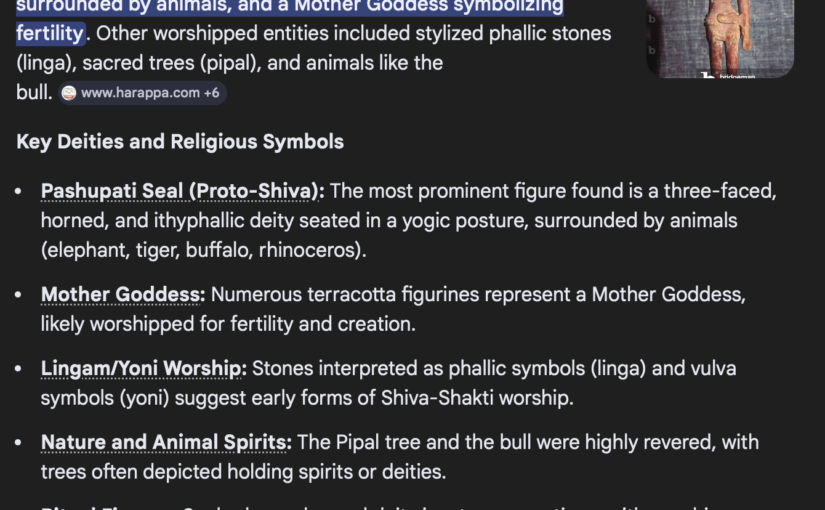
Shiva Pashupati - World History Encyclopedia

Look at what Mohenjo-daro actually gives us: the Pashupati Seal; three-faced, ithyphallic, seated in yogic posture, surrounded by elephant, tiger, buffalo, rhinoceros. Proto-Shiva. The Mother Goddess figurines. Linga and yoni stones. Pipal veneration. The sacred bull. Every single religious thread runs forward into the living Hindu tradition. Continue reading On Civilisational States and Who Gets to Claim the Indus

India’s Eastern Face: Where Civilisation Dissolves Instead of Ending

Hard Edges and Soft Ones

India is unusual among civilisations in that most of its edges are real. They can be pointed to on a map and felt underfoot. The northwest is closed by the Hindu Kush, a wall that both protected and punctured India through invasion. The north is sealed by the Himalayas, which turned the subcontinent inward for millennia. The south ends cleanly in the Indian Ocean, a hard geographic edge that also became India’s great outward highway. These are faces with sharp contours.

India is bounded in the northwest by mountains, in the north by ice, in the south by water, and in the east by diffusion.

The east is different. It does not end. It thins.

A Boundary That Does Not Behave Like One

Geographically, there is a boundary. The Indo-Burman ranges run from Arunachal through Nagaland, Manipur, Mizoram, and down into Burma. They are real mountains, thick with forest, rain, and disease. But they are not high enough, cold enough, or empty enough to function like the Himalayas. They slow movement without stopping it. They divide ecologies more than peoples.

This matters because civilisation follows ecology before it follows flags.

Where India Becomes Something Else, Gradually

Continue reading India’s Eastern Face: Where Civilisation Dissolves Instead of Ending

Brown Pundits