My friend’s friend (a Western expat who I’ve met before a few times) couldn’t fill up his vehicle today at the local gas station.
We’ve obviously been hearing about scarcity in fuel but this is the first time; it’s been a personal connection.
My friend’s friend (a Western expat who I’ve met before a few times) couldn’t fill up his vehicle today at the local gas station.
We’ve obviously been hearing about scarcity in fuel but this is the first time; it’s been a personal connection.
The Dhurandhar effect
Omar Ali’s Dhurandhar review is our highest-traffic page by a distance followed by BB’s Kohrra season 2 review. It ranks 20th on a keyword with 87,000 monthly searches in India alone. A single film review, by one writer, on one streaming title, is pulling 37% of our traffic. Continue reading Brown Pundits: Traffic Report, March 2026
Note: Since we were talking about colonialism , I am sharing this essay I wrote about opera and colonialism. I originally wrote this piece as part of a graduate school application to King’s College London where I was planning to study musicology. I ended up going to SOAS to pursue Ethnomusicology instead. It also makes a change from all the discussion of geopolitics.
During the mid-nineteenth century, European composers experienced a vogue for depicting the Orient on stage. Not only was the Orient an exotic location, but the operas set there spoke to the imperial anxieties of various European nations. In their essay published in Imperialisms: Historical and Literary Investigations, Linda and Michael Hutcheon write: “Opera may not appear at first to be quite the same as these other Western means explored by [Edward] Said of ‘dominating, restructuring, and having authority over the Orient’. But it is important to recall that Opera was a powerful discursive practice in nineteenth century Europe, one that created, by repetition, national stereotypes that, we argue, are used to appropriate culturally what France could not always conquer militarily” (Hutcheon 204).
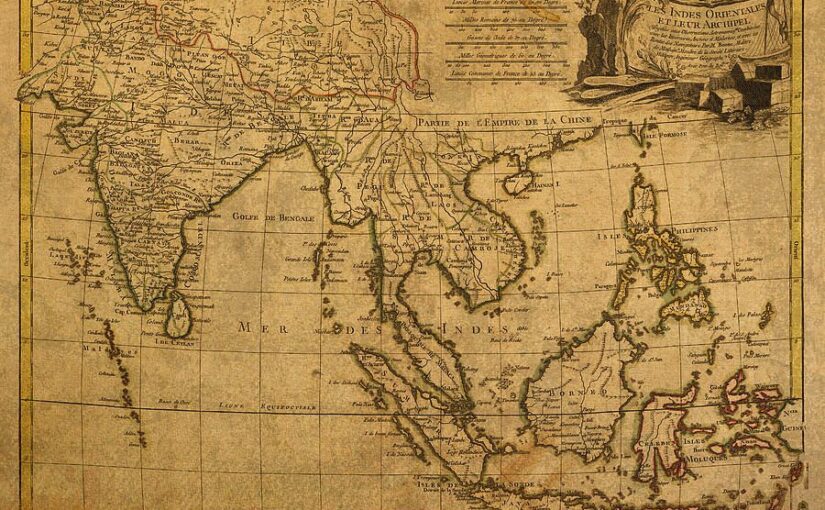
In this paper, I will analyze two French Grand Operas from this period—George Bizet’s The Pearl Fishers (1863) and Leo Delibes’s Lakme (1883)—in order to determine the stereotype of the “Oriental” that was being presented to French audiences. As a point of contrast, I will also discuss Indrasabha (The Heavenly Court of Indra), an operatic drama written by the Urdu poet Agha Hasan Amanat and produced in 1855 in the palace courtyard of Wajid Ali Shah, the last Nawab of Awadh. This contrast will serve to illuminate how the operatic tradition was adapted by Indians themselves as well as the differences in the narratives about the Orient as conceived by the Occident as opposed to the Orient itself. Continue reading The Depiction of the Indian Subcontinent in 19th Century French Grand Opera
Brown Pundits has always been a forum for the kind of thinking that most outlets are too timid or too tribal to publish. We intend to keep it that way. But that standard cuts both ways, and we are raising it.
Effective immediately, the moderation policy is zero tolerance.
This is not a crackdown on opinion. We welcome disagreement; sharp, even uncomfortable disagreement. What we will no longer tolerate is noise dressed up as insight.
What does noise look like? You know it when you read it. It is the rattling of nuclear talking points that have not been updated since 1998. It is the reduction of a civilisation of 220 million people, or of a billion-and-a-half, to a single variable: the Crescent, or the Saffron. It is venom without weight, and venting without argument.
Pakistan is complex. India is complex. Every human society is, at its foundation, irreducibly complex.
Any comment that treats either as otherwise will be moderated; sometimes publicly, sometimes silently. We apply the sniff test: does it smell right, given the context? Given how tight our Editorship and Commentariat is, we will be judicious, as we have always been; for instance the Precedent post on the controversial Dhuruandar sequel remains Gaurav Lele’s.
This applies to both sides of every line we cover; geographical, civilisational, sectarian, or political.
We are not asking for bookishness. We are not asking for academic caution or diplomatic hedging. We are asking for the one thing that separates a pundit from a troll: considered thought. If you are going to cast aspersions, earn them. Make the case. Bring the weight. If you cannot, do not post.
We have a large and growing commentariat. That is something to be proud of. It is also a responsibility; to each other, and to the readers who come here because they expect better than what they can find elsewhere.
We expect better. We will enforce it.
Thank you for your attention to this matter.
— The Editors, Brown Pundits Continue reading Open Thread + A Note on Standards
West vs the Rest
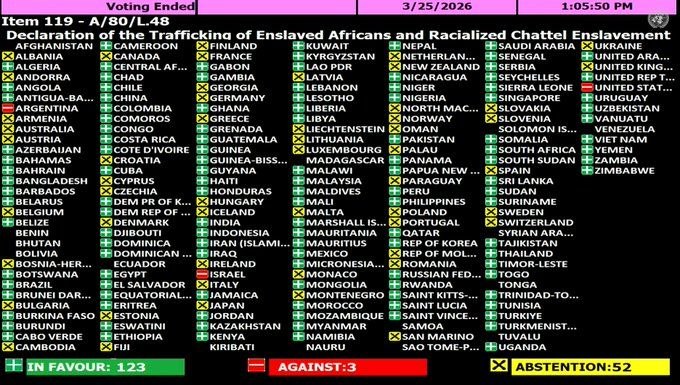
Today’s UNGA vote, 123 for, 3 against, 52 abstentions, is a clean ledger of where the world stands. The resolution declares the transatlantic slave trade “the gravest crime against humanity.” Three countries voted against: the United States, Israel, and Argentina. The UK and all 27 EU members abstained.
The 52 abstentions are the more revealing column. The EU’s stated objection was legal: calling this the “gravest” crime implies a hierarchy among atrocity crimes, which has no basis in international law. That’s a defensible position. It’s also a convenient one for countries that ran the trade.
The US was blunter; its representative objected to the “cynical usage of historical wrongs as a leverage point to reallocate modern resources.” At least that’s honest about what reparations actually means in practice.
The UN is essentially asking whether countries whether they were colonised or not?
The 123 is the story. This isn’t Russia and China championing the Global South; it’s Africa, the Caribbean, and most of Asia doing it themselves. This marks the first floor vote at the UN specifically on transatlantic slavery as a crime, and a call for reparations.
The resolution is non-binding, so nothing material changes today. But the vote is a data point: on a question of historical accountability, the West is either against or abstaining, and everyone else is not.
That’s the fault line. West vs the Rest; and the Rest has the numbers. Gaza, Russia, Iran: all proxies for the same fracture. Russia ran an empire, but its Soviet collapse was so total it no longer reads as imperial. China likewise. So both get to stand on the other side of the line.
And underneath the EU’s legal objection, the “hierarchy of crimes” argument, is something unspoken: the Holocaust has long held the position of singular atrocity in Western moral architecture. This resolution is, implicitly, a challenge to that. The Rest is saying: your crime towards us was graver, or at least as grave. Europe couldn’t vote yes without conceding the point.
A very important interview with Vali Nasr–one of the world’s foremost experts on Iran
March 3, 2026 — Asia Society Policy Institute (ASPI) hosts a rapid-response conversation following the recent and significant escalation in the U.S.-Iran conflict. Join Asia Society Trustees Vali Nasr, Majid Khadduri Professor of International Affairs and Middle East Studies at Johns Hopkins University School of Advanced International Studies (SAIS); and Hamid Biglari, Partner at RedBird Capital Partners, Executive Chairman of RedBird X (RedBird’s AI business), and Chairman of Financial Services, as they assess the strategic, political, and economic implications of this unfolding crisis.
Start with the uncomfortable question nobody in Washington wants to ask directly: how is this not a defeat for Israel?
Trump reposted Shehbaz Sharif’s offer to host US-Iran peace talks, and Bannon’s WarRoom picked it up within the hour. That’s the tell. When Pakistan’s diplomatic positioning lands on the most watched MAGA platform in America, amplified by the President himself, the “Second Act” isn’t a thesis anymore. It’s the news.
In 1956, Britain and France attacked Egypt alongside Israel. Militarily, they won. The Egyptian army collapsed. The canal was taken. Then Washington intervened, sterling cracked, and within weeks they withdrew — humiliated, permanently diminished, never again operating as independent great powers in the Middle East. They won the battle and lost the century. (As an aside, PM Modi made his allegiances clear from the very start of this conflict; the bombing was reportedly postponed for his visit to Washington. India, like Britain and France in 1956, has picked its side. The question is whether it has picked the winning one.)
That is the template. Now run the present war through it. Israel spent two years engineering this confrontation. Then, at the exact moment diplomacy began to work, the bombs fell. Oman’s Foreign Minister Badr bin Hamad Al Busaidi, a cautious, establishment figure from a cautious, establishment country, said it plainly: nuclear negotiations were making progress, Iran had agreed to no enriched uranium stockpiling and full IAEA verification, peace was within reach. Talks were due to resume on 2 March.
The strikes began on 28 February.
That is not coincidence. That is a choice: war over settlement. Now look at the structure that follows. Iran has not won militarily. Its air force is degraded. Its infrastructure is hit. Its Supreme Leader is dead, replaced by his son; a harder man, not a softer one, which is itself a signal about how decapitation strategies tend to end. But Iran has achieved the one thing that matters strategically: leverage over the Strait of Hormuz. Analysts are already describing any exit that leaves Iran as the effective gatekeeper of the Strait as a colossal strategic failure for the United States. That is the centre of gravity. The US can bomb, seize assets, escalate. But it cannot reopen the Strait on its own terms if Iran is willing to absorb damage and impose cost. Geography is doing the work. Patience is doing the rest.
Now watch Washington move.
A $200 billion supplemental request is already in play. Oil prices are moving. Trump has begun the political separation, “I might have forced their hand”, while his own Secretary of State had already said Israel led the way. That asymmetry matters. Trump wants a deal he can sell to American families at the petrol pump. Israel wants Iran broken. Those are incompatible war aims, and they are visibly diverging: Trump rebuked Israel over the South Pars gasfield strike; Israel assassinated Ali Larijani, seen by some as a key potential negotiating figure, just as back-channel possibilities were opening.
The same negotiations torpedoed in February are now the only viable exit. Trump says Iran wants a deal. Iran denies it. Neither side is behaving like a defeated power. This is not surrender. This is endurance; and endurance, historically, beats air supremacy.
That is Suez. It does not require retreat under fire. It requires something subtler: the moment when the patron begins calculating its costs independently from the client, and reaches a different conclusion. When that happens, the war ends regardless of battlefield position. Britain and France didn’t lose in 1956 because they ran out of soldiers. They lost because Washington ran out of patience.
The American public will eventually ask whose war this was. That question is already forming. And it is precisely here, in the gap opened by Washington’s growing ambivalence and Israel’s strategic overreach, that the second story begins.
While the US and Israel have been consumed by a war that is proving harder to exit than to enter, one country has quietly stepped into the resulting vacuum. Not China. Not Russia. Not Turkey, though Ankara is watching closely.
Pakistan.
Continue reading Is Hormuz, Israel’s Suez but Pakistan’s Second Act?
Politics is deeply ideological—but does ideology really matter in geopolitics at all?
A few modern (if that’s a fair word) Islamic countries—Turkey, Azerbaijan, and Pakistan—have adopted an increasingly anti‑India position. For Pakistan, this stance is ideological; for Turkey and Azerbaijan, it is clearly pragmatic. Meanwhile, India has become friendlier with the Taliban, Iran (the current war notwithstanding), and the Gulf states.
Similarly, India’s closeness to Israel is not ideological—though cheerleaders on social media often present it that way. It is strategic and does not depend on Jews being tolerant of Hinduism. I have zero insight into how Israelis view Hinduism (nor do I, as a resident of India who never intends to visit Israel, particularly care). But that should not matter, because Israel is one of the very few all‑weather geopolitical partners India has.
India needs weapons and technology, and it gets them from Israel—so Israel is important to India. India needs oil and gets it from Iran and Russia—so they are important to India.
These statements may sound childish or crude, but they capture how geopolitics actually works. It does not run on ideology or cultural history. Much of the cultural narrative that intellectuals and pop‑culture try to weave around geopolitics is post‑hoc justification meant for an idealistic public. Even dictatorships engage in such storytelling—not just democracies. There are exceptions, of course. For instance, when the Nupur Sharma controversy broke, it triggered a small geopolitical crisis for India.
Nation‑states are both products of culture and creators of culture. Cultural and political anxieties were the prime movers of the Pakistan movement. But the lived realities of Pakistan, India, and even Bangladesh as nation‑states have produced their own cultural trajectories and divergences.
So should an Indian cheer for the bombing of a friendly totalitarian theocracy at the hands of its friend which is a selective liberal democracy {only for the chosen people) ?
No—not only because Iran is a friend of India, but because emerging economies that are democracies need at least the façade of a rules‑based international order to function. Donald Trump doesn’t seem to like the façade but diplomacy of varying shades still ought to be relevant in politics for years to come.
Wealth Doesn’t Win Wars
A contact in New York mentioned, almost in passing, that the shelves at their local (premium) supermarket were beginning to empty. Not bare, but noticeably thin, the way they go before a blizzard. People panic-buying quietly, without announcement. At LaGuardia, long queues that the local press has barely covered. The official newsflow says nothing. But the supermarket shelves don’t lie.
This is how the consequences of a war 6,000 miles away arrive in the richest city in the world; not with sirens, but with gaps on the grocery shelves and unexplained airport delays that nobody in authority seems in a hurry to explain. The information lag is itself a story. There is roughly a week between what is happening and what is being reported. Don’t believe one’s lying eyes.
BB’s thesis is that military power is ultimately a function of GDP. It is a reasonable working assumption. It is also, we would argue, dangerously wrong in the specific conditions we are now watching play out in real time.
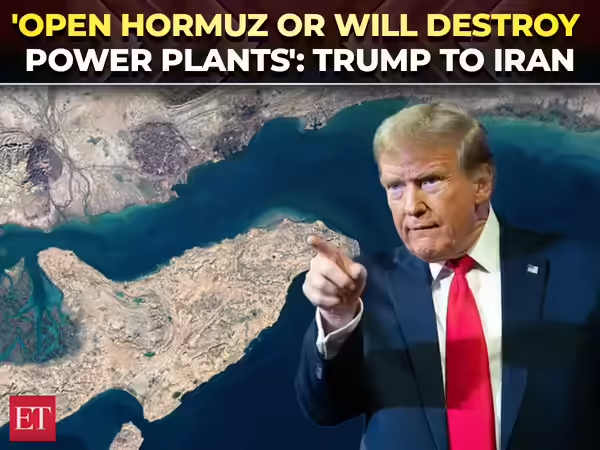
The United States and Israel are the two wealthiest, most technologically sophisticated military powers to have ever jointly prosecuted a war. Their adversary is a sanctioned, inflation-wracked theocracy that has been massacring its own citizens and losing proxy after proxy for two years. And yet here we are, Day 23 of Operation Epic Fury, with Trump issuing a 48-hour ultimatum to obliterate Iran’s power plants unless the Strait of Hormuz is fully reopened, Iran responding that any such strike will be met with attacks on U.S. and Israeli energy and infrastructure assets, Brent crude at $112 a barrel and Goldman Sachs projecting elevated prices through 2027, and the administration having exhausted every economic lever it possesses. The richer side is losing the economic war. The question is whether they know it yet.
Iraq, Afghanistan, and the Sociology of Surrender
The pattern is not new. We have watched it twice in living memory, in the same geography, and both times the lesson was the same. Continue reading The Hormuz Ultimatum: Wealth Doesn’t Win Wars
While the usual suspects on BP are busy with their anti-Pakistan comments, the Iran war continues–which is far more important globally than Pakistan/India back and forth is.
The inordinate focus on Pakistan on this forum is quite something and deserves a deeper psychological explanation.
UnHerd’s Freddie Sayers speaks with Professor of Political Science at the University of Chicago, Robert Pape, to discuss the high-stakes ‘escalation trap’ unfolding between the United States and Iran – breaking down the tactical successes and failures of the US military campaign and analysing how Iran is leveraging its geographical position and control of the Strait of Hormuz through low-cost drone and missile harassment. As Professor Pape draws comparisons to the Vietnam War and 1973 oil crisis, has the Trump administration lost control of the conflict’s trajectory, and are we moving toward a dangerous ground power dilemma that threatens the global economy and the stability of the Western alliance?