The Pakistani Voice That Isn’t in the Room

BB made a very sharp observation, and we want to put it on the record as a note rather than a finished argument, because it deserves more elaboration than we can give it today.

Who carries the Green Passport

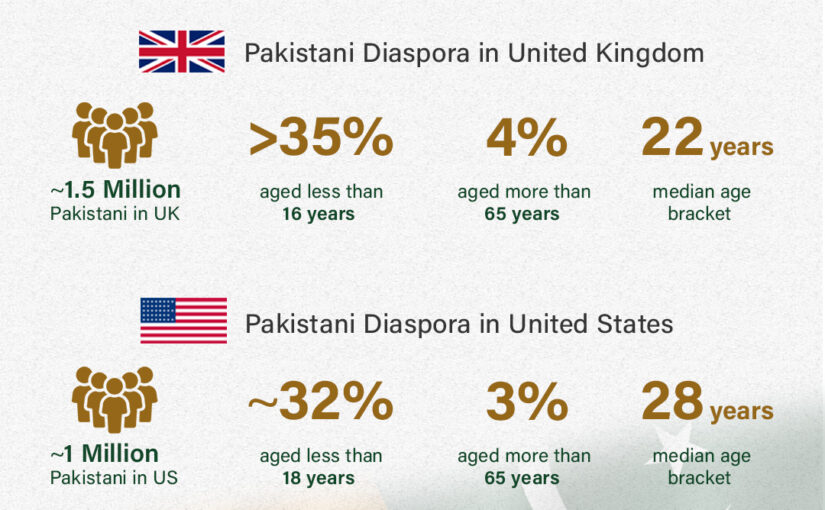
Look at who carries the Pakistani case at BP. Kabir holds a foreign passport. Q and EK write from the diaspora. Every voice that argues the Pakistani perspective here argues it from somewhere else. Not one of them speaks from inside the country: resident, middle or upper-middle class, holding a green passport with everything the green passport actually costs at the visa counter, at the airport, in what can and cannot be said at home. India, by contrast, is argued for in large part by Indians who live in India (BB is one such example). So the table is lopsided in a particular way. One side is represented by people inside the country it speaks for; the other, almost entirely by people outside it.

No photo description available.
The Great Cleft

Diasporas are powerful but deadly

Continue reading The Pakistani Voice That Isn’t in the Room

Bin Qasim’s Thousand-Year Wound

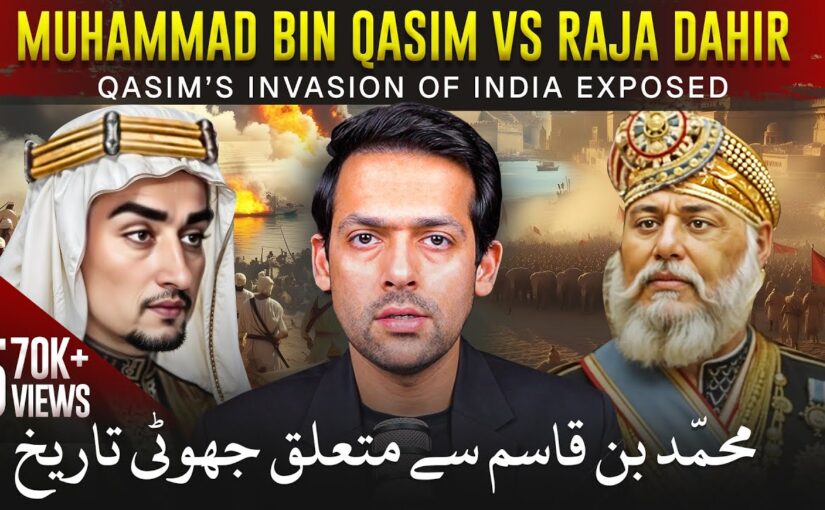
There is one fault line under everything that happens here, and it is old. Pakistan stands, whether it wishes to or not, as the proxy for the Muslims of the subcontinent, and India as the proxy for its non-Muslims. This is not a quarrel of the last election or the last war. It is a wound more than a thousand years old, set running when Muhammad bin Qasim landed in Sindh in 711, and it has been arguing with itself in the subcontinental subconscious ever since. Every thread on this site is a small, late episode of that argument.

There is a scene in The Devil Wears Prada, the cerulean one, where a colour chosen by Miranda Priestly (Meryl Streep) at the summit of fashion is followed down the seasons, runway to department store to clearance bin, until Andy (Anne Hathaway), who fishes it out is sure her choice owed nothing to any of it.

Anne Hathaway referencing the ICONIC cerulean sweater scene for her first  day filming The Devil Wears Prada 2 💙 Andy is back! , #AnneHathaway  #TheDevilWearsPrada #TheDevilWearsPrada2 #AndySachs ...

The subcontinent’s argument works the same way. Bin Qasim’s landing in 711 was a decision taken at the top of history, and it has filtered down through thirteen centuries of conquest, doctrine and memory into a comment thread, where two strangers swapping insults are certain the quarrel is about this week. It is not. It was chosen for them a thousand years ago, and they are wearing it without knowing the name of the colour.

What is new is that the argument is going quiet, and quiet is worse than loud. The subcontinent is partitioning itself a second time, in the mind. Indians increasingly talk only to Indians, Pakistanis only to Pakistanis, each inside a feed built to agree with them. The 1947 line cut the map; the algorithm is cutting the conversation. Against that, the value of Brown Pundits is simple and almost embarrassing to state. It is one of the few open places left where the two sides still argue with each other in public and mean it. That is worth defending even when the argument is ugly, because the alternative is not a calmer argument. It is no argument, and two rooms that never open the door.

Is BP sui generis on the Internet?

Continue reading Bin Qasim’s Thousand-Year Wound

Two Colonisations, One Border: What the Data Actually Says About Bengal’s Post-1971 Demographic Story

Check BB’s personal anecdote on the Northeast.

As mentioned, the Special Intensive Revision of electoral rolls in West Bengal has removed 9.1 million names, 2.7 million of them under contested adjudication. The argument has compressed itself into two bad positions. Either every deletion is disenfranchisement, or every deletion is a Bangladeshi caught. Neither is true, and the census of the last hundred years tells a more specific story than either side wants.

The received wisdom on Northeast India collapses into one sentence: Bangladeshi Muslims are flooding across the border. The received wisdom is partly wrong and mostly incomplete. A narrower reading of the census, focused on the actual border districts, tells a stranger story. There are two demographic colonisations in eastern India, not one. They run in opposite religious directions, and Indian statecraft has treated them as opposites: one ratified, one criminalised.

Tripura: the Hindu Bengali takeover

Tripura*: 1951: 71% Hindu, 7% Muslim (with ~21% still counted under tribal religions separately).

Today: 83% Hindu, 9% Muslim.

In 1941, tribals were 50% of Tripura. By 2011, 32%. Partition and the 1971 war did the rest.

The population that replaced the Kokborok, Reang, and Jamatia is Bengali Hindu, not Muslim. Tripura’s Muslim share today is 9%, below the all-India average. The Northeast state most transformed by Partition and 1971 is the one that became a Hindu Bengali colony.

South Tripura district is the cleanest data point. The ST share there is 17%. The Bengali Hindu majority there is overwhelmingly composed of descendants of refugees who crossed between 1947 and 1971.

*Note on Tripura: the Hindu figure jumped partly because tribals were reclassified as Hindu between 1951 and 1971 in the census. Real Hindu Bengali influx adds on top of that statistical shift.

Assam border districts: the Muslim Bengali case

Assam: 1951: 72% Hindu, 25% Muslim.

Today: 61% Hindu, 34% Muslim. Continue reading Two Colonisations, One Border: What the Data Actually Says About Bengal’s Post-1971 Demographic Story

Kabir, the Anchor of the Crescent

Dissent Must Have a Home

The parent post set out why the house speaks in the plural and why pruning widens the room. This post sets out the harder discipline. A plural voice that cannot bind itself is not a voice. It is a whip. And a forum that cannot bind its Founders is not a forum. It is their salon.

The Crescent anchor.

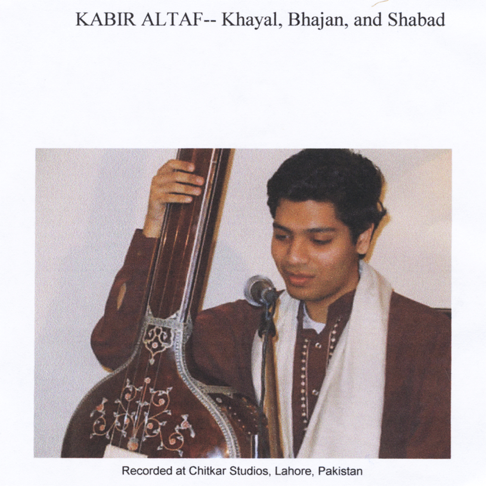
When Brown Pundits was revived, two commentators returned before anyone else. Kabir was one of them. sbarrkum was the other. That mattered more than any traffic number. A forum lives by the return of people willing to argue in public, under their own names or their settled masks, on a schedule that does not flinch.

Kabir matters for a second reason. The Centre gathers quietly and often overlaps with the Saffron bench in instinct or historical frame. The Crescent bloc on this site is essentially held together by Kabir. Remove him and the others do not regroup under a new flag. They drift.

Without Kabir, Brown Pundits will become a site where Muslims are written about more than they are written by.

Continue reading Kabir, the Anchor of the Crescent

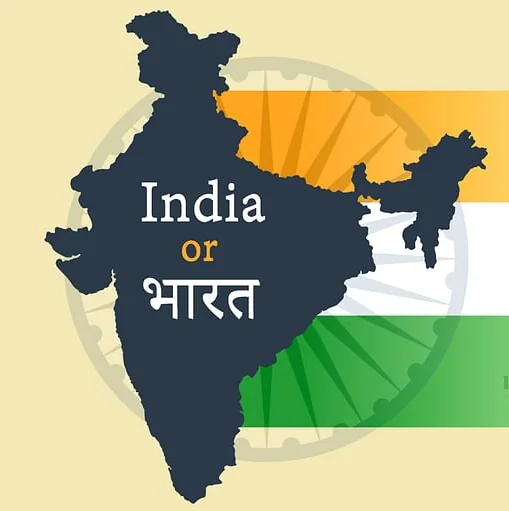
India That Is Bharat: The Exceptional Uniqueness and the Dual Identity

This is a Brown Pundits Precedent Post.


We have been asked, repeatedly and in good faith, why Brown Pundits appears to handle criticism of India with more care than it handles criticism of Pakistan. The charge is that we hold a double standard. It deserves a direct answer.

The answer is that we do hold a distinction, and we are not embarrassed by it, but it is not the distinction the charge assumes.

The Distinction

Pakistan is roughly seventy-nine years old as a sovereign state. India as a sovereign state is roughly seventy-nine years old as well. As nation-states under international law, as signatories to the United Nations, as entities with currencies and armies and foreign ministries, the two are pari passu. We treat them that way and we will continue to treat them that way. On every question that applies to nation-states as nation-states, the two sit at the same table and get the same scrutiny.

But India is not only a nation-state. India is also a civilisation, and the civilisation is not seventy-nine years old. The civilisation is, give or take the archaeological argument one prefers to have, somewhere around five thousand years old. It stretches from the Indus Valley through the Dravidian-Aryan synthesis, through the Vedic period, through the great classical flowering, through the medieval syntheses, through the colonial rupture, and into the present. One can argue the exact nature of the continuity. One cannot plausibly argue that the continuity is not there. It is there in the same way it is there for China. It is there in the same way it is there for Egypt. It is there.

This is not a claim about superiority. It is a claim about category. Pakistan is a sovereign state. India is a sovereign state and a civilisation. The two facts do not cancel. They coexist.

The Civilisational Peer Group Is Short

How short is short. At the level of a nation-state that is co-terminus with a multi-millennial civilisation, the peer group is essentially India and China. Two entries. Iran and Egypt have the civilisational depth but have been transformed by the Greco-Arab conquest, in an unalterable fashion. Greece has the civilisational depth but the modern Greek state is a nineteenth-century construction with limited political continuity to the ancient polis; the Ottoman interlude was equally determinative. Israel is a unique case and we will come to it.

That leaves India and China. Two countries on the planet where the nation-state is also the civilisation, where the sovereign political entity today is a recognisable continuation of the same cultural-linguistic-religious matrix that produced its earliest texts, and where the ordinary citizen, with some education, can read something written two or three thousand years ago in a language that is still a living vehicle of the culture.

That is not a small claim. It is also not a nationalist claim. It is simply a descriptive one.

The Indian Exception Continue reading India That Is Bharat: The Exceptional Uniqueness and the Dual Identity

Pakistan is the Israel of the Subcontinent

A Brown Pundits Precedent Post

I. The Ideology Before the Nation

Pakistan has a birth certificate: a 1933 pamphlet by Choudhry Rahmat Ali. Israel has the Basel Programme of 1897. Both nations emerged not from an ancient territorial consciousness but from an ideological project; one that required, as its sustaining premise, the claim that a religious minority could not coexist within a pluralist polity. This is not a slur; it is the historical record.

What makes both nations structurally similar is that their nationalism is grievance-generative by design. Israel requires the Palestinian question; Pakistan requires Kashmir. Without the wound, the ideology loses its cohering force. This is why, as Kabir inadvertently demonstrates in thread after thread, Kashmir is not merely a territorial dispute for Pakistan; it is an existential necessity. Indian nationalism has no equivalent. India does not need Kashmir to know what it is. Pakistan does.

II. Organic vs. Constructed Nationalism

Omar has made the point that durable nationalism must be organic; rooted in geography, language, ethnicity, or long civilisational memory. Bangladesh is a useful comparison: Bengali Muslim nationalism is at least tethered to a linguistic and territorial reality. The Bengalis of East Pakistan had a mother tongue, a delta, a literary tradition. When Pakistan tried to impose Urdu on them, they revolted; because Bengali identity had roots.

Pakistan’s tragedy is that Urdu itself is borrowed. It is a prestige creole, Persianised, Arabicised North Indian court language, that is the mother tongue of perhaps 7% of Pakistan’s population (the Muhajir elite but Urdu had admittedly very deep roots in Lahore). It was imposed as a national language precisely because it belonged to no one’s soil, and could therefore function as a neutral imperial medium. The irony is that Urdu is a derivative of Persian, and Persian, the language Pakistan’s nationalism effectively displaced, was the actual civilisational glue of the entire region from Kabul to Lucknow. In the Golestan framework, Persian would resume its natural role as the prestige link language. Pakistan’s nationalism requires its absence.

III. A Core-Periphery Imperial Topology Continue reading Pakistan is the Israel of the Subcontinent

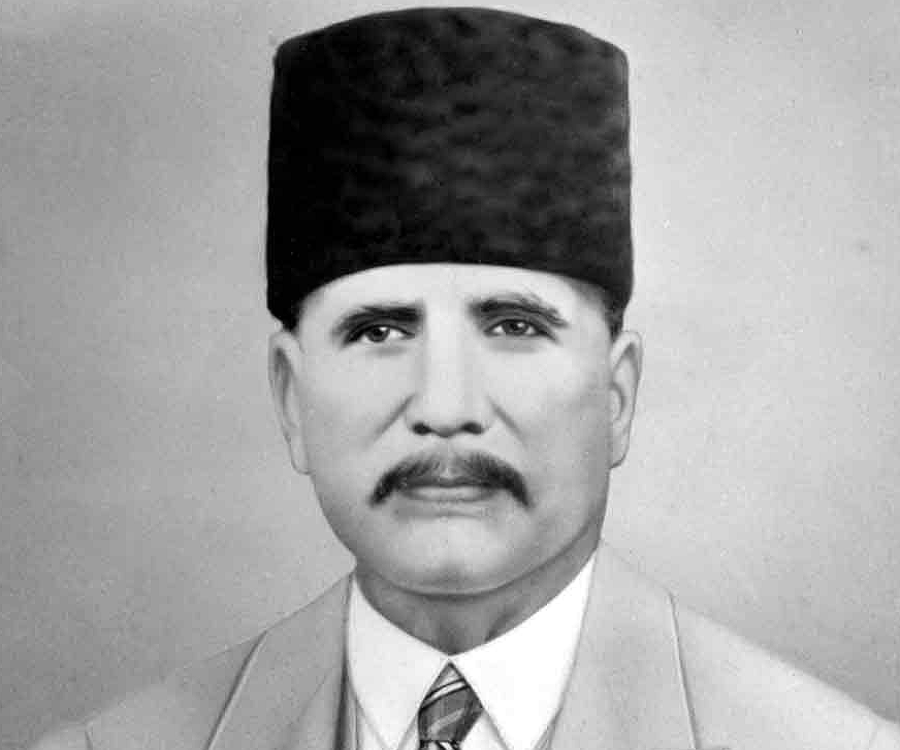
Allama Iqbal’s Dream Fulfilled; West Pakistan Defends India Against the Barbarians..

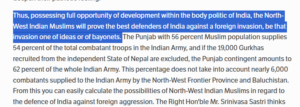
Since the world has been set alight and everyone has a theory, I will put out my pet theory and invite comments. In 1930 Allama Iqbal (supposed father of the idea of Pakistan) proposed a consolidated Muslim state in Northwest India as a solution to the problem of Muslim Nationalism in India. The part that is relevant to us today is his claim that such a state will defend India against the Barbarians to its West (his words were: “the North-West Indian Muslims will prove the best defenders of India against a foreign invasion, be that invasion one of ideas or of bayonets. “).

Iqbal, being a romantic Islamist in an age when the British Empire seemed a permanent fact of life had confused ideas about many things, and his vision of a Northwest Muslim state was as confused and romantic as any of his other dreams, but in this case he hit on something real.. Pakistan is the buffer that protects India from the Middle Eastern snakepit. Of course, it is also an example of the same snakepit extending into the Indian subcontinent, but it is worth remembering that India at one point was almost entirely colonized by Islalmicate invaders from the Northwest. Now that invasive colonial culture is concentrated in Pakistan; and with the war with Afghanistan, it is now directed against the very people it once idealized.

So my point is that Indians should thank Jinnah for his service. They now have a fighting chance of escaping the Middle eastern cannon fodder trap and becoming a successful Asian country.
Choose wisely. Let Pakistan be more in the Middle East. Be more Asian.

And for Pakistan the answer is also the same. Try to be more Indian, less Middle eastern. But our road home may be convoluted. Even Indonesia is not home free, our path is going to be rockier..

Here is the relevant quote from the Allahabad address (full text in link)

She Parked a Car With Her Husband. Fifty Years Later, She Is Still Waiting.

Before anything about this blog, its standards, or its arguments, I want to begin with a story; because sometimes a single human life cuts through every debate and reminds us what any of this is actually for.

Damayanti Tambay was 21 years old, a three-time national badminton champion, when she married Flight Lieutenant Vijay Tambay in April 1970. Twenty months later, war broke out. On 3 December 1971, they drove together to a garage in Ambala cantonment to park their bottle-green Fiat. That was the last time she saw him.

On 5 December, flying a strike mission over Shorkot Airbase in West Pakistan, Vijay was hit by anti-aircraft fire and ejected. Radio Pakistan later broadcast his name among those captured. Damayanti heard it alone. She felt relief. A prisoner of war comes home eventually, she thought.

He never did.

A Loving Wife’s Unending Search Continue reading She Parked a Car With Her Husband. Fifty Years Later, She Is Still Waiting.

After the Begums: Bangladesh searches for a new order

In the tea stalls of Bangladesh, where politics is consumed with the same sugary intensity as the cha, the mood is one of jittery anticipation. For 18 months the country has been a state in parenthesis.

On 12 February that parenthesis would close. Voters will go to the polls in a unique double act: casting one ballot for a new parliament and another in a referendum on the “July Charter,” a package of constitutional reforms designed to prevent the rise of another autocrat.

The election is framed as the culmination of a “Second Liberation,” born of the student-led uprising that ousted Awami League in August 2024 after 15 consecutive years in power.

Observers from the Commonwealth, the EU and other nations are in place; the ballot boxes are ready.

Continue reading After the Begums: Bangladesh searches for a new order

Brown Pundits