Islamophobic writers claim that “Islam” is responsible for the decline of Muslims. Without accepting this in toto, can we make a case that the solidification of Islamic theology has been bad for the Islamicate world?
http://voegelinview.com/closing-of-the-muslim-mind-review/
The Magical World of Islam
Robert R. Reilly. The Closing of the Muslim Mind: How Intellectual Suicide Created the Modern Islamist Crisis.Forward by Roger Scruton. Wilmington: Intercollegiate Studies Institute Books, 2010. 244 pp. Hardcover, $17.79, Kindel Edition, $12.99.
In 2002 Bernard Lewis published a remarkable book, What Went Wrong? Western Impact and Middle Eastern Response. In his new book, Robert Reilly doesn’t ask what went wrong or even how did it happen? What he does ask is “Why?” That is, he proposes an explanatory interpretation, not a narrative of events. This is a more philosophically difficult task and is bound to be more controversial as well, and not just in the Muslim world, which has grown extraordinarily sensitive to such questions.
The thesis is disarmingly simple: “a large portion of mainstream Sunni Islam, the majority expression of the faith, has shut the door to reality in a profound way.” Reilly attributes this non-recognition of reality to a “dehellenization” of Islam, a condition made even more acute, thorough, and effective because “few are aware that there was a process of Hellenization preceding it.” According to Reilly and other western scholars of the history of Islam, until the ninth century it was still possible to discuss questions which are still familiar in the West, such as the relationship of reason and revelation, or the relationship between noetic and pneumatic experience and symbolization, or even the capability of reason with respect to truth. Such questions are, or were, common to all monotheistic religions.
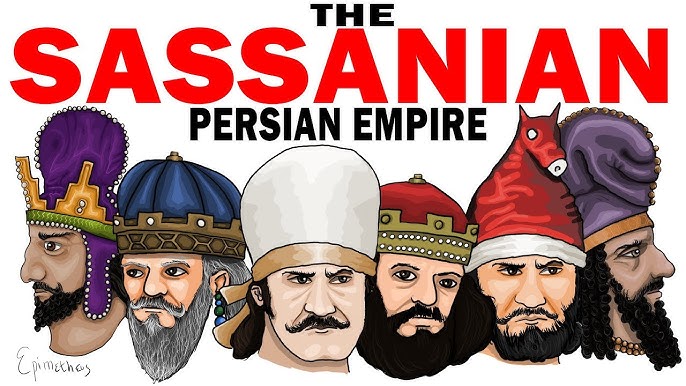
The two chief ways of closing the mind, whether Muslim, Greek, or American, have been familiar since Plato’s day and were brilliantly restated by Allan Bloom in 1987: (1) reason cannot know anything; (2) reality is unknowable. Reilly begins from a basically Platonic position that closing the mind or a refusing to apperceive reality is a constant human possibility. He then provides a brief history of the original encounter of Islam with philosophy as practiced in the Byzantine and Sassanid territories conquered during the early Islamic centuries. The most interesting result flourished as the so-called Mutazalite School of theology. As did Socrates in the Euthyphro, they discussed and decided such questions as whether God forbids murder because it is wrong or whether it is wrong because God forbids it.
The Early influence of Greek Thought
The Mutazalites would have agreed with St. Thomas that humans are capable of apprehending things created in their minds because such things were first thought by God. That is, God’s intelligibility is what makes God’s creation intelligible. God can neither be unreasonable nor unjust, they held, because His reasonableness and justice were obligatory (wajib) or part of His nature.
The height of Mutazalite influence came in the first half of the ninth century. Central to their teaching was the notion that the Koran was an historical document rather than an entity that has coexisted with God from all eternity. This is an issue that has recently again become an item of discussion, at least among scholars, Muslim and non-Muslim, outside the Muslim world. For the Mutazalites, an uncreated Koran violated the fundamental nature of God, His unity (tawhid). An uncreated Koran, they argued, would be like a second God, which was impossible.
More than internal religious debate was involved however when the caliph al-Ma’mun required religious judges and witnesses to take an oath that Mutazalite doctrine was true. This inquisition (minah, testing) was more than an argument, though perhaps less than compulsion. In any event, as Reilly argued, there is nothing inherently irrational in the use of force to defend reason; “the enemies of reason cannot be opposed by reason alone.” How else but by force can reason then be defended against the unreasonable? This is a self-evident position that Westerners have forgotten as thoroughly as Muslims.
al-Ghazali and the arbitrary Will of God
The “traditionalists,” as Reilly called the non-Mutazalites, believed in a lot more than in the uncreated status of the Koran, though that was a central pillar of their position. If eternal God had spoken to humans in the eternal Koran, there was no need for reason because reality and instruction had been finally and completely revealed. This was the fundamental position of the Asharite School founded by Abu Hasan al-Ashari in the early tenth century. In contrast to the Mutazalites, the Asharites emphasized the unlimited will of God, not His reasonableness.
The dispute with the Mutazalites was not over whether God created everything; they were agreed on that. Rather it was over whether, in addition to what Christian scholastics were to call the primary cause, namely God, there were secondary causes. For the Asharites there were none. The implications of this position were elaborated a century and a half later by Abu Hamid al-Ghazali in Deliverance from Error. According to al-Ghazali, the Koran does not reveal God but God’s instructions to humans. In effect this reverses the Socratic and Mutazalite teaching: murder is wrong because God wills it. Thus good is what is permitted, halal; evil is what is forbidden, haram. There is, in consequence, no need for moral or political philosophy at all because there is no need to reason about things.
Al-Ghazali’s other major book, called The Incoherence of the Philosophers, argued that, because God is not bound by anything, there is no “natural” cause-and-effect sequence. In Thomistic language, there are no proximate causes but only a prime or first cause, namely the will of God. For the same reason — the absence of any limitation to God’s will — human freedom must also be an offence against God’s omnipotence.
Reilly’s argument, very simply, is that the triumph of al-Ghazali and of the Asharite School ended the possibility of integrating philosophical reason and Islam for large numbers of Sunni Muslims. The line-by-line refutation of al-Ghazali’s The Incoherence of the Philosophers was made in The Incoherence of the Incoherence by Averroes in the twelfth century. Averroes’ reward was to have his books burned in the town square at Cordova in 1195. The victory of al-Ghazali was quickly followed by a simplification and a dogmatization of his views, first by Ibn Taymiyya and then by his Hanbali followers, including Abd al-Wahhab, the originator of Wahhabism, which inspires so many of the contemporary Islamists.
Reason-dependent Democracy impossible for Islamists
The most significant political consequence today of the ascendancy of the Asharites is, first of all, that democracy is rendered impossible for believers. This is less because Sharia is God’s law than because the prerequisite of democracy is the respectability of reason. “Otherwise,” Reilly asked “what could serve as its legitimating source?” The Thomistic syllogism Reilly employs is straightforward: without the possibility of secondary causes, there can be no natural law; without natural law, there can be no constitutional political order by which human beings, using reason, create laws to govern themselves and act freely.
By liberating divine omnipotence from the laws of causality, God was also liberated from rationality. A typical bit of theological policy-making along these lines would go something like this: the use of seatbelts is an affront to God because God alone wills the hour of our death. If that time has arrived, seatbelts will not save you; if your time is not up, using a seatbelt is unnecessary. Why, then, have a seatbelt law?
Freed from the constraints of cause and effect, things happen as if by magic; or rather, it becomes impossible to tell the difference between magic and God’s will. Supernatural forces, not a good aim and a steady hand, direct the bullet of a rifleman; in place of commonsensical accounts of political events, complex conspiracies rule the world. It is self-evident that science, including political science, is impossible. When the effort has been made to construct an “Islamic science” the results are both entirely predictable and utterly silly. Using Koranic quotations, for example, “Islamic scientists” attempt to deliver the chemical composition of djinns or the temperature of Hell (Reilly uncharacteristically fails to provide the information as to whether the temperature was calculated in degrees Fahrenheit or Celsius).
The Contemporary Wreckage
The contemporary consequences, which Reilly calls “The Wreckage,” are widely attested by Muslim thinkers. Just as some rabbis argued that the Holocaust was God’s punishment for not following His ways, some imams make the same kind of argument regarding the “wreckage.” It is a rebuke from God that can be corrected only by Islamism.
But just as Emil Fackenheim rejected the blasphemy of the Holocaust as punishment, Reilly argues that Islamism answers nothing. It is “a spiritual pathology based upon a theological deformation that has produced a dysfunctional culture.” Moreover, as Roger Scruton noted in his Foreword to the book, unless policy-makers understand they are dealing with a theological, philosophical, and spiritual problem, and not, for example a problem of economic inefficiency or social distress, their prescriptions are inevitably going to make matters worse. Such would be a recipe for even greater policy incoherence. Reilly provided an obvious analogy: “if someone had suggested that in order to deal with Nazism one first had to overcome the problem of poverty in Germany, they would be laughed out of school.”
More generally, if you believe in a magical world where everything operates by first causes, you will never have to bother yourself with the world and try to discover how it works. Islamism is as much a second reality in Eric Voegelin’s sense as the Thousand Year Reich or a Classless Society. Like those spiritual fantasies, it appears in the world with the recognizable face of totalitarianism.
Any remedy (if that is the right term) is one for Muslims to undertake. They alone can reconcile the unity of God with the unity of reason, much as Thomas did for twelfth-century Christianity. But as Voegelin once observed, the recovery of reason demands a new Thomas, not a neo-Thomist. How much more difficult to find a Muslim equivalent after so many centuries of Asharite irrationality. Most of us can see the parallel between Islamism and especially between militant Salafist jihadism and the totalitarian movements of twentieth-century Europe.
Most of us can see that Islamism is a perversion of Islam. Few however raise the next question, which has been explored in the case of deformations of Christianity by scholars such as Norman Cohn and Hans von Balthasar and, of course, by Voegelin: what was it in Islam that made such a perversion possible? Robert Reilly raises just that question and provides a clear answer in this splendid book.
Islam Caused Islamic World’s Decline
by Andrew Stunich
07 Jul, 2008
Islam So Dominates Islamic Culture That It Had To Play A Role In Its Decline
The cause of the Islamic world’s decline is, like most issues related to Islam, controversial, but worthy of consideration given Islam’s increasing impact on Western culture. Bernard Lewis, a highly respected Professor Emeritus of Near Eastern Studies at Princeton University who has written extensively about the history of Islam, wrote a well-received January 2002 Atlantic Monthly article and subsequent book entitled “What Went Wrong” wherein he set forth many sound reasons that help to explain why the Islamic world declined from its once dominant cultural, economic, and military status to its current state of abject inferiority.
However, Prof. Lewis’ analysis implausibly exonerated Islam as a factor in the Islamic world’s decline. He opined that “to blame Islam as such is usually hazardous and not often attempted.” He further argued that it was not plausible to blame Islam because during most of the Middle Ages it was the world of Islam that contained the major centers of civilization and progress.
While Prof. Lewis’ is correct that Islam once contained the major centers of civilization and progress during the Middle Ages, there is nonetheless a plethora of evidence that overwhelmingly establishes that Islam was a substantial factor in the decline of Islamic civilization.
We refer to the Islamic world using its majority religion to identify the culture for a compelling reason: Islam is more than just a religion. In its original form, Islam is a complete social, political, and religious way of life that absolutely dominates the lives and thoughts of fundamentalist Muslims. As a matter of simple logic and common sense, one is left to wonder how it could possibly be that the religion that so overwhelmingly drives and dominates Islamic culture could somehow have managed to not play a role in its decline? Quite the opposite is true: It would be hard to overestimate Islam’s role in the decline of Islamic civilization.
Islamic Diversity Often Masks Recognition of Islam’s Full Impact On Islamic Civilization
When I discuss Islam, except where otherwise noted, I am referring to the Islam Muhammad preached and practiced which I often refer to as “fundamentalist Islam” or “Muhammadanism.” On the other end of the spectrum of Islamic faith, I refer to Muslims that are largely influenced by non-Islamic factors, but who maintain some connection with Islam because they were born into an Islamic culture, as “cultural Muslims.” The Islamic world also contains Muslims that fall within many points between the two poles of cultural Islam and fundamentalist Islam and many Muslims that fall outside of the two poles (i.e., Twelver Shiite Islam) such that any analysis of Islam’s impact on the Islamic world can be quite challenging. But we should not be overly distracted by the diversity of Islamic belief nor should that diversity be allowed to preclude recognition of the impact of fundamentalist Islam on Islamic culture.
Real Islam is the religion founded in the seventh century by Muhammad Ibn Abdullah and which is based on the Quran, hadiths, and Sira (biography of Muhammad). A fundamentalist Muslim attempts to practice Islam just as the first three generations of Muslims did as set forth in the Quran, hadiths, and Sira.
Islam is a revealed religion with a distinct set of unchanging rules and guidelines to follow. It is not a religion that is supposed to “come from within” like some new age religion. It seems quite incongruous to claim that one believes that Muhammad was Allah’s prophet and therefore profess to be a Muslim and then reject clear Islamic doctrine as established by Muhammad when the Qur’an demands that Muslims obey Muhammad and follow his “perfect” example. The religion is named Islam, meaning submission, because its founder, Muhammad, claimed that is the word Allah said to him in several alleged revelations. (Fn 1) Otherwise, the religion would surely have been known as Muhammadanism or something similar thereto.
I applaud on moral grounds any Muslim that rejects the violent and hateful aspects of Islamic doctrine, but it seems that at a certain level of modification from the Islam Muhammad preached and practiced, one ceases to be a Muslim. We would all be better served if adherents to evolved or reformed versions of Islam would more accurately self-identify under some other designation.
Instead, we see Ahmadiyya Muslims, many Sufi Muslims, and Bahai Muslims all believing they are “Muslims” when they have deviated so far from the religion Muhammad preached and practiced that Muhammad would hardly consider them Muslims. Muhammad once ordered a mosque, whose members were practicing a heretical form of Islam, burned and his followers burned it to the ground with the heretical Muslims inside thereby establishing in Islamic doctrine that schisms were not only not to be tolerated, but should be violently suppressed. (Fn 2)
Sikhs should be praised for admitting that they are adherents of a new religion that combines aspects of Islam and Hinduism. Many Muslim sects should follow the Sikh’s example as it would help alleviate much of the confusion that arises whenever Islam is analyzed and it would limit fundamentalist Islam’s ability to hide its true nature.
Because so many Muslims do not practice fundamentalist Islam, the religion often masks its true nature very effectively. Any religion, no mater how clear its doctrines, varies in practice depending upon the nature of the culture where it is practiced. This principle is especially true for Islam. Islam is a syncretic religion that incorporates beliefs from other religions, particularly Arabian Paganism, Judaism, Christianity, and Zoroastrianism. Because it is already a syncretic religion, Islam has historically readily absorbed increased influence from the other religions previously practiced by new Muslim converts in specific regions. The most well known being the Islam practiced by many Shiite Muslims. Over time, Islam often shed the increased influence in some regions as the old religions in various locales faded from memory, but in some regions, such as Iran, the influence of the prior culture and religion leaves a permanent mark that can greatly alter Islam—not always for the better as exemplified by Iran’s Islamic government.
Sometimes, however, the foregoing process does improve Islam with the unfortunate result that fundamentalist Islam, with the help of religiously sanctioned deception known as taquiya, often evades full blame for its extremely violent and hateful doctrines. As will be shown below, real or fundamentalist Islam started as an extremely aggressive, warrior religion and its beginnings set the stage for the Islamic world’s eventual decline.
What Went Right Set The Stage For Decline
Understanding what went wrong in the Islamic world is, perhaps, best addressed by first recognizing what went right because the initial success of Islam and its early rise to economic, political, and military power is also a primary cause of what ultimately went wrong.
When Muhammad and his early followers arrived in Medina, it is clear that they were in a less than secure economic state. They had cut themselves off from the protection and support of their tribe – an act that was considered tantamount to a death sentence at the time. Moreover, this severance from their tribe’s support and protection occurred in a hostile environment. The Arabian Peninsula consists mainly of desert that, under normal circumstances, can only support a low-density population. Whether Muhammad felt that he had no other alternatives or whether he felt he had other options is something we will probably never know with certainty, but there is no question that Muhammad chose to create a society that sustained itself and advanced its interests by preying upon non-Muslims.
Mohammed said: “I have been ordered to fight with the people till they say, None has the right to be worshiped but Allah, and whoever says, None has the right to be worshiped but Allah, his life and property will be saved by me.” (Fn 3) “Allah made the Jews leave their homes by terrorizing them so that you killed some and made many captives. And He made you inherit their lands, their homes, and their wealth. . . .” (Fn 4) Clearly, Muhammad viewed non-Muslim’s land and property as fair game and his conduct established that he practiced what he preached.
Given the foregoing Islamic doctrine, it should not come as a surprise that Islamic history reveals that about eighteen months after arriving in Medina, Muhammad and his followers started raiding caravans owned by their former tribe in Mecca. These raids resulted in the murder of some of the caravan merchants and brought booty to the early Muslims such as raisins, tanned hides, and other various goods that allowed the early Muslims to flourish. (Fn. 5). Not only were valuable goods obtained directly from these raids, but captives from subsequent raids were either ransomed back to their families in Mecca or sold as slaves resulting in additional revenue. Financial success attracted more believers to the developing Islamic faith.
These caravan raids resulted in the early Islamic community developing the resources needed to later attack entire Jewish tribes. The subsequent attacks on Jewish tribes resulted in the destruction of the Jewish tribes on the Arabian Peninsula by some combination of slaughter, slavery, and expulsion. The attacks also transferred land and great wealth to the Muslim community that allowed it to then dominate the entire Arabian Peninsula.
Muhammad’s goal of gaining wealth via robbery and warfare is undeniable. It is also undeniable that extremely reprehensible means were utilized. The earliest history of Muhammad originating from a devout Muslim, Ibn Ishaq, reveals the brutal means by which Muhammad conquered non-Muslims and stole their wealth:
“Kinana, the husband of Safiya, had been guardian of the tribe’s treasures, and he was brought before the apostle [Muhammad], who asked where they were hidden. But Kinana refused to disclose the place. Then a Jew came who said, ‘I have seen Kinana walk around a certain ruin every morning.’ The apostle asked Kinana, ‘Art thou prepared to die if we find thou knewest where the treasure was?’ And he replied, ‘Yes.’ So the apostle ordered the ruin to be dug up, and some of the treasure was found. After that Kinana was asked again about the remainder, but he still refused to tell. The apostle of Allah handed him over to al-Zubayr, saying, ‘Torture him until he tells what he knows’, and al-Zubayr kindled a fire on his chest so that he almost expired; then the apostle gave him to Muhammad b. Maslama, who struck off his head.” (Fn 6)
The hadith also reveal Muhammad’s methods. Muhammad said “I have been made victorious with terror. The treasures of the world were brought to me and put in my hand.” (Fn 7)
The early behavioral example of Muhammad is of paramount importance to Muslims and set the stage for much of what is wrong in the Islamic world. The Qur’an expressly advises Muslims that in Muhammad they have “a beautiful pattern (of conduct) for any one. . . .” (Fn 8) In addition, the Qur’an repeatedly commands Muslims to not only obey Allah, but to obey Muhammad. (Fn 9)
It cannot be emphasized enough that the beginning of wisdom with respect to an understanding of Islam and its impact on Islamic civilization is the realization that Muhammad did not just bring a type of monotheism to the Arabian Peninsula by eliminating worship of all of the other pagan gods. Of far more significance is the fact that Muhammad also brought the belief that Muhammad was the Prophet, Apostle and Messenger of Allah, that Muhammad had to be obeyed as commanded by Allah, and that Muhammad’s life was the perfect example for living. This aspect of Islamic belief that Allah allegedly commanded that Muhammad must be obeyed and, further, that his life is a perfect example for Muslims to follow, has overwhelming ramifications when trying to gain an understanding of Islam and any Islamic civilization.
It follows that Muhammad’s early example has had a tremendous impact on Islamic culture. The example, as can be seen above, was indisputably not a favorable one. It is little wonder that Dante’s Divine Comedy depicts Muhammad in Hell being tortured for eternity by devils. Even if one ignores the immoral aspects of Muhammad’s example, once the opportunity for booty and ill-gotten gain played itself out, what was left for the Islamic world? It seems to me that not much was left other than to wait for the rest of the world to develop an economy that made the oil under the sand extremely valuable and that appears to be exactly what happened.
Unfortunately, Muhammad did not set forth a good example illustrating that his followers should work hard and develop industry, trade and agriculture. Muhammad had clearly set up a system predicated upon military expansion and an economy that thrived based on the fruits of conquest. Such an economy is doomed to failure when the source of booty not only runs out, but military losses drain the economy. Consider the example of the Ottoman Empire – the last great Islamic Empire.
In 1683, the Ottoman Turks tried to advance farther into Europe by besieging Vienna. The Turks had planned and prepared elaborately for the battle but nonetheless lost. It was a major turning point in history. The Turks not only lost the battle and failed to gain any war booty, but the fleeing Turks left behind a great bounty for the European victors. Polish King Jan Sobieski purportedly described the windfall in a letter to his wife as follows:
“Ours are treasures unheard of … tents, sheep, cattle and no small number of camels … it is victory as nobody ever knew of, the enemy now completely ruined, everything lost for them. They must run for their sheer lives . . .” (Fn 10)
Of course, it can be argued that decline from other causes led to military defeat, but my main point remains valid regardless – a civilization built upon conquest is doomed to failure. The historical record conclusively establishes that no empire has ever succeeded in maintaining its hegemony forever.
Islam once made Islamic cultures stronger as it produced fearless soldiers that believed they would receive an earthly award (booty and women) if they lived and a heavenly award if they died. Qur’an chapter 4, verse 74 promises: “Let those fight in the cause of God Who sell the life of this world for the hereafter. To him who fighteth in the cause of God, – whether he is slain or gets victory – Soon shall We give him a reward of great (value).” Mohammed said: “The person who participates in (Holy battles) in Allah’s cause and nothing compels him to do so except belief in Allah and His Apostle, will be recompensed by Allah either with a reward, or booty (if he survives) or will be admitted to paradise (if he is killed). ” (Fn 11) The Qur’an guarantees instant Paradise to those who fight for Allah. (Fn 12) Dying for Allah is presented as preferable to living: “And if ye are slain, or die, in the way of God, forgiveness and mercy from God are far better than all they could amass.” (Fn 13) Martyrs are promised a secure, sensual (sensual is expanded to erotic in the hadiths) and luxurious life in paradise with beautiful women. (Fn 14)
When wars were fought hand to hand with swords and other such weapons, Islam had an advantage in that many Islamic warriors were absolutely fearless and not only unafraid to die, but sometimes eager to obtain their virgins in Paradise. As technology advanced, while it still takes courage to fight in any war, it is a little easier to fire a weapon from some distance as opposed to slashing and hacking in close combat amidst severed limbs, rivers of blood and the smell of sweat, blood, and human waste. In the modern age, the advantage is to the better educated and better familiarized with advanced technology and religious zeal with its associated fearlessness is no longer a significant advantage.
Not having left an example other than military conquest as a means to sustain Muslim society, Muhammad sowed the seeds of its eventual decline. While some might argue that Muhammad was once a caravan merchant himself thereby setting an example of entrepreneurship, that profession preceded the early Muslim community’s Hijra or migration to Medina. The Islamic world gives overwhelming emphasis to Muhammad’s example after the Hijra to such an extent that even the Islamic calendar is not based on Muhammad’s birth, the date of his first alleged revelation, or the date of his first convert. Instead, the Islamic calendar starts with the Hijra which speaks volumes. It emphasizes that what is important is not when Islam was in its infancy without military or economic power, but that what is important is political and military power. Such a view is well warranted by the statements attributed to Muhammad. Mohammed once was asked: what was the best deed for the Muslim next to believing in Allah and His Apostle? His answer was: “To participate in Jihad in Allah’s cause.” (Fn 15)
Based on the foregoing, it is undeniable that Islam’s origins are inextricably entwined with conquest and a drive for booty. As such, the origin of Islam has been a hindrance to an Islamic culture that holds Muhammad up as a perfect example for all time that Muslims are commanded to emulate. Winston Churchill reached the same conclusion:
“How dreadful are the curses which Mohammedanism lays on its votaries! [Votaries means a devout adherent of a cult or religion] Besides the fanatical frenzy, which is as dangerous in a man as hydrophobia in a dog, there is this fearful fatalistic apathy. The effects are apparent in many countries. Improvident habits, slovenly systems of agriculture, sluggish methods of commerce, and insecurity of property exist wherever the followers of the Prophet rule or live.
As degraded sensualism deprives this life of its grace and refinement; the next of its dignity and sanctity. The fact that in Mohammedan law every woman must belong to some man as his absolute property, either as a child, a wife, or a concubine, must delay the final extinction of slavery until the faith of Islam has ceased to be a great power among men. Individual Moslems may show splendid qualities – but the influence of the religion paralyses the social development of those who follow it. No stronger retrograde force exists in the world. Far from being moribund, Mohammedanism is a militant and proselytizing faith. It has already spread throughout Central Africa, raising fearless warriors at every step; and were it not that Christianity is sheltered in the strong arms of science, the science against which it had vainly struggled, the civilization of modern Europe might fall, as fell the civilization of ancient Rome.” (Fn 16)
The Focus On The Study of Islam Undermined Islamic Culture
Another result of the religious dominance of Islamic culture is that even when education is undertaken in Islamic culture, the emphasis is too often centered on Islamic studies. The Islamic world devotes such a disproportionate amount of its education resources on the teaching of Islam that it acts like an anchor that impedes forward progress. Not only does the emphasis on religious study take away from the study of knowledge that might help advance the culture, but it has the additional pernicious effect of cementing Islam’s grip on the culture. Muslim youth are inculcated into a relatively unshakable Islamic belief system that perpetuates itself into perpetuity. Many Muslims spend much of their time memorizing the Qur’an. Memorizing such Qur’anic verses as “slay the pagans wherever you find them” hardly prepares Muslims for an increasingly technical world.
The Islamic world was actually undermined when the technology advanced that made the spread of the Qur’an and hadith to larger numbers of the faithful possible. Increased knowledge of and access to the actual tenets of the religion actually caused more Islamic orthodoxy. The Internet is exacerbating the problem.
Islamic civilization was actually better off when Muslims were dependent on religious leaders and hearsay for an understanding of their faith during the periods when a more moderate form of Islam developed.
Discrimination Against Women Harms Islamic Culture
Islamic doctrine regarding women also impedes progress. Imagine what would happen to the world’s premiere economy, the United State’s economy, if women were forced to comply with Sharia law? The United States would lose a significant percentage of its work force and its Gross Domestic Product (GDP) would suffer. Islamic doctrine directly leads to the restrictions on and prejudices against women in Islamic culture that impedes advancement. It is beyond credible dispute that Islam is an inherently misogynist religion that has resulted in untold discrimination against women.
Muhammad taught that captured women were lawfully subject to slavery and rape by their male captors. (Fn 17) Note that in the Quran the references to “those whom your right hands possess” is a euphemism for captives and slaves. Modernly, it is applied to non-Muslim women working for Muslims in Islamic countries. It is common to hear reports of workers in Islamic countries, especially Saudi Arabia, being raped by their male employers. (Fn 18)
Islamic doctrine is no more enlightened with respect to Muslim women. Muhammad declared that women are intellectually inferior to men and that they comprise the majority of Hell’s occupants. (Fn 19) One hadith records Muhammad as stating: “Women are naturally, morally and religiously defective.” (Fn 20)
The Qur’an describes men as being above their wives, demands women’s obedience to their husbands, demands that women cover themselves, and states that their husbands may beat them. (Fn 21) Muslim women are given less of an inheritance than men. (Fn 22)
Modernly, probably the most terrible aspect of Islamic discrimination against women is that their testimony in court is considered to be worth only half that of a man’s testimony. (Fn 23) This law, in addition to other aspects of Sharia Law, yields the terrible result that if a woman wants to prove that she was raped, then she must have solid evidence beyond her own testimony as the male rapist’s testimony is deemed to outweigh her testimony as a matter of law. Muslim women that are rape victims sometimes find themselves jailed or stoned to death for reporting rape given that since it cannot be proven, they have effectively admitted to adultery. (Fn 24)
Based on the foregoing, it seems obvious that Islam has directly resulted in women being unable to make a full contribution to Islamic society. Any religion that prevents approximately half its population from full participation in the economy patently acts as a hindrance to advancement and economic growth. Bernard Lewis seems in accord on this point. He accurately summed up the plight of women in the Islamic world as follows:
“According to Islamic law and tradition, there were three groups of people who did not benefit from the general Muslim principle of legal and religious equality – unbelievers, slaves, and women. The women was obviously in one significant respect the worst-placed of the three. The slave could be freed by his master; the unbeliever could at any time become a believer by his own choice, and thus end his inferiority. Only the women was doomed forever to remain what she was – or so it seemed at the time.” (Fn 25)
Given the Islamic world’s treatment of women and focus on religious studies, is it any wonder that the Islamic world declined? To understand just how poorly the Islamic world performs on the World stage, consider the following. Muslims comprise approximately twenty percent of the world’s population and they have collectively won less than ten Nobel Prizes. Jews comprise .02 percent of the world’s population but have collectively won more than 180 Nobel Prizes. (Fn 26)
Islam is Not Conducive to Democracy
Many, including Bernard Lewis, have opined that Islam is not incompatible with democracy. That is an arguable point, but what is not subject to legitimate argument is that Islam is hardly conducive to democracy. Muhammad set a clear example of combining religious and political authority. Islam also naturally fosters the belief that man cannot by popular vote set aside “Allah’s laws.” A religion that does not even give protection to someone for being unable to believe that Muhammad was God’s prophet (Quran chapter 9, verses 5, 29), can hardly be expected to produce the type of enlightened belief in pluralism that is necessary in any healthy democracy.
Can a culture that focuses its educational resources teaching that the Qur’an is literally God’s word really expect its citizens to accept anything other than a society controlled by the Qur’an given the express commands to the contrary? Of course not. Consider what the Ayatollah Ruhollah Khomeini had to say on the subject:
“Divine governments . . . set themselves the task of making man into what he should be. To juxtapose “democratic” and “Islamic” is an insult to Islam. Because . . . Islam is, in fact, superior to all forms of democracy.” (Fn 27)
Democracy has been repeatedly proven by example to result in the most dynamic economies in the world. Islam, by making Islamic culture naturally resistant to democracy, has, therefore, impeded the Islamic world’s advancement. Statistics tell the story quite well. Turkey’s Islamic culture has been held in check by a strong secular government and military that imposes as a matter of law sever restrictions on Islamic practice. According to the CIA World Factbook, Turkey has a $12,999 per capita GDP. Conversely, Iran, an Islamic Republic, has a per capita GDP of $10,600 despite vast oil revenue and a very educated population. But the foregoing figures do not tell the whole story. On the matter of per capita GDP and income, Hassan Hakimian and Massoud Karshenas, in their article “Dilemmas and Prospects of Economic Reform and Reconstruction in Iran,” observed:
“During the two decades before 1975 per capita income in Iran grew faster than in Turkey and kept pace with Korea. By 1975 the level of per capita GDP in Iran was more than double those attended in Korea and Turkey. However, since the late 1970s income per head in Iran has witnessed a rapid decline. . . By 1990, GDP per capita in Iran had declined by half, almost down to the levels prevalent in the early 1960s and falling behind Turkey and Korea.” (Fn 28)
A can be seen, the reintroduction of Islamic rule in Iran caused Iran to go from having a per capita income of more than double Turkey’s per capita income to a per capita GDP less than Turkey’s per capita GDP. Over time, Iran will continue to lose ground in comparison to non-Islamic countries and more secularized Islamic countries unless and until it can escape the grip of Islamic fundamentalists. The Islamic regime has driven away the country’s best and brightest and will continue to do so until its grip on Iranian society can be broken.
Nature of the Qur’an Assures That It Dramatically Impacts Muslims’ Behavior
Because most people in the West are secular, it is often difficult for Westerners to appreciate how deeply religious belief can impact individuals and society. The impact of devout religious belief is magnified in the Islamic world because of the duel nature of Islam as a religious and political system that permeates nearly all aspects of life in most Islamic countries and the belief that the Qur’an is literally the word of God revealed to Muhammad via an angel. Try to understand how the Qur’anic verses set forth in this essay would affect you if you truly believed they were literally the word of God and you lived in a society wherein Islam dominated your religious, political, business and social pursuits. When the Qur’an says slay the pagans if they will not convert to Islam and that non-Muslim’s property and even their women and children are fair bounty for Muslims to take, sell into slavery or even to utilize as sex partners whether the women consent or not, it is not hard to fathom that many adherents will do just that and that such conduct still exists, for example, in Sudan in the twenty-first century should hardly come as a surprise.
It Is Difficult For Many Muslims To Challenge Islamic Orthodoxy
Despite Islam’s obvious drain upon and hindrance to Islamic culture, Islam has inherent properties that make change extremely difficult. For example, Islamic doctrine demands that apostates, those that leave the faith or try to modify it, be killed. That command is vaguely set forth in the Qur’an, chapter 9, verse 12, but clearly set forth in the hadith. (Fn 29) It is, therefore, difficult for cultural Muslims in some Islamic states to make headway against Islamic orthodoxy as any attempt to do so might result in being declared an apostate with severe consequences. Similarly, any criticism of Islam that targets Muhammad and his example is likewise dangerous. Many Muslims can and do act quite violently to any criticism of Muhammad. Such violence is sanctioned by Islam given that Muhammad himself ordered critics and rivals assassinated.
Debunking Arguments Exonerating Islam
In “What Went Wrong,” Bernard Lewis exonerates Islam as a factor in the Islamic world’s decline by noting that for most of the Middle Ages Islam contained the centers of civilization and progress. But Prof. Lewis’ conclusion is hardly compelled by his premise. When the reasons underlying the Islamic world’s dominance during the Middle Ages are examined, the better conclusion is that the Islamic world experienced a Golden Age despite Islam and not because of it. The only benefit Islam played in the Islamic world’s Golden Age is that it drove Islamic conquest, but that quality of Islam, as shown above, paved the way for its eventual decline.
The fact is that the Islamic world simply benefited from the decline of other cultures during the Middle Ages and from the industry and effort of its conquered dhimmi population. (Fn 30)
The previously dominate Western culture, Roman culture, declined dramatically during the Middle Ages. The Islamic world simply filled a void created by the weakened Byzantine Empire (last of the Romans), weakened Persian Empire, and the collapsed Western Roman Empire. Germanic invasions, disease, civil war, and other causes simply caused Western civilization to steeply decline. In addition, the Byzantine Empire and Persian Empires had exhausted themselves fighting each other and both were thereafter drained by periodic Islamic aggression that surely sapped much of their vigor. Europe was also hemmed in by a hostile Islamic world thereby limiting trade until sea routes were established bypassing the Middle East. By comparison to declining Western Civilization, the Islamic world seemed robust and vibrant and in a way it was. But it was a culture that benefited from conquest and the absorption of the host cultures.
Over time, however, as discrimination and persecution resulted in fewer and fewer non-Muslims and the influence of Islam increased as the percentage of Muslims in the society increased, the Islamic world declined. As common sense would suggest, as the Islamic world expanded dramatically it brought into its fold many other religions and philosophies that exerted significant influence on the culture. With the passage of time, these influences waned in many places because, not only did the dhimmi population shrink, but these influences had no doctrinal support within the Qur’an and life and sayings of Muhammad. Even where we see these influences preserved to some degree such as in Iran, the non-Islamic influences have sometimes failed to mitigate the harsher aspects of fundamentalist Islam and, in fact, in Iran has produced an even more virulent strain of Islam called Twelver Islam.
We can see a modern example of how a culture can decline when it loses an industrious minority population by observing what happened in Uganda. When Idi Amin took power in Uganda in 1971, he eventually forcibly removed the entrepreneurial Indian minority from Uganda with the result that the economy declined dramatically. The same principle caused decline within Islamic culture. Over the centuries, the dhimmi population declined as a result of significant persecution. The dhimmi population strengthened Islamic culture and as it diminished Islamic culture suffered.
In addition, the tales of an Islamic Golden Age of scientific progress are greatly exaggerated and, to the extent it existed, it occurred despite Islam – not because of it. I have read the Qur’an and hadith and there is nothing of any significance in either body of work that would remotely cause a Golden Age. I am not alone in reaching such a conclusion. One writer observed that:
“[t]he success of the Muslims as successful scientists, thinkers, writers and medicine men had little to do with their religious piety. If you look at the lives of the greatest philosophers and scientists of the time, you will realize that a great number of them were agnostics if not completely atheists. Avicenna, Razi, and Omar Khayam were not orthodox believers.” (Fn 31)
I greatly suspect that some day people will argue that present day Qatar is an example of a successful Islamic culture experiencing a “Golden Age.” The country is 77.5 % Muslim and it is thriving economically and making great strides forward culturally. Qatar boasts one of the highest per capita GDP’s in the world at a whopping $80,900 a year. Qatar is also undergoing some spectacular real estate development. There is no question that Qatar is doing well, but the success has nothing to do with Islam. It is simply an example of an Islamic state whose ruler is more inclined to follow Western economic models as opposed to traditional Islamic culture.
Qatar certainly establishes that with vast oil and natural gas revenues and sound leadership that Muslims can achieve success, but it is such a tiny country and its success is so driven by the unusual circumstance of having vast per capita oil and natural gas revenue, military protection from the United States, and a relatively liberal leadership that has even allowed women to vote, that it is a poor model with respect to legitimizing fundamentalist Islam. Quite the opposite is true. Qatar proves that an Islamic culture can thrive when fundamentalist Islam is held in check by what appear to be leadership that draws more inspiration from non-Islamic influences than Islam. Qatar’s progress simply proves that as an Islamic culture moves along the spectrum of belief that is modern Islam away from fundamentalist Islam and toward cultural Islam that the pernicious effects of Islam will at some point surrender its grip on the culture and give way to advancement. The same principle operated in pre-Islamic Revolution Iran and the same principle, in reverse, operated in post-Islamic Revolution Iran to drag the country backwards and caused decline quite similar to what was observed in the Islamic world following Islam’s Golden Age.
It seems to me to be no coincidence that ibn Taymiyyah, a fourteenth century reformer of Islam, sought to return Islam to its roots and return the religion to one based on the Qur’an and life of Muhammad; in other words, return Islam to the religion preached and practiced by Muhammad. Ibn Taymiyyah’s reform agenda arose at a time when most historians believe Islam’s Golden Age was coming to an end. Could it be that ibn Taymiyyah’s movement helped bring to an end the very age that occurred, at last in part, due to the relaxed degree of Islam to which he so strongly objected? Regardless as to the answer, the fact that he saw such a strong need for reform reveals that Islam’s so-called Golden Age may well have been golden, but it had strayed from the Islam Muhammad preached and practiced.
Even the Mongol invasions that so devastated Islamic culture cannot serve to mitigate the evidence against Islam as a factor in the Islamic world’s decline. While the Mongols laid waste to much of the Islamic world and certainly helped end its Golden Age, the devastation did not have to occur. The Mongols had already satiated themselves with victory and booty from other cultures, including Chinese culture, and Genghis Kahn – who was nearly in his sixties by 1219 – appeared to simply want to live out the rest of his life in peace. Accordingly, he initially sent conciliatory messages and gift laden envoys to the Islamic world seeking sincere peace and trade relations, but those overtures were not only rebuffed, but met with the slaying of the Mongol envoys that resulted in infuriating Genghis Kahn. (Fn 32)
Could it be that the extremely hateful way that Islamic doctrine refers to non-Muslims and allows for the murder and robbery of non-Muslims caused the Muslims to act so savagely toward the Mongol overtures and thereby bring down upon themselves such utter destruction? It is not hard to imagine given what Muhammad alleged God had to say about non-Muslims. We have already seen above how the Qur’an and haith allow the killing and robbery of non-Muslims. To such religiously sanctioned murder and robbery, the Qur’an refers to non-Muslims in numerous derogatory ways and clearly teaches that non-Muslims are fair game for almost every type of indignity and violence.
The Qur’an states that non-Muslims are: not to be taken as a friend (3:28), confused (6:25), to be Terrorized- ” I will instil terror into the hearts of the Unbelievers: smite ye above their necks and smite all their finger-tips off them.”(8:12), to be made war on (9:5 & 29), to be considered unclean (9:28), considered evil and a helper of evil against God (23:97 & 25:55), to be punished (25:77), humiliated (37:18), hated (40:35), to be beheaded (47:4), to be laughed at (83:34), and assumed to be plotting against Muslims (86:15). Finally, as if there could be any doubt based on the foregoing, the earliest biography of Muhammad originating from Ibn Ishaq flatly quotes Muhammad as stating: “”Muhammad is the apostle of Allah! Those with him are violent against Unbelievers but merciful to one another. . . . ” The Qur’an is in accord: “Muhammad is the apostle of God; and those who are with him are strong against Unbelievers, (but) compassionate amongst each other. . . ” (Fn 33)
Based on the foregoing, is it then any surprise that when the first Mongol envoy arrived with tremendous wealth that it was seized and all of the Mongols killed? Does it not appear to be very similar to Muhammad’s treatment of the Meccan caravans and are Muslims not admonished to follow Muhammad’s example? When Genghis Kahn sought redress for the first destruction of his envoy, all of the members of his second envoy were also killed or mutilated. Genghis Kahn was infuriated and understandably so. He was no longer content to live out his days in peace. The resulting Mongol invasion of the Islamic world is legendary for the level of destruction and brutality. Genghis Kahn and the Mongols had learned that it was best to utterly destroy a civilization and kill its upper class in order to make sure that the civilization would never rise up again and that is what happened to much of the Islamic world. (Fn 34)
While it is true that the Great Ottoman Turk Empire arose after the Mongol devastation and that some other parts of the Islamic world did well after the Mongol invasions, there is no denying that the Mongol invasions had a terrible overall impact on Islamic culture and it all happened because Muslims viewed the Mongol envoys as fair game to be killed and robbed just as Islamic doctrine teaches.
Modernly, we see the exact same type of Islam inspired hatred toward non-Muslims once again setting the stage for further decline in the Islamic world. The Iranian government has repeatedly made bellicose statements indicating that it intends to eventually attack Israel. The evidence also overwhelmingly suggests that Iran’s pursuit of nuclear power is intended for military purposes and that Iran may well undertake a nuclear first strike against Israel. While a full discussion and proof of this issue is beyond the scope of this essay, it is relevant to note that the Iranian Government’s conduct toward Israel is eerily analogous to the violence and bellicosity that brought the Mongol wrath down upon the Islamic world. Iran would very much like to provoke a confrontation with Israel. The Iranian Government periodically announces a stated intent to destroy Israel. The Israelis are understandably deeply concerned. The last time the Jews ignored a tyrant’s stated desire to destroy Jews they experienced the Holocaust. The Israelis are determined to not make the same mistake and are openly practicing long-range military strikes that are obviously geared at preparing the Israeli air force to take out Iran’s nuclear facilities.
I believe that eventually the Iranians will get the war they seem so eager to provoke and I also suspect that the country, like its Middle Age Islamic counterpart, will be devastated by the conflict. The Israelis, like the Mongols in the Middle Ages, are simply better at war than the Iranians and the Israelis may well end up dropping nuclear bombs on Iran if the Iranians succeed, as the Iranians fully intend, in causing enough damage in Israel so as to make the Israelis feel that they have no choice.
If war comes, it will cause an even further decline in Iran’s already sad state of affairs. That decline will be directly attributable to Islam. Not only do the Qur’anic verses set forth above about non-believers fuel Iran’s intransigence and bellicosity, but the Qur’an has several verses that disparage Jews in the worst of terms and overall Islamic doctrine and history drives Islamic hatred of Jews and Israel. (Fn 35) That Iran’s bellicosity toward Israel is driven by Islam is also evidenced by the fact that, prior to its Islamic Revolution, Iran had good relations with Israel.
As a direct result of religiously generated hatred of Jews, the modern age will see a repeat of what happened in the Middle Ages – Islam will cause a decline in Islamic culture. Not only will Iran decline, but the decline may well extend to other Islamic countries should they attempt to assist Iran in its attempt to annihilate Israel.
Prof. Lewis further observes that Islamic “governments and societies achieved a freedom of thought and expression that led persecuted Jews and even dissident Christians to flee Christendom for refuge in Islam.” Here again, it is simply by comparison with an equally corrupt and oppressive Western culture during the Middle Ages that Islamic culture in the Middle Ages looks relatively palatable, but even at that tales of Islam’s alleged tolerance of Jews and Christians are greatly exaggerated. While at certain times and places there may have been some tolerance, a non-Muslim never knew when some event might cause terrible persecution and Jews and Christians lived under formal discriminatory rules such as the Pact of Umar that were far from anything that would, under modern belief, be considered tolerant. (See Fn 30)
While the discrimination may have seemed better by comparison during the Middle Ages and during times and places when Islamic culture deviated from its roots as a warrior culture that destroyed Jewish tribes, Islam has largely locked much of the Islamic world in a state of religiously mandated discrimination against non-Muslims. By subscribing his thoughts and views as the word of God to be followed for all time, Muhammad has made it difficult for Islamic culture to keep pace with other cultures’ advances with respect to the treatment of minority populations. That is why most Jews now live outside the Islamic world.
Such religiously mandated bigotry toward non-Muslims has also certainly had a chilling effect on some Muslims’ ability to conduct business and trade with non-Muslims and surely hobbles economic development. If the Arabs living near Israel were to shift their focus from trying to annihilate the Jews to trying to engage in commerce with them, they might raise their paltry per capita GDP. In just sixty years as a nation the Israelis have managed to achieve one of the highest per capita GDP’s in the world , $25,800, despite being saddled with a less than industrious and significantly hostile Arab community that comprises approximately 23 percent of Israel’s population. By way of comparison, Syria has a per capita GDP of $4,500, Jordan $4,900, and Egypt $5,500. Lebanon, which has a large non-Muslim population, has a per capita GDP of $11,300. While Jordan and Egypt have supposedly made peace with Israel, it is a cold peace and it has not resulted in the type of true peace and economic cooperation that could and would help bolster their economies.
Conclusion
Muhammad’s behavior and teachings may well have been within the range of normative behavior for the seventh century and he certainly advanced Arab culture to a level of success it may well have never otherwise known. If Muhammad had only been a general and political leader, we might well view him much as we view Alexander the Great. Unfortunately, however, Muhammad attributed his philosophy, wants, and desires to be the word of God and in doing so he has prevented the Islamic world from advancing as it should have. One hadith claims Muhammad said that “Islam cannot change.” (Fn 36) If Islam cannot change, it should be no surprise that an Islamic culture that is so overwhelmingly influenced by Islam also has difficulty adapting and changing and, as such, its decline and continued difficulties are in large part directly attributable to Islam and the religion’s inherent flaws.
________________________________________
Footnotes
Fn 1: Quran 2:132-135
Fn 2: See Sirat Rasoul Allah: http://www.faithfreedom.org/Articles/Sira.htm#tabuk) See chapter 25 called Tabuk
Fn 3: Al Bukhari Vol. 4:196
Fn 4: Qur’an 33:26
Fn.5: See Sirat Rasoul Allah: http://www.faithfreedom.org/Articles/Sira.htm#firstcaravan) See chapter 12 called “First Caravan”
Fn6: See Sirat Rasoul Allah: http://www.faithfreedom.org/Articles/Sira.htm#khaybar; See chapter 20 called “Khaybar”
Fn 7: Al Bukhari: Vol. 4, Book 52, Number 220
Fn 8: Qur’an 33:21
Fn 9: Qur’an 3:32, 3:132, 4:59, 5:92, 8:1, 8:20, 24:47
Fn 10: See Wikipedia, Battle of Vienna: http://en.wikipedia.org/wiki/Battle_of_Vienna
Fn 11: Al Bukhari, Vol. 1:35
Fn 12: Qur’an 4:74; 9:111; and 47:5-6
Fn 13: Qur’an 3:157
Fn 14: Qur’an 44:51-56; 52:17-29
Fn 15: Al Bukhari Vol. 1: 25
Fn 16: Sir Winston Churchill, The River War, first edition, Vol. II, p248-250, London: Longmans, Green & Co., 1899.
Fn 17: Qur’an 4:24 and 33:52
Fn 18: See e.g., http://hrw.org/reports/2004/saudi0704/7.htm#_ftn145
Fn 19: Al Bukhari 2:28 and 6:301
Fn 20: Al Bukhari 3:195
Fn 21: Qur’an 2:228, 4:34, and 24:31
Fn 22: Qur’an 4:11
Fn 23: Qur’an 2:282
Fn 24: http://www.hrw.org/reports/1992/pakistan/
Fn 25: What Went Wrong, (2002) Bernard Lewis, p67-69
Fn 26: See http://www.masada2000.org/nobel.html
Fn 27: Ayatollah Ruhollah Khomeini, 1979, as quoted in The Iran Threat, 2007, Alireza Jafarzadeh, page 39
Fn 28: Source: Parvin Alizadeh (editor), The Economy of Iran, I.B. Tauris Publishers, London, 2000 as referenced online at http://www.sjsu.edu/faculty/watkins/iran.htm#RECORD
Fn 29: Al Bukhari, Vol. 4, Book 52, Number 260: “The Prophet said, ‘If a Muslim discards his religion, kill him.'”
Fn 30: For those interested in further proof of my views regarding the treatment and effect of dhimmis in the Islamic world, I strongly recommend the work of Bat Ye’or, an historian specializing in the history of non-Muslims in the Middle East and author of the following books relevant to this subject: Islam and Dhimmitude: Where Civilizations Collide (2001), The Decline of Eastern Christianity: From Jihad to Dhimmitude (1996), and The Dhimmi: Jews and Christians Under Islam (1985). I consider her to be the leading authority in her field.
Fn 31: Myths about the Golden Age of Islam, Yasser Latif Hamdani, January 2, 2005
Fn 32: Gengis Khan and the Making of the Modern World, 2004, Jack Weatherford, p. 105-107
Fn 33: Qur’an 48:29
Fn 34: Gengis Khan and the Making of the Modern World, p105-124.
Fn 35: See Arab-Israeli Conflict, parts one and two, by Andrew Stunich on the Islam-watch.org website.
Fn 36: Al Bukhari, Vol. 9, Book 88, Number 174
________________________________________
Andrew Stunich is a practicing lawyer in California. He specializes in civil litigation. He has studied the Middle East for the last twenty-seven years. In addition to his Juris Doctorate in law, he studied business, economics, and history at Humboldt State University. After September 11, 2001, he undertook an intensive self-study of Islam. Mr Stunich has also appeared on a regional radio program in Northern California to discuss Middle East related issues and Islam. He has also debated Islam on a popular Northern California website and in newspaper editorials with a Humboldt State University professor and Islamic apologist.