Bengalis are all basically very similar (except for Brahmins)

The new paper, 50,000 years of Evolutionary History of India: Insights from ~2,700 Whole Genome Sequences, is very good. It also answers a question that comes up sometimes: how different are West Bengalis from Bangladeshis? We haven’t had a apples to apples comparison until this paper that’s easy to understand.

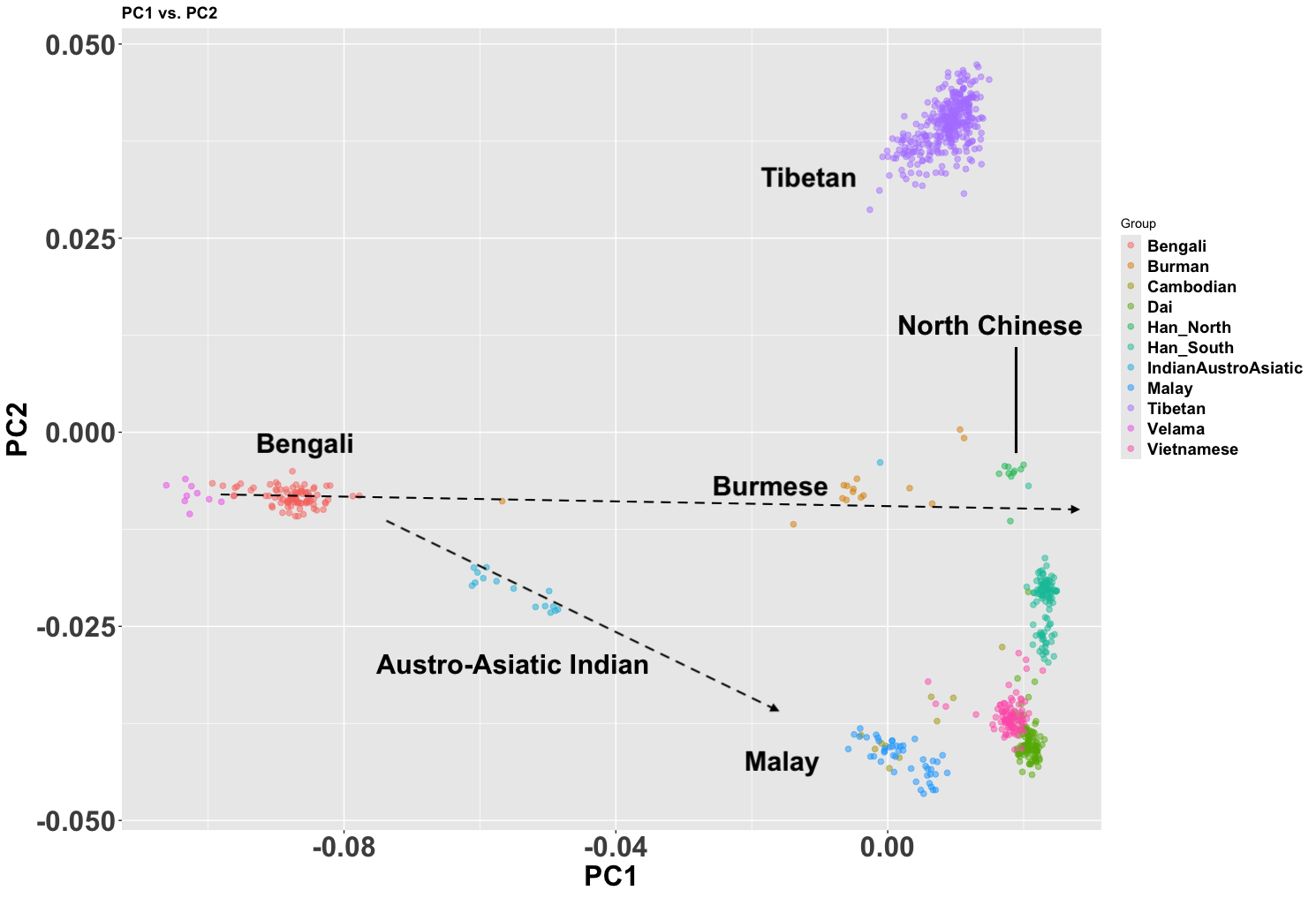
There are figures in the paper that make the overlap clearer. The main difference is more variance in the West Bengalis, and a greater East Asian shift among Bangladeshis. But the latter is clearly just geography; those whose ancestry is from the east of the Padma (like me) always have more East Asian ancestry than those from the west, while those in the north also seem to have more.

The variance in West Bengal is probably driven by caste. You can see Brahmins, and probably what are Bengali-speaking scheduled castes and tribes. In the Bangladesh Muslim population everyone eventually intermarried.

The Assamese are even more East Asian shifted than the Bangaldeshis. As I said in a previous post, these Indo-Aryan groups look like they mixed with a Khasi-like population at some point.

Finally, the West Bengal population had admixture from an East Asian group between 500 and 600 AD. This is the same date as for the Bangladeshis, meaning they are both the same population with the same origin. The major difference seems likely to be the proportion of East Asian ancestry and lack of caste structure within eastern Bengal.

Population structure in South Asian – Genomes Asian 1K paper

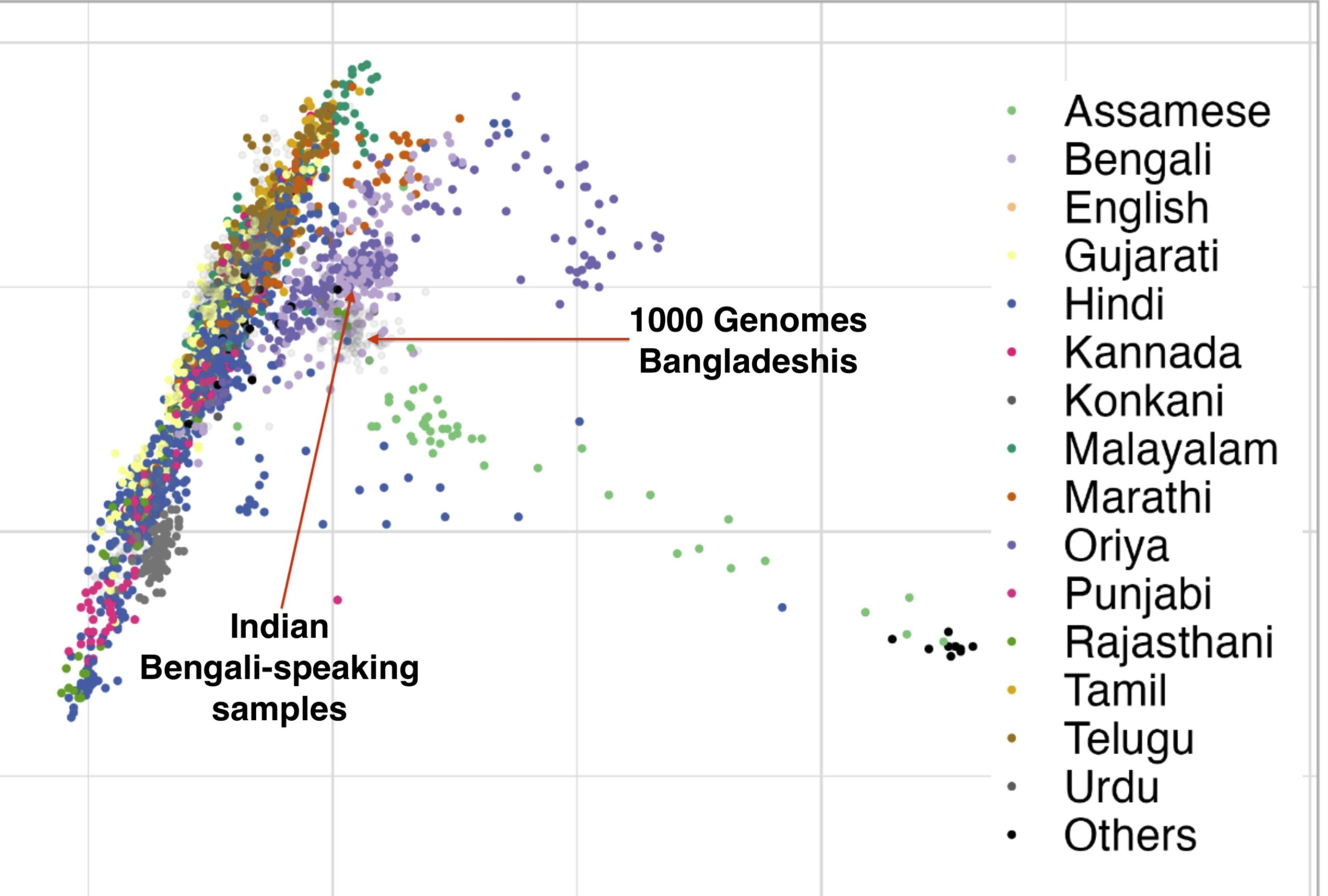
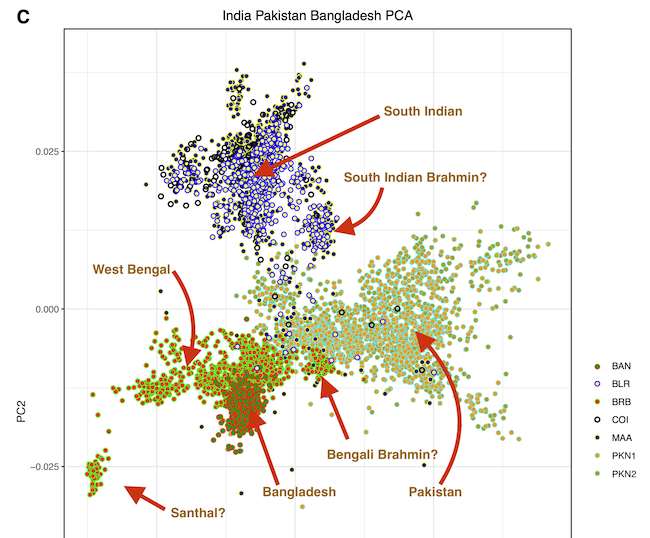
The full version of this paper is out, South Asian medical cohorts reveal strong founder effects and high rates of homozygosity. It’s not the best for understanding population structure because they focus on within South Asia variation, but it does seem to confirm that among Bengalis there is a cline from west to east, irrespective of religion (see the discussion where they note that Muslims in the west cluster with westerners). I found a PCA in the supplements where I added some explanatory notes. It’s really hard to parse their figures because they really didn’t care, and the Genomes Asia Consortium doesn’t release their data… (their browser sucks)

Merry Christmas!

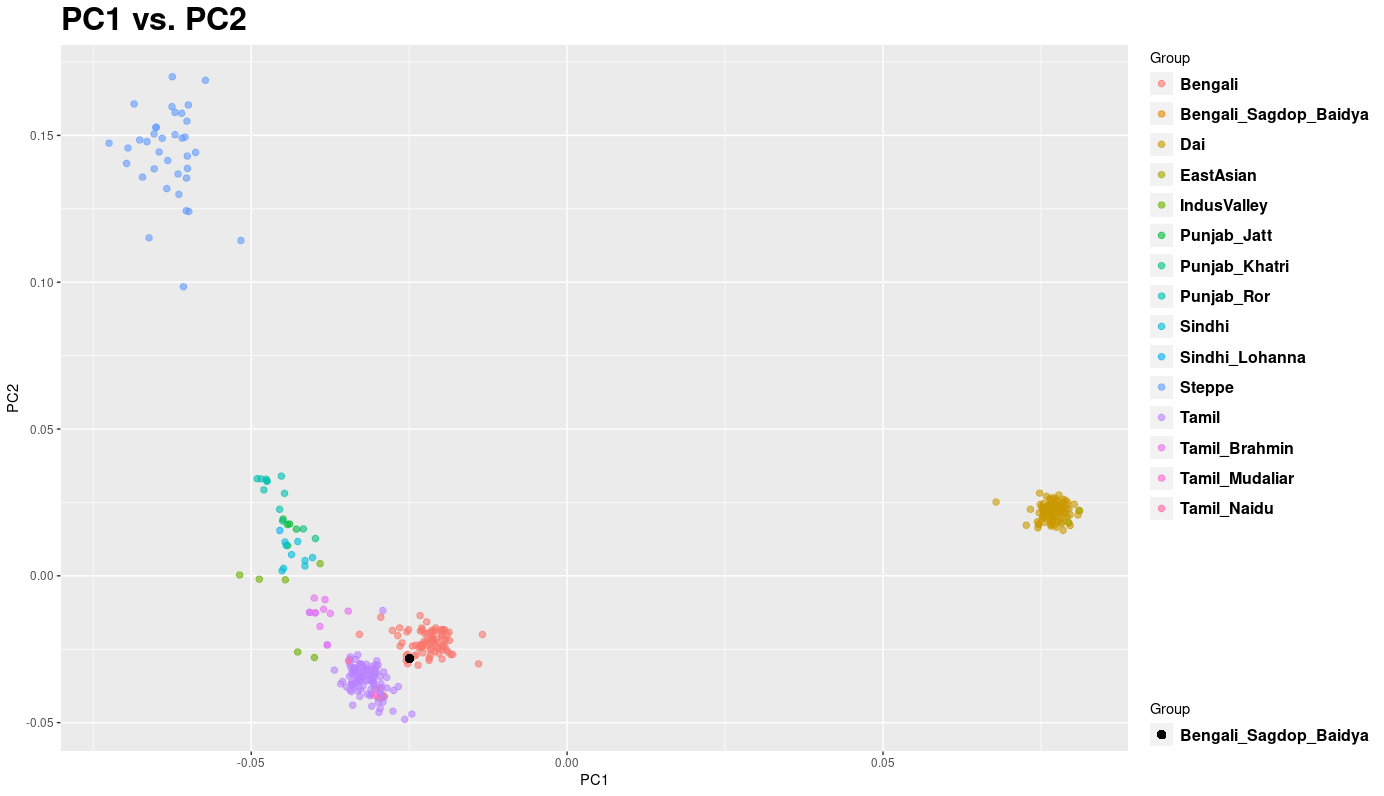
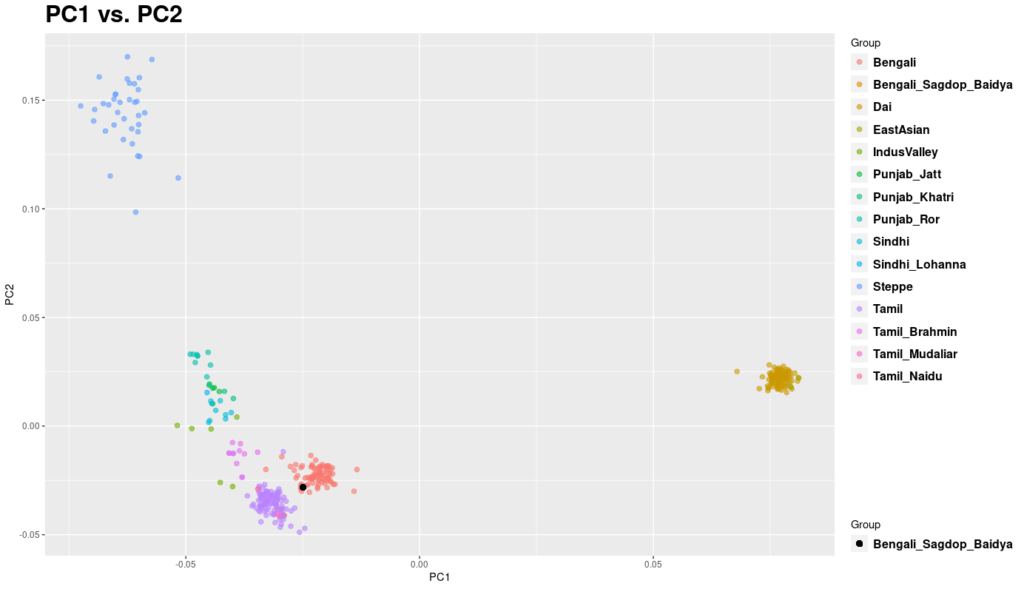
I got a sample from someone where one parent was a West Bengal Sadgop, and another parent a Baidya with family origins in East Bengal. One hypothesis that I’ve see is that Baidya are basically Brahmins who lost their caste. Genetically this does not seem to be the case. Bengali Brahmins shift considerably toward the steppe samples compared to average Bangladeshis, and this individual does not. Rather, their uniqueness is that they have very little East Asian ancestry compared to the median. This is typical of non-Bramin West Bengalis. It is plausible to me that this individual’s Baidya parent, from East Bengal (Bangal), had more East Asian ancestry than their West Bengali (Ghoti) parent, so you see an average.

Though there are some exceptions, it seems that the non-Brahmnin bhadralok castes did undergo ritual uplift from that of conventional peasant cultivators at some point in Bengal. This seems similar with regard to Kayasthas in UP, but not in Maharashtra, where CKPs seem to have an affinity with Brahmins distinct from the Maratha cultivators.

Update: I found a preprint that pretty much answers all the questions re: Bengalis.

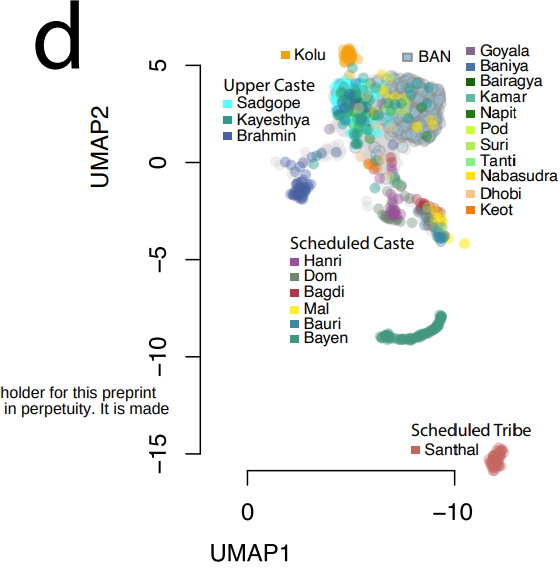
Here is a panel with a UMAP representation of genetic distance, and you see West Bengal is adjacent to Bangladesh. But there is a “tail” of individuals that are parallel to South Indians.
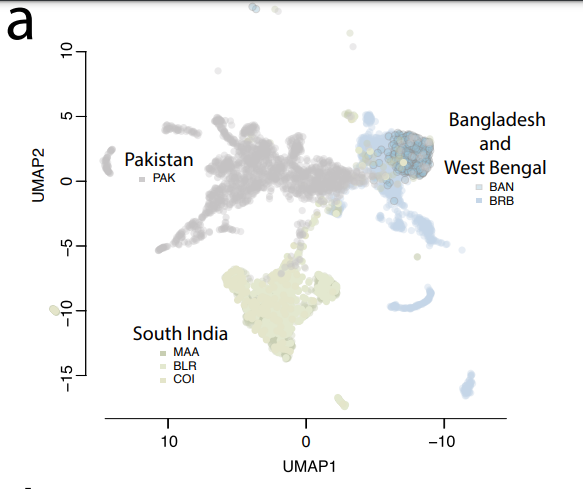
This UMAP makes clear Bengali Brahmins are distinct from Kayasthas and Sadgop. These populations seem roughly similar to most Bangladeshis except they are shift over, and I assume this means less East Asian ancestry, as PCA seems to how:

Bangladesh and West Bengal genetics

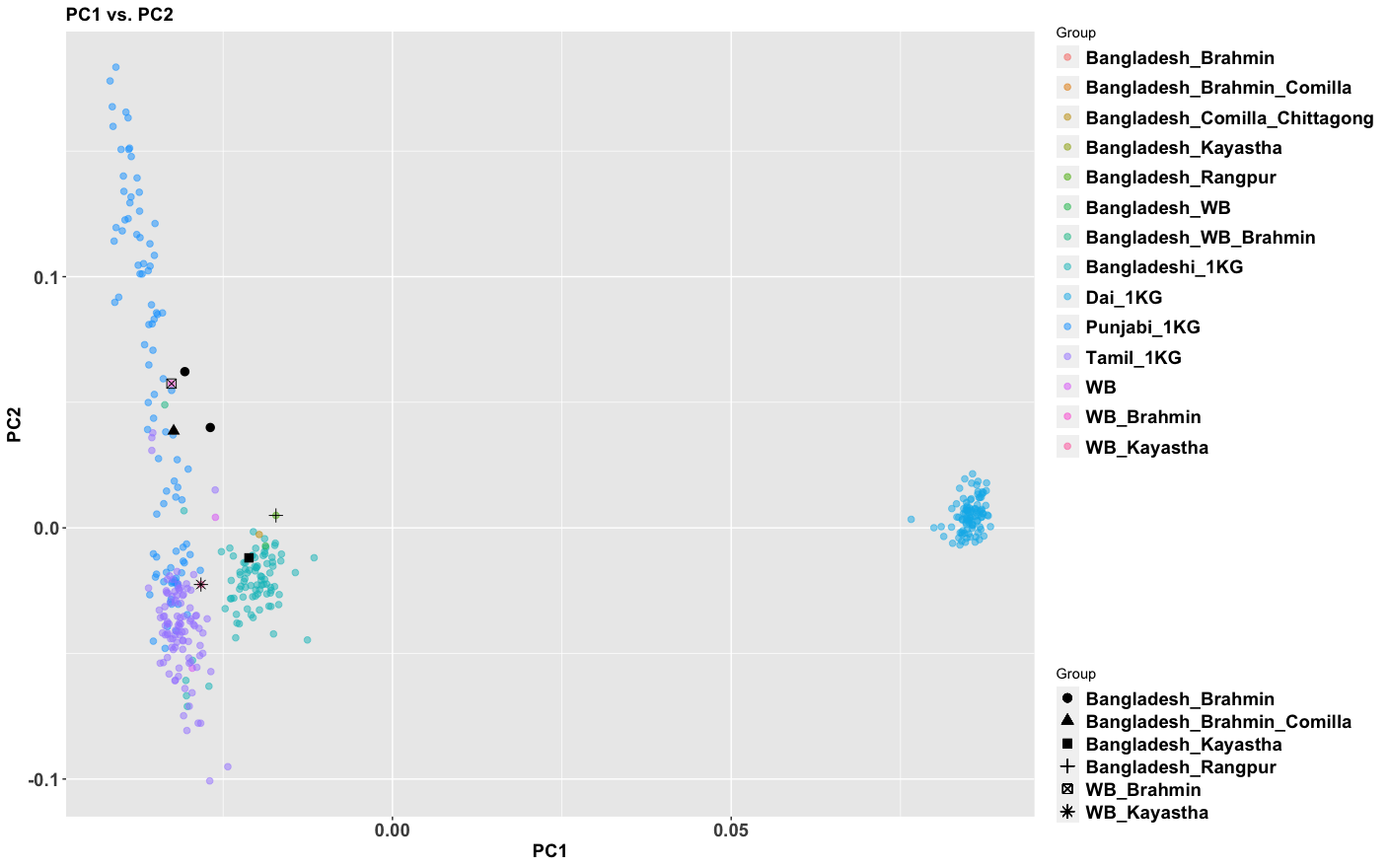
I got a few more samples with provenance. The Bengali Brahmins are shifte the way you would expect. The Bangladesh Kayastha (someone from a Hindu background) is in the cluster with generic Bangladeshis from Dhaka. The West Bengali Kayastha is far less East Asian. My current model right now is that the Kayasthas are basically peasants that engaged in uplift, as in general they don’t seem so genetically distinct from other Bengalis, in contrast with Brahmmins. Though Bengali Brahmins do exhibit admixture with Bengalis with East Asian ancestry, they are very different overall.

Brown Pundits