
Well, here is the long promised article. I’ve been meaning to write this for a year, with many disparate bits of data floating around from different subjects in a brain soup. Gratitude to Q, while his purposes are very much misaligned and probably in direct opposition to mine, provided both the impetus and coalescing of the arguments. And of course to X.T.M for the site on which it took place. I’m pretty sure if it weren’t for BP, this wouldn’t have gotten penned.
https://indosaurus.substack.com/p/parsis-matrilineal-dna-and-steppe
May the common Agni deva of the Zoroastrians and Hindus enable them to reclaim the name Aryan from the Nazis, the skinheads, the brotherhoods and all the racist degenerates who have tried to corrupt it.
Why not post the full article here?
It’s to save me energy on any edits. I don’t count the energy you expend with 1 click as worthy of note.
Calling yourself willys is a bold choice.
Almost all the arguments you presented have been answered in the previous thread.
I do want to outline the Jatt part where you question why they are low on the varna system with the highest steppe %. The Jatts were endogamous group isolated in Sindh. They did not migrate to Punjab and Gangetic plain until the 11th century AD where the caste system really calcified 2000 years ago and where it is still strong. Even Muslim conquerors were not accepted inside this system, so they created their own one.
If you look at the y-dna, its r1a heavy amongst UP/Bihar/Bengali Brahmins, even more than Jatts. Autosomnal steppe percentages also track higher in upper hindu castes to low in lower castes in a North West to South East gradient (the expansion route).
Your claim that IVC was the original Arya culture is wrong. IVC inhabitants were 30% AASI, and this is not present in Iran or Afghanistan in any significant quantity. The Avesta was composed in Khorasan/Afghanistan and this is where Steppe percentage is the highest (higher than India or mainland Iran) along with Steppe ydna percentage. IVC has nothing do with any of this.
Firstly, the aryans didn’t introduce Iron smelting into South Asia. People already knew how to smelt iron long before the Iron Age, and I am pretty sure there were Iron instruments from the Bronze Age. The main difference was the cost-effectiveness of iron smelting compared with bronze smelting; bronze was easier to produce and, by extension, became more commonplace, resulting in the Bronze Age. Having the capacity to produce Iron instruments doesn’t change the timing in this specific situation, since the main point here is that Indo-Aryans had advanced Iron smelting, which allowed them to spread further than preexisting groups as they made more Iron tools, not that they were the first to make Iron tools.
Secondly, the cave argument is quite questionable. In Meenakshi DUBEY-PATHAK’s article “The Rock Art of the Bhimbetka Area in India”, the author talks about how the cave was continuously used for thousands of years, to the extent that there are literally inscriptions written in old Ashokan Brahmi. Also, the region was inhabited, with a Buddhist stupa from the Mauryan period and a Shiva temple from the Paramara period nearby, all the while the cave had depictions of the Nataraja and a Shiva-like god holding a trident. So, it isn’t much of a stretch to understand that the paintings you were referring to can date from a much later period rather than 3,000 years ago.
Thirdly, the Indo-Aryans could neither be that old nor have been the Indus Valley people, considering the fact that the cultures align at all. Archaeological evidence clearly shows that the Indus Valley was a heavily urbanized society with complex sewage networks and hydrological systems. The Vedas that are attributed to the Indo-Aryans represent what is very clearly a pastoralist society and don’t seem to mention anywhere nearly as urban as the Indus Valley was. Additionally, if the Indo-Aryan exsisted for such a long time, there doesn’t seem to be any definite archaeological remains for the Indo-Aryans that go that far back.
Lastly, people’s understanding of Proto-Indo-European theory has expanded beyond what the early figures and weird practices thought. A recent study that examined the Yamnaya Indo-European culture shows this quite well: Wolfgang Haak et al.’s Massive migration from the steppe was a source for Indo-European languages in Europe. The study showed that a significant number of people groups that would fall into a traditional culture that could be labelled as Indo-European are not necessarily biologically related to the original Indo-European people groups. For example, the Greek language for example is considered to be an Indo-European language, as indicated by its overall structure; however, the Greeks themselves don’t possess any Yamnaya (Indo-European) genetic material in extensive amounts, and said Indo-Europeans didn’t migrate to the region extensively. The study further suggested that, in some places, Yamnaya migrations even had a complete resurgence of the pre-existing Neolithic population. The basic suggestion was that a lot of the groups that would become Indo-European appear to have enculturated themselves into the broader culture rather than getting displaced over time.
The same aspect would still apply to places like Iran and India, where Indo-aryans that migrated from external regions like the steppe over time settled and, through a process of enculturation, gradually formed a deeply mixed culture with the local population. The Iranians have 90% Zagros genomic material because they enculturated into the Indo-Iranian base culture rather than having made the structure themselves. For example, Southeast Asia adopted a lot of classical South Asian cultural practices without being conquered or through intermarriages. Southeast Asian didn’t invent those cultural artifacts; rather, they adopted them from an external group. A lot of arguments are basically trying to interlink culture and genetics as if culture is only transmitted from parent to child all the time.
culture is always….complex. These ‘we wuz’ and ‘you weren’t’ arguments are tiresome.
The likes of Q are driven by a peculiar flavor of self-hate embedded tribalism.
Good post and mostly agreed. Although I would say that the Greeks do possess 10-20% Yamnaya ancestry which is the same as many Brahmin groups in South India that possess Steppe Aryan ancestry.
Also – while you draw a more peaceful conclusion, I have a more sinister view of events. We know that the Yamnaya and Corded Ware cultures replaced male lineages in Europe. Britian for example has 90% Indo European Y-dna. These lineages don’t get replaced in peaceful migrations in an ancient era (especially when female lineages don’t change that much). They get replaced during prolonged periods of conflict with the victor establishing its culture and religion as supreme. This is what happened in most of Europe, and this is what happened in India and Iran as well – although on a much smaller scale – possibly because these countries had a larger population base or gave more resistance. This is what is referred to the ‘invasion’ in AIT.. not a grand battle at Panipat with the victor taking the spoils, but continued and repeated incursions by Steppe pastoralists over a span of couple of centuries that were mostly violent expansion of territory.
Do you have any information on how the different parts of the vedas are dated? I think that some of the verses are older than others and since it was not all written at once, we can have situations where some things can be referred to as if they are 5000 ybp( years before present) and other things clearly tell a time that are 3000 ybp.
I think this can sort of spread some light on when the Indo Aryans as a group formed within Indian subcontinent.
I don’t have the exact dating for every part of the Vedas, but I remember a bunch of details specifically about the Rig Veda from my anthropology class at university. Some of the information may be dated, so keep that in mind. The general theory of the Rig vedas date seen to relate to the early Kuru kingdom, sometime around 1200 BCE, not an exact date since some authors date it further back, while others date it further ahead. What was taught to me was the fact that during the early Vedic period of migration into South Asia, the majority of the Indo-Aryans lived in the Indus Valley region. They weren’t able to penetrate further inwards due to the thickness of the vegetation in the forests that existed in North India. Usually, there was a strong cyclical pattern, where heavy rain during the monsoon caused a large portion of the forest to expand over time, and this period of heavy rain was followed by a period of drought or dryness that reduced the vegetation and made it easier to enter. The Indo-Aryans arrived early during the period of thicker vegetation and hence remained in the Indus region.
Once the drier season came, the vegetation reduced, and the Indo-Aryans were able to pierce the forest and migrate Westwards since they had the ability to mass-produce iron instruments that could clear the thick forests. The textual information presented seems to suggest that most of the Early Indo-Aryan kingdoms during their stay at the Indus were controlled under the supremacy of the Puru clan. Over time, a branch clan of the Purus called the Ikshvaku gradually migrated across the river to settle in the land around Purana Kila and the South Haryana region.
The Rig Veda seems to have been composed in this newly burgeoning kingdom during the reign of a king named Sudas. This king originally had a chief priest named Vishwamitra, who served as an advisor and composed the early sections of the Rig Veda. However, Vishwamitra seems to have been replaced partway by a new head priest, Vasistha. Why this happenend to be unclear; Vishwamitra may not have wanted to share the position of head priest or purohita with Vasistha. Either way, Vasistha composed a sizeable section of the Rig Veda. Now, he makes a bunch of allusions and weird comments that don’t fully make sense since we don’t have the social context for whatever the bloody hell was going on.
What can be gleaned is that at some point (maybe Vishwamithra or maybe not), the Puru clan instigated a war with the Ikshvaku clan; we don’t really know why this happened, but Vasistha seems to suggest a war happened. This was known as the famous battle of ten kings, where Sudas destroyed a natural dyke and followed the rivers when the Indo-Aryan kings (and their non-Aryan allies) were trying to cross. Sudas came to the top, and he merged the Ishavaku-Puru clan, forming the Bharata clan, in turn establishing the Kuru supetribe structure and codifying the Rig Veda.
Over time, the aryans started to settle in the land East of the Indus and continued migrating into the Eastern Gangetic valley. There are specific details in the texts that suggest this migration. For example, there was one part where the author was talking about the prototypical idea of reincarnation, and they compared it to the process of rice cultivation, which was more common in the Eastern Gangetic valley and was written around the same time as the migration. Generally, the first section of the Vedas that were codified during the Early Vedic period was the myths; afterwards, the priests started to add the ritualistic elements that referenced the myths in the earlier section. Closer to the end of the Vedic period, around 600 BCE, the priests started providing more complex philosophical and theological explanations of the rituals as well as the myths; this section was referred to as the Upanishads.
The Rig Veda is kinda unique in contrast to most texts in the sense that the oldest of the texts results in a lot of cryptic central asian stuff. As my professors talked about this one part, where the god Agni sees a fire that appears atop a lake, and he proceeded to absorb said fire, which was technically a minor deity, I believe, into himself. This fire might be referring to an actual thing the older Indo-Iranians saw on their journey through Central Asia. Basically, a lake with a natural gas reservoir was leaking gas that appeared on the surface, and something caused the gas to burn continuously. Central asian countries do have that as a thing in some places, like that random pit in Turkmenistan that is forever on fire. Nonetheless, like with every other thing here, most of this is a working hypothesis that can and probably has been disputed many times.
In terms of the Indo-Aryans themselves, it kinda gets complicated with their interactions with the preexisting ethnic groups in South Asia. For example, a certain distantly related group of the Indus Valley people survived well into the time period of the Indo-Aryans, as their ochre pottery survived into the later periods and were near contemporary of the Indo-Aryans, who may have been absorbed into the Aryan culture.
Another element here would be the endless contentions. For example, some people argue that the battle of the ten kings was mythological in origin and was based on a pre-existing trope. The Rig Veda may have been composed in Afghanistan near a river that was potentially the old, dried-up Saraswati River from the text. Also, you have Mittani texts that reference the gods that appeared in the Vedas, like Varuna, Mitra, etc., but the Mittani works predate the Rig Veda, so potentially the Rig Veda might have even older origins that predate the given dating. Another issue would be the fact that texts like the Rig Veda had multiple recensions, of which only 1 full extant recension and a secondary partial recension survive, so we might be missing some details that existed in the missing versions. There is the whole the early vedas are represent a version of the Proto-Indo-Aryan languages, of which a sizeable section eventually developed into Prakrits of the later period. The Vedas are a cumulation of 1 or more dialects of Proto-Indo-Aryan, which crystallized over time.
None of this gets into the whole issue with Indian art, history, and literature, where authors favor space over time in their narrative structure. Authors will literally write down events that happened in the past, but wouldn’t even bother to properly date any of the events and mess up the timing of things. A good example I remember is when an author discusses a Rajput painting that showed a murder happening and the murderer trying to escape. The Mughal painting showed the escape panel, but subtle left clues showed that the person committed the murder. The Rajput painting showed the murderer doing to killing and escaping in a single sequence by having the character drawn twice in the same painting. The Mughal painting had a clear sense of time in its narrative structure, but the Rajput painting favored a spatial depiction of events, while sacrificing a clear sense of time. This tendency kinda affects narrative structure in literature, where the events are described in detail, but the timing is often sacrificed. There is a whole book about this topic called “Retelling Time: Alternative Temporality from Premodern South Asia”.
I am just stopping my discussion here since it got too long.
Iron smelting was clearly not Aryan, the earliest Iron has been found in TN.
Aryans would have shared the same Zagros Neolithic farmer genes as the IVC people did (87% in the Rakhagiri sample), even if the were not the exact same civ, they came from the same genetic pool.
Iron would have moved up from South India pretty soon, not taken 2000 years to do so.
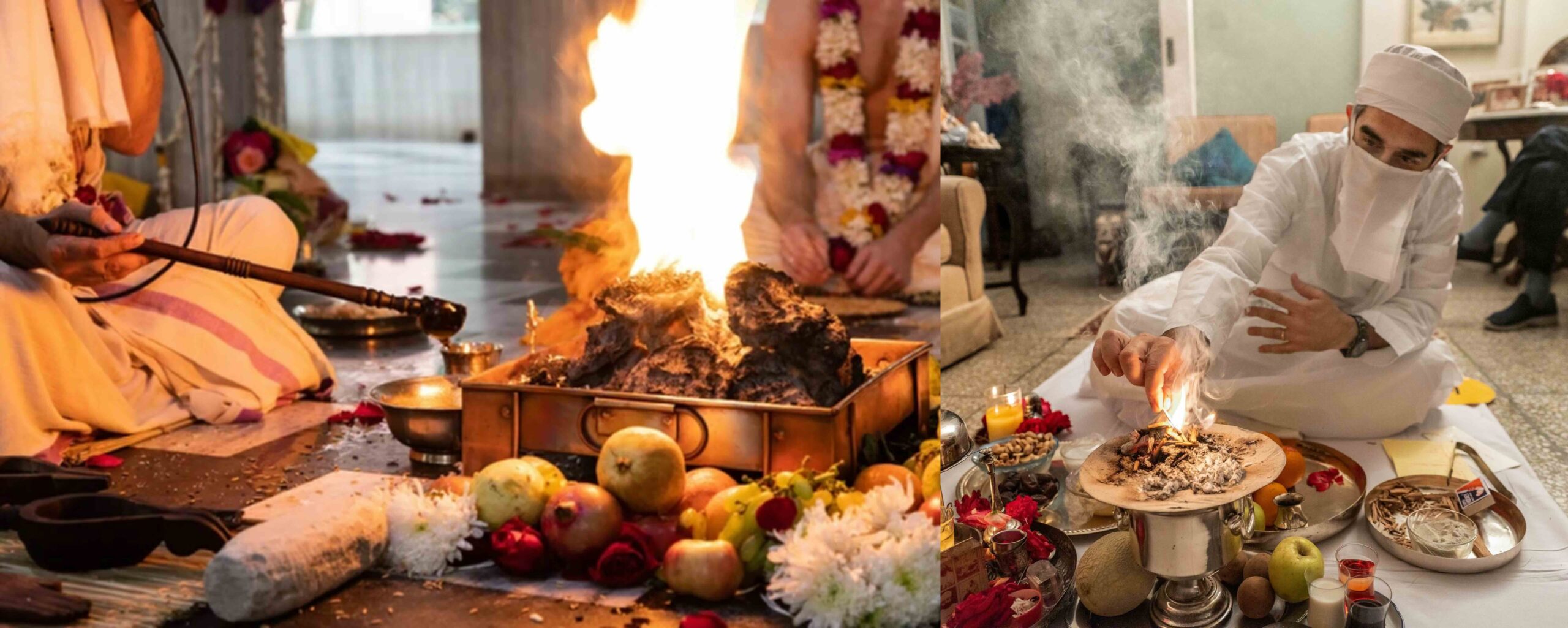
The steppe theory does not explain the picture above
i.e Aryan has a particular religious ritual look. This look is both Iranian and Indian.
Not steppe.
The theory that Iranians adopted steppe practices doesn’t hold water because the zoroastrian priesthood does not have distinct steppe genes.
Finally the Sanskrit language would not be pre-eminent in the subcontinent if there were no Aryan women around to propagate it. Rituals you can maintain, but language is preserved mostly by women teaching it to their children. Gujarati became the Parsi mothertongue within a few generations.
SouthEast Asian cultures all speak their own languages, Malay/Indonesian Bahasa, Thai, Tagalog, are all very extant and clearly non Indian.