Two of my recent essays

I have two pieces of writing I want to share. The first is an essay I wrote on Iqbal for his birthday (9th November), exploring how we have misread him, and how, in a way, he misreads himself.

https://inkelab.substack.com/p/iqbal-an-uninteresting-poet

The second piece discusses how book reviews can nudge critical readership in Pakistan. It includes a situational analysis of reading habits in the country, the role of reviews and sugarcoating, and the emerging Bookstagram and BookTok communities.

https://dunyadigital.co/books/jumpstarting-critical-reading-the-power-of-a-book-review

Would love to know what you people think about both. Thanks!

Ghalib for Gen Z

This review was originally published at The Friday Times.

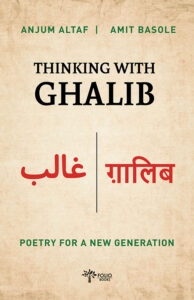
Publisher: Folio Books

Publishing date: 2021

Authors:  Anjum Altaf & Amit Basole


“For Ghalib, life is an unending search. Neither the holy of holies in Mecca nor even the attainment of paradise is the end of it.” ~Ralph Russell

We’ve all heard of that crooked genius, Mirza Asadullah Beg Khan Ghalib — whether through our school Urdu courses (unfortunately encountered at an age when our consciousness is still unripe) or through pop culture. Sometimes it’s his well-known fantasy for mangoes; other times it’s when someone shares a couplet whose slightly convoluted vocabulary immediately earns it the label of “a Ghalib shayr”; and other times, his destitution and scrambling for a pension.

As a Gen Z myself, I can say that most of today’s youth are largely alienated from the Urdu language, let alone Persian. And of course, this doesn’t mean we’re reading Byron or Eliot instead; rather, it’s the excess of TikTok. Decoding Ghalib feels like a Herculean task for us. This dilemma not only distances us from a rich poetic tradition but also from the timeless lessons it has nurtured.

Continue reading Ghalib for Gen Z

Why Indian English Loves Long Sentences

If China endured a century of humiliation, India has lived through a thousand years of it. Invasions and exploitation left it poor in wealth but rich in culture; intricate, adaptive, and resilient. That depth shows in Desi English, which often favours long, ornate sentences over plain ones.

This habit echoes Persian’s former role in the subcontinent: a prestige language whose mastery signalled rank. Even Ghalib’s vast Persian verse drew less love than his Urdu. In India, Persian was the colonial language of power; today, English plays that part.

In Iran, Persian changes fast. Slang, borrowed terms, and foreign tones reshape it so quickly that many in their forties struggle with teenage speech. My own Persian, kept alive in Kuwait and India, is closer to Shirazi and Tehrani standards than to the language my ancestors spoke. I’m self-conscious with Iranians, but with diaspora Persians, I speak freely; we share a looser, accented form of speech. Continue reading Why Indian English Loves Long Sentences

Against Platonic Love

The context of this poem is an interview of the legendary Urdu poet Ahmad Faraz (1931–2008) with Naeem Bukhari. Faraz is regarded as one of the true heirs of Urdu’s laminal poetic tradition and celebrated for his bold, progressive stances and romantic verses that deeply resonated with the masses.

Though I personally rank him second to Faiz Ahmed Faiz (his contemporary), due to the universality, conceptual depth, and themes Faiz cultivated in his poetry, what I love about Faraz is his radical romanticism and mastery of language. Especially since he hailed from Kohat, a non-Urdu-speaking city in Khyber Pakhtunkhwa, this is particularly remarkable.

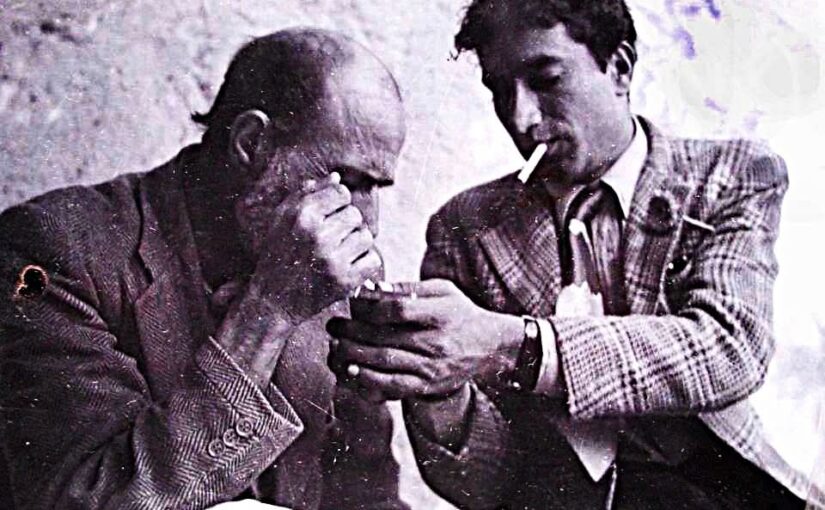
Two literary giants of NWFP/KP: Ahmad Faraz (right) lights a cigarette for Ameer Hamza Shinwari.

Another interesting connection between Faraz and myself is that we both attended the same institution, the prestigious Edwardes College. For those who don’t know, Edwardes College was established in 1900 and has produced generations of intellectuals and cultural figures, including Prithviraj Kapoor, the pioneering Indian film and theatre actor/director/producer; Dr. Khan Sahib (Dr. Abdul Jabbar Khan), the first Chief Minister of West Pakistan (The famous Khan Market in New Delhi is named in his honour.)

Edwardes College Peshawar

Coming back to the interview:

NB: Temperamentally aap ek romantic aadmi hain?

(Translated: Are you, temperamentally, a romantic person?)

AF: Haan, bilkul hoon. Main ek bharpoor ishq ka qail hoon. Ek mukammal insaan ke ishq ka. Main Aflatooni ishq (jo frustration ka ishq hota hai) ka haami nahi hoon. Us mein aap apne wujood ka aadha hissa zaya kar dete hain. Is liye aap mukammal mohabbat de hi nahi sakte kisi ko, jab tak apna poora wujood uske hawale na kar dein. Toh main ek mukammal insaan ki tarah, mukammal ishq chahta hoon. Jiske liye rona ho, jiske liye hansna ho, jisko aap yaad karein. Jo aapke wujood mein poori tarah sama gaya ho.

(Translated: Yes, absolutely. I believe in passionate, complete love — love for a whole person. I’m not a supporter of Platonic love, the kind that’s rooted in frustration. In that kind of love, you end up wasting half of your existence. That’s why you can’t give someone complete love unless you offer your entire being to them. So I desire complete love, as a complete person. Love for whom you cry, laugh, miss deeply — someone who becomes entirely embedded in your existence.)

And that is how I gestated this poem. Please enjoy!


Against Platonic Love

ŰȘŰłÚ©ÛŒÙ† کو ہم نہ Ű±ÙˆŰŠÛŒÚș ŰŹÙˆ Ű°ÙˆÙ‚Ù Ù†ŰžŰ± ملے

[1] Ű­ÙˆŰ±Ű§Ù†Ù ŰźÙÙ„ŰŻ میÚș ŰȘÛŒŰ±ÛŒ Ű”ÙˆŰ±ŰȘ Ù…ÚŻŰ± ملے

Sitting aimlessly on Eid day,

Thinking about the futility of the aeon,

I thought of the fractious spell

And the resultant intoxication I had, even

After years and years of encounter.

Peshawar is far more subliminal than Eden—

I can touch and lurch in the scent of the gated city

And prostrate upon it.

What maiden houris of the afterlife,

With a lightning appearance,

Pristine countenance,

And godly silhouette,

Could hold to the eyes of this crooked earthling

The wax of your ear,

The rusted steel nose pin,

Greyish, catastrophic hairs,

And the acned cheeks of yours?

Ah, the sensation of the earthly viscera,

The dysmorphia of every kind and sort—

It is incomparable to the untouchable,

and the non-sensorous holiest of holies.

Icarus [2] vaporized in this

Frenzy of the soar—

And so too the frustrated ones,

Whose beloved is exalted,

And merely and pathetically exalted

[1] taskīñ ko ham na ro.eñ jo zauq-e-nazar mile
hƫrān-e-ឳhuld meñ tirī sƫrat magar mile

We would not weep for solace, if we had the gift of sight—
If, among the houris of paradise, we found your likeness.
(“`Ghalib)

[2] Icarus, a figure from Greek mythology, attempted to escape Crete using wax-and-feather wings made by his father, Daedalus. Ignoring warnings, he flew too close to the sun, causing the wax to melt and sealing his tragic fall.


Reading the Reader: On Ammar Ali Qureshi’s Views and Reviews

By Furqan Ali

A review from Ink-e-Lab.
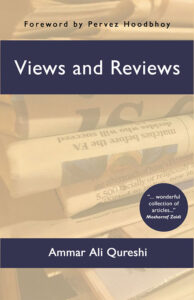

Publisher: Folio Books

Author: Ammar Ali Qureshi

Pages: 228


According to a Gallup survey, 75% of people claim not to read books at all. Mind you, this survey is from 2019 and by 2025, the figure has likely deteriorated even further; social media has drastically decimated our attention spans. A book, being a far more demanding form of engagement, often feels too formidable. People now struggle to read even a full 1,000 words op-ed, let alone something verbose. Many skim through posts on X, LinkedIn, or even long WhatsApp messages. And for those who do feel the urge to read, they’re often left perplexed: what should they read?

And that’s where book reviews come in: book reviews offer several valuable benefits for readers, writers, and the broader literary community. They help readers make informed decisions by summarizing a book’s content, style, and strengths or weaknesses, ultimately saving time and guiding personal preferences. Albeit, it is not a replacement of the whole corpus at all.

Reviews also deepen understanding by unpacking complex themes, symbolism, or context that casual readers might overlook. Additionally, they encourage critical thinking and discussion, as they often present arguments and interpretations that spark dialogue.

For writers, reviews provide constructive feedback and insight into how their work is being received, while also offering exposure, especially to lesser-known authors, by promoting diverse voices and hidden literary gems. Overall, reviews enrich the reading experience and foster a thoughtful culture of engagement with books. And the impending book under discussion does all of this and more.

Ammar Ali Qureshi’s Views and Reviews is a compilation of articles written across five cities spanning three continents over the past 15 years. One might call it a ‘labour of love’—a testament to his deep affection for books, inherited from his parents, both students of history, who allowed him to devour every book in their home. Even today, the library he has posted online reflects this passion, curated with care and brimming with crĂšme de la crĂšme titles.

The idea of writing these pieces draws inspiration from A.J.P. Taylor, the most popular and provocative British historian of the 20th century, who authored around 1,600 book reviews. This book, of course, is much slimmer compared to Taylor’s prolific output, yet it spans a wide range of subjects: history, politics, the economy and governance structures, nationalism, notable personalities, poetry, and more.

One striking piece, included in the first section, covers the exiled prince I had never heard of before, Maharaja Daleep Singh, son of Maharaja Ranjit Singh. The author’s review captures the deep melancholy of the story: the fall of one of the fiercest and most formidable reigns faced by the British, stretching from 1799 to 1849—from the southern districts of Punjab to Afghanistan and Kashmir. Ranjit Singh’s feat was a remarkable historical achievement.

The loss of this indigenous Punjabi kingdom, the confiscation of the Koh-i-Noor, Daleep’s dethronement at the age of ten, his coerced conversion to Christianity, his exile to England, and eventually his re-embrace of Sikhism, these form a profoundly tragic arc. He died penniless in a Paris hotel room, carrying the burdens of resentment and betrayal to the very end. The first section of the book, “Historical Perspectives on Punjab,” reads like a lament from a son mourning his lost mother, Punjab.

The second section turns to Pakistan. Among the essays, Pakistan and Iran: Neighbours of Many Surprises and Pakistan’s Middle Class and Islam particularly caught my attention. The former explores how Iran, under the Shah, was the first foreign head of state to visit Pakistan in 1950, became its largest bilateral donor—providing $800 million in loans and credit in the 1970s—supported Pakistan in the 1965 and 1971 wars, and yet, today, we face off against each other at a tense border.

The latter explores the rise of the new middle class, based on Dr Ammara Maqsood’s book The New Pakistani Middle Class. It focuses on how this class is more inclined toward a globalized form of Islam—seen as a legacy of Zia-ul-Haq and practiced by many Muslims in the West—rather than Wahhabism. However, Ammar points out the frequent conflation between the two, especially given the influence of Saudi funding. This stands in contrast to the older middle class, which projected a softer image of Pakistan.

In the third section, the article on Iqbal, “Iqbal — Love Letter to Persia,” reveals his (Iqbal’s) deep love for Persia: the language (of over 12,000 verses he composed, around 7,000 are in Persian), and Persian history especially the Persian conquest, which he considered most significant in the history of Islam, as reflected in his doctoral thesis. Iqbal’s admiration was reciprocated by prominent Persians, including Iran’s poet laureate Mohammad-Taqi Bahar, Prime Minister Mohammad Mossadegh, and influential figures like Ali Shariati (the ideologue of the Iranian Revolution) and Ali Khamenei (Supreme Leader of Iran).

Ammar quotes,

“Although the language of Hind is sweet as sugar / Yet sweeter is the fashion of Persian speech / My mind was enchanted by its loveliness / My pen became a twig of the Burning Bush / Because of the loftiness of my thoughts / Persian alone is suitable to them.”

The fourth section focuses on governance, particularly how corruption and the absence of a robust justice system fuel crony capitalism, weaken public service delivery, stifle economic growth, hinder innovation, crowd out investment, erode public trust, nudge religious extremism and reinforce elitism, among other consequences.

The fifth section, focused on personalities and memoirs, features intriguing pieces on figures such as Karl Marx—described as a “Prophet of Revolutions”—and Nur Jahan, the only Mughal queen to have her name inscribed on coins, who effectively ruled Jahangir’s empire for 15 of his 21 years on the throne. It explores the enduring influence of their legacies and the lessons they continue to offer, even after centuries. He quotes Robert Heilbroner from his book The Worldly Philosophers:

“We turn to Marx, therefore, not because he is infallible, but because he is inescapable.”

The sixth section shifts to global history, touching upon the rise and fall of Eastern and Western powers, the miscalculations of the Afghan war, Robert Fisk’s life amidst global upheavals, diplomatic failures, Obama’s failures, the rise of Trump, and much more. But I’ll stop here, I wouldn’t want to spoil it by revealing everything in it.

What elevates Ammar’s work is that his reviews are not mere summaries. He weaves history, politics, identity, and contemporary relevance into his analysis. He doesn’t shy away from highlighting contradictions or calling for critical engagement. His essays are not just about books, but about how to read, how to wrestle with ideas, how to cherish curiosity, and how to think.

In an age of vanishing attention spans, Views and Reviews is not only a literary respite, it is a call to return to depth, nuance, and the quiet joy of thoughtful reading.

Dead Poets of Pakistan

After Kabir exited the WhatsApp group, the conversation between the Manavs and Furqan (who I have made Editor to encourage more DPPs) drifted, inevitably, to poetry and Punjabi. Furqan has already made two excellent contributions, A flying peacock and Lord Ganesh in a confectionary mill. Kabir did a great job in diversifying the Authorial voices on BP.

As we shape the future of Brown Pundits, I keep returning to one submerged voice in the Persianate world, particularly in Pakistan. A voice that is Westernised, undercapitalised, and culturally adrift. These are not the clerics, generals, or capitalists. These are the middle-gentry, the in-betweeners; fluent in English, wired to the internet, but uncoupled from patronage and power.

Like much of the Muslim world, Pakistan remains profoundly hierarchical. And I suspect its creative pulse, its latent genius, lies in that Westernised fringe of the lower elite: the zone between the bourgeoisie and the establishment. The boundary class. Half-in, half-out.

In a strange way, Pakistan’s obscurity may be its shield. Unlike India, an excavated society with every civilizational layer being rapidly monetised (Saiyaara is breaking records), Pakistan is a half-formed splinter. It doesn’t face the same pressures of internal reckoning. That may be a blessing.

Across the Persianate world, from Anatolia to Delhi, we are witnessing a civilizational scatter. The old cosmopolis of the Gunpowder Empires (Ottoman, Safavid, Mughal) has collapsed, leaving behind cultural debris. The Persianate polity, once a unified Empire of the Mind, is now a broken archipelago.

India, by contrast, benefits from its post-colonial majority. Like Israel, it is 80% one faith; with all the confidence and coherence that brings. It has the numbers, the market, and a dominant civilizational script. The Sanskrit world, if not unified, is at least centrally anchored.

In this context, Kabir represents one pole of the Pakistani elite: articulate, English-speaking, confidently liberal but also capable of drowning out the marginal voices he’s adjacent to. And yet sadly, I don’t think Pakistan is headed for any Hindufication. The trajectory is different.

Pakistan is not returning to India. It is, perhaps, becoming the lowlands of the Iranian plateau; a bridge nation once again, neither fully Arab nor Indic. Suspended between worlds, it may rediscover itself in that liminality.

Because sometimes, the dead poets are not gone. They’re just waiting for the right silence.

Pakistaniat & Urdu from Qasim to Quaid

UP’s very long shadow:

As I board my flight back to the UK after a brief but productive trip, I find myself reflecting on a language that continues to haunt and inspire me: Urdu.

It is a tongue caught between paradoxes. The language of courtesans and qawwals, of sacred supplication and sly seduction. It carries within it the scent of jasmine and blood, of Delhi’s dusk and Lahore’s lingering grief.

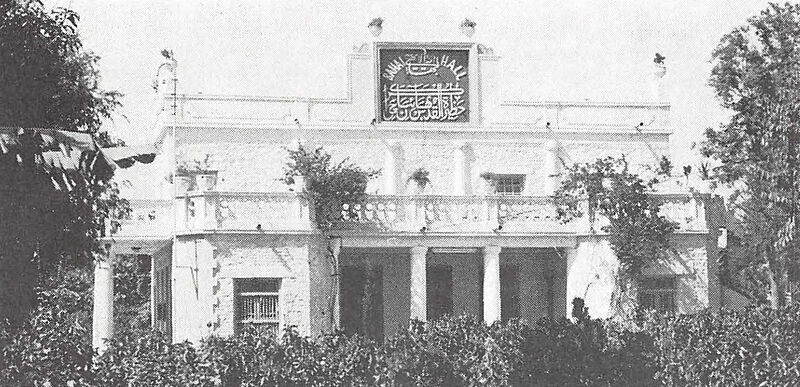
The Beloved Guardian of the Baha’i Faith once noted that while most Baha’i texts should be translated from English, Urdu alone is trusted for direct translation from Persian and Arabic. That proximity, that spiritual siblinghood with Persian, the language of kings, and Arabic, the language of God, renders Urdu magical.

Sanskrit, of course, is the language of gods, but Urdu, its stepdaughter of sorts, captures the longing of poet to partisan.

There’s a reason the Bahá’í prayer I share below is so piercing in Urdu. So here, before I cross back into another timezone, I offer this prayer—without commentary, without translation. Just Urdu, as it was meant to be heard.

And I wonder: perhaps this is what Pakistan truly is—a project in transcending the local. Not rooted in soil, but in sentiment. A place where Punjabis, Pathans, and Muhajirs are asked to shed skin and commune in Urdu. Where Pakistaniyat, for all its fractures, has succeeded in producing a common idiom: of piety, pride, and pain. Continue reading Pakistaniat & Urdu from Qasim to Quaid

Brown Pundits