Open Thread: BP Survey

Our 2026 reader survey is open until 7 June – anonymous, roughly five minutes. Please take a moment.


Update – from the thread: More reading reccys. Furqan flagged Dr Naazir Mahmood’s The assassination that changed India, along with his own book review on Duniya Digital and a related op-ed, Stupidity or strategy, on the political economy of the subcontinent’s borrowed democratic forms. Kabir marked the passing of playback singer Suman Kalyanpur with two recordings: an unreleased Pakeeza song, introduced by Meena Kumari, and a Rafi duet. And from our own pages, the latest BRAHM newsletter: The Sky Above São Paulo.


Update, 1 June 2026 – links from the thread: The Peshawar Review has a new issue out, including Professor Harbans Mukhia’s reminiscences of Kirori Mal College (College Days) and Shan-e-Ahmed reading an Urdu transcreation of T. S. Eliot’s “The Love Song of J. Alfred Prufrock” (Prufrock in Pakistan). On the Tata Sons listing question, Agni flagged a cluster of commentary: the Indian Express “to list or not to list” column, The New Indian Express on the boardroom fight, Soonawala on why an IPO may not appeal to investors, and Business Standard on the 12 June board meeting. Survey responses are at 18 and counting; please add yours if you haven’t.


Editor’s note, 1 June: This Survey thread will sit on the front page through the week, until Sunday the 7th June, while we are travelling Eastbound, so we have made it an Open Thread. What strikes us, watching the comment threads, is that for all the constant bickering, BP is a community, and a recognisably Desi one.

It has the hue of a Hindu joint family (to be of the Indian subcontinent is, almost by definition, to have Hindu ancestors; “Hindu” is simply what the Persians called the people beyond the Indus) that has built a wall down the middle of the house and still cannot get over each other. The wall is real. So is the fact that nobody moves out.


Original Post: Every few years BP runs a reader survey. Razib began the tradition in 2019, and the responses then told us things the comments alone never could.

Seven years on, with a substantially different commentariat, we are running the 2026 edition. The prompt to revive it came from Kabir, whose recent post on what BP is and is not raised exactly the kind of question a survey can help answer, and we are grateful for it.

Nineteen questions, anonymous, roughly five minutes. The core spine is demographic in Razib’s tradition: age, sex, country, mother tongue, ethnic background, religion, caste, education, political ideology, and views on Hindu and Pakistani nationalism. A few behavioural questions follow on how often you visit, how long you have been reading, how you first found BP, and which topics you would like to see more of, with optional fields at the end for handle, newsletter signup, and anything else you would like the editors to know.

Please take the time to fill in this survey. Thank you for your engagement.

On “Press Freedom” and Prejudice.

This is what Norway’s leading newspaper chose for its coverage of the Indian Prime Minister’s visit to Norway.

https://x.com/_Tracer_Bullet_/status/2056737017460089173

While the usual suspects on BP chose to focus on an aspiring influencer’s stunts and dramatic heckling, I am not surprised that such blatant bigotry in the ‘mainstream’ newspaper of the supposedly Number one ranked Press has not been discussed on BP. Hilariously, a non-trivial subset of the Indian media and political opposition actually supported a rookie aspiring journalist’s publicity stunt.

Its a time-tested pattern. Rage-baiting and attacking Hindus and India earns notoriety, while the pushback and negative consequences if you push the envelope too far into nakedly racist territory, is minimal if there at all.

For all the cacophony and chaos that the Indian media landscape consistently generates, it has yet to demonstrate ability to even capitalize on such low-hanging fruit. A more capable media ecosystem wouldn’t allow such nonsense unpunished.

This is the overton window that needs to be shifted – the coverage ‘rules’ on India allow for a lot more mainstream ‘phobia’ and assault. And we see that on BP as well, the Pakistani tribal ‘patriot’ squad repeatedly find themselves facing pushback which to them is unexpected. After all, why shouldn’t they be allowed free rein in rage-baiting and plying bigoted stereotypes.

Open Thread; the endless Argument of the Archives

What We Did

Brown Pundits was founded as a diaspora project. A handful of Brown people thinking out loud about where they came from, what it meant, and whether the subcontinent could be understood in English without either romanticising it or apologising for it.

What happened instead was stranger and more valuable. The site became a place where the subcontinent argues with itself in public, without editorial supervision, without a line to hold, and without the particular kind of cowardice that afflicts publications which need to keep everybody happy.

Over the past week, we forced the archive into coherence. All 3,987 published posts; every Open thread, Genetics argument, Civilisational essay, Partition debate, BrownCast episode, Film review, Obituary, every Moderation notice, are now part of a single navigable structure. For the first time, the site can be read not as a sequence of posts, but as a narration.

What the Archive Revealed

The Partition of India is not a historical event on this site. It is a living emergency. Every argument we have had about Pakistan’s identity, India’s secularism, the Muslim League, Jinnah that is QeA, the two-nation theory, Bangladesh’s founding, the treatment of minorities across all three successor states; all of it is 1947 refusing to close. The wound keeps producing arguments because it was never properly treated. The British left. The questions they left behind did not. Brown Pundits has been, among other things, one of the few places in the English-speaking world where those questions are fought over by people who have actual stakes in the answers, not just professional opinions about them.

Pax Persica

Continue reading Open Thread; the endless Argument of the Archives

On Censorship

We need to have a honest discussion about censorship on BP. We have a contributing author who demands and exercises the right to “ban” other contributing authors from commenting on ‘his’ threads. This, while continuing to spout distinctly one-eyed perspectives and cherry-picked regurgitated content.

Do we want BP to be a space with ‘dueling’ threads, or actual discourse? If Indians and Pakistanis can’t even manage a written conversation on a blog post via comments, without arbitrary petty ‘bans’ justified in the name of “I simply don’t like you” – this is the sort of thing that ends up having a disproportionate impact on the nature of what this space is.

Brown Pundits: Traffic Report, March 2026

The Dhurandhar effect

Omar Ali’s Dhurandhar review is our highest-traffic page by a distance followed by BB’s Kohrra season 2 review. It ranks 20th on a keyword with 87,000 monthly searches in India alone. A single film review, by one writer, on one streaming title, is pulling 37% of our traffic. Continue reading Brown Pundits: Traffic Report, March 2026

Open Thread + A Note on Standards

Brown Pundits has always been a forum for the kind of thinking that most outlets are too timid or too tribal to publish. We intend to keep it that way. But that standard cuts both ways, and we are raising it.

Effective immediately, the moderation policy is zero tolerance.

This is not a crackdown on opinion. We welcome disagreement; sharp, even uncomfortable disagreement. What we will no longer tolerate is noise dressed up as insight.

What does noise look like? You know it when you read it. It is the rattling of nuclear talking points that have not been updated since 1998. It is the reduction of a civilisation of 220 million people, or of a billion-and-a-half, to a single variable: the Crescent, or the Saffron. It is venom without weight, and venting without argument.

Pakistan is complex. India is complex. Every human society is, at its foundation, irreducibly complex.

Any comment that treats either as otherwise will be moderated; sometimes publicly, sometimes silently. We apply the sniff test: does it smell right, given the context? Given how tight our Editorship and Commentariat is, we will be judicious, as we have always been; for instance the Precedent post on the controversial Dhuruandar sequel remains Gaurav Lele’s.

This applies to both sides of every line we cover; geographical, civilisational, sectarian, or political.

We are not asking for bookishness. We are not asking for academic caution or diplomatic hedging. We are asking for the one thing that separates a pundit from a troll: considered thought. If you are going to cast aspersions, earn them. Make the case. Bring the weight. If you cannot, do not post.

We have a large and growing commentariat. That is something to be proud of. It is also a responsibility; to each other, and to the readers who come here because they expect better than what they can find elsewhere.

We expect better. We will enforce it.

Thank you for your attention to this matter.

— The Editors, Brown Pundits Continue reading Open Thread + A Note on Standards

Dhurandhar, Politics of Bollywood & India Pakistan

I had avoided the Dhurandhar hype for the last four months. I finally watched the first movie on Netflix and then read XTM’s review and watched the 2nd part in theatre. I profoundly disagreed with it—especially the line:

“By routing this grief through an anti-Pakistan narrative, the film asks Hamza to deny his Sikhness in order to become fully Indian, and frames that erasure as redemption.”

I’m not writing a formal review of the movie, but I will try to respond to a few generic questions raised on this forum and across social media regarding Dhurandhar.


Is the villain missing?

I agree with XTM that a central villain is missing in Part 1, but perhaps we should see Dhurandhar as a 7‑hour film split into two parts, rather than a standalone first installment.


Part 1 vs Part 2

Personally, I felt Part 1 was more tightly written and better dramatized. While some reviewers saw the love story as a needless distraction, I viewed it as a way to explore Hamza’s humanity despite his profession.


Is Dhurandhar Anti‑Islam?

On the contrary, I felt the filmmakers went out of their way to separate the issue of anti‑India terrorism from Islam—despite the fact that some terror groups do draw on fundamentalist interpretations of religion.
The villains are not portrayed as devout Muslims; they are not shown praying before missions. Rehman Dakait’s wife lighting his cigarette as a good‑luck gesture is a good example.

One could even argue that Dhurandhar focuses almost entirely on political motivations within Pakistan, while ignoring any potential religious motivations behind the Indo‑Pak conflict. I don’t know exactly how the ISI thinks, but I would wager that at least some religious motivations do exist—it cannot be purely political.


Is Dhurandhar Anti‑Pakistan?

Obviously, it is—but I disagree with XTM’s assertion that it dehumanizes Pakistani Muslims.
I didn’t enjoy the montage of political killings by “unknown gunmen”; it felt shallow. But it wasn’t the sort of random, gleeful violence we saw with Gaitonde in Sacred Games during the 1993 riots.

The film definitely leans dark, but I would still call it shades of grey, especially because of Hamza’s conversations with his wife.

I also believe that Major Iqbal’s character is humanized. He carries the burden of his father’s sins, and the mental torture he undergoes—while still maintaining a link to his wife and child—would break almost anyone. We can see why Major Iqbal becomes who he is. Ironically, this humanization also makes him a less effective villain than Rehman Dakait, as many reviewers have noted.


Is Dhurandhar pro‑Modi propaganda?

I may be wrong, but I felt the film used real politics—like demonetization—to weave its plot. Using real events increases impact, and I think that’s what the filmmakers were aiming for.

Does this mean it has no propaganda effect? Of course not. But compared to the list of A‑list Bollywood movies I’ve seen over the years, this is nothing unusual. We will probably see Hollywood films justifying the Iran war in a decade or so—that has always been the pattern.

If you pay attention, the film also touches upon how previous governments—Indira Gandhi’s as well as Manmohan Singh’s—played roles in shaping certain outcomes. It is not a “Modi or bust” narrative.
However, it would be blind to deny that the film does portray the Modi government’s actions toward Pakistan and terrorism in a positive light.


Jaskirat’s Arc

While I found certain aspects of the film underwhelming, I thoroughly enjoyed Jaskirat’s arc. Here, I completely disagree with XTM. The movie does not celebrate Jaskirat’s transformation into a killer—it shows the cost he pays at every step. It also explicitly shows how he is used by the establishment.

Jaskirat doesn’t become an intelligence operative because Pakistan “earned his hatred.” He becomes one because it was the best choice available to him. The film wants viewers to see the price soldiers pay for their “jobs.”

Also i absolutely do not understand why XTM thinks Jaskirat’s Sikhness is erased in the movie. Rather Jaskirat choses to travel back to Pathankot as a tired  Sikh in full Pagdi not macho silky muscly Hamza. I think going beyond this straightforward narrative into the alleged drugs, land dispute, Khalistan angle while thinking erasure of Sikhness or History is something i absolutely do not get.


On Hatred Being ‘Installed’

XTM claims:

“The hatred is not earned. It is installed.”

I disagree. You do see Hamza’s transformation through Lyari’s horrific violence, the betrayal of the Baloch by Rehman, and 26/11. You can see a monster being born in Lyari, but even then he retains his humanity—which becomes evident again when he reacts to killing his friend.

The movie does not end with a “happily ever after” for either Hamza or Jaskirat. It wants you to examine that, not ignore it.


My Take

I enjoyed both movies. Like XTM and many others, I agree that Part 2 has more flaws while Part 1 is far more seamless. Still, Jaskirat Singh Rangi’s arc in Part 2 is the highlight of the entire seven hours.


On India–Pakistan

Contrary to what social media suggests, India as a whole has moved on from Pakistan. You can see this from the declining obsession with India–Pakistan cricket matches compared to the 1990s and 2000s.

Yet, a significant number of Indians derive a kind of sadistic pleasure from Pakistan’s struggles. You see this reflected in reactions to news, such as Pakistan mediating in the Iran crisis—where both the Hindu right wing and the opposition twist the narrative for political ends.

If you once hated your neighbour in the slum you grew up in, would you still mock his poverty after moving into a middle‑class apartment? Or should you aspire to grow on your own terms?

This attitude towards Pakistan is self‑defeating. I honestly pity it.
My message to fellow Indians: Grow up and move on. Look East.

What if Pakistan successfully mediates in the Iran crisis? What if Pakistan continues to punch above its weight diplomatically?

If their mediation helps solve an energy crisis—unlikely, but possible—shouldn’t I, as an energy‑deficient Indian, be happy? If Pakistan’s rise ever poses a genuine risk to India, I will worry about it then. Until that point, I prefer to leave it to the agencies and the government. If Pakistan becomes richer and doesn’t support terrorism against India why would that be a bad thing ? I am not being naive but i think there is a marginal chance of Ind- Bangladesh level relations with Pakistan in 20 years if not 10. Inshallah

On Dhurandhar, Decorum, and Where BP Draws the Line

The review of Dhurandhar 2 has now been posted. Read it if you haven’t. The comment thread on the Ikkis post, which ran in parallel, illustrated the review’s central argument more vividly than any film still could.

A film that educates audiences to hate will eventually produce hateful audiences.

We have been moderating this site long enough to know that comment threads are a pressure gauge, not a debating society. What happened over the last 48 hours was not debate. It was escalation; predictable, cyclical, and ultimately ending where it always ends when people get sufficiently worked up: in the language of violence.

BB was on a Dhurandhar high. We understand this. There is something in the film’s rhythm, the josh of it, as he put it himself, that makes a certain kind of Punjabi Muslim-hating Bollywood patriot feel ten feet tall. We are not without understanding. He had just watched a four-hour film designed specifically to produce this effect. But understanding the cause does not excuse the consequence.

The line was crossed when he repeated, almost verbatim, dialogue from the film, the “ghar mein ghusega bhi, marega bhi” register, and directed it as a personal threat at Kair. Saying one will infiltrate Pakistan and hold a gun to someone’s head to make them chant a slogan is not josh. It is a threat. That it is practically unenforceable is beside the point. The language normalises exactly what we argued Dhurandhar 2 normalises: the idea that the other must be humiliated into submission, not merely defeated.

BB’s commentating rights are suspended until Thursday, 2nd April. Every comment he attempts in that period will be deleted. When the suspension ends, reinstatement of authorship will depend on whether the Saffroniate faction of our commentariat, can reason with him collectively that certain red lines exist even in the heat of subcontinental rivalry. Those lines are not about Pakistan. They are about the difference between argument and menace.

Kabir and Sbarrkum retain their authorship. Kabir was asked to stop and did not, and we say so plainly. But nothing in his conduct approached the violent register BB eventually reached. We are also honest about the asymmetry here: Brown Pundits tilts toward Bharat, that is India; everyone who reads this site regularly knows this. That soft tilt means Kabir, Sbarrkum and Qureshi operate in a forum that is structurally not neutral. The least we owe them is consistent application of the rules.

We want to say something about the Punjabi dimension behind all of this, because it is analytically interesting and not merely polemical.

Continue reading On Dhurandhar, Decorum, and Where BP Draws the Line

Dhurandhar 2: When the Villain Disappears, So Does the Film

We wrote in December that Dhurandhar perfected Bollywood’s new formula: the fetishisation of Pakistan as the subcontinent’s most glamorous disaster. Dangerous, broken, desirable, and always in reach. Three months later, the world has changed more than the franchise has. Iran has seized the Strait of Hormuz. Pakistan is psychologically vacating South Asia. And Dhurandhar 2 arrives as a cinematic relic of a paradigm already dissolving.

It is not good.

The first film worked because the villain was the gravitational centre. Akshaye Khanna’s Rehman Dakait, Baloch, charismatic, smouldering, made Ranveer Singh’s Hamza credible by giving him something worth the deception. A spy story lives or dies by its antagonist. Remove the antagonist, and you don’t get a hero. You get a man punching air for four hours. That is Dhurandhar 2. Angrier, louder, emptier; and at 3 hours 55 minutes, a film that confuses scale with depth.

The structural collapse is ideological as much as narrative. Dhurandhar 1 had grey. Hamza was a man genuinely lost between two worlds; the film understood that proximity to Pakistan produces desire, not only contempt. That complexity, that slippage between intimacy and danger, was what made it aesthetically serious. Dhurandhar 2 closes that gap entirely. The Pakistani Muslim is now simply a target, and the film is at pains to multiply them faster than they can be eliminated. This is the Hydra error; the same mistake Mossad has made in Gaza. Cut off the head and ten more appear, until the only logical conclusion the audience is being nudged toward is collective punishment. You cannot make a film that glorifies this logic and then claim it is merely entertainment.

The Hindutva-Zionism convergence is now visible at the level of cinematic grammar. Both traditions have arrived at the same endpoint: the innocents cannot be separated from the combatants, therefore the innocents must go too. It is a short distance from that premise to a football scene with a severed head, which Dhurandhar 2 includes without irony. This is not complexity. This is an audience being educated to hate, and that is far more dangerous than any amount of bad plotting.

Bollywood has always used Pakistan as its erotic shadow; familiar enough to feel intimate, foreign enough to feel forbidden. That formula depended on the Pakistani figure retaining some glamour, some interiority, some capacity to make the Indian hero sweat. Dhurandhar 2 strips all of that away. What remains is a shooting gallery. The irony is that by dehumanising its villains, the film also destroys its hero. Hamza becomes less interesting the more Pakistan becomes merely a backdrop for his competence.

The music, which in the first film gave us a Persian Gulf aesthetic that became genuinely anthemic, is a significant step down. The background score intrudes rather than elevates. And Ranveer Singh, who is a serious actor, is given a character arc built almost entirely around rage; which is a waste of an instrument that can do much more.

There is a deeper geopolitical irony the filmmakers did not intend. Dhurandhar 2 is a film about Indian dominance of the AfPak axis at precisely the moment that axis is reorienting toward Iran. Pakistan is stepping into its role as a Muslim power, mediating with Tehran, psychologically decoupling from the subcontinent. The Baloch and Pashtuns are the eastern Iranians; Punjab’s future is as a lowland frontier of a broader Persianate world, not as the last redoubt of a subcontinent fixation. Dhurandhar 2 is the cinematic expression of an India that has not yet noticed.

What Dhurandhar 1 understood, and Dhurandhar 2 has forgotten, is that the most dangerous person in any room is the one you cannot stop watching. Rehman Dakait was that person. His absence is not a plot problem. It is the film’s entire problem.

The sequels that matter are the ones that deepen what came before. Dhurandhar 2 only amplifies it, and amplification without depth is just noise.

⚠️ SPOILERS BELOW – Read only if you have seen the film Continue reading Dhurandhar 2: When the Villain Disappears, So Does the Film

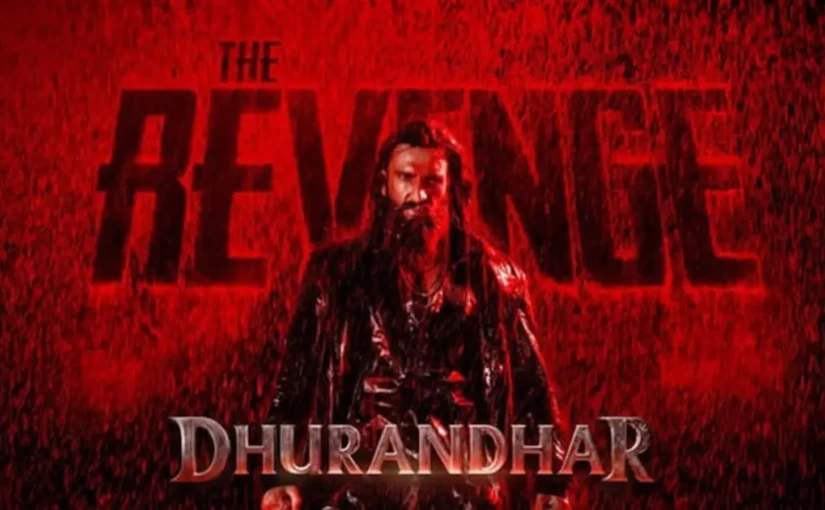
Dhurandhar The Revenge – The Wrath of Bharat

Writing this review now as I came home at 5 am and slept the whole day.

Will keep it spoiler-free as much as possible.

First of all, if some people had issues with the politics of the first movie, they are going to hate this one as it takes it way way beyond, shifting the overton window so far to the right.

The movie is great, super fun and keeps you engaged throughout. It is a bit looser than the first one, not having the razor sharp focus of the espionage drama that it was, instead transforming into more of an action movie.

The action setpieces are way more brutal and better choreographed and more in number compared to the first one.

The movie starts with one of the setpieces barely a few minutes in and then keeps going for a while before slowing down a bit leading to the interval (which is the best part of the movie) before building up steam and not letting go till the end.

Music, as always is a banger with a variety of remixes of old songs and some interesting needledrops.

Already on it’s way to be the highest grossing Indian movie of all time with massive crowds even in South India.

Anyways, highly highly recommended.

Ya naya Hindustan ka naya cinema hai.

Brown Pundits