GDP of South Asian countries 1 : nominal vs real

In March 1776, exactly 250 years ago, Scottish economist Adam Smith published his work The Wealth of Nations, widely considered to be one of the most influential books on political economy.  In this book he highlighted the fact that people often confuse the real wealth of a country (the ability to buy goods and services) with  its nominal wealth. The idea is still relevant today, so let us have a closer look. If we rank the major South Asian countries by their per capita nominal GDP (size of the total economy in the local currency divided by the price of a dollar), the list goes as follows :

1. SriLanka : USD 4516 
2. India : USD 3051
3. Bangladesh : USD 2960 
4. Pakistan : USD 1710
5. Nepal : USD 1550
6. Afghanistan : USD 417 

Many people assume that these numbers measure how poor or rich a country is. In particular, the average Sri Lankan is 50 percent wealthier than the average Indian, and the average Bangladeshi is 70 percent wealthier than the average Pakistani. This is not really true. The nominal GDP accurately measures the real wealth of a country only in an utopian world where there are no taxes or other barriers on tradable goods, and transportation costs are completely absent. In reality, Americans can not instantly transport themselves to India to get cheap haircuts, and South Asian countries often impose huge taxes on imported goods. So nominal GDP is a flawed yardstick if we want to compare different countries.

Here’s a simple puzzle based on this idea : What steps should the Indian government take if they want to increase the country’s per capita nominal GDP from USD 3000 to USD 6000 within this year?

At first glance, achieving this may seem unattainable, given that India’s economy is currently growing at a rate of 6-7 percent annually. However, once we realize that nominal GDP also depends on trade policies, it is easy to come up with strategies to make this happen. For instance, the Indian government could implement an extra import duty of Rs 45 per dollar on all imported goods while simultaneously offering a Rs 45 per dollar subsidy (through tax incentives, free land, etc.) for all exported products. This will reduce the price of the dollar from Rs 90 to Rs 45 and double India’s nominal GDP. It’s also easy to see that this will have no impact on the real economy. Since the USD isn’t utilized in local transactions, the domestic market will stay the same. The extra tax imposed on imports will be balanced by the decrease in the dollar’s value. Likewise, the lower dollar rate will be offset by subsidies provided in the export sector.


Who Is Reading Brown Pundits? (And Why Pakistan Just Became Our Biggest Audience)

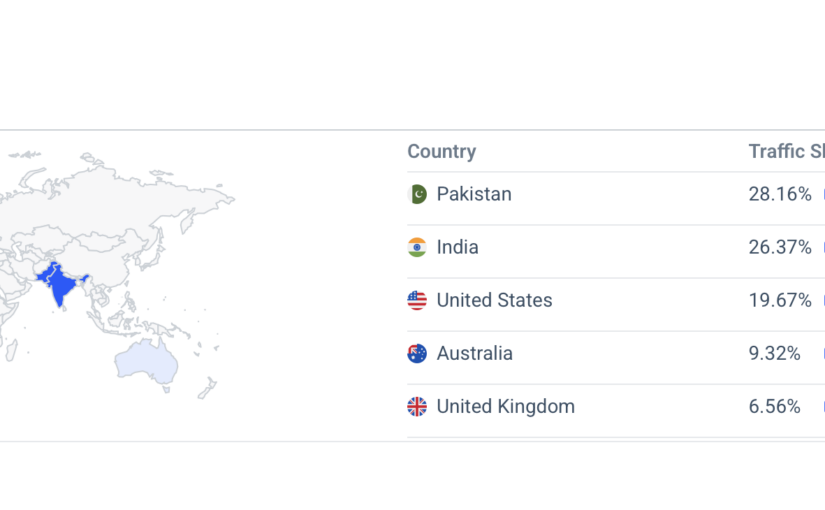
We have been running this blog long enough to know that readership numbers are a vanity metric, until they aren’t. February held steady at 41,000 views, which we are quietly proud of. But what genuinely surprised us, and we mean genuinely, not in the performative way, is that Pakistan now constitutes 28% of our readership.

A thousand visits a day, give or take a bit more. The old 1% rule says one in a hundred will actually say something; which means for every BB, RNJ, Kabir or Sbarr in the comments, there are ninety-nine people reading in silence and agreeing with “either camp”. We find that thought rather beautiful.

Prior to February, Pakistan had never cracked the top five. Now it’s sitting at number one.

Bharatstan, indeed.

Bharatstan Anthem 2025🇮🇳#Bharatstan #IndianArmy #ProudIndian #JaiHind #DeshBhakti #subscribe - YouTube

Commentariat = Saffroniate? Continue reading Who Is Reading Brown Pundits? (And Why Pakistan Just Became Our Biggest Audience)

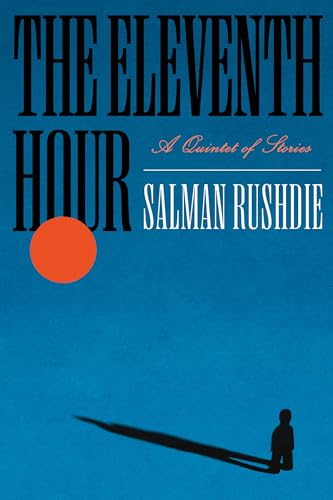
Review: The Eleventh Hour by Salman Rushdie

Salman Rushdie is one of the world’s most prominent English language writers and certainly among the most famous writers of Indian origin. His second novel, Midnight’s Children won the 1981 Booker Prize as well as the “Best of the Bookers”. Other well-known novels include Shame–one of the great novels about Pakistan– and The Satanic Verses.

The Eleventh Hour is a collection of five stories, two of which were previously published in The New Yorker. For the purposes of this review, I will focus on “The Musician of Kahani” and “Late”.

“The Musician of Kahani” is set in the fictional city of Kahani (Urdu/Hindi for “story”) though the setting is clearly modeled on Bombay–where Rushdie was born and brought up. The story revolves around Chandni Contractor (the titular musician) who marries into a prominent business family. After she suffers a stillbirth while her in-laws are throwing party after party celebrating the arrival of the baby, Chandni decides to take revenge on them through her music. Rushdie describes the scene as follows:

The day came when Chandni’s fingers began to move once more in their particular fashion. She was back in her own room in her family’s residence in Breach Candy. She had not thought, since her return, of sitting at her piano or picking up her sitar–both of which had been quietly returned to her–but this time when her fingers moved Meena was in no doubt that she heard music. First Meena heard it, then Raheem. It was music of a kind they had never heard before, and the instruments on which it was being played were unknown to them, It rose above their home like a pillar of smoke, like a column of fire, like the weapon of an invading alien species, and then it rushed across the city and the country to do its deadly work… (Rushdie 96)

As a musician myself, I was particularly intrigued by the supernatural power of music in this story. Continue reading Review: The Eleventh Hour by Salman Rushdie

The Demise of Brown Pundits Is Much Exaggerated

Every few months someone asks whether Brown Pundits is “dying.” I understand the instinct. The internet is littered with abandoned blogs. Attention is fickle. Writers drift. The centre does not hold. And yet, when I actually look at the numbers, the mood often turns out to be wrong.

We had a real dip. In September and October we were running at roughly 55–65k monthly readers. Then we fell hard, to around 33k. This month, we have bounced back to roughly 53k. That is a 60% jump on the trough. A lot of it is mobile. A lot of it is casual readership rather than the old-school desktop cohort. But it is still real people arriving, reading, and sharing.

The geographical pattern is also telling. India and the United States remain the main pillars, as you would expect. But Bangladesh has surged in a way we did not anticipate. That matters because it suggests we are not only a niche diaspora salon. We are also being read inside the region, by people who do not need South Asia explained to them. Continue reading The Demise of Brown Pundits Is Much Exaggerated

15 Years of Brown Pundits: A Platform, a Posture, a Proof

On 28 December 2010, the question was not ideology or politics, but naming.

brownpundit(s). brownguru(s). brownsmarts. brownfolks. brownidiots.

The instinct was already there: reclaim brown without asking permission, and refuse the performance of respectability that so often polices minority intellectual spaces. The reply came quickly and decisively.

Brownpundits.

The first post, Hello World, went live on 30 December 2010. Fifteen years later, what matters is not that a blog survived. Many do. What matters is how it survived: without institutional backing, without funding, without ideological capture, and without deference to credentials masquerading as truth. Brown Pundits was never designed as a platform for prestige. It was designed as an intellectual retreat; a place where arguments stand or fall on substance, not accent; where brownness is neither explained nor apologised for; where disagreement is not heresy. That posture, upright, unbought, unafraid, is why Brown Pundits still exists.

A Discipline, Not a Brand

Brown Pundits began with a simple wager: that the English-language internet still had room for a South Asian intellectual space that did not need permission. No institutional sponsor. No ideology police. No professional incentives. Just writers who believed that brown questions, Indian, Pakistani, Bangladeshi, diasporic, could be argued in public with rigor and dignity. Fifteen years on, Brown Pundits remains. That endurance is not luck. It is structure. We lasted because we never built this as a brand. We built it as a discipline.

The point has never been agreement. The point has been posture: stand upright, test claims, correct errors, refuse theatre. Independent platforms fail for predictable reasons. They chase virality. They harden into faction. Or they monetize attention until thought becomes marketing. Brown Pundits avoided those traps by being unusually boring in the right ways: we publish, we argue, we edit, we keep the record. Nobody here is paid to write. That is not moral vanity. It is why we remain unpurchasable.

Five Years of Solidarity

Over the last five years, some of the most important work has not been online at all. It has been the steady, unglamorous work of civic seriousness: reading dense documents, tracking deadlines, understanding procedure, and watching institutions scramble when they assume nobody is paying attention. During this period, there has also been sustained dialogue with a small circle of intellectually serious allies; quiet, exacting minds with a gift for clarity under pressure and an instinct for how power hides behind process. Not public figures. Not brands. Just adults: difficult to gaslight, uninterested in theatrics, precise about the record.

That kind of solidarity resets the baseline. You stop mistaking polish for integrity. You stop confusing titles with truth. You learn to clock everything. You learn that the record is not drama; it is protection. That discipline carries back into Brown Pundits. It shows in how disputes are handled, how errors are named, and how authority is tested rather than absorbed.

The SD Episode as Proof

The recent SD exchange was not, in the end, about architecture. It was about authority: who is allowed to explain, who is expected to absorb, and what happens when the subject speaks back. We engaged the way Brown Pundits always has. We read closely. We identified the errors. We insisted on precision. We treated the exchange as part of the record, not as outrage content. What mattered was not that corrections were made; corrections are normal and welcome.

What mattered was the instinct that surfaced at the start: revise quietly, respond pedagogically, assume the critique will not notice the shift. That instinct is older than any one writer. It is a patterned behaviour in how authority manages challenge in brown-facing spaces. And yet, precisely because Brown Pundits exists, the record held. The language moved. The posture changed. This was not a “victory.” It was proof of concept. The platform did what it is meant to do.

“Brown” Is Not an Ethnicity; It Is a Civilizational Composite

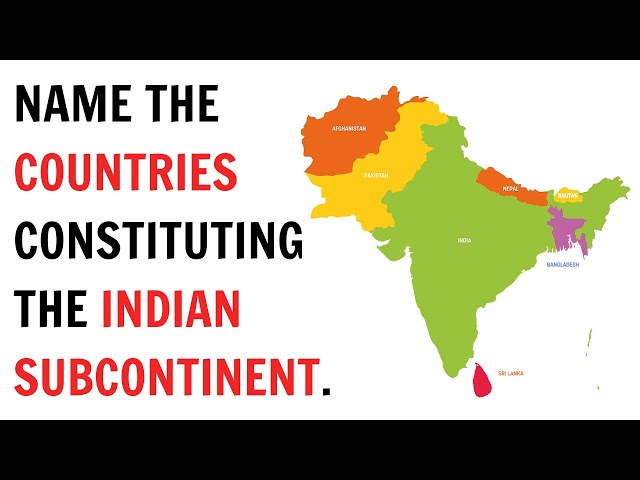
The deeper reason Brown Pundits still matters is that brown is not a neat identity. It is not a single bloodline, doctrine, or grievance. It is a civilizational composite with a long memory and a hard geography. The Indian subcontinent is layering, not essence:

  • ancient coastal and inland populations

  • Dravidian continuities and transformations

  • Aryan synthesis and institutionalisation

  • Islamicate overlays that became native in texture, not merely foreign in rule

  • British power, whose administrative afterlife still structures class and accent

And beyond this lie the East, the Northeast, the mountain corridors, the sea routes. This is why Brown Pundits resists simplification. The subcontinent is not a monoculture, a single trauma, or a single pride. It cannot be narrated by those who treat it as a site for extraction; political, academic, or aesthetic.

What Fifteen Years Means

Fifteen years is long enough to know what this site is for. Not fame. Not power. Not money. Not outrage. Those are cheap forms of relevance. Brown Pundits exists to keep an alternative alive: an intellectual retreat on the open web where brown life can be examined with seriousness; where hierarchy is not mistaken for truth; where criticism is not treated as insolence; where the record matters. We are not untouchable, and we do not aim to be. But we are not easily compromised, because everyone here has a life outside the internet. That is our freedom. Fifteen years on, the mission remains unchanged:

Stand upright | Read closely | Correct what is wrong | Refuse permission structures | Keep the record |

That is why we are still here.

Mamdani and India — A Strategic Moment

The Desi Mayor and the Mirror of India: What Zohran Mamdani’s Victory in New York Means for a 2050 India

by Amb Manav Sachdeva

When Zohran Mamdani — the 34-year-old Indian-heritage, Muslim-American democratic socialist — clinched the victorius count for the mayoralty of New York City, it was more than an American political event. It was a global inflection point. For the first time in history, the world’s most influential city is poised to be led by a man who not only traces his lineage to India but proudly identifies himself as desi — as an inheritor of South Asian pluralism, Muslim humanism, and diasporic imagination.

For India, Mamdani’s win ought not to be filtered merely through the lenses of political affinity or ideological tension. Nor should it be reduced to whether he has praised or criticized Narendra Modi. It must be read as a civilizational opportunity — a chance to reflect on how India sees itself through the mirror of its far-flung children, and how it chooses to relate to a diaspora that has become not just prosperous, but powerful.

From Symbolism to Strategy Continue reading Mamdani and India — A Strategic Moment

Asian Americans: Model Minority, POC or just a bad idea?

Razib Khan has a post up about Asian Americans and how they are perceieved/presented in American intellectual discourse.
Facts are important. But they can be inconvenient….. Today Quartz put up a piece, If Asian Americans saw white Americans the way white Americans see black Americans, which is not really about Asian Americans at all, but simply uses them as a prop, often in a mendacious manner. First, it gives a nod to the Asian American “Model Minority Myth,” stating that there is “perception that they are high achievers relative to other American ethnic groups.” Get it? There’s a perception. There’s a myth in some scholarly and political quarters that the model minority idea is a myth, founded mostly on assertion (e.g., just stating that it’s a false myth) and slicing and dicing the statistics to emphasize ways in which Asian Americans are disadvantaged in relation to non-Hispanic whites. For example, there is often a focus on the diversity among Asian Americans, ranging from affluent Indian Americans, to groups with more conventional socioeconomic profiles like Filipinos, and finally, those which are somewhat disadvantaged such the Hmong. This is to show that Asian Americans are not a model minority…some of them are struggling. But the logic is not applied to whites! Those who purport to debunk the myth of the model minority would not accede to debunking the idea of white privilege by pointing to the state of Appalachia, and rural white America more generally. Group averages for we, but not thee?


 And yet the Quartz piece engages in some interesting jujitsu by actually reporting the statistics of Asian American advantage vis-a-vis white Americans in the service of a broader agenda of putting whites in their place in relation to their critiques of black Americans. In particular it quotes Anil Dash as saying “If Asian Americans talked about white Americans the way whites talk about black folks, they’d bring back the Exclusion Act.”


This to me is really bizarre, and why I term the piece mendacious: Asian Americans do talk about white Americans the way whites talk about black folks. This sort of thing was a clear subtext of Amy Chua’s Battle Hymn of the Tiger Mother. Many (most?) Asian American kids who grew up with immigrant parents were barraged with assertions about the disreputable character of their “American” (white) friends, and how it was important to keep on the straight & narrow. Immigrants from Asia often perceive white Americans to be sexually obsessed, lazy, and prone to a general amorality and fixation on short term hedonic interests. These are polite ways to condense the sort of attitude many Asian immigrants have toward the white American mainstream, which they worry will absorb and corrupt their children. Dash must know this, as he probably had immigrant parents, or was friends with people from immigrant backgrounds. Most white Americans don’t know this, partly because most white Americans don’t have non-white friends. But anyone from an Asian American background would be aware of the stereotypes and perceptions.


The tacit misrepresentation of Asian Americans here, not acknowledging that they do engage in the exact sort of behavior you are hypothetically positing they might engage in and so alienate white people, is not surprising. Asian Americans are often simply bit characters in a drama involving broader social and political streams which dominate the political landscape.,, 

Read the whole thing there..

I am posting this because I have often wondered why some Asian-American intellectuals (and more specifically, “South Asian” ones, since I am a little more familiar with them) are so committed to a model in which the model minority is a myth and Asian-Americans are “people of color”, standing shoulder to shoulder with African-Americans and Latinos in POC-solidarity against the oppressive rule of White privilege? I don’t mean to say that there is NO truth in any such model. But leaving the truth and untruth of the assertion aside for the moment.

Brown Pundits