Election 2014: Death Knell of Strategic Depth?


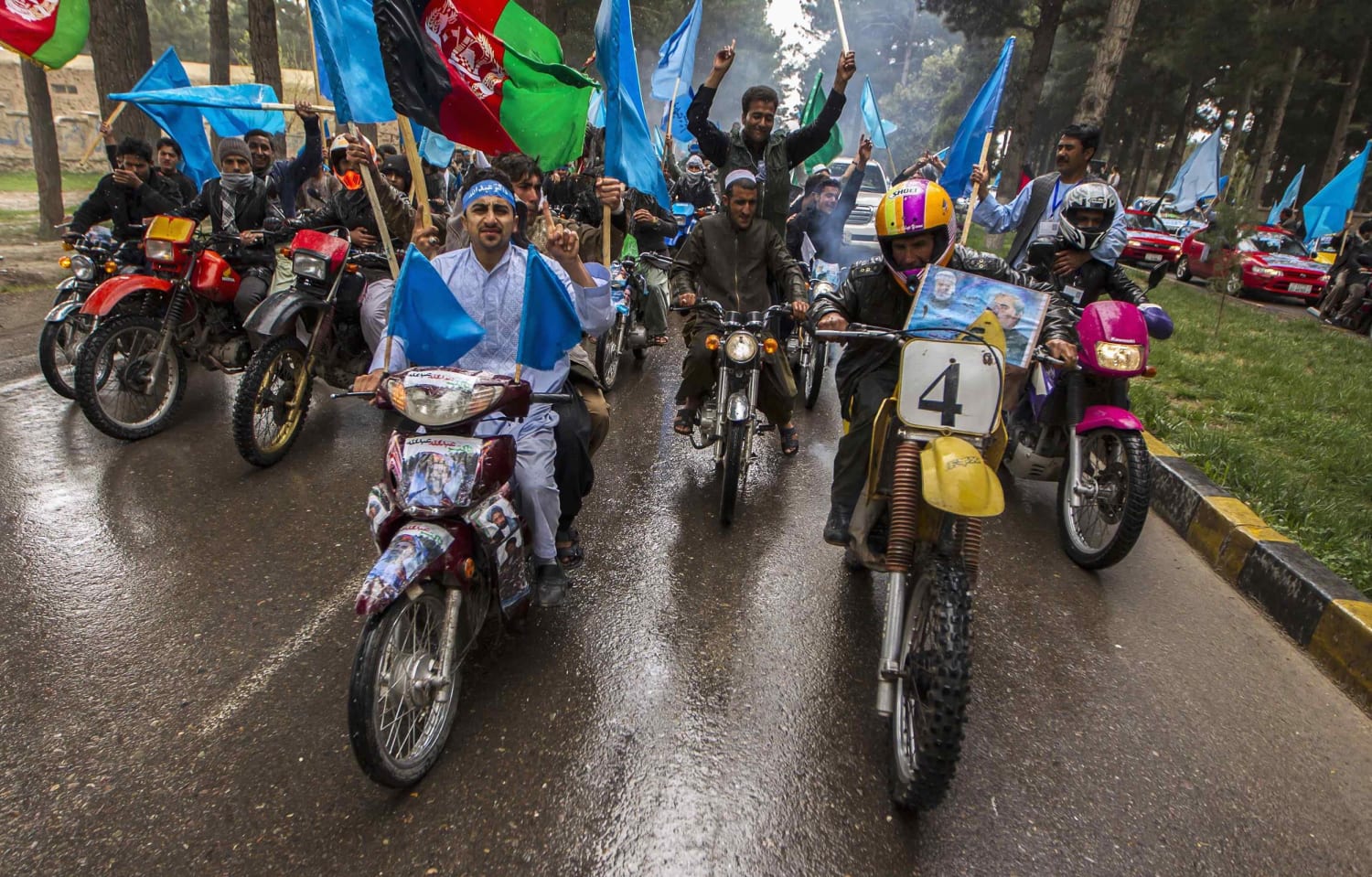
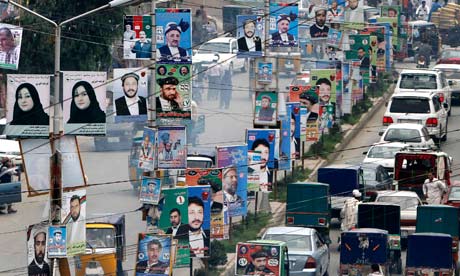
Afghanistan has voted. And wow, what a lot of voting there was! Millions of Afghans turned out and voted in an election where a vote for anyone was a vote against Mullah Umar and his backers. Now it may be that the results will not be accepted, that the winners will fight each other or that the good feeling will evaporate as some future Taliban offensive shakes the state. But if the results are credible and are accepted, then it may well be (to quote journalist Tahir Mehdi) that April 5th 2014 will be to strategic depth what December 16th 1971 was to the two-nation theory.
Of course, one may then point out that the Two Nation theory has had a very healthy Zombie existence since 1971. But even the healthiest Zombie is still a Zombie. Dying is forever.
One can always hope.
This question came up on twitter: was this election a success because Afghan security forces and ISAF did a fantastic job and the Afghan people rejected Mullah Umar? or because Pakistan was paid (and paid well) and agreed to permit a peaceful election? I suspect a bit of both. But either way, it does not alter the significance of the event. Whether Pakistan’s Taliban allies are just not strong enough to disrupt elections or whether Pakistan has sold them out for money. its all the same as far as strategic depth is concerned. Its over.


PS: I have already heard from people on twitter that this will not lead to milk and honey and a civil war is coming. But please note, I said nothing about those things. All that may be true. But strategic depth was a different story. The story was that Afghanistan is waiting for Americans to leave and then our boys walk in and eject the “mayor of Kabul”. That doesnt seem to be the story at all. “Our boys” didnt look as strong as advertised. And unless they are the dominant and strongest party, strategic depth is dead and strategic nightmare awaits.

Monsters Inc

The Americans are cutting their losses (who can blame them), Karzai is straddling the fence (he is fooling himself) and the evil people are free to scare little kids.

It sounds just like a fairy (horror) tale but there will be many more true stories like this from Taliban controlled Af-Pak territory.

It is beyond belief that the powers that be (from America to Afghanistan) are waiting (for what?) to designate the Taliban as terrorists. They will feel bad, the poor dears. Nelofar’s life is presumably lost in vain.

..
The story is heartbreaking. A Facebook status update on July 16, 2013,
from Ahmad Sardar, the Afghan journalist in Kabul. Nelofar, his
5-year-old daughter asks her dad, “Do the Taliban kill animals too?” The
father answers no, and the little girl says: “I wish we were animals.”


Little Nelofar is dead now, brutally murdered
by the Taliban – shot in the head – together with her dad, her mom and
her 8-year-old brother. Of Nelofar’s family, only her 2-year-old brother
has miraculously survived, in a coma with three bullets in his body.


On March 20, 2014, on the eve of the Persian New Year, the Taliban
managed to enter the highly fortified Serena Hotel, located just a
kilometer away from the Afghan presidential palace, where Nelofar and
her family were celebrating the Nawrooz, the arrival of the spring and
of the New Year.


The Taliban suicide mission left nine people dead and many more
injured before Afghan forces killed the four attackers, who had managed
to sneak pistols and ammunition inside the hotel, despite the tight
security measures.


The deadly attack on the Serena Hotel occurred on the same day that yet more Taliban fighters were freed from Bagram Prison,
complete control of which was transferred to the Afghan government
exactly a year ago. Since, then, most of the prisoners – considered
dangerous members of the Taliban – have been let go without formal trial
and over the strong protests of both U.S. officials and a majority of
the Afghan people.


Despite the fact that the Taliban’s use of deadly force against the
civilian population is widely branded as “terrorist attacks” inside and
outside of Afghanistan, neither the Afghan government nor the U.S.
officially recognizes the Taliban as a terrorist organization.


There is no sign that Karzai will put aside his vain hopes of winning
the hearts and minds of his “dissident brothers”; not even at the cost
of the many lives taken during the bloodshed perpetuated by the Taliban
on a daily basis. Karzai has lost the faith and trust of the Afghan
people on this.


It is an open secret that Mr. Karzai’s refusal to sign the Bilateral
Security Agreement with the Americans is purely political, with an eye
to winning the Taliban’s favor.


The Afghan public meanwhile worry that the withdrawal of
international forces from Afghanistan will mean a return of the Taliban
to power. There is an increasing need for the international community,
led by the United States, to take a clear stance with regards to the
Taliban.


In short, it is time for Washington to put objective facts above
political wishful thinking and officially recognize the Taliban as a
terror organization.
Many other members of the international community
would then surely follow suit, resulting in real and effective pressure
on the Taliban and its supporters, both inside Afghanistan and at a
regional level.
Acknowledging the Taliban as a terrorist entity will
also facilitate more cooperation between the international community in
their fight against terrorism, based on universal legal conventions and
international law.


Little Nelofar was surely not the only Afghan child to be so
frightened of the Taliban; the fear has paled the face of every Afghan.
The first step in overcoming that fear, however deep and complex, is for
people to know what they are dealing with: insurgents or terrorists.

..
regards

Sardar Ahmad

Killing (muslim) journalists is not good for propaganda but then the Taliban is not usually known for finesse.

Also the teenage soldiers cant seem to (understandably) shoot straight, the two year old baby of Ahmad did manage to survive (still in ICU).  

Perhaps one day he will try to avenge the actions of the killers of his parents and siblings….by becoming a journalist. Best wishes for the kid who (thankfully) does not understand the scope of his loss.

One more feather in the cap for the ISI (as the Afghans are calling it).

The Guardian links to the last story that Ahmad filed before he died.

Kabul zoo on Tuesday unveiled its new star attraction – Marjan
the lion,
who lived on a rooftop in the city until being rescued by animal welfare officials last year when close to death.

A
businessman in the Afghan capital had bought the male lion cub as a
status symbol for $20,000, and kept his pet on a roof terrace.

But the fast-growing cat was seriously ill when Kabul municipal officials tracked him down last October. “We
found him in a very dire condition. He was almost dead. He couldn’t
move. He couldn’t even raise his head,” vet Abdul Qadir Bahawi told AFP. “We
were not sure that he would survive. But our efforts paid off, and he
is much better. Now he loves to play with us. I think he loves us a
lot.”

Marjan is named after a famous half-blind lion who lived at Kabul zoo and became a symbol of Afghanistan’s national survival after living through coups, invasions, civil war and the hardline Taliban era, before dying in 2002. The
first Marjan, born in 1976, was blinded by a grenade thrown by a
soldier whose brother had been killed after entering his cage.


Government
inspectors took him from the owner and started an intense five-month
rehabilitation programme at the zoo to bring him back to health,
including regular massage and physiotherapy sessions.

….Afghanistan
said an attack on a Kabul hotel that left nine civilians dead,
including an AFP journalist, was planned “outside the country” in a
veiled reference to Pakistan.

The NSC said the attack on the hotel, which was carried out by four
teenage gunmen and claimed by the Taliban, was in fact the work of
“foreign intelligence services” — a phrase normally meant to mean
neighboring Pakistan.

“Witness testimony and preliminary
information analysis shows that this terrorist attack was directly
executed or carried out by foreign intelligence services outside the
country,” the council said in a statement.

“Another information
of the NDS (National Directorate of Security) shows that earlier when
one Pakistani diplomat entered the Kabul-Serena hotel to use its sport
club, he filmed the corridors of the hotel which the hotel staff raised
objections to,” it added.

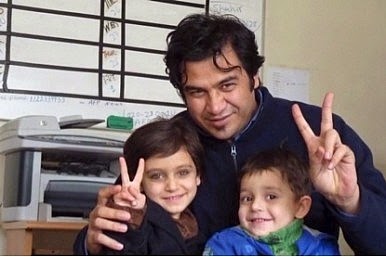
The victims of Thursday’s attack included AFP
journalist Sardar Ahmad, his wife and two of their three children,
along
with another Afghan and four foreigners — two Canadians, an American
and a Paraguayan. The couple’s youngest son, two-year-old
Abozar, survived with bullet wounds to the head, chest and leg and
remained in intensive care today.

Afghanistan made a similar
allegation following a deadly restaurant bombing in Kabul in January
that killed 21 people including 13 foreigners.

regards

“The sole survivor”

The shadow wars waged between Pakistan and India in Afghanistan as recounted by William Dalrymple.

As I have noted before, the wars will end when the elites decide that enough is enough. Let us hope that they have the wisdom to step up to the plate (together) sooner rather than later.

At six o’clock in the morning of February
26, 2010, Major Mitali Madhumita was awakened by the ringing of her
mobile phone. Mitali, a 35-year-old Indian army officer from Orissa, had
been in Kabul less than a year. Fluent in Dari, the most widely spoken
language in Afghanistan, she was there to teach English to the first
women officer cadets to be recruited to the Afghan National Army.

It was a sensitive posting, not so much because of gender issues as
political ones: India’s regional rival, Pakistan, was extremely touchy
about India providing military assistance to the government in
Afghanistan and had made it very clear that it regarded the presence of
any Indian troops or military trainers there as an unacceptable
provocation. For this reason everyone on the small Indian army English
Language Training Team, including Mitali, and all the Indian army
doctors and nurses staffing the new Indira Gandhi Kabul Children’s
Hospital, had been sent to Afghanistan unarmed, and in civilian dress.
They were being put up not in an army barracks, or at the Indian
Embassy, but in a series of small, discreet guest houses dotted around
the city’s diplomatic quarter.  


The phone call was from a girlfriend of Mitali’s who
worked for Air India at Kabul airport. Breathless, she said she had just
heard that two of the Indian guest houses, the Park and the Hamid, were
under attack by militants. 
As the only woman on her team, Mitali had
been staying in separate lodgings about two miles away from the rest of
her colleagues, who were all in the Hamid. Within seconds, Mitali was
pulling on her clothes, along with the hijab she was required to wear,
and running, alone and unarmed, through the empty morning streets of
Kabul toward the Hamid. 
“I just thought they might need my help,” she told me recently in New Delhi. 
As she dashed past the Indian Embassy, Mitali was
recognized by one of the guards from diplomatic security who shouted to
her to stop. The area around the guest houses was mayhem, he told her.
She should not go on alone. She must return immediately to her lodgings
and stay there.
“I don’t require your permission to rescue my
colleagues,” Mitali shouted back, and kept on running. When she passed
the presidential compound, she was stopped again, this time at gunpoint,
by an Afghan army security check post. Five minutes later she had
charmed one of the guards into giving her a lift in his jeep. Soon they
could hear bursts of automatic weapons, single shots from rifles and
loud grenade blasts. 
 “As we neared the area under attack I jumped out of the jeep and ran
straight into the ruins of what had been the Hamid guesthouse. It was
first light, but because of all the dust and smoke, visibility was very
low and it was difficult to see anything. The front portion of the
guesthouse was completely destroyed—there was just a huge crater.
Everything had been reduced to rubble.
A car bomb had rammed the front
gate and leveled the front of the compound. Three militants then
appeared and began firing at anyone still alive. I just said, ‘Oh my
God,’ and ran inside. 
“I found my way in the smoke to the area at the back
where my colleagues had been staying. Here the walls were standing but
it was open to the sky—the blast had completely removed the roof, which
was lying in chunks all over the floor. There was cross-firing going on
all around me, and the militants were throwing Chinese incendiary
grenades. Afghan troops had taken up positions at the top of the Park
Residence across the road and were firing back. I couldn’t see the
militants, but they were hiding somewhere around me.
“As quietly as I could, I called for my
colleagues and went to where their rooms had been, but I couldn’t find
them anywhere. I searched through the debris and before long started
pulling out bodies. A man loomed out of the gloom and I shouted to him
to identify himself. But he wasn’t a terrorist—he was the information
officer from our embassy and he began helping me. Together we managed to
get several injured people out of the rubble and into safety. 
“Then we heard a terrible blast. We later learned
that Major Jyotin Singh had tackled a suicide bomber, and by holding him
from behind had prevented him entering the Park Residence. The bomber
was forced to blow himself up outside. Jyotin had saved the lives of all
the medical team inside.
“But the only one of my colleagues who hadn’t been killed on the spot,
Major Nitesh Roy, died of his 40% burns in hospital three days later. I
was the only one of my team who came back alive.”

 regards

Brown Pundits