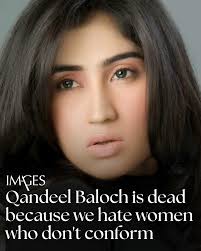
Open Thread: Pakistan’s Demons are The Daughters of God

Q writes on Pakistani source confirms US, Iran closing in on one-page memo to end war:

  1. Total Pakistani victory. If Pakistan pulls off the mediation, this will its greatest diplomatic victory ever. Lifting of Iranian sanctions will allow cheaper Iranian oil to flow directly to Pakistan, and the oil pipeline can be finally completed. Complete eradication of Indian influence from Iran is now achieved, and this will also eliminate any support to BLA from across the border.

Pakistan post Sindoor is on a winning streak. The mediation is real, the memo is real, and if it holds, the diplomatic ledger for the year goes firmly into Rawalpindi’s column. Iranian oil at the door, IP pipeline thinkable for the first time in fifteen years, BLA lifelines into Sistan throttled, Chabahar quietly demoted. A Victorious month?

But the question is whether she can conquer her demons. And the demons are not in the foreign ministry. They are in the drama studios.

Q again, on Pakistani dramas:

Women low-key love abusive behaviour from attractive men. Pretty much all women fantasy porn is about this. (What they don’t love is abusive aggressive behaviour from ugly or poor men) Since females are the primary target audience of these dramas, they tend to show this because that’s what the market demands. I would not read too much into this. What’s more concering was that foreign funded NGOs were trying implement anti-family messaging in the last 15 years – and that messaging has suddenly dried up after their funding dried up.

Fantasy is not preference. A woman reading a brooding-billionaire romance is not auditioning for one. To collapse the two is to flatten the female imagination into a market signal, which is exactly what the Pakistani dramas do and exactly why they rot the culture that consumes them.

Daughters of God Continue reading Open Thread: Pakistan’s Demons are The Daughters of God

“Bad Gays: Qutbuddin Mubarak Shah” (Kabir’s Open Thread)

This is not exactly current events but in the spirit of discussing Indian History:

The podcast “Bad Gays” which defines itself as a “podcast about evil and complicated queers in history” did an episode a while back about Qutbuddin Mubarak Shah, who was the son of Alauddin Khalji (of “Padmavat” fame).  IIRC, this was the only time the podcast has featured a South Asian figure.

They also have a book called Bad Gays: A Homosexual History (Verso 2022).

On Qutbuddin Mubarak Shah, they write: Continue reading “Bad Gays: Qutbuddin Mubarak Shah” (Kabir’s Open Thread)

Pakistani Centrists, Not Muslim Extremists

A Precedent note

The most important thing to understand about the Pakistani voices on this site is that they are centrists, not extremists. Kabir, El Khawaja, S Qureishi: none of them is a fringe figure in Pakistani society. They are roughly where a literate, urban, employed Pakistani sits, and that fact deserves attention.

It deserves attention because India, over the last decade, has stopped engaging with Pakistanis altogether. Visas have collapsed. Cricket is gone. Cinema is gone. Academic exchange is gone. The everyday oxidation of one society against another, the slow correction by which extreme positions get rounded down through exposure to people who hold different ones, has been switched off. What is left is each side talking to itself about the other.

Brown Pundits is one of the few places where that has not happened.

The thread that prompted this note will illustrate. A week ago, S Qureishi observed that the only downside of the Islamic Revolution was that “there is no OnlyFans.” We were deeply offended by this line seriously enough to write the next piece on counterfactual analysis of Iranian society. Q then returned, under another post, with a fuller thesis: female sexuality must be controlled to sustain a civilisation. Pressed on enforcement, he listed disownment, violence, lawsuits, vandalism. Finally when pressed on honour killing, he admitted it was “horrible” and “immoral.”

Three voices took shape on the thread. The most salient asked that the comment be deleted as misogynist.

We are not deleting it.

We disagree with Q on almost every line he wrote. The thesis that female autonomy is the load-bearing crack in civilisation is one we reject in full. The post on Virginity Policing that triggered this thread was our own. But Q is not a Taliban spokesman. He is a Pakistani who, when challenged in writing by other commenters, was forced to articulate his position, defend it under hostile examination, and concede that violence is wrong. That is not platforming. That is engagement. It is the slow work India has decided it no longer needs to do.

Continue reading Pakistani Centrists, Not Muslim Extremists

Humsafar and Shakespeare

Since we were recently discussing gender norms in Pakistan, I am sharing this TV review I wrote some years ago. “Humsafar” was one of the most popular Pakistani TV dramas and it revolved around the theme of gender relations. This continues to be a major theme in Pakistani dramas. Part of the reason that I don’t watch Pakistani TV is that the dramas are largely full of crying women and toxic men. However–according to a family friend of mine who writes TV plays— this is actually what the (largely female) audience wants. 

It’s also interesting to note that “Humsafar” is the drama that made Fawad Khan and Mahira Khan a star couple on Pakistani TV. (They are not married. “Khan” is a very common last name in Pakistan). 


Since last September, one TV serial has taken Pakistan by storm, becoming a major topic for conversation and forcing people to reschedule social occasions so that they don’t clash with the program’s time slot. Entitled Humsafar (Companion), the drama has made stars out of its leading couple, Fawad Afzal Khan and Mahira Khan.  The play is a typical melodrama, centering around the relationship between Ashar and Khirad and the intrigues that drive them apart, intrigues created by Ashar’s controlling mother, Farida. Yet somehow, this hackneyed plot line has had the entire nation hooked for six months.

To briefly summarize the plot: Ashar is the son of a rich man living in Karachi and working in his father’s company.  His cousin, Khirad, meanwhile lives a middle-class life with her mother in Hyderabad. Khirad’s mother finds out that she has cancer and calls her brother (Ashar’s father) and asks him to help her. Her brother brings her to Karachi and gets her treatment, but it is too late. As she waits to die, she begs her brother to get her daughter married so that she is assured a secure future. Her brother agrees, telling her that he will marry Khirad to his own son.  Ashar agrees to honor his father’s promise, but his mother, Farida, is totally against the marriage, believing that Khirad is beneath her son’s standard. Farida has also hoped that her own niece, Sara, will become Ashar’s wife. Sara loves Ashar and believes that she will eventually marry him.  However, under threat of divorce, Farida is forced to accept the marriage. While her husband is alive, she pretends to accept Khirad but as soon as he passes away she begins plotting to get rid of her. Her plot involves making Ashar believe that Khirad has been unfaithful to him. Ashar is made to witness a scene in which Khirad is alone in the kitchen with another man who is holding her dupatta in his hands. Farida immediately accuses Khirad of infidelity, and though Khirad begs Ashar to believe she is innocent, he rejects her. Farida than throws Khirad (who is pregnant, unknown to Ashar) out of the house in the middle of the night.  Khirad writes a letter to Ashar, telling him that what he saw was orchestrated by his mother, and that she is pregnant. However, Ashar doesn’t read this letter until much later.

Khirad gives birth to a daughter, Hareem, and the story moves ahead four years.  Hareem has a congenital heart condition, and Khirad comes to Ashar to tell him that he has a daughter who needs open-heart surgery.  She herself shows no desire to reconcile with him, but simply wants him to do his duty towards his child.  Ashar takes the responsibility of getting the child treated, and mother and daughter move into Ashar’s house. Ashar begins to fall in love with Khirad again, but Khirad decides that once Hareem is well, she will leave her with her father, and go back to Hyderabad, believing that Ashar can provide her daughter with a much better life than she can. When she leaves, Ashar discovers her letter of four years ago and learns the truth. He rushes after Khirad to bring her back. Meanwhile Sara has realized that she was manipulated by her aunt and that Ashar will never love her. She commits suicide. Ashar returns and confronts his mother, who subsequently has a nervous breakdown. Ashar and Khirad reconcile. Continue reading Humsafar and Shakespeare

Why is Pakistani Culture obsessed with Policing Female Virginity?

We were at our favourite Persian restaurant. A young woman two tables away, not Persian herself, was telling her Persian father about her female friend in continental Europe.

The friend was Pakistani-origin. She had started dating a Latino man. The Pakistani friend’s mother, somehow, had a dream. In the dream, her daughter had lost her virginity.

The dream was the trigger.

The mother went into a spiral. The father, it was said, lost his job. The mother had a nervous breakdown. A trip back to the Muslim homeland was arranged. The daughter refused to board until she saw the return flight in her hand. Only then did she get on the plane. When she returned to the Muslim country, they told her she wasn’t going back to Europe.

We lost the rest of the story, and, over the rest of the meal, we thought about Sana Cheema.


What Sana Cheema Saw

Sana Cheema was a twenty-six-year-old Italian-Pakistani who had lived in Brescia since 2002. She wanted to marry a second-generation Italian-Pakistani man of her own choosing. Her father took her back to Gujrat, in Punjab, under the pretext of a visit.

She was strangled the day before her return flight to Italy. Her neck was broken. Her hyoid bone dislocated. Her father, her brother, and her uncle were charged. They had buried her quickly, without autopsy, and told relatives she had died of natural causes. The body had to be exhumed on a magistrate’s order after Italian media forced the case into daylight.


Qandeel Baloch, in the Same Line Continue reading Why is Pakistani Culture obsessed with Policing Female Virginity?

Brown Pundits