India: food, food everywhere, not a bite to eat

Amartya Sen can now get a second Nobel prize by pointing out that while democracies on the whole manage to avoid famines, they can still manage to condemn people to malnutrition, while the equivalent wheat production of Australia manages to rot away or worse.
….
Most of you may know that India produces
more food than we can consume. In fact, India has been self sufficient
in food for at least the last three decades, having “achieved self- sufficiency in food production in the late 1970s (1)”. And yet hunger in India remains at alarming levels. More children remain malnourished in India than any part of the world (almost 40% of the world’s total according to some estimates).


What most of you may not know is that India wastes a quantity of wheat equivalent to the entire production of Australia every year, of which 21 million tonnes perishes every year due to a lack of inadequate storage and distribution (2). Worse, up to 40 percent of the country’s food harvest rots before it gets to the market, thanks to inadequate cold storage facilities and transport bottlenecks.


A report from 2008 highlighted the scale of mismanagement and callous neglect of food storage:  “Over
10 lakh tonnes of foodgrains worth several hundred crores of rupees,
which could have fed over one crore hungry people for a year, were
damaged in..(FCI) godowns during the last one decade
 (between 1997 – 2007).”

Shockingly, “Rs 2.59 crore was spent just to dispose off the rotten foodgrains”.  


Responding to an RTI query last year, FCI admitted that over 17,500 tonnes of foodgrain lying in its godowns got destroyed in the last three years (alone)”. This abysmal state of affairs has seen foodgrains being stored in classrooms, grains being burnt and stocks being infested with worms.
 

A pernicious side-effect of rotten grains in godowns is the sight
of good quality grains being left in the open since valuable space has
been taken up by grains unfit for consumption.


Ironically, even as food production has soared in the last few years, storage capacity has actually decreased. This report by Kamayani Mahabal mentions
how Government owned storage capacity actually fell to 32.1 million
tonnes in 2009 from 36.7 million tonnes in 2004. This was UPA-I.

UPA-II was not much of an improvement. While “..total foodgrains
stock in the Central Pool recorded an increase of 45.8 million tonnes
between 2006-07 and 2011-12; FCI increased its storage space through
hiring or owned space only to the extent of 8.4 million tonnes (18
percent)…Its owned storage capacity increased by mere 0.4 million
tonnes during the period
” (3).

What’s worse, even the existing capacity – woefully inadequate as it was – was not being utilised fully. “The
auditor (CAG) observed that utilization of existing storage capacity in
various states and union territories was less than 75% in the majority
of the months between 2006-07 and 2011-12.” 

In case of fruits and vegetables – items that perish easily – lack of proper storage makes the situation worse. An ASSOCHAM Study from 2013 estimated that “at least 30% of fruits and vegetables were rendered unfit for consumption due
to spoilage
after harvesting, negligent attitudes, absence of food
processing units and unavailability of modern cold storages”. The study
also noted that barely 22% of produced fruits and vegetables reach the
wholesale market in India.


Dr JP Narayan of LokSatta has noted that “Post-harvest losses of perishable commodities exceeds Rs 100,000 crores or Rs one trillion per annum”.

regards

Polio free!!! but many “question marks” remain

Yay!!!

Congratulations to all 10 countries who passed (India, Nepal, Bangladesh, Maldives, and Sri Lanka are the SAsian nations, also Burma, South Korea, Indonesia, Thailand, and East Timor).

Given India’s pathetic condition it was considered to be the last frontier for polio. The fact that the job was done at all is nothing short of a miracle.

However celebrations need to be tempered with caution. Polio has now spread westwards to Syria from Af-Pak (via jihadis who plan to set up a drone-free forward base from which to attack Europe/West), it can just as easily spread eastwards as well.

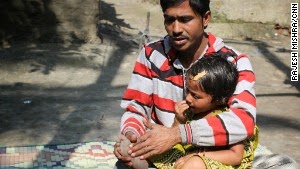
The symbol for polio eradication is Rukhsar Khatun the last victim who still needs treatment and (as noted below) her “future is still a question mark.” 

Not to mention, question marks for millions of Rukhsars living a virtual death sentence as dictated by the merchants of death

……………….


She has become the
greatest symbol of India’s valiant — and successful — effort to rid
itself of a crippling and potentially deadly disease. Rukhsar, 4, is the
final documented case of polio in India.


Her face has appeared in
newspapers and on television. She’s been invited to national events by
Rotary International, the organization that led the effort to rid India
of polio. She is a literal poster child, an inspiration, a symbol of a
feat that no doctor or health official thought possible even a few years
ago.


Apart from the publicity, though, Rukhsar’s life has hardly changed, her future still a question mark.


She is used to seeing
health officials and reporters arrive on foot at her home in Shahpara, a
village in the Indian state of West Bengal. On the day we visited, she
dressed herself in a long green printed dress, marred only by a tear at
the shoulder. She oiled her hair and pulled it back with plastic
barrettes.
She did it all herself when she learned we were on our way.


Her parents, Abdul Shah,
32, and Shobejan Begum, 30, blame themselves for their child’s
suffering. They had their other children vaccinated, but not Rukhsar.
She was a sickly child, in and out of hospital with liver infections and
diarrhea. They thought it safer not to subject her to more medication.


It wasn’t until little
Rukhsar’s right foot swelled and twisted in early 2011 that her parents
took her to a hospital in nearby Beleghata for tests.
She was just 18
months old when doctors confirmed the worst: Rukhsar had polio.


Polio is caused by a
virus that attacks the brain and spinal cord cells that move joints and
muscles.  
About one-third of those who contract polio in India are left
paralyzed — as was Rukhsar.


“Everything was our fault,” explains her father. “I thought she would never walk again.”

….
The World Health Organisation officially certified India and
10 other Asian countries free of polio on Thursday, a milestone lauded
as a “momentous victory” over an ancient scourge.

The
Southeast Asian region, which includes India but excludes Afghanistan
and Pakistan, was certified by a panel of experts after the countries
went three years without reporting a single new case.

The WHO said
the certification meant 80 per cent of the world’s population lived in
polio-free regions and was an important step towards global eradication
of the crippling disease.

“This is a momentous victory for the
millions of health workers who have worked with governments,
nongovernmental organisations, civil society and international partners
to eradicate polio from the region,” said WHO Southeast Asia regional
director Poonam Khetrapal Singh.


The
certification is particularly significant in India, home to 1.2 billion
people, and which until 2009 still accounted for half of all cases
globally.

The certification confirms one of India’s biggest public
health success stories, accomplishing something once thought
impossible, thanks to a massive and sustained vaccination programme. India
celebrated the milestone on January 13 – which marked three years since
the last reported new case in the country, that of a teenage girl in a
slum in the eastern city of Kolkata.

India reported 150,000 cases
of paralytic polio in 1985, and 741 new infections that led to paralysis
in 2009. In following year, the number of new victims fell to double
figures before the last case in January 2011. 

India’s poor
sanitation, mass internal migration and dilapidated public health system
made many experts believe it would be the last country to eradicate the
disease, if at all.

The countries certified Thursday were India,
Bangladesh, Bhutan, South Korea, Indonesia, Maldives, Myanmar, Nepal,
Sri Lanka, Thailand and East Timor.

……………..
regards

World War I (from an Indian viewpoint)

It has been a hundred years past now. The Indian numbers are pretty impressive, it is sad that none of our JNU educated historians (mostly elite class Bengali Marxists) have dwelt on this aspect of Indian history.

….

How many Indians were involved in WW-I, where did they mostly hail from?

Figures differ. Though most estimates say 1.4 million Indians—950,000
soldiers and 450,000 non-combatants— participated in the War, some
figures show that almost 1.7 million Indians, including 6,00,000
non-combatants signed up for war between 1914 and 1918, from a then
total population of 225 million. The soldiers were mostly from Punjab
(which would now include  Haryana), Garhwal and Kumaon, though with the
setting up of a Bengali regiment there were recruits from eastern India
and elsewhere.

How many Indian soldiers were killed?

Officially, about 50,000 Indian soldiers died, while more than 65,000
were wounded and about 10,000 were reported missing in action.


How do we remember the Indian soldiers who fell in the War?

The India Gate in New Delhi is the most visible symbol of the War in
India. It was dedicated to Indian soldiers who fought in the First World
War for the British Empire. It commemorates the 70,000 Indian soldiers
who fell in defence of the Empire in the War and, subsequently, also
other soldiers who died in the Northwest Frontier and the Third Afghan
War and had no known grave. ‘The eternal flame’ was installed there in
1971 and has since become the site of the symbolic tomb of the ‘Unknown
Soldier.’

Where were Indian soldiers deployed?

They were deployed in the European theatre, Egypt, Palestine and Africa. They fought in many of the major battles of the War.

What impact did WW-I have on India’s freedom movement?

It had a major and fundamental impact on India’s freedom movement. It
began with Britain’s decision in 1917 that India  will be granted 
“responsible government” like other British “white dominions.” It
shifted the leadership in the Congress from the “moderates” to Gandhi’s
movement of “Swaraj in one year”. It also brought about a shift in
politics from the avowedly “secular” to more strident appeal for
religious allegiance.  

The popular outrage movement against the “Rowlatt
Act”, seen as a tool to curb freedom of expression, led to the
Jallianwala Bagh massacre in Amritsar in April 1919 and devolution of
power to the provinces in India by Britain.

regards

“experiment of developing India ….has failed”

Deeply enchanted with Mao and completely disenchanted with Nehru (and his successors), Neville Maxwell made the following predictions.  

Ramchandra Guha looks at how well the verdicts have held up over time.

IN the first weeks of 1967, the Times of London carried a series
of articles on “India’s Disintegrating Democracy”. Written by their
Delhi correspondent, Neville Maxwell, these assessed the upcoming
General Elections, the fourth held since Independence, and the first
since Jawaharlal Nehru’s death. 
 
The articles were deeply pessimistic
about the prospect for democracy in India. As Maxwell wrote, “famine is
threatening, the administration is strained and universally believed to
be corrupt, the government and the governing party have lost public
confidence and belief in themselves as well”.
These various crises had
created an “emotional readiness for the rejection of Parliamentary
democracy”. The “politically sophisticated Indians” whom Maxwell spoke
to expressed “a deep sense of defeat, an alarmed awareness that the
future is not only dark but profoundly uncertain”.
Maxwell’s own view was that “the crisis is upon India — he could spy
`the already fraying fabric of the nation itself”, with the states
“already beginning to act like sub-nations”. His conclusion was
unequivocal: that while Indians would soon vote in “the fourth — and
surely last — general election”, “the great experiment of developing
India within a democratic framework has failed”.
The imminent collapse of democracy in India, thought Maxwell, would
provoke a frantic search for “an alternative antidote for the society’s
troubles”.  

Three options presented themselves. 

The first was represented
by the Jan Sangh (forerunner of today’s Bharatiya Janata Party).
This
would play the Hindu card but fail, since it was as corrupt and
faction-ridden as the other parties, and because the South would reject
its over-zealous promotion of the Hindi language. 

The second possibility
was an army coup,
but this too “seems out of the question in India”
because of the complex federal system. To succeed, there would have to
be 17 simultaneous coups in the States, as well as one in the centre.

While a straightforward coup was unlikely, Maxwell thought that the army
would nonetheless come to rule India through indirect means.
As he
predicted, “in India, as present trends continue, within the
ever-closing vice of food and population, maintenance of an ordered
structure of society is going to slip out of reach of an ordered
structure of civil government and the army will be the only alternative source of authority and order. That it will be drawn into a civil role seems inevitable, the only doubt is how?”
Maxwell answered his query by suggesting that “a mounting tide of public
disorder, fed perhaps by pockets of famine”, would lead to calls for a
strengthening of the office of the President. The Rashtrapathi would be
asked to literally act as the Father of the Nation, “to assert a
stabilizing authority over the centre and the country”. Backing him
would be the army, which would come to exercise “more and more civil
authority”. In this scenario, the President would become “either the
actual source of political authority, or a figure-head for a group
composed possibly of army officers and a few politicians … “.
Forty years down the road, we can perhaps say that Maxwell’s predictions
have been fulfilled in part, modest part.
The BJP has been shown to be
as corrupt and faction-ridden as (say) the Congress, the army has been
called in more often to quell civil disorder, and the President is no
longer a complete figure-head.  Yet his (Maxwell’s) extreme scepticism
about parliamentary democracy, his announcement of its imminent demise,
has turned out to be very mistaken indeed.
Rather than use the benefit of hindsight, let us contrast to Maxwell’s
gloominess a more upbeat contemporary estimate. This was provided by an
anonymous correspondent of another British journal, The Guardian.
His assessment of that election campaign of 1967 began by mentioning
how “the Delhi correspondent of a British newspaper whose thundering
misjudgments in foreign affairs have become a byword has expressed the
view that Indian democracy is disintegrating”. 
Then he added: “My own view after three weeks traveling round the country and talking to all and sundry, is that Indian democracy is now for the first time coming fully alive”.

regards

The West India company

…is striving to be a bit more humane than the East India Company (the 18th c. avatar, not the 21st c. shop owned by Sanjiv Mehta).

Taymoor Soomro recounts the bad old days in the Dawn
….
The East India Company was to its generation, what Amazon will likely be to
the next: monstrous, semi-sovereign, monopolistic, life-styling. It was a
state-backed, limited liability company incorporated in the seventeenth century
to explore the world and trade for the British. Through commerce and political
machination, it acquired increasing control over India and eventually colonised
the subcontinent before it was absorbed into the British administration.  

Over
its almost three century (first) life, it grew to rule one-fifth of the world’s
population, command a standing army of 200,000 men and control half the world’s
trade.
It was simply “the Company”.

The Company stood for power, adventure, discovery, luxury and class. It did
not bring civilisation to the subcontinent. The Mughals of the 17th and 18th
centuries were far more sophisticated than the British in many ways.
But it
brought tea and spices to the West and cheap cloth — calico, gingham, chintz,
seersucker and taffeta for example — a clean underwear revolution. Like all
corporates, its greatest strength and failing was its pure profit motive. In an
age with little regulation and competition, that absolute lack of morality
harnessed to extraordinary power generated massive profit and massive harm.  

The
Company played a role in the Bengal Famine of 1770 in which 10 million died,
the Boston Tea Party in 1773, the Anglo-Chinese Opium Wars from 1839 to 1842
and 1856 to 1860 and the War of Independence 1857, also known as mutiny; and
destroyed local textile and shipbuilding industries.
It was finally dissolved
in 1874 because of its failures in administration. The grotesque poverty of the
subcontinent today is in part a product of its rule.

So its revival comes as something of a surprise. Even more so, given that
the resuscitator who has pressed his warm breath between its blue lips is an
Indian. Sanjiv Mehta — a businessman with a diverse background in gemology and
tea trading — bought the rights to use the East India Company name in 2005.

There are clearly incentives. The East India Company has a name and
reputation that provide an obvious platform for a luxury goods retailer. Even
more so because we seem to remember the good and none of the bad. It is, in
British history, the original bridge to the exotic Orient, bringing tea and
pepper and cloves and muslin to the Empire. And in subcontinental history, the
Company heralded the British Raj — and brought order to India in a way that
none have since.
Its recent revival is an exercise in monetising those elements
of orientalism and nostalgia and as such its investment appears to be purely in
its branding.

Don’t get me wrong — if, on a hungry afternoon, at the back of a cupboard, I
chanced upon a dusty jar of its Real Raspberries Enrobed in Chocolate, I’d
likely enjoy them notwithstanding my discomfort with their politics and
semantics.

But in the end the East India Company’s revival leaves me more than anything
else with an unpleasant taste in my mouth. Its gruesome legacy, its
orientalism, its poor product selection make this endeavor unwise. In its
second incarnation, the Company retains its relentless thirst for profit but
little else.  

And to revive a grand Empire builder as a gift shop — well, it’s
like Pol Pot as a Cabbage Patch Kid: embarrassingly distasteful … but perhaps
appropriately degrading. If this is an act of revenge, it’s masterful.

……………
IT
major Tata Consultancy Services said it has been named as the top
employer in Europe for the second consecutive year by the Top Employers
Institute.

The company was recognised as an exceptional performer
across six core human resources areas – primary conditions, secondary
benefits, working conditions, training, career development and company
culture.


“We are delighted to have been rated as the foremost
employer across Europe for the second consecutive year and we look
forward to building on this success as we continue to grow and develop
our talent base across the UK and Continental Europe,” TCS Executive
Vice President and Global Head, Human Resources Ajoy Mukherjee said.


Previously known as the CRF Institute, The Top Employers Institute is
an independent organisation that identifies top performers in the field
of Human Resources worldwide. The Top Employer certification is based on independent research conducted by the institute and audited by Grant Thornton.

regards

NASA-NSF predicts collapse of civilization

Plus the important (and novel) assertion that Maurya, Gupta and Han empires were equal to (if not better) than the Roman Empire. Since these are “western scholars” we must take their erudition for granted and their claims as sacrosanct.

But what if the underlying conclusions are actually true? Are we all set-up for a mass collapse? When is this due? The wise people need to be brave and tell us clearly what they know (and dont know). Otherwise its all (cheap) talk and (free) publicity for fairy tale spinners (like Jared Diamond).


A new study sponsored by Nasa’s Goddard Space Flight Center has
highlighted the prospect that global industrial civilisation could
collapse in coming decades due to unsustainable resource exploitation
and increasingly unequal wealth distribution.

Noting that
warnings of ‘collapse’ are often seen to be fringe or controversial, the
study attempts to make sense of compelling historical data showing that
“the process of rise-and-collapse is actually a recurrent cycle found
throughout history.” Cases of severe civilisational disruption due to
“precipitous collapse – often lasting centuries – have been quite
common.”

The research project is based on a new cross-disciplinary
‘Human And Nature DYnamical’ (HANDY) model, led by applied
mathematician Safa Motesharrei of the US National Science
Foundation-supported National Socio-Environmental Synthesis Center,
in association with a team of natural and social scientists. The study
based on the HANDY model has been accepted for publication in the
peer-reviewed Elsevier journal, Ecological Economics.

It finds
that according to the historical record even advanced, complex
civilisations are susceptible to collapse, raising questions about the
sustainability of modern civilisation:

“The fall of
the Roman Empire, and the equally (if not more) advanced Han, Mauryan,
and Gupta Empires,
as well as so many advanced Mesopotamian Empires, are
all testimony to the fact that advanced, sophisticated, complex, and
creative civilizations can be both fragile and impermanent.”

By
investigating the human-nature dynamics of these past cases of
collapse, the project identifies the most salient interrelated factors
which explain civilisational decline, and which may help determine the
risk of collapse today: namely, Population, Climate, Water, Agriculture,
and Energy.

These
factors can lead to collapse when they converge to generate two crucial
social features: “the stretching of resources due to the strain placed
on the ecological carrying capacity”; and “the economic stratification
of society into Elites [rich] and Masses (or “Commoners”) [poor]” These
social phenomena have played “a central role in the character or in the
process of the collapse,” in all such cases over “the last five thousand
years.”

Currently, high levels of economic stratification are
linked directly to over-consumption of resources,
with “Elites” based
largely in industrialised countries responsible for both:

“…
accumulated surplus is not evenly distributed throughout society, but
rather has been controlled by an elite. The mass of the population,
while producing the wealth, is only allocated a small portion of it by
elites, usually at or just above subsistence levels.”

The study challenges those who argue that technology will resolve these challenges by increasing efficiency:

“Technological
change can raise the efficiency of resource use, but it also tends to
raise both per capita resource consumption and the scale of resource
extraction, so that, absent policy effects, the increases in consumption
often compensate for the increased efficiency of resource use.”

Productivity
increases in agriculture and industry over the last two centuries has
come from “increased (rather than decreased) resource throughput,”
despite dramatic efficiency gains over the same period.

Modelling
a range of different scenarios, Motesharri and his colleagues conclude
that under conditions “closely reflecting the reality of the world
today… we find that collapse is difficult to avoid.” In the first of
these scenarios, civilisation:

“…. appears to be on
a sustainable path for quite a long time, but even using an optimal
depletion rate and starting with a very small number of Elites, the
Elites eventually consume too much, resulting in a famine among
Commoners that eventually causes the collapse of society.
It is
important to note that this Type-L collapse is due to an
inequality-induced famine that causes a loss of workers, rather than a
collapse of Nature.”

Another scenario focuses on the
role of continued resource exploitation, finding that “with a larger
depletion rate, the decline of the Commoners occurs faster, while the
Elites are still thriving, but eventually the Commoners collapse
completely, followed by the Elites.”

In both scenarios, Elite
wealth monopolies mean that they are buffered from the most “detrimental
effects of the environmental collapse until much later than the
Commoners”, allowing them to “continue ‘business as usual’ despite the
impending catastrophe.” The same mechanism, they argue, could explain
how “historical collapses were allowed to occur by elites who appear to
be oblivious to the catastrophic trajectory (most clearly apparent in
the Roman and Mayan cases).”

The two key solutions are to reduce economic
inequalit
y so as to ensure fairer distribution of resources, and to
dramatically reduce resource consumption by relying on less intensive
renewable resources and reducing population growth:

regards

The poverty picture (Africa)

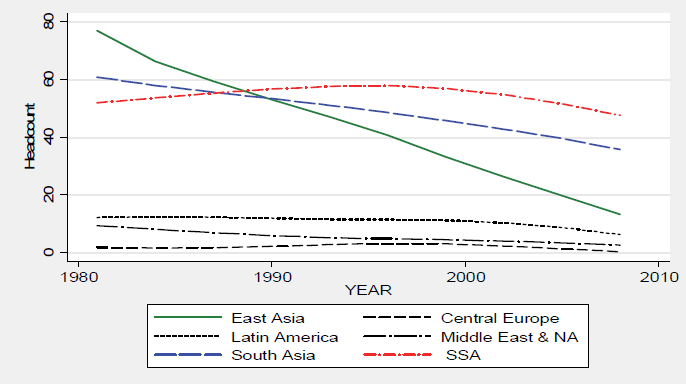
Sub-Saharan Africa may very well be the next big opportunity but it pays to look at the ground conditions (India is facing  the same problem)

….
John Page and Abebe Shimeles, authors of a recent
study published by the World Institute for Development Economic Research,
think they have found an answer: not enough workers have moved from the fields
to offices and factories….. 

Indeed, in Tanzania and Uganda, jobs have moved
in the other direction, from services to agriculture.

The authors measure how responsive employment is to GDP growth and find
sub-Saharan Africa has the most unresponsive labour markets in the world….. 

Page and Shimeles reckon that if employment
shifted away from farming, poverty levels would dive.

Rwanda has experienced such a shift in recent years. Agriculture made up
three quarters of its employment in 2000; that fell to 52 per cent in 2011. A
mining and construction boom emerged.  

Page and Shimeles calculate that the
sectoral shift was almost wholly responsible for Rwanda’s subsequent fall in
poverty.

There are lessons here for countries like Nigeria….Yet in 2010, 44 per cent of
Nigeria’s workforce was still employed in the agriculture sector.
For a big
drop in poverty, the jobs market needs to change.

regards

“The sole survivor”

The shadow wars waged between Pakistan and India in Afghanistan as recounted by William Dalrymple.

As I have noted before, the wars will end when the elites decide that enough is enough. Let us hope that they have the wisdom to step up to the plate (together) sooner rather than later.

At six o’clock in the morning of February
26, 2010, Major Mitali Madhumita was awakened by the ringing of her
mobile phone. Mitali, a 35-year-old Indian army officer from Orissa, had
been in Kabul less than a year. Fluent in Dari, the most widely spoken
language in Afghanistan, she was there to teach English to the first
women officer cadets to be recruited to the Afghan National Army.

It was a sensitive posting, not so much because of gender issues as
political ones: India’s regional rival, Pakistan, was extremely touchy
about India providing military assistance to the government in
Afghanistan and had made it very clear that it regarded the presence of
any Indian troops or military trainers there as an unacceptable
provocation. For this reason everyone on the small Indian army English
Language Training Team, including Mitali, and all the Indian army
doctors and nurses staffing the new Indira Gandhi Kabul Children’s
Hospital, had been sent to Afghanistan unarmed, and in civilian dress.
They were being put up not in an army barracks, or at the Indian
Embassy, but in a series of small, discreet guest houses dotted around
the city’s diplomatic quarter.  


The phone call was from a girlfriend of Mitali’s who
worked for Air India at Kabul airport. Breathless, she said she had just
heard that two of the Indian guest houses, the Park and the Hamid, were
under attack by militants. 
As the only woman on her team, Mitali had
been staying in separate lodgings about two miles away from the rest of
her colleagues, who were all in the Hamid. Within seconds, Mitali was
pulling on her clothes, along with the hijab she was required to wear,
and running, alone and unarmed, through the empty morning streets of
Kabul toward the Hamid. 
“I just thought they might need my help,” she told me recently in New Delhi. 
As she dashed past the Indian Embassy, Mitali was
recognized by one of the guards from diplomatic security who shouted to
her to stop. The area around the guest houses was mayhem, he told her.
She should not go on alone. She must return immediately to her lodgings
and stay there.
“I don’t require your permission to rescue my
colleagues,” Mitali shouted back, and kept on running. When she passed
the presidential compound, she was stopped again, this time at gunpoint,
by an Afghan army security check post. Five minutes later she had
charmed one of the guards into giving her a lift in his jeep. Soon they
could hear bursts of automatic weapons, single shots from rifles and
loud grenade blasts. 
 “As we neared the area under attack I jumped out of the jeep and ran
straight into the ruins of what had been the Hamid guesthouse. It was
first light, but because of all the dust and smoke, visibility was very
low and it was difficult to see anything. The front portion of the
guesthouse was completely destroyed—there was just a huge crater.
Everything had been reduced to rubble.
A car bomb had rammed the front
gate and leveled the front of the compound. Three militants then
appeared and began firing at anyone still alive. I just said, ‘Oh my
God,’ and ran inside. 
“I found my way in the smoke to the area at the back
where my colleagues had been staying. Here the walls were standing but
it was open to the sky—the blast had completely removed the roof, which
was lying in chunks all over the floor. There was cross-firing going on
all around me, and the militants were throwing Chinese incendiary
grenades. Afghan troops had taken up positions at the top of the Park
Residence across the road and were firing back. I couldn’t see the
militants, but they were hiding somewhere around me.
“As quietly as I could, I called for my
colleagues and went to where their rooms had been, but I couldn’t find
them anywhere. I searched through the debris and before long started
pulling out bodies. A man loomed out of the gloom and I shouted to him
to identify himself. But he wasn’t a terrorist—he was the information
officer from our embassy and he began helping me. Together we managed to
get several injured people out of the rubble and into safety. 
“Then we heard a terrible blast. We later learned
that Major Jyotin Singh had tackled a suicide bomber, and by holding him
from behind had prevented him entering the Park Residence. The bomber
was forced to blow himself up outside. Jyotin had saved the lives of all
the medical team inside.
“But the only one of my colleagues who hadn’t been killed on the spot,
Major Nitesh Roy, died of his 40% burns in hospital three days later. I
was the only one of my team who came back alive.”

 regards

The Begums of Bhopal (new edition)

Bhopal was ruled by Nawabs and Begums stretching as far back as 1723 (dynasty founded by Nawab Dost Muhammad Khan Bahadur) [ref. wiki]. When India became independent Begum Sajida Sultan
(1915 – 1995)
was the last titular Begum of Bhopal until
1971 when India abolished royal entitlements. Upon the demise of Begum Sajida in 1995, the title was left
to her oldest daughter Nawabzadi Saleha Sultan Begum Sahiba, Bhopal
being a matriarchy.

File:Begum sajida sultan.jpg 

There are no more Begums, instead we have the cardholders of the Indian Muslim Women’s League (BMMA) who are meeting in Bhopal and developing strategies that will strive to preserve the secular, democratic nature of the Indian Republic. As the times change, it is fitting that people (and systems) change as well- common people coming together to shape the future of their fellow citizens as opposed to blindly following the dictates of a (not always) benign monarch.

….      Women leaders and volunteers of the Bharatiya Muslim Mahila Andolan
(BMMA) have urged women belonging to the minority community to come
together with men to safeguard democracy and secularism in the country.

In a clear indication
that it does not want members of the minority community to vote for the
BJP’s prime ministerial candidate Narendra Modi, the press release said the BJP was propping up a prime ministerial candidate with a tainted record of deaths of innocents in Gujarat in 2002.

“There have been several riots across the country in the last two
years. All this really points to the potential return of communalism to
the centre-stage of Indian politics. It also indicates the fragility of
communal peace and the continuing communalisation of mind-sets and
sections of society.   The development bandwagon cannot continue in the
face of poverty, injustice and communal violence taking place in
different parts of the country,” said the press release. 
       

….
regards

The Muslims of Uttar Pradesh

may help determine who wins Election 2014. IMO the muslim vote will go for AAP in urban areas and BSP in rural ones. SP the current ruling party will be heavily penalized due to the Muzaffanagar riots. Thus Mayawati and Arvind Kejriwal will benefit from the muslim vote, even though NYT may have found isolated support for Modi. In Gujarat he has got plenty of muslim votes following logic #1 (see below)- If he looks like winning why waste your vote on someone else??

There is an old political saying in India that the way to Delhi goes
through Lucknow, the capital of Uttar Pradesh.
From an American point of
view, Uttar Pradesh has it all: the electoral heft of a
California-Ohio-Michigan combination, the uncertainty of a Florida
recount, the political tricks of a South Carolina primary and the stark
community divisions of Mississippi.


Salim Shah was cooking egg and
chicken rolls on a dusty side street here when India’s most controversial
national politician flew to a nearby park in a red helicopter and addressed
hundreds of thousands of screaming supporters. Mr. Shah said that he and his
12-year-old son, who sliced boiled eggs by Mr. Shah’s side, were too busy to
attend the rally. But when asked how he intended to vote in what many observers
believe is the most consequential Indian election since 1977, Mr. Shah gave a
brief shrug. “I’m inclined to support Mr. Modi,” Mr. Shah said quietly. “It
looks like he’s going to win, and why waste your vote by voting for someone who
is not going to win?”

Disgust with the present government
and disappointment with the Gandhi political dynasty are so widespread that Mr.
Modi comes to the election with a huge advantage. But the scale of his success
depends in part on whether he can persuade Muslims like Mr. Shah to support his
candidacy, a difficult challenge. Muslims make up about 14 percent of the
country’s population, and they have been a crucial part of the support base of
the governing party, Indian National Congress, for years.

Mohammad Jaffar Ali, a 27-year-old stockbroker who
lives in a Muslim enclave in Lucknow, acknowledged hours after the rally that
Mr. Modi seemed to be a good leader. “But I think being a good human being is
far more important than being a good leader,”
Mr. Ali said. “I’m not voting for
him.”

A crowd soon gathered around Mr. Ali, a common
occurrence when politics are discussed here. Among the young men was Karim
Jafar, a 25-year-old medical product wholesaler and Muslim, who made a point of
saying that he was a “an Indian first and a Muslim second.”
Mr. Jafar said:
“I’m young. I don’t know much about the past, but I’m hopeful for a good future
and I think Mr. Modi could help bring that. No leader is perfect. I’m going to
vote for Modi and see.”

Mr. Modi’s call for a more business-friendly
government could also lure younger voters, many of whom are leaving school with
few job prospects. India’s economy must create more than 115 million additional
jobs over the next 10 years to accommodate the country’s youthful flood, a rate
of growth its economy is far from achieving.

Mohammad Shakeel, 44, said he remembered the past too well
to support Mr. Modi. Standing in front of about 70 caged chickens with fresh
chicken blood brightening his shop floor, Mr. Shakeel said that he voted in the
past for Congress, but this time would vote for a regional party. “There’s some
concern, even some fear, about what Mr. Modi will do to Muslims if he becomes
prime minister,” Mr. Shakeel said. “We don’t forget.”
regards
Brown Pundits