“Some can resist these pressures. Others succumb”

Another week, another tell-all book. Now it is the turn of the infamous Coal allocation (aka coal-gate) scam and it is a veritable nightmare for PM Man Mohan Singh (again). The claims are familiar:  an honorable (but weak) man who has been forced to play host to a den of dishonorable people.

PC Parakh was the chief whistle-blower in this case and here is a brief profile from Wiki:
In 2004, coal secretary P C Parakh informed PM the potential fraud
inherent in the discretionary allocation of the captive coal fields and
objected to it in writing.
Still all the 142 coal blocks were allocated
without auction during the Prime Minister’s tenure in the coal ministry.
The Supreme Court observations on April 30 (2013) are undoubtedly harsh. No
other government in India has been criticized in such words. PC Parakh who is considered the whistleblower for the coalgate said
that he clearly pushed for auctions, but was overruled by the PM.

Our personal opinion is that this is a BJP driven ploy to get free election propaganda (going around the election commission rules). We agree that dirty tricks are considered fair play in love and war, but this relentless targeting of a man who has given all his blood, sweat, and tears to his nation seems quite distasteful and extremely petty.
….
A new
book accuses Prime Minister Manmohan Singh of being weak and unable to
stamp out corruption on his watch, the second recent attack by an
insider that undermines the Congress party as it seeks re-election
despite trailing in opinion polls.


That impression
was underlined in a book, published on Monday, called “Crusader or
Conspirator? Coalgate and Other Truths” by PC Parakh, who retired as
coal secretary in 2005.

It said Singh’s inability to take on vested interests led to the so-called “Coalgate” scandal, which rocked his premiership.

It was the second book in the last week to portray 81-year-old Singh,
Prime Minister since 2004, as a well-intentioned man of high personal
integrity but one often unable to assert his authority.

The
Coalgate scandal erupted in 2012 after the public auditor questioned the
government’s awarding of mining concessions without competitive
bidding, which it said unduly benefited chosen private and state
companies and potentially cost the treasury billions of dollars in lost
revenues.

Parakh said that Singh, though keen to introduce open
bidding, could not tackle resistance from coal ministers in his
administration. Parakh said he himself came under pressure from people
interested in acquiring coal blocks.

“Pressures come in the
form of enticements such as post-retirement assignments, partnership in
business, bribery, blackmail or pure intimidation. Pressures also come
from friends and relations,” Parakh wrote in the book. “Some
can resist these pressures. Others succumb,” he said, adding that at no
time did the Prime Minister’s office make recommendations or exert
pressure in favor of any party.
….

regards

(Surya Devi lied) Mohd Bin Qasim died

Fairy tales from 712 AD….and good raw material for Hindus and Muslims to squabble over in 2112 AD.

The linked article is however accurate in pointing out that the condition of the sub-alterns remained unchanged following conversion, it was primarily a numbers game (and still is). When it comes to burials the ghost of the caste(s) speaks with one voice- Hindu, Muslim, Sikh etc.

…..
Chachnama, a Sindhi book published by the Sindhi Adabi Board
in 2008, speaks of Muhammad bin Qasim’s demise on page 242 to 243. I
will try to summarise it for you.

After Raja Dahar was killed, two
of his daughters were made captive, whom Muhammad Bin Qasim sent to the
capital Damascus. After a few days, the Caliph of the Muslims called
the two young women to his court. The name of the elder daughter of Raja
Dahar was Suryadevi, while the younger one’s name was Pirmaldevi.


Caliph
Waleed Bin Abdul Malik fell for Suryadevi’s extraordinary beauty. He
ordered for her younger sister to be taken away. The Caliph then began
to take liberties with Suryadevi, pulling her to himself.

It is
written that Suryadevi sprang up and said: “May the king live long: I, a
humble slave, am not fit for your Majesty’s bedroom, because Muhammad
Bin Qasim kept both of us sisters with him for three days, and then sent
us to the caliphate. Perhaps your custom is such, but this kind of
disgrace should not be permitted by kings.”

Hearing this, the Caliph’s blood boiled as heat from anger and desire both compounded within him.
Blinded
in the thirst of Suryadevi’s nearness and jealousy of Bin Qasim who had
robbed him of the purity he would otherwise have had, the Caliph [sic]
immediately sent for pen, ink and paper, and with his own hands wrote an
order, directing that, “Muhammad (Bin) Qasim should, wherever he may
be, put himself in raw leather and come back to the chief seat of the
caliphate.”

Muhammad Bin Qasim received the Caliph’s orders in the
city of Udhapur. He directed his own men to wrap him in raw leather and
lock him in a trunk before taking him to Damascus.

En route to
the capital, Muhammad Bin Qasim, conqueror to some, predator to others,
breathed his last and his soul departed to meet with the Creator in
whose name he claimed to crusade in Sindh.

When the trunk carrying
Muhammad Bin Qasim’s corpse wrapped in raw leather reached the Caliph’s
court, the Caliph called upon Dahar’s daughters, asking them to bear
witness to the spectacle of obedience of his men for the Caliph.

One
of Dahar’s daughter’s then spoke in return and said: “The fact is that
Muhammad Qasim was like a brother or a son to us; he never touched us,
your slaves, and our chastity was safe with him. But in as much as he
brought ruin on the king of Hind and Sind, desolated the kingdom of our
fathers and grandfathers, and degraded us from princely rank to slavery,
we have, with the intention of revenge and of bringing ruin and
degradation to him in return, misrepresented the matter and spoken a
false thing to your majesty against him.”

The author of the Chachnama
then writes that had Muhammad Bin Qasim not lost his senses in the
passion of obedience, he could have made the whole journey normally,
while wrapping himself in raw leather and locking himself in a trunk
only when a part of the journey remained to be covered.

He could have then proven himself innocent in the Caliph’s court and saved himself from such a fate.
….

regards

A new capital for Hindu-stan

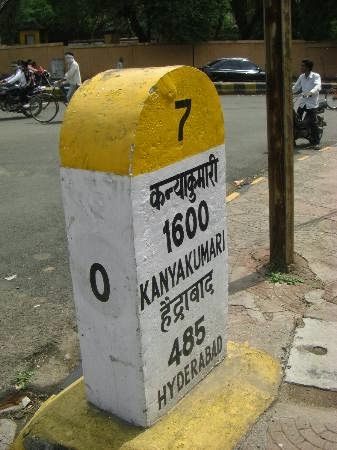
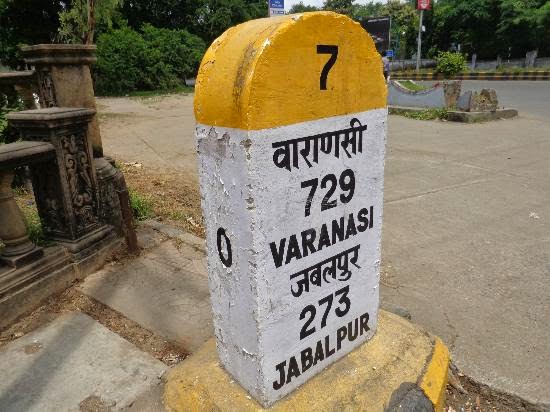
If our leaders had any sense they would re-locate the capital from Delhi to Nagpur. This is the famous city of Oranges, and it has a zero mile marker indicating the centre-point of India. For now it is the capital of Vidarbha (and winter capital of Maharashtra) and a fully cosmopolitan city (more North Indian flavor than Marathi). 

Nagpur is well connected to rest of India and is closer to most of
India than Delhi. Most important, it is proximate to the Adivasi/Maoist
belt. The capital re-location would ensure that the heartlands (which
presently suffer from sever neglect) get a bit more TLC.

Nagpur
is also the home of the RSS and knowledgeable observers of India know
of this and are looking ahead (see below). If the BJP comes to power it
can shake things up by moving house. If nothing else the people of the
Deccan Plateau (South-Central and Southern India) would welcome such a
move and may even develop a soft corner for a (primarily) Hindi-belt
party. This fellow feeling would be critical for BJP to nurture and
develop in order to challenge Congress in those impregnable southern
forts.

….
British
high commissioner Sir James David Bevan today visited Nagpur to witness
the polling process in Naxal-hit Vidarbha region during the first phase
of Lok Sabha elections in Maharashtra. 

“I am here to observe
the wonderful experience of polling in the world’s largest democracy and
enjoying it,” the senior diplomat told PTI, adding Britain is also
keenly following Indian elections.

On why he chose to come to
Nagpur when he lived in Delhi, where seven LS seats went to polls on
Thursday, James said he wanted to visit other places in the country to
keenly watch the democratic process.

James arrived here this
morning from Delhi and drove straight to the residence of former BJP
national president Nitin Gadkari who is contesting his first Lok Sabha
election this time from here. He spent nearly half-an-hour with the 56-year-old stalwart at ‘Gadkariwada’ in Mahal. Later, James visited some of the polling booths. Gadkari, accompanied
by his wife Kanchan and the family, cast his vote in Town Hall polling
centre amid media glare.

Ten Lok Sabha constituencies in Vidarbha where polling is underway
since 7 AM are Nagpur, Ramtek, Bhandara-Gondia, Gadchiroli,
Chandrapur,Akola, Amravati, Buldana, Wardha and Yavatmal-Washim.


regards

MH-370 signals (1300 sq km wide, 6.5 km deep)

The hunt for the black box recorder goes on, now concentrated on a Los Angeles size area in the Indian Ocean.

It is one level of miracle to pin-point the pings (which are due to be switched off any time now, there is a grace period of about 10 days) and quite another (impossible) challenge to retrieve the recorder from extreme depths (worst case scenario: it is in a trench 5800m deep).
….

An
Australian aircraft picked up a new underwater signal on Thursday while
searching the same part of the Indian Ocean where earlier sounds were
detected that were consistent with an aircraft’s black boxes.


If confirmed, this would be the fifth underwater signal detected in the
hunt for Flight 370, which vanished on March 8 while flying from Kuala
Lumpur, Malaysia, to Beijing, with 239 people aboard.

On
Tuesday, the Australian vessel Ocean Shield picked up two underwater
sounds, and an analysis of two other sounds detected in the same general
area on Saturday showed they were consistent with a plane’s flight
recorders, or “black boxes.”


The Australian navy has been
dropping buoys from a P-3 Orion to better pinpoint the location of the
sounds detected by the Ocean Shield.

 
Royal Australian navy
commodore Peter Leavy said each buoy is dangling a hydrophone listening
device about 300 meters (1,000 feet) below the surface. Each buoy
transmits its data via radio back to the plane.

 
The underwater
search zone is currently a 1,300 square kilometre (500 square mile)
patch of the ocean floor, and narrowing the area as small as possible is
crucial before an unmanned submarine can be sent to create a sonar map
of a potential debris field on the seabed.

 
The Bluefin 21 sub
takes six times longer to cover the same area as the pinger locator
being towed by the Ocean Shield, and it would take the vehicle about six
weeks to two months to canvass the underwater search zone, which is
about the size of Los Angeles. That’s why the acoustic equipment is
still being used to hone in on a more precise location, US navy Capt.
Mark Matthews said.

 
The search for floating debris on the ocean
surface was narrowed on Thursday to its smallest size yet — 57,900
square kilometers (22,300 square miles), or about one-quarter the size
it was a few days ago. Fourteen planes and 13 ships were looking for
floating debris, about 2,300 kilometers (1,400 miles) northwest of
Perth.

 
A “large number of objects” were spotted on Wednesday,
but the few that had been retrieved by search vessels were not believed
to be related to the missing plane, the search coordination centre said.


The
locator beacons on the black boxes holding the flight data and cockpit
voice recorders have a battery life of about a month, and Tuesday marked
one month since Flight 370 disappeared. The plane veered off-course for
an unknown reason, so the data on the black boxes are essential to
finding the plane and solving the mystery. Investigators suspect it went
down in the southern Indian Ocean based on a flight path calculated
from its contacts with a communications satellite and analysis of its
speed and when it would have run out of fuel.

 
An Australian
government briefing document circulated among international agencies
involved in the search on Thursday said it was likely that the acoustic
pingers would continue to transmit at decreasing strength for up to 10
more days, depending on conditions.

 
Once there is no hope left of the Ocean Shield’s equipment picking up any more sounds, the Bluefin sub will be deployed. Complicating matters, however, is the depth of the seafloor in the
search area. The pings detected earlier are emanating from 4,500 meters
below the surface — which is the deepest the Bluefin can dive.


Williams said colleagues at the Woods Hole
Oceanographic Institution in Massachusetts had autonomous and remotely
operated underwater vehicles that will dive to 11 kilometers (36,100
feet), although they might not be equipped for such a search.

 
Underwater vessels rated to 6,500 meters (21,300 feet) could search the
sea bed of more than 90 percent of the world’s oceans, Williams said.
“There’s not that much of it deeper than six and a half kilometers,” he said.
 
Williams said it was unlikely that the wreck had fallen into the narrow
Diamantina trench, which is about 5,800 meters (19,000 feet) deep,
since sounds emanating from that depth would probably not have been
detected by the pinger locator.


regards

Red planet beckons

Mausi Mars (Mangal) is coming closer and closer to Ammi Earth (Prithvi). There is no need to pack your emergency gear (yet), she is 92 mil km away!!!

In the meantime the pride of Indian Space Research Organization (ISRO) the Mangal Yaan which left Earth on November 05, 2013 and has crossed the half-way point as of Wednesday, April 09, 2014 at 0950 hrs (Indian Standard Time).

The D-day (Mars insertion step) is September 24, 2014. Watch this space for updates.

“On Wednesday at 9:50am, India’s Mars Orbiter Spacecraft crossed the
half-way mark of its journey to the red planet along the designated
helio-centric trajectory,” the Indian Space Research Organisation said
in a statement.

India’s Deep Space Network, aided by NASA, has
been tracking the orbiter since its launch and six orbit raising
manoeuvres after which it left the Earth orbit on December 1 last year.

Through six orbit raising
exercises, scientists have brought the apogee (the spacecraft’s farthest
point from Earth) from the initial 25,000 km to 1,92,000 km.

As the spacecraft goes through the spheres of influence of the Sun and
Mars, four trajectory correction manoeuvres (TCMs) were planned to keep
it on course. Originally the TCMs were planned in April, August and
September, 2014.  The Mars orbiter insertion will be carried out on
September 24, 2014.

If all goes fine, MOM will study a range of
things including early signs of life or supporting system on the red
planet and its atmosphere through five indigenous instruments or for at
least five months.

India is among an elite club of nations to
take up interplanetary probes. Of the 51 Mars missions by the US and
Russia/ USSR, only 21 had been successful. Fourteen days after India’s
MoM, the US launched a similar mission, MAVEN, which is also on its way
to the red planet.

….
regards

Bangladesh war hero is history

It is true enough that those who do not learn from history are condemned to a repeat performance. However in order to learn from history one must first appreciate the importance of history. Indians have never ever written a proper history book (as opposed to propaganda), all the write-ups from the past have been composed by foreigners. Since there is so little evidence on record, there are broad possibilities for manufacturing new evidence (interpretations) by marxists and westerners,which are then subject to furious condemnation by the Hindutva brigade (as insult to hindus and hindusim). But it is clear that the origin of the problem lies not in our stars but in ourselves.

If our leaders had any sense (and shame), INS Vikraant would be converted into a museum and the history of the Bangladesh war should be re-told with a focus on the victims (all of them) not victors. While all groups suffered it was primarily the Hindus who were exterminated or driven out of the country to lead life as refugees in India (where they would face extreme prejudice in Dandakaranya and elsewhere). Hindu homes even had charming yellow stars painted on them. People were shot on the spot depending on whether they were circumcised or not. The powers that be kept quiet at that time because they wanted to focus on bangla nationalism (and punjabi racism) and not the hindu-muslim divide. But why the silence after such a long time?

To be sure all this is not conspiracy just incompetence on a grand, incomprehensible scale.
The
decommissioned aircraft carrier of the Indian Navy, INS Vikrant, which
played an important role in the 1971 Indo-Pak war, has been sold for Rs
60 crore. “The auction process of INS Vikrant was completed
last week and a company named IB Commercial Pvt Ltd won the bid,” said a
defence source here tonight.

Earlier, the Maharashtra
government had expressed its inability to maintain Vikrant, the Indian
Navy’s first aircraft carrier which was commissioned in 1961. It was
decommissioned in January 1997.

In January 2014, during the hearing of
a public interest litigation which opposed the plan to scrap the ship,
the Union ministry of defence told the Bombay high court that it had
completed its operational life.
 While the Maharashtra government stated that to preserve it as a museum would not be viable financially. The high court subsequently dismissed the PIL.  The Majestic-class
aircraft carrier, purchased from Britain in 1957, played a key role in
enforcing the naval blockade of East Pakistan during the Indo-Pakistan
War of 1971.

….
regards

Indelible (not quite) ink: Maharajah brand

The ink comes from the factory that the Mysore Maharajah had built and goes onto the voting finger around the world. Only one little company knows the secret recipe for indebility (unfortunately not fool-proof, yet). An Indian technology success story (until China figures out how to make it) which in addition to earning foreign exchange also contributes to  the Indian democracy brand.

Each bottle contains 10 ml of indelible ink.
“The contents of the bottle or the chemical formula used in its
manufacture is a State secret. Otherwise, people will start making
efforts to wipe the ink away and subvert the democratic process,’’
says
Hara Kumar, managing director, marketing, of the company.


Five years ago, the unit dispatched 1.9 million bottles to the EC. In
2014, the demand is up by almost 20 per cent. “Around 70 per cent of the
total order has already been transported to various state capitals
while the rest is being manufactured using a single shift,” says Kumar.


In the last financial year, the company’s turnover was Rs 18.92 crore
with a net profit of Rs 2.29 crore; 50-70 per cent of its total sales
can be attributed to indelible ink. Moreover, the company earns foreign
exchange too. It exports indelible ink to 28 countries in Asia and
Africa, including Turkey, Bhutan, Malaysia, Nepal, South Africa,
Nigeria, Ghana, Papua New- Guinea and Canada. It also supplies voters’
ink to the United Nations.


This company was started by the Mysore Royal family in 1937 and was
once called Mysore Lac and Paint Works Ltd. At the time, the company
also made special paints for application on war tanks.
It was in 1962
that the company was granted an exclusive licence to manufacture and
supply indelible ink to the EC by the National Research Development
Corporation, Delhi.


“Indelible ink was used for the first time in the 1962 election.

Kumar says that over the years, the company has changed the
composition of the ink to address complaints that it can be easily
rubbed off. “Technically, once applied it will stay bright for more than
ten days and start fading only afterward. There is no chance that a
person can rub it off immediately and go to another booth to cast a
second vote,’’ he says.


Regardless of what Kumar or the teacher say, booth-level political
workers admit that the ink can indeed be erased. Assorted cleaning
agents may be used for the job: anything from toothpaste, hand
sanitisers, nail polish removers to dish washing liquids and alcohol.
And if those don’t work all that well, there are several YouTube videos
that demonstrate how to unmark your finger.

….
regards

India at the forefront of fighting Climate Change

Recycled lunch: Using human waste to grow food, and fight climate change

Rajanna Uganawadi and his ancestors have been working the soil on the outskirts of Bangalore as long as anyone can remember. Their seven acres are a patchwork of green plots pieced together amid the new apartment complexes sprouting up on farmland around India’s IT capital.
Next to Uganawadi’s cement-block house, a yellow tanker truck painted with lotus flowers backs up next to a stand of young banana trees. The stench of toilet water hangs in the air as a young man pops open a spout and a heavy stream of clear liquid and brown sludge sprays from the truck onto the base of the trees. It’s untreated sewage from a large apartment complex nearby.
From Waste to Resource
Bangalore farmer Rajanna Uganawadi says by switching from synthetic fertilizers to human waste he’s increased his banana harvests to three or four from two.

Credit: Bianca Vasquez Toness
Bangalore farmer Rajanna Uganawadi says by switching from synthetic fertilizers to human waste he’s increased his banana harvests to three or four from two. The practice also avoids significant amounts of greenhouse gases from the manufacture, transportation and application of synthetic fertilizer.
The man repeats this all day – draining out septic tanks and delivering the contents to farmers around Bangalore. It’s an extreme twist on the old adage “one man’s trash is another man’s treasure.”
”So that’s it,” the man says. “I meet the need. Some people want it to be emptied and I take it from them and I give it to those who want it.”

Sam Manekshaw, by Hamid Hussain

From Dr Hamid Hussain.

Sam was representative of an earlier generation of Indian officers.  Few historical tit bits about the documentary.  If you look Sam in pictures, he is always wearing black PIFFER pips although usually senior officers do not wear regimental color pips.  Lieutenant General ® S. K. Sinha gives his opinion about Sam in documentary.  There is interesting story about Sinha.  Sinha is originally from Jat regiment but in WWII, he spent about two weeks with a draft of 4/12 FFR (Sam and present Pakistan army chief General Raheel Sharif’s battalion) before his own battalion came to theatre.  Later, he also went to Gorkha Rifles.  In 1947, three young officers were serving together in Military Operations (MO) directorate in Delhi.  Sam was GSO-1, Yahya Khan was GSO-2 and Sinha GSO 3.  In 1971 Indo-Pak war, Sam was Indian army chief, Yahya Khan Pakistan army chief and Sinha was at GHQ heading pay commission.  Sinha asked Sam to be given a chance to participate in war and stated, “The old G1 is going to war with the old G2 and the old G3 is being left out”.  Sam owned a red motorcycle and in 1947 he sold it to Yahya for Rs.1000.  In the upheaval of 1947 Yahya went to Pakistan and never paid the money.  Sam used to joke about that Yahya never paid him for the motorcycle therefore he went ahead and got half of the country of Yahya.  I did obituary of Sam attached below;

Hamid

Defence Journal, August 2008
Sam Manekshaw (April 03, 1914-June 27, 2008)
Hamid Hussain
On June 27, 2008 Sam Hormusji Framji Jamshedji Manekshaw passed away in a hospital in India.  He was called Sam by his colleagues, Sam Bahadur by soldiers and Lord Mountbatten called him Manekji.  He was the last of the breed of an officer corps which joined the British Indian army in 1930s.  Sam was the most popular soldier in India and was admired even in Pakistan.  Sam was born in Amritsar and educated at Sherwood College in Nainital and Hindu Sabha College in Amritsar.  He passed out from Indian Military Academy at Dehra Dun in 1934 getting his military identity of IC-0014.  He followed the routine of spending one year of probationary period with the British regiment; 2nd Batallion of Royal Scots after commission.  He then joined the elite 4/12 Frontier Force Regiment (FFR).  This battalion evolved through its one hundred and fifty year history going through various reorganizations which changed its name.  It started as 4th Sikh Local Infantry after First Sikh War in 1846.  In 1901, it became 4th Sikh Infantry and in 1903 became 54th Sikhs. 1922 reorganization changed it into 4th Battalion of 12 Frontier Force Regiment.  1957 reorganization gave it its present designation of 6 Frontier Force (FF).   The original designation of force deployed on the frontier of newly acquired territories in 1849 was Punjab Irregular Frontier Force (PIFFER).  Till today those who join Frontier Force Regiment are known as PIFFERS.  Young impressionable cadets at academy see their instructors as role models and the caliber of an instructor may be a factor when a cadet chooses his battalion.  Lieutenant Colonel Jimmy Carter of 4/12 Frontier Force Regiment was a first rate officer and then instructor at Dehra Dun (he later commanded the battalion in 1942 when it was being reorganized into a reconnaissance battalion at Ranchi).  He may have been responsible for two cadets of the batch joining the 4/12 FFR; Sam and Atiq-ur-Rahman nick named Turk. 
In Second World War, Sam then a captain was leading Sikhs of Charlie company of 4/12 FFR in Burma.  A small group of Japanese soldiers surprised the troops and sneaked into the perimeter of the battalion at night.  This caused a panic and a number of soldiers bolted from the scene.  Sam’s Sikhs firmly stayed in their positions.  Sam had threatened them that he will personally distribute ‘bangles’ if any of them moved from their position.  Later, in one of the attacks on a Japanese position, Sam was severely wounded when seven bullets of a Japanese machine gun hit him in his stomach.  His orderly Sher Singh put Sam on his back and evacuated him to Regimental Aid Post where Regimental Medical Officer (RMO) Captain G. M. Diwan tended to him.  Sam was in a serious condition and all who saw him were convinced that he will not survive from his serious wounds.  Major General D. T. Cowan pinned his own Military Cross (MC) on Sam’s chest stating that ‘a dead person cannot be awarded a MC’.  Death was closely lurking around Sam.  When Sam was being treated at a hospital at Pegu, Japanese planes bombed the hospital and Sam’s bed was moved to the lawn. Severely wounded Sam was moved to Mandalay and then to Rangoon.  Sam was on the last ship which left Rangoon before Japanese overran it.  The ship was also bombed by Japanese planes but Sam made it to Madras.  He survived this ordeal to live up to the ripe age of 94.  After partition in 1947 when Sam’s battalion was allotted to Pakistan, 8th Gorkha (Shiny Eight) became Sam’s home. 
During 1947-48 Kashmir Operations, Sam then Colonel was a staff officer at Directorate of Military Operations.  In Baramula, Pakistani tribesmen killed Colonel Thomas Dyke and his wife who were on holidays.  Dyke had done his first year attachment with 2nd Royal Scots along with Sam before joining Sikh Regiment.  Sam commanded an infantry brigade, served as Commandant of Infantry School, commanded an infantry division and then went on to become Commandant of Defence Services College at Wellington.  He commanded 4th Corps and then became Western Army Commander followed by commanding Eastern Army Command.  In June 1969, he succeeded General Kumaramangalam to become eighth army chief of Indian army.  
In early 1950s, two PIFFERS on Pakistan side and one old PIFFER from Indian side were commanding the brigades close to border.  Brigadier Bakhtiar Rana was commanding a brigade in Lahore, Brigadier Atiqur Rahman (nick named Turk) was commanding 101 Brigade (based in Sialkot but sent to Lahore due to anti-Ahmadiya riots) while Sam was commanding a brigade in Ferozpur.  Rana and Turk went to see Sam and old PIFFERS buddies enjoyed Sam’s hospitality.  After 1971 war when Sam came to Pakistan as Indian army chief for negotiations, Turk was his host.  Sam had lifelong attachment to his parent battalion.  When he was army chief, there was a standing order to all the staff, guards and sentries that whenever an ex-serviceman of 4/12 FFR came to the army headquarters, he should be brought to the chief no matter what chief was doing.  In 1971 war when he was Indian army chief, he kept an eye on performance of 4/12 FFR (now 6FF) which was fighting from Pakistan’s side.  His staff would notice a certain pride in his eyes when the briefing officer would give some account of 4/12 FFR.  He commented to his military assistant ‘I should like to see one of my 8th Gorkha battalions fighting the 4/12 Frontier Force Regiment’.  When Major Shabbir Sharif of 6 FF got the highest gallantry award of Nishan-e-Haider fighting from Pakistan side, Sam wrote to one of his old British Commanding Officer (CO) of 4/12 FFR in England that he was so proud that an officer of ‘his battalion’ got the honor although Sam’s forces were fighting against Pakistan.   In 1973, when he came to Pakistan for post-war negotiations, he requested that dinner be served in the silverware of his parent battalion.  4/12 FFR (6 FF) was then stationed in Okara and cutlery of the battalion was carefully packed and sent to Lahore where Sam was entertained.  During his 1973 visit to Pakistan, Sam was given a lunch at Station Artillery Mess in Lahore.  Sam went around looking at the impressive array of trophies in the mess.  He stopped by a trophy and asked what a trophy of 54th Sikh (4/12 FFR) was doing in the artillery mess.  One Pakistani officer confided that the trophy was brought to the mess for the special occasion.  In March 1973, when Sam visited England, he hosted a dinner where all serving and retired officers who had association with 54th Sikhs and 8th Gorkha Rifles were in attendance.
In his professional career, Sam was famous for his brief and to the point orders.  In 1962 Indo-China war, Sam was urgently dispatched to take over 4thCorps from Lieutenant General B. M. Kaul (nick named Bijji).  On his arrival Sam assembled all staff officers and gave his one sentence address stating ‘Gentlemen I have arrived.  There will be no more withdrawals in 4th Corps, thank you’ and walked out.  He issued a brief order to all in the Corps which read, ‘there will be no more withdrawals without written orders and these orders shall never be issued’.  These statements elevated Sam’s reputation but the fact was that Sam took over the Corps after the unilateral ceasefire announced by China.  Sam himself summed up his philosophy of work by stating that ‘I am a simple infanteer and a Gorkha at that and I want everything cut and dried.  Complicated stuff is for the intellectuals’.  He was known for his straight talk even with heavy weights of Indian political scene.  In 1971, when a large number of refugees started to pour from then East Pakistan into neighboring states, the Chief Ministers of West Bengal, Assam and Tripura started to flood Delhi with urgent telegrams.  Prime Minister Indira Gandhi summoned Sam to a cabinet meeting.  She was very angry and after a long diatribe about the situation turned towards Sam and asked him ‘What are you doing about it?’ The response which Sam gave was typical.  On question of what he was going to do, he said ‘Nothing, it’s got nothing to do with me.  You didn’t consult me when you allowed BSF [Border Security Force], the CRP [Central Reserve Police] and RAW [Research and Analysis Wing] to encourage the Pakistanis to revolt.  Now that creates trouble, you come to me.  I have a long nose.  I know what’s happening’. 
Sam’s working method was based on simplicity and he avoided lofty statements.  He was well aware of the ground realities and talked frankly about tricky issues even with his soldiers.  In the run up to 1971 war, when he visited a garrison he would bluntly tell soldiers that when war breaks out there will be no scavenging.  He told them that he was commanding soldiers and not thieves.  He also warned them against womanizing.  He reminded his soldiers that the war was against the Pakistan army and not against their women.  In professional matters, he kept high standards.  A general was accused of misusing funds.  When Sam summoned him to his office and narrated the charge, the general blurted ‘Sir, do you know what you are saying?’  Sam snapped at him, ‘Your Chief is not only accusing you of being dishonest but also calling you a thief.  If I were you I would go home and either shoot myself or resign.  I am waiting to see what you will do’.  The same evening the general resigned.  
Sam had a sense of humor and there are many stories of his witty responses.  When he lay critically wounded in Burma, the Australian surgeon tending to wounded asked him what happened, Sam replied ‘I was kicked by a mule’.  In 1971 conflict, when then prime Minister Indira Ghandi asked him if he was ready for the impending conflict, Sam replied with a twinkle in his eyes ‘I am always ready, sweetie’.  In the run up to 1971 war, when he visited different garrisons, he warned soldiers against womanizing.  He would tell them that ‘when you feel tempted, put your hands in your pockets and think of Sam Manekshaw’. 
In 1973, after becoming Field Marshal when Sam was visiting England, he hosted a dinner.  One of his former Commanding Officer was also present who asked him ‘May, I call you Sam’.  Sam replied, ‘Please do, Sir.  You used to call me bloody fool before.  I thought that was my Christian name’.  After retirement, Sam was a director with Escorts.  A hostile bid for the organization was thwarted by changing of the whole board.  Mr. Naik was one of the new directors.  Sam remarked that ‘This is the first time in history when a Naik has displaced a Field Marshal’. 
He was sometimes brash but always had enough humility.  In 1971, when Prime Minister asked him to go to Dacca to accept surrender of Pakistani forces he said that the honor should go to Eastern Army Commander Lieutenant General Jagjit Singh Arora.  After surrender, Sam flew to Calcutta to congratulate officers of eastern command.  When he landed at Dum Dum airport, he was escorted to a Mercedes car captured from Pakistanis but he refused to sit in Mercedes.  When wearing casual dress, he always preferred Peshawari chaplis. 
Sam was lucky during his whole career.  In 1947-48 Kashmir war, he was a staff officer at General Head Quarters (GHQ).  In 1962 debacle, he was serving as Commandant of Defence Services Staff College far away from the conflict.  He was asked by his mentor and new army Chief J. N. Chaudhri (nick named Mucchu) to take over 4th Corps from Lieutenant General B. M. Kaul.  Sam took over after the unilateral ceasefire by China and therefore never put his skills into any battle.  In 1965 war, Sam was Eastern Army Commander while all the action was on the western front.  India was in a much better strategic position in 1971 and the outcome of the war was a foregone conclusion.  Sam became a popular soldier after India’s victory on 1971. 
Sam’s life was not without controversy.  Sam’s frank comments got him into trouble with his superiors.  In 1962, then Defence Minister V. K. Krishna Menon and Chief of General Staff Lieutenant General B. M. Kaul initiated an inquiry against Sam for alleged ‘anti-national attitude’.  Sam was accused of being more loyal to Queen of England than President of India.  He was also accused of stating that as commandant of Staff College, he will not allow any officer as instructor whose wife looked like ‘ayah’.  Sam’s promotion was held for eighteen months during this time.  A Court of Inquiry headed by then Western Army commander Lieutenant General Daulat Singh exonerated Sam.  The principle witness against Sam was Brigadier H. S. Yadav (he was commissioned in Grenadiers and nick named Kim).  Brigadier Inder Vohra was another witness against Sam.  In 1963, when Sam took over as Western Army Commander, Yadav served under him as a brigade commander.  Some officers trying to curry favor with Sam, made adverse remarks about Yadav.  Sam quickly replied ‘Look chaps, professionally, Kim Yadav is head and shoulders above most of you’.  Yadav himself had enough sense of humor that after conclusion of 1971 war, he sent a telegram to Sam which read, ‘you have won the war: all by yourself, without me – a remarkable achievement.  My congratulations’.  In January 1973, Sam again stirred a controversy and was accused of having disdain for everything Indian.  In an interview he had stated that his favorite city was London where he felt at home.  More explosive comment was his statement that in 1947 Jinnah asked him to join Pakistan army.  Sam added that ‘if I had, you would have had a defeated India’. 
In this author’s dictionary, the pinnacle of any officer’s career is not in attaining general rank but the honor to command the battalion he is commissioned in.  Unfortunately, in Sam’s illustrious career, he never had the chance to command a battalion.  However, this fact does not diminish his position in Indian army history.  Sam’s first annual confidential report by his superior read, ‘this officer, I beg his pardon, this man, may one day become an officer’.  He not only became an officer and a gentleman but became the most popular officer of Indian army.  In his passing, an era has come to an end.  Knowing Sam, it is most likely that even up there, he will be hanging out with old warriors of PIFFERS and Gorkha regiments.  Good bye, Sam. Rest in peace. 
Notes:
1- Author is thankful to many PIFFER officers for their valuable input. 
2- Lieutenant General Depinder Singh.  Field Marshal Sam Manekshaw: Soldiering with Dignity (Dehra Dun: Natraj Publishers, 2003, Second Edition)
3- Lieutenant General M. Attiqur Rahman.  Back to the Pavilion (Karachi: Oxford University Press, 2005)
4- Hamid Hussain.  Stranger Than Fiction, Defence Journal, December 2007
5- The Independent, June 28, 2008
6- The Indian Express, June 27, 2008
7- Lieutenant General A. S. Kalkat.  Sam Manekshaw.  100 People Who Shaped India.  India Today.
Dr. Hamid Hussain is an independent analyst based in New York.  For corrections, comments and critique humza@dnamail.com
Hamid Hussain
July 18, 2008

Signal from the MH-370 black box (maybe)

Breaking news: a Chinese ship might have just detected the black box from MH-370.
If so it will be nothing short of a miracle (aided by modern technology that tracks a plane even when some murderous idiot has switched off the transponders). Let us hope for the best (only 3 days are left before the signal is switched off).

…..
A black box detector deployed by the Haixun 01 picked up the signal at
around 25 degrees south latitude and 101 degrees east longitude, the
report said.


The batteries of the black box flight recorders have a life of about 30
days, meaning they will shut down in the next three days.


Officials said the multinational team has entered the most intensive phase in the search operations.

Up to 10 military planes, three civil jets and 11 ships were searching
about 217,000 sq km, 1,700 km north west of Perth, to locate the plane’s
data recorder that could help investigators unravel the mystery of what
happened on March 8, the day the Beijing-bound jet suddenly disappeared
from radar screens.


China’s Liberation Daily reported that three people on board had heard
the signals, which were not recorded as they came suddenly.


The frequency of 37.5 kHz per second is currently the international
standard for the underwater locator beacon on a plane’s black box.


Also, a Chinese air force plane searching for the jet spotted a number of white floating objects in the search area today.

The plane photographed the objects over a period of 20 minutes after spotting them at 11:05 local time.


China’s state-run CCTV reported the ship’s crew detected the signal and alerted both Chinese and Australian rescue centres.
The signal was heard this afternoon by the ship’s crew and it lasted for one and half minutes.


This kind of signal is, however, not exclusive to black box and it could
be from other equipment also. So, it cannot be confirmed at the moment
that the signal is from the black box record of the MH370, the report
said.

The signal of the black box can be picked up in a three-mile radius,
that could further help the search team to narrow down their operation.


…..

regards

Brown Pundits