Iraq: Indian Partition and Afghan Jihad combo package?

Parallels with Partition of British India 

A foreign superpower militarily defeats local dictatorial regime,and introduces an electoral polity to a local populace, which has not been exposed to it in past. Elites of the second largest religious majority (around 30-35% of populace), who enjoyed (or have a perception of enjoying) power under the earlier dictatorial regime, now fear of being electorally
swamped by the bigger religious majority. A full fledged ‘Direct Action’, sectarian cleansing and civil war follows. Been there, done that??

Parallels with Afghan Jihad

  1. No unified command/sole spokesperson in rebel ranks. Half of the Iraqi Sunnis (15-20% of Iraq’s populace) are Kurds who will resist any Arab overlords from Baghdad (be it Shia or Sunni). The Arab Sunnis (the other half of Iraq’s Sunni populace) are also a divided lot- Baathists, ISIS and many Sunni Tribals control different parts of NW Iraq and are coordinating tactically only to topple present Baghdad based regime. Some parallel here with the diverse lot of Afghan Mujahideens in 1980s/90s?
  2. A proxy war superimposed on domestic power struggle ( with Iran and KSA taking the place of Soviets and USA in Afghanistan )
  3. ISIS seems like an Iraqi-Sham version of Taliban.

Lessons for Iraq from experience of Partition and Afghan Jihad

  1. Those who ally with ISIS, may face a serious blowback later (like Pakistan and Afghan Mujahideen faced with Taliban).  
  2. A protracted conflict likely in Iraq unless rival Gulf powers back down
    (or one of them runs out of money or faces blowback from fanatics on own
    side). Afghan Civil war began in 1970s and is yet to end.
  3. A sectarian Partition in an environment of hostility may create  more problems than it would solve. It will take generations to undo the damage. 
  4. Since a mutually agreed foreign master does not exist, if the partition occurs, there is likely to be a highly contested border region (more like LoC in Jammu and Kashmir than Radcliffe line)
  5. Local Shia-Sunni minorities will suffer in general and perhaps cleansed near the contested border zones, if Partition occurs.
  6. Iraqi Arab Sunnis may end up suffering much more than Iraqi Shias- because of
    their far fewer numbers as well as fractured,
    non-elected rebel leadership with several extremist and authoritarian groups calling shots.

PS: It goes without saying, that from Karbala to Ottoman-Safavid struggle for Mespotamia to colonial Sykes-Picot border to the riches of Oil Fields to Saddam’s rule to Iran-Iraq War to Kurdistan’s struggle for independence to Syrian civil war to Maliki’s triumphalism, the region has a unique history of its own. The attempt here was to look at the event (perhaps in a very imperfect way) from the lense of South Asian crises that have played out along similar lines.

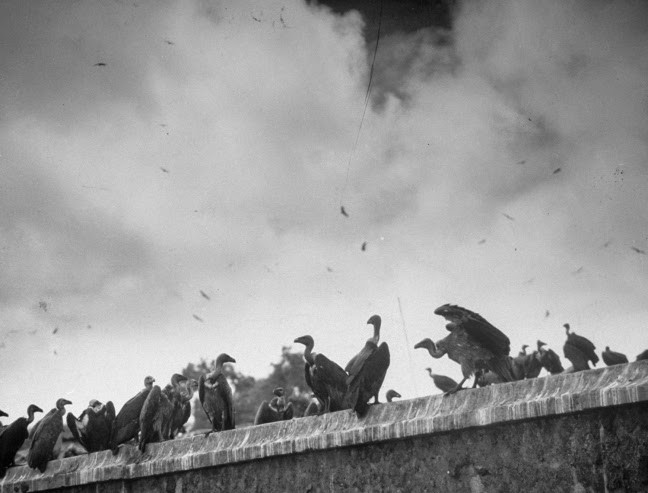
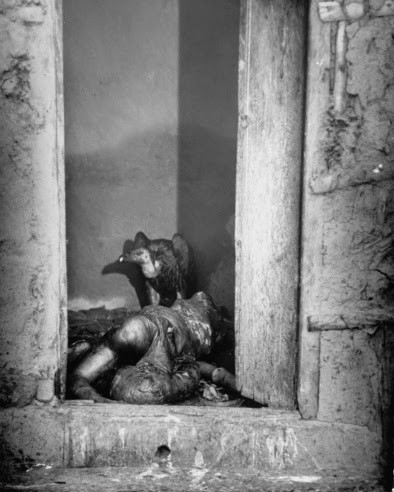
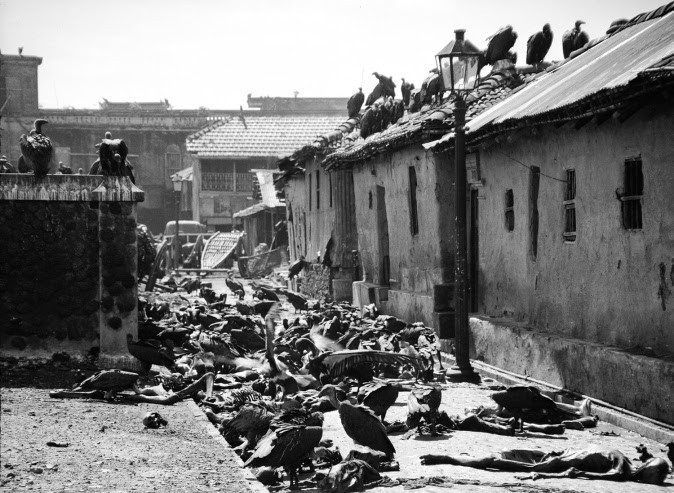
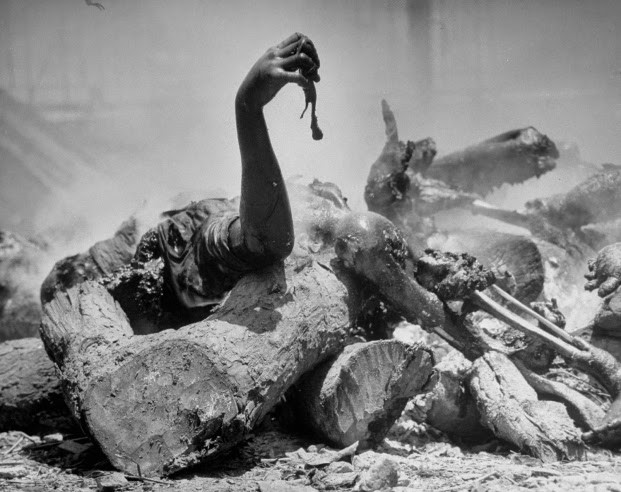
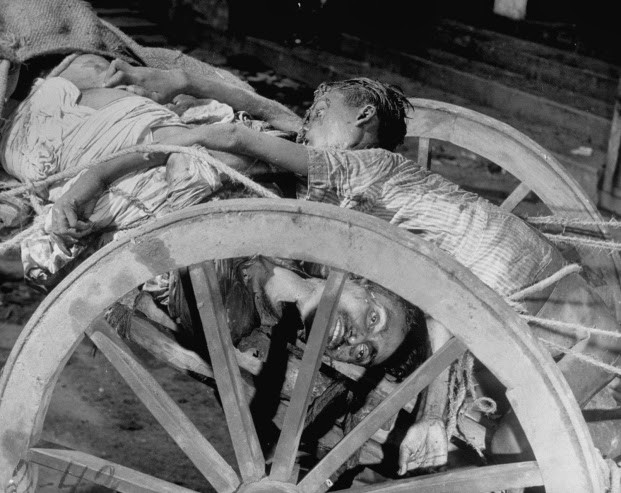
Vultures of Calcutta take Direct Action

Kolkata, August 1946. Nice set of pictures to go along with the nice times.

One thing must be emphasized. Whichever community was guilty for whatever excess pleads amnesia or seeks revision of history. Better yet, they would like the clock to start the day after….

Thus BJP is proud to state that Gujarat has been riot-free post Feb 2002, Congress has really cared about Sikhs following Nov 1984, Pakistan has been a well-wisher of Bangladesh since Jan 1972……

And yes, certainly no one has been conclusively determined to be at fault for the state-backed terrorism in August 1946, for the 10,000 deaths in the Great Calcutta Riots following the call for Direct Action by the Muslim League. As is the norm in South Asia there is a Hindu truth (the villain was the ML govt of Bengal headed by Hussain Suhrawardy) and the Muslim truth (majority dead were muslims, hence the riots were the fault of Hindus). FWIW there is a comprehensive account of the riots at the link noted below which tries hard to be fair.

An interesting observation- even though the riots during partition were quite violent in Bengal, there was no exchange of population, as had happened in Punjab. It was post 1965 and mostly in 1971 that mass Hindu migration took place from (now) Bangladesh.  

Amidst all the competing truths that are out there, the following truths are undoubtedly true- 
(1) India will be a hostile place for muslims going forward, while in Pakistan and (to a lesser extent) Bangladesh you can be in trouble if you are the wrong sort of muslim, and 
(2) Hindus will in time disappear from a third of the South Asian landmass.
……..


Link (1): http://www.massviolence.org/The-Calcutta-Riots-of-1946

Link (2): http://life.time.com/history/vultures-of-calcutta-the-gruesome-aftermath-of-indias-1946-hindu-muslim-riots/?iid=obnetwork#12

……

regards

Cold storage horror

And while the military was trying to break-down the cold storage walls, did anyone think of switching off the power to the facility? Probably it would not have mattered, the poor folks were probably long gone before anyone noticed.

To an outsider this all looks like Pashtun nationalism fighting for its version of “pure lands for pure people,” not dissimilar to the earlier movements by Sikhs, Muslims (and even Hindu groups) in the sub-continent.

The only problem is the access to the sea from Peshawar (Khalistan maps used to show a corridor from Punjab to sea- via Karachi).  Thus the Pashtuns have decided that they will keep their lands AND re-create Pakistan in their own image.
………
At least seven bodies were recovered in the early hours of
Tuesday morning from Karachi airport’s cold-storage facility, DawnNews
reported.

The rescue operation continued nearly for 28
hours. The rescue workers finally broke down three walls of the
cold-storage facility to retrieve the victims.


Meanwhile, talking
to media persons Sindh Health Minister Dr Sagheer Ahmed said that the
corpses were immediately shifted to Jinnah Hospital for DNA tests in
order to identify them, after which they would be handed over to their
relatives.

Ahmed said that the bodies were badly burnt and were
beyond recognition and the process of identification would take three
weeks time.

He added that if the deceased could not be identified, they would be buried after being provided temporary identification.

One of the Airport Security Force (ASF) personnel was still missing, Ahmed claimed.
According to sources, the deceased were employees of a private cargo company.

Due
to the fact that Civil Aviation Authority (CAA) lacked heavy machinery,
many prominent social workers voluntarily sent cranes to rescue the
victims.

The army also assisted in the recovery of bodies in the rescue operation.
The deceased had taken refuge in the cold-storage facility to escape the carnage where they were earlier trapped.

“We
are looking into this and according to the families some seven people
were trapped inside the cold storage and were in contact with the
families on cell phone,” said Abid Qaimkhani, a spokesman for CAA.

Earlier last night, the families of seven airport workers had blocked Shahra e Faisal demanding that authorities work towards freeing their relatives who were trapped.
……….

Link: http://www.dawn.com/news/1111784/seven-bodies-recovered-from-karachi-airports-cold-storage-facility
……..

regards

What Modi has done for Pakistan

Has established, without any shadow of doubt, that the Quaid, in his infinite wisdom, made the right moves for the Muslims of India.

Pakistan is the sanctuary for the now precarious millennia old Islamic tradition while our brethren Muslim Indians will cower in their ghettos waiting while their special privileges (special status for Kashmir, Muslim family law) steadily erode to eventually become the Palestinian citizens of Israel.
Pakistan for pity’s sake should enact a right of return for all Urdu-speakers & perhaps settle them in the failed city of Gwadar?

Muslims are over-represented only in jails

Saba Naqvi re-visits the famous “moth-eaten” word, to describe the parlous state of Indian secularism. She particularly focuses on the dangers of polarization. It is nobody’s case that BJP has anything to offer towards a unifying agenda. But what have the secularists ever done for India (and Indian muslims)?

the only area
where Muslims are over-represented is in Indian jails  

Naqvi points out the effect of the poison pus from partition I (partition II is not mentioned, even though she talks about Axom and Bengal) but she should have also pointed out that ideologies are more poisonous than events.

The biggest and most powerful poison source is the two nation theory: “our heroes are their villains and vice versa,” a logic that can equally hold true for Shia/Sunni, Urdu/Bengali, and all other ways that humanity can be divided. Today Pramila Rani Baruah is a hero for Bodos and a villain for muslims: this is the proud legacy of the TNT.

the
rhetoric of Modi/Shah amounts to
this: Muslims got two countries out of Partition and rejected secularism; why
are they still in India trying to vote against us?

It is basically a massive con game. The agenda will be set by conservative muslims males who have only one thing in their mind: Islam khatre mein…..and that’s it. It was the Shah Bano case that convinced the Hindu upper-caste, middle-class (the primary source of opinion-makers) that secularism should be ditched in favor of majoritarianism and gave rise to the BJP as a political player. The secularists are opportunists who would pursue soft-Hindutva (Congress in Gujarat) and soft-Islamism (Samajwadi party in UP, Trinamool Congress in West Bengal) to get votes. Sure they dont have a genocidal agenda, but they dont have the good of any community at heart. Politics to them is an exercise to simply feather their family beds. If the Aam Admi party stands apart from the crowd it will get the votes of deprived muslims as well as relieved hindus. If it adopts the same formula as the secularists it will be doomed to a cut in the vote-bank and nothing more.
……………………..

Muslim
equals terrorist equals Pakistani equals infiltrator equals Bangladeshi is not
a new construct for the Sangh parivar. But in this election, the BJP is using
the Bangladeshi immigrant rhetoric with particular emphasis
as it believes
there are gains to be made by polarising sensibilities in Assam, Bengal and
Bihar. So the demonology only needs to be updated and tweaked. And this time
the Muslim bogeyman returns in the shape of the “Bangladeshi”. The immigrant,
illegal migrant, settler, foreigner etc.

At
one level, these are all battles erupting around the Partition fault-line, the
wounds that routinely get infected and begin oozing pus. At its base level, the
rhetoric of Modi/Shah and even the more sophisticated right-wingers amounts to
this: Muslims got two countries out of Partition and rejected secularism; why
are they still in India trying to vote against us?
If they want to stay, it
should be on our terms, not those set by people who are infiltrators and
terrorists anyway.

Communal ideology and prejudice are easy to spot and
analyze. It is harder to confront the great crisis of Indian secularism, that
is now so hollowed out that it makes it easy for communal forces to grow. One
could even borrow the phrase Mohammed Ali Jinnah used for the Pakistan he
got—“moth-eaten”—which is what the fabric of Indian secularism has become
today.
For those who still have idealistic stardust in their eyes, we must
blink and accept that Indian secularism is not about some utterance of the soul
as a Jawaharlal Nehru may have once imagined it. It appears to be mostly about
electoral management by secular parties that involves first seeing Muslims as a
herd and then trying to keep that herd together.

But
the crisis of secularism is no laughing matter. The Muslim community has
slipped on all human development indices. Yet in modern secular India, an
entire mobilisation has thrived on the argument that they are “appeased”. There
is indeed a section of the community that is appeased: the clerics. All
political parties go to them.
Last week, Priyanka Gandhi did so in Rae Bareli;
simultaneously in Delhi Meh­mood Madani, an influential cleric from the Deoband
tradition, who has of late been making pro-Modi noises, said “Priyanka would
have been better than Rahul” for the Congress. 
Since Inde­pendence, sec­ular
parties in India have approached the Muslim community through clerics and in
the process given them legitimacy. The maulanas, in turn, have used the cover
of “secularism” to keep retrograde personal laws in place and thereby their own
relevance intact till presumably they land in paradise.
They rarely talk of
jobs, employment, modernity. The result now is that having been given
“secularism” to eat and a vote to brandish, the Muslims of India have been left
in their ghettos with many “sole spokesmen” of the community. It is these
clerics who promise the deliverance of that herd during election time. Their
projection of their own clout is often a fraudulent exercise.

As
the BJP thrives, so will the clerics who live off victimhood and the fears of
the minority community. Among the most successful is Badruddin Ajmal, who leads
the AIUDF in Assam. In the 2012 violence in the state, he too had stoked the
flames.
A graduate of the Deoband seminary, he des­cribes “religious discourse
and Islamic theological excha­nges” as among his favourite pastimes on his
website. He is a perfume moghul with expansive business and charity interests,
who no doubt sees himself as a protector of the community and a servant of
Allah.

How
did we get here? For one, the clout of the maulanas has increased ever since
the Congress famously capitulated before them when it overturned the Shah Bano
judgement in 1986. It is hardly worth restating that this not only pushed
Muslims deeper into the ghetto, it eventually created conditions for the rise
of the BJP on the stage of national politics in the late ’80s.

The
All-India Muslim Personal Law Board (AIMPLB) was at the heart of that churning.
Founded in 1973, it is a collection of clerics with a motley crew of
professionals whose main purpose is to protect Sharia law. Of its 201 members,
101 are life members. They represent an orthodox male viewpoint that has not
just been allowed to go unchallenged but has also been promoted actively by the
secular state.

Outright corruption in the name of secularism too is part of
the disease.
Particularly so in the matter of Waqf properties that can be
described as religious endowments made in the name of Allah for the benefit of
the poor and needy in the Muslim community. There are approximately 3,00,000
registered Waqf properties in India on about four lakh acres of land (the
second largest land holding after Indian railways). It is a national resource
that should have been developed for the welfare of the community,
as it is meant
to. Instead,
this resource has been mortgaged, sold and encroached upon with the connivance
of the same clerical class in league with elected Muslim representatives. Waqf
boards in all the states are repositories of corruption, yet they get away with
it because any demand for scrutiny is described as an attack on Islam.

Meanwhile, issues that really concern the community such as employment,
safety, prosperity are not addressed. The police and the entire judicial
system is known for its profiling on communal lines and the only area
where Muslims are over-represented is in Indian jails while even
well-to-do members of the community are not rented homes in many
localities in Indian metros. 

……….
Link: http://www.outlookindia.com/printarticle.aspx?290671
………….
regards

You hate us, we hate you back

Kashmir and Bangladesh are (in our opinion) two hot-spots where the two-nation theory will be alive and causing misery for a considerable time to come. Everywhere else populations have adjusted to a new reality (Hindu free Pakistan, Muslims amidst big Hindu majority India).

In Bangladesh the fight (as we see it) is between muslims who are loyal to their south asian roots and muslims who want to preserve the (undivided) Pakistan narrative. It is clear that each faction is not so strong so as to wish the other one away. The future can be only one way: a tighter integration with India (which needs active Indian aid) or a tighter integration with the Middle East. It will be a brave man who can predict how things will turn out.

Kashmir is fully lost to India and would merge with Pakistan in a hear-beat if given the chance. Too much blood has been spilled for any reconciliation to take place. However the geo-political scenario being what it is, the best offer that the Kashmiris can get is a soft border (even that is unlikely).  
Also Pandits are not going back ever.

It is now past time that all parties involved recognize the reality in Kashmir and move forward to reduce pain and misery. If not we will be looking at military occupation forever as well as frequent beating up of Kashmiri students (see below) around the country. It is OK for people to hate each other but progress still needs to happen at the village, town and district level. Generations growing up under machine guns (and miniscule education and job opportunities) will be stunted in their imaginations and capabilities. It will be a human disaster on a very large scale. Hopefully there are visionaries who can lead out of this dark place. The only person who could have overcome this divide was Gandhi (and perhaps Subhas Bose who led the Azad Hind Fauz). But we need to remain hopeful that the hour will eventually provide the men and women.
……..

Three Kashmiri students from a private
university in India’s Greater Noida city of Uttar Pradesh were allegedly
beaten up and forced to shout pro-Indian and anti-Pakistani statements
at the common hostel they were staying at, according to a report on The Hindustan Times website.

At
least six students, who were allegedly intoxicated, forced their way
into the room of the Kashmiri students attacking them and made them
shout anti-Pakistan slogans.

Around 150 students staged protests
on Monday, claiming that their university administration and local
police had turned a deaf ear to their grievances and had failed to
respond on time to their complaints when the incident took place.

Even
though the targeted students all belonged to Kashmir, the university
administrations tried to play down the tone of the incident alleging
there was no ethnic or regional context.

The incident is reminiscent of a similar incident in March when 67 students from Kashmir were expelled and charged with sedition following a clash over alleged support for Pakistan during the Indo-Pak Asia Cup cricket clash. The sedition charges were later dropped.

…….
Link: http://www.dawn.com/news/1104337/kashmiri-students-forced-to-raise-anti-pakistan-slogans-in-indian-hostel
……
regards

“When she awoke, her brother was gone”

The (true) story of Mhd. Husein (15 years) and Senwara Begum (9 years) facing the horrors of the actual sea (and also a sea of inhumanity), separated from their parents…..perhaps forever.

So…we are experiencing in real-time the impact of yet another 2 nation policy…this time by devotees of a Great Soul who instructed that even plants and animals are to be treated with kindness. 

It is perhaps churlish to ask at such a sad moment, but when will the history of children displaced by the partitions in South Asia be written, many of whom are still rotting away in so many slums? If we the browns will not take responsibility, will the white man (Associated Press) launch an investigation and write the report? The theories of competitive grievances tend to drown out the reality of all the grief and misery.

The powerful epigraph in Jyoti Grewal’s book on the Sikh riot victims (1984) comes to mind: ‘I write so I am not written out; I write so I am not written about.’
….
Their
small boat was packed with 63 people, including 14 children and 10
women. They baked in the sun and vomited from the waves.
Nearly two
weeks passed, and then a boat with at least a dozen Myanmar soldiers
approached. They kicked and bludgeoned the Rohingya men with wooden
planks and iron rods, several passengers said.

They
tied Mohamad’s hands and lit a match, laughing as the smell of burnt
flesh wafted from his blistering arm. Senwara watched helplessly.
The
beatings finally stopped after Mohamad suspected money changed hands,
and the soldiers ordered the boat to leave. The government said the Navy
denied seizing any ships during that period.

“Tell us, do you have your Allah?” one Rohingya survivor quoted the soldiers as saying. “There is no Allah!”

The ship plodded on,
but it was falling apart. A sarong stuffed in a hole could not stop
water from bubbling through, and Senwara’s sticky rice and bits of bread
were gone. 

When they finally floated ashore in Thailand, she had no
idea where she was.

On shore, Mohamad and
Senwara were given rice and dry fish and then put on another small boat
without an engine. Thai troops pulled them far out to sea, cut the rope
and left them to drift without food or water, survivors said. Senwara
got sick after drinking sea water and eating ground-up wood.

The next day, they spotted a fishing boat. It was from Indonesia.
Once in Indonesia, after nearly a month
at sea, Mohamad and Senwara were transferred to a filthy detention
center with about 300 people, double its capacity.  

A riot soon broke out
there between the Rohingya and illegal Buddhist fishermen from Myanmar,
and eight Buddhists were beaten to death.
 

Senwara slept through the brawl in another area. When she awoke, her brother was gone.

After
a few months in jail with other Rohingya arrested from the fight,
Mohamad was released due to his age and left for neighboring Malaysia. Mohamad
found illegal work as a street sweeper, earning about $70 a month, and
now lives in a tiny hovel with about 17 other Rohingya men. He remains
tortured with guilt for leaving his little sister behind.

Soon
after the detention center riot, Senwara was registered as an asylum
seeker. She was moved to temporary U.N. housing in Medan, Indonesia, and
taken in by a Rohingya woman. She remains hurt and angry for being left
alone, and her heart aches for home.

Senwara’s parents didn’t learn the children were safe until more than eight months after their village was burned. On
that awful night, their mother, Anowar Begum, and father, Mohamad
Idris, fled with two babies into a lake.
Later, they searched
frantically and found five more of their nine children. The family ended
up in a squalid camp with tens of thousands of other homeless Rohingya
near Rakhine state’s capital, Sittwe. They had given up hope on Senwara
and Mohamad by the time an unknown Rohingya called from Indonesia to say
the children were safe.

Today, 22 months after their separation,
it’s only through technology that the family, now scattered across three
countries, can remain in touch.
Mohamad, in Malaysia, watches a
video clip of his sister playing soccer in Indonesia. Even as he breaks
down, he cannot look away from the little girl on the screen. Back
in Myanmar, Anowar stares at her daughter on a Skype video and sobs
into her headscarf. Senwara wipes away her own tears in Indonesia as her
father’s weathered face trembles.

“I don’t think I will ever be able to see my parents,” she says, softly. “For the rest of my life.”
___
The Associated Press reported the children’s story based on interviews and data from Myanmar, Indonesia, Malaysia and Thailand.
…..
Link: http://www.washingtonpost.com/world/asia_pacific/desperate-rohingya-kids-flee-alone-by-boat/2014/04/26/5a368008-cd5c-11e3-b81a-6fff56bc591e_print.html
…..
regards

Seeking Jaziyah from muslims

Here is a living glowing consequence of the 2-nation theory. The basic premise is simple: If muslims deserve a separate homeland why should hindus not have one as well? The only thing that stands between this vision (demand) and reality is an unified muslim block vote for the Congress or its substitutes.

As Shahid Siddiqui points out such block-voting has come at a great expense of economic and social backwardness- which suits both the political masters and community leaders just fine. And ironically it has not even helped in making muslims feel secure (which is the rationale for Jaziyah).

But things may change. The worm will eventually turn. Muslims will reject the false choice of security and progress. They will demand both which they are fully entitled to, as citizens of India, regardless of caste and creed. That will hopefully be the beginning of a new India.
….


Jaziyah is the protection tax that non-Muslim citizens of an Islamic
state have to pay to the Islamic government for their safety and
well-being. In independent India minorities, especially Muslims, have to
pay Jaziyah of a different kind. This Jaziyah is in the form of votes,
paid to so-called secular parties, especially to Congress for ensuring
protection to them, for not letting India become a Hindu nation and
keeping it secular.


Since Independence this game has been
played both covertly and overtly. Media and intellectuals have,
knowingly or unknowingly, helped these parties in extracting this
‘electoral Jaziyah’ from insecure minorities. After partition, Muslims
who remained in India were told both by Muslim and ‘secular’ leadership
that if they wanted to survive in Hindu India it was their duty to
protect secularism, which in real terms meant voting for one party,
which in return would keep India secular.

In India’s political
lexicon, thereafter, ‘secularism’ became synonymous with ‘Muslim vote
bank’. The Sangh Parivar parties used it conversely to mean ‘appeasement
of Muslims’. Indian ‘secularism’ therefore was neither ‘sarva dharma
samabhava’ (equal respect for all religions) nor the European concept of
state above religion. It meant protecting minorities from possible
violence and discrimination. In practical terms it meant verbal
appeasement of Muslims, especially before elections.

The
socio-economic condition of Muslims deteriorated after Independence,
riot after riot made them more insecure, their representation in
government and private services declined, they became economically more
vulnerable. They went into a shell and their sense of victimhood made
them withdraw into a social and political ghetto.

Congress,
which claimed to be secular, took the service of maulanas, political
ulemas and other conservative elements instead of educated liberals to
garner Muslim votes. In other words communal leadership was imposed on
Muslims by ‘secular’ parties.

Liberal Muslim leaders demanded
economic and social rights while religious leaders were more concerned
with Muslim personal law or protection of madrassas or perceived notions
of ‘Islam in danger’. From Jawaharlal Nehru to Sonia and Rahul Gandhi,
‘appeasement’ of Muslim communal leadership, at a heavy cost to the
educational and economic growth of the community, took place.

Other ‘secular’ parties followed the same path of appeasing the
religious/communal leadership to garner the Muslim vote. ‘Secular’
leaders made a beeline to get political fatwas from Madanis of Deoband,
Ali Mian of Nadwatul Ulema, Shahi Imam Bukhari of Delhi’s Jama Masjid to
Arshadul Qadri and Tauseef Raza of Barelvi school, so that Muslims were
herded like sheep to vote for saving secularism.

Realising
that these ‘secular’ parties only cared for and promoted narrow
religious leaders, even educated liberal and secular Muslim leaders
started speaking the same language. Those like Azam Khan, Syed
Shahabuddin and the Owaisis replaced others like Dr Faridi, Karim
Chhagla, Fakhruddin Ali Ahmad or Arif Mohammad Khan.

Muslims
have been carrying this cross of secularism on their feeble shoulders
for the last 67 years. From my student days when we campaigned for
Subhadra Joshi and D R Goyal, great crusaders for secularism, we saw
that all meetings for ‘secular democracy’ were organised only in Muslim
localities, as if only Muslims were required to be educated about
‘secular India’.

Later we realised that it was not to educate
Muslims about secularism but to create the fear of Jan Sangh and Balraj
Madhok, making Muslims vote for Congress unquestioningly. The same game
has been played over and over again and gullible Muslims as well as
their intelligentsia have carried this cross as an honour and privilege
since Independence.

As chairman of Congress’ Minority Cell in
1996, I was surprised to discover that all its meetings began with
recitation of Quran. I stopped this practice as I considered it a
religious activity not suitable for a secular party. However, this was
held against me by my secular colleagues in the party. Whenever i spoke
about socio-economic and educational problems faced by the community, i
was told by Congress’ highest leadership that Muslims voted out of fear
and not for development.

The same attitude prevails in other
‘secular’ parties like SP or BSP. They believe in taking the Muslim vote
for granted. Muslims had no ‘option’ but to vote for these parties if
they wanted India to remain secular.

Any group or community
without an option in a democracy is a bonded slave of certain parties
and politics. There are regional alternatives like SP, Trinamool
Congress, RJD and so on — but their attitude is the same. They all
expect Muslims to pay protection money in the form of their votes, the
secular ‘Jaziyah’ of modern democratic India.

How long and for
how many more elections will this continue? When will secularism be the
need for a modern state which treats its citizens equally, rather than a
burden to be carried by minorities of this great nation? The enemies of
secularism are not those who have opposed it but those who have
manipulated it for their electoral benefit, looking to get Muslim votes
out of fear rather than from conviction.

The writer is a former MP and editor, Nai Duniya.


regards

Babri demolition was pre-planned

If this Cobra sting report is true then there should be charges of high crimes against the nation brought against the top conspirators.

What we found to be the most sickening was this viewpoint: young participants were deliberately used as
cannon fodder by provoking a police firing on kar sevaks in 1990 because
of the belief of some leaders that the movement would not gather steam
unless ‘some Hindus die’.


An
elaborate sting operation, conducted on 23 key people of the Ram
Janambhoomi movement, claims that the demolition of the Babri Masjid on
December 6, 1992, was elaborately planned by the various wings of the
Sangh parivar and executed with precision by trained volunteers. It
wasn’t, as it is claimed, a case of mob frenzy going out of control,
leading to the fall of the disputed 16th century structure.

The
investigation, carried out by Cobrapost, claims that by piecing
together the versions given by the top Ram Janambhhomi players, among
them Sakshi Maharaj, Acharya Dharmendra, Uma Bharti, Mahant Vedanti and
Vinay Katiyar, it is apparent that top BJP leaders like L K Advani and
the then UP chief minister Kalyan Singh, as well the former Congress PM,
P V Narasimha Rao,
were aware of the planned demolition of Babri
Masjid.

Posing as a
would-be-author researching his book on the Ayodhya movement, Cobrapost
associate editor K Ashish travelled to Ayodhya, Faizabad, Tanda,
Lucknow, Gorakhpur, Mathura, Moradabad in UP, Jaipur, Aurangabad, Mumbai
and Gwalior interviewing 23 of those who participated in the operation.
He clandestinely recorded conversations with them.

If what
they claim is true, the Ram Janambhoomi leaders and activists toiled
secretly for months on a plan codenamed ‘Operation Janmabhoomi’ and
executed it with military precision. Volunteers were trained, logistics
painstakingly put in place and the assault on the disputed shrine
launched using large surging crowds with volunteers skilled in
demolishing structures embedded in it.

Not only do those
interviewed spell out details of the planning, they also allegedly
reveal how enthusiastic young participants were deliberately used as
cannon fodder by provoking a police firing on kar sevaks in 1990 because
of the belief of some leaders that the movement would not gather steam
unless ‘some Hindus die’.

Many of those interviewed by the
make-believe author are accused in CBI cases pertaining to the
demolition. Yet, they seemed to have no qualms in “confessing” (or
boasting) about their role in the episode that left a deep communal
schism in India.

….regards

Sawan Masih: judicial murder

Judicial murder is the unjustified use of capital punishment [ref. wiki]. It is our humble opinion that capital punishment is never justified.

The term was first used in 1782 (German Justizmord) by August Ludwig von Schlözer in reference to the execution of Anna Göldi. In a footnote, he explains the term as “the murder of an innocent, deliberately, and with all the pomp of
holy Justice, perpetrated by people installed to prevent murder, or, if a
murder has occurred, to see to it that it is punished appropriately.”

Voltaire in 1777 used the comparable term of “judicial assassins” (assassins juridiques)

Hermann Mostar (1956) defends the extension of the term to un-premeditated miscarriage of justice where an innocent suffers the death penalty.

The verdict was expected and there remains very little hope for this man (he cant be released anyway). He is in real danger of being killed in prison while awaiting the appeals process to be completed. In an ideal world he should be allowed to escape to a safe haven in the west but the chances of that happening are slim to none.


What is most alarming (given the recent judge killing in Islamabad) is that the Taliban thugs are effectively warning the judiciary, follow our (unsaid) guidelines or else it is you who will face death.
….
A
court convicted a Pakistani Christian man and sentenced him to death
Thursday in a blasphemy case that sparked a riot last year in the
eastern city of Lahore, according to his lawyer.

Naeem Shakir,
the lawyer for Sawan Masih, said a judge announced the verdict during a
hearing at the jail where the trial has been held out of fears that
Masih might be attacked on his way to court. Shakir said he would
appeal.

Although Pakistan has never executed anybody under the
law, crowds angered over blasphemy accusations have been known to take
the law into their own hands and kill those they suspect of violating
it. 
 Once an accusation is made it is extremely difficult to reverse, in
part because law enforcement personnel do not want to appear to be going
easy on suspects.

Such vigilantism has created a climate of
fear, forcing frightened judges into holding court sessions inside jails
and keeping witnesses from coming to the defense of those on trial.

Many human rights activists say the blasphemy law, which allows for
punishment of life in prison or death, is misused as a way to target
people for personal gain or revenge.

The incident that led to
Thursday’s conviction began March 7 last year when a young Muslim man
accused Masih of maligning the Prophet Muhammad. Police arrested Masih,
but the next day a mob ransacked the neighborhood where he and other
Christians live, setting fire to homes and destroying household
possessions.

Fearing for their safety, hundreds of Christian
families fled the area overnight ahead of the riots. Many in the
neighborhood have since moved back, and their homes have been rebuilt.

The police arrested 83 suspects following the rampage, including the
man who brought the complaint against Masih, said a Lahore police
official, Rana Taseer Riaz. But so far none of the suspects have been
convicted and all were released on bail, he said.

Pakistan’s
blasphemy law has existed since even before the country’s 1947 founding.
During the 1980s, the U.S.-backed military dictator, Gen. Mohammed
Zia-ul-Haq, amended it to add the death penalty and single out Islam as
the religion that may not be insulted, among other changes.
.


regards

Brown Pundits