
Recycled lunch: Using human waste to grow food, and fight climate change
Rajanna Uganawadi and his ancestors have been working the soil on the outskirts of Bangalore as long as anyone can remember. Their seven acres are a patchwork of green plots pieced together amid the new apartment complexes sprouting up on farmland around India’s IT capital.
Next to Uganawadi’s cement-block house, a yellow tanker truck painted with lotus flowers backs up next to a stand of young banana trees. The stench of toilet water hangs in the air as a young man pops open a spout and a heavy stream of clear liquid and brown sludge sprays from the truck onto the base of the trees. It’s untreated sewage from a large apartment complex nearby.
From Waste to Resource
Credit: Bianca Vasquez Toness
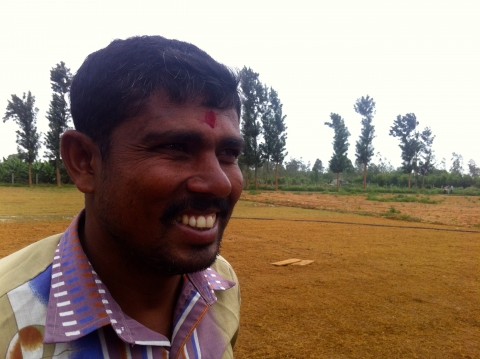
Bangalore farmer Rajanna Uganawadi says by switching from synthetic fertilizers to human waste he’s increased his banana harvests to three or four from two. The practice also avoids significant amounts of greenhouse gases from the manufacture, transportation and application of synthetic fertilizer.
The man repeats this all day – draining out septic tanks and delivering the contents to farmers around Bangalore. It’s an extreme twist on the old adage “one man’s trash is another man’s treasure.”
”So that’s it,” the man says. “I meet the need. Some people want it to be emptied and I take it from them and I give it to those who want it.”

This information in this newspaper is incorrect; there are a large number of lorry tankers who pump septic tank waste in south India, but, it is a fallacy that they can use it directly for growing bananas.
State law says that the human waste cannot be used directly as fertilizer, because of E-colii and other bacteria which do not disappear into the soil, but are directly present in produced bananas and other vegetables. As such, a treatment is necessary to remove the bacteria, heavy metals and a number of other waste materials present.
If this dude supplies human waste directly to bananas, he is going to jail, because bananas are the worst in retaining E-colii as they are not washed after plucking. In the south India, treatment plant sizes are limited and septic tanks are not pumped very often. The situation is even more dire for construction and industrial waste; the government stipulates construction should only use treated water, but there are not sufficient treatment facilities available.
Its a Nice Information Green Banana Hope to See More Thanks for Sharing…
climatic changes has lead to many problems for the farmers as there is no rains or improper water supply many lead to many problems
Urdu Newspaper in Mumbai