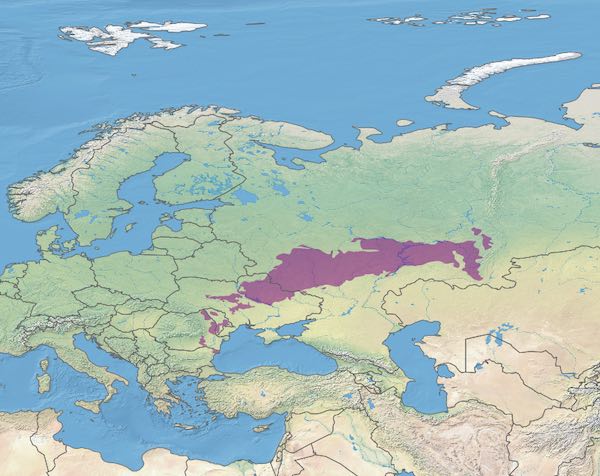
 In the comments below a reader asks a legitimate question: why the focus on Indo-Aryans when the most probably model suggests that even among the most “Aryan” of South Asian groups the ancestry attributable to the Andronovo-Sintashta people are only on the order of 30%? In most of northern South Asia, the fraction is probably closer to 10%, and it is far lower in the south (there is a concomitant varna gradient as well).
The exact point estimate will change, but it is almost assured that most of the ancestry of Indo-Aryan speaking South Asians is going to derive from the people who were resident within the Indian subcontinent when the Indo-Aryans arrived. So why the arguments and debates about Indo-Arans?
To understand this I will move the discussion out of a South Asian context first:
O most valiant and blessed martyrs! O truly called and elected unto the glory of Our Lord Jesus Christ! Which glory he that magnifies, honors and adores, ought to read these witnesses likewise, as being no less than the old, unto the Church’s edification; that these new wonders also may testify that one and the same Holy Spirit works ever until now, and with Him God the Father Almighty, and His Son Jesus Christ Our Lord, to Whom is glory and power unending for ever and ever. Amen.
– Perpetua
The above is the conclusion of the witness and statement of St. Perpetua, a young Christian woman martyred by the Roman authorities on account of her faith. For over 1,000 years Christians have identified with and drawn strength from Perpetua. Young Catholic women in Poland cry to this day when they read her story. The story of Perpetua is their story in some deep way.
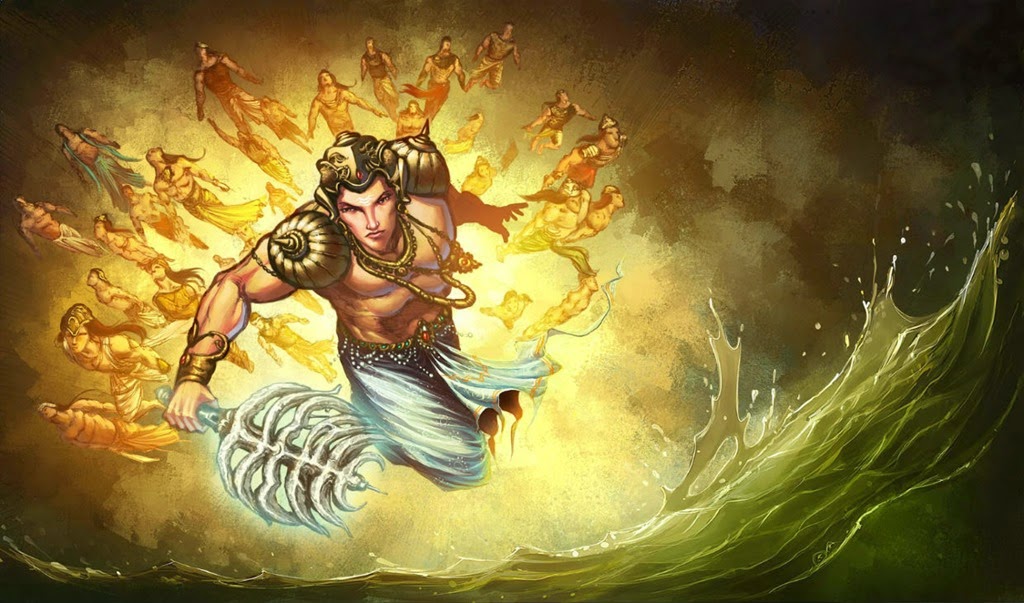
When Perpetua was being sent to her death, the ancestors of the Polish women who identify so great with her were pagans, practicing slash and burn agriculture south of the Baltic shore. They were worshipping and venerating gods which in fact held a distant relationship to those of the Rig Veda!
Many of us may laugh at the fact that Pakistanis venerate Muhammad bin Qasim , when if he were alive today he likely have contempt for the “black crows” which bow down before the Arab god (Qasim lived before a more universalistic Islam emerged, and when the sect was very much a cult of the Arabs of the Arabs). Similarly, the origin priests of the Indo-Aryans would probably look with confusion and bewilderment at the “black” people speaking with their voice.
But speak they do! The power of the Indo-Aryans is the power of memory over flesh. In the Bible, Ruth states that “thy people shall be my people, and thy God my God: Where thou diest, will I die, and there will I be buried…”
What language did the mleccha speak? I am convinced that some of them surely spoke dialects related to those of southern India, though the existence of Burushashki points to greater complexities than we may imagine. What gods did they worship? There are suppositions one can make about the non-Aryan elements of Indian culture. They are likely numerous, constitutive to an understanding of Indian culture, but they are the background. The frame.
In the foreground is the name and the speech of the Aryans. The very words which roll off our tongues, and the memories of the heroes of yore. The Aryans obtained their cultural immortality by implanting in the other peoples of the Indian subcontinent their speech, their mythos, and their very identity.