Open doors (after 817 years)

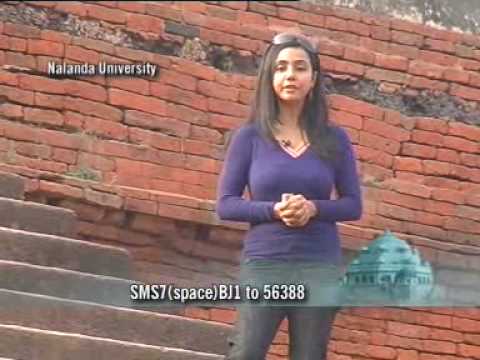
Nalanda University was born in the 5th century CE and was consumed by flames in the 12th. Eight hundred years later the doors are open once again (classes begin Sep 14). We are hopeful that the distinguished faculty led governing board and the international funding from China, Singapore and Japan will make for a good start. Hopefully this will also put Bihar on the map……as the poorest in Bihar prosper, so will the rest of India.

….
[ref. Wiki] The Governing Board of Nalanda University: Amartya Sen (Harvard), Sugata Bose (Harvard), Wang Bangwei (Peking University), Wang Gungwu  (National University of Singapore), Susumu Nakanishi (Kyoto City University of Arts), Meghnad Desai (London School of Economics), Prapod Assavavirulhakarn (Chulalongkorn University, Thailand), George Yeo (Former Minister for Foreign Affairs of Singapore), Tansen Sen (Baruch College, CUNY), Nand Kishore Singh (Member of Parliament – Rajya Sabha), Chandan Hareram Kharwar (Pune University). 
………..

…….
So what of the future? We remain sceptics as there is no visionary leader willing to lead the fight.  They should have paid top dollar and got a high priced CEO to be present on-site (in remote, law-less Bihar) and lead the effort from the front. Prof Sen (junior) seems to be just the right man (age, qualifications, plus the gift of a syncretic name like Tansen Sen) for the job.
……………
….
As rumors have it, things are being remote-controlled by warm bodies residing in Delhi, which does not exactly inspire confidence. We hope that for once Indians can rise above pettiness.

Also for people who are sitting on their hands, check out this profile of Chandan Hareram Kharwar: is this a hoax or what? Curious minds want to know (siliconindia.com/profiles/chandan-Hareram-Kharwar)
……

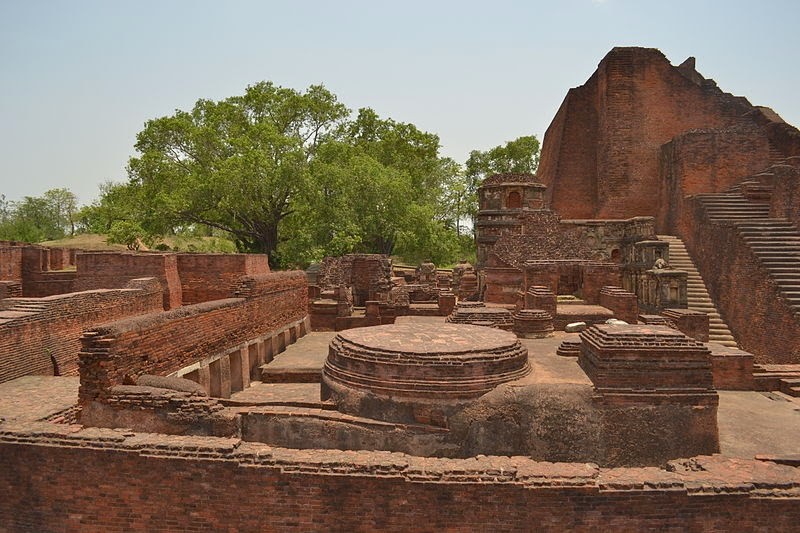
[ref. Wiki] Nālandā was an ancient higher-learning institution in Bihar, India. The site is located about 88 kilometres southeast of Patna, and was a religious centre of learning from the fifth century CE to 1197 CE. 
….
Nalanda flourished between the reign of Śakrāditya (whose identity is uncertain, who might have been either Kumaragupta I or Kumaragupta II) and 1197 CE, supported by patronage from the Gupta Empire as well as emperors like Harsha and later rulers from the Pala Empire.


The complex was built with red bricks and its ruins occupy an area of 14 hectares (488 by 244 metres). At its peak, the university attracted scholars and students from as far away as Tibet, China, Greece, and Greater Iran. 

Nalanda was ransacked and destroyed by an army of the Muslim Mamluk Dynasty under Bakhtiyar Khilji in 1193 CE. 
 …..
The Nalanda University in nearby Rajgir is an effort to revive and re-establish this ancient institution of learning.

Nalanda University was one of the world’s first residential university
as it had dormitories for students. It is also one of the most famous
universities. In its heyday, it accommodated over 10,000 students and
2,000 teachers The university was considered an architectural
masterpiece, and
was marked by a lofty wall and one gate. 

///
Nalanda had eight separate
compounds and ten temples, along with many other meditation halls and
classrooms.
On the grounds were lakes and parks. The library was located in a nine
storied building where meticulous copies of texts were produced.


The Tang Dynasty Chinese pilgrim and scholar Xuanzang studied, taught
and spent nearly 15 years at Nalanda University. He has left detailed
accounts
of the university in the 7th century. Yijing has also left information
about the other kingdoms lying on the route between China and the
Nālandā
university. He was responsible for the translation of a large number of
Buddhist scriptures from Sanskrit into Chinese.


///

According to records of history, Nalanda University was destroyed three times by invaders, but only rebuilt twice 

Library of Nalanda University which is reported to have burned for three
months after the invaders set fire to it, ransacked and destroyed the
monasteries, and drove the monks from the site.

Japan and Singapore are financing the construction work, with
contributions totalling around US$100 million. Gopa Sabharwal has been
appointed the
first Vice-Chancellor of this university in February 2011.


It has been estimated that US$500m will be required to build the new
facility, with a further US$500m
needed to sufficiently improve the
surrounding
infrastructure. The group is looking for donations from governments,
private individuals and religious groups.


The State Government of Bihar handed over 443 acres of sprawling land
acquired from local people, to the University, where construction work
has
begun. It is a dream project of the former Indian president APJ Abdul
Kalam.


..

For best architectural design, a global competition was held for
construction of an international state-of-the-art institution.Vastu
Shilpa
Consultants have been selected as the winner of the design competition
with dbHMS providing the triple net-zero energy, water and waste
strategic
plan  


Classes for the School of Ecology and Environmental Studies and the
School of Historical Studies. Right now there are 15
students and
11 faculty members at the campus. Sabharwal said there were two reasons
for starting on a small note as she wanted the students and teachers to
settle
down, and that Union external affairs minister Sushma Swaraj would be
visiting on September 14.


More than a thousand students from various countries across the globe
had applied for the seven schools on different subjects that will
function at
the university, of which only 15, including one each from Japan and
Bhutan, were selected.


….

The NU came into existence by the Nalanda University Act passed by
Parliament. Economist Amartya Sen is the Chairman of the Governing Body
of the
university, while renowned teachers from various countries are its
members

…..

Link:

…..

regards
Abolishing elite-selves

“When the activists first asked us to fill applications we thought they were mocking us….When they still didn’t leave, we ignored them….But they didn’t give up and today we are so glad”….says
Malik, a vegetable vendor…..“We couldn’t imagine stepping inside the school…..my daughter goes there every day to study and spe­aks such good
English, like they do on TV”

….


The title is derived from a famous quote from a wise man (which finally came true after 50 years, less 11 days, when the son of a tea-seller became PM on May 16, 2014):
…….
…..a description of Nehru by
the Australian diplomat Walter Crocker…..After Nehru died on May 27, 1964 ….Western press pondered whether India would fall apart…….As
Crocker put it in his biography of Nehru…”In propagating ideas of
equality, Nehru and the upper class Indian nationalists of English
education abolished themselves….Nehru destroyed the Nehrus”….. 

….
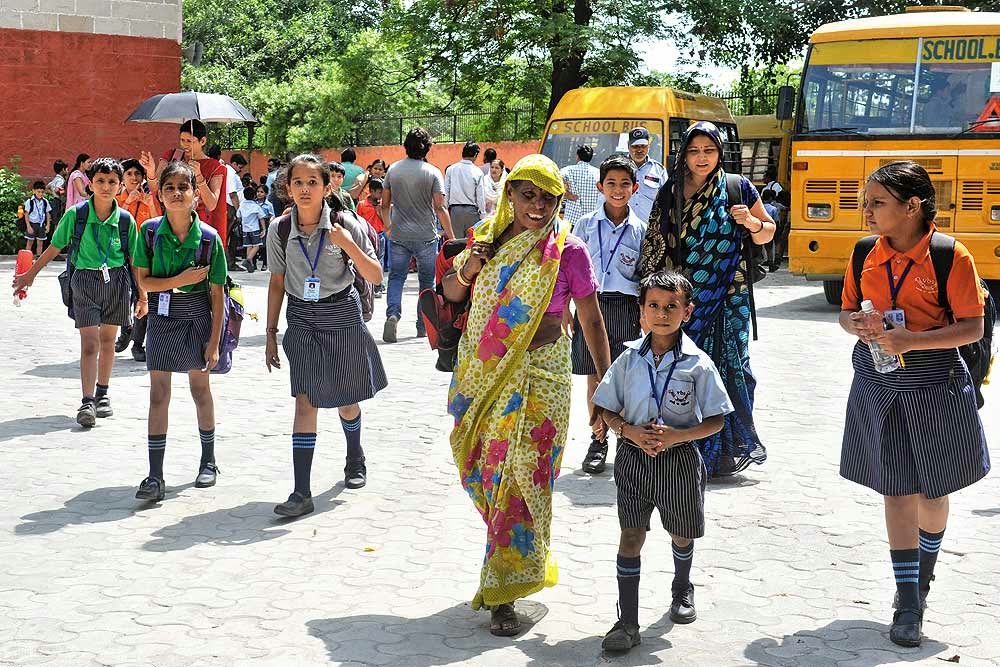
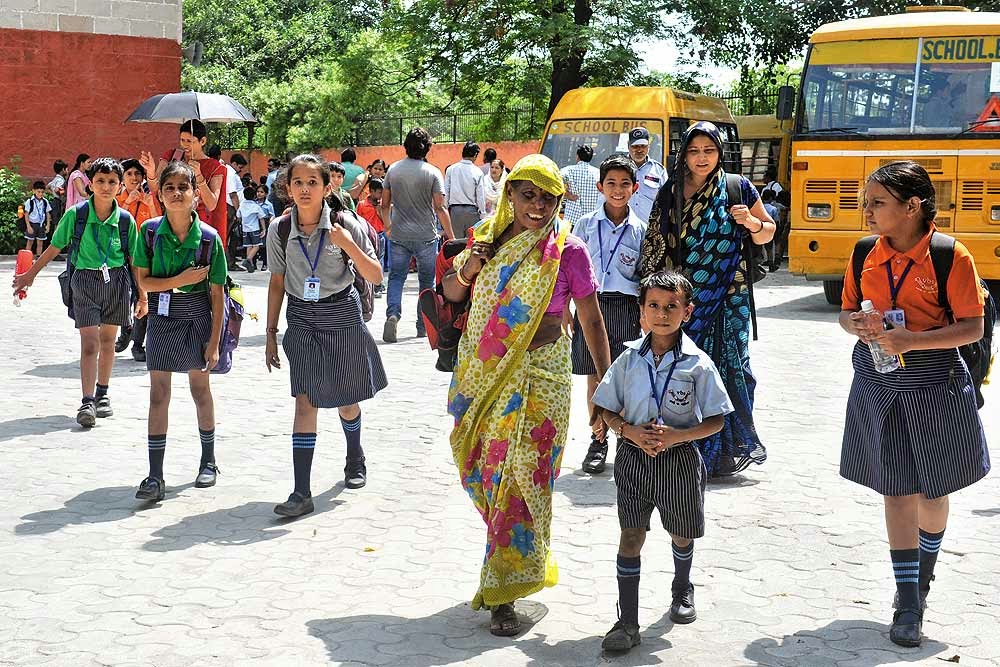
Then there is the NGO driven non-violent social justice movement (much better than the Maoist driven violent one) which ensured passage of the Right to Education (RTE) act that dictates that 25% of the elite school seats must go to the slum-kids in the vicinity. Ashok points out (and we agree) that credit must also be given to the UPA-II regime for this achievement, however it must be emphasized that without the enthusiasm of the NGOs such a law would never get implemented in reality.

As per the law, not only will the tuition for Economically Weak (EWS) students be free – presumably all this will be cross-subsidized by upper middle class parents – the students have a right to free books and uniforms as well. Naturally, the resistance is huge, the elite class will not easily abolish themselves. But make no mistake, this is the face of soft revolution.

There is a lot to be said both for and against reservations. But there is no doubt that the Indian policy of running the largest affirmative action program in the world is designed to do two things: it gives people at the bottom of the ladder hope (one day, their children can be Prime Minister just like the chai-wallah’s son). Secondly,  it reduces the resentment just a little bit and thereby increases the stake of the poor in the democratic order.

“My daughter speaks such good English, like they do on TV” is a phrase that will melt the heart of the harshest cynic. We hope.
……

In
2006, the school wouldn’t let them stand at their gate, watchmen would
shoo them away. When, after several protest dem­onstrations, they were
finally let in, they were curtly told seats for weaker sections had
already been filled. Not a single child from their slum, the only one in
the vicinity, had however been admitted.


The next academic year, hundreds of them gathered outside the school
on the first day the forms were distributed. “Ryan International was so
fed up that they asked us to write our children’s name on slips, place
them for the draw and pick them ourselves. This time all the seats meant
for weaker sections went to children from our slum,” recalls Sunita,
laughing. Her husband is an auto-rickshaw driver and her son now studies
in Class III at the school in the Vasant Kunj locality of southwest
Delhi.


“When the activists first asked us to fill applications in these
schools, we thought they were mocking us and we abused them roundly,
asking them to get lost. When they still didn’t leave, we ignored them.
But they didn’t give up and today we are so glad they didn’t,” says
Malik, a vegetable vendor.


“We couldn’t imagine stepping inside the school,” he goes on to say.
“But now my daughter goes there every day to study and spe­aks such good
English, like they do on TV.” His eight-year-old daughter studies in
Class II at the Vasant Valley school, in the same area.


Over 200 children from Rangpuri Pahari, the area Malik and others
live in, now go to the several private schools in and around here, among
them Ryan International, Bloom Public School, Vasant Valley and Delhi
Public School. The parents in the slum have come together to form the
Sajag Society, an association of EWS parents, to discuss their problems,
help each other and encourage more children from the slum to exercise
their right to education. Delhi today records the highest number of EWS
admissions in private schools across the country.


Yet it isn’t easy for the parents. They still have to pay through
their nose. “We don’t have to pay tuition fee, but we still spend about
Rs 8,000 a year. Books cost up to Rs 5,000 a year. The uniform does last
for over a year because the material is good, but they cost around Rs
1,500 for each set. Shoes again cost around Rs 800,” lists out Renu, who
works as a domestic help.


….
Even as the government has ordered schools to provide free (no fees)
education, including free books and uniforms, few schools pay heed to
the provision. And the centralised system, which ensures admissions
based on a lottery, doesn’t allow parents to select a school based on
affordability. Vasant Valley, parents say, is the only school in the
area which has provided free uniform for the first time this academic
year. dps, on the other hand, distributes books of senior students to
the poorer students, instead of giving them free books as per the law.

………..

Link (1): business-standard.com/rahul-jacob-nehru-then-modi-now

Link (2): outlookindia.com/printarticle.aspx?291803

….

regards

Brown Pundits