
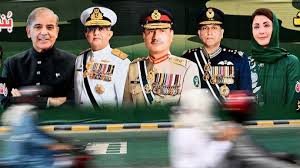
The settled view of Pakistan, is that it is the most ideologically Islamic state the world has ever produced, and that each decade carries it further into theocracy. We think the settled view is wrong.
The Pakistani elite has quietly secularised. And far from hollowing the state out, this is precisely how Pakistan became what it was always designed to be: the successor state to British India’s Muslims. Islam was the vehicle. Pakistan is the destination.
Islam remains the public language of legitimacy.
Privately, among the stakeholders who actually run the place, the operating priorities are entirely secular. The society on the ground is conservative and devout. The class at the top, the one that keeps the state alive, believes in Pakistan far more than it believes in Islam.
It helps to separate three things that we mean by Islam. There is Islam as faith, the private conviction of the believer. There is Islam as identity, the badge of who one is and whom one stands with. And there is Islam as state language, in which Pakistan explains itself to itself and to the world.
The elite has not surrendered the third, and it has not wholly shed the second. What it has let go of is the first as a terminal value: the notion that the purpose of the state is to realise Islam, rather than to deploy it.
Faith has gone from ultimate to instrumental.
This migration is what we mean by secularisation. This is not the familiar story of liberalisation. We are not saying Pakistan grew tolerant, or irreligious, or fond of gin. We are saying something narrower and stranger. Pakistan’s elite secularised the priorities of the state without secularising its language. Strip away the Islamic vocabulary and look at what the stakeholder class optimises for, and the list is unmistakable: state survival, strategic depth, military capability, sovereignty, national prestige, and the reproduction of the elite itself.
These are not Islamic priorities. They are Prussian ones. What has emerged among the men who keep Pakistan going is a finely tuned, military-bureaucratic nationalism, disciplined and unsentimental, for which Islam is the flag and not the engine.
Prussia describes the temper of this elite.
For the fate of the faith itself, the better analogy is France. A revolutionary creed, once it triumphs completely, turns ceremonial. No one in the Fifth Republic argues about Robespierre over breakfast, not because the Revolution failed but because it won so totally that the nation absorbed it and stopped debating it. The principle became the backbone.
A French republican today need not be a Jacobin, need not want the Terror back, to hold 1789 sacred; the founding is revered precisely because it is finished, no longer a live programme anyone is required to enact.
Islam in Pakistan is travelling that road. It won its argument in 1947. It produced the state, and having produced it, it no longer needs to function as a working programme. It becomes instead the national myth: sacred, unexamined, saluted on every occasion and enacted on almost none. A Pakistani patriot can revere the idea that made Pakistan without wanting an Islamic state, in just the way a French one reveres the Revolution without wanting another. This is why the secularisation is so hard to see. The reverence is genuine and loud; it simply no longer governs. The founding faith has been elevated into myth and quietly retired from the business of running anything.
It is thus worth dwelling on the Crescentiate.
Among the loudest defenders of Pakistan, the most theologically committed voice is almost always the one not born in Pakistan. The diaspora keeps the faith as identity; the Pakistan-formed elite keeps the state. That asymmetry is instrumental. It tells you where belief has migrated, and which of our three meanings of Islam each camp is actually holding.
China conducts cold realist diplomacy and stays militantly atheist; Saudi Arabia conducts it and stays Muslim. Just about.
But look at the content of Pakistan’s realism, not merely its existence, and a state for which Islam was the terminal value would let creed shape its alliances.
Pakistan does the reverse.
In the year since the brief war with India, Islamabad has bound itself, at once and without visible discomfort, to atheist China, to Shia Iran across an old sectarian divide, to Wahhabi Saudi Arabia, and to a secular and nominally Christian Washington. It made its army chief a field marshal, secured a private White House lunch and the warmest American hearing in two decades, signed a mutual defence pact with Riyadh, deepened the all-weather tie with Beijing, and turned itself into the broker shuttling between Washington and Tehran. The creed of the partner is simply not an input to the calculation.
This is the point the diplomatic noise obscures. A devout society sits at the base; at the summit sits a class that will take any table and collect from each guest, indifferent to the religion of the man across it. Such indifference is ordinary in a secular state. In a state that names Islam as its reason for existing, it nothing less than extraordinary. The secularisation is invisible only because nobody troubled to change the language.
Set India beside it, and the asymmetry sharpens.
India bet on admission. The whole architecture of its recent foreign policy assumed it would be the lynchpin of a respectable Western order, the natural partner of the United States, the anchor of the Indo-Pacific. On precisely that axis it was challenged: tariffed at fifty per cent, called a dead economy, told it was interchangeable with Pakistan, made to watch its rival courted in the Oval Office. India did not collapse.
It adapted, with a trade agreement with the European Union, another with the United Kingdom, a wary thaw with China, and an eventual tariff truce with Washington. But the adaptation is the point. India fell back on strategic autonomy and a scramble of bilateral deals because the club it had courted declined to grant it tenure. Two states, two objective functions. Pakistan played for leverage and took leverage; India played for belonging and learned that belonging was not on offer.
Data is not Destiny
Which brings us to BB, and to the data. BB loves a number and quotes them tirelessly: GDP, fertility, the human development index, the metrics on which Pakistan plainly trails. Every one of those numbers is correct.
The error is not in the data but in the assumption beneath it, that prosperity is the thing the state is playing for. GDP matters. It does not. BB reads the masses and the macro-aggregates as the players; they are not.
The players are the Prussian elite, running a different game. The honest question is not whether Pakistan is poorer, which it is, but what it has been willing to trade prosperity for, and the answer, shown again this past year, is sovereignty and leverage, which Elitestanis will buy at almost any price.
Kashmir is Sui Generis
The same misreading feeds the Saffroniate’s favourite fantasy, that Balochistan or Afghanistan can be turned into Pakistan’s Kashmir, a running wound that bleeds the state. It will not happen, and the reason is structural. Insurgencies are not bought; they are lit. They begin with the sub-gentry and the disaffected elite, not with the poor as such.
Balochistan rages only where its own leaders sustain the infrastructure of resistance, and you cannot wire money to a grievance and expect a nation to rise. A broad-based nationalism appears only once an entire population has been activated to an ideology, the way sustained dispossession forged a mass Palestinian nationalism that now commands the sympathy of much of the world.
That threshold has not been crossed in Balochistan, and it will not be crossed from a spreadsheet in Delhi. Meanwhile Pakistan has persuaded Washington to brand the Baloch insurgency terrorist: the very lever the Saffroniate dreams of pulling is being pulled the other way. The Saffroniate is cloaked to it because it keeps fighting an imagined theocracy the Pakistani elite quietly stopped being.
What BP teaches us
We learned a version of all this from our own house. Brown Pundits ran a reader survey, and thirty people filled it in. The masses, here as everywhere, are silent. Even the sub-elite readership is mostly inert; the few who could mount a real counter-current, by starting a rival shop of their own, will not trouble to. Neglect Brown Pundits for years and it roars back regardless, because the quarrel between the Saffroniate and the Crescentiate is the most interesting argument in this corner of the internet, and it has nowhere else to go.
And in the comments, the discovery. Across all the Crescentiate energy, almost no one argues theology. No one is building the Caliphate. No one is much exercised about an Islamic state. Yet every one of them comes alive the instant Pakistan, the nation, is touched. That is not an Islamic attachment. It is a national one.
We are We
Sitting between the two camps, neutral by temperament, we see what each cannot see about itself. And the revealed preference of the Crescentiate, watched over years, is the sharpest evidence we have. On the whole they do not want a seat at the Western table; they are content to be the exotic token, the interesting outsider, and they reach for absurd lectures on the West’s misogyny and patriarchy partly to keep that distance.
The Saffroniate’s commenters want the opposite: the nod of recognition from respectable opinion. We are describing a commentariat, not a census. But the asymmetry on the page is consistent, and it rhymes with the statecraft. The Indian instinct is to be let in; the Pakistani instinct is to be left alone, intact and exotic. That single difference is why Indian commentary keeps reaching for the Western template, instrumentally and without quite saying why, while the Pakistani feels no such pull.
The Saffroniate is still arguing with yesterday’s Pakistan, the Islamic project the elite abandoned years ago, while today’s Pakistan, secular at the summit and Prussian to the bone, slips past unnoticed.
Jinnah, in the end, got the state he wanted. Nehru got an argument, and he is still having it with a Pakistan that no longer exists.
The Punjabi Muslim is ruling something after centuries of being ruled by Afghans, turks, sikhs, British.
He has not really won some great battles against anybody.
The Prussian state was brittle, eventually to be dissolved.
was it brittle?
it didn’t adapt to survive.
Is this conjecture? How do we know that the Pakistani elite Is not interested in using Islam and being its warriors?
And if what you are saying is true how long can this contradiction keep up? A nominally secular leadership paying obeisance to and using religion as a justification only helps those who want to really create a religious state itself. Pakistan military is not Afghanistan but this double life does not bode well for the cureent state and its leaders.
The Pakistani constitution states that all laws must be in conformity with Quran and Sunnah. Look up the “Objectives Resolution”
Islam is not going anywhere. Nor should it. This is a country where 97% of the population is Muslim.
As long as Pak Fauj is in charge, the religious fundamentalists will not be in control of the state.
XTM is absolutely correct that for the Pakistani “establishment” and elite nationalism is far more important than religion.
I do take issue with the claim that Pakistan is the “most ideologically Islamic state the world has ever produced”. This describes Saudi or Iran rather than Pakistan. Saudi Arabia’s law is literally Shariah.
KSA & Iran weren’t formed on Islam.. no other nation on the planet was formed on that basis..
Like I said, Saudi law is literally Sharia. Iran is ruled by clerics.
I think it’s fairer to say that Pakistan was meant to be a Muslim state and not an Islamic state.
these are technicalities.
also Pakistan operates on Islam for thee but not for me..
so long as the population is chained; the elite has a fairly free hand. so Elitestanis are rapidly becoming post-Islamic but still ensuring that Islam is the dominant ideology that drives society and keeps Pakistan..
Islam quietens revolutionary impulses in Pakistan
Are they technicalities? Until recently, women couldn’t drive in Saudi. Iranian women have to wear hijab.
Neither of those things were ever true in Pakistan.
I also don’t think anyone is becoming “post Islamic”. I may not associate with the elite but certainly I’m part of the upper middle class. People are still quite concerned with the appropriate time for namaz, fasting etc. And these are all educated, professional people (professors of medicine etc) who are quite modern in other ways.
I agree with you that Islam is used strategically in Pakistan–just as Hinduism is used strategically in India.
That makes Pakistan a muslims state not an islamist one as Kabhr points out
Iirc the protection of subcontinental muslims in general is why Pakistan was formed. Which is why even a seemingly secularism elite can control much of its apparatus. Unlike western or even iranian secularists who are default anti religious and go out of their way to distinguish their worldview from any religious impulse.
Pakistani secularized elites wholeheartedly accept Islam as part of their identity, without too much religion practise. A secularized islam than post islam what have you
This is a good post and sums up the Pakistani mentality nicely.
There is very little debate on whether Pakistan should be a Shariah ruled Islamic State or a secular state. This debate only happened when Zia tried Islamization over and above the needs of society or when Musharraf tried his Ataturk reforms in Pakistan that eventually failed.. Pakistani rulers after him largely continued the status quo that has continued in Sunni Sultanates for over a thousand years – that is that Islam provides a basic framework that can be used for governance but its not the only tool and the ruling elite is mostly secular that uses Islam to legitimize its rule.
Indians unfortunately do not understand Pakistan (or Islam) even a little bit and their understanding seems to have been stuck in the 1940’s. Their entire history of the last 1000 years is fabricated by deliberately misrepresenting this fundamental Muslim way of governance for local politics but they have effectively cornered themselves into a lonely position on the world stage. Their modern foreign policy is pretty uninspiring and based on the false assumption that neo liberalism will save their bacon in a world where it is dying. It will not.
Just like Israel has run out of allies and may face ruin, Modi ji is steering India towards the same direction (although a long way to go still)
India also has a huge welter of the Nehruvian legacy..
> Indians unfortunately do not understand Pakistan (or Islam) even a little bit and their understanding seems to have been stuck in the 1940’s.
This is my position as well. Indian state is still trying to fight third battle of Panipat in 2026. Hilariously using the same Maratha tactics from 1761 and carrying a bigger contingent of pilgrims with its troops. And its new Peshwas in Nagpur and Delhi haven’t learn a much of a lesson since getting defeated repeatedly by a much weaker military.
> Israel has run out of allies and may face ruin, Modi ji is steering India towards the same direction
This is a bit unfair. Modi is nothing like Bibi and has been extremely charitable to Pakistanis at the cost of his own popularity.
Is that even true? Jinnah was always rather confused about what Pakistan was supposed to be, was it supposed to be a Islamic Theocracy, a Secular Democracy or a Military Junta? Regardless, let’s be real Jinnah’s state is long dead which is why no one debates about it. It died in the same ambulance as Jinnah did, ignored by the same people that supported it creation. The state we see today is a cobbled together remains of the interest groups which held it together which is a complex of the landowners and the military.
but which has successful endured.
in 1971; it wasn’t just Bangladesh that should have been created but 5 more mini-Stans.
Why but? Had India not intervened, Bangladesh would still be part of Pakistan.
The Mukti Bahini on its own was thrashed by the Pakistani army.
India was instrumental.
Plus Pakistan was more centralized and the punjabi muslim elite were themselves beneficiary despite losing access to the bay of Bengal.
BB I think we could expand this comment a little and turn it into a post. An important part that we’re missing out on this is that Pakistan is a successor state in the sense it remains just as colonial in its outlook as the British Raj was. It is in deeply unequal agreements with its non-Punjabi provinces with a clear ethnic hierarchy within the state. It has an extremely colonial outlook with regards to Afghanistan even viewing it as a ‘strategic depth’ even when they had limited influence within Afghanistan.
On another note, I remember going to my favorite Indian restaurant in Palo Alto called Zareen and being really surprised at seeing a picture of Karima Baloch hanging there. So it was clear to me that the American policy on Balochistan was clearly more complex than the Pakistanis here make it out to be. As Baloch separatists are well represented even in some of the most prosperous areas of the West.
we have been to Zareens
https://www.zareensrestaurant.com/about
My family hails from Karachi, Bombay, and Punjab, and so, inevitably, food is a big part of our life. My mother, my aunts, and my sister, are all amazing cooks. I was lucky to have eaten their cooking and learned their art growing up.
this was the first we have heard of Karima Baloch- it would be good to do a post on this martyr..
[…] had been meaning to make a post regarding this for sometime but since X.T.M made his post touching on some of the points, now is as good a time as […]
there was a 2 day gap from our last post; we won’t be allowing any threads for a few days to allow this to completely air out..
Is this applicable to ALL posts from now on?
Will there be a breathing period for everyone’s posts?
Similarly, is there a limit on number of posts someone can make in a particular time?
Curious how confidently this assertion gets expressed, while we never have any actual Baloch voices to express or challenge it. In other news, Mehrang Baloch has been sentenced to life imprisonment by a kangaroo court, a woman against whom there’s zero evidence of anything other than non-violent political activism within the ‘constitution of Pakistan’.
That is the point – Pakistan is not India..
As you say it’s an Elite has successfully master the art of Kleptocracy.
The curious thing about Pakistan is the lack of Revolutionary Impulse.
That is the point of the piece. It’s very hard to find analogues elsewhere in the world. The answer is that Islam has been successfully deployed to “glue” society
I think you need to look into the Baloch situation a bit more before you pass sweeping judgements.
Precisely – it is the fact that it is only interrogated by deep dive.
Whereas issues like Palestine, Kashmir etc; they have become internationalised.
There is something when an issue catches global attention. None of the current states (AfPak, Iran) are going to countenance territorial changes ..
It is actually very interesting that so much analysis is vested in Pakistan failing or breaking up.
The correct geopolitical analysis is what if Pakistan survives and thrives; that’s when tactics become formidable. When one overestimates rather than underestimates the counterparty.
>Whereas issues like Palestine, Kashmir etc; they have become internationalised.
I think there is a question to be asked about why …. “muslim on muslim” violence and repression somehow do not become “internationalised” to the extent that Palestine does.
Also, if BP is going to claim honest discussion of an issue, can we try and avoid casting blanket aspersions on commenters’ motivations?
Wait, on what charges did India imprison Sharjeel Imam and Umar Khalid?
Whatever the charges, they were less than why Mahrung Baloch is in jail for the murder of an FC soldier Shabbir Baloch.
They’ll never want to talk about Sharjeel and Umar.
Imprisoning Muslim Phd Scholars is normal in the new India.
Don’t know who they are
https://en.wikipedia.org/wiki/Umar_Khalid
Umar has been in jail since September 2020 for his alleged involvement in the Delhi riots.
It’s easy for the Indians here to trot out Mahrung Baloch to make their anti Pakistan points. Good for them.
But they’ll never examine why their own country holds Muslim Phd scholars in jail.
Umar’s trial is yet to begin and he’s already been in jail for six years.
But hey, let’s cast aspersions on Pakistan. That’s what satisfies the psychological needs of the Indians here.
“ceasefire violation” in jumping in to respond to my comment 😀
Anyway, I don’t mind, I don’t believe in censoring anyone, especially folks I disagree with.
Whataboutism is………inherently infantile and the opposite of ‘intellectualism’ or center left liberalism.
The conversation in this thread is topical – about Pakistan and Balochistan. Dragging pending court cases in India is…..a red herring.
It’s not a ceasefire violation as he is replying to us ..
You dont know who Umar Khalid is?
https://www.satp.org/satporgtp/countries/india/terroristoutfits/simi.htm
Sounds like Muslim version of RSS
The difference is that one gets elected to rule, but while the other is called ‘terrorist’.
Jinnah was clearly right abou Hindu rule.
whataboutism is…….an infantile defense.
So is pretending that the generational resistance in Balochistan against the Pakistani nation-state somehow doesn’t exist.
Balochistan has nothing to do with you. It has never been a Disputed Territory.
You all will never ever succeed in breaking the Islamic Republic of Pakistan again.
I ….DGAF about breaking or preserving the state of Pakistan. Am entitled to my opinions and perspective on it though. And to empathize with the persecuted plight of the Baloch. Who have been horrendously oppressed by the Pakistani nation state and its armed forces.
What has happened once will happen again. History doesn’t repeat but it sure does rhyme.
Do it. I’m still waiting. Pakistan’s red lines were crossed with the IWT and it did nothing. It will do nothing when it losses territory.
We will nuke you out of existence.
Never ever threaten the Islamic Republic.
Nothing and no one is more important than the Islamic Republic of Pakistan.
The elites will find ways to ‘explain’ away things. Scapegoats will be found. New ‘heroes’ will be crafted. And the game of thrones will continue, with a slightly smaller throne.
This is what we mean by wishful thinking.
Out of curiosity; do you sympathise with the Kashmiris?
funny how I need to provide certifications of my ‘sympathies’. But yes, I will answer the question in good faith. I strongly sympathize with all Kashmiri victims of terrorism and state violence, of any and all faiths.
Insurgency, extremist violence and exploitation, and state heavy handed responses to it, the whole mess is tragic.
Why is that the Pakistani provocateurs are not asked whether they sympathise with the victims of Pahalgam, or 26/11. My uncle lost a limb in the 1993 Bombay bombings. The detonators were provided by Pakistani army (NATO issue, found with serial numbers, traced and purchased by PakMil).
Why aren’t the same standards applied here when the Baloch are outrageously murdered and disappeared?
A thread discussing Pakistan, has been hijacked into hurling nuclear ‘existential’ threats against India. And the question asked is ‘ But what about the Kashmiris’.
Some introspection is required.
It is funny how quickly things devolve to nuclear blackmail with Pakistani right wingers. It didn’t even take 3 exchanges of words to get to that point.
The bigotry is not even concealed. Its right there bobbing its head below the surface.
Sorry, every single Pakistani-whether left or right wing– knows that the territorial integrity of Pakistan is an absolute red line.
There will be no more 1971s. We will not lose an inch of the Islamic Republic.
The definition of insanity is doing the same thing and expecting different results. Has the actions of the Pakistani state changed or does it remain the same as it was with the Bengalis? I think you’ll find your answer there.
Exactly. The nukes aren’t the silver bullet against secession that the Pak right wingers seem to think it is. Yes, it can serve as a deterrent against external invasion. Internal ones? The only thing IMHO stopping the Baloch from breaking away, is sheer numbers. Their population density relative to the landmass is just too scarce.
Kabir if you violate all your ceasefire; we will stop that Precedent effectively. Do you wish for the Online Safety Precedent to be dropped!
No, I’m sorry.
But it doesn’t seem like the ceasefires are being respected by the other side either.
Yes that’s fine and we will deal with them.
But you know as long as we surface online that impose the ceasefires
We are very sorry to hear about your Uncle.
He’s passed away since then. And personal feelings aside, the bottomline in India-Pakistan relations and conversation is this – there is an incredibly bloody historical track record of hundreds and hundreds of civilian murders and terror attacks sent into India over the last 3 decades – directly linked to Pakistani state. No amount of propaganda is going to somehow reduce this trauma to “both sides are not innocent”.
For actual India-Pakistan lasting peace or rapprochement, this 800 pound gorilla needs to be addressed – honestly by Pakistanis.
Until Pakistani policy acknowledges this, and permanently, publicly moves away from such bloody policy choices, we are not going to see peace on the subcontinent.
And the elites that control Pakistan are all too willing to let their citizens pay the price for the absence of peace.
My father’s shop was almost bombed in the Mumbai attacks. I have no hope for peace with a nation which would do that to my city. The Pakistani tactic of market bombings is well known at this point.
Thank you for sharing.
Sorry to hear about this.
there’s just too many to list. Not that I care for the weirdo cultists of BAPS, but literally temples have been repeatedly targeted. The goal of inciting and fomenting communal unrest in India is naked.
Just months ago, there was a plot to mass poison thousands of devotees via temple prasad that was foiled.
Pahalgam and its cold-bloodedly identified Hindu victims stand testament to the malafide intent.
And you have official Pakistani mouthpieces asserting that such attacks are ‘false flags’. Such horrific nonsense has been thrown about in BP as well.
When you have so-called authors threatening repeatedly to nuke a country out of existence – because they had a disagreement in a discussion – and mind you, this is not the first time this has happened.
On top of that, such folks are given the latitude to invent “rules” that their propaganda can’t be questioned.
Kabir stop; your comments are getting more and more provocative. You will lose Authorship & 20 comment deletion.
Stop
And threats to the territorial integrity of Pakistan are fine?
The “Saffroniate” wantonly break the ceasefire. Triggering Pakistanis is their game.
I apologize for getting triggered. But threatening the territorial integrity of the Islamic Republic of Pakistan is unforgivable.
Thank you – They can do what they like since you have a ceasefire on. You need to also respect your own Ceasefires.
I do respect my ceasefires. But some people enjoy breaking them apropos of nothing.
Threatening the territorial integrity of Pakistan is not on.
Discussing the tragedy and criminal state repression against the Baloch is not ‘threatening the territorial integrity’ of Pakistan.
Actual progressives would recognize that such honest discussions, in fact, are the only way to save and preserve the same.
But for close-minded tribal keyboard warriors, its a holy war duty to ‘attack’ opposing viewpoints.
> You all will never ever succeed in breaking the Islamic Republic of Pakistan again
I give it 5 years. I know you have nuclear weapons but we will see about that too.
Good luck with that.
Pakistan’s nuclear doctrine is very clear. Any serious threat to the territorial integrity of Pakistan and the nuclear weapons come into play. The nukes are not for decoration.
Not one inch of the Islamic Republic will ever be lost again.
Nothing and no one is more important than the national security of the Islamic Republic of Pakistan.
There is no what aboutism, if the post I replied to compared the two countries judicial systems.
Mahrung Baloch’s organization killed Shabbir Baloch (yes — another Baloch). Whether her involvement was direct or indirect could be trumped up by authorities who would rather see her in jail. However her charges are way more serious than our neighbouring country jailing Muslim activists left right and center and then coming here to lecture us about it.
Indians will not understand tribal societies, which is why they keep hoping somehow that these tribals from are going to go against an organized nuclear powered nation state and some how win. This is completely delusional. Nothing is going to happen. The Baloch litereally rule Sindh and South Punjab. The president of Pakistan is Baloch, the last CM of Punjab was Baloch, the national assembly is full of them. Believe whatever you want, but all militant movements with foriegn backers in Pakistan will be crushed.
Up til now, the state is treating these movements with kiddie gloves.. but if those gloves ever came off, there is an unlimited amount of manpower, funds, weapons and even political will (both local and international) that can be used to eliminate these threats.
Are they Baloch though
Zardari is a Baloch tribe.
You are baloch if you are from a baloch tribe.
Unless indians are now defining Baloch in some new ways unknown to the locals, that’s how it works.
I do not claim to ‘understand’ or know the issues in Balochistan with any degree of certainty.
But the historical record of repeated Baloch uprisings dating back to the 1950s, the history of PakMil assassinating Baloch leaders, throwing ‘disappeared’ young men out of flying helicopters, allegedly while still alive – I don’t think any of that qualifies as “kiddie gloves”. The Pakistani military has air-bombed Balochistan repeatedly over the decades since 1948. I mean, for all the hue and cry over ‘state repression’ in J&K, that’s never happened in India.
The guardian newspaper carried a story a decade ago, with a picture showing how entire towns in Balochistan had all its residences with the roofs removed. The PakMil enforced this so that they could go after Baloch ‘fighters’ using helicopters. I mean imagine, entire towns and villages forced to break their own roofs so that helicopter machine guns can target them better.
Kiddie gloves? Yeah I do not think so.
Someone posted recently on X, comparing the HDP metrics for Baloch in Iran vs Pakistan, and the numbers were horrific.
Pakistanis need to be a lot more honest about Balochistan. And this isn’t me wishing to see Pakistan ‘break apart’. I honestly don’t have a dog in that fight, or care enough about the outcome. But simply on human terms, the Baloch are being treated criminally unfairly.
This is actually treating them with kiddie gloves.
When the gloves come off, you will see actual armed operations very much like the ones you saw against TTP back in 2014 which eliminated them completely within a few months from all areas of control.
The Baloch are not treated any more unfairly than any other ethnic group in Pakistan.The misfortune of Baloch inside Balochistan is that they populate a very vast sparsely populated desert with little or no infrastucture. They are a tribal society where tribes are semi autonomous and the tribal chief is akin to a godly figure.
The British allowed it to stay as a princely state and state infrastructure was never developed. They usually cut deals with the tribal leaders.. and Pakistani state just continued the same policy since 1947. However since the Pakistani state was already weak
To claim that the Baloch as a people are ethnically discriminated is completely wrong, since more Baloch live in Sindh and South Punjab than they do in Balochistan. Infact I would even go as far to say that their tribal sturcture has caused more problems even in these areas by keeping old school feudalism alive.
Iranian Baluchistan (Sistan) is also the poorest area of Iran, there the Baloch are actually mocked in Iran not just for their poverty but also for their culture, religious sect and even race. The only reason they score higher on HDI is because Iran is richer, has oil & gas and access to that wealth flows naturally down in a common market. Iran also has a longer history of ruling the region, and has used more brutal methods to crush any rebellions in Sistan than whatever Pakistan has done.
The Indian narrative on Baluchistan is completely wrong, but it serves a purpose for their government to promote that.
What I am always interested is that even common Indians on social media (not singling you out but this is an observation) are heavily invested in Pakistani insurgents that Pakistan or Pakistanis are not when it comes to India. For example I have never seen a Pakistani talk about Manipur insuregecy or Naxal insurgency.. The only portion we ever care about is Kashmir since it is tied to our security and it is an international dispute under international law. But indians are heavily invested in Pakistani insurgencies, which is an unhealthy obsession .
and Pakistanis are/were deeply invested in Khalistan.
death by a thousand cuts is a Pakistani strategy that India has perfected..
Pakistan only really supported Khalistan for 4 or 5 years in the 80’s and gave up the movement once a cold peace with India was established. I haven’t heard of Khalistan support coming from any section of Pakistani public or state for decades now, despite there being common ethnic ties. So this is a completely false equivalency.
I haven’t heard of Khalistan support coming from any section of Pakistani public or state for decades now, despite there being common ethnic ties. So this is a completely false equivalency.
Factually wrong. A simple google search would help disabuse of these notions.
yes Pakistanis are very keen on splintering India etc..
I don’t think this is actually true.
Khalistan was revenge for 1971. No one in Pakistan seriously talks about Khalistan anymore.
The only territory we want is India-Occupied Kashmir which is a Disputed Territory in international law and not part of “India proper”–despite what Indians claim.
Balochistan is unequivocally part of Pakistan. It is an issue that has nothing to do with India or Indians. Neither does KPK. The only reasons the “Saffroniate” brings these up is a desire to belittle Pakistan and break it up in smaller pieces.
Unfortunately for them, a nuclear-armed state will not break up that easily.
Oh we will love it if India splinters, that is destiny. Its just that most of us are not heavily invested in that scenario.
However the same cannot be said for Indians, the obsession is unhealthy.
Why though?
Why would you like it if India splits up?
Why?
Because we want to see our enemy brought down to size.
Same reason why Indians want Balochistan and KPK to secede from Pakistan.
For the same reason the Western Europeans loved it when the USSR splintered?
Its always good when an enemy country fractures, they become weak.
Its a miracle that most Pakistanis don’t care about this too much especially when that enemy country did the same to us (not ‘would have done’, but actually did). Shocking, I know right?
And this is the point I am referring to. The Indians are still very much invested in trying to break Pakistan further still while the Pakistanis are still unserious about even trying to do the same with India. Pakistan both abandoned the Khalistani movement in the 80s and it doesnt stoke up insurgencies in the East. It still doesnt still exploit the huge dissatisfied Indian muslim minority. Both Chinese and Americans would love to fund these causes.
This is a result of Pakistani leadership often looking West towards the middle east rather than dealing with the Eastern threat. Musharraf was hawkish on India but then became a peacenik. Sharif wanted to go against the establishment and be buddies with Hindutva. Bajwa was also a secret Indian lover while Imran Khan is still inspired by Gandhi. All of these leaders gave India the intitiave that they used to eliminate our leverage and now it will take years to build back that leverage.
Pakistani leadership perhaps aware that no border with India is in Pakistan’s interest?
If Bangaldesh wanted to be part of Pakistan again they would have done so already through a referendum. You use USSR as an example but forget thst most of the reason none of its constituent states did not want to reintegrate is due to the USSRs own actions, same with Pakistan itself. This failure of the Pakistani leadership to create a hegemony is why Pakistan broke into 2, compared to Indias success in places outside Kashmir Valley.
Pakistan lacks the capacity to stoke tensions in the wast after losing Bangladesh and many Indian muslims are even more critical if partition than most hindus. The Khalistsni movement collapsed Pakistan did not abandon it because of some goodwill. The fact thst cross border terrorist attzcks like 26/11 happened and terrorist organizations are still there on Pakistans side of kashmir shows that the state is still committed to breaking India.
It is a pity that the leadership that wanted to normalize ties with India has been sidelined by the army which is the reason why India is forced to take a more antagonistic stance towards Pakistan
I’m……curious as to what ‘leverage’ Pakistan purportedly ‘had’ over India, and how you think its possible to ‘build it back’.
The blindspot or the dishonesty – take your pick on which one you perceive – is…. unsurprising.
Any groups that threaten the territorial integrity of Pakistan must be taught a lesson that they will never forget. The territorial integrity of the Islamic Republic of Pakistan is an absolute red line. There will be no more secession.
Pak Fauj will make sure of that.
Just as India doesn’t allow secession, Pakistan will not either.
For a moment, I will set aside my India identity and try to give an objective input on Kashmir.
Prior to 1990, some of the staunchest supporters of an independent Kashmir were from within the Kashmiri pandit community. Indian intelligence constantly reported on secessionist tendencies within the pandit community. For the pandits, the rude awakening was the realization that there was no common Kashmiri identity that they shared with the Muslims of the valley.
The most brutal crime that brought this point home for them was when Girija Tickoo, a Kashmiri Hindu, was brutally abducted, gang-raped, and sawed alive by Islamic terrorists in Kashmir on June 25, 1990. Lured back to the valley on the pretext of collecting her salary, she was murdered after her identity was revealed. The Muslims had communalized the movement and therefore, lost the support of the hindus. Once the movement became communal, it was dead and Pakistan had lost. Every attempt subsequently was nothing but frustration and corruption. The Pakistani Punjabi is brutally corrupt and the establishment Indians are no less. They all profiteered from violence in the valley. This too ended in 2019 with the abrogation of Article 370. BB’s deleted post provided excellent detail on how violence is almost zero in the valley now.
Objective opinion: India won. For Pakistan, Kashmir is spilt milk.
Anyone with half a brain can see the Kashmir movement for what it is now – a Islamist supremacist project foisted upon Kashmiris by Pakistani resources and exploited by those with vested interests within the Indian establishment. The so-called internationalization of the dispute that Pakistanis like to harp on about is purely a result of Nehru’s follies in 1948, Anglo-Western strategic interests and the diplomatic covering fire Islamic Prussia (read rentier security services) receives in return for its services to harder Islamic states.
There are arguments within Indian strategic circles that Pakistan is a nuisance and China is the existential enemy (ref. to Bharat Karnad’s writings). I can see the seduction in that argument. Liberal fools think that common ethnic and cultural background would mean we will eventually find common ground and realist proponents argue that Pakistan just doesn’t have the wherewithal to be more than a serious nuisance every 5-7 years. This framing doesn’t take in to account the visceral hate for Indian non-Muslims that virtually the whole of Pakistani state and society holds for us. At some point the Indian state has to break the triangulation amongst the Pak-China-US axis that keeps us hobbled.
We’ve put up with their shenanigans so long because there wasn’t an avenue where we had the initiative – which will hopefully change with the IWT’s abeyance. Indian leadership must realize that we are dealing not just with an antagonistic neighbour (like China) but a state that’s built on ideological and geopolitical foundations designed to only work towards our destruction, and one that has near enough employed Clausewitzian Absolute War in the pursuit of its aims. Once this dawns upon the right people, the right strategy should be a natural outcome.
Pakistanis view the JnK ‘dispute’ as unfinished business of partition. Indians, view it as an extension of the regressive Islamist logic of landgrab. It is unlikely that either can convince the other of its ‘rightness’. Not on internet discussions, or anywhere else.
The undeniable reality is that the remnants of Kashmiri ‘secessionism’ are inextricably intertwined with ethno-religious supremacist nonsense, that are…not really tenable in the 21st century.
The division in 1947 was based on religious lines. One of the reasons why Pakistan did not protest seriously when India gobbled up Junagadh and Hyderabad after waging unjust and illegal invasions, was because they were Hindu Majority.
However India trying to gobble up Kashmir was clearly a land grab when it was clearly a Muslim majority state. And since Kashmir is geographically a natural part of Pakistan and a source of many of its rivers, this was a red line India crossed. Their plan was to control Pakistan and try to disintegrate it.
Why Indians cannot see this obvious flaw in their argument over Kashmir, one must be really thick or really brainwashed to ignore this.
Alsace is German but is in France. It seems fairly settled.
Is that an international dispute with UN resolutions, and of geographic and strategic importance to either country? Does the Kashmir dispute looks settled to you?
What’s it with your weak analogies?
Indians will come and say with a straight face that ‘kashmir is settled’, but won’t remove half a million soldiers from it in fear of an invasion.
Alsace Lorraine is precisely the reason why France and Germany could never become allies until after 1945..
from when Prussia grabbed it in 1871 so a fairly big deal.. (74yrs)
exactly the same time as Kashmir’s dispute, 1947-2026 (79 years)
Kashmir as the Alsace-Lorraine of the Indian Subcontinent is a fairly settled analogy; it’s why India & Pakistan simply can’t normalise.
Are you claiming that France and Germany fought two world wars because of Alsace Lorraine? My european history is weak but this is complete hyperbole. The area was only contested because of its natural resources during industrialization.
And Germany lost in 1945 and was forced to concede territory (Kalingrad being another example). Germany is a US vassal state right now but who knows when another painter comes along and retakes old lost territories.
OTOH, all conflict between India and Pakistan have been over Kashmir. Even 71 war would not have happened if there was no Kashmir dispute.
There is no comparision.
Alsace Lorraine meant that France & Germany would always be on opposite sides from 1871 to 1945.
For instance If India & Pakistan didn’t have the Kashmir thorn; would they and could they have formed an analogous European Union.
France and Germany are both Christian countries.
Even without the Kashmir dispute, India and Pakistan will never form a “European Union”. A majority Hindu country and a majority Muslim country will never get along.
However, had there not been an ongoing territorial dispute, far more normalization would have occurred.
France and Germany have been on the opposite sites for centuries prior. It was protestant vs catholic, then republican vs kingdom, then socialism vs feudalism, and then french vs german.
There is no reason to believe one small piece of land was causing the entire issue.
Pakistan and India may have better relations if Kashmir was not an issue but we would not have been allies. Nobody likes India in the neighbourhood because Indian policy exudes SDE, whereby they are so encumbered and so bogged down by their (perceived) history of colonization that given a little bit of freedom, they want to colonize everyone else around them to feel better.
Until and unless they let go of the past, the future remains bleak for them.
Pakistani’s will come and say with a straight face that ‘balochistan is settled’, but won’t remove a hundred thousand soldiers from it in fear of an insurgency.
Pakistan has tried to invade that piece of land 4 different times. In each war it was the focus of Pakistani offensives.
The analogies get lamer by the hour.
Baluchistan is not disputed territory. Kashmir is a disputed territory between India and Pakistan. Its not “settled” until we say it is.
Whereas nobody cares about your opinion on Baluchistan, Sindh, Punjab or KP.
Exactly,
Balochistan is unequivocally part of Pakistan. It has nothing to do with India or Indians.
Kashmir is a Disputed Territory subject to UN Resolutions.
Kashmir is Muslim majority. A majority Hindu state has no business holding on to Muslim-majority land.
Basically, my cake is my cake, our cake is also my cake, and your cake is my cake too.
This is the Indian philosophy, and it’s hilarious that they are completely oblivious to this.
India despite the rhetoric of many dullards within the countey rejects the logic of partition that muslims and hindus cant live together.
Lakshadweep is more than 90% muslim. as are many parts of Bengal and assam along the indo bangladesh border plus some parts of Rohilkhand and areas in south like Mallapuram and old hyderabad
It is the border with Pakistan and many of Indias own missteps that has led to the present issue not the muslim majoroty character of the people who live in Kashmir.
As little as Indians may know about Balochistan, it seems that Pakistanis know as little about Kashmir and India as a whole.
Please! Your PM is called “Hindu Hriday Samrat”. He’s not the Emperor of Muslim Hearts now is he?
Kashmir is a Muslim majority territory. It was Muslim-majority in 1947. Had it been part of British India, the entire thing would have gone to Pakistan no questions asked.
This whole issue only arose because it was a princely state ruled by a Hindu Dogra Maharaja.
You really need to read Mridu Rai (not a Muslim and not a Pakistani) on this issue.
A Hindu nationalist country does not get to hold Muslim majority land at gunpoint.
There is absolutely no comparison between Balochistan–unequivocally Pakistani territory– and Kashmir– internationally disputed territory subject to a UN plebiscite.
Modi is not India no matter how much os said otherwise.
If muslim majority Malda and Murshidabad were given to India like buddhist majority chittagong hills was given to Pakistan no guarantee things would have gone as simply as you describe. Kashmir itself like the above may have been given to India for territorial contiguity while maybe you could have gotten Leh.
The dogra king complicated matters but even withoit him the boundaries in present day India would have been as they are give or take a few territories depending on how negotiations went. Also in 1947 many kashmiris themselved wanted to be part of India so things are not guaranteed to go as easily as you think it would.
Litigating this with Pakistanis is pointless and I am sure they feel the same way about us but I do want to point out the colonial and geopolitical angle.
To think Pakistan was created on some principle where all the Muslim majority provinces were grouped together is a gross simplification. Heck, Sikandar Hayat Khan was firmly opposed to Partition. As a leader of the heartland of what is now Pakistan, does that invalidate the whole foundation of Pakistan? I think we know the answer we are likely to get from the Crescentiate. This is not to say anything of Dr. Khan Sahib and his more famous brother’s opposition to partition.
Fact is – that perfidious Albion was never going to implement Partition without ensuring a severance of the land link between India and Afghanistan and by extension, Central Asia and USSR. Pakistan is, after all, Muslim Zion. There’s enough archival evidence to bear this out for those willing to look.
In any case, I am going to stop commenting on this thread now because I can see this going the same way as some of the previous discussions here. Still have to go through FlyDie’s piece on violence in India and engage substantively.
yep, well said. Pointless.
After seeing that thread from 6 years ago, its abundantly clear that that old axiom about 7 years in a straight pipe, and the proverbial dog’s tail stays crooked.
droll
yes perfidious Albion indeed
Read Mridu Rai’s “Hindu Rulers Muslim Subjects”.
If Kashmir had been part of British India, the entire thing would have been given to Pakistan. There would have been no discussion. It was so solidly Muslim majority.
Even geographically, Srinagar is closer to Rawalpindi and Lahore than it is to Delhi.
This back and forth is pointless. For reasons of national security Pakistan will never ever give up on Kashmir. It has been repeatedly pointed out that all our rivers flow through Kashmir.
If Pakistan had control of Kashmir, your country could never threaten to turn off our water. You all are building dams on rivers in Occupied Kashmir. As far as we are concerned that is an act of war.
Also, our ideology demands that all Muslim-majority lands form part of Pakistan.
two points :
1.tehran is nearer to Delhi as compared with tiruvananthapuram.
2. Muslim majority areas-like kurla and mohammed Ali road?
IdEoLoGy DeMaNds.
Let the rabid regressive Pakistanis ‘eat grass’ if they want to. Pity is that the ‘normal’ Pakistanis who simply want to move on and build a better life for themselves and their community are being exploited in the process.
Khair, it is what it is.
Pipe dreams of ‘owning’ Kashmir and headwaters, is like little kids dreaming of maps of Akhand Bharat that includes Afghanistan.
Amen
not a coincidence
https://threadreaderapp.com/thread/1489753129809711105#google_vignette
Let’s start with a question. What are the four largest inland capital cities of Eurasia? Well, obviously, Beijing, Delhi, Tehran and Moscow. What is in common between these inland megacities that also serve as the political cities of huge empires/states?
and what is Pakistan going to do; invade?
We will continue to do exactly what we are doing now.
A cold peace followed by episodes of hot war.
The Kashmir cause will never ever be abandoned. Our national security depends on those rivers.
India needs to come to the table. The Musharraf Manmohan Plan is the ultimate solution.
Otherwise, the status quo continues.
If Indians think they can exploit disaffection in Balochistan, Pakistanis can certainly exploit disaffection in Occupied Kashmir.
If you are talking about India’s dams on Pakistan’s rivers (according to IWT), we can always blow those dams up. Turning off our water is an act of war. We have repeatedly stated that.
and what would India do if the dams are blown up..
There would be a war obviously.
But we are clear. Our water cannot be turned off. We reserve the right to all our options.
Wait, XTM, you expect that Pakistan will sit tight if its water, its source of life, is threatened?
Yazid stopped Water for Hussain’s party and he is still cursed 14 centuries later in a yearly marked event.. and you think that religious imagery is not going to be used here?
The non-chalant way people here just speak about stopping water and expect that the other side is just going to sit tight while they do it. Try cutting off your neighbours water and see if he doesnt raise hell and break down some doors. Now imagine that 300 million times bigger.
See the new “Precedent”. I’m fine with it.
However, it should also apply to the “Saffroniate” here threatening to turn off Pakistan’s water.
Technically, depriving a civilian population of water is a war crime.
Incidentally, this op-ed appeared in DAWN this morning:
“Dams on Chenab–a target?”
By Ahmer Bilal Soofi
The author is an advocate of the Supreme Court and a former caretaker law minister
https://www.dawn.com/news/2010916/dams-on-chenab-a-target
This is fine to discuss.
This is the maximalist attitude that has cost Pakistan dearly, directly led to the IWT being suspended, and yet the tribal brainwashing is immensely sticky.
The notion that India suspending IWT, somehow directly means ‘stopping water’ for Pakistan is ludicrous. It would take years if not more than a decade, and billions in targeted construction to somehow “stop” water to Pakistan.
Also, Pakistanis like to gloss over the malicious non-compliance that their government has been indulging in for multiple decades, in preventing India from even executing projects that fall within the IWT’s 20% usage allotted to India.
Pakistan kept sending murderers across the border into India, kept hamstringing and deadlocking the IWT as it stood, and now it wants to act all wounded.
You keep sowing the seeds of antagonism for decades, and then you are ‘surprised’ when the opponent responds, and you want to color it as if it is some sort of ‘unprovoked aggression’. Such one-eyed bullshit may sell for a home audience used to decades of ISI-approved ‘programming’. But there’s a reason why there are few takers for it outside of Pakistan.
Pakistan has 2-3 major dams with any pondage worth concerning about. Tarbela and Mangla would be the primary target in such an exchange. It would be really unfortunate for Pakistan as if Dams were targeted large amounts of water would flow down the Indus in a small amount of time to Pakistan while it losses any ability to hold that water simultaneously. So if this look place in a non-monsoon time of the year it would lead to flash floods in most of the country.
This is why upper riparian states have an advantage in spreading influence into lower riparian states. Pakistan can state that stopping that waters is an act of war but the ability to influence anything positively through their actions on this domain remains rather limited. This is why I’m personally more fond of an amended IWT as I said in my article. But it seems to me most Pakistani commentators won’t learn the significance of their actions until most of the consequences make their lives impossible. Which is rather sad to me.
+1
Pakistan has refused to invest in water management on their own side. And instead of leveraging the lopsided favorable IWT, it chose to cynically weaponize its ‘monitoring clauses’ to attack and harangue Indian efforts to build even run of the river projects.
Its a classic example of cutting off the branch one is sitting on. And of course, in RW Pakistani echo chambers, it can never be Pakistani mistakes, it has to be evil Endia’s fault.
Its funny how Pakistani ‘maximalism’ on Kashmir now stops at the “Musharraf Manhoman deal”. That in itself is a powerful indicator of how far the goalposts have shifted on the JnK dispute within the current generation. I distinctly remember the 1990s and 2000s where the same Pak patriots would look at that type of resolution as Indian fantasies.
Give it another couple of decades of the current situation – even if the Pakistani economy somehow manages to crawl away from the cliff edge its been surviving on, even the LoC as border resolution will start looking rosy to Pakistanis.
It’s important to remember that even the “Musharraf Manmohan deal” is a way to gain through negotiation what was lost through war. It would be a great mistake on the Indian side to take that deal even in consideration.
Even in the brightest Pakistani projections of their new diplomatic hegemon status they aren’t growing at 3.5+%. This means that effectively speaking they’re going to stagnate in GDP per capita in the long term while India gains on them by about 5-7% on GDP per capita metrics. This situation is already unsustainable, in the long term it will only get worse.
of course, but simply pointing out that even the ‘best’ case scenario for Pakistan now involves some vague mumbling about ‘wishes and aspirations of Kashmiris’.
Time is on India’s side, and so is Kashmiri integration. Just deter and minimize the jihadi attacks. Which Pakistan won’t be able to continue affording due to having its ….financial cojones in a vise anyway.
Partition just made no sense whatsoever tbh
It made perfect sense for the Muslim majority regions of British India to separate from the Hindu ones.
Why should Muslims have to live under the Hindu jackboot?
Hindus wouldn’t have wanted to live under the Muslim jackboot.
At least this way 250 million of us are free. And we live in the world’s only Muslim majority nuclear power.
freedom in poverty?
Most muslims if they live under a hindu jackboot is because the elites chose to leave and retreat to a backwater rather than fight for their rights in a secular country. It is crazy that Pakistanis dont think about this when going to the US that has bombed many muslims majority countries and Britian literally colonized us.
And it bears remembering that prior to the 1990s a lot of anti muslim bigotry was more muted and less challenged.
Even the ram janmabhoomi movements did not bring it to the fore. The riots muslims occasionally engaged in either with or without provocation( so much for living under someone jackboot) and the wars with Pakistan increased the feeling of bigotry, 9/11 like for muslims everywhere and repeatred terrorist attacks just made it normal.
To behave that this is a natual way of being, and act as if the state of Pakistan and in certain cases muslims themselves have not created this situation is very ignorant.
The US and UK are not Hindu countries.
Don’t tell me about the US. I am an American national. I spent my entire life in the Maryland suburbs of Washington, DC.
My whole point is that there is a Hindu-Muslim antipathy which dates back to 1947–or even before.
Pakistanis do not have the same issues with the West that we do with Hindu India.
We have already gone over how a lot of these ‘issues’ are constructed and this whole notion of living under someone’s boot is same with how white Americans spread anti black and brown bigotry because they are afraid that they will.be treated as badly in minority as they have treated them.
Please reflect on how many of the issues that Pakistan has with India are a result of your own misadventure as much as any issue that particular hindus and Muslims may have. You cant seriously believe subcontinental Muslims have done nothing wrong at all or your country’s army has been in the right all the time
The modern nation-states of Pakistan and India were formed through the violent Partition of British India. They have fought four wars since independence mostly over the Disputed Territory of Occupied Kashmir.
Pakistan doesn’t have any of these issues with the US or the UK.
I never said that Pakistan has “been in the right all the time”. I will obviously defend my country here just as the Indians on this forum defend theirs.
Pakistanis have our own POV about how India has treated us. Helping East Pakistan to secede is probably the most egregious example.
It was the British who imposed a quick partitition on subcontinent, the americans who enabled the taliban to rise that is causing issues in Kyber Pakhtuwoon and basically helped a military elite stay in power which is not good for Pakistan in the long term.
Being a nationalist does not mean you automatically think your country is in the right or that its POV is correct, true Indian nationalists will readily admit, that Kashmiris, tribals and others do have a basis for their disaffection, they are not entirely misled and fooled and that military might is not the substitute for agreement.
Don’t give me this lecture.
Your own countrymen on this site defend India’s Occupation of Kashmir.
“basically helped a military elite stay in power’– Pak Fauj is the defender of the nation against Hindu India. Had it not been for Pak Fauj and for the fact that Pakistan is a nuclear weapon state, our enemy would have succeeded in breaking us long ago.
I am speaking about myself, otherwise do you want to speak about the things your countrymen say with respect to women on this site.
Pak Fauj is the main reason why India and Pakistan are in conflict, they are the people who supported those who did not respect the aspirations of Bengalis for political control, it is their support of cross border terrorism that has led to the abeyance of IWT.
If India has nuclear weapons today it is due to Pakistan getting them, and if they ever use these weapons for anything but defensive purposes it will be the end of Pakistan as we know it.
Hindu India is only your enemy because the Pakistani army needs it to be, and does things that put us on a conflicting path.
Mild correction, It was the Chinese nuclear weapons which led to Indian proliferation.
Sure. Blame Pakistan.
Let’s not talk about how hateful Hindus are towards Muslims. The RSS was created in the 1920s–long before Pakistan was even a glimmer on the horizon.
But let’s just blame Pak Fauj.
The problem with Hindus is they cannot get over the fact that Muslims ruled over them. That’s what the entire victim narrative is about.
No need to get worked up towards Calvin..
The funniest part of this whole exchange is that Calvin is a Christian. Truly, a “Sarv Dharma Vada Pav” moment, would bring a tear to Gandhi’s eyes.
Why do you not get the sense that Pakistan is being blamed for all problems between India and Pakistan?
Your mileage may vary but I am finding this whole thing increasingly tiresome.
The Pakistani army, not the state.
Or does Pakistan also have similar mentality as ‘Indira is India and India is Indira’ towards its army
Pak Fauj is the only thing defending Pakistan from India. Without Pak Fauj, Pakistan wouldn’t exist today.
A powerful military is our best defense against our enemy.
Sorry, you are never going to change my mind on this.
Pakistan would still exist and not be spending so much of its economy on an army that is treating the countey as its fiefdom.
Bangladesh still exists and India has way, way less control than almost everybody asserts.
This whole notion of India being a hostile country when almost all the reasons of hostility from Indias end stem from Pakistani armys own action is ironic.
The RSS is just one faction amingst Indians.
Majority of Indians only developed bad attitudes toward muslims after the ram janmabhoomi yatras and even then it took riots and 9/11 for this anti muslim bigotry to reach criticial mass.
If anything many other Indians have no issues with reconciling that the areas they lived in had muslims and that their ancestors benefitted from that. That is one of the major criticism of histiography for most of the last 50 years and even today you have books of popular history that show the mughals in a neutral to positive light, who try to justify Aurangzeb and other muslim rulers.
I have never said that it is *only * Pakistans fault that anti muslim bigotry is prevalent but the wars we had, the terrorism they have supported have all contributed to the present animus against muslims.
Extremists of one religion feed the other, you can talk only of one head of this oroboros and ignore the other.
“Majority of Indians only developed bad attitudes towards Muslims after the Ram Janmabhoomi yatras”– I’m sorry, this is historically illiterate.
Mahatma Gandhi was assassinated in 1948 by an extremist who thought he was being too nice to Pakistan.
We were deprived of our share of British India’s finances. Our water was cut off. Our country was split in 1971.
India has always been out to get Pakistan. It is only thanks to Pak Fauj that the Islamic Republic of Pakistan still exists.
//Mahatma Gandhi was assassinated in 1948 by an extremist who thought he was being too nice to Pakistan.//
And the large part of India hated Godse for it.
///We were deprived of our share of British India’s finances. Our water was cut off. Our country was split in 1971.//
Gandhi himself went out of his way to ensure you get your share, even if the muslim league was fanning communal flames and had done things like Direct Action Day.
The IWT was in force for most of the past 70 years and has only been cut off due to terrorists Pakistan had encouraged and supported.
Your country was split because the bengali muslims did not want to be under your domination.
//India has always been out to get Pakistan. It is only thanks to Pak Fauj that the Islamic Republic of Pakistan still exists.//
India would like to have normal relationship with Pakistan, but if a country fans separatism violence, and has even aided in terrorist attacks on its soil. We would have solved Kashmir issue had pakistani army not scuttled it.
My point stands.
India has been antagonistic to Pakistan from day one. We were supposed to come crawling back in ten years.
Well, it’s been almost 80 years and the Islamic Republic of Pakistan is still here.
Sorry Indians.
We were antagonistic not out of hatred but violence done by ML volunteers in the aftermath of partition and because both india and pakistan have been trying to gain as much land and power after the british left.
Indians dont care that pakistan exists, it would be happy if its army stops supporting cross border terrorism and focus on bettering itself.
You think it boils anyone’s blood that Pakistan exists? It does not.
IWT is an interesting topic to explore
Calvin this is a pointless endeavor. Pakistan was built on the idea that Hindus and Muslims cannot co-exist. At some point we have to realize that this issue won’t be resolved through words, no matter how well meaning they might be. You will come to the same conclusion that every other Hindu commentator came to on this website that we cannot paper over our differences with civil arguments with certain people.
I am not trying to change anyone’s minds. I dont care if these issues are solved because this is beyond any of us in the blog
It is fascinating, to what extent someone is willing to defend a constructed reality all in service of a military that is a huge reason for many of the conflicts with India it is engaged in.
I’m entitled to my worldview just as anyone else is entitled to theirs.
I’m a centrist Pakistani. My views are right in the middle of the Pakistani consensus.
My mother comes from a family that has served in Pak Fauj–some in very high positions.
You can have your views but you also need to admit that all this talk of India being an enemy or nukes being the only thing keeping dissidents together is just pro army talking points
The former is basically a major reason why even when Indian and pakistani governments wanted to mend ties it never worked out
The latter ironically proved the Indian detractors on this site correct that most of Pakistan does not want to be part of it, if the only thing you have is a threat of nuclear warfare. You should consider why you and sone of the Indians you dont like are on the same page on this issue.
I don’t need to admit anything to you.
I’m entitled to “pro Army talking points”. Many of my relatives have proudly served in Pak Fauj. One of them was even Chief of Air Staff.
India is a hostile state. This is simply an acknowledgement of reality.
This conversation has run its course. Feel free to have the last word if you must.
even though it was the West who crushed and humiliated the Mughals.
Not true actually. Most of India was captured by the British from the Marathas over the course of 4 wars. The last independent Mughal ruler was Ahmed Shah who was killed in 1754. The treaty to acquire Delhi in 1804 was signed by English with the Marathas. The Mughals were not even recognized as a signatory. After 1857, Bahadur shah was tried as only king of Delhi, not India.
Mughals were humiliated by the natives themselves. You could make the argument that the Nizam of Bengal and Awadh were humiliated by the British.
your comment inspired a post – thank you
Yes, but that history is so far back in the past.
Frankly speaking, in Pakistan 1947 is viewed not so much as independence from the British but independence from the Hindus.
Hindu-Muslim antipathy is real–and goes both ways. That’s my whole point.
For Sir Syed Ahmed Khan etc, British rule was far preferable to Hindu Raj.
yes again it shows Pakistanis are badly informed tbh
It’s not a question of being “badly informed” so much as the creation of a national narrative.
The Pakistan movement is seen as a freedom struggle against Hindu domination. You may not agree with this but it’s a perfectly valid framing.
The Muslim League was not against the British as such.
Had the British stayed, they would have had to balance Hindu and Muslim interests.
The worst thing for Muslims would have been Hindu Raj.
THe propaganda is really strong in Pakistan, if that is the case.
Why do you then continue to deny that this whole hindu-muslim conflict is mostly constructed by selective framing and Hindus and muslims are not natural enemies.
I’m not going to litigate this with you. It’s frankly boring at this point.
British India was Partitioned because Hindus and Muslims absolutely despised each other. The entire history since 1947 shows that they continue to despise each other.
You are free to believe otherwise. It’s no skin off my back.
But the evidence supports my worldview and not yours.
The Mughal Empire is considered a high point of Indian Muslim history. Meanwhile for “Hindu Hriday Samrat” it’s part of “1000 years of colonization”.
Hindu and Muslim worldviews are generally unreconciliable.
Sections of hindus and muslims can think that they are natural enemies, but a dispassionate reading of history shows that this is not right.
Many in India dont believe so, and as I repeatedly say Modi is not India, using his views as a means to say anything is dishonest historically.
It is also wrong to say that worldviews are irreconciable, if your worldview needs you to maintain this ficition, because your countrys army needs this to maintain its largesse, that is not some objective truth but a constructed reality. One that someone from your background should at least be willing to call point out to.
I am a Pakistani nationalist. I love the Islamic Republic of Pakistan.
250 million Pakistanis are free from Hindu rule. We are the world’s only Muslim-majority nuclear power.
I think that’s a good thing. You are free to disagree.
There is no need for the hyperbole or Hinduphobia. There are more than a billion Hindus on the planet; they don’t cohere onto the same view.
Once again, the whole reason Pakistan exists is because a large section of the Muslims of British India did not want to live under Hindu rule.
Let us be.
As for “Hinduphobia”, If Hindus didn’t want to live under Muslim rule, Muslims certainly don’t want to live under Hindu rule.
There was nevrr going to be a hindu rule in united subcontinent.
The situation of muslims as a whole would havr been much better in a united India.
You can be a pakistani nationalist and think it is a good thing it exists, however blindly repeating the national narrative as fact when you know very well it is not entirely correct is kind of jarring.
At the time that Pakistan was created, we did not know what shape the Indian constitution would take. Congress was a party that basically represented Hindu interests. This was the Quaid’s view.
There is no point your arguing with me about this. I am never going to agree with you.
I am 100% with the Qauid. The Islamic Republic of Pakistan is a necessity for 250 million Pakistanis. Thank God we have a 97% Muslim country.
Hindu Raj was our worst fear and we are thankfully free of it.
//At the time that Pakistan was created, we did not know what shape the Indian constitution would take. Congress was a party that basically represented Hindu interests. This was the Quaid’s view.//
After seeing what the constitution ended up looking like and the efforts by the congress and others to accommodate muslims you should be able to see Quaid was wrong.
If there is a specter of hindu raj today, the actions of the Pakistani army and conservative muslims have as much role to play as bad faith actors in other religions.
You dont need to agree with me bit even uou need to admit thst India has been more fair to its minorities and done more to accommodate them than Pakistan has. If anything Pakistan with your constant use of nuclear threats seems to have not been able to accommodate even its diverse muslim ethnic groups, its strange thst you and RnJ are on the same page on this.
It is upto you to believe Jinnah was right, I won’t change thst but at least before say 2014, India did prove him wrong and Pakistani army and conservative musliks also have a role in why he is being proven right.
Continue blaming Pakistan.
Meanwhile, your PM is called “Hindu Hriday Samrat”. A pogrom against the Muslim minority occurred on his watch. And this was before 2014.
But clearly it’s far easier to blame Pakistan.
The Quaid was absolutely right. 250 million Pakistanis are eternally grateful we don’t have to live in a Hindu-majority country. I’m not going to speak for Bangladeshis but probably even they are grateful they don’t have to live in a Hindu-majority country.
Tbh Modi is pointlessly demonized at this point. There is no point in giving any justification about him. He’s the PM who’s probably done most for the Muslims in the recent past. There’s a reason why so many on the Hindu Right Wing make jibes about “Maulana Modi” to him.
Every PM has done quite a lot for all the poor secrions of the country.
The money in various schemes and scholarship that is put back does not come from the party pockets but either from indirect tax collections, or the labour that many of these sections provide. It is not a charity. Doing the most basic thing that is one jobs does not make one biased.
I mean you can argue about that but the reality is the delivery of state’s services prior to Modi in several states displayed some level of bias of either in implementation or in the drafting of the scheme itself. We can go back several decades and identify which government was responsible for which hand pump in UP because of the extreme levels of preferential treatment of caste groups by their leadership.
Whatever you may think about Modi he doesn’t believe that any single group has the first rights over the resources of the Nation like Manmohan did.
Manmohan first rights over the nation including all vulnerable groups it is literally in the whole statement thst obcs,scs,sts,women and muslims were all included.
As far as biases in the schemes are concerned it is more that last mile connectivity was lacking, not that certsij communities were excluded in most states yhe congress ran. The growth and development of technology, and the base made with aadhar or sbis countrywide connectivity deserve as much credit as Modi does and again the money come from the taxation and labour of all Indian citizens.
+1
Its an undeniably regressive philosophy, one that disproved itself in 1971 already. Religion is a silly raison d’etre for secession. It simply does not work.
For all the chest-thumping about nukes on BP, we all know it if it weren’t for those nukes, Pakistan would have already …1971-ed itself by now.
https://www.dawn.com/news/2010917
I have been repeatedly attacked personally for pointing out Pakistan’s governance issues, here is Dawn echoing the same sentiment. Is Dawn ‘anti-Pakistan troll’?
Arguably, Partition saved Indian muslims from the tyranny of muslim jackboots. Bangladeshis had to suffer through a ‘near-genocide’ to escape it.
Ali Wazir, Mahrang Baloch et al can be….the political descendants of Abdul Gaffar Khan…
Pakistan was pretty much dominated by Urdu-speakers until Ayub Khan?
Just because Pakistanis want to keep playing ‘partition partition’ doesn’t mean they get to do so. 1947 is in the history books, and so is partition. Pakistani fixation and inability to accept this, led to their own partition in 1971.
Put it this way, 1971 style partitions have more likelihood for Pakistan than 1947. This is the bitter unvarnished truth. Now whether you choose to come to terms with, or refuse to do so, while ruining your own country in the process – Pakistan has the ‘sovereignty’ to make that choice.
We have gone from a desert backwater to a nuclear power with 300 million people in less than 80 years, now “bringing peace to the Middle East”. I think we are doing fine despite what the naysayers keep on saying. Sure performance has lagged in the last 10 years but we are now back on track.
Pakistan will do whatever it takes to ensure its security, including waging an offensive war and using all weapons at its disposal. We have also perfectly leveraged bigger powers against you and will continue to do so – which is to your own peril since neither of them wants you to level up. Your best bet is to give up Kashmir and our water sources, and then forget about us, just like we will then forget about you. Mine the border with dirty bombs after.
As the field Marshal has said, when you live in a rough neighbourhood, better be a dumper truck that can roughshod your neighbouring mercedes if situation requires. Just like Iran has shown the world currently.
a nuclear power backwater.
none of the Cresceniate actually live in Pakistan. i.e. the 97% Pakistan
The people living in Pakistan are not spending time arguing with Indians in English. Urdu is the primary language of Pakistan, see Urdu media or podcasts.. they are way more hawkish on India than the Crescenate here
“desert backwater”? 😀
Do you fancy yourself Arab? Last I checked Punjab, Rawalpindi, Sialkot aren’t…..desert. No?
North Korea has nukes too. The average North Korean is what, a foot shorter than his south Korean counterpart? Ind-Pak HDP gaps aren’t as wide yet, but the trendlines are unmistakable. And irreversible.
true
>The division in 1947 was based on religious lines
The keyword there is was. Pakistanis keep harboring the delusion that that Partition isn’t history but something ongoing. To say its delusional, is……a euphemism.
Kashmir dispute isn’t history, it’s ongoing. This is why you have more than half a million soldiers stationed there, because you know you will lose it the moment they retreat. LOC is not a border.
You can pretend it’s over, just like you pretended to conquer Lahore’s seaport last year but it’s only over when we say it is.
Lahore has a seaport??
During “Sindoor”, Indian news channels all claimed that that India had conquered “Lahore’s seaport”.
It shows Indians have no idea about even the basic geography of Pakistan.
Also, with your no warmongering precedent, you probably should look at some of the comments of the Saffroniate on this thread:
AJK is not leaving Pakistan. Indian threats to take AJK from us are “warmongering” right?
Not one inch of the Islamic Republic of Pakistan is ever going anywhere. India will not be allowed to do any more 1971s.
India was only able to do a 1971 because the disaffection with the Pakistani military was already there, if not India, even Afghanistan or Iran or even the US could split Pakistan if disaffection continues.
Pakistan is a nuclear power.
No one can split Pakistan ever again.
There is a “no warmongering” precedent now, but let me just say that the territorial integrity of the Islamic Republic of Pakistan is an absolute red line.
Afghanistan is nothing compared to the Islamic Republic of Pakistan. They need to wake up to that reality. A non-nuclear state without even a proper army cannot compete with Pak Fauj.
You cant force people to be part of a country, I dont believe Balochistan will ever split from Pakistan nor Pakhtunwala but the threat of nuclear attack makes it look like you believe there is no incentive fir these populations to stay pakistani as if without a nuclear weapon they would have split up properly.
If a nuclear attack is all that is keeping people in pakistan then a future split may be on the table.
East Pakistan wouldn’t have been able to secede without external help.
The point is that Pakistan is now a nuclear power. Any external power that threatens our territorial integrity must understand that.
Any internal elements that threaten our territorial integrity will be dealt with.
We will not lose even an inch of the Islamic Republic of Pakistan. This is completely non-negotiable.
“You can’t force people to be part of a country”– Your country holds Kashmiri Muslims at gunpoint. Give this lecture to your own countrymen.
//East Pakistan wouldn’t have been able to secede without external help.//
It seceded because the Bengali Muslims wanted to do so, without this Indias intervention would never succeed. This disaffection is wholly on Pakistan and not India. Blaming India for taking advantage of this when Pakistan has tried to do the same with the Sikhs with support for Khalistan and is trying to do with support for Kashmiri militants is ignoring the wood for the trees. A nuclear weapon wont keep Balochistan and Khyber Pakhtuwon with Pakistan if the populace is discontent. They are not entirely discontent yet, but if this is the attitude then a split may happen again, no matter what you want.
//Your country holds Kashmiri Muslims at gunpoint. Give this lecture to your own countrymen.//
We are forced to use force because of Pakistani funded terror organizations, when the militancy ends that is when we can do a full and proper accounting for all that has happened to both the Kashmiri muslim and kashmiri pandit side.
The point is that Pakistan is now a nuclear power. Any external power which attempts to break up the Islamic Republic must contend with that fact.
Internal forces that attempt to secede will be dealt with. Don’t you worry about that.
We will never lose even a single inch of the Islamic Republic. This is an absolute red line for 250 million people.
Your views on Occupied Kashmir are typical Indian nationalist hypocrisy.
India’s tallest leader (Pandit Nehru) promised the Kashmiri people a plebiscite. We are still waiting for that promise to be carried out.
Feel free to have the last word. I’m done engaging with you.
The plebescite needs both army to withdraw, has Pakistani army withdrawn from their side of Kashmir?
And if you really think that Pakistan will be able to keep disaffected people within its ambit through nuclear weapons, then it is the height of foolishness.
Lets say pakistan does laucnh a nuclear weapon on any country it beleives that is threatening its sovereignity, will the world stay quiet, you will be santioned to kingdom come, while justifying any retaliatory attacks and even give a fillip to the people who want to disassociate. Hope the people in the government are not as trigger happy with their nuclear weapons because using this will be the end of Pakistan as one knows it.
There isn’t going to be any secession.
Good luck with your fantasy. The break up of the Islamic Republic of Pakistan is something that will never ever be tolerated.
The Islamic Republic of Pakistan was broken up once with India’s help. This will never happen again.
Our nuclear doctrine is very clear. Any existential threat to our territorial integrity brings the weapons into play.
I’m not interested in litigating this with you.
Nothing and no one is above the national security of the Islamic Republic of Pakistan.
Again with the nukes.
I’m sorry but fantasies of breaking up the Islamic Republic of Pakistan are extremely triggering.
I’m not advocating the use of nuclear weapons. In any case the decision to use them or not is far above my pay grade.
But our doctrine is very clear. Not a single inch of the Islamic Republic of Pakistan will ever be lost again. This is not something that we are going to negotiate on.
I dont want to break up Pakistan.
That would be an unmitigated disaster for India as well.
But it is very strange that you directly jump to nukes as a guarantor for Pakistans territorial integrity not the fact that significant populations of Pashtuns and Balochs buy into the idea of Pakistan.
Do you not think they want to he part of this country? Your use of nukes shoes that you definitely have some doubts.
I am not foolish to believe that future secessions in the northeast will.not arise due to Indias military straight but because many of the population there buy into the idea of India. This is the same for former naxalite areas and Kashmir as well.
“I don’t want to break up Pakistan”– Then why do you keep harping on this?
Secession can only happen with external help. Any external entity that wants to help break up Pakistan better think again. It’s not 1971.
Any internal secessionist forces will be dealt with by Pak Fauj.
We will NEVER lose one inch of the Islamic Republic. Pakistan’s territorial integrity is a sacred principle.
Don’t even speak about Occupied Kashmir. The only thing keeping that area under the control of Hindu India is the huge number of soldiers you all have there.
Calvin is Indian; J&K is erm Indian and has been since 1947?
He can conceivably fly to Srinagar on the next flight there; you presumably can’t?
Occupied Kashmir is a Disputed Territory. You know very well that that is its status in International Law.
I am ethnically Kashmiri Muslim. My great-grandfather is buried in Srinagar.
With all due respect, this comment was actually very offensive.
How is it offensive when any Indian can opine on what is functionally a part of their national territory.
As we just argued in our most recent post; Geography is not Power but Power is Power.
India has been able to hold onto Kashmir (the Valley) for 79 years.
Kashmiris are Indian citizens and have the same rights as other Indian citizens (in fact for a while they had more rights). They are not like the Palestinians of West Bank & Gaza, who are effectively stateless.
Thus telling Calvin that he’s not allowed to have an opinion on what is effectively a part of his nation and national identity is incorrect.
What was offensive was you saying “He can conceivably fly to Srinagar and you can’t”
I am ethnically Kashmiri Muslim. This was a nasty comment on your part.
Occupied Kashmir is a Disputed Territory. You know very well what its status in International Law is.
I’m not going to litigate this further.
“India has been able to hold onto Kashmir for 79 years”– At gunpoint.
Kashmiri Muslims don’t want India there.
I am merely curious as to why do you default to nukes as a solution to any secession that are almost always based on disillusionment.
The military in Kashmir is only to deal with many pakistani supported terorrists,not the civilians at large.When the militancy is dealt with, a reckoning will be done on what all has happened in Kashmir and it will be the Kashmiri people wanting to be part of India not our army or nukes which will keep them there.
You believe that Pakistans territorial intergirty is sacred then why do you portray its continuity on being able to threaten dissenting populations with nukes rather than asserting how much they themselves are partial to the pakistani project. It makes it look like youb yourself like many Indians believe that the people in Pakistan dont want to be part of Pakistan.
I can speak on my country, just you can speak on India. I do believe that a large number of Kashmiris will choose to stay in India if given the chance, no need to threaten anyone with nukes.
I’m getting very tired of repeating myself.
Secession can only happen with external help. Anyone who wants to threaten a nuclear power’s territorial integrity needs to think again.
Just as India will not allow secession, neither will Pakistan
“The military in Kashmir is only to deal with Pakistani sponsored terrorists”– You clearly know nothing about Kashmir. There are soldiers and checkpoints in the middle of Srinagar.
Read memoirs and stories by Kashmiri Muslims. “Curfewed Night” by Basharat Peer is one example.
Whether you want to admit it or not, many Kashmiri Muslims do not like India.
You do realize your argument goes both ways right? If your soldiers retreat you lose as well. Its not like Pakistan will nuke India over the small provinces of GB and PoK. At the end of the day it was over in 1971, when you lost half your country. But you didn’t wisen up and instead just became revanchist for the part of a country you never occupied. So instead now you’re on an online forum repeating the same lines you’ve said again and again with diminishing results to console yourself.
The LOC is a ceasefire line.
It becomes a border only when Pakistan says it is.
Since India has “abrogated” IWT, we should abrogate Simla.
It was Karachi seaport and yes I agree it was another black mark in the history of Indian media in the last 10 years.
Pakistanis view the JnK ‘dispute’ as unfinished business of partition. Indians, view it as an extension of the regressive Islamist logic of landgrab. It is unlikely that either can convince the other of its ‘rightness’. Not on internet discussions, or anywhere else.
Almost every country in the world (excepting USA perhaps?) has historical grievances (unfinished business) that can be used to whip up anger and justify violence the ‘enemy’. Most responsible states understand that is a one way road to hell. It is only revanchist states like Russia, Pakistan etc. that would rather destroy their own country than accept status quo and move on.
This Kashmir discussion is like a cricket match where the winning team, umpires and spectators have all gone home but the losing team is doing dharna in the field claiming the match is not over until they say so.
Droll – we shall write soon however we are wilting in a very British heatwave alas.
Have some ice cream with a flake bar in it or something – weird combination that I noticed was incredibly popular when I was in London for a test match many years ago…
yes haha it’s our favourite.
More than half a million soldiers are stationed in Kashmir to defend it. You don’t even have half those numbers in Rajasthan, Gujrat & Punjab combined. But regular Indians are brainwashed into believing that the show is over.
If the show is over, why are you all there? Go back home and see the fireworks then.
Absolutely.
If they think they have won, they should send their soldiers home.
They know that Kashmiri Muslims despise them. Why should any self-respecting Muslim want to live under the Hindu jackboot?
K – u need to stop being so communal
Yawn…
Given that we have a feudal military kleptocracy next door that has attempted 4 times to invade JnK, its…..logical to have forces there. We also have the muslim-genociding Chinese Communist Party with a disputed border in the same region, don’t forget.
I mean, its one thing for Pakistanis to bend over and accept muslim uighurs being genocided without a peep, even conceding land to the Commies, but India doesn’t have such spineless leadership.
Looks like Indus water treaty will be resintated soon
in exchange for allowing Indian airlines to traverse Pakistani airspace
https://x.com/SouthAsiaIndex/status/2070189209605042651
We should never ever let Indians traverse our airspace.
presumably we will ignore this rant; but we are becoming more disinclined to maintain the Online Safety Precedent.
alot of what you are writing is essentially warmongering and hate speech..
the Online Safety Precedent and ceasefires cannot be abused.
The “Saffroniate” says worse things about Pakistan.
Not only that, but I am abused personally.
You can drop the ceasefires if you wish. It’s your blog. But I will leave entirely.
I will not stand for personal abuse.
Indians are already traversing our airspace, just in foreign airlines and besides its pretty harmless and it wouldn’t matter to us.. we make money on it anyway.
I meant we shouldn’t open our airspace to Indian airlines.
[…] 0M-3 on Pakistan, the Successor State to Islamistan […]