
It is often argued by supporters of the Aryan Migration Theory, including academics, that the data obtained from the discipline of linguistics makes it impossible to posit the Indian subcontinent as a potential Indo-European homeland.
We often hear and read such blithe dismissals,
Long before the IE proto-language was an issue, Friedrich Schlegel recognized the antiquity of Sanskrit and its parallels to related languages like Greek and Avestan. In his work Über die Sprache und Weisheit der Indier (published in 1808) he praised the Old Indic language for its pureness and clarity and he implied that India alone must have been the origin of the later IE “colonies”. Today India can be ruled out as a homeland candidate with the utmost probability.
I am often bemused and at times annoyed by such absolutist statements. What exactly is that incontrovertible evidence that makes it most impossible for India (and the Indian subcontinent) to be even considered a potential PIE homeland ? Most often, these scholars never bother to explain how they are so sure. I doubt that they would be able to defend their statement if pressed further.
But rather than expect them to change and become more objective, it is better that we look for ourselves to see if their statements have any merit at all. And that is what I intend to do so in this piece.
We shall tackle this subject in two sections:-
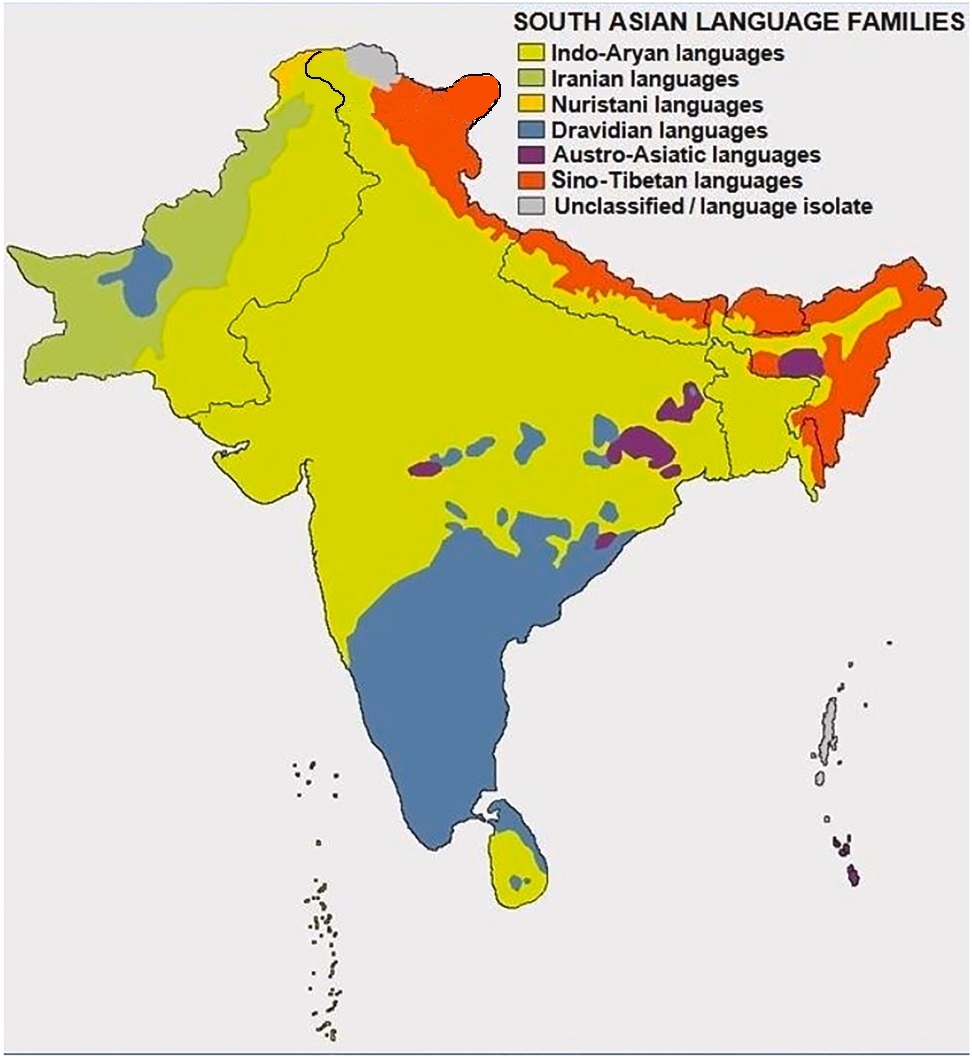
1) Analyse the linguistic data from the subcontinent, Indo-European and non-Indo-European, and find out if there is sufficient evidence there to prove that Indo-Aryan languages are not native to the subcontinent.
2) Look at the nature of the linguistic evidence obtained from the Indo-Aryan and Indo-Iranian languages in the subcontinent vis-a-vis the rest of the Indo-European languages and find out if that evidence argues against or for an Indian origin of the Indo-European languages.