
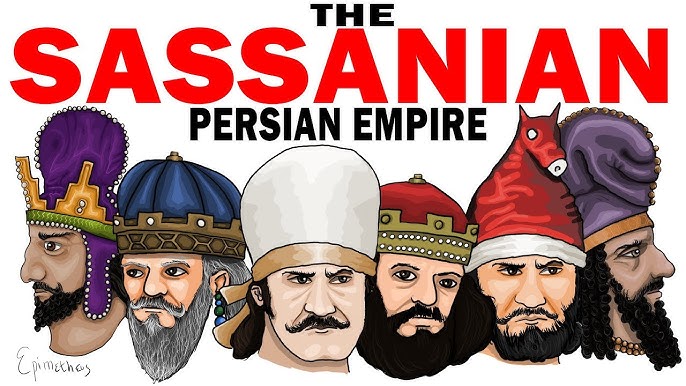
The Clip That Explained a Civilisation
A short video of an Iranian woman is circulating on X. In it, she says Islam is not Iran’s native religion and was imposed on Zoroastrian Persians through torture, massacre, rape, and enslavement. The clip is amplified by familiar accelerants, including Tommy Robinson, and is now being treated as a one-line explanation for a fourteen-century transformation.
Almost immediately, a counter-narrative appears. It insists there is “not a single piece of evidence” for forced conversion in Persia; that Islamisation was slow; and that many Persians, especially Sasanian elites, moved toward the new order for political, fiscal, and social reasons. A further layer is added: nostalgia for the Sasanians is misplaced because late Sasanian society was rigid, unequal, and harsh, and early Muslim rule improved conditions for ordinary people. These are two different claims. They are routinely fused. History does not require that fusion.
Conquest Is Not ConversionThe scholarly material being shared, often selectively, starts from a basic distinction: conquest and conversion are not the same thing.
In The Prophet and the Age of the Caliphates, Hugh Kennedy warns against the slogan “Islam was spread by the sword” when it is used to imply mass, immediate conversion. He draws a line between rapid military success and the slower, uneven work of religious change, noting, without romance, that conquest created the political conditions in which Islam could spread “in the way it did.” That formulation rejects both extremes: instant forced conversion and conversion untouched by power.
Ira Lapidus, in A History of Islamic Societies, pushes the same distinction further. He notes how thin the explicit narrative evidence is when modern commentators speak as if we possess village-by-village conversion logs. He also documents early Muslim governance as pragmatic: not only tolerant at times, but actively reliant on non-Muslim administrators and institutions. Empires run on scribes, taxes, and local elites long before they run on ideology.
This complicates the viral claim. It also complicates its mirror image.
Persia Is Not Everywhere
A sentence from Bertold Spuler’s Iran in the Early Islamic Period is doing the heavy lifting: that almost all Persians became Muslim within a few centuries “without significant outside coercion.” It reads like a verdict. It is not one.
“Without significant outside coercion” is comparative language, not a denial of conquest, pressure, or episodic violence. Spuler’s claim is narrower: that the long-run Islamisation of Persia is not best explained by a model of continuous forced conversion at swordpoint. That matters because it directly challenges the trope of rape and terror as the default mechanism; without pretending power relations were irrelevant.
Spuler’s broader point is often omitted: Persia did not merely absorb Islam; it reshaped it, retained its language, and re-emerged culturally in New Persian. Islamisation here was neither annihilation nor simple submission.
The Sasanian Mirror
At this point, the argument usually turns moral.
Touraj Daryaee’s Sasanian Persia emphasise hierarchy, legal inequality, and elite dominance under the late Sasanian state. The implication is clear: modern romanticism forgets how narrow and coercive that order was for most people; Islam then appears less an alien imposition than a regime change that disrupted an entrenched aristocracy.
This argument has force, but it answers a different question. Demonstrating that the Sasanians were harsh does not demonstrate that conversion was free. A bad old regime alters incentives; it does not abolish coercion. Disliking an aristocracy does not prove persuasion; it reshuffles coalitions.
Tax, Land, and the Arithmetic of Empire
A more concrete line of argument comes from fiscal history, including passages circulated from Authority and Control in the Countryside. These describe lower tax rates in some contexts, land arrangements tied to development, and administrative inclusion as tools of early Muslim rule.
This shortens to: “ʿUmar returned the land to Persian farmers.” The texts themselves are more conditional. They describe land grants tied to obligations, investment incentives, and the creation of a loyal local elite. This is not charity; it is statecraft. The implication is precise and often missed: conversion may not have been demanded at swordpoint, but it unfolded within structured incentives that made alignment with the new order rational over time. “Voluntary” here does not mean ideologically neutral; it means choice under empire.
Two Views, Cleanly Separated
One view holds that the viral claim is historically reckless. Conquest occurred, but mass forced conversion in Persia is not evidenced as the dominant mechanism. Islamisation took centuries, was uneven, and was mediated through elites, institutions, and incentives. The rape-and-massacre line functions less as history than as polemic, amplified today by diaspora identity politics and opportunistic Western actors.
The other view holds that the slow-conversion story is being used as a sanitiser. Conquest is violence even when bureaucratic. Legal hierarchy, fiscal pressure, and social stratification can coerce belief without leaving the kind of evidence modern audiences expect. From this angle, the speaker’s language may be exaggerated, but her intuition, that Islamisation occurred under asymmetric power, is not fantasy.
What the Sources Actually Allow
Read carefully, the scholarship supports a narrower conclusion than either camp prefers. Islam was not imposed in Persia through universal, continuous forced conversion. Nor did it spread in a vacuum where persuasion alone did the work. Military conquest created political dominance. Political dominance reshaped incentives. Over generations, those incentives altered religious affiliation.
Whenever a debate insists the story is “obvious,” it is usually collapsing centuries into a single scene, or erasing power altogether. That is where history stops and myth begins.
Comments are now open; sorry for the glitch!
Iran seems to be rapidly stabilising?
I feel for the Iranians. Truly stuck between the devil and the deep sea. We Indians can learn a lot from their history although I am afraid we won’t.
On January 10, 2026 Moon of Alabama claimed that
Now as of January 12, 2026 Moon of Alabama claims “Regime Change Riots In Iran Fail Faster Than Expected”
Meanwhile as of 2:00 PM US EST 12th Jan CNN and BBC are pushing the narrative that the protests are ongoing and large death toll (unverified)/ So whom to believe
Anyway excerpts from Moon of Alabama Jan 12rh Post
I especially pointed out that the U.S. had delivered Starlink satellite terminals to organizers of the riots – 40,000 of them is a rumored number – but that the Iranian government had acquired the means to detect them and to shut down their traffic
Just a day later Forbes reports that the government did indeed used its new tools:
‘Kill Switch’—Iran Shuts Down Starlink Internet For First Time – Forbes, Jan 11 2026
The Iranian government did not bother to track down single terminals but used the new Russian and Chinese equipment to shut down all Starlink traffic in Iran.
The total blocking of Internet traffic and international phone communication in Iran was the decisive step taken to end the riots.
Without Internet access the CIA/Mossad agents directing the rioters were unable to command and control their on-the-ground forces.
Full article in Link below
https://www.moonofalabama.org/2026/01/regime-change-riots-in-iran-fail-faster-than-expected.html
Iran has switched or switching to a Chinese GPS system, BeiDou Navigation Satellite System (BDS).
That means Israeli and US missiles and aircraft will be FLYING BLIND over Iran.
So the Pentagon diplomatically says needs more time for War with Iran
Trump realizing he is powerless to invade Iran has “Effective immediately, any Country doing business with the Islamic Republic of Iran will pay a Tariff of 25% on any and all business being done with the United States of America. This Order is final and conclusive.”
Really, another bit of Tomfoolery by Trump. Iran will continue to export oil thru China. China will refine and sell to the world
https://www.zerohedge.com/military/pentagon-tells-trump-it-needs-more-time-prepare-war-iran
Are you implying that Iran was using (American) GPS all this while? Even if so, how would Iran switching over to BeiDou lead to a loss of GPS for literally anyone else? Where are you taking this from?
depends on which strain is being…lit up.
GPS and Starlink use satellites for communication.
To block GPS and Starlink for a particular region you jam the signal from the relevant satellite for that region.
Yes GPS and Starlink will not work for everyone in that region once the signal is jammed.
GPS and similar are not new technologies.
Read the article below, gives a lot of overview communication technology
https://www.aljazeera.com/opinions/2025/7/27/irans-plan-to-abandon-gps-is-about-much-more-than-technology
Just like that the Iranian Riots are over with shutdown of Internet and Starlink (as predicted by Moon of Alabama)
Now it will mop up operations, including arresting those who have a Starlink Satellite Dish installed . If there is any evidence of collaboration with the Enemy i.e Israel long Jail sentence (or executed as spies and traitors)
“That means Israeli and US missiles and aircraft will be FLYING BLIND over Iran.”
Still waiting for you to explain where you got this from. I’ve read that toilet paper you shared. It has nothing about Iranians suddenly developing the ability to deny US/Israel the use of GPS over its airspace.
Either you share this source or accept that you just made it up without either the understanding or the homework to back up what you said.
first time? 🙂 Our retired friend tends to shoot from the hip a lot, often blanks.
I’ve read that toilet paper you shared. It has nothing about Iranians
I see fixated on toilet paper. (I can expand on that sentence about Indian habits if you wish)
t has nothing about Iranians suddenly developing the ability to deny US/Israel the use of GPS over its airspace.
Too bad you are ignorant about GPS Technology. If you were a little more courteous I would have explained.
I came to BP in good faith and didn’t want to pre-judge anyone despite the controversial history in the comments. While Kabir is controversial, at least he engages in good faith. I guess Sairav was right about you after all. Your less than elementary understanding and self-obsession makes your comments more fit for 4chan than any serious discussion board.
was the absence of a ‘jati’ system, made the terrain too flat for the conversions to happen rapidly?
Dear X.T.M,
I’ve deeply appreciated your sharp and insightful writing about Iranian diaspora cultural dynamics. I just read your piece “On Iran, Israel, and the Right to Self-Defense” and felt compelled to respond, since I believe we share a grounding for our political thought in prioritizing universal justice and equality. My sympathies are also with the Iranian people, in opposition to the Islamic Republic and in opposition to American or Israeli military intervention.
As someone who cares deeply for my Jewish and Baha’i family and friends, I sympathize in particular with the fear of Baha’is regarding possible trajectories for the decolonization of Palestine. Israel is the state in the region that has best tolerated Baha’i holy sites and spared them destruction (a notable exception being Turkey’s relative tolerance of the house of Baha’u’llah which still stands). The fear that the replacement of the Israeli state with an Islamic Palestine would result in the destruction of the Baha’i World Center is grounded in reality and very valid. At the same time, the preservation of Baha’i properties cannot come at the expense of Palestinian lives.
And so, I disagree deeply with the expressed love of Israel in your piece. One cannot simultaneously love justice, equality, and Israel. I think one can love Israelis as individual people (they did not choose to be born citizens of their state) and one can love the land they live on. But that is not what it means to love Israel, which is a political entity, a state.
A state is a system of laws and law enforcement that holds a monopoly on armed force within its borders. The Israeli state predicates itself on creating and maintaining a Jewish demographic majority where one had not previously existed for over a thousand years, by incentivizing Jewish immigration and non-Jewish emigration. Palestine, on the other hand, had long been the name for the land on which the Israeli state established itself through violent imperial conquest. The only reason the Zionist leadership in 1948 did not use the name Palestine for Israel is that they expected it to be claimed by their neighboring Arab state as part of the partition plan (https://www.timesofisrael.com/leaders-grappled-over-arabic-name-for-fledgling-state/).
Israel is unjust at its core, in its essence, in a particular way that most modern states — even ones that are more authoritarian, less democratic, more oppressive — are not. It is unjust the way apartheid South Africa was, the way colonial America was during the phase of “manifest destiny.” An Iran without the Islamic Republic — a secular, democratic, pluralist Iran that protects all ethnicities and faiths within its borders — could still be called Iran. But an Israel without structural Jewish supremacy would not be an Israel at all.
A loving criticism of the Baha’is in my life is that in an attempt to stay apolitical and eschew partisanship as Baha’u’llah prescribes, they often fail to stand up for justice in situations they feel are “too political.” The end of American slavery was political, the civil rights movement was political. To advocate against extreme wealth inequality is political. Since politics is about systems of power — which people like you and I seek to make more just — there cannot be progress towards justice without engagement in politics.
Further, I was told always “Baha’is are not Zionists, they are staunchly neutral on the issue of who should govern the Holy Land. Islamic jurists call them Zionists as an excuse to persecute them for perceived apostasy.” It is inconsistent to claim you are not a Zionist and also to claim you love Israel.
I encourage you to follow Israeli and Palestinian activists working to build a single democratic, pluralist, secular Palestine, one that would protects israeli Jews who remain in it as Jewish Palestinians after the collapse of Zionism. The organizations Zochrot and Mesarvot, the Israeli BDS partner Boycott From Within. West Asian and North African Jewish anti-zionist civil rights leaders like Reuven Abergel and Noam Schuster Eliassi, Noa Avishag Schnall and Magda Haroun. Indeed, the Palestinian BDS leadership itself, since the Palestinian liberation vision has never included the mass expulsion of Jews on the basis of their being Jewish.
I’m here for further discussion of this topic whenever you like, since you sound like you’re worth the time.
R
Dear R,
Thank you for such a thoughtful and serious engagement.
The distinction I would emphasise is the one the Bahá’í Faith made before 1948, in its submission to the UN Special Committee on Palestine: we are non-partisan not out of disengagement, but because we explicitly refused to prescribe political outcomes for the Holy Land while affirming justice as a moral principle. Our sole, consistent concern—under any future sovereignty—has been the protection of human life, religious equality, and the independence and safeguarding of Bahá’í holy sites and institutions.
That posture has not meant moral quietism. Under apartheid in South Africa, for example, white Bahá’ís relinquished leadership positions to Black Bahá’ís in defiance of racial law, accepting legal and social consequences. The aim was justice without alignment to a partisan project.
When I speak of “love” in this context, I mean concern for people, land, and continuity of life, not endorsement of ethnocratic law or permanent domination. Bahá’í neutrality does not preclude moral clarity; it constrains alignment with political projects.
I appreciate the seriousness of your critique, and I value the spirit in which it was offered.
Best,
XTM
.
XTM claimed to be a Zionist on this forum sometime back.
https://timesofindia.indiatimes.com/india/from-chabahar-to-kashmir-why-chaos-in-iran-hurts-india-benefits-china-pak/articleshow/126527558.cms
a slightly different analysis…. interesting.
Some truth to the temporary power vacuum counterweight issue. However, another thing to consider is that a post-revolution Iran would allow India to resume buying energy from Iran, reducing Persian dependency on China as a sole sanctions client.
There’s … a lot of complexity in this and the author’s argument is quite…one-sided.