
Our 2026 reader survey is open until 7 June – anonymous, roughly five minutes. Please take a moment.
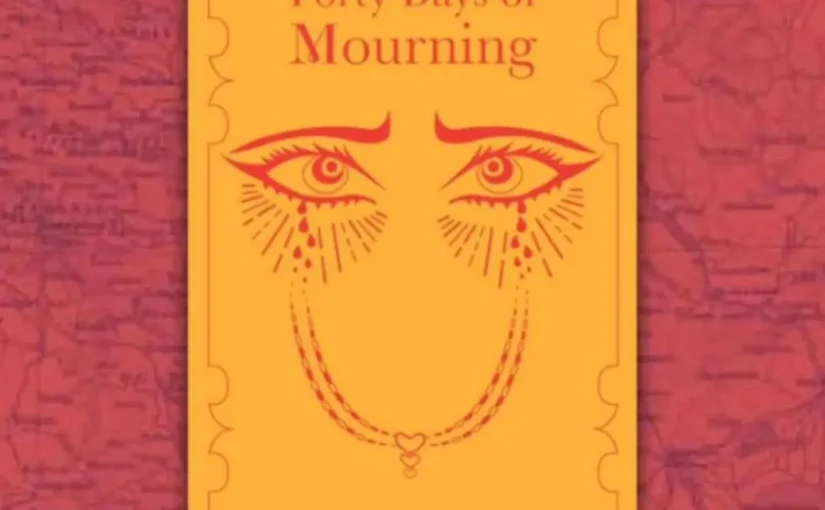
Since there has been some recent discussion of Hyderabad Deccan here, I am sharing this book review from DAWN of Arslan Athar’s debut novel Forty Days of Mourning.
Note: Like everyone else these days, Arslan also has a Substack. He is a Lahore-based writer.
Hyderabad Deccan is not merely a setting in this novel. It is a living, breathing presence that shapes the people who inhabit it and the events that unfold. Once a princely state rich in terms of material wealth and cultural plurality, Hyderabad carried a distinct identity that rarely finds adequate representation in narratives of colonial India. Discussions around the British Raj and Partition often reduce history to binaries, and Hyderabad’s nuanced past is frequently overlooked. Athar’s novel resists this erasure with care and precision.
And:
As pressure from the newly formed Indian state increases, Hyderabad’s fragile independence begins to crack. The story follows this slow unravelling, moving from hope and denial to violence, loss and reckoning, ending with the state’s forced integration and the collective grief of a world that disappears almost overnight.
As the wife of a high-ranking army officer, Saleema moves through the city’s elite circles, aware of every whisper of political tension, every shifting alliance. But as the Nizam’s Hyderabad faces the inevitability of annexation, Saleema realises that neither status nor cunning can fully shield her, and the choices she makes ripple through both her personal life and the crumbling world around her.
In an interview with newinbooks.com, Athar notes:
My father’s family is originally from Hyderabad Deccan. However, at the time of the Partition of the Indian Subcontinent and the subsequent annexation of the Princely State of Hyderabad, the family moved. In their new home, Pakistan, they never really talked about that time of turmoil. I only found out about it because of an assignment, and learning about the annexation became the impetus for this novel. From all the research about the time, the character of Saleema was born, and the story blossomed from there!

It is really surprising for other indians to know about the loss felt by hyderbadi Muslim elite. Some probable reasons:
1) the remaining elites have power in the city. There are 7 mlas of the assembly and one lokasabha MP. Probably the Hyderabad city municipal corporation is also with them.
2) They have displaced nizam’s children and have become the new rich.
3) I had a few ashraff friends with Hyderabad origins and non of them ever complained about the “loss”.
4) do they have power in Pakistan still. Hillaly comes mind.
Hyderabad was one of the largest princely states. Certainly, it was the richest. Its loss is felt by many people not just those whose families were from there.
In the Pakistani national narrative, Kashmir is obviously much more important simply because it is Muslim-majority and continues to be a Disputed Territory. Hyderabad State was Hindu majority and it was inevitable that it was not going to be allowed to accede to Pakistan.
According to a 2003 estimate, there were 200,000 people of Hyderabadi origin in Karachi.
I don’t think Hyderabadis are particularly powerful in Pakistan. Pakistan is very much run by Punjabis.
Wiki has a whole list of Muslims of Hyderabadi origin. It includes people like Anwar Maqsood (a Pakistani scriptwriter) and S.M Ahsan ( former Commander-in Chief of the Pakistan Navy). Ahsan was also the first naval aide-de-camp to the Quaid himself.
https://en.wikipedia.org/wiki/List_of_Hyderabadi_Muslims