
On language diversity in India – North vs South

Language remains a bone of contention within Indian discourse, and much of it surrounds the North Indian insistence on Hindi (more specifically Khariboli, the high prestige dialect of Hindi spoken traditionally in the region around Delhi) versus the Southern insistence on lingual diversity and the immense pride in regional lingual traditions (be it Tamil, Kannada or Telugu)

But the fundamental divide is this –

Lingual diversity in North India is significantly lower than in the Deccan, which creates fundamental differences in the attitudes towards lingua franca like Khariboli

Roughly 450 million people from Bikaner to Jamshedpur speak similar tongues Yet the 60 million people in Karnataka can barely follow the 70 million people in TN

The reason Khariboli in my view established itself as the primary lingua franca of the North Indian plain is because the differences across the various languages spoken from Panipat to Gaya were not as massive to start with. Clearly smaller than the differences between say Telugu and Tamil.

But why is that? One obvious proximate reason –

South had regional polities unlike North where Empires spanned the whole Indo-Gangetic plain, driving greater homogeneity in the spoken Prakrits.

But what are the underlying reasons for the greater political unity of North India?

    • The Northern terrain is more uniform, unlike South which is a plateau. Also the nature of the terrain varies a lot down south. E.g. Tamil Nadu is clearly a plain, while neighboring Kerala is hill country and Karnataka is an elevated plateau. This perhaps limited social intercourse of people in ancient times.
    • In the North we have the great Ganges river. The Ganga-Jamuna river system unites the land, linking the whole expanse of land through maritime commerce.Ā  South has no such single river system but separate provincial rivers like Krishna, Godavari in AP, Kaveri in Karnataka and TN.
    • North India was setted earlier by the Indo-Aryans. Its proto-historical period can be conservatively dated to 1500-1000 BCE. In contrast, Southern India emerges out of pre-history much later towards the beginning of the Common era. The earlier settlement meant that the Gangetic plain is significantly denser and also uniformly dense. E.g. UP’s density is over 800 per sq. km, while Bihar is at 1100. Whereas in the South, there is greater variation in population density. Tamil Nadu is at 550 per sq.km, Kerala is 800+, while Karnataka and Andhra are significantly less dense (around 300).. The higher and more uniform density up north perhaps contributed to a more homogeneous lingual culture.

But the last hypothesis is unsatisfactory. It leaves us with the question – Why didn’t the less dense and more isolated parts of North India (Rajasthan and Madhya Pradesh evolve distinct regional cultures? Having said that, it must be noted that the relatively denser parts of these two states – Malwa and Mewar are culturally closer to the Gangetic mainstream culture than other parts of these provinces where we do see greater variation in dialect (E.g. Marwar)

I feel the vastly different levels of lingual diversity between the Northern plains and Deccan impact how the discourse is conducted today on the issue of Hindi and Khariboli.

The “typical” North Indian argument underrates the diversity down south. And hence goes like this –

Hey. We are Braj, Avadhi, Bhojpuri speakers. We don’t mind our differences, and have chosen to embrace Khariboli as the “standard” tongue. Why can’t you southerners do so as well?

The “typical” South Indian argument overstates the lingual diversity up north.

Hey..why are you guys adopting Khariboli without resistance. Why have you guys given up on Braj, Avadhi, Bhojpuri? Get a spine!

Both sides in my view get it wrong. Northerners understate lingual diversity down south. Southerners overstate lingual diversity up north. This is at the root of most culture wars around language

The author tweets @shrikanth_krish
On Language wars and the rise of the Vernacular in history

Language wars are a constant feature of Indian public life. Most recently there was much discussion on Language on Indian twitter triggered by the National Education Policy (NEP 2020). But amidst the language squabbles, we tend to reflect less on the root cause of all the language schisms –Ā  The rise of the Vernacular. A relatively recent phenomenon in Indian history.

Back in 1000 CE, Sanskrit reigned supreme as the primary literary tongue of India. There was some Prakrit literature and considerable literature in some of the older Southern languages – Tamil and Kannada in particular.Ā  But for the most part Vernaculars had a position secondary to Sanskrit.

The language of prestige and literary expression was undoubtedly Sanskrit, though it was hardly the mother tongue for a large percentage of Indians. Vernaculars reigned at home, and in common speech. Yet in an age of limited literacy, they never competed with Sanskrit for “prestige”. This was very much the case not just in India, but in much of the western world as well. In Europe, as late as 15th century, 70% of the printed literature was in Latin!

Continue reading On Language wars and the rise of the Vernacular in history

A Dalit writes on Oppresive Hindi

The historian Sumit Sarkar, in his Modern India: 1885-1974, writes that literary Hindi was very much ā€œan artificial creation closely associated with Hindu-revivalist movements.ā€ Bharatendu, Sarkar notes, ā€œcombined pleas for use of swadeshi articles with demands for replacement of Urdu by Hindi in courts, and a ban on cow-slaughter.ā€ Around the same period, a historian and linguist named Shivaprasad was promoting another link language, Hindustani. Where Bharatendu’s Hindi was highly Sanskritised, Shivaprasad wanted something closer to the languages already popular at the time. The champions of Hindi were especially offended by Hindustani’s incorporation of Urdu elements.

Biting My Tongue -What Hindi keeps hidden

Hindi carried Brahminical and communal impulses from its inception. Later, its installation as a dominant language came to be a demand in the nationalist movement, though even then this was highly contentious. Anil Chamadia, a veteran journalist who has taught at Mahatama Gandhi International Hindi University in Maharashtra, told me that Bharatendu’s language prevailed because it appealed to the emergent, Brahmin-dominated nationalist movement and administration. The dominant castes, he said, saw in the Sanskritised tongue a tool to further their varchasv, or dominance, over society. Sanskrit, of course, had earlier served exactly that use. Chamadia described Hindi as ā€œvarchasv ki dharaā€ā€”a stream of dominance. Today, he said, those who control the Hindi language are the same who control the dominant societal narrative.

BP Podcast episode 49: Hindi as the lingua franca

Another BP Podcast is up. You can listen onĀ Libsyn,Ā iTunes, Spotify,Ā  and Stitcher. Probably the easiest way to keep up the podcast since we don’t have a regular schedule is toĀ subscribe at one of the links above.

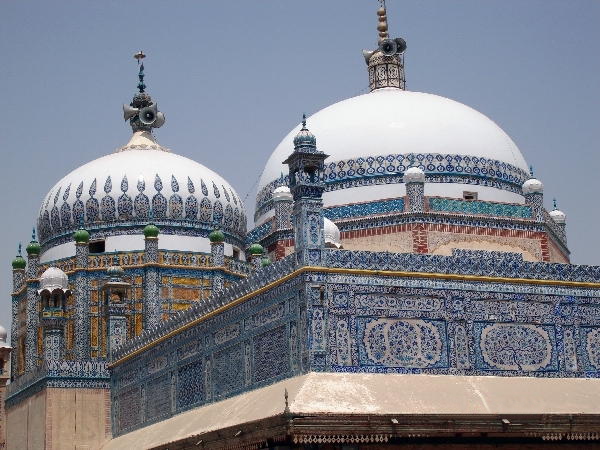
Tomb of Khwaja Ghulam Farid Korejo

Shoaib, Abhisek and Xerxes speak on the recent Tamil-Hindi controversy. Our podcast was limited to North India since Karthik (a South Indian) couldn’t make it. However it was still a fascinating discussion.

As as aside we just recorded the 50th BrownCast episode with Professor Majeed on Grierson’s LSI. We started on the 14th of October with Episode 1 (Episode 1 is actually Episode 2 since Razib & I recorded an episode that disappeared) but it’s nice to see how far we have come with the podcasts as a complement to the main blog.

My interests in the podcasts are veering towards the Lectures I attend (or “Live-Blogging” in my own particular lingo) and even though it’s not the most popular (as anyone with cursory knowledge of the blog knows that I can be quite the provocateur) it does lend some much needed intellectual heft to my own output.

As for Episode 49 with our Resident Linguists; it covered some very good ground. I also had personal sympathies for Shoaib as he was house-hunting in Delhi at time of the podcast and Renting while Muslim in India is as bad (or almost as bad) as Renting while Black in America.

Finally I hope everyone, irrespective of whether you have Netflix or not (I don’t watch TV but make exceptions), has watched the critically important “When they See Us.” A really seminal piece of work on Race in America by Ms. Du Vernay.

You can also support the podcast as aĀ patronĀ (the primary benefit now is that you get the podcasts considerably earlier than everyone else…). Would appreciate moreĀ positiveĀ reviews.

BJP slips on Hindi; Tamil Nadu stands firm

The first language controversy in the subcontinent emerged in Uttar Pradesh in the 19th century as a section of Hindus sought to replace Urdu – till then the language of administration along with English – with Hindi. As part of this politics, ā€œUrdu and Hindi became proxies for Muslim and Hindu [political] mobilisation,ā€ wrote Garga Chatterjee. ā€œIn that process, shoring up Hindi numbers became crucial. Many languages of North India like Awadhi, Bhojpuri, Rajasthani, Braj, etc., were nominally fused into Hindi as a political tactic with devastating long-term consequences for the counted-as-Hindi-but-not-Hindi languages.ā€

Why imposing Hindi on India is a bad idea

I feel *Hindu* nationalism is a many headed Hydra. It builds on a millennia of humiliation but at the same time seems extraordinarily insensitive to actually diversity.

The only real defence Hindu nationalists have as to why their ideological brand is softer than the Muslim equivalents is simply because “Hinduism is a broad tent.”

I feel this obscures that Hinduism was the subject of intense reform over the last two centuries in a way Islam wasn’t. However it won’t surprise me if this tenuous commitment to liberalism falters after longer and more successful stunts of the BJP.

It seems the BJP has discovered the political power of Two Nation Theory and is really riding that perilous horse.

Not only is Hindi growing, it is changing. The Union government’s efforts to make it a ā€œnational languageā€ have resulted in it being ā€œfirmly moored to a vastly associational Sanskrit with all its casteist baggage intactā€, writes Mrinal Pande. ā€œIts highly associational vocabulary is being used to purge thousands of words it has assimilated through the centuries from regional dialects and Islamic and European languages.ā€ Of course, actually purging Hindi of all its Persian vocabulary would be an impossible task – the very name of the language is from Farsi.

Post backlash from T.N., mandatory Hindi goes out of draft education policy

It’s more than just about language, it is the imposition of culture’: DK leader K. Veeramani on National Education Policy

Browncast Episode 32: Indian Linguistics Podcast

You can listen on Libsyn,Ā iTunes, Spotify,Ā  and Stitcher. Probably the easiest way to keep up the podcast since we don’t have a regular schedule is toĀ subscribeĀ at one of the links above.

You can also support the podcast as aĀ patronĀ (the primary benefit now is that you get the podcasts considerably earlier than everyone else…).

We had a conversation about Indian linguistics. It was Razib, myself, Avtansa, Indian Linguist and TianChengWen.

I’m quite proud of this podcast since I was able to get some of the linguistic luminaries together. The topic was a broad overview of language in South Asia.

We were able to keep a very strong regional balance since TCW’s specialty is Dravidian. We touched on the role of Sanskrit and its prominence as a literary lingua franca until the late medieval period (until it was supplanted).

Incidentally, we didn’t talk all that much about Indian English instead we delved into the “dialects.” There seems to be a turning point in that the Subcontinent is consolidating linguistically among regional, national and religious lines with English emerging as the great neutral and prestige language.

We touched a fair bit on the specific languages of the Hindi belt but I guess for next time we will have to tackle those that are tangential to the Hindi language sphere like Punjabi, Bengali, and Marathi.

Beware of Hinditvas

I love it when my point is so spectacularly proven. But I find it funny how intense these discussions take considering I prefaced the post with my own thoughts on NawRuz and Persian cultural imperialism.

Yes Islam is vulgar but so is Hindi. Just as obviously Muslim symbols wouldn’t find room in polite society neither would Hindi (hence why English is busy eviscerating it in the Desh).

I find it interesting that none of the Hinditvas condemn my constant insulting of Islam but become hysterical at my criticising of what is an ugly and artificial tongue. Just as I find Liberalstanis to be hypocritical in their silence over Islam’s deeply problematic nature; they have on the flip side these Hinditvas. QeA is probably the prototypical Liberalstani and Nehru the Hinditva; hence why the Subcontinent ended up as the disaster as it was. Both these tribes have been thoroughly colonised and participated willing in the destruction of the British Raj, a wholesale inheritance would have meant a South Asia able to be the light rather than laughter of regions.

The whole idea of the Hindi language was simply to cleanse Urdu of any Muslim association. The language policy has been a complete disaster (language played no part in 1971; I just did a debate on the topic).

It’s neither here or there; it doesn’t matter to me since my own life and choices have been able to traverse the deepening divide fairly easily (the upshot of being half-caste). However the sad bit is that India has lost it’s ur-homeland (Indthings is technically not wrong in claiming that the Vedas weren’t composed in modern day India) and AfPak is becoming a firm reality.

It’s the slow generations but these Hinditvas have driven Pakistan away into the arms of an unwilling Ummah. In that same Ummah Pakistanis will always be second or third class citizens because they’re a bit of a joke. They don’t carry much status in the Muslim world since they aren’t really proud of who they are.

To give an example the Muslim Sindhi people in trying to create a language pride day randomly chose a day in December as Sindhi Cultural Day. With a little thought the Sindhis could have instead started ressurecting the Cheti Chand tradition and actually reach out to Sindhi Hindus (especially their rich diaspora) as a way to strength Sindhi identity.

It’s a sad reality both India and Pakistan have lost out because they have squabbled like silly children, one side insisting on an absurd language and the other on an absurd religion.

I find it heart-warming that no-one agrees with me; it means that I’m actually on to something. The more I live the more I realise just how unique my own perspectives actually and being a child of the divide(s) means I’m never going to think like everybody else or make the same life choices..

Brown Pundits