The “Prakrisation” of Hindi

FlyeDie, presumably not one of BB’s handles, has left an excellent high-signal comment on the Hindification of East India. It posits Prakrit as a Latin analogue that spurred the development of the various Indic languages, and reads modern Hindi as walking the same path.

A wider blog admin note. We have been encouraging the Saint and the Shah to litigate their ongoing duel through the mechanism of high-signal posts, and this is the spirit in which we offer FlyeDie’s theory.

As an aside, there is also a very good comment by Calvin on the segregated political nature of the Indian Muslim community, which we may return to separately.

Brown Pundits exists to advance the bounds of niche knowledge on the Subcontinent. Our specific role is to stimulate excellent conversations, or guftugū as nos ancêtres les Mughalois would have punned it, and the comment below is one such endeavour, the more valuable because so much of our past has been lost or distorted. We reproduce it unedited.

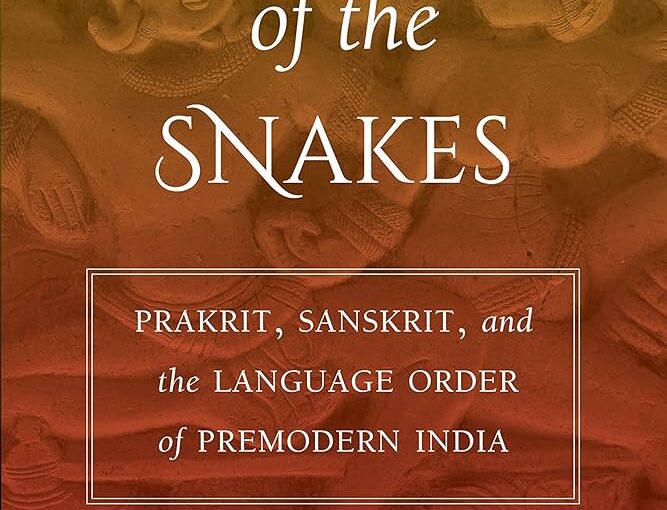
Okay, I think I am going on a weird comment streak and losing my mind. So, I have a weird tin foil theory; it is going to be long, and it is going to sound like bullshit, but please bear with me. Here is my tin foil hat theory: Hindi is the Prakrit of the modern age, and it is destined to follow the same path as Prakrit. To explain what I am trying to say, I am going to talk about my favorite book about Prakrit: “Language of the Snakes Prakrit, Sanskrit, and the Language Order of Premodern India” by Andrew Olett.

Continue reading The “Prakrisation” of Hindi

You Cannot Demolish His Mosque and Claim His High Culture

A precedent post on hybridity, custodial duty, and the elites who want it both ways

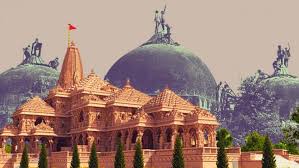
The argument running through the recent threads is sharper than the usual India versus Pakistan braggadocio. It is a claim about high culture itself. A civilisation cannot demolish a man’s mosque and claim his high culture in the same breath. The two moves cancel. The elites on both sides of the 1947 line have been performing both moves for eighty years, and the contradiction is now visible.

What high culture is

High culture is the foundational settlement of values, ordinarily anchored in religion, that a civilisation runs on. It can be syncretic in formation. Plural ownership is harder to sustain, and most attempts eventually close into a single settlement or fracture into rival ones; some imperial frames (Ottoman, Mughal, the Republic of India itself) did hold the tension for longer than the simple model would predict. The point is not that plurality is impossible. The point is that plurality is unstable, and the instability is what generates events like 1992.

England is the cleanest worked example of closure. The English high culture is a hybridisation of Anglo-Saxon, Anglo-Norman, and an absorbed Celtic remainder. Scotland and Wales sit inside the matrix without breaking it. The hybridisation closed; one settlement emerged.

Ireland is the test case in the negative. The same Anglophone substrate produced a different high culture in the Catholic south, and in the Catholic pockets of the north, because religion did the foundational work and religion would not blend. Two islands, one language family, two high cultures. Language is the medium. Religion is the substrate.

Ludwig von Mises, in Nation, State, and Economy, argued the related half. The nation is a speech community, but the speech community is shaped by what the school teaches and what the church says. Plattdeutsch villages on the Dutch border could have gone either way two centuries ago; the descendants would now be just as good Hollanders or just as good Germans, depending only on where the school and the church sat. Language carries national consciousness. The religious settlement decides which language wins.

Notre Dame: The custodial bargain Continue reading You Cannot Demolish His Mosque and Claim His High Culture

Gurdaspur and Siliguri: The Two Necks That Held

A precedent post on Pakistan’s self-exile from the subcontinent, and the geography that outlasted it

This is not anti-Pakistan polemic. Pakistan can flourish in the role she has chosen, and may continue to do so (Pakistan’s pivotal role in the US-Iran war is, on any honest reading, a legitimisation win for the current hybrid government)). The point being made here is structural, not personal.

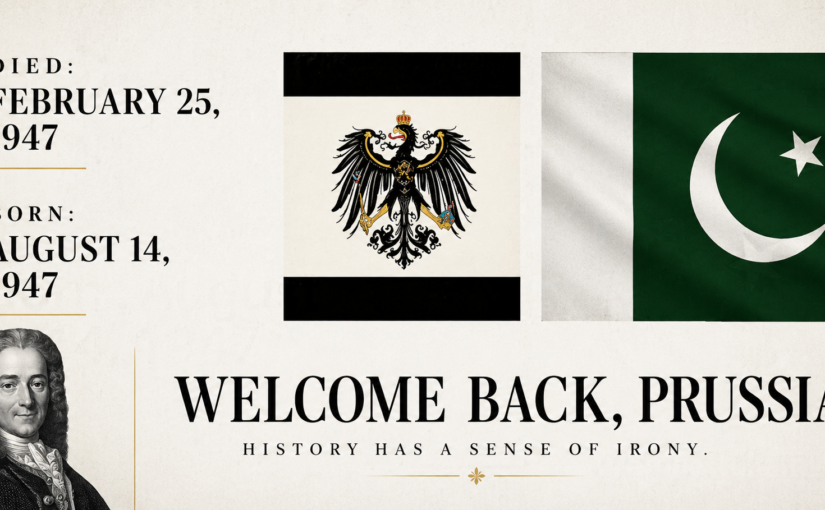
Pakistanis are a subset of the British Raj’s Muslim population. As Punjabis, as inheritors of the Mughal cultural complex (alas one cannot destroy his Masjid and simultaneously claim to be his heir), as native carriers of the Hindustani register that becomes Urdu under one stylisation and Hindi under another, they began with a favoured position inside the subcontinent. They have traded it for a subordinate position inside the wider Muslim world. The internal hierarchies of the Islamicate, where Pakistanis rank against Arabs, Turks, and Persians, are dense and unflattering and deserve their own treatment another day.

The cause of the trade, in the end, is theological. The subcontinent runs on iconographic generosity, painted shrines, sung saints, plural deities, devotional excess. Strict iconophobia cannot live inside that civilization without breaking it. Pakistan chose the stricter line in 1947 and has progressively tightened it since. The Urdu denial, the recent insistence in some Pakistani quarters that Urdu is not really an Indian language, is the cleanest evidence of the opt-out.

Irreducibly Indo-Persian

Continue reading Gurdaspur and Siliguri: The Two Necks That Held

Brown Pundits