Sanity strikes in Sudan!!!!

Very good news in a world where a trickle of good news is mostly drowned out by the torrents of bad news.

Hope (in our common humanity) springs eternal as Merriam is saved from certain death. We are sure her family will be immensely relieved. Congratulations to all those who protested and who believed that the protests would work (unfortunately we of little faith did not).

Merriam just had a baby girl as well. Best wishes from the bottom of our heart.
……………….


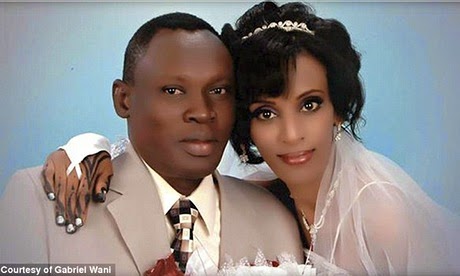
A woman sentenced to death in Sudan after marrying a Christian could be released within days, according to reports. A senior Khartoum official has told the BBC that Meriam Ibrahim will be freed following worldwide protests about her treatment.
 
David Cameron has joined Ed Miliband, Nick Clegg and Tony Blair in condemning the “barbaric” punishment of the 27-year-old, who gave birth to a daughter this week while shackled in her cell.

Ms Ibrahim was raised a Christian by her mother and has refused to renounce the faith.
However, a court ruled earlier this month that she is Muslim because that was her father’s faith.

Her Christian marriage was annulled and she was sentenced to 100 lashes for adultery and death by hanging for renouncing Islam.


Sex outside a “lawful relationship” is regarded as adultery under Sudanese law.

……..
Link: http://www.theguardian.com/world/2014/may/31/reports-sudan-death-row-woman-to-be-freed
……….

regards

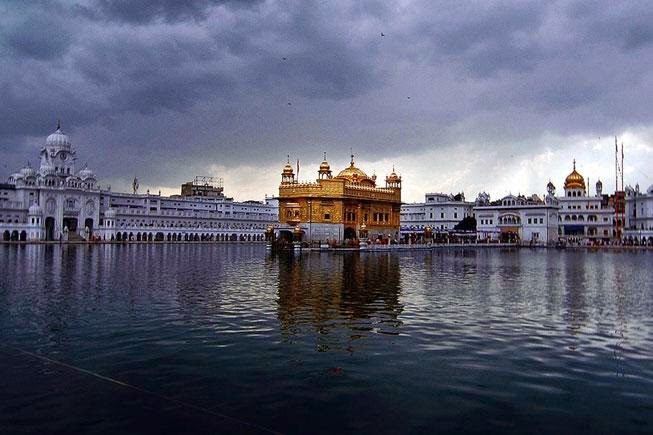
The Golden Temple

As we peruse this report on Operation Bluestar by Hartosh Singh Bal we find even more reasons why religion should stay out of South Asian politics (but then as a liberal atheist we are expected to believe that). At the minimum what is required right now are decent politicians who will not exploit heavenly matters for earthly gain.

…..
The dismal story of Bluestar had been set on its tracks by Sanjay
Gandhi, but it now appears that its disastrous conclusion was the work of his
brother Rajiv, who swept to power with the biggest mandate in Indian history
following his mother’s assassination. 

Operation Bluestar was not just Indira Gandhi’s last battle; it was the
first, and perhaps the most disastrous, of Rajiv’s blunders.

By the time the smoke cleared over the Darbar Sahib, hundreds of
innocent bystanders had died.
 

Bhindranwale lay murdered, and the Akal Takht, where he had set up his
final defiance of Delhi, stood shattered. The operation was followed by the
assassination of Indira Gandhi by her Sikh bodyguards, and the organised
massacre of thousands of Sikhs by Hindu mobs, led mainly by Congress
politicians.

…….. ….

Our opinion (as  informed by our relatives who survived in the war zone) is that 1984 was a great crime and happened as part of an action-reaction story (Hartosh does not account for the Hindus who were forced out of buses and summarily shot to death). But as he makes it clear like never before, the desperation of the Royal Family to get back into power in Punjab and how Rajiv Gandhi and his cronies played with fire (which later consumed the family as well). It is clear also that ordinary people matter very little in the scheme of things, with dynasties looking to survive (through a policy of divide and rule) or outstanding egos looking to be fed (by human blood). Justice in its own fashion has been handed out after more than 30 years have gone by. It is too little, too late.

There is one thing also that Hartosh does not tell us about (he is correct in his opinion that the election of the BJP and the destruction of the Congress party is not a good omen for India). If it comes to a full fledged battle, the Sikhs will lose out badly and not just in India. The holy shrines of the Sikhs are spread out all over India and Pakistan. At present there are protests that the shrines are being desecrated in Pakistan. There was a major security  incident whereby Sikh protestors converged on the Pakistan Parliament.

Matters have become so polarized in South Asia that it may come to this that minority communities will not be able to survive outside of ghettos (and even imperfectly inside them). Case in point is Rabwah in Pakistan (Ahmadis) and Juhapura in Gujarat (Muslims). It will require statesmen of extra-ordinary stature to overcome  the politics of polarization (the Aam Admi Party won in Punjab by associating with a Sikh militant group, see below). Politics for short term convenience and reliance on ideological extremists to get rid of moderates is the bane of South Asia. It must stop right now. We must have peace just to survive (Hartosh talks about the drug menace in Punjab threatening to derail another generation of youngsters after a previous generation has been lost to militancy), if not to prosper.
…………………………..

Following
the Punjab insurgency, which extended from the early 1980s to the mid
1990s, the number of pilgrims to the Darbar Sahib has increased rapidly.
The queues to enter the shrine now extend beyond the causeway; but the
sense of quiet calm remains, though it is at odds with the shrine’s
history. Perhaps no place of worship so central to a major religion in
India has seen as much violence within its premises.

The sarovar was constructed in 1581 by Ram Das, the fourth Sikh guru.
The tank was lined and the shrine completed by the fifth guru, Arjan
Dev, in 1601. By that time, the Sikh congregation had grown large enough
for the Mughal emperor Jehangir to see Guru Arjan as a threat to his
sovereignty. He was arrested in 1606, and tortured to death when he
refused to convert to Islam. For his followers, this first martyrdom in
their incipient faith would become the paradigm for Sikhism’s
relationship with the durbar in Delhi.

The sixth guru, Hargobind, donned two swords to represent a change in
the nature of his leadership—he would be not only a spiritual guide to
his disciples (piri), but also a preceptor in their temporal lives (miri). The weapons form Sikhism’s central symbol, the khanda—a
pair of linked swords. The guru ensured the same symbolism was
reflected in the architecture of the Darbar Sahib. Across from the
causeway, facing the central shrine, which represents spiritual
authority, he constructed the building known as the Akal Takht, the
timeless throne, from where he administered justice like any temporal
authority.

Once the line of living gurus ended with Guru Gobind Singh in 1708, this authority over the Sikhs came to be vested in the jathedar,
or custodian, of the Akal Takht. Through the eighteenth century, as
centralised authority broke down in the Punjab, the Sikhs grew in
strength. Dispersed, led by various men, groups of Sikh warriors would
gather periodically at the Akal Takht to plan and direct their course of
action. Those seeking to contain them would target the Harmandir Sahib
and the Akal Takht.

Each person who has desecrated the shrine occupies an oversize space
in the collective memory of the community. Every Sikh can recount the
story of Massa Rangar, who was appointed the kotwal or ruler of
Amritsar in 1740 and proceeded to host nautch parties in the Harmandir
Sahib, having first removed the holy book, the Guru Granth Sahib, from
its place. He was beheaded by two Sikhs, Mehtab and Sukha Singh, who
claimed to be revenue officers coming to deposit a large sum of money.

Even better known is the story of a defender of the faith, Baba Deep
Singh. In 1757, the Afghan emperor Ahmad Shah Abdali, having sacked
Delhi for the fourth time, was waylaid by a Sikh contingent near
Kurukshetra. Angered, he left his son Taimur Shah behind as the governor
of Lahore to take care of this menace. Taimur demolished the Harmandir
Sahib, but the seventy-five-year-old Deep Singh led a contingent of five
hundred Sikhs to take back the complex. By the time he neared Amritsar,
their number had swelled to five thousand. Clashing with a much larger
Afghan army, Deep Singh was injured by a blow to the neck, but continued
to fight his way to the Darbar Sahib, eventually succumbing to his
injuries by the sarovar. On the parikrama, the spot where he is believed
to have fallen is marked by a portrait of him carrying his decapitated
head in one hand, still holding a sword aloft in the other.

The martyrdom of Baba Deep Singh resonates through Sikh history. Two
centuries later, in June 1984, when the Indian Army went into the Darbar
Sahib on orders from prime minister Indira Gandhi, it was to disarm and
dislodge Jarnail Singh Bhindranwale, who according to tradition was the
fourteenth head of the Damdami Taksaal, an orthodox Sikh seminary once
headed, it is said, by Deep Singh. In the mythology of a faith where the
stories of Massa Rangar and Deep Singh arouse intense and contrary
emotions, Sikhs memorialised both Bhindranwale and Gandhi in accordance
with the roles they had assumed—one the defender, the other a
desecrator.

The trajectory of those two lives, both of which ended violently
thirty years ago, intersected for the first time in 1977, when
Bhindranwale assumed charge of the Damdami Taksaal, and Gandhi was swept
out of power after the Emergency. Nowhere was Gandhi’s decision to
suspend the constitution as strongly contested as in Punjab, and no
party resisted it with quite the ferocity of the Akali Dal, which
represented Sikh interests in the state. Over the next seven years,
Gandhi, Bhindranwale and the Akali Dal would lead three fronts in a
battle in which they faced off, realigned with and schemed against each
other until the very end.

From the moment an Akali Dal government, in alliance with the Janata
Party and the Communist Party of India (Marxist), took charge of Punjab
in 1977, Gandhi’s politics were guided by her desire to cut the Akalis
down to size. The execution of her wishes was left to her son, Sanjay
Gandhi, and her loyalist, the canny Sikh politician Giani Zail Singh,
who chose Bhindranwale as their weapon. Bhindranwale saw no reason to
refuse their aid; any support for his brand of Sikh orthodoxy was
welcome.

By the time the Congress returned to power in the state in 1980,
Bhindranwale was well on his way to becoming a popular icon,
accumulating so much power that the Akalis, whom he was supposed to be
undermining, ended up turning to him for help. He became the dominant
political force in Punjab: by 1983, he was running a parallel state from
within the Darbar Sahib complex, handing down death sentences and
dispensing rough justice before adoring supplicants. Even the policemen
in Punjab tasked with arresting him were reduced to seeking his
protection.

Bluestar, the military operation to remove Bhindranwale from the
Darbar Sahib, ended this regime—but at the cost of hundreds of lives,
and the credibility of the Indian Army, which subsequently had to deal
with mutinous troops for the first time in the history of independent
India. Although the action has been examined in close detail in the
years following the attack, the lack of planning and intelligence, and
the hurry to carry it out, have never been properly explained.

In February this year, the declassification of intelligence documents
in the UK revealed information about a commando operation inside the
Darbar Sahib that was planned but never executed. Given this evidence, I
revisited several people who had witnessed the events leading up to
Operation Bluestar. In light of these interviews, it is possible to
assemble a more coherent picture than ever before of the Gandhi family’s
political calculations, which were central to the nature of the final
operation. The dismal story of Bluestar had been set on its tracks by
Sanjay Gandhi, but it now appears that its disastrous conclusion was the
work of his brother Rajiv, who swept to power with the biggest mandate
in Indian history following his mother’s assassination. Operation
Bluestar was not just Indira Gandhi’s last battle; it was the first, and
perhaps the most disastrous, of Rajiv’s blunders.

By the time the smoke cleared over the Darbar Sahib, hundreds of
innocent bystanders had died. Bhindranwale lay murdered, and the Akal
Takht, where he had set up his final defiance of Delhi, stood shattered.
The operation was followed by the assassination of Indira Gandhi by her
Sikh bodyguards, and the organised massacre of thousands of Sikhs by
Hindu mobs, led mainly by Congress politicians. In Punjab, militancy
against the Indian state reached levels unprecedented in the years
before Bluestar; it took a decade for a semblance of peace to return.

Over the last thirty years, the debate over Bluestar has played out
between two extreme points of view: that of radicals in Punjab and
abroad, who dwell on the Congress’s role while overlooking
Bhindranwale’s complicity, and that of people in the rest of India, who
tend to focus on Bhindranwale with little sense of the Congress’s
contribution to the tragedy. Many Indians may believe the events of that
June can be consigned to the history books, but their memory remains
alive in Punjab. Many Sikhs continue to view the operation, and the
figure of Bhindranwale, in a markedly different light from the rest of
the country. Without understanding how such distinct perspectives came
to exist, it may be impossible to come to terms with the history of
Bluestar.

– See more at: http://www.caravanmagazine.in/print/4423#sthash.VRumZKHB.dpuf

Following the Punjab insurgency, which extended from the early 1980s to
the mid 1990s,
the number of pilgrims to the Darbar Sahib has increased
rapidly. The queues to enter the shrine now extend beyond the causeway; but the
sense of quiet calm remains, though it is at odds with the shrine’s history.
Perhaps no place of worship so central to a major religion in India has seen as
much violence within its premises.

….
The sarovar was constructed in 1581 by Ram Das, the fourth Sikh guru.
The tank was lined and the shrine completed by the fifth guru, Arjan Dev, in
1601. By that time, the Sikh congregation had grown large enough for the Mughal
emperor Jehangir to see Guru Arjan as a threat to his sovereignty. He was
arrested in 1606, and tortured to death when he refused to convert to Islam.
For his followers, this first martyrdom in their incipient faith would become
the paradigm for Sikhism’s relationship with the durbar in Delhi.


The sixth guru, Hargobind, donned two swords to represent a change in
the nature of his leadership—he would be not only a spiritual guide to his
disciples (piri), but also a preceptor in their temporal lives (miri). 


The weapons form Sikhism’s central symbol, the khanda—a pair of linked
swords. The guru ensured the same symbolism was reflected in the architecture
of the Darbar Sahib. Across from the causeway, facing the central shrine, which
represents spiritual authority, he constructed the building known as the Akal
Takht, the timeless throne, from where he administered justice like any
temporal authority.

Once the line of living gurus ended with Guru Gobind Singh in 1708, this
authority over the Sikhs came to be vested in the jathedar, or custodian, of
the Akal Takht. Through the eighteenth century, as centralised authority broke
down in the Punjab, the Sikhs grew in strength. Dispersed, led by various men,
groups of Sikh warriors would gather periodically at the Akal Takht to plan and
direct their course of action. Those seeking to contain them would target the
Harmandir Sahib and the Akal Takht.


Each person who has desecrated the shrine occupies an oversize space in
the collective memory of the community. Every Sikh can recount the story of
Massa Rangar, who was appointed the kotwal or ruler of Amritsar in 1740 and
proceeded to host nautch parties in the Harmandir Sahib, having first removed
the holy book, the Guru Granth Sahib, from its place. He was beheaded by two
Sikhs, Mehtab and Sukha Singh, who claimed to be revenue officers coming to
deposit a large sum of money.


Even better known is the story of a defender of the faith, Baba Deep
Singh. In 1757, the Afghan emperor Ahmad Shah Abdali, having sacked Delhi for
the fourth time, was waylaid by a Sikh contingent near Kurukshetra. Angered, he
left his son Taimur Shah behind as the governor of Lahore to take care of this
menace. 


Taimur demolished the Harmandir Sahib, but the seventy-five-year-old
Deep Singh led a contingent of five hundred Sikhs to take back the complex. By
the time he neared Amritsar, their number had swelled to five thousand. Clashing
with a much larger Afghan army, Deep Singh was injured by a blow to the neck,
but continued to fight his way to the Darbar Sahib, eventually succumbing to
his injuries by the sarovar. On the parikrama, the spot where he is believed to
have fallen is marked by a portrait of him carrying his decapitated head in one
hand, still holding a sword aloft in the other.

….
The martyrdom of Baba Deep Singh resonates through Sikh history. Two
centuries later, in June 1984, when the Indian Army went into the Darbar Sahib
on orders from prime minister Indira Gandhi, it was to disarm and dislodge
Jarnail Singh Bhindranwale, who according to tradition was the fourteenth head
of the Damdami Taksaal, an orthodox Sikh seminary once headed, it is said, by
Deep Singh. 


In the mythology of a faith where the stories of Massa Rangar and Deep
Singh arouse intense and contrary emotions, Sikhs memorialised both
Bhindranwale and Gandhi in accordance with the roles they had assumed—one the
defender, the other a desecrator.


The trajectory of those two lives, both of which ended violently thirty
years ago, intersected for the first time in 1977, when Bhindranwale assumed
charge of the Damdami Taksaal, and Gandhi was swept out of power after the
Emergency. Nowhere was Gandhi’s decision to suspend the constitution as
strongly contested as in Punjab, and no party resisted it with quite the
ferocity of the Akali Dal, which represented Sikh interests in the state. 


Over the next seven years, Gandhi, Bhindranwale and the Akali Dal would
lead three fronts in a battle in which they faced off, realigned with and
schemed against each other until the very end.

….
From the moment an Akali Dal government, in alliance with the Janata
Party and the Communist Party of India (Marxist), took charge of Punjab in
1977, Gandhi’s politics were guided by her desire to cut the Akalis down to
size.
The execution of her wishes was left to her son,
Sanjay Gandhi, and her loyalist, the canny Sikh politician Giani Zail Singh,
who chose Bhindranwale as their weapon. Bhindranwale saw no reason to refuse
their aid; any support for his brand of Sikh orthodoxy was welcome.

….
By the time the Congress returned to power in the state in 1980,
Bhindranwale was well on his way to becoming a popular icon, accumulating so
much power that the Akalis, whom he was supposed to be undermining, ended up
turning to him for help. He became the dominant political force in Punjab: by
1983, he was running a parallel state from within the Darbar Sahib complex,
handing down death sentences and dispensing rough justice before adoring
supplicants. Even the policemen in Punjab tasked with arresting him were
reduced to seeking his protection.


Bluestar, the military operation to remove Bhindranwale from the Darbar
Sahib, ended this regime—but at the cost of hundreds of lives, and the
credibility of the Indian Army, which subsequently had to deal with mutinous
troops for the first time in the history of independent India.
Although
the action has been examined in close detail in the years following the attack,
the lack of planning and intelligence, and the hurry to carry it out, have
never been properly explained.

….
In February this year, the declassification of intelligence documents in
the UK revealed information about a commando operation inside the Darbar Sahib
that was planned but never executed. Given this evidence, I revisited several
people who had witnessed the events leading up to Operation Bluestar. In light
of these interviews, it is possible to assemble a more coherent picture than
ever before of the Gandhi family’s political calculations, which were central
to the nature of the final operation. 

….
The dismal story of Bluestar had been set on its tracks by Sanjay
Gandhi, but it now appears that its disastrous conclusion was the work of his
brother Rajiv, who swept to power with the biggest mandate in Indian history
following his mother’s assassination. 

….
Operation Bluestar was not just Indira Gandhi’s last battle; it was the
first, and perhaps the most disastrous, of Rajiv’s blunders.


By the time the smoke cleared over the Darbar Sahib, hundreds of
innocent bystanders had died.
 
….
Bhindranwale lay murdered, and the Akal Takht, where he had set up his
final defiance of Delhi, stood shattered. The operation was followed by the
assassination of Indira Gandhi by her Sikh bodyguards, and the organised
massacre of thousands of Sikhs by Hindu mobs, led mainly by Congress
politicians. In Punjab, militancy against the Indian state reached levels
unprecedented in the years before Bluestar; it took a decade for a semblance of
peace to return.

….
Over the last thirty years, the debate over Bluestar has played out
between two extreme points of view: that of radicals in Punjab and abroad, who
dwell on the Congress’s role while overlooking Bhindranwale’s complicity, and
that of people in the rest of India, who tend to focus on Bhindranwale with
little sense of the Congress’s contribution to the tragedy. 

….
Many Indians may believe the events of that June can be consigned to the
history books, but their memory remains alive in Punjab.

Many Sikhs continue
to view the operation, and the figure of Bhindranwale, in a markedly different
light from the rest of the country. Without understanding how such distinct
perspectives came to exist, it may be impossible to come to terms with the
history of Bluestar

…….
Link: http://www.caravanmagazine.in/print/4423#sthash.VRumZKHB.dpuf
…………..

regards

So now they understand (350 years too late)

Rule Britannia!Britannia rule the wavesBritons never, never, never shall be slaves.

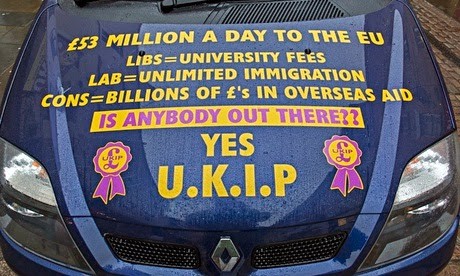
Not to worry little Englanders, the sole purpose of EUSSR is to force the Human Rights Act down your uncivilized throats. There will be no stopping of immigration from brown/black lands – your jails are far better than their burnt-out huts. As far as overseas aid is concerned, it is a bribe to sell first-world weapons to third-world despots. Be happy now and suck it up (freedom will be a long time coming).

We are firm believers in maximum devolution of power and hence are sympathetic to claims of UK being crushed by the dictates of imperials from Brussels and Strasbourg. How about considering an apology for UK having
colonized India, causing numerous Holocausts
through man-made famines, collecting trillions in illegal taxes and
confiscated treasures, destroying local industries and enslaving tens of
thousands of soldiers to fight
Indians at home and other Europeans
abroad? 
….
Link: http://www.theguardian.com/politics/2014/may/30/tories-ukip-newark-by-election-farage-helmer-peoples-arm
….

regards

We all saw it coming…

…we just did not realize how bad things were. The most damning observation by Anand Soondas is the currency of “Hindu truth” vs. “Muslim truth” that has been gaining ground for quite some time. Hindus are now united (mostly) in terms of how fed up they are about muslims.

Finally, though, the marauding Muslims
had been dealt a blow for all of history’s crimes. From Chengiz to Babur
and Jinnah to Dawood, everything had been avenged in one fell swoop.
And for this they gave credit to one man. Narendra Modi. For once a
Hindu had stood up, and how.

   
We can add the Bangladesh genocide and ongoing ethnic cleansing of Hindus in Pak/Bangla and many others to that long bloody list (see also Tipu Sultan). Never forget, their heroes are our villains.

The Muslims do not really have much with which to retaliate with against this tidal wave of hate: respond with bombs or threats of partition, and the backlash is (will be) overwhelming. The only option is to sue for peace and to live in ghettos (the Sri Lankan model). 

Sad to say, this is how things will be, from now on to infinity. Hindus will (have already) disappear from a large part of the South Asian land-mass. The muslims will face the sword of injustice everywhere, in India for just being a muslim, in Pakistan (and Bangladesh) for being the wrong type of muslim. 

We actually agree with Arundhati Roy that the new govt does not have an agenda for explicit harm towards muslims, but there are many indirect ways in which the screws can be tightened.

How about Muslims joining hands with the other minorities – the Sikhs, the Jains, the Christians, the Buddhists and the Parsis to face a common threat? Sorry, it is not going to happen. The Christians are secure in their fortresses in the South and in the North-East (except the tribal communities dispersed all over, and even in that case, elite Christians do not have much sympathy to spare) . The Sikhs are already in alliance with the Hindu Brotherhood. The Jains and Parsis are actually pillars of the Brotherhood, they are some of the biggest supporters of Modi.

Not to forget, the Muslims are at fault as well. Everywhere in South Asia, and if history is any guide, there is not one minority community which will feel inclined to be friendly or accommodative towards muslims. If Muslims in India can harass Tibetans because of what is happening to Rohingyas in Burma, then why should any neo-Buddhist feel kindly towards them?

Our only quibble with Anand Soondas is that Congress knows why it failed the Indian people, but it will not have the guts to do a proper introspection and take necessary steps for re-invention. As a wise BPite says, Congress is doomed with the N-G family at the top, and it is equally doomed without them.
…….

Ayodhya is an
unusually sleepy town with a slightly overpowering population of
monkeys. It generally goes about with its existence unmindful of its
place in either ancient or modern history. But the early months of 2002
were different. Its people were then wide awake – a few in anticipation,
a majority in anxiety. Much of India, too, was on its toes. 
The VHP had
threatened to launch a 100-day yagya to press for construction of the
Ram mandir and, by February 17, sadhus, mahants, sanyasis, party workers
from across the country affiliated to various saffron fronts had begun
converging at Karsevakpuram for the great prayer, to god and to
government. The air crackled with the fire lit by hundreds of
volunteers. Copious amounts of ghee flung into the flames made it seem
like summer inside the camps. Something was bound to singe.

The place had been turned into a fortress, crawling with jawans and
officers from the paramilitary forces and sundry intelligence men in
mufti from the local and central units. There was talk of the army being
called in if the VHP and the akharas did not back down. On the face of
it, they didn’t. 

Prime Minister Atal Bihari Vajpayee’s repeated
entreaties to everyone to wait for the court’s order on the impossibly
vexed temple tangle were summarily dismissed by the yagya organizers.
Ramchandra Parmahans, the eccentric president of the Ram Janmabhoomi
Trust, often boomed that it was not a matter to be decided by the
judiciary as it concerned faith, the religious sentiments of Hindus. He
accused the BJP of selling out. VHP president Ashok Singhal was equally
vituperative and unmoved. This is India, this is Ram lalla’s birthplace,
he said. “Nothing will stop us from making the structure.”     

The momentum kept building up. The fires kept burning. Truckloads of
kar sevaks kept pouring in. To get the logistics right – food and
accommodation, after all, were not unlimited and had to be dispensed
with care – individual groups were advised to stay at Karsevakpuram for a
stipulated period of time and then head home so that everyone
interested in the 100-day programme could get a chance to participate in
what the sadhus were calling a historic turning point for India. 

It was one such group returning from Ayodhya that got caught in
Godhra on February 27. Fifty-nine Ram sevaks, many among them women and
children, were locked inside the blazing compartments of the Sabarmati
Express by a Muslim mob to suffocate and burn. 

Something was bound to singe. 
Those were initial days of
my reporting career and I was posted in Lucknow as the Uttar Pradesh
correspondent for The Telegraph. Though I had come back to base, I
wanted to go to Gujarat to see the train for myself and the trail of
death and destruction it had triggered off. My editor at that paper
finally relented and on the first anniversary of the tragedy, I was on
my way to Godhra. It was February 27, 2003. S-6, the roasted and ravaged
compartment of the Sabarmati Express, was still there at Signal Falia,
the station. It looked sullen and angry at its own fate.

In a report from there, I had then written: “In the one year that
has passed, Godhra has changed. Everything is divided — people,
loyalties, business, bus stops, hospitals, schools. Even truth. Inquire
about any incident and you are bound to get a Hindu truth and a Muslim
truth…The Hindu and Muslim populations of this town were already
divided, roughly in half, making it one of the most dangerous and
communally sensitive hotspots in the country. Now, even the geography
seems to have split vertically…

Being a predominantly Muslim locality has
not helped. Business in Signal Falia, which lies next to Godhra railway
station, has collapsed. The rows of shops that lined the wall adjoining
the periphery of the station have been razed. There were 180 shops in
all, the bread and butter of more than 2,000 people. Now, there is only
one long line of rubble.”

Then, in a dispatch dated February 27, 2003: “The platform wore a
deserted look. A quick scan of railway records at Godhra station showed
nobody had bought a ticket to board the Sabarmati Express, scheduled to
arrive at 2 am. Yet railway security officials patrolled the platform
and guards stood outside the station. Five jawans huddled near a bonfire
at the station entrance, listening to the commentary of the
India-England match. As Ashish Nehra took another wicket, they cackled.
At 1.25 am, India’s path to the Super Six stage was looking easier.
“Bas, aaj India match jeet jaye, kal ka kal dekha jayega,” a jawan said
softly…

The train pulled in ahead of time and lingered at the platform
for 15 minutes. The few inside S-6 fidgeted nervously. Suresh Yadav,
travelling with six family members, was not interested in the score.
“Why isn’t the damn train moving” he muttered. His brother, Ramesh, who
was peeping furtively through the closed shutters, didn’t volunteer an
answer. There was a general sigh of relief when the train moved,
hesitantly, at 1.56 am.”

As I left Godhra and returned to Ahmedabad, traveling to a few other
places along the way, there had been one constant refrain from Hindus
everywhere – in Gandhinagar, Vadodara, Surat. “Sabak ho gaya.” (They
have been taught a lesson.) “Garv hai humko.” (We are proud.) Almost all
of them said their anguish had been heightened by the unwillingness of
mainstream political parties and the media to condemn unequivocally and
in categorical terms what was a most inhuman, unthinkable act of
cruelty.

Finally, though, the marauding Muslims
had been dealt a blow for all of history’s crimes. From Chengiz to Babur
and Jinnah to Dawood, everything had been avenged in one fell swoop.
And for this they gave credit to one man. Narendra Modi. For once a
Hindu had stood up, and how. In the ten years since the horrific
violence startled and shocked Indians with its sheer malevolence and
systematic intent, the adulation has hardly ebbed. 

To some extent, I suspect, this lies at the heart of a fair amount
of support for the Gujarat chief minister and the man who could be the
BJP’s prime ministerial candidate for 2014. Though there is no evidence
yet to prove Modi let the severe reprisals against the Godhra killings
go on unabated – something that would eventually take more than 1200
lives – that’s what common folks believe. And sensing the Hindu
mahapurush sentiment, Modi hasn’t really gone out of his way to disabuse
that notion. If anything, he has worked on that image. His ‘Gujarat
model’, he has quietly and subtly signaled, is not just about keeping
the economy in place.

Introducing the Vibrant Gujarat campaign a year after the
post-Godhra riots was a political masterstroke. This man was a doer.
People could do business with him. Faith and finance came together
perfectly to photoshop further the portrait. Soon, the Tatas were happy,
then the Ambanis, then industry bodies. Even Bollywood. Amitabh
Bachchan, not known to be too finicky while choosing his friends, is
clearly in love with Modi. His ad campaigns have brought in thousands of
more tourists to Gujarat. It helps industry to support, and to be seen
supporting, Modi – a man unlike the passive Manmohan Singh or the
befuddled Rahul Gandhi. It will be a huge bonus if in future he heads
the cabinet in New Delhi and there is need for collaborations with and
investments from governments and business houses abroad.

Some foreign powers seem pleased with
the prospect already and have ended their excommunication of Modi.
Ethics seldom come in the way of enterprise. In the largely scripted
interactions he’s had – at SRCC and FICCI – in Delhi, no one has grilled
him on Godhra. He has instead talked about his vision of India, its
powers – both real and imagined – and its potential. Of how it is a
nation of mouse-charmers. In any case, the Modi juggernaut now ensures
he needn’t go any place where there’ll be uncomfortable questions to
answer. That won’t fit in with the painting under construction – of the
man on a white horse. He is all about ‘listen’, not ‘ask’.

That no data on Modi’s Gujarat outshining the rest of the country
has stood the test of time – or compared better with stats coming out of
some of India’s now-performing states like Madhya Pradesh, Chhattisgarh
and even Bihar (Hooda would insist Haryana, too) – has become
irrelevant and ceased to matter. A TOI article pointed out how there’s
growing unemployment in Gujarat, how women and children don’t do too
well, how dalits are still being victimized, how – far from the promise
of farmers selling petrol – large sections are facing acute shortage of
water.

In 2005, when the US denied him a visa, Modi said he would make
Gujarat such a destination that one day the state will be compared with
America. He said farmers would be like Arab sheikhs and will have crude
oil pouring out of taps in their fields. That hasn’t happened, and most
likely it never will.

But if there is anything equally responsible for the Modi wave
apparently sweeping the nation – fuelled, of course, by a fawning,
amoral industry and a core Hindutva vote bank – it is the disastrous
rule of the UPA government, its PM and an annoying bunch of
Gandhi-worshipping, directionless and out of sync ministers. 

On every
front the country has only gone down the ladder in this past one decade.
The economy is in tatters, security is too casual, transparency is
hardly visible and administration is non-existent. The lot of our women
has worsened. Even as I write this, there have been four rapes in Delhi
in the last 24 hours. A 19-year-old was gang raped and a 5-year-old girl
brutalized so badly that she is struggling to stay alive. And this
coming after the Nirbhaya case following which the government had vowed
to increase police presence and patrolling. Only corruption and
disparity have grown. If the number of billionaires and millionaires has
gone up, so have the poor and the hungry.

In the hands of UPA 2, India has seemed too large to handle, too
diverse to unify, too discontented to be mollified. Latest international
rankings show that India fares poorly on all human development
indicators such as education, child mortality sex ratio, environment,
human rights and gender equality. The situation is actually worse than
the indices indicate. 

India ranks at 136 out of 187 countries with
comparable data in the Human Development Index. It was at number 94 out
of 176 countries in Transparency International’s 2012 Corruption
Perception Index, slipping from number 72 among 180 countries in 2007.
Our gender inequality index is shameful too – at number 129 out of 147
countries.
 

From the absence of food security to custodial torture, and
from large-scale displacement of the poor to malnourishment, the Working
Group on Human Rights and the UN recently came out with a damning
report on India’s rights track record. Not taking into account uprooting
due to armed and ethnic conflict, India was estimated to have the
highest number of people displaced annually by ‘development’ projects.
That’s a whole load of bad news.

The other, quite incredible, move by the Congress and its Gandhi
loyalists has been to pitch Rahul as the answer to Modi. They have to
understand that the poor guy is just not interested in the top job. In
fact, he keeps hinting that he’s trapped in a wrong body. For a party
and alliance in disarray, it would be suicidal to have someone so
confused helm it.
There can be nothing worse than pushing on stage a
leader who does not want to lead. It sends out all the wrong signals.
Manmohan Singh says he doesn’t discount a third term for himself. That’s
a chilling thought. Even for Congressmen. 

If the BJP and its allies do come to power, riding on the back of
Modi’s popularity and the disenchantment with the UPA, the Congress will
know exactly who to blame. The Congress.

Indians haven’t been so despondent, listless and impatient as they
are today. All that large sections of the public want to do is vote out
the present government. But if that rage and hope coalesce into a
movement that’s ready to have Modi as India’s prime minister, the
country, its politics and its people will have a lot to answer – to
itself and to the world watching it. Because then we will never be able
to hold any politician accountable for the wrong that he does or
oversees or fails to stop. And that will be too much of a price to pay –
even if it is in the name of development. Or the promise of it.

…..
Link: http://blogs.timesofindia.indiatimes.com/onefortheroad/the-making-of-narendra-modi-unmaking-of-india/
…..

regards

“Aapko toh khatra nahin hua?”

Anand Soondas comments on what stories become important for the media and what is left out (especially the rape stories).

We have something to add to the points that Anand makes so well. There is now a perception (amongst politicians and much of the elite class) that India is being unfairly targeted by the media. 

Rapes happen everywhere (it may even happen at a higher frequency someplace else), so why the spotlight on India? 

And why are journalists (part of the elite class themselves, many of them foreigners) being so insensitive: “Aapko toh khatra nahin hua?”
….
The competition was tough from the word go — Smriti Irani’s
discrepancies in her affidavits, Modi’s man Nripendra Misra getting the
top job with the help of a hurriedly drafted ordinance, DDA lining up
27,000 flats, the row over Article 370, IPL 7 entering the final lap. 

The two little girls, sisters as it turned out, in faraway Badaun in
Uttar Pradesh who were raped, beaten and hung from a tree didn’t stand a
chance even in such medievally administered death to make it to the
front pages of Delhi’s big newspapers.


One had it as a small single column inside on day 1, the other, also a
national daily, as a brief, again in an inside page. That such things
happen in today’s India, in 2014, and that such barbarism continues to
exist in a country whose first-world aspirations have just decimated a
non-performing party and thrust into power another that sells dreams
well didn’t merit more space.


It needn’t have been so.


There is a thought, in my view somewhat misplaced and erroneous, that
readers of newspapers in the metropolises aren’t concerned or
particularly keen about reports, however tragic, gory or shattering,
coming from the interiors. Therefore, often datelines kill bylines.


Around the time that Nirbhaya died after being violated in a Delhi
bus, there was another, equally brutal, gang rape that happened in
William Nagar in the Garo Hills of Meghalaya. Sixteen men, some of them
boys, on the night of December 13, 2012 waylaid a teenager returning
home after attending a winter festival and, just for kicks, first
thrashed her and then took turns to rape her. Some of them wanted, and
tried very hard, to finish her off. She survived, to be denied admission
in schools, to be boycotted by society and teased by former friends.


Her story, in many ways, is more harrowing than Nirbhaya’s because
she continues to live that horror every day of her life. It wasn’t
compelling enough though — or so felt some of our papers coming out of
the cities — for the urban readers. There wasn’t much about it anywhere.
The glossing over and ignoring of the story was scandalous, to say the
least.


In the name of core readership, it’s become almost routine for
stories from our villages and towns to be summarily dismissed. Many,
even those with larger ramifications, that speak of us as a people,
disappear without a trace.


But is that how readers themselves look at things? I am not too sure.
For one, there is so much migration from hinterland to heartland that
large chunks of consumers of newspapers in metro cities aren’t its
native residents. 

Second, a newspaper’s readership these days is in
reality larger, more amorphous than the numbers for it that various
surveys give. For example, someone who doesn’t take The Times of India
may on any given day read an article in it that is suggested by a
friend, or click on a TOI link shared by another, or go through it on
the FB wall of a colleague, perhaps scan it quickly on Twitter. 

Most
importantly, are we assuming that someone in Delhi will not be
interested in, say, the persecution of a group of PUU (people unlike us)
that’s happened in Bareilly?
If something is important, interesting,
engrossing, he will. It’s a talking point like any other. News by
definition is, and should be, all-encompassing. As far as possible, at
least. There is a world beyond Gurgaon on one side and Noida on the
other, and it ought to be acknowledged.


Yes, space is shrinking in the papers because of the costs involved
in printing and it makes sense to give the immediate surroundings
priority. But it is imperative that we strike a balance. My mother is
always searching for stories from Darjeeling and Sikkim, my next door
neighbours, the Joshis, are perpetually hunting for tidbits from
Uttarakhand, and the Beheras on the ground floor complain regularly that
Odisha is all but forgotten by the publications in New Delhi.


Moreover, just because we think the poor and the uneducated unwashed
don’t read the flashy dailies and aren’t our target audience, we cannot
stop writing about them when they need to be written about the most. We
will be unfair to them, to our readers and to ourselves as people in the
media.


One story almost everyone in my building — the Joshis, the Beharas,
the Gangulys, my mother — seemed to have read recently was the one about
a fire flattening out a cluster of jhuggis in Vasant Kunj. Some of them
went out in the evening with money, food and clothes to comfort the
hapless dwellers there.

……….

Questioned
by reporters over the inexcusable rise in violence against women in Uttar
Pradesh, an edgy Akhilesh Yadav on Friday shot back at the journalists,
“Aapko toh khatra nahin hua? (it’s not as if you faced any danger?)”
The chief minister’s insensitive counter-question left most mediapersons
stunned.

Akhilesh was in Kanpur on personal work when city reporters buttonholed him
over the alarming rise in rape cases in the state, apart from an abysmal slide
in the rule of law.  

There have been four rapes in the last two days in UP,
beginning with the sexual assault and murder of two dalit teenagers in Badaun,
followed by rape of another dalit teenage girl in Azamgarh. On Friday, a fourth
girl was raped in Sharawasti.

Last month, Akhilesh’s father and Samajwadi Party chief Mulayam Singh Yadav had
commented on the issue of rape, “Boys will be boys, why hang
rapists?”

Addressing a rally in Moradabad in April, Mulayam had said,Ladkiyan pehle dosti karti hain. Ladke-ladki
mein matbhed ho jata hai. Matbhed hone key baad usey rape ka naam dey deti
hain. Ladko sey galti ho jati hai. Kya rape case mein phansi di jayegi?

(First, girls and boys become friends. Then, when differences occur between
them, the girls accuse boys of rape. Boys may make mistakes, but should they be
hanged for it?)”

……..

Link(1): http://blogs.timesofindia.indiatimes.com/onefortheroad/the-girls-who-were-hanged-by-the-tree-and-other-stories/

Link (2): http://timesofindia.indiatimes.com/india/Asked-about-UP-rapes-CM-Akhilesh-Yadav-says-But-youre-safe/articleshow/35800676.cms
….

regards

Searching for Parity (through Partitions)

Here is the million dollar question. If Modi can develop a first-rate economic relationship with China, will he be able to pressurize Pakistan (via China) to sue for peace? The future picture will be more clear, if we make a careful evaluation of the past, why and how we have arrived at this bend of history.

To expect India to make ‘concessions’ to Pakistan when this country is
caught in such dire straits is to be naïve. India would rather add to
our miseries than bend. Let’s get it straight: whatever the government
in power in New Delhi, India has no intention of resuming meaningful
talks with Pakistan — Mumbai and terrorism being useful, ever-green
pretexts. 

Looking back, what was the primary cause behind the South Asian partitions? It was primarily because opposing elites were seeking parity with respect to each other (not just independence from each other).

If one considers Partition I in South Asia in an unbiased manner then it appears that Nehru (representing Congress) unfortunately made a few terrible mistakes. He was a Fabian socialist and was impatient to run the country HIS way. Religion as an ornament was fine by him, but (we presume) that he was put off by Hindu as well as Muslim precepts as something backward (if not outright evil) and deserving to be put in the rubbish bin.

Nehru’s mistake was two-fold: at a theoretical level he misjudged the appeal of muslim nationalism (he thought he was more popular amongst muslims than Jinnah!!!), and at a practical level he underestimated the antagonism and mistrust felt by both sides meaning there was a total absence of trust. Muslims simply did not trust Nehru that there will be adequate safeguards in India for them to lead life in their own way, AND a pathway to parity. Parity meant equality of privilege. And parity was something that Nehru was unwilling to give.

Partition I happened not just because muslims in South Asia were
looking for a homeland for themselves, it happened because they felt
that they deserve parity with the Hindus of India.
For
historical reasons it was never possible to imagine a situation where
Pakistan < India. This is the reason Pakistan always has had a subservient relationship with the USA (and subsequently China and Saudi Arabia), because only with these nations as allies can Pakistan hope to achieve parity with India.

Partition II also happened because Bengalis were looking for parity (with Punjabis). The thinking was straight-forward, culturally, scientifically, Bengalis were equal or even superior to Punjabis. Economically, Pakistan was beholden to jute from the East and the jute money was being spent disproportionately in the West. Only in military prowess the Bengalis were lagging. And to seek parity in this sphere the Bengalis turned to India.

The powers that be in Pakistan made (unfortunately) the same mistakes that Nehru did a few decades ago. They underestimated the appeal of Bengali nationalism and they did not grasp the level of mistrust between Bengalis and Punjabis. When Bhutto made the offer for parity, it was too little, too late.

Indeed we believe that the secularism (plus) model as adopted by Nehru and the Congress and applied to India was because of the belated
realization that you cannot demand trust from your sworn enemies, you
can only hope that with time, the change will come from within the
community.
Thus while Nehru joined hands with Ambedkar and blew up
existing Hindu society with the Hindu Civil Code, for muslims his answer
was (now in opposition to Ambedkar) that as a community they are simply
not ready. This is why we have (constitutionally) Uniform Civil Code as
a desirable goal but something that will never be implemented (not even
BJP has the willpower to do it, though they will use the resentment to
catch votes). In this sense having a personal code is also an imperfect declaration of parity. 

When people talk of secularism in the Indian context it is a search for parity in as many spheres as possible. Mindless application of this principle however can lead to policy incoherence. As an example take the case of minority educational institutions. While all mainstream organizations
(with a few notable exceptions) must obey the standard 50 (general) + 50
(quota) reservation policy (for students and faculty alike), the MEIs do
not have to follow this rule. In this way the MEIs are able to guarantee a few seats for Christians, Muslims etc. but the overwhelming composition is forward caste!!! How is this anyway fair and useful??
…..
During the first decades after independence Pakistan was indeed superior to India by most measures. India was a poor country trying to experiment with imperfect democracy, while Pakistan was being run by the military (leading from the front or from behind) with an efficient bureaucracy and fueled by a powerful, unifying, ideology.

The impact of ideology was most clear in the way the two countries played cricket (and also hockey), especially against each other. Pakistan has always been blessed with rare talent, but due to the lifting power of ideology Pakistanis managed to rise even above the sum of their talents. India on the other hand mostly played below par (this has changed of late). Gandhiji’s statement of Hindus being weak and Muslims being strong was exactly a reflection of the respective ideological strengths.

In the long run however this search for muslim (now explicitly Sunni Punjabi) parity seems headed for the quick-sands. It is not just that Hindus out-number Muslims, it is that elite Hindus out-number elite S-P Muslims. Further, the way the partitions and the aftermath have played out, elite Hindus can now co-opt muslims to fight against muslims (see Kargil war) but the reverse is not possible. This is the exact opposite of what happened during the glory days of Islamic rule when Akbar had a galaxy of Hindu generals (and Hindu soldiers) fighting against the Rajputs and the Marathas. 

To his credit, Bhutto recognized this when he talked about eating grass in order to fund a nuclear weapons program (which will provide parity in face of a much larger Indian army equipped with conventional weapons). The jihadi army would then act as a force-multiplier and this is how we get to parity (+). 

But as is clear from the cold war experience, this equality seeking exercise in the military domain is bound to exact a terrible penalty in economic (hard power) as well as the cultural domain (soft power). And a Pakistan which is weaker economically may not be able to withstand the pressures emanating from an economically dominant India. Most alarmingly, the economic partnerships that India now may choose to develop with China, USA and even the Middle East may outweigh (or at the least counter-balance) the strategic relationships these countries have with Pakistan.  

When we reach that point (and we feel it is inevitable), the battle for parity will be lost. Perhaps it is already lost (only historians will be able to tell for sure…in a few decades time).

……………………
‘STRUCTURED talks’ is a piece of nonsense that was first
heard in the South Asian context possibly in the ’90s. Since then, the
talks charade between Pakistan and India has assumed many nomenclatures —
peace process (God bless Henry Kissinger for coining this phrase),
‘composite dialogue’ in the wake of Vajpayee’s visit to Islamabad to
attend the Saarc conference in 2004, and — thanks to Hina Rabbani Khar —
‘not only uninterrupted but uninterruptible’ dialogue.

The
prime minister’s adviser on foreign affairs Sartaj Aziz now adds the
prefix of ‘re’ to make it an impressive-sounding epithet — ‘restructured
talks’. The result is India’s unqualified victory in refusing to talk
turkey, thus freezing the Kashmir issue.

Statements made on
Wednesday by the two foreign policy managers now stand out in contrast,
one by Mr Aziz; the other by the Indian foreign minister Sushma Swaraj;
the latter has substance brimming with confidence bordering on
arrogance; the former’s a poor attempt at claiming success which is not
there. The latter was blunt to the point of crudity, mercifully after
the visitors had left the former full of diplomatic clichés and
inanities and pleading for the process to be “restructured and updated”.

Two points highlighted Ms Swaraj’s policy statement, made not at a
press conference but given to the Press Trust of India (PTI), the
official news agency, showing her eagerness to clarify the BJP
government’s policy with regard to Pakistan in the wake of the
swearing-in ceremony on Monday and the meeting between Nawaz Sharif and
Narendra Modi.

We do not know the sequence in which the Indian
foreign minister spelled out the BJP government’s priorities in the
realm of foreign affairs, but going by what appeared in print she spoke
first of Pakistan — in the most bullying style — and then concentrated
on how India would project itself to the world. It is the latter part
that is significant and gives an inkling of the ‘big power’ status that
has been the obsession of Indian leaders and strategists from the
founding father Jawaharlal Nehru and Subramanian to this day.

As
paraphrased by the PTI and reported by our New Delhi correspondent, Ms
Swaraj said her priority would be to ‘showcase India’s strengths to the
world and improve relations with neighbouring countries, strategic
partners, Africa, Asean member countries, Europe and others’.
India’s strengths — yes, the plural. 

Indeed, India has many ‘strengths’
to flaunt, not only the size of its territory and population but the
breakthrough it has made in economy and the efforts it is making to have
a military-industrial complex.

Slowly but to good effect, India
has begun to act on the advice of its friends in the West. How long will
you remain bogged down in your obsession with the infinitely small
Pakistan? If you want China status, have a higher vision, go beyond
Pakistan, treat your western neighbour with contempt, think of greener
pastures, and do what Ms Swaraj aptly did with all seriousness on
Wednesday — ‘showcase India’s strengths to the world’.

Against
this ‘showcasing’, consider her advice to Pakistan whose prime minister
had met hers a day earlier — “stop terrorist activities”, because talks
get subdued in the “din” of bombs. This then is Pakistan’s status in her
eyes and this in a nutshell is the outcome of the prime minister’s
visit to New Delhi.

Finally, we have to note what most Pakistani
commentators miss. India has no reason to give relief to Pakistan,
knowing well that this country is in a nutcracker situation. Half the
army is either already bogged down in the west to combat the Taliban or
is perhaps mobilising more troops for an operation. Balochistan is in
the grip of a low-intensity insurgency. The economy is in a shambles.
Blasphemy and YouTube are national issues. The ISI, one of the world’s
most powerful and resourceful spy agencies, is waging a war of its own
against a media group by mobilising mullahs.

Development activity
has ceased to exist in three of the provinces. There are polio
restrictions on Pakistani travellers. Afghanistan is breathing down our
neck. America and the West consider us little better than an exporter of
terrorism. China has expressed behind-the-scenes concern to Pakistan
over the situation in Xingjian, and the state’s writ is absent not only
in Fata but in many other areas too.

To expect India to make
‘concessions’ to Pakistan when this country is caught in such dire
straits is to be naïve. India would rather add to our miseries than
bend. Let’s get it straight: whatever the government in power in New
Delhi, India has no intention of resuming meaningful talks with Pakistan
— Mumbai and terrorism being useful, ever-green pretexts.

…….
Link: http://www.dawn.com/news/1109487/nonsense-no-less/
…..

regards

net benefits of British rule?

On the other hand, for the conquered peoples, British rule was an unparalleled blessing. For the first and only time in their histories, they had a government that tried – and generally tried with success – to be just and moderate. India in particular gained from British rule. It got a reasonably honest administration, and the benefits of English law and of western science and education. No one who looks at India under Aurangzebe and under Queen Victoria can regard the change as other than for the best for the great majority of the Indian people. Seen purely from the right of the conquered peoples to life, liberty and property, the only disadvantage of British rule was that it finally came to an end. And this is the truth even taking into account the bloodshed of the initial conquests and of the maintenance of British rule. Every imperial power that ever existed has governed by the sword. No other has ever unsheathed the sword so reluctantly and with so many compensating benefits.
http://seangabb.co.uk/?q=node/664

Congratulations (Sriram, Ansun, Gokul, Ashwin)

In general it is quite true that Indians suffer from deep inferiority complex (unless you are talking to mad folks who claim that the Vedic civilization was in possession of atom bombs). 
However the spelling bee is one area where they may claim to have the upper hand, with the top four places secured this year and a proud tradition in the making. Great job, folks.
….
For the first time in 52 years, two spellers were declared co-champions of the Scripps National Spelling Bee on Thursday.

Indian-Americans Sriram Hathwar of New York and Ansun Sujoe (top) of Texas
shared the title after a riveting final-round duel in which they nearly
exhausted the 25 designated championship words. After they spelled a
dozen words correctly in a row, they both were named champions.

The past eight winners and 13 of the past 17 have been of Indian
descent, a run that began in 1999 after Nupur Lala’s victory, which was
later featured in the documentary “Spellbound.”

Earlier,
14-year-old Sriram opened the door to an upset by 13-year-old Ansun
after he misspelled “corpsbruder,” a close comrade. But Ansun was unable
to take the title because he got “antegropelos,” which means waterproof
leggings, wrong.

Sriram entered the final round as the
favorite after finishing in third place last year. Ansun just missed the
semifinals last year.

They become the fourth co-champions in the bee’s 89-year history and the first since 1962.

“The competition was against the dictionary, not against each other,”
Sriram said after both were showered with confetti onstage. “I’m happy
to share this trophy with him.”

Sriram backed up his status as
the favorite by rarely looking flustered on stage, nodding confidently
as he outlasted 10 other spellers to set up the one-on-one duel with
Ansun. The younger boy was more nervous and demonstrative, no more so
than on the word that gave him a share of the title: “feuilleton” the
features section of a European newspaper or magazine.

“Ah,
whatever!” Ansun said before beginning to spell the word as the stage
lights turned red, signaling that he had 30 seconds left.

Although they hoisted a single trophy together onstage, each will get
one to take home, and each gets the champion’s haul of more than $33,000
in cash and prizes.

Gokul Venkatachalam of Missouri finished third, and Ashwin Veeramani of Ohio, was fourth. 

…….
….
regards 

The Hin-Jew conspiracy begins to take shape

Narendra Modi is supposedly very much Israeli like in character- this is vouched for by the Israelis themselves. Also it is inevitable that the enemy of your enemy is your friend.

To update the Two Nation Theory: their maximum villain-enemies are our maximum hero-friends and vice versa.
……

To his Israeli partners, Modi’s profile
as an opponent of Muslim extremism—a perceived common enemy,
particularly in the wake of the 2008 terrorist attacks in Mumbai—only
made him more appealing.

Surveys
by the Israeli Foreign Ministry have found that Indian support for
Israel is higher than in any other country polled, beating out even the
United States. “Rural Indians see Israel as an agricultural superpower,”
said Shimon Mercer-Wood, Southeast Asia desk officer at the Israeli
Foreign Ministry. “Urban India sees Israel as a leader of innovation and
entrepreneurship.”

………. 

It is actually high time that Israel and India take the partnership to the next level in the civilian domain (military links are already strong).

Technology wise India needs Israel..desperately. But (as we imagine) a country with one billion friends is what Israel needs India far more, in particular in the coming days as the Boycotts, Divestment and Sanctions campaign picks up steam in the West.

In the near future, it may well be that the European doors will close. Anti-semitism is right now rampant and deadly across the continent and is likely to accelerate as the Left-Islam alliance grows in strength. In the mean-time India under the Hindu Brotherhood will be shining brightly (welcome sign: swastika?)

At the same time we wish Palestine and Kashmir to remain peaceful (it will never be resolved because their sacred ground is ours as well).  
It is beyond pathetic (but understandable) that people cannot see beyond their artificial communities…..all of them .
……..
Israelis who have met Narendra Modi, India’s newly elected prime
minister-designate, gush about him and what he means for Israel. At a
recent event at the Institute for National Security Studies, in Tel
Aviv, he was described in glowing terms: “outgoing”; “assertive”;
“extremely, extremely clever”; and “very tachles, very direct,
very Israeli.”
 

Among the calls Modi received congratulating him on his
win last week was one from Israeli Prime Minister Benjamin Netanyahu,
who told
his cabinet at their weekly meeting that Modi had replied by expressing
the desire to “deepen and develop economic ties with the state of
Israel.”


….When Modi, the head of the Hindu nationalist BJP party, is sworn in
as prime minister on Monday, he will become the only Indian premier to
have ever visited the Jewish state.
He has close relationships with
Israeli business leaders, and his landslide victory has left many
anticipating the possibility of a great leap forward in Indian-Israeli
relations—and with it, a billion new customers and allies.


Israel’s relationship with India has long been a quiet affair, with a
lot going on behind the scenes, but not much happening in public.
 

Though India voted to recognize Israel in 1950, successive governments
in the 1960s, 1970s, and 1980s avoided public ties with Jerusalem,
partly to appease India’s large Muslim minority and partly out of a
desire to avoid alienating Arab allies. India didn’t establish official
relations with Israel until 1992, making it the last non-Arab,
non-Muslim country in the world to do so.


Despite this, commercial ties, technology sharing, space exploration,
and military cooperation between the two countries have all grown
vigorously in recent years. Bilateral trade has shot up from less than
$200 million in 1992 to almost $4.4 billion in 2013 (not including
weapons sales, which account for billions more). The growth in bilateral
trade has been driven largely by precious stones and by defense
spending. The exception is in Gujarat, the state where Narendra Modi has
served as chief minister for the past 13 years.


In Gujarat, Israeli industry was not only welcomed by Modi but actively pursued. Huge tenders for a semiconductor plant , a new port , and a desalination plant
were awarded to Israeli bidders. Israeli agriculture, pharmaceutical,
alternative energy, and information technology companies have flourished
there. This isn’t incidental: Modi’s campaign was based on replicating
his economic success in Gujarat on a national scale, and much of that
success was tied up with Israel.


In Gujarat, Modi emphasized privatization and small government. He
opened financial and technological parks, brought in foreign investment,
and cracked down on corruption. Under his administration, the state’s
economy expanded by more than 10 percent annually. In 2010, in Modi’s third term in office, Forbes named Gujarat’s largest city, Ahmedabad, as the third-fastest growing city in the world.


Modi’s career was nearly derailed in 2002 when riots broke out in
Ahmedabad; an estimated 1,000 Muslims were killed by Hindu radicals
during the violence. Modi’s government was accused of not doing enough
to stop the massacre, and while Modi was cleared of any wrongdoing by
the Indian Supreme Court’s Special Investigation Team in 2009, he was banned
from visiting the United States over his role in the violence—a
circumstance that drove Modi to develop relationships with other foreign
partners, particularly Israel and Japan, instead.


In 2006, Modi accepted an invitation to visit Israel for an
agricultural technology conference. The five-day trip sparked an ongoing
relationship; Modi began encouraging partnerships with Israeli
ministries and advised his constituents to study Israeli agricultural
and water-management systems. 

To his Israeli partners, Modi’s profile
as an opponent of Muslim extremism—a perceived common enemy,
particularly in the wake of the 2008 terrorist attacks in Mumbai—only
made him more appealing.


Modi’s BJP has often been supportive of Israel. Though diplomatic
relations between New Delhi and Jerusalem were first officially
established under the dominant Congress Party in 1992, it was during the
last BJP coalition government, between 1999 and 2004, that the
relationship blossomed. India’s Foreign Minister Jaswant Singh, of the
BJP Party, visited Israel in 2000, and in 2003 Ariel Sharon became the
first Israeli leader to visit India.


According to a report in the International Business Times,
Modi has suggested that he may make the first official state visit by a
sitting prime minister to Israel during his term of office. His timing
is impeccable: The Indian public seems especially well primed for a
closer alliance with Israel as well. 

Surveys
by the Israeli Foreign Ministry have found that Indian support for
Israel is higher than in any other country polled, beating out even the
United States. “Rural Indians see Israel as an agricultural superpower,”
said Shimon Mercer-Wood, Southeast Asia desk officer at the Israeli
Foreign Ministry. “Urban India sees Israel as a leader of innovation and
entrepreneurship.”


In the last few months a string of cooperative anti-terror agreements
was signed between the two countries; negotiations over a Free Trade
Agreement are ongoing. One of the largest Indian business delegations
ever to visit Israel will be attending the MIXiii conference in Tel Aviv this month. But Modi’s victory has the potential to send these efforts into overdrive.


….
“Modi likes Israeli Chutzpah,” said a senior member of the AgileTree
investment company who has dealt personally with him in Gujarat for
years and asked to remain anonymous because of continuing business
operations with both major parties. “If only a fraction of what happened
in Gujarat will happen in India as a whole, the state of Israel will be
one of the biggest beneficiaries.”

……
Link: http://www.tabletmag.com/jewish-news-and-politics/173767/modi-israels-new-best-friend
….

regards

29 May 1953 (on top of the world)

Many people have successfully climbed Mt Everest (OK, following S Anand- Cho-mo-lung-ma as it is called in Tibetan, and Sagar-Matha in Nepali) following in the footsteps of Tenzing Norgay and Edmund Hilary. It is a huge money earner for Nepal as well as an environmental disaster ready to strike any time. Indeed this year all climbing is sopped because of the death of 13 Sherpas.

I
banged out a brief message on my typewriter for a Sherpa to take down to
the Indian radio station first thing next morning.  SNOWCON DITION BAD . . .
ABANDONED ADVANCE BASE . . . AWAITING IMPROVEMENT. It meant, as the
Indian radiomen would not know, …that Everest had been
climbed on May 29 by Hillary and Ten-zing. 

There is one parochial
grievance (a familiar one). The Western (UK) Press really needs to make
more of a decent effort to give credit to the “”natives” and not grasp
it all for Queen and Country.
How many people know that it was
Rakhaldas  Bandopadhyay who discovered Mohen-jo-Daro and also Jagadish
Chandra Bose who invented the radio (not Marconi- it took IEEE-
Institution of Electrical and Electronics Engineers – about 100 years to
correct the record)? Similarly it was Radhanath Sikdar, (described in Wiki as an Indian mathematician and surveyor from Bengal), was the first to identify Everest as the world’s highest peak in 1852 (Sir George Everest was the Surveyor General of India, who preceded Andrew Waugh- the man who officially made the announcement). 

Finally, in March 1856 he announced his
findings in a letter to his deputy in Calcutta.
Kangchenjunga was declared to be 28,156 ft (8,582 m), while Peak XV was
given the height of 29,002 ft (8,840 m).
Waugh concluded that Peak XV
was “most probably the highest in the world”.
Peak XV (measured in feet) was calculated to be exactly 29,000 ft
(8,839.2 m) high, but was publicly declared to be 29,002 ft (8,839.8 m)
in order to avoid the impression that an exact height of 29,000 feet
(8,839.2 m) was nothing more than a rounded estimate.
Waugh is therefore wittily credited with being “the first person to put two feet on top of Mount Everest”.

A few more micro-details. Sir Edmund Hilary (20 July 1919 – 11 January 2008) is obviously the inspiration for Captain Keith Mallory, the hero of the Guns of Navarone authored by Alistair MacLean. His mate Tenzing Norgay (late May 1914 – 9 May 1986), was born Namgyal Wangdi, in Tengboche, Khumbu in the foot-hills of Everest. He was a Nepalese Buddhist [ref. Wiki]
…….


Not
many modern adventures, at least of the physical, peaceable kind, ever
achieve the status of allegory. One was, of course, that
ultimate feat of exploration, that giant step for all mankind, the
arrival of Apollo 11 upon the moon. The other was the first ascent of Mount Everest.


It was allegorical in many senses.
The mountain stood on one of the earth’s frontiers, where the Himalayan
range separates the Tibetan plateau from the vast Indian plains below.
The adventure was symbolically a last earthly adventure, before
humanity’s explorers went off into space. The expedition that first
climbed Everest was British, and a final flourish of the British Empire,
which had for so long been the world’s paramount power. And as it
happened, the news of its success reached London, the capital of that
empire, on the very morning a new British queen, Elizabeth II, was being
crowned in Westminster Abbey.
Almost everything meant more than it had a
right to mean, on Everest in 1953.


It did not always seem so at the
time. When those two men came down from the mountaintop, all one of them
said was: “Well, we’ve knocked the bastard off.”


The mountain was bang on the line
between Tibet and Nepal, two of the world’s most shuttered states, but
during the 19th century the British, then the rulers of India, had
regarded them as more or less buffer states of their own empire, and had
seldom encouraged exploration.  

….
Everest had first been identified and
measured from a distance, when a surveyor working far away in Dehra Dun,
in the Indian foothills, had realized it to be the highest of all
mountains, and in 1856 it had been named after Sir George Everest,
former surveyor general of British India.
It was known to be holy to the
people living around it, it looked celestial from afar, and so it became
an object of tantalizing mystery, an ultimate geographical presence.


Nobody tried to climb it—certainly
not the Sherpa people who lived at its foot—until 1921, when a first
British expedition was allowed to have a go. Between the two world wars
five other British attempts were made. All went to Everest via Tibet,
attacking the northern side of the mountain, but after World War II,
Tibet was closed to foreigners, and for the first time climbers
approached the mountain from the south, in Nepal. By then the British
Raj had abdicated, and in 1952 a Swiss expedition was the first to make a
full-scale attempt from the Nepali side. It failed (but only just). So
there arose, in the following year, a last chance for the British, as
their empire lost its vigor, its power and its purpose, to be the first
on top.


The empire was fading not in
despair, but in regret and impoverishment. The British no longer wished
to rule the world, but they were understandably sad to see their
national glory diminished. They hoped that by one means or another their
influence among the nations might survive—by the “special relationship”
with the United States, by the genial but somewhat flaccid device of
the Commonwealth, or simply by means of the prestige they had
accumulated in war as in peace during their generations of supremacy. 
When in 1952 the ailing King George VI died, they pinned their hopes of
revived fortunes upon his daughter, the future Queen Elizabeth II, who
would accede to the throne in June of the following year. All was not
lost! It might be the start, trumpeted the tabloids, of a New
Elizabethan Age to restore the dashing splendors of Drake, Raleigh and
the legendary British sea dogs.


With this fancy at least in the
backs of their minds, the elders of the Royal Geographical Society (RGS)
in London, who had organized all the previous British expeditions to
Everest, made their plans for a final grand-slam assault upon the
mountain. The British had long thought that if it was not exactly their
right to be the first on the top of the world, it was in a way their
duty. Everest wasn’t in the British Empire, but it had been within a
British sphere of influence, as the imperialists liked to say, and so
they considered it a quasi-imperial peak. As early as 1905, Lord Curzon,
the inimitably imperial viceroy of India, had declared it “a reproach”
that the British had made no attempt to reach that summit of summits;
nearly half a century later the British public at large would have been
ashamed if some damned foreigners had beaten them to it.


So it was an emblematically powerful
expedition that the RGS sponsored this time. It had a strong military
element—most of its climbers had served in the armed forces. Most had
been to one of the well-known English private schools; several were at
Oxford or Cambridge. Two were citizens of that most loyally British of
the British dominions, New Zealand. One was from Nepal, and therefore
seemed a sort of honorary Briton. 
Nearly all of them had previous
Himalayan experience, and professionally they included a doctor, a
physicist, a physiologist, a photographer, a beekeeper, an oil company
executive, a brain surgeon, an agricultural statistician and a
schoolmaster-poet—a poetic presence was essential to the traditional
ethos of British mountain climbing. Astalwart and practiced company of
Sherpa mountain porters, many of them veterans of previous British
climbing parties, was recruited in Nepal. The expedition was, in short,
an imperial paradigm in itself, and to complete it a reporter from the
LondonTimes, in those days almost the official organ of
Britishness in its loftiest measures, was invited to join the expedition
and chronicle its progress.


….
The leader of this neo-imperial
enterprise was Col. John Hunt, King’s Royal Rifle Corps, a distinguished
mountaineer, one of Montgomery’s staff officers in World War II, and an
old India hand. The reporter from The Times was me.


….
Three men, in the end, came to
dominate the exploit. Hunt himself was the very incarnation of a leader,
wiry, grizzled, often wry and utterly dedicated. Whatever he was asked
to do, it seemed to me, he would do it with earnest and unquenchable
zeal, and more than anyone else he saw this particular task as something
much grander than a sporting event. As something of a visionary, even a
mystic, he saw it as expressing a yearning for higher values, nobler
summits altogether. He might have agreed with an earlier patron of
Everest expeditions, Francis Younghusband of the RGS, who considered
them pilgrimages—“towards utter holiness, towards the most complete
truth.” Certainly when Hunt came to write a book about the adventure, he
declined to talk about a conquest of the mountain, and simply called it
The Ascent of Everest.


The second of the triumvirate was
Tenzing Norgay, the charismatic leader of the Sherpas with the
expedition, and a famously formidable climber—he had climbed high on the
northern flank of Everest in 1938, on the southern flank in 1952, and
knew the mountain as well as anyone. Tenzing could not at that time read
or write, but his personality was wonderfully polished. As elegant of
manner as of bearing, there was something princely to him. He had never
set foot in Europe or America then, but in London later that year I was
not at all surprised to hear a worldly man-about-town, eyeing Tenzing
across a banquet table, say how good it was to see that “Mr. Tenzing
knew a decent claret when he had one.” When the time came for Hunt to
select the final assault parties, the pairs of climbers who would make
or break the expedition, he chose Sherpa Tenzing for one of them partly,
I am sure, for postimperial political reasons, but chiefly because he
was, as anyone could see, the right man for the job.


….
His companion to the summit was one
of the New Zealanders, emphasizing that this was a British expedition in
the most pragmatic sense—for in those days New Zealanders, like
Australians and even most Canadians, thought themselves as British as
the islanders themselves. Edmund Hillary the beekeeper was a big, burly,
merry, down-to-earth fellow who had learned to climb in his own New
Zealand Alps but had climbed in Europe and in the Himalayas too. He was
an obvious winner—not reserved and analytical like Hunt, not
aristocratically balanced like Tenzing, but your proper good-humored,
impeturbable colonial boy. There was nobody, I used to think, that I
would rather have on my side in the battle of life, let alone on a climb
up a mountain.


….
The expedition went like clockwork.
It was rather like a military campaign. Hunt took few chances in his
organization, and tested everything first. He’d brought two kinds of
oxygen equipment to the mountain, for instance, and climbers tried them
both. Camps established on the mountain flanks enabled men to haul
equipment up in stages, and when they were sick or overtired during
those three months on the mountain, they went down to the valleys to
rest. Two pairs of climbers made final assaults. The first team, Thomas
Bourdillon and Charles Evans, turned back 285 feet from the top. It was
late in the day, and the exhausted climbers saw the final approach as
too risky. Nobody was killed or injured on the 1953 British Everest
Expedition.


…..
Everest was not the most difficult
mountain in the world. Many were technically harder to climb. Once more
it was a matter of allegory that made its ascent so wonderful an event.
It was as though down all the years some ectoplasmic barrier had
surrounded its peak, and piercing it had released an indefinable glory.
It was Ed Hillary the New Zealander who said they’d knocked the bastard
off, but he meant it in no irreverent sense—more in affectionate
respect. For myself, cogitating these mysteries in the course of the
expedition, and gazing at the spiraling plume of snow that habitually
blew like a talisman from Everest’s summit, agnostic though I was I did
begin to fancy some supernatural presence up there. It was not the most
beautiful of mountains—several of its neighbors were shapelier—but
whether in the fact or simply in the mind, it did seem obscurely nobler
than any of them.


….
Everest 1953, I fear, did much to
corrupt all this. Nationalists squabbled with a vengeance for the honors
of success on the mountain, and Tenzing in particular was the subject
of their rivalries. He was Asian, was he not, so what right had the
imperialists to call it a British expedition? Why was it always Hillary
and Tenzing, never Tenzing and Hillary? Which of them got to the top
first, anyway? All this came as a shock to the climbers, and even more
to me. When it came to such matters I was the most amateurish of them
all, and it had never occurred to me to ask whether Hillary the
Antipodean or Tenzing the Asian had been the first to step upon that
summit.


….
I was not, however, an amateur at my
trade. Just as the physiologist had been busy all those months
recording people’s metabolisms, and the poet had been writing lyrics,
and the cameraman had been taking pictures, so I had been active sending
dispatches home to The Times. They went via a cable station in
Kathmandu, the capital of Nepal. There was no road to Kathmandu from the
mountain. We had no long-distance radio transmitters, and certainly no
satellite telephones, so they went by the hands of Sherpa
runners—perhaps the very last time news dispatches were transmitted by
runner.


It was 180 miles from the mountain
to the capital, and the faster my men ran it, the more I paid them. The
journey was very hard. The best of them did it in five days—36 miles a
day in the heat of summer, including the crossing of three mountain
ranges more than 9,000 feet high. They very nearly broke the bank.


….
I kept a steady stream of dispatches
going, and I was not at all surprised to find that they were often
intercepted by rival papers and news organizations. I did not much care,
because they generally dealt more in description or surmise than in
hard fact, and were couched anyway in a fancy prose that no tabloid
would touch; but I did worry about the security of the final,
all-important message, the one that would report (or so we hoped) that
the mountain had actually been climbed. This I would most decidedly
prefer to get home without interference.


….
Fortunately, I had discovered that
some 30 miles from our base camp, at the foot of the mountain, the
Indian Army, keeping a watch on traffic out of Tibet, had established a
radio post in touch with Kathmandu. I arranged with its soldiers that
they would, if the need arose, send for me a brief message reporting
some important stage in the adventure. I resolved to keep this resource
in reserve for my final message. I could not, however, afford to let the
Indians know what such a message contained—it would be a secret hard to
keep, and they were only human—so I planned to present it to them in a
simple code that appeared not to be in code at all. A key to this
deceitful cipher I had sent home to The Times.


….
The time to use it came at the end
of May, and with it my own chance to contribute to the meanings of
Everest, 1953. On May 30 I had climbed up to Camp 4, at 22,000 feet in
the snow-ravine of the Western Cwm, a valley at the head of a glacier
that spills out of the mountain in a horrible morass of iceblocks and
crevasses called the Khumbu Icefall. Most of the expedition was
assembled there, and we were awaiting the return of Hillary and Tenzing
from their assault upon the summit. Nobody knew whether they had made it
or not.


….
As we waited chatting in the snowy
sunshine outside the tents, conversation turned to the forthcoming
coronation of the young queen, to happen on June 2—three days’ time; and
when Hillary and Tenzing strode down the Cwm, and gave us the thrilling
news of their success, I realized that my own moment of allegory had
arrived. If I could rush down the mountain that same afternoon, and get a
message to the Indian radio station, good God, with any luck my news
might get to London in time to coincide with that grand moment of
national hope, the coronation—the image of the dying empire, as it were,
merging romantically into the image of a New Elizabethan Age!


….
And so it happened. I did rush down
the mountain to base camp, at 18,000 feet, where my Sherpa runners were
waiting. I was tired already, having climbed up to the Cwm only that
morning, but Mike Westmacott (the agricultural statistician) volunteered
to come with me, and down we went into the gathering dusk—through that
ghastly icefall, with me slithering about all over the place, losing my
ice ax, slipping out of my crampons, repeatedly falling over and banging
my big toe so hard on an immovable ice block that from that day to this
its toenail has come off every five years.


….
It was perfectly dark when we
reached our tents, but before we collapsed into our sleeping bags I
banged out a brief message on my typewriter for a Sherpa to take down to
the Indian radio station first thing next morning. It was in my
skulldug code, and this is what it said: SNOWCON DITION BAD . . .
ABANDONED ADVANCE BASE . . . AWAITING IMPROVEMENT. 

It meant, as the
Indian radiomen would not know, nor anyone else who might intercept the
message on its tortuous way back to London, that Everest had been
climbed on May 29 by Hillary and Ten-zing. I read it over a dozen times,
to save myself from humiliation, and decided in view of the
circumstances to add a final two words that were not in code: ALLWELL, I
wrote, and went to bed.


It went off at the crack of dawn,
and when my runner was disappearing down the glacier with it I packed up
my things, assembled my little team of Sherpas and left the mountain
myself. I had no idea if the Indians had got my message, had accepted it
at face value and sent it off to Kathmandu. There was nothing I could
do, except to hasten back to Kathmandu myself before any rivals learned
of the expedition’s success and beat me with my own story.


….
But two nights later I slept beside a
river somewhere in the foothills, and in the morning I switched on my
radio receiver to hear the news from the BBC in London. It was the very
day of the coronation, but the bulletin began with the news that Everest
had been climbed. The queen had been told on the eve of her crowning.
The crowds waiting in the streets for her procession to pass had cheered
and clapped to hear it. And the news had been sent, said that
delightful man on the radio, in an exclusive dispatch to The Times of London.

………..
BURRA SAHIB 

Where will “Sir Ed” celebrate the
ascent’s big anniversary? Not at the queen’s London gala. Hint: For
decades he has aided the Sherpas.


They call him Burra Sahib—big in stature, big in heart—and
they have it just right. Yes, he has had lucrative endorsement gigs
with Sears, Rolex and now Toyota (and has led expeditions to the South
Pole and the source of the Ganges). 
But 6-foot-2 Edmund Hillary has
mostly devoted himself to the Sherpas, a Tibetan word for the roughly
120,000 indigenous people of mountainous eastern Nepal and Sikkim,
India, since he and Tenzing Norgay, the most famous Sherpa of all,
summated Mount Everest 50 years ago. “I’ve reveled in great adventures,”
Sir Edmund, 83, says from his home in Auckland, New Zealand, “but the
projects with my friends in the Himalayas have been the most worthwhile,
the ones I’ll always remember.”


Hillary and the Himalayan Trust,
which he founded in 1961, have helped the Sherpas build 26 schools, two
hospitals, a dozen clinics, as well as water systems and bridges. He
also helped Nepal establish SagarmathaNational Park to protect the very
wilderness that his ascent has turned into the ultimate trekking and
climbing destination, attracting 30,000 people a year.


His love of the area is tinged with
sadness. In 1975, Hillary’s wife and youngest daughter were killed in a
plane crash while flying to one of the hospitals. “The only way I could
really have any ease of mind,” he now recalls, “was to go ahead with the
projects that I’d been doing with them.” (A grown son and daughter
survive; he remarried in 1989.)


History’s most acclaimed living
mountaineer grew up in rural New Zealand too “weedy,” he says, for
sports. But heavy labor in the family beekeeping business after high
school bulked him up for his new passion—climbing. Impressive ascents in
New Zealand and the Himalayas earned him a spot on the 1953 Everest
expedition. Hillary was knighted in 1953, and he graces New Zealand’s $5
note and the stamps of several nations. Yet he works hard to debunk his
heroic image. “I’m just an average bloke,” he says, albeit with “a lot
of determination.”


….
It’s of a piece with Hillary’s
modesty that he would rather talk about his partner Tenzing, a former
yak herder who died 17 years ago. “At first he could not read or write,
but he dictated several books and became a world ambassador for his
people.” What Hillary admires about the Sherpas, he adds, is their
“hardiness, cheerfulness and freedom from our civilized curse of
self-pity.”


….
To hear him tell it, climbers are
ruining Everest. Since 1953, 10,000 have attempted ascents: nearly 2,000
have succeeded and nearly 200 have died. Hillary concedes that Nepal, a
very poor country, benefits from the permit fees—$70,000 per
expedition—that climbers pay the government. Still, he has lobbied
officials to limit the traffic.
“There are far too many expeditions,” he
says. “The mountain is covered with 60 to 70 aluminum ladders,
thousands of feet of fixed rope and footprints virtually all the way
up.”


Hillary plans to celebrate the
golden anniversary of the first ascent in Kathmandu, he says, with “the
most warmhearted people I know.”
….

Link: http://www.smithsonianmag.com/travel/finally-the-top-of-the-world-81199251/#iO1YSDIthG9bJZVd.99

…….

regards
Brown Pundits